
INTERNATIONAL PROGRAMME ON CHEMICAL SAFETY
ENVIRONMENTAL HEALTH CRITERIA 209
FLAME RETARDANTS: TRIS(CHLOROPROPYL)
PHOSPHATE AND TRIS(2-CHLOROETHYL)
PHOSPHATE
This report contains the collective views of an international group of
experts and does not necessarily represent the decisions or the stated
policy of the United Nations Environment Programme, the International
Labour Organisation, or the World Health Organization.
Published under the joint sponsorship of the United Nations
Environment Programme, the International Labour Organisation, and the
World Health Organization, and produced within the framework of the
Inter-Organization Programme for the Sound Management of Chemicals.
World Health Organization
Geneva, 1998
The International Programme on Chemical Safety (IPCS),
established in 1980, is a joint venture of the United Nations
Environment Programme (UNEP), the International Labour Organisation
(ILO), and the World Health Organization (WHO). The overall
objectives of the IPCS are to establish the scientific basis for
assessment of the risk to human health and the environment from
exposure to chemicals, through international peer review processes, as
a prerequisite for the promotion of chemical safety, and to provide
technical assistance in strengthening national capacities for the
sound management of chemicals.
The Inter-Organization Programme for the Sound Management of
Chemicals (IOMC) was established in 1995 by UNEP, ILO, the Food and
Agriculture Organization of the United Nations, WHO, the United
Nations Industrial Development Organization, the United Nations
Institute for Training and Research, and the Organisation for Economic
Co-operation and Development (Participating Organizations), following
recommendations made by the 1992 UN Conference on Environment and
Development to strengthen cooperation and increase coordination in the
field of chemical safety. The purpose of the IOMC is to promote
coordination of the policies and activities pursued by the
Participating Organizations, jointly or separately, to achieve the
sound management of chemicals in relation to human health and the
environment.
WHO Library Cataloguing in Publication Data
Flame retardants : tris(chloropropyl) phosphate and
tris(2-chloroethyl) phosphate.
(Environmental health criteria ; 209)
1.Phosphoric acid esters - toxicity
2.Phosphoric acid esters - adverse effects
3.Flame retardants - toxicity
4.Flame retardants - adverse effects
5.Environmental exposure
I.International Programme on Chemical Safety
II.Series
ISBN 92 4 157209 4 (NLM Classification: QD 181.P1)
ISSN 0250-863X
The World Health Organization welcomes requests for permission to
reproduce or translate its publications, in part or in full.
Applications and enquiries should be addressed to the Office of
Publications, World Health Organization, Geneva, Switzerland, which
will be glad to provide the latest information on any changes made to
the text, plans for new editions, and reprints and translations
already available.
(c) World Health Organization 1998
Publications of the World Health Organization enjoy copyright
protection in accordance with the provisions of Protocol 2 of the
Universal Copyright Convention. All rights reserved.
The designations employed and the presentation of the material in
this publication do not imply the expression of any opinion whatsoever
on the part of the Secretariat of the World Health Organization
concerning the legal status of any country, territory, city, or area
or of its authorities, or concerning the delimitation of its frontiers
or boundaries.
The mention of specific companies or of certain manufacturers'
products does not imply that they are endorsed or recommended by the
World Health Organization in preference to others of a similar nature
that are not mentioned. Errors and omissions excepted, the names of
proprietary products are distinguished by initial capital letters.
CONTENTS
ENVIRONMENTAL HEALTH CRITERIA FOR FLAME RETARDANTS: TRIS(CHLOROPROPYL)
PHOSPHATE AND TRIS(2-CHLOROETHYL) PHOSPHATE
PREAMBLE
ABBREVIATIONS
TRIS(CHLOROPROPYL) PHOSPHATE
1. SUMMARY
1.1. Tris(1-chloro-2-propyl) phosphate (TCPP)
1.2. Tris(1,3-dichloro-2-propyl) phosphate (TDCPP)
2. IDENTITY, PHYSICAL AND CHEMICAL PROPERTIES, AND ANALYTICAL
METHODS
2.1. Tris(1-chloro-2-propyl) phosphate (TCPP)
2.1.1. Identity
2.1.2. Physical and chemical properties
2.2. Tris(1,3-dichloro-2-propyl) phosphate (TDCPP)
2.2.1. Identity
2.2.2. Physical and chemical properties
2.3. Conversion factors
2.4. Analytical methods
3. SOURCES OF HUMAN AND ENVIRONMENTAL EXPOSURE
3.1. Natural occurrence
3.2. Anthropogenic sources
3.2.1. Production and processes
3.2.2. Release in the environment
3.2.3. Uses
3.2.3.1 TCPP
3.2.3.2 TDCPP
4. ENVIRONMENTAL TRANSPORT, DISTRIBUTION AND TRANSFORMATION
4.1. Transport and distribution between media
4.2. Transformation
4.2.1. Abiotic
4.2.2. Biotic
4.2.3. Degradation
4.2.4. Bioaccumulation
5. ENVIRONMENTAL LEVELS AND HUMAN EXPOSURE
5.1. Environmental levels
5.1.1. Air
5.1.2. Water
5.1.3. Sediment
5.1.4. Biota
5.1.5. Food
5.2. General population exposure
5.2.1. Adipose tissue
5.2.2. Biological fluids
6. KINETICS AND METABOLISM IN LABORATORY ANIMALS
6.1. TCPP
6.2. TDCPP
7. EFFECTS ON LABORATORY MAMMALS AND IN VITRO TEST SYSTEMS
7.1. Single exposure
7.1.1. TCPP
7.1.2. TDCPP
7.2. Short-term exposure
7.2.1. TCPP
7.2.2. TDCPP
7.3. Long-term exposure
7.3.1. TCPP
7.3.2. TDCPP
7.4. Skin and eye irritation or sensitization
7.4.1. TCPP
7.4.1.1 Skin irritation
7.4.1.2 Eye irritation
7.4.1.3 Sensitization
7.4.2. TDCPP
7.4.2.1 Skin irritation
7.4.2.2 Eye irritation
7.4.2.3 Sensitization
7.5. Reproductive toxicity, embryotoxicity and teratogenicity
7.5.1. TCPP
7.5.2. TDCPP
7.6. Mutagenicity and related end-points
7.6.1. TCPP
7.6.2. TDCPP
7.7. Carcinogenicity
7.7.1. TCPP
7.7.2. TDCPP
7.8. Other studies
7.8.1. Immunotoxicity
7.8.1.1 TCPP
7.8.1.2 TDCPP
7.8.2. Neurotoxicity
7.8.2.1 TCPP
7.8.2.2 TDCPP
8. EFFECTS ON HUMANS
8.1. TCPP
8.2. TDCPP
9. EFFECTS ON OTHER ORGANISMS IN THE LABORATORY AND FIELD
9.1. Microorganisms
9.2. Aquatic organisms
9.2.1. Algae
9.2.2. Invertebrates
9.2.3. Fish
9.3. Terrestrial organisms
10. EVALUATION
10.1. TCPP
10.2. TDCPP
11. FURTHER RESEARCH
TRIS(2-CHLOROETHYL) PHOSPHATE
A1. SUMMARY
A2. IDENTITY, PHYSICAL AND CHEMICAL PROPERTIES, AND ANALYTICAL
METHODS
A2.1 Identity
A2.2 Physical and chemical properties
A2.3 Conversion factors
A2.4 Analytical methods
A3. SOURCES OF HUMAN AND ENVIRONMENTAL EXPOSURE
A3.1 Natural occurrence
A3.2 Anthropogenic sources
A3.2.1 Production and processes
A3.2.2 Uses
A4. ENVIRONMENTAL TRANSPORT, DISTRIBUTION AND TRANSFORMATION
A4.1 Transport and distribution between media
A4.2 Transformation
A4.2.1 Abiotic
A4.2.2 Biotic
A4.3 Bioaccumulation
A5. ENVIRONMENTAL LEVELS AND HUMAN EXPOSURE
A5.1 Environmental levels
A5.1.1 Air
A5.1.2 Water
A5.1.2.1 Surface water
A5.1.2.2 Drinking-water
A5.1.2.3 Effluents
A5.1.2.4 Leachates
A5.2 Sediment
A5.3 Biota and food
A5.3.1 Biota
A5.3.2 Food
A6. KINETICS AND METABOLISM IN LABORATORY ANIMALS
A6.1 Mice
A6.2 Rats
A7. EFFECTS ON LABORATORY MAMMALS AND IN VITRO TEST SYSTEMS
A7.1 Single exposure
A7.2 Short-term exposure
A7.2.1 Mice
A7.2.2 Rats
A7.3 Long-term exposure
A7.3.1 Mice
A7.3.2 Rats
A7.4 Skin and eye irritation or sensitization
A7.4.1 Skin irritation
A7.4.2 Eye irritation
A7.4.3 Sensitization
A7.5 Reproductive toxicity, embryotoxicity and teratogenicity
A7.5.1 Developmental toxicity
A7.5.2 Fertility
A7.6 Mutagenicity and related end-points
A7.6.1 In vitro studies
A7.6.2 In vivo studies
A7.7 Carcinogenicity
A7.7.1 Oral
A7.7.1.1 Mice
A7.7.1.2 Rats
A7.7.2 Dermal
A7.7.2.1 Mice
A7.8 Other special studies
A7.8.1 Neurotoxicity
A8. EFFECTS ON HUMANS
A9. EFFECTS ON OTHER ORGANISMS IN THE LABORATORY AND FIELD
A9.1 Microorganisms
A9.2 Aquatic organisms
A9.2.1 Algae
A9.2.2 Invertebrates
A9.2.3 Fish
A10. EVALUATION
A11. FURTHER RESEARCH
A12. PREVIOUS EVALUATIONS BY INTERNATIONAL BODIES
REFERENCES
RÉSUMÉ
RESUMEN
NOTE TO READERS OF THE CRITERIA MONOGRAPHS
Every effort has been made to present information in the criteria
monographs as accurately as possible without unduly delaying their
publication. In the interest of all users of the Environmental Health
Criteria monographs, readers are requested to communicate any errors
that may have occurred to the Director of the International Programme
on Chemical Safety, World Health Organization, Geneva, Switzerland, in
order that they may be included in corrigenda.
* * *
A detailed data profile and a legal file can be obtained from the
International Register of Potentially Toxic Chemicals, Case postale
356, 1219 Châtelaine, Geneva, Switzerland (telephone no. + 41 22 -
9799111, fax no. + 41 22 - 7973460, E-mail irptc@unep.ch).
* * *
This publication was made possible by grant number
5 U01 ES02617-15 from the National Institute of Environmental Health
Sciences, National Institutes of Health, USA, and by financial support
from the European Commission.
Environmental Health Criteria
PREAMBLE
Objectives
In 1973 the WHO Environmental Health Criteria Programme was
initiated with the following objectives:
(i) to assess information on the relationship between exposure to
environmental pollutants and human health, and to provide
guidelines for setting exposure limits;
(ii) to identify new or potential pollutants;
(iii) to identify gaps in knowledge concerning the health effects of
pollutants;
(iv) to promote the harmonization of toxicological and epidemio
logical methods in order to have internationally comparable
results.
The first Environmental Health Criteria (EHC) monograph, on
mercury, was published in 1976 and since that time an ever-increasing
number of assessments of chemicals and of physical effects have been
produced. In addition, many EHC monographs have been devoted to
evaluating toxicological methodology, e.g., for genetic, neurotoxic,
teratogenic and nephrotoxic effects. Other publications have been
concerned with epidemiological guidelines, evaluation of short-term
tests for carcinogens, biomarkers, effects on the elderly and so
forth.
Since its inauguration the EHC Programme has widened its scope,
and the importance of environmental effects, in addition to health
effects, has been increasingly emphasized in the total evaluation of
chemicals.
The original impetus for the Programme came from World Health
Assembly resolutions and the recommendations of the 1972 UN Conference
on the Human Environment. Subsequently the work became an integral
part of the International Programme on Chemical Safety (IPCS), a
cooperative programme of UNEP, ILO and WHO. In this manner, with the
strong support of the new partners, the importance of occupational
health and environmental effects was fully recognized. The EHC
monographs have become widely established, used and recognized
throughout the world.
The recommendations of the 1992 UN Conference on Environment and
Development and the subsequent establishment of the Intergovernmental
Forum on Chemical Safety with the priorities for action in the six
programme areas of Chapter 19, Agenda 21, all lend further weight to
the need for EHC assessments of the risks of chemicals.
Scope
The criteria monographs are intended to provide critical reviews
on the effect on human health and the environment of chemicals and of
combinations of chemicals and physical and biological agents. As
such, they include and review studies that are of direct relevance for
the evaluation. However, they do not describe every study carried
out. Worldwide data are used and are quoted from original studies,
not from abstracts or reviews. Both published and unpublished reports
are considered and it is incumbent on the authors to assess all the
articles cited in the references. Preference is always given to
published data. Unpublished data are only used when relevant
published data are absent or when they are pivotal to the risk
assessment. A detailed policy statement is available that describes
the procedures used for unpublished proprietary data so that this
information can be used in the evaluation without compromising its
confidential nature (WHO (1990) Revised Guidelines for the Preparation
of Environmental Health Criteria Monographs. PCS/90.69, Geneva, World
Health Organization).
In the evaluation of human health risks, sound human data,
whenever available, are preferred to animal data. Animal and in
vitro studies provide support and are used mainly to supply evidence
missing from human studies. It is mandatory that research on human
subjects is conducted in full accord with ethical principles,
including the provisions of the Helsinki Declaration.
The EHC monographs are intended to assist national and
international authorities in making risk assessments and subsequent
risk management decisions. They represent a thorough evaluation of
risks and are not, in any sense, recommendations for regulation or
standard setting. These latter are the exclusive purview of national
and regional governments.
Content
The layout of EHC monographs for chemicals is outlined below.
* Summary -- a review of the salient facts and the risk evaluation
of the chemical
* Identity -- physical and chemical properties, analytical methods
* Sources of exposure
* Environmental transport, distribution and transformation
* Environmental levels and human exposure
* Kinetics and metabolism in laboratory animals and humans
* Effects on laboratory mammals and in vitro test systems
* Effects on humans
* Effects on other organisms in the laboratory and field
* Evaluation of human health risks and effects on the environment
* Conclusions and recommendations for protection of human health
and the environment
* Further research
* Previous evaluations by international bodies, e.g., IARC, JECFA,
JMPR
Selection of chemicals
Since the inception of the EHC Programme, the IPCS has organized
meetings of scientists to establish lists of priority chemicals for
subsequent evaluation. Such meetings have been held in: Ispra, Italy,
1980; Oxford, United Kingdom, 1984; Berlin, Germany, 1987; and North
Carolina, USA, 1995. The selection of chemicals has been based on the
following criteria: the existence of scientific evidence that the
substance presents a hazard to human health and/or the environment;
the possible use, persistence, accumulation or degradation of the
substance shows that there may be significant human or environmental
exposure; the size and nature of populations at risk (both human and
other species) and risks for environment; international concern, i.e.
the substance is of major interest to several countries; adequate data
on the hazards are available.
If an EHC monograph is proposed for a chemical not on the
priority list, the IPCS Secretariat consults with the Cooperating
Organizations and all the Participating Institutions before embarking
on the preparation of the monograph.
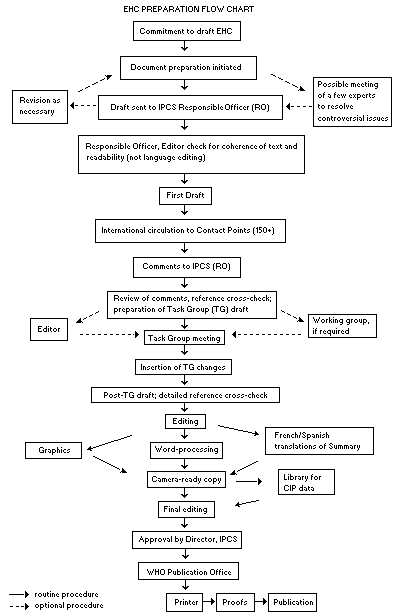
Procedures
The order of procedures that result in the publication of an EHC
monograph is shown in the flow chart. A designated staff member of
IPCS, responsible for the scientific quality of the document, serves
as Responsible Officer (RO). The IPCS Editor is responsible for
layout and language. The first draft, prepared by consultants or,
more usually, staff from an IPCS Participating Institution, is based
initially on data provided from the International Register of
Potentially Toxic Chemicals, and reference data bases such as Medline
and Toxline.
The draft document, when received by the RO, may require an
initial review by a small panel of experts to determine its scientific
quality and objectivity. Once the RO finds the document acceptable as
a first draft, it is distributed, in its unedited form, to well over
150 EHC contact points throughout the world who are asked to comment
on its completeness and accuracy and, where necessary, provide
additional material. The contact points, usually designated by
governments, may be Participating Institutions, IPCS Focal Points, or
individual scientists known for their particular expertise. Generally
some four months are allowed before the comments are considered by the
RO and author(s). A second draft incorporating comments received and
approved by the Director, IPCS, is then distributed to Task Group
members, who carry out the peer review, at least six weeks before
their meeting.
The Task Group members serve as individual scientists, not as
representatives of any organization, government or industry. Their
function is to evaluate the accuracy, significance and relevance of
the information in the document and to assess the health and
environmental risks from exposure to the chemical. A summary and
recommendations for further research and improved safety aspects are
also required. The composition of the Task Group is dictated by the
range of expertise required for the subject of the meeting and by the
need for a balanced geographical distribution.
 The three cooperating organizations of the IPCS recognize the
important role played by nongovernmental organizations.
Representatives from relevant national and international associations
may be invited to join the Task Group as observers. While observers
may provide a valuable contribution to the process, they can only
speak at the invitation of the Chairperson. Observers do not
participate in the final evaluation of the chemical; this is the sole
responsibility of the Task Group members. When the Task Group
considers it to be appropriate, it may meet in camera.
All individuals who as authors, consultants or advisers
participate in the preparation of the EHC monograph must, in addition
to serving in their personal capacity as scientists, inform the RO if
at any time a conflict of interest, whether actual or potential, could
be perceived in their work. They are required to sign a conflict of
interest statement. Such a procedure ensures the transparency and
probity of the process.
When the Task Group has completed its review and the RO is
satisfied as to the scientific correctness and completeness of the
document, it then goes for language editing, reference checking, and
preparation of camera-ready copy. After approval by the Director,
IPCS, the monograph is submitted to the WHO Office of Publications for
printing. At this time a copy of the final draft is sent to the
Chairperson and Rapporteur of the Task Group to check for any errors.
It is accepted that the following criteria should initiate the
updating of an EHC monograph: new data are available that would
substantially change the evaluation; there is public concern for
health or environmental effects of the agent because of greater
exposure; an appreciable time period has elapsed since the last
evaluation.
All Participating Institutions are informed, through the EHC
progress report, of the authors and institutions proposed for the
drafting of the documents. A comprehensive file of all comments
received on drafts of each EHC monograph is maintained and is
available on request. The Chairpersons of Task Groups are briefed
before each meeting on their role and responsibility in ensuring that
these rules are followed.
WHO TASK GROUP ON ENVIRONMENTAL HEALTH CRITERIA FOR FLAME RETARDANTS:
TRIS(CHLOROPROPYL) PHOSPHATE AND TRIS(2-CHLOROETHYL) PHOSPHATE
Members
Dr R. Benson, US Environmental Protection Agency, Denver, Colorado,
USA (Rapporteur)
Mr R. Cary, Health and Safety Executive, Toxicology Unit, Bootle,
Merseyside, United Kingdom
Dr S. Dobson, Institute of Terrestrial Ecology, Monks Wood,
Huntingdon, Cambridgeshire, United Kingdom
Mr D. Renshaw, Department of Health, London, United Kingdom
(Chairman)
Dr E. Söderlund, National Institute of Public Health, Department of
Environmental Medicine, Oslo, Norway
Dr J. Wagstaff, US Food and Drug Administration, Center for Food
Safety and Applied Nutrition, Washington, DC, USA
Observers
Dr R. Henrich, AKZO NOBEL, Dobbs Ferry, New York, USA
Dr P. Martin, Albright and Wilson UK Limited, European Business
Services - Product Stewardship, Oldbury, West Midlands, United Kingdom
Mr M. Papez, European Flame Retardants Association (EFRA), c/o
European Chemical Industry Council (CEFIC), Brussels, Belgium
Mr D. Thornton, Courtaulds Chemicals, Spondon, Derby, United Kingdom
Secretariat
Dr M. Baril, International Programme on Chemical Safety, Montreal,
Quebec, Canada (Secretary)
Dr P.G. Jenkins, International Programme on Chemical Safety, World
Health Organization, Geneva, Switzerland
ENVIRONMENTAL HEALTH CRITERIA FOR FLAME RETARDANTS: TRIS(CHLOROPROPYL)
PHOSPHATE AND TRIS(2-CHLOROETHYL) PHOSPHATE
A WHO Task Group on Environmental Health Criteria for Flame
Retardants: Tris(chloropropyl) phosphate and Tris(2-chloroethyl)
phosphate met at the offices of the Health and Safety Executive (HSE),
London, United Kingdom from 9 to 13 March 1998. Drs B. Woodard (HSE)
and P. Brantom (British Industrial Biological Research Association)
opened the meeting and welcomed the participants on behalf of the
organizing institutes. Dr M. Baril, IPCS, welcomed the participants on
behalf of Dr M. Mercier, Director of the IPCS and the three
cooperating organizations (UNEP/ILO/WHO). The Task Group reviewed and
revised the draft monograph and made an evaluation of the risk to
human health and the environment from exposure to these flame
retardants.
Financial support for this Task Group was provided by the United
Kingdom Department of Health as part of its contribution to the IPCS.
The first draft of this monograph was prepared by Dr G. J. van
Esch, Bilthoven, the Netherlands. The second draft, prepared by Dr M.
Baril, incorporated the comments received following circulation of the
first draft to the IPCS contact points for Environmental Health
Criteria monographs.
Dr P.G. Jenkins (IPCS Central Unit, Geneva) and Dr M. Baril (IPCS
technical adviser, Montreal) were responsible for the overall
technical editing and scientific content, respectively.
The efforts of all who helped in the preparation and finalization
of the monograph are gratefully acknowledged.
* * *
ABBREVIATIONS
BaP benzo (a)pyrene
BCF bioconcentration factor
CA chromosome aberration
ECD electron capture detection
FPD flame photometric detection
GC gas chromatography
ip intraperitoneal
LOEC lowest-observed-effect concentration
LOEL lowest-observed-effect level
MS mass spectrometry
NADPH reduced nicotinamide adenine dinucleotide phosphate
NCI negative ion chemical ionization
ND not detectable
NOEC no-observed-effect concentration
NOEL no-observed-effect level
NPD nitrogen phosphorus detection
NTE neurotoxic esterase
OECD Organisation for Economic Co-operation and Development
PB phenobarbital
PCB polychlorinated biphenyl
SC subcutaneous
SCE sister chromatid exchange
TCEP tris(2-chloroethyl) phosphate
TCPP tris(1-chloro-2-propyl) phosphate
TDCPP tris(1,3-dichloro-2-propyl) phosphate
TOCP tris- ortho-cresyl phosphate
TRIS(CHLOROPROPYL) PHOSPHATE
Tris(1-chloro-2-propyl) phosphate
Tris(1,3-dichloro-2-propyl) phosphate
1. SUMMARY
1.1 Tris(1-chloro-2-propyl) phosphate (TCPP)
Tris(1-chloro-2-propyl) phosphate (TCPP) is a colourless liquid
used as a flame retardant, mainly in polyurethane foams. It is not
volatile. Its solubility in water is 1.6 g/litre, it is soluble in
most organic solvents, and it has a log octanol/water partition
coefficient of 2.59.
Analysis is by gas chromatography/mass spectrometry (GC/MS).
Concentration of TCPP from water prior to analysis can be achieved
using XAD resin, followed by extraction with various organic solvents.
TCPP is manufactured from propylene oxide and phosphorus
oxychloride. Annual worldwide demand exceeded 40 000 tonnes in 1997.
TCPP is not readily biodegraded in sewage sludge inocula. It is
rapidly metabolized in fish.
Traces of TCPP have been detected in industrial and domestic
effluents but not in surface waters. It has not been detected in
surveys of sediments. Traces of TCPP have been detected in raw
peaches, raw pears and fish.
No data are available on the kinetics and metabolism of TCPP in
mammals.
TCPP is of low to moderate acute toxicity by the oral (LD50 in
rats = 1017-4200 mg/kg body weight), dermal (LD50 in rats and rabbits
is > 5000 mg/kg body weight) and inhalation routes (LC50 in rats is
> 4.6 mg/litre).
Rabbit eye and skin irritancy studies have indicated that TCPP is
either non-irritant or mildly irritant. A skin sensitization study
showed that TCPP has no sensitizing properties.
The reproductive toxicity, immunotoxicity and carcinogenic
potential of TCPP have not been investigated. The results of in
vitro and in vivo mutagenicity studies investigating an
appropriate range of end-points indicate that TCPP is not genotoxic.
TCPP has been investigated for potential delayed neurotoxicity in
hens. There was no evidence of delayed neurotoxicity when two oral
doses (each of 13 230 mg/kg body weight) were given 3 weeks apart.
No studies of the effects of TCPP on humans are available.
Toxicity values for organisms in the environment are available,
LC50 values ranging from 3.6 to 180 mg/litre. The no-observed-effect
concentrations for algae, daphnids and fish are 6, 32 and 9.8
mg/litre, respectively.
1.2 Tris(1,3-dichloro-2-propyl) phosphate (TDCPP)
Tris(1,3-dichloro-2-propyl) phosphate (TDCPP) is a viscous
colourless liquid used as a flame retardant in a range of plastic
foams, resins and latexes. It is not volatile. Its solubility in water
is 0.1 g/litre, it is soluble in most organic solvents, and it has a
log octanol/water partition coefficient of 3.8.
Analysis is by GC/MS. Concentration of TDCPP from water prior to
analysis can be achieved using XAD resin, followed by extraction with
various organic solvents.
TDCPP is manufactured from epichlorohydrin and phosphorus
oxychloride. The commercial product is predominantly TDCPP with trace
amounts of tris (2,3-dichloropropyl) phosphate. Annual worldwide
demand was 8000 tonnes in 1997.
TDCPP is not readily degraded in sewage sludge inocula.
Studies have demonstrated limited degradation of TDCPP in natural
waters. It is rapidly metabolized by fish.
Bioconcentration factors are low (3-107). The half-life of
elimination in killifish is 1.65 h.
Traces of TDCPP have been detected in sewage effluent, river
water, seawater, drinking-water, sediment and in fish. TDCPP has been
found in some samples of human adipose tissue.
Kinetic studies in rats using 14C-labelled TDCPP showed the
radiolabel to be distributed throughout the body following oral or
dermal administration. The major metabolite of TDCPP identified in the
urine of rats was bis(1,3-dichloro-2-propyl) phosphate. Elimination of
the radiolabel was primarily in faeces and urine, with a small amount
in expired air as CO2.
TDCPP is of low to moderate acute toxicity by the oral route
(LD50 in rats = 2830 mg/kg body weight) and of low acute toxicity by
the dermal route (dermal LD50 in rats is > 2000 mg/kg body weight).
In a 3-month study in mice, an exposure of approximately 1800
mg/kg body weight per day caused death within one month. The
no-observed-effect level (NOEL) for the study was 15.3 mg/kg body
weight per day; the lowest-observed level (LOEL) for increased liver
weight was 62 mg/kg body weight per day.
The sensitization potential of TDCPP has not been investigated.
The potential for TDCPP to affect human male reproductive ability
is unclear in view of testicular toxicity in rats but a lack of effect
on male reproductive performance in rabbits. The possible effect on
female reproduction has not been investigated.
A teratology study on rats showed fetotoxicity at an oral dose of
400 mg/kg body weight per day; there was maternal toxicity at doses of
100 and 400 mg/kg body weight per day. No teratogenicity was seen.
Overall, the mutagenicity data show that TDCPP is not genotoxic
in vivo.
The carcinogenicity of TDCPP has been investigated in a single
2-year feeding study. It was carcinogenic (increased occurrence of
liver carcinomas) at all exposure levels that were tested (5-80 mg/kg
body weight per day) in both male and female rats. Kidney, testicular
and brain tumours were also found. In addition, there were
non-neoplastic adverse effects in bone marrow, spleen, testis, liver
and kidney. The effects in the kidney and testis occurred at all
exposure levels. Only animals in the highest dose and control groups
were evaluated for effects in the bone marrow and spleen. It was
impossible, therefore, to determine whether there was a dose-response
relationship for these effects in these organs.
TDCPP exposure produced some indications of immunotoxicity in
mice but only at high doses.
Limited human studies following occupational exposure are
available but they add little to the knowledge of the safety aspects
of TDCPP.
2. IDENTITY, PHYSICAL AND CHEMICAL PROPERTIES, AND ANALYTICAL METHODS
2.1 Tris(1-chloro-2-propyl) phosphate (TCPP)
2.1.1 Identity
Chemical formula: C9H18Cl3O4P
Chemical structure:
The three cooperating organizations of the IPCS recognize the
important role played by nongovernmental organizations.
Representatives from relevant national and international associations
may be invited to join the Task Group as observers. While observers
may provide a valuable contribution to the process, they can only
speak at the invitation of the Chairperson. Observers do not
participate in the final evaluation of the chemical; this is the sole
responsibility of the Task Group members. When the Task Group
considers it to be appropriate, it may meet in camera.
All individuals who as authors, consultants or advisers
participate in the preparation of the EHC monograph must, in addition
to serving in their personal capacity as scientists, inform the RO if
at any time a conflict of interest, whether actual or potential, could
be perceived in their work. They are required to sign a conflict of
interest statement. Such a procedure ensures the transparency and
probity of the process.
When the Task Group has completed its review and the RO is
satisfied as to the scientific correctness and completeness of the
document, it then goes for language editing, reference checking, and
preparation of camera-ready copy. After approval by the Director,
IPCS, the monograph is submitted to the WHO Office of Publications for
printing. At this time a copy of the final draft is sent to the
Chairperson and Rapporteur of the Task Group to check for any errors.
It is accepted that the following criteria should initiate the
updating of an EHC monograph: new data are available that would
substantially change the evaluation; there is public concern for
health or environmental effects of the agent because of greater
exposure; an appreciable time period has elapsed since the last
evaluation.
All Participating Institutions are informed, through the EHC
progress report, of the authors and institutions proposed for the
drafting of the documents. A comprehensive file of all comments
received on drafts of each EHC monograph is maintained and is
available on request. The Chairpersons of Task Groups are briefed
before each meeting on their role and responsibility in ensuring that
these rules are followed.
WHO TASK GROUP ON ENVIRONMENTAL HEALTH CRITERIA FOR FLAME RETARDANTS:
TRIS(CHLOROPROPYL) PHOSPHATE AND TRIS(2-CHLOROETHYL) PHOSPHATE
Members
Dr R. Benson, US Environmental Protection Agency, Denver, Colorado,
USA (Rapporteur)
Mr R. Cary, Health and Safety Executive, Toxicology Unit, Bootle,
Merseyside, United Kingdom
Dr S. Dobson, Institute of Terrestrial Ecology, Monks Wood,
Huntingdon, Cambridgeshire, United Kingdom
Mr D. Renshaw, Department of Health, London, United Kingdom
(Chairman)
Dr E. Söderlund, National Institute of Public Health, Department of
Environmental Medicine, Oslo, Norway
Dr J. Wagstaff, US Food and Drug Administration, Center for Food
Safety and Applied Nutrition, Washington, DC, USA
Observers
Dr R. Henrich, AKZO NOBEL, Dobbs Ferry, New York, USA
Dr P. Martin, Albright and Wilson UK Limited, European Business
Services - Product Stewardship, Oldbury, West Midlands, United Kingdom
Mr M. Papez, European Flame Retardants Association (EFRA), c/o
European Chemical Industry Council (CEFIC), Brussels, Belgium
Mr D. Thornton, Courtaulds Chemicals, Spondon, Derby, United Kingdom
Secretariat
Dr M. Baril, International Programme on Chemical Safety, Montreal,
Quebec, Canada (Secretary)
Dr P.G. Jenkins, International Programme on Chemical Safety, World
Health Organization, Geneva, Switzerland
ENVIRONMENTAL HEALTH CRITERIA FOR FLAME RETARDANTS: TRIS(CHLOROPROPYL)
PHOSPHATE AND TRIS(2-CHLOROETHYL) PHOSPHATE
A WHO Task Group on Environmental Health Criteria for Flame
Retardants: Tris(chloropropyl) phosphate and Tris(2-chloroethyl)
phosphate met at the offices of the Health and Safety Executive (HSE),
London, United Kingdom from 9 to 13 March 1998. Drs B. Woodard (HSE)
and P. Brantom (British Industrial Biological Research Association)
opened the meeting and welcomed the participants on behalf of the
organizing institutes. Dr M. Baril, IPCS, welcomed the participants on
behalf of Dr M. Mercier, Director of the IPCS and the three
cooperating organizations (UNEP/ILO/WHO). The Task Group reviewed and
revised the draft monograph and made an evaluation of the risk to
human health and the environment from exposure to these flame
retardants.
Financial support for this Task Group was provided by the United
Kingdom Department of Health as part of its contribution to the IPCS.
The first draft of this monograph was prepared by Dr G. J. van
Esch, Bilthoven, the Netherlands. The second draft, prepared by Dr M.
Baril, incorporated the comments received following circulation of the
first draft to the IPCS contact points for Environmental Health
Criteria monographs.
Dr P.G. Jenkins (IPCS Central Unit, Geneva) and Dr M. Baril (IPCS
technical adviser, Montreal) were responsible for the overall
technical editing and scientific content, respectively.
The efforts of all who helped in the preparation and finalization
of the monograph are gratefully acknowledged.
* * *
ABBREVIATIONS
BaP benzo (a)pyrene
BCF bioconcentration factor
CA chromosome aberration
ECD electron capture detection
FPD flame photometric detection
GC gas chromatography
ip intraperitoneal
LOEC lowest-observed-effect concentration
LOEL lowest-observed-effect level
MS mass spectrometry
NADPH reduced nicotinamide adenine dinucleotide phosphate
NCI negative ion chemical ionization
ND not detectable
NOEC no-observed-effect concentration
NOEL no-observed-effect level
NPD nitrogen phosphorus detection
NTE neurotoxic esterase
OECD Organisation for Economic Co-operation and Development
PB phenobarbital
PCB polychlorinated biphenyl
SC subcutaneous
SCE sister chromatid exchange
TCEP tris(2-chloroethyl) phosphate
TCPP tris(1-chloro-2-propyl) phosphate
TDCPP tris(1,3-dichloro-2-propyl) phosphate
TOCP tris- ortho-cresyl phosphate
TRIS(CHLOROPROPYL) PHOSPHATE
Tris(1-chloro-2-propyl) phosphate
Tris(1,3-dichloro-2-propyl) phosphate
1. SUMMARY
1.1 Tris(1-chloro-2-propyl) phosphate (TCPP)
Tris(1-chloro-2-propyl) phosphate (TCPP) is a colourless liquid
used as a flame retardant, mainly in polyurethane foams. It is not
volatile. Its solubility in water is 1.6 g/litre, it is soluble in
most organic solvents, and it has a log octanol/water partition
coefficient of 2.59.
Analysis is by gas chromatography/mass spectrometry (GC/MS).
Concentration of TCPP from water prior to analysis can be achieved
using XAD resin, followed by extraction with various organic solvents.
TCPP is manufactured from propylene oxide and phosphorus
oxychloride. Annual worldwide demand exceeded 40 000 tonnes in 1997.
TCPP is not readily biodegraded in sewage sludge inocula. It is
rapidly metabolized in fish.
Traces of TCPP have been detected in industrial and domestic
effluents but not in surface waters. It has not been detected in
surveys of sediments. Traces of TCPP have been detected in raw
peaches, raw pears and fish.
No data are available on the kinetics and metabolism of TCPP in
mammals.
TCPP is of low to moderate acute toxicity by the oral (LD50 in
rats = 1017-4200 mg/kg body weight), dermal (LD50 in rats and rabbits
is > 5000 mg/kg body weight) and inhalation routes (LC50 in rats is
> 4.6 mg/litre).
Rabbit eye and skin irritancy studies have indicated that TCPP is
either non-irritant or mildly irritant. A skin sensitization study
showed that TCPP has no sensitizing properties.
The reproductive toxicity, immunotoxicity and carcinogenic
potential of TCPP have not been investigated. The results of in
vitro and in vivo mutagenicity studies investigating an
appropriate range of end-points indicate that TCPP is not genotoxic.
TCPP has been investigated for potential delayed neurotoxicity in
hens. There was no evidence of delayed neurotoxicity when two oral
doses (each of 13 230 mg/kg body weight) were given 3 weeks apart.
No studies of the effects of TCPP on humans are available.
Toxicity values for organisms in the environment are available,
LC50 values ranging from 3.6 to 180 mg/litre. The no-observed-effect
concentrations for algae, daphnids and fish are 6, 32 and 9.8
mg/litre, respectively.
1.2 Tris(1,3-dichloro-2-propyl) phosphate (TDCPP)
Tris(1,3-dichloro-2-propyl) phosphate (TDCPP) is a viscous
colourless liquid used as a flame retardant in a range of plastic
foams, resins and latexes. It is not volatile. Its solubility in water
is 0.1 g/litre, it is soluble in most organic solvents, and it has a
log octanol/water partition coefficient of 3.8.
Analysis is by GC/MS. Concentration of TDCPP from water prior to
analysis can be achieved using XAD resin, followed by extraction with
various organic solvents.
TDCPP is manufactured from epichlorohydrin and phosphorus
oxychloride. The commercial product is predominantly TDCPP with trace
amounts of tris (2,3-dichloropropyl) phosphate. Annual worldwide
demand was 8000 tonnes in 1997.
TDCPP is not readily degraded in sewage sludge inocula.
Studies have demonstrated limited degradation of TDCPP in natural
waters. It is rapidly metabolized by fish.
Bioconcentration factors are low (3-107). The half-life of
elimination in killifish is 1.65 h.
Traces of TDCPP have been detected in sewage effluent, river
water, seawater, drinking-water, sediment and in fish. TDCPP has been
found in some samples of human adipose tissue.
Kinetic studies in rats using 14C-labelled TDCPP showed the
radiolabel to be distributed throughout the body following oral or
dermal administration. The major metabolite of TDCPP identified in the
urine of rats was bis(1,3-dichloro-2-propyl) phosphate. Elimination of
the radiolabel was primarily in faeces and urine, with a small amount
in expired air as CO2.
TDCPP is of low to moderate acute toxicity by the oral route
(LD50 in rats = 2830 mg/kg body weight) and of low acute toxicity by
the dermal route (dermal LD50 in rats is > 2000 mg/kg body weight).
In a 3-month study in mice, an exposure of approximately 1800
mg/kg body weight per day caused death within one month. The
no-observed-effect level (NOEL) for the study was 15.3 mg/kg body
weight per day; the lowest-observed level (LOEL) for increased liver
weight was 62 mg/kg body weight per day.
The sensitization potential of TDCPP has not been investigated.
The potential for TDCPP to affect human male reproductive ability
is unclear in view of testicular toxicity in rats but a lack of effect
on male reproductive performance in rabbits. The possible effect on
female reproduction has not been investigated.
A teratology study on rats showed fetotoxicity at an oral dose of
400 mg/kg body weight per day; there was maternal toxicity at doses of
100 and 400 mg/kg body weight per day. No teratogenicity was seen.
Overall, the mutagenicity data show that TDCPP is not genotoxic
in vivo.
The carcinogenicity of TDCPP has been investigated in a single
2-year feeding study. It was carcinogenic (increased occurrence of
liver carcinomas) at all exposure levels that were tested (5-80 mg/kg
body weight per day) in both male and female rats. Kidney, testicular
and brain tumours were also found. In addition, there were
non-neoplastic adverse effects in bone marrow, spleen, testis, liver
and kidney. The effects in the kidney and testis occurred at all
exposure levels. Only animals in the highest dose and control groups
were evaluated for effects in the bone marrow and spleen. It was
impossible, therefore, to determine whether there was a dose-response
relationship for these effects in these organs.
TDCPP exposure produced some indications of immunotoxicity in
mice but only at high doses.
Limited human studies following occupational exposure are
available but they add little to the knowledge of the safety aspects
of TDCPP.
2. IDENTITY, PHYSICAL AND CHEMICAL PROPERTIES, AND ANALYTICAL METHODS
2.1 Tris(1-chloro-2-propyl) phosphate (TCPP)
2.1.1 Identity
Chemical formula: C9H18Cl3O4P
Chemical structure:
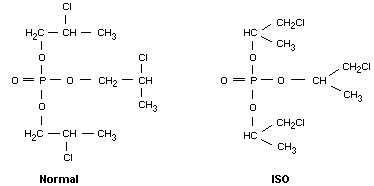 Relative molecular mass: 327.55
CAS name: tris(2-chloroisopropyl) phosphate
CAS registry number: 13674-84-5
Synonyms: 2-propanol, 1-chlorophosphate (3:1);
1-chloro-2-propyl phosphate (1:3);
tris(1-chloromethylethyl) phosphate;
tris(2-chloroisopropyl) phosphate;
tris(ß-chloropropyl) phosphate;
phosphoric acid, tris(2-chloro-1-methyl
ethyl) ester
Trade names: Fyrol PCF; Amgard TMCP; Antiblaze 80;
Levagard PP; Tolgard TMCP; TCPP
Common names: TCPP; TMCP; TCIP
2.1.2 Physical and chemical properties
Physical state: clear, colourless liquid
Melting point: -42°C
Boiling point: 235-248°C
Flash point: 218°C (Cleveland open cup method)
Vapour pressure: <2 mmHg at 25°C
Viscosity: 61 cP at 25°C
Specific gravity: 1.29 at 25°C
Solubility in water: 1.6 g/litre at 20°C
Stability: Hydrolyses slowly under alkaline or acidic
conditions
n-Octanol/water partition
coefficient (log Pow): 2.59
References: ECB (1995); Akzo (1995)
2.2 Tris(1,3-dichloro-2-propyl) phosphate (TDCPP)
2.2.1 Identity
Chemical formula: C9H15Cl6O4P
Relative molecular mass: 430.91
CAS name: tris(1,3-dichloroisopropyl) phosphate
CAS registry number: 13674-87-8
Synonyms: 1,3-dichloro-2-propanol phosphate;
2-propanol, 1,3-dichloro-, phosphate;
phosphoric acid tris(1,3-dichloro-2- propyl)
ester; tris(1-chloromethyl-2-chloroethyl)
phosphate; tris(1,3-dichloroisopropyl)
phosphate; tris(1,3-dichloro-2-propyl)
phosphate; tris [2-chloro-1-(chloromethyl)
ethyl] phosphate
Trade names: CRP; Firemaster T33P; Fyrol FR 2; PF 38; PF
38/3; Apex Flame Proof Emulsion 197 and 212;
Antiblaze 195; Amgard; TDCP
Common names: TDCPP; TDCP
There is some confusion concerning TDCPP isomers. The commercial
product has predominantly branched substituent propyl groups in the
"iso" orientation joined via the centre carbon. The alternate isomer,
i.e. tris(2,3-dichloro-1-propyl) phosphate (CAS registry number
78-43-3), exists only as a trace in the former because of steric
hindrance from chlorine substitution on adjacent carbon atoms.
Commercial production via reaction of phosphorus oxychloride and
epichlorohydrin can, therefore, only produce the major species:
i.e.
Relative molecular mass: 327.55
CAS name: tris(2-chloroisopropyl) phosphate
CAS registry number: 13674-84-5
Synonyms: 2-propanol, 1-chlorophosphate (3:1);
1-chloro-2-propyl phosphate (1:3);
tris(1-chloromethylethyl) phosphate;
tris(2-chloroisopropyl) phosphate;
tris(ß-chloropropyl) phosphate;
phosphoric acid, tris(2-chloro-1-methyl
ethyl) ester
Trade names: Fyrol PCF; Amgard TMCP; Antiblaze 80;
Levagard PP; Tolgard TMCP; TCPP
Common names: TCPP; TMCP; TCIP
2.1.2 Physical and chemical properties
Physical state: clear, colourless liquid
Melting point: -42°C
Boiling point: 235-248°C
Flash point: 218°C (Cleveland open cup method)
Vapour pressure: <2 mmHg at 25°C
Viscosity: 61 cP at 25°C
Specific gravity: 1.29 at 25°C
Solubility in water: 1.6 g/litre at 20°C
Stability: Hydrolyses slowly under alkaline or acidic
conditions
n-Octanol/water partition
coefficient (log Pow): 2.59
References: ECB (1995); Akzo (1995)
2.2 Tris(1,3-dichloro-2-propyl) phosphate (TDCPP)
2.2.1 Identity
Chemical formula: C9H15Cl6O4P
Relative molecular mass: 430.91
CAS name: tris(1,3-dichloroisopropyl) phosphate
CAS registry number: 13674-87-8
Synonyms: 1,3-dichloro-2-propanol phosphate;
2-propanol, 1,3-dichloro-, phosphate;
phosphoric acid tris(1,3-dichloro-2- propyl)
ester; tris(1-chloromethyl-2-chloroethyl)
phosphate; tris(1,3-dichloroisopropyl)
phosphate; tris(1,3-dichloro-2-propyl)
phosphate; tris [2-chloro-1-(chloromethyl)
ethyl] phosphate
Trade names: CRP; Firemaster T33P; Fyrol FR 2; PF 38; PF
38/3; Apex Flame Proof Emulsion 197 and 212;
Antiblaze 195; Amgard; TDCP
Common names: TDCPP; TDCP
There is some confusion concerning TDCPP isomers. The commercial
product has predominantly branched substituent propyl groups in the
"iso" orientation joined via the centre carbon. The alternate isomer,
i.e. tris(2,3-dichloro-1-propyl) phosphate (CAS registry number
78-43-3), exists only as a trace in the former because of steric
hindrance from chlorine substitution on adjacent carbon atoms.
Commercial production via reaction of phosphorus oxychloride and
epichlorohydrin can, therefore, only produce the major species:
i.e.
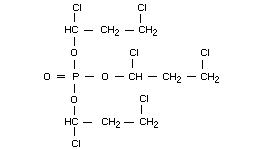 It is therefore assumed that all referenced studies were
conducted on commercial samples (CAS registry number 13674-87-4).
2.2.2 Physical and chemical properties
Physical state: viscous liquid
Boiling point: 236-237°C at 5 mmHg
(decomposes at > 200°C at 4 mmHg)
Specific gravity: 1.52 at 25°C
Solubility: 0.1 g/litre (30°C) in water;
soluble in most organic solvents
Flash point: 252°C (Cleveland open cup method)
Stability: resistant to chlorination in aqueous
solution; it has an extremely low rate of
hydrolysis and resists attack by bases
Viscosity: 1800 cP (25°C)
n-Octanol/water partition
coefficient (log Pow): 3.8
Vapour pressure: 0.01 mmHg at 30°C
References: Hollifield (1979); Sasaki et al. (1981); Windholz (1983);
Chemical Information Systems (1988); Ishikawa & Baba (1988); Akzo
(1997b)
2.3 Conversion factors
TCPP
1 ppm = 0.0746 mg/m3
1 mg/m3 = 13.39 ppm
TDCPP
1 ppm = 0.0567 mg/m3
1 mg/m3 = 17.62 ppm
2.4 Analytical methods
Gas chromatography and mass spectrometry (GC/MS) with a
nitrogen-phosphorus detector (GC/NPD) is used to detect
tris(chloropropyl) phosphates in drinking-water and adipose tissue.
Water samples are prepared as follows: absorption on a XAD resin
cartridge, extraction with methylene chloride or elution with
acetone/hexane, drying over anhydrous sodium sulfate and concentration
and determination by GC/MS (LeBel et al., 1981; Benoit & LeBel, 1986).
LeBel et al. (1987) used large-volume resin sampling cartridges to
obtain sufficient organic extracts from water for analysis. Recovery
at 10 ng TDCPP/litre fortification was 96.8%.
The limit of determination for tris(chloropropyl) phosphates in
human adipose tissue is < 1 ng/g (LeBel & Williams, 1983). The
recovery of TDCPP from human adipose tissue fortified with TDCPP was
92.1 to 111.4% in a concentration range of 2.5-25 µg/kg with benzene
extraction (LeBel & Williams, 1983).
Gas chromatography with negative chemical ionization mass
spectrometry (GC/NCIMS) has been used to identify TDCPP in human blood
samples (Sellström & Jansson, 1987).
TDCPP can be analysed in food by GC/NPD (Draft, 1982).
3. SOURCES OF HUMAN AND ENVIRONMENTAL EXPOSURE
3.1 Natural occurrence
Neither TCPP nor TDCPP occur as natural products.
3.2 Anthropogenic sources
3.2.1 Production and processes
TCPP production and use has continued to grow at an average of 4%
per year since the mid-1960s when it was first commercialized. Its
growth has been a reflection of polyurethane tonnage growth compounded
by legislative advances and the fact that TCPP has replaced some other
flame retardants, e.g., tris(chloroethyl) phosphate (TCEP).
All commercial TCPP is produced by the reaction of phosphorus
oxychloride with propylene oxide followed by purification.
All commercial TDCPP is produced by reaction of phosphorus
oxychloride with epichlorohydrin.
In 1997, global TCPP demand reached over 40 000 tonnes per year;
global TDCPP demand was estimated at 8000 tonnes per year and growing.
3.2.2 Release in the environment
The environmental fate of TCPP is unknown; entry into and
transport through the aquatic media, however, appear to be the most
likely sources of contamination. TCPP fire retardants could
potentially reach the environment from waste streams generated: (a) in
manufacturing plants; (b) where they are added to fabrics and
plastics; and (c) from the final product during its use, disposal or
recycling. Their transport to the environment could also occur by
atmospheric emissions, by leaching or with the movement of treated
fabrics or plastic products (US EPA, 1976).
Ahrens et al. (1979) determined the rate of release of TDCPP as a
function of the number of launderings of children's polyester
sleepwear. They observed that about 37% of the flame retardant was
lost after 20 washings, most of which was lost by the tenth wash.
Prepolymers containing polyethyleneimine with TDCPP impart flame
retardancy to cotton fabrics but do not withstand persistent
laundering (Bertoniere & Rowland, 1977).
TDCPP may undergo thermal oxidative degradation in air at 370°C.
The major chlorinated C3 species (97% volatiles) are
1,3-dichloropropene and 1,2,3-trichloropropane and acrolein.
Hydrochloric acid is also produced.
3.2.3 Uses
3.2.3.1 TCPP
The vast majority of TCPP is used in rigid polyurethane foams. It
is also used in flexible polyurethane foams for furniture and its
upholstery, principally in the United Kingdom and Ireland.
TCPP is added at various points in the polyurethane supply chain:
to final foam producers; to "system houses" who pre-blend and
formulate ready-made systems; and to base polyol producers who may use
it to reduce polyol viscosity/mobility.
The use in rigid polyurethane foams may be further sub-divided
into blocks and spray systems for building insulation and for
refrigerator casings. Very small use of TCPP also exists in textile
back-coating formulations and in certain coatings.
3.2.3.2 TDCPP
TDCPP is added as a flame retardant to: (a) polyurethane foam
(both rigid and flexible); (b) other plastics and resins; and (c)
acrylic latexes for back coating and binding of non-woven fabrics
(Weil, 1980; US EPA, 1988).
Incorporation of TDCPP into polyurea coatings for application to
wool has produced flame-resistant, machine-washable and
shrink-resistant material (Fincher et al., 1973).
TDCPP was formerly used as a flame retardant for children's and
infant's clothing.
4. ENVIRONMENTAL TRANSPORT, DISTRIBUTION AND TRANSFORMATION
4.1 Transport and distribution between media
No data are available regarding transport and distribution of
TCPP or TDCPP between different media.
4.2 Transformation
4.2.1 Abiotic
TCPP hydrolyses slowly under both acidic and alkaline conditions
(Akzo, 1997a).
4.2.2 Biotic
TCPP is not readily biodegradable in sewage sludge inocula.
Following inoculation at 20 mg/litre in a MITI test, 14% was degraded
in 28 days (MITI, 1992). After inoculation at 100 mg/litre in a test
under OECD Guideline 3OI C, there was no degradation within 28 days
(Bayer AG, 1990, unpublished data). Using Amgard TMCP, TCPP was
assessed for inherent biodegradability under OECD Guideline 302C.
Calculated degradation (from oxygen uptake) was 21% after 28 days
(SafePharm, 1996a). In the same test, Amgard TDCP (TDCPP), showed no
degradation within 28 days (SafePharm, 1996b).
4.2.3 Degradation
Hattori et al. (1981) studied the degradation of TDCPP in
environmental water during 1979-1980. Using the molybdenum blue
colorimetric method, the increase of phosphate ions was analysed in Oh
River and Neya River water and seawater from Osaka Bay. According to
measurements made at 7 and 14 days, the degradation was 12.5 and
18.5%, respectively, when 20 mg TDCPP/litre was added to water from
the Oh River, 0 and 5.4%, respectively, when 1 mg/litre was added to
water from the Neya River, 0 and 22% respectively in seawater from
Osaka Bay (Tomagashima), and 0% in seawater from Osaka Bay (Senboku).
The percentage degradation of TDCPP in water in the presence of
killifish (Orzyias latipes) or goldfish (Carassius auratus) was
monitored by Sasaki et al. (1981). Initial concentration and fish
numbers per unit volume were not reported. More than 90% of the TDCPP
degradation with killifish, and approximately 70% with goldfish,
occurred within 100 h; the half-lives being 31 h for killifish and 42
h for goldfish.
4.2.4 Bioaccumulation
Bioaccumulation of TDCPP was studied in both static and
continuous-flow tests using killifish (Oryzias latipes). In static
tests, bioconcentration factors (BCFs) ranged from 47 to 107 following
exposure to TDCPP at 0.3-1.2 mg/litre for 96 h. In continuous-flow
systems, BCFs ranged from 31 to 59 following exposure to 0.04-0.4
mg/litre over 3 to 32 days. The half-life of elimination was 1.65 h
following transfer to clean water after exposure in the
continuous-flow system (Sasaki et al., 1982). Static BCFs for goldfish
(Carassius auratus) ranged from 3 to 5 for TDCPP (Sasaki et al.,
1981).
5. ENVIRONMENTAL LEVELS AND HUMAN EXPOSURE
5.1 Environmental levels
5.1.1 Air
TCPP and TDCPP concentrations of 0.0053 and 0.0047 µg/m3,
respectively, were measured in the ambient air of Kitakyushu, Japan,
in 1983 (Haraguchi et al., 1985).
5.1.2 Water
In 1975 and 1978 more than 100 samples of river water were
analysed in Japan for the presence of TDCPP. In 1975 0/100 and in 1978
0/114 samples contained the substance. The limit of determination in
1975 was 0.02-0.25 and in 1978 it was 0.001-0.5 µg/litre
(Environmental Agency Japan, 1983, 1987).
In a survey conducted in 1980, 25 samples of river water and
seawater were collected near Kitakyushu City, Japan, and analysed for
TDCPP. All samples contained this phosphate at concentrations of
0.023-0.136 µg/litre (limit of determination, 0.01 µg/litre) (Ishikawa
et al., 1985a).
Twenty-four samples of water were collected and analysed for the
presence of TDCPP in Japan in 1984. None of the samples contained
either TDCPP (limit of determination 0.25-1 µg/litre) or TCPP (limit
of determination 0.05-1 µg/litre) (Environmental Agency Japan, 1987;
personal communication from the Japanese Ministry of Health and
Welfare to the IPCS, July 1993).
TDCPP has been identified in raw river water and drinking-water
extracted from Japanese rivers (Takahashi & Morita, 1988). A study of
river water samples collected at Isojima in the Yodo river basin in
1984 led to the conclusion that urban run-off was not a source of
river water pollution in that area (Fukushima et al., 1986). Fukushima
et al. (1992) determined the trend of TCPP and TDCPP levels in the
basin from 1976 to 1990. There was a peak in the polluted area of
TDCPP in 1987 where the concentration reached 0.9 µg/litre and one in
a less polluted area in 1988 where it was 0.6 µg/litre.
Industrial and domestic effluents in Kitakyushu, Japan, contained
detectable levels of TDCPP (limit of determination, 0.03 µg/litre).
The concentration ranged from not detectable (ND) to 0.1 µg/litre at 3
food factories, ND to 0.6 µg/litre at 7 chemical factories, ND to 0.29
µg/litre at 5 steel factories, ND to 0.59 µg/litre at 6 other
industrial sites and ND to 0.18 µg/litre at 3 metal processing plants,
0.28 to 1.4 µg/litre in 5 sewage treatment plant effluents (influents
0.33 to 1.6 µg/litre) and ND to 0.56 µg/litre in 5 domestic effluents.
It was concluded by the authors that the water pollution in the area
was due to a combination of pollution sources of low concentrations
(Ishikawa et al., 1985b). TCPP was detected at 0.06 µg/litre only in
one of the "other industrial sites" and was not detected in other
industrial effluents. TCPP was found at only one of the sewage
treatment plants (at 0.98 µg/litre in the influent and 0.32 µg/litre
in the effluent).
TDCPP was detected at concentrations ranging from trace to 0.22
µg/litre in water from water treatment plants in Japan (Takahashi &
Morita, 1988).
In 1979 a survey of drinking-water from treatment plants
throughout Canada was carried out. Samples were taken approximately 3
months apart in August/September and again in November/ December.
TDCPP was found at levels ranging from 0.0003 to 0.023 µg/litre in the
drinking-water supply of 15 Canadian cities. It was not detected in
drinking-water from 14 other cities (Williams & LeBel, 1981).
The concentration of TDCPP in drinking-water samples (one sample
at each station) collected in 1980 from 12 Canadian Great Lakes
municipalities ranged up to 0.0157 µg/litre during January and from
0.0001 to 0.0046 µg/litre during August (Williams et al., 1982).
Drinking-water samples (two samples of each station) collected from
six Eastern Ontario water treatment plants, in the period June-October
1978, contained 0.0002 to 0.0018 µg/litre (LeBel et al., 1981).
In a survey of organic effluent pollutants from three Swedish
waste water treatment plants, Paxéus (1996) found TDCPP at
concentrations of < 0.5 to 3 µg/litre.
5.1.3 Sediment
In 1975, 100 samples and, in 1978, 114 samples of sediment were
analysed for the presence of TDCPP in Japan. No TDCPP was found (limit
of determination in 1975 was 0.002-0.05 and, in 1978, 0.0001-0.06
mg/kg) (Environmental Agency Japan, 1983, 1987).
In a survey in 1980, four out of six samples of sediment
collected from a river and the sea near Kitakyushu City, Japan,
contained TDCPP at concentrations of 9-17 µg/kg (limit of
determination, 5 µg/kg) (Ishikawa et al., 1985a).
Twenty-four samples of sediment were collected and analysed for
the presence of TDCPP and TCPP in Japan in 1984. None of the samples
contained TDCPP (limit of determination, 0.03-0.06 mg/kg) or TCPP
(limit of determination, 0.011-0.05 mg/kg) (Environmental Agency
Japan, 1987; personal communication from the Japanese Ministry of
Health and Welfare to the IPCS, July 1993).
5.1.4 Biota
In 1975 and in 1978 samples of Japanese fish were analysed for
the presence of TDCPP. In 1975, 7/94 samples contained TDCPP at
concentrations of 0.015-0.025 mg/kg and in 1978 0/93 samples contained
TDCPP (limit of determination, 0.001-0.03 mg/kg) (Environmental Agency
Japan, 1983, 1987).
5.1.5 Food
In a market-basket survey of 234 food items conducted over a
10-year period between 1982 and 1991, TCPP was found 3 times. Residues
found in raw peach and raw pear were 0.009 mg/kg (limits of detection
unspecified) (Kan-Do Office and Pesticides Team, 1995).
5.2 General population exposure
5.2.1 Adipose tissue
In a series of studies (LeBel & Williams, 1983, 1986; LeBel et
al., 1989), TDCPP was detected in human adipose tissue. In initial
studies, concentrations ranged from not detectable (< 0.001 µg/kg) to
257 µg/kg. In later studies, samples from 4 out of 6 cities showed no
detectable TDCPP, whilst in the other two concentrations ranged up to
32 µg/kg.
5.2.2 Biological fluids
Using NCI mass spectrometry with a limit of detection of 0.01 µg,
Hudec et al. (1981) found TDCPP in the seminal fluid of 34 out of 123
student donors. The TDCPP concentrations ranged from 5 to 50 µg/litre.
6. KINETICS AND METABOLISM IN LABORATORY ANIMALS
6.1 TCPP
No data are available on the kinetics or metabolism of TCPP.
6.2 TDCPP
The only data available derive from studies in rats.
Groups of 2-8 male Sprague-Dawley rats received an unstated
amount of 14C-TDCPP by intravenous injection (Lynn et al., 1981). The
position of the radiolabel was not specified. Urine, faeces and
expired air were collected for 24-h periods over 5 days; bile and
plasma samples were collected over 24 h only. Total radiolabel and
tissue concentrations of TDCPP were assessed in most major organs at 5
min, 30 min, 8 h, 24 h and 5 days after injection. The major
metabolite isolated from urine, faeces and bile was
1,3-dichloro-2-propyl phosphate (BDCP); in addition
1,3-dichloro-2-propanol and a dimethyl derivative of BDCP were
identified in urine. There was also substantial elimination of 14CO2
via exhaled air. The tissue distribution studies indicated
distribution of the parent compound and the major metabolite
(1,3-dichloro-2-propyl phosphate) throughout the body. On completion
of 5 days collection, approximately 96% of the administered
radiolabelled material had been recovered in the urine, faeces or
exhaled air.
Similar results were reported following dermal application of 0.9
mg/kg and oral administrations of up to 22 mg/kg (Nomeir et al., 1981;
Minegishi et al., 1988).
Following the intraperitoneal administration of 14C-TDCPP to
male Sprague-Dawley rats, urine collected over 24 h contained a major
metabolite, bis(1,3-dichloro-2-propyl) phosphate (BDCPP) (Lynn et al.
1981). In rats receiving intravenous injection, 54% of the radiolabel
was excreted in the urine after 5 days; 62% of the urinary label was
BDCPP (Lynn et al., 1980,1981).
Nomeir et al. (1981) studied the metabolism of 14C-TDCPP in
rats. Labelled TDCPP was distributed rapidly throughout the body
following either oral or dermal administration or intravenous
injection. Elimination of TDCPP was primarily in the bile, faeces and
urine, but some was expired as C02. About 80% of the dose was
eliminated within 24 h, but traces of radioactivity were found in most
tissues 10 days following exposure.
In a similar study, Minegishi et al. (1988), using male Wistar
rats, showed, after 168 h of an oral administration of 21.5 mg/kg in
olive oil, a recovery of 43.2% in the urine, 39.2% in the faeces and
16.2% in the expired air.
Six hours after intravenous administration of 14C-TDCPP (40.7
mg/kg) to CD-1 mice, binding of TDCPP-derived radioactivity was
detected in isolated RNA, DNA and protein from liver, kidney and
muscle. The maximum levels in RNA, DNA and protein were 28, 8.3 and 57
nmoles/kg, respectively (Morales & Matthews, 1980).
TDCPP was rapidly metabolized in vitro by an NADPH- dependent
microsomal mixed-function oxidase system and glutathione
S-transferases from rat liver to BDCPP, 1,3-dichloro-2-propanol,
3-chloro-1,2-propanediol, and one metabolite which was probably a
glutathione conjugate (Nomeir et al., 1981; Sasaki et al., 1984).
7. EFFECTS ON LABORATORY MAMMALS AND IN VITRO TEST SYSTEMS
7.1 Single exposure
7.1.1 TCPP
Acute oral LD50 values for TCPP in rat have been reported in a
series of studies, as presented in Table 1, and range between 931 and
4200 mg/kg body weight for males and 707 and 2500 mg/kg body weight
for females.
LC50 values for inhalation exposure to TCPP administered as an
aerosol to rats are given in Table 2.
Dermal LD50 values for the rat and for the rabbit are above 2000
mg/kg body weight (Gordon, 1980; Smithey, 1981c; Cuthbert, 1989f).
7.1.2 TDCPP
Slc/ddY mice (10 male, 10 female per group) were given a single
oral intubation of TDCPP in olive oil and were observed for 14 days.
There were 7 dose groups and a control group for males and 6 dose
groups and a control group for females. The dose range was 2210-3500
mg/kg for males and 1890-2780 mg/kg for females. Clinical signs
included ataxia, hyperactivity and convulsion (incidence not
reported). LD50 values for male and female mice were 2670 mg/kg
(range 2520-2830) and 2250 mg/kg (range 2120-2390 mg/kg), respectively
(Kamata et al., 1989).
In two different studies using male and female Sprague-Dawley
rats, Cuthbert (1989a,b) investigated the oral and dermal LD50 of
TDCPP. In the oral study, clinical signs noted 1-5 days after dosing
included hypokinesia, piloerection, soiled coats, ataxia,
chromodacryorrhoea, rhinorrhoea and salivation. In the dermal study,
no death occurred and no clinical signs were noted 24 h after
administration. In both cases the LD50 was evaluated as greater than
2000 mg/kg.
When Anderson (1990b) administered a TDCPP-containing aerosol to
groups of 5 male and female Sprague-Dawley rats, the LC50 was greater
than 5220 mg/m3.
7.2 Short-term exposure
7.2.1 TCPP
Groups of rats fed ad libitum for 14 days at levels of 4200,
6600, 10 600 and 16 600 mg/kg diet presented minimal evidence of
toxicity. No treatment-related changes were seen in haematology,
clinical chemistry or cholinesterases activity. Increased relative and
absolute liver weights were reported without concomitant
histopathological change (Stauffer, 1980).
7.2.2 TDCPP
No histological effects were observed in the liver, kidneys or
gonads of rats given daily doses of 250 mg/kg per day for 10 days
(Ulsamer et al., 1980).
7.3 Long-term exposure
7.3.1 TCPP
No data on TCPP are available.
Table 1. Oral LD50 values for TCPP in rats
Straina LD50 (mg/kg body weight) Clinical signs Reference
Male Female
Sprague-Dawley 4200 2800 "depression", tremors, lacrimation, Stauffer, 1979
salivation, convulsion
Sprague-Dawley 2710 - "depression" and tremors at Stauffer, 1972
dosage > 1000 mg/kg
Sprague-Dawley 2000 1260 "depression" and intermittent muscle Stauffer, 1970
spasm at 464 mg/kg; salivation ataxia
and spasmodic jumping at high dose
Sprague-Dawley 931 - "depression" hunched posture, decreased Safepharm (undated/a)
respiratory rate, increased salivation,
laboured respiration
Sprague-Dawley 1310 - hunched posture, decreased respiratory Safepharm (undated/c)
rate, signs of lethargy, ataxia, laboured
respiration
Sprague-Dawley - 980 ataxia, hunched posture, decreased Safepharm (undated/d)
respiratory rate, lethargy, laboured
respiration
Sprague-Dawley - 1548 ataxia, hunched posture, lethargy, Safepharm (undated/e)
piloerection, decreased respiratory rate,
laboured respiration
NS - 1011 piloerection, hunched posture, waddling Huntingdon Life
gait, lethargy, respiratory distress, Sciences, 1997b
increased salivation, clonic convulsions
NS - 707 hunched posture, waddling gait, lethargy, Huntingdon Life
respiratory distress, increased salivation Sciences, 1997a
Table 1. (Continued)
Straina LD50 (mg/kg body weight) Clinical signs Reference
Male Female
NS 1546 1017 increased or reduced activity; oral, nasal, Mehsl, 1980
perional and ocular discharge, hunching,
rough coat, aggression, diarrhoea, anorexia
and sporadic twisting
NS 1824 1101 reduced activity, oral/nasal discharge, Anon, 1981a
convulsion, emaciation, prostration
NS 1750 1150 - Bayer AG, 1990
(unpublished data)
NS 1419b Stauffer, 1978
(Report No. T6539)
NS >2000b,c After 1-3 days, reduced activity, Cuthbert, 1989d
piloerection and ataxia
a NS = not specified
b Separate values for males and females not given
c 10 animals (5 of each sex)
Table 2. LC50 values for TCPP administered as aerosol to rats
Duration LC50 (mg/litre) Remarksa Reference
(h)
1 > 17.8 10 animals (5 of each sex), whole Mehlman & Smart, 1981
body exposure; clinical signs:
decreased activity, partially closed
eyes, swollen eye lids, lacrimation
4 > 4.6 clinical signs: mild lethargy and matted fur Stauffer, 1979
4 > 7.9 10 animals (5 of each sex) Anderson, 1990a
4 approximately 5 (female) whole body exposure (one exposure Mehlman & Singer, 1981
> 5 (male) level only; 0/5 male; 3/5 female);
clinical signs: decreased activity, increased
salivation
a There were no deaths in the first three studies but three females out of five died in the study of
Mehlman & Singer (1981)
7.3.2 TDCPP
Slc/ddY mice (12 male, 12 female per group) were administered
diets containing 0, 100, 400, 1300, 4200 or 13 300 mg/kg diet for 3
months. The daily intake of TDCPP reported by the authors was 0, 13,
47, 171, 576 or 1792 mg/kg body weight per day for males and 0, 15,
62, 214, 598 or 1973 mg/kg body weight per day for females. The
animals in the highest exposure groups showed emaciation, rough hair
and tremor (incidence not reported) and all animals died within one
month. Haemoglobin concentration was decreased in males and females by
13% and 11%, respectively, in the group treated with 4200 mg/kg diet.
There was a progressive increase in serum alkaline phosphatase
and serum alanine aminotransferase activities with increasing
exposure, but the change was not statistically significant after 3
months. There was also an increase in relative liver weight in males
(statistically significant in the 1300 and 4200 mg/kg groups where the
increases were 32% and 51%, respectively) and females (statistically
significant in the 400, 1300 and 4200 mg/kg groups, where the
increases were 16%, 29% and 51%, respectively). There was also an
increase in relative kidney weight in males (statistically significant
in the 4200 mg/kg group where the increase was 39%) and females
(statistically significant in the 1300 and 4200 mg/kg groups where the
increases were 34% and 40%, respectively). A slight necrosis was
reported in the liver of two females of the 4200 mg/kg group. In this
study the NOEL for the increase in relative liver weight in males was
47 mg/kg body weight per day and in females 15 mg/kg body weight per
day; the LOEL in males was 171 mg/kg body weight per day and in
females 62 mg/kg body weight per day (Kamata et al., 1989).
7.4 Skin and eye irritation or sensitization
7.4.1 TCPP
7.4.1.1 Skin irritation
TCPP was investigated in New Zealand white rabbits for dermal
irritation. Two reports classified TCPP as mild or slightly irritant
to rabbit skin (Cuthbert, 1989e; Safepharm, 1979c).
In a study conducted under OECD Test Guideline 404, 0.5 ml TCPP
was applied to the skin of three New Zealand white rabbits under a
semi-occlusive dressing for 4 h (Liggett & McRae, 1991a). Slight
erythema (grade 1) was noted in one animal on day 1 only. Thereafter,
there were no signs of skin irritation.
In two different studies, 0.5 ml of TCPP was applied to two test
sites, one abraded and one intact skin of the back of six New Zealand
white rabbits under an occlusive binder for 24 h. Using the technique
of Draize test, sites were scored for irritancy at 24 and 72 h after
application. In both case the test material was classified as not
irritant (Smithey, 1980b, 1981b).
7.4.1.2 Eye irritation
In a study conducted under OECD Test Guideline 405, 0.1 ml TCPP
was instilled into one eye of each of three New Zealand white rabbits
(Liggett & McRae, 1991b). Slight conjunctival redness (grade 1) was
seen in each animal on day 1 only. Thereafter, there were no signs of
eye irritation.
Three older studies conducted under different guidelines using
albinos or New Zealand white rabbits reported no signs of eye
irritation (Safepharm, 1979b; Smithey, 1980a, 1981a). In a limited
study, Cuthbert & Jackson (1990b) reported that TCPP was slightly
irritant, but the effect was quickly reversible in New Zealand white
rabbits.
7.4.1.3 Sensitization
TCPP was examined using the Magnuson and Kligman method for
possible contact sensitization potential in guinea-pigs. TCPP produced
no skin sensitization(Safepharm, 1979a).
7.4.2 TDCPP
7.4.2.1 Skin irritation
The acute dermal irritation potential of TDCPP was investigated
in three New Zealand white rabbits. Well defined (score 2) erythema
was recorded in 2 animals 1 h after patch removal. The third animal
showed very slight erythema at 1 h. By 48 h all treated sites were
normal. TDCPP was classified as irritant to rabbit skin (Cuthbert,
1989c).
7.4.2.2 Eye irritation
New Zealand white rabbits were used to evaluate the eye
irritation potential of TDCPP. Slight conjunctival redness and slight
discharge were noted 1 h after instillation. By 24 h after
instillation, all treated eyes were normal. It was concluded that
TDCPP was slightly irritant to the rabbit eye (Cuthbert & Jackson,
1990a).
7.4.2.3 Sensitization
No data on the skin sensitization potential of TCPP are
available.
7.5 Reproductive toxicity, embryotoxicity and teratogenicity
7.5.1 TCPP
No studies concerning the possible reproductive toxicity,
embryotoxicity or teratogenicity of TCPP have been reported.
7.5.2 TDCPP
Female Wistar rats (15-24 per group) were given 25, 50, 100, 200
or 400 mg/kg body weight by oral intubation on days 7 to 15 of
gestation. In the 400 mg/kg group, there was severe maternal toxicity;
maternal body weight gain and food consumption were markedly
suppressed and 11 out of 15 dams died. Clinical signs in dams at 400
mg/kg included piloerection, salivation and haematuria. Fetal death
was markedly increased at 400 mg/kg. In the 200 mg/kg group there was
a statistically significant increase in relative kidney weight (15%
increase) in dams. No effects on dams were seen at lower exposures.
There was no evidence of an increased number of fetal deaths, of
abnormal fetal development, or of malformation at an exposure of 200
mg/kg or less. In this study the NOEL and LOEL for maternal toxicity
were 100 mg/kg and 200 mg/kg body weight per day, respectively, and
the NOEL and LOEL for fetotoxicity were 200 mg/kg and 400 mg/kg body
weight per day, respectively (Tanaka et al., 1981).
In a fertility study, male rabbits were given oral gavage TDCPP
doses of 2, 20 or 200 mg/kg body weight per day for 12 weeks. The
treatment did not affect mating behaviour, fertility, sperm quality or
sperm quantity. Kidney and liver weight were increased at 200 mg/kg
body weight per day, but it was reported that no histopathological
lesions were seen in kidneys, liver, pituitaries, testes or epididymes
(Wilczynski et al., 1983).
7.6 Mutagenicity and related end-points
7.6.1 TCPP
There was no clear evidence from a battery of assays for
mutagenicity and related effects to suggest that TCPP was genotoxic
(Tables 3 and 4).
TCPP produced no gene mutations in strains TA1535, TA1537,
TA1538, TA97, TA98 and TA100 in any of six Salmonella/microsome plate
assays and one Escherichia coli (Stauffer, 1978c; Nakamura et al.,
1979; Anon, 1980; Zeiger et al., 1992; Mehlman et al., 1980; Parmar,
1977; Kouri & Parmar, 1977) nor in a yeast gene mutation assay
(Stauffer, 1978c) in either the presence or absence of metabolic
activation. One mouse lymphoma assay gave equivocal results (Anon,
1981b), but a second mouse lymphoma assay was negative in the presence
and absence of metabolic activation (Stauffer, 1978a). An in vitro
assay for unscheduled DNA synthesis (UDS) in a primary culture of rat
hepatocytes gave a negative result (Bayer, 1991, Report No. 20393),
whereas the results of in vitro UDS assays in WI-38 cells (Stauffer,
1978b) were equivocal in the presence and absence of metabolic
activation. Two out of three cell transformation assays in BALB/3T3
cells gave negative results in the absence of metabolic activation
(Stauffer, 1978b, 1980, Report No. T10182), whereas the third was
equivocal (Stauffer, 1978, Report No. T6357).
TCPP caused no chromosomal damage in bone marrow in three in
vivo cytogenetic assays using oral or subcutaneous administration to
rats (Stauffer, 1978, Report No. T6539) and intraperitoneal
administration to mice (Bayer, 1991, Report No. 20029).
7.6.2 TDCPP
TDCPP has been tested for mutagenic effects in vitro and in
vivo (Tables 5 and 6).
TDCPP has been investigated several times in bacterial gene
mutation studies using the Salmonella/microsome mutation test.
Mortelmans et al. (1986) reported the findings of four tests performed
in three different laboratories which tested TDCPP using strains
TA100, TA1535, TA98, TA97 (2 labs) and TA1537 (2 labs) in the presence
and absence of metabolic activation by S9 from Aroclor 1254 activated
livers of rats and hamsters. There was no evidence of mutagenicity in
the absence of S9, but all three laboratories obtained some positive
results in the presence of S9. Positives were reported in at least
some of the laboratories for strains TA97, TA100 and TA1535 with both
hamster and rat S9. All three laboratories reported positive findings
in TA100. Two other studies (Gold et al., 1978; Sœderlund et al.,
1985) also found a mutagenic response in TA100 in the presence of
metabolic activation. Brusick et al. (1980) found no mutagenicity in
strains TA1535 or G46 in the presence or absence of S9, but obtained
different results in TA100 depending upon the source of the S9 used in
the assay: mutagenic activity was seen when they used S9 from rat
liver activated with Aroclor 1254 or phenobarbital but not with S9
from human liver or from mouse liver activated with Aroclor 1254 or
phenobarbital. Taken as a whole, the results of bacterial tests show
TDCPP to have mutagenic potential.
No mutagenic activity was noted in strains TA98, TA100, TA1535 or
TA1537 when they were incubated with untreated or
beta-glucuronidase-treated urine from TDCPP-treated mice (Brusick et
al., 1980). The CD1 mice had been given oral doses of 0.05, 0.17 or
0.5 ml/kg body weight per day, and urine was collected on the fourth
day of treatment. It was unclear from the report of the study whether
or not the urine samples had been tested for mutagenicity in the
presence of any metabolizing system.
TDCPP did not induce gene mutations in the mouse lymphoma assay
either in the absence or presence of various exogenous metabolic
systems (S9 from rat or mouse liver induced with either Aroclor 1254
or phenobarbital) when tested up to a concentration causing a 50%
reduction in cell growth (Brusick et al., 1980).
Table 3. Mutagenicity and related end-points for TCPP in vitro
Test system Concentration Activation Resulta Reference
+S9 -S9
Bacterial gene mutation assays
Salmonella typhimurium
TA100, TA1535 0.3-10 µmol/plate + + - Nakamura et al., 1979
Salmonella typhimurium
TA97, TA98, TA100, TA1535, TA1537 3.3-1000 µg/plate + + - Zeiger et al., 1992
Salmonella typhimurium
TA98, TA100, TA1535, TA1537, TA1538 0.001-5 µl/plate + + - Stauffer, 1978c
Salmonella typhimurium
TA98, TA100, TA1535, TA1537, TA1538 0.03-1 µl/plate + + - Anon, 1980
Salmonella typhimurium
TA98, TA100, TA1535, TA1537, TA1538 0.03-0.33 µl/plate + + - Mehlman et al., 1980
Salmonella typhimurium
TA98, TA100, TA1535, TA1537, TA1538 1-50 µl/plate + + - Parmar, 1977
Escherichia coli
Pol A+, Pol A- 2-20 µl/plate + + - Kouri & Parmar, 1977
Yeast gene mutation assay
Saccharomyces cerevisiae 0.001-5 µl/plate + + - Stauffer, 1978c
L5178Y TK+/- 0.08-0.48 µl/ml + + - Stauffer, 1978c
L5178Y TK+/- 0.006-0.028 µl/ml + + ± Anon, 1981b
Unscheduled DNA synthesis
Human diploid WI-38 cells 0.1-5 µl/ml + + ± Stauffer, 1978b
Table 3. (Continued)
Test system Concentration Activation Resulta Reference
+S9 -S9
Human diploid WI-38 cells 0.1-100 µl/ml + - ± Stauffer, 1978b
Rat liver primary cells 12.5-200 µg/ml + - - Bayer, 1991
(Report No. 20393)
Cell transformation assays
BALB/3T3 cells 0.00125-0.02 µl/ml - + ± Stauffer, 1978
(Report No. T6357)
BALB/3T3 cells 0.00125-0.02 µl/ml - + - Stauffer, 1978b
BALB/3T3 cells 0.00015-3 µl/ml - + - Stauffer, 1980
(Report No. T10182)
a ± = equivocal result
Table 4. In vivo mutagenicity assays for TCPP
Species Route of administration Dose Result Reference
Cytogenetic assays
Rat oral 0.011, 0.04 and no chromosomal Stauffer, 1978
0.11 ml/kg body weight aberrations (Report No. T6539)
Rat subcutaneous 0.011, 0.04 and no chromosomal Stauffer, 1978
0.11 ml/kg body weight aberrations (Report No. T6539)
on 5 consecutive days
Mouse intraperitoneal 350 mg/kg body weight "no clastogenic effects" Bayer, 1991
(Report No. 20029)
Table 5. Mutagenicity and related end-points for TDCPP in vitro
Test system Concentration Result Reference
Bacterial tests
S. typhimurium
TA100, TA1535, G46 10200 µg/plate + Brusick et al., 1980
S. typhimurium
TA97, TA98, TA100, TA1535, TA1537 10 to 10 000 µg/plate + Mortelmans et al., 1986
S. typhimurium
TA100 50-1000 µg/plate + Soderlund et al., 1985
S. typhimurium
TA100 50-250 µg/plate + Gold et al., 1978
Mouse lymphoma assay
L5178Y cells up to 0.07 µl/ml - Brusick et al., 1980
SCE assay
L5178Y cells 0.005-0.07 µl/ml ? Brusick et al., 1980
Chromosomal aberration assays
L5178Y cells 0.01-0.1 µl/ml + Brusick et al., 1980
CHL cells ? + Kawachi et al., 1980;
Ishidate et al., 1981
Human fibroblasts ? - Kawachi et al., 1980;
Ishidate et al., 1981
Cell transformation
BALB/3T3 cells up to 0.312 µl/ml - Brusick et al., 1980
Table 6. In vivo mutagenicity of TDCPP
Test systema Dose Result Reference
Insect assay
SLRL mutations in Drosophila 2.5 and 25% in feed - Brusick & Jagannath, 1977;
Brusick et al., 1980
Mammalian bone marrow assays
SCE & CA in CD1 mice 0.05-0.5 ml/kg - Brusick et al., 1980
body weight
Micronuclei in mice 2000 mg/kg body weight - Thomas & Collier, 1985
a SLRL = sex-linked recessive lethal
SCE = sister-chromatid exchange
CA = chromosome aberration
TDCPP was also tested for in vitro chromosome effects, i.e.
chromosomal aberrations (CA) and sister chromatid exchanges (SCE),
using mouse lymphoma (L5178Y) cells at concentrations up to those
causing a 50% reduction in growth rate (Brusick et al., 1980). Tests
were performed in the absence and presence of various exogenous
metabolic systems (S9 from mouse liver induced with either Aroclor
1254 or phenobarbital). The results for SCEs were equivocal, whereas
those for CAs showed increased numbers of chromosomal aberrations
(excluding gaps) with both metabolic activation systems. Induction of
SCEs was reported in a separate study by Gold et al., 1978. Incomplete
reports of in vitro cytogenetic studies claimed that TDCPP caused
chromosomal aberrations in CHL cells but not in human fibroblasts
(Kawachi et al., 1980; Ishidate et al., 1981).
TDCPP did not induce primary DNA damage as measured indirectly as
unscheduled DNA synthesis in a primary culture of rat hepatocytes
(Williams et al., 1989). In vivo covalent binding studies in CD1
mice have revealed that TDCPP and/or its metabolites can bind to
cellular DNA from the liver and kidney (Morales & Matthews, 1980).
Section 6.2 includes other details of this study.
TDCPP did not induce sex-linked recessive lethal mutations in
Drosophila melanogaster (Brusick et al., 1980).
TDCPP did not induce SCEs or CAs in bone marrow cells of CD1 mice
(sex not reported) following either a single oral gavage dose of 0.05,
0.17 or 0.5 ml TDCPP/kg body weight (using bone marrow harvest times
of 6, 24 and 48 h post-dosing) or 5 consecutive daily oral exposures
at the same dose levels with a harvest time of 6 h after the last dose
(Brusick et al., 1980).
TDCPP did not induce micronuclei in polychromatic erythrocytes in
the bone marrow of either sex of mice (strain not reported) that had
been given a single dose of 2000 mg TDCPP/kg body weight by an
unspecified route of administration (Thomas & Collier, 1985). The
ratio of normochromatic erythrocytes to polychromatic erythrocytes was
not elevated at any of the sampling times (24, 48 and 72 h
post-dosing), but, as there was systemic toxicity seen in the treated
mice, the TDCPP must have entered the blood circulation and thus the
bone marrow cells must have been exposed to TDCPP and/or its
metabolites.
TDCPP did not induce morphological cell transformations in
BALB/3T3 cells in two independent tests in the absence of any
metabolic activation (Brusick et al., 1980).
7.7 Carcinogenicity
7.7.1 TCPP
No data on the carcinogenic potential of TCPP are available.
7.7.2 TDCPP
Groups of 50 male and 50 female Sprague-Dawley rats received
approximately 0, 5, 20 and 80 mg TDCPP/kg per day by dietary
administration for 2 years (Aulette & Hogan, 1981). An additional 10
animals per group were killed after 1 year for interim investigations.
Examinations included body weight gain and food consumption,
haematology, clinical chemistry, urinalysis, ophthalmoscopy, organ
weights and extensive macroscopic and microscopic investigations.
Increased mortality was reported in males at 80 mg/kg per day.
Reduced body weight gain was noted in males and females at 80 mg/kg
per day (approximately 20% lower than control), although food
consumption was unaffected. Ophthalmoscopy revealed sacculations on
the retinal arterioles in one male at 20 mg/kg per day and four males
and four females at 80 mg/kg per day at 80 or 104 weeks. Red blood
cell values were reduced amongst males and females at 80 mg/kg per
day. In addition, there was a slight decrease in plasma cholinesterase
activity in females at 80 mg/kg per day, although erythrocyte
cholinesterase was unaffected.
Increased liver, kidney and thyroid weights were reported at 12
and 24 months at the highest dose in both males and females.
Microscopic pathology changes were observed in liver, kidneys, testes
(and associated tissues), bone marrow, spleen and parathyroids. In the
liver, a slight increase in the occurrence of local hepatocellular
alterations was noted in males and females at 80 mg/kg per day (males,
29/46 compared to 20/45 in controls; females, 35/50 compared to 15/49
in controls). In addition, there was a slight increase in the
incidence of dilated sinusoids in the liver at this exposure level
(males, 12/46 compared to 4/55; females, 18/50 compared to 7/49). In
the kidneys, an increased occurrence of hyperplasia in the convoluted
tubules was observed in all groups of treated males and females
(males, 2/45, 10/49, 28/48, 24/46; females 0/49, 1/48, 3/48, 22/50).
In addition, there was an increase in the occurrence of chronic
nephropathy in males and females at 80 mg/kg per day (males, 39/46
compared to 25/45; females, 25/50 compared to 7/49). In the
seminiferous tubules there was a slight increase in the occurrence of
germinal epithelial atrophy and oligospermia (30/43, 29/48, 42/47,
44/45); eosinophilic material in the tubular lumen (2/43, 4/48, 12/47,
11/45); sperm stasis (5/43, 5/45, 11/47, 14/45); periarteritis nodosa
(5/43, 10/48, 19/47, 14/45). Seminal vesicle atrophy and decreased
secretory products were reported in all treated groups. In the
epididymides males given 80 mg/kg per day had an increased incidence
of oligospermia and degenerated seminal products.
An increased incidence of bone marrow erythroid/myeloid
hyperplasia was recorded in males and females at 80 mg/kg (males,
21/42 compared to 12/40 in controls; females, 18/44 compared to
13/41). However, no samples were taken from other treated groups.
An increased incidence of spleen erythroid/myeloid metaplasia was
seen in males and females at 80 mg/kg per day (males, 10/45 compared
to 12/45 in controls; females, 33/50 compared to 30/49). Again there
were insufficient tissue samples taken from other treatment groups to
draw firm conclusions about the dose-response relationship. Similarly,
there was an increased occurrence of parathyroid hyperplasia in males
and females at 80 mg/kg per day (males, 12/31 compared to 1/21;
females, 9/25 compared to 6/26). Insufficient samples were taken from
other treated groups to determine the dose-response relationship.
Neoplastic changes were observed in the liver, kidneys, testes,
brain, thyroid and adrenals. In liver, the occurrence of benign
neoplastic nodules was 2/45, 7/48, 1/48, 13/46 in males and 1/49,
1/47, 4/46, 8/50 in females; the incidence of carcinoma was 1/45,
2/48, 3/48, 7/46 in males and 0/49, 2/47, 2/46, 4/50 in females. In
the kidneys the incidence of renal cortical tumours (benign and/or
malignant) was 1/45, 3/49, 9/48, 32/46 in males and 0/49, 1/48, 8/48,
49/50 in females. The incidence of benign testicular interstitial
tumours was 7/43, 8/48, 23/47 and 36/45. A slight increase in the
incidence of brain astrocytomas was observed in males receiving 80
mg/kg per day (4/46 compared to 0/44 in controls) and a single
oligodendroglioma was observed amongst males and females given 80
mg/kg per day.
The occurrence of thyroid adenomas was increased amongst females
at 80 mg/kg per day (5/49 compared to 1/42 in controls). In addition,
a slight increase in the occurrence of parafollicular cell adenomas
was noted in males and females at 80 mg/kg per day (males, 3/41
compared to 0/40; females, 4/49 compared to 2/42). The occurrence of
adrenal cortical adenomas was increased only in females at 80 mg/kg
per day (19/49 compared to 8/48 in controls).
It was concluded that TDCPP is carcinogenic at all exposure
levels that were tested in both sexes of rats based on the increased
occurrence of liver carcinomas. Kidney, testicular and brain tumours
were also found. In addition, there were non-neoplastic adverse
effects in bone marrow, spleen, testis, liver and kidney. Effects in
the kidney and testis occurred at all exposure levels. Only the
animals in the highest dose and control groups were evaluated for
effects in the bone marrow and spleen. It was impossible, therefore,
to determine the dose-response relationship for these effects.
7.8 Other studies
7.8.1 Immunotoxicity
7.8.1.1 TCPP
No data on the immunotoxic potential of TCPP are available.
7.8.1.2 TDCPP
The effects of TDCPP on immunological functions and host
susceptibility to infectious agents were examined following exposure
in adult mice. Groups of 7-10 B6C3F1 mice received 0, 0.25, 2.5 or 25
mg/kg per day by subcutaneous injection for 4 days. Immunological
tests included bone marrow cellularity and colony formation,
lymphoproliferative responses to mitogens, delayed hypersensitivity
and serum IgG, IgM, and IgA concentrations. Other end-points examined
included clinical signs of toxicity, haematology, clinical chemistry,
body weight, and the weight of thymus, spleen and liver. There were no
clinical signs of toxicity, no significant effects on body weight,
organ weight, and no abnormal histopathology.
TDCPP treatment induced minimal changes in immune functions and
host susceptibility only at the highest dose tested. This was
indicated by decreased (P < 0.05) lymphoproliferative responses to
mitogens and increased tumour takes following tumour cell challenge,
where there was an increase (P < 0.05) in the number of animals with
tumours (8/10 versus 5/10 in control) but no change in the latency
period (Luster et al., 1981).
7.8.2 Neurotoxicity
7.8.2.1 TCPP
The neurotoxic potential of TCPP in adult white Leghorn hens was
evaluated by Sprague et al. (1981). A group of 18 hens received an
initial oral dose of 13.23 g TCPP/kg body weight followed by the same
treatment 3 weeks later. The animals were sacrificed 3 weeks after the
second dose. Loss of body weight, transient reduction in food
consumption and one death were reported for the treated animals. Egg
production ceased shortly after the first dose and there was severe
loss of feathers. No behavioural or histological evidence for delayed
neurotoxicity was seen.
7.8.2.2 TDCPP
Chickens exposed orally to TDCPP at doses of 0.6, 1.2, 2.4 or 4.8
g/kg body weight per day for 5 days exhibited leg and wing weakness at
doses of 1.2 g/kg or more and 100% mortality at 4.8 g/kg body weight,
while lower dose levels caused leg and wing weakness (Ulsamer et al.,
1980).
White Leghorn hens, 12 months old, were orally exposed to 420 mg
TDCPP/kg body weight per day for five consecutive days as specified in
the procedure outlined in Navy MIL-H-19457B (SHIPS) protocol. After 21
days of observation there were no signs of neurotoxicity, whereas
TOCP, used as positive control, induced inability to walk,
hypertension, ataxia and prostration (Bullock & Kamienski, 1972).
8. EFFECTS ON HUMANS
8.1 TCPP
No data concerning the effects of TCPP on humans are available.
8.2 TDCPP
A retrospective cohort study examined mortality in 289 workers
employed in the manufacture of TDCPP. The cohort included all male
workers employed for 3 months or more in a manufacturing plant in the
USA during 1956-1977. The subjects were followed up until 1980.
Overall mortality in the subjects was 75% of the normal expected for
the male population in the USA. Three cases of cancer of the lung were
identified (0.8 cases expected), but all three decedents were moderate
to heavy smokers. Air samples were not taken at the time of exposure
but breathing zone samples were taken from other area/job
classifications in 1981 and all contained less than 0.4 µg/m3 (7 ppb)
of TDCPP. The slight increase in the number of people with lung cancer
was not statistically significant and its association with TDCPP
exposure remains unclear due to the small size of this study, the
absence of evidence of exposure to TDCPP, the effect of possible mixed
exposure to other chemicals and other confounding factors including
smoking history (Stauffer, 1983b).
During 1981 workers at a TDCPP manufacturing plant in the USA had
their health assessed in physical examinations. The health reports of
93 potentially exposed workers from the factory were compared with the
health reports of 31 non-exposed workers who were matched for age,
alcohol consumption and smoking habits. The two groups of workers were
comparable with regard to chest X-ray results. Exposed workers had a
2-fold increase in the prevalence of "abnormal" electrocardiograms,
but fewer exposed workers had a history of heart disease. There were
no significant differences in any of the clinical chemistry parameters
investigated. The prevalence of minor respiratory disease was slightly
increased in exposed workers. The results of the study did not reveal
any significantly increased morbidity in workers exposed to TDCPP
(Stauffer, 1983a).
9. EFFECTS ON OTHER ORGANISMS IN THE LABORATORY AND FIELD
9.1 Microorganisms
The LC50 for bacteria from sewage sludge was reported to be
> 10 000 mg/litre for TDCPP (Akzo, 1997b). No data were identified
for TCPP.
9.2 Aquatic organisms
9.2.1 Algae
The EC50 for growth has been reported to be 47 mg TCPP/litre for
the green alga Selenastrum capricornutum (Akzo, 1997c). The
corresponding EC50 in the same alga for TDCPP was 12 mg/litre (Akzo,
1997b). Exposure of the alga Scenedesmus subspicatus to TDCPP
(Amgard TDCP) at 10 mg/litre for 72 h had no effect on growth or
biomass (SafePharm, 1994).
9.2.2 Invertebrates
The 48-h LC50 for Daphnia was reported to be 131 mg/litre
(measured concentration corresponding to 209 mg/litre nominal
concentration) for TCPP as Antiblaze 80 under static conditions
(Mobil, 1985a). A lower-observed-effect concentration (LOEC) (based on
nominal concentrations) of 33.5 mg/litre was determined on the basis
of behavioural observations.
A 21-day reproduction test using Daphnia magna showed a
no-observed-effect concentration (NOEC) of 32 mg/litre for TCPP based
on adult mortality. No reproductive effects were seen at lower
concentrations (SafePharm, undated/b).
A 48-h LC50 of 4.6 mg/litre for Daphnia magna was reported
using TDCPP (Amgard TDCP), together with a NOEC of 1.8 mg/litre
(SafePharm, 1993a).
9.2.3 Fish
The 96-h LC50 for the fathead minnow (Pimephales promelas) was
51 mg/litre (based on measured concentrations; equivalent to 98
mg/litre nominal concentration) under static conditions. The
corresponding LC50 for bluegill sunfish (Lepomis macrochirus) was
180 mg/litre. The NOEC for both species was estimated to be 9.8
mg/litre for TCPP as Antiblaze 80 (Mobil 1985b,c).
The 96-h LC50 for rainbow trout (Oncorhynchus mykiss) was 1.1
mg/litre for TDCPP (Amgard TDCP) and the NOEC 0.56 mg/litre
(SafePharm, 1993b). One out of 6 goldfish (Carassius auratus) died
after exposure to TDCPP at 1 mg/litre for 168 h and all fish died
after exposure to 5 mg/litre (Eldefrawi et al., 1977). The 96-h LC50
values for killifish (Oryzias latipes) and goldfish
(Carassius auratus) were reported to be 3.6 and 5.1 mg/litre,
respectively, for a static exposure system. Killifish exposed to 3.5
mg/litre for 24 h showed spinal deformities (Sasaki et al., 1981).
9.3 Terrestrial organisms
An acute toxicity test in artificial soil on TDCPP (Amgard TDCP)
conducted according to OECD Guideline 207 on the earthworm
Eisenia foetida gave an LC50 value after 14 h of 130 mg/kg soil and
a NOEC of 100 mg/kg soil (SafePharm, 1996c). The corresponding values
for TCPP (Amgard TMCP) were a 14-h LC50 of 97 mg/kg and a NOEC of 32
mg/kg soil (SafePharm, 1996d).
10. EVALUATION
10.1 TCPP
Residues of TCPP are found infrequently and at low concentration
in food items. TCPP has not been found in drinking-water. The low
volatility of TCPP precludes significant exposure from air. Exposure
to TCPP from these sources will not present an acute hazard to the
general population. Although toxicological data from long-term studies
are limited, because of low exposure to TCPP the risk of adverse
health effects to the general population is negligible.
TCPP has been tested at three trophic levels for acute exposure
and two trophic levels for chronic exposure of organisms relevant to
the environment. The lowest reported chronic NOEC is more than 3
orders of magnitude higher than the highest reported concentration in
sewage effluent (Fig. 1). There will be no adverse effects on the
environment from the use of TCPP.
10.2 TDCPP
TDCPP has been tested at three trophic levels for acute exposure
and two trophic levels for chronic exposure of organisms relevant to
the environment. The lowest reported chronic NOEC is more than 3
orders of magnitude higher than the highest reported concentration in
sewage effluent and surface waters (Fig. 2). There will be no adverse
effects on the environment from the use of TDCPP.
Residues of TDCPP are found infrequently and at low concentration
in food items and drinking-water. The low volatility of TDCPP
precludes significant exposure from air. Exposure to TDCPP from these
sources will not present an acute hazard to the general population.
TDCPP was genotoxic in bacterial tests and in some in vitro
mammalian cell tests. However, it has not been sufficiently tested for
mutagenicity in vivo. TDCPP has been found to be carcinogenic in
rats. The mechanism of carcinogenicity has not be elucidated. The
exposure level leading to the residues found in humans is unknown.
Insufficient information, therefore, is available to estimate
accurately human risk. However, because of the low exposure, the risk
is expected to be low.
It is therefore assumed that all referenced studies were
conducted on commercial samples (CAS registry number 13674-87-4).
2.2.2 Physical and chemical properties
Physical state: viscous liquid
Boiling point: 236-237°C at 5 mmHg
(decomposes at > 200°C at 4 mmHg)
Specific gravity: 1.52 at 25°C
Solubility: 0.1 g/litre (30°C) in water;
soluble in most organic solvents
Flash point: 252°C (Cleveland open cup method)
Stability: resistant to chlorination in aqueous
solution; it has an extremely low rate of
hydrolysis and resists attack by bases
Viscosity: 1800 cP (25°C)
n-Octanol/water partition
coefficient (log Pow): 3.8
Vapour pressure: 0.01 mmHg at 30°C
References: Hollifield (1979); Sasaki et al. (1981); Windholz (1983);
Chemical Information Systems (1988); Ishikawa & Baba (1988); Akzo
(1997b)
2.3 Conversion factors
TCPP
1 ppm = 0.0746 mg/m3
1 mg/m3 = 13.39 ppm
TDCPP
1 ppm = 0.0567 mg/m3
1 mg/m3 = 17.62 ppm
2.4 Analytical methods
Gas chromatography and mass spectrometry (GC/MS) with a
nitrogen-phosphorus detector (GC/NPD) is used to detect
tris(chloropropyl) phosphates in drinking-water and adipose tissue.
Water samples are prepared as follows: absorption on a XAD resin
cartridge, extraction with methylene chloride or elution with
acetone/hexane, drying over anhydrous sodium sulfate and concentration
and determination by GC/MS (LeBel et al., 1981; Benoit & LeBel, 1986).
LeBel et al. (1987) used large-volume resin sampling cartridges to
obtain sufficient organic extracts from water for analysis. Recovery
at 10 ng TDCPP/litre fortification was 96.8%.
The limit of determination for tris(chloropropyl) phosphates in
human adipose tissue is < 1 ng/g (LeBel & Williams, 1983). The
recovery of TDCPP from human adipose tissue fortified with TDCPP was
92.1 to 111.4% in a concentration range of 2.5-25 µg/kg with benzene
extraction (LeBel & Williams, 1983).
Gas chromatography with negative chemical ionization mass
spectrometry (GC/NCIMS) has been used to identify TDCPP in human blood
samples (Sellström & Jansson, 1987).
TDCPP can be analysed in food by GC/NPD (Draft, 1982).
3. SOURCES OF HUMAN AND ENVIRONMENTAL EXPOSURE
3.1 Natural occurrence
Neither TCPP nor TDCPP occur as natural products.
3.2 Anthropogenic sources
3.2.1 Production and processes
TCPP production and use has continued to grow at an average of 4%
per year since the mid-1960s when it was first commercialized. Its
growth has been a reflection of polyurethane tonnage growth compounded
by legislative advances and the fact that TCPP has replaced some other
flame retardants, e.g., tris(chloroethyl) phosphate (TCEP).
All commercial TCPP is produced by the reaction of phosphorus
oxychloride with propylene oxide followed by purification.
All commercial TDCPP is produced by reaction of phosphorus
oxychloride with epichlorohydrin.
In 1997, global TCPP demand reached over 40 000 tonnes per year;
global TDCPP demand was estimated at 8000 tonnes per year and growing.
3.2.2 Release in the environment
The environmental fate of TCPP is unknown; entry into and
transport through the aquatic media, however, appear to be the most
likely sources of contamination. TCPP fire retardants could
potentially reach the environment from waste streams generated: (a) in
manufacturing plants; (b) where they are added to fabrics and
plastics; and (c) from the final product during its use, disposal or
recycling. Their transport to the environment could also occur by
atmospheric emissions, by leaching or with the movement of treated
fabrics or plastic products (US EPA, 1976).
Ahrens et al. (1979) determined the rate of release of TDCPP as a
function of the number of launderings of children's polyester
sleepwear. They observed that about 37% of the flame retardant was
lost after 20 washings, most of which was lost by the tenth wash.
Prepolymers containing polyethyleneimine with TDCPP impart flame
retardancy to cotton fabrics but do not withstand persistent
laundering (Bertoniere & Rowland, 1977).
TDCPP may undergo thermal oxidative degradation in air at 370°C.
The major chlorinated C3 species (97% volatiles) are
1,3-dichloropropene and 1,2,3-trichloropropane and acrolein.
Hydrochloric acid is also produced.
3.2.3 Uses
3.2.3.1 TCPP
The vast majority of TCPP is used in rigid polyurethane foams. It
is also used in flexible polyurethane foams for furniture and its
upholstery, principally in the United Kingdom and Ireland.
TCPP is added at various points in the polyurethane supply chain:
to final foam producers; to "system houses" who pre-blend and
formulate ready-made systems; and to base polyol producers who may use
it to reduce polyol viscosity/mobility.
The use in rigid polyurethane foams may be further sub-divided
into blocks and spray systems for building insulation and for
refrigerator casings. Very small use of TCPP also exists in textile
back-coating formulations and in certain coatings.
3.2.3.2 TDCPP
TDCPP is added as a flame retardant to: (a) polyurethane foam
(both rigid and flexible); (b) other plastics and resins; and (c)
acrylic latexes for back coating and binding of non-woven fabrics
(Weil, 1980; US EPA, 1988).
Incorporation of TDCPP into polyurea coatings for application to
wool has produced flame-resistant, machine-washable and
shrink-resistant material (Fincher et al., 1973).
TDCPP was formerly used as a flame retardant for children's and
infant's clothing.
4. ENVIRONMENTAL TRANSPORT, DISTRIBUTION AND TRANSFORMATION
4.1 Transport and distribution between media
No data are available regarding transport and distribution of
TCPP or TDCPP between different media.
4.2 Transformation
4.2.1 Abiotic
TCPP hydrolyses slowly under both acidic and alkaline conditions
(Akzo, 1997a).
4.2.2 Biotic
TCPP is not readily biodegradable in sewage sludge inocula.
Following inoculation at 20 mg/litre in a MITI test, 14% was degraded
in 28 days (MITI, 1992). After inoculation at 100 mg/litre in a test
under OECD Guideline 3OI C, there was no degradation within 28 days
(Bayer AG, 1990, unpublished data). Using Amgard TMCP, TCPP was
assessed for inherent biodegradability under OECD Guideline 302C.
Calculated degradation (from oxygen uptake) was 21% after 28 days
(SafePharm, 1996a). In the same test, Amgard TDCP (TDCPP), showed no
degradation within 28 days (SafePharm, 1996b).
4.2.3 Degradation
Hattori et al. (1981) studied the degradation of TDCPP in
environmental water during 1979-1980. Using the molybdenum blue
colorimetric method, the increase of phosphate ions was analysed in Oh
River and Neya River water and seawater from Osaka Bay. According to
measurements made at 7 and 14 days, the degradation was 12.5 and
18.5%, respectively, when 20 mg TDCPP/litre was added to water from
the Oh River, 0 and 5.4%, respectively, when 1 mg/litre was added to
water from the Neya River, 0 and 22% respectively in seawater from
Osaka Bay (Tomagashima), and 0% in seawater from Osaka Bay (Senboku).
The percentage degradation of TDCPP in water in the presence of
killifish (Orzyias latipes) or goldfish (Carassius auratus) was
monitored by Sasaki et al. (1981). Initial concentration and fish
numbers per unit volume were not reported. More than 90% of the TDCPP
degradation with killifish, and approximately 70% with goldfish,
occurred within 100 h; the half-lives being 31 h for killifish and 42
h for goldfish.
4.2.4 Bioaccumulation
Bioaccumulation of TDCPP was studied in both static and
continuous-flow tests using killifish (Oryzias latipes). In static
tests, bioconcentration factors (BCFs) ranged from 47 to 107 following
exposure to TDCPP at 0.3-1.2 mg/litre for 96 h. In continuous-flow
systems, BCFs ranged from 31 to 59 following exposure to 0.04-0.4
mg/litre over 3 to 32 days. The half-life of elimination was 1.65 h
following transfer to clean water after exposure in the
continuous-flow system (Sasaki et al., 1982). Static BCFs for goldfish
(Carassius auratus) ranged from 3 to 5 for TDCPP (Sasaki et al.,
1981).
5. ENVIRONMENTAL LEVELS AND HUMAN EXPOSURE
5.1 Environmental levels
5.1.1 Air
TCPP and TDCPP concentrations of 0.0053 and 0.0047 µg/m3,
respectively, were measured in the ambient air of Kitakyushu, Japan,
in 1983 (Haraguchi et al., 1985).
5.1.2 Water
In 1975 and 1978 more than 100 samples of river water were
analysed in Japan for the presence of TDCPP. In 1975 0/100 and in 1978
0/114 samples contained the substance. The limit of determination in
1975 was 0.02-0.25 and in 1978 it was 0.001-0.5 µg/litre
(Environmental Agency Japan, 1983, 1987).
In a survey conducted in 1980, 25 samples of river water and
seawater were collected near Kitakyushu City, Japan, and analysed for
TDCPP. All samples contained this phosphate at concentrations of
0.023-0.136 µg/litre (limit of determination, 0.01 µg/litre) (Ishikawa
et al., 1985a).
Twenty-four samples of water were collected and analysed for the
presence of TDCPP in Japan in 1984. None of the samples contained
either TDCPP (limit of determination 0.25-1 µg/litre) or TCPP (limit
of determination 0.05-1 µg/litre) (Environmental Agency Japan, 1987;
personal communication from the Japanese Ministry of Health and
Welfare to the IPCS, July 1993).
TDCPP has been identified in raw river water and drinking-water
extracted from Japanese rivers (Takahashi & Morita, 1988). A study of
river water samples collected at Isojima in the Yodo river basin in
1984 led to the conclusion that urban run-off was not a source of
river water pollution in that area (Fukushima et al., 1986). Fukushima
et al. (1992) determined the trend of TCPP and TDCPP levels in the
basin from 1976 to 1990. There was a peak in the polluted area of
TDCPP in 1987 where the concentration reached 0.9 µg/litre and one in
a less polluted area in 1988 where it was 0.6 µg/litre.
Industrial and domestic effluents in Kitakyushu, Japan, contained
detectable levels of TDCPP (limit of determination, 0.03 µg/litre).
The concentration ranged from not detectable (ND) to 0.1 µg/litre at 3
food factories, ND to 0.6 µg/litre at 7 chemical factories, ND to 0.29
µg/litre at 5 steel factories, ND to 0.59 µg/litre at 6 other
industrial sites and ND to 0.18 µg/litre at 3 metal processing plants,
0.28 to 1.4 µg/litre in 5 sewage treatment plant effluents (influents
0.33 to 1.6 µg/litre) and ND to 0.56 µg/litre in 5 domestic effluents.
It was concluded by the authors that the water pollution in the area
was due to a combination of pollution sources of low concentrations
(Ishikawa et al., 1985b). TCPP was detected at 0.06 µg/litre only in
one of the "other industrial sites" and was not detected in other
industrial effluents. TCPP was found at only one of the sewage
treatment plants (at 0.98 µg/litre in the influent and 0.32 µg/litre
in the effluent).
TDCPP was detected at concentrations ranging from trace to 0.22
µg/litre in water from water treatment plants in Japan (Takahashi &
Morita, 1988).
In 1979 a survey of drinking-water from treatment plants
throughout Canada was carried out. Samples were taken approximately 3
months apart in August/September and again in November/ December.
TDCPP was found at levels ranging from 0.0003 to 0.023 µg/litre in the
drinking-water supply of 15 Canadian cities. It was not detected in
drinking-water from 14 other cities (Williams & LeBel, 1981).
The concentration of TDCPP in drinking-water samples (one sample
at each station) collected in 1980 from 12 Canadian Great Lakes
municipalities ranged up to 0.0157 µg/litre during January and from
0.0001 to 0.0046 µg/litre during August (Williams et al., 1982).
Drinking-water samples (two samples of each station) collected from
six Eastern Ontario water treatment plants, in the period June-October
1978, contained 0.0002 to 0.0018 µg/litre (LeBel et al., 1981).
In a survey of organic effluent pollutants from three Swedish
waste water treatment plants, Paxéus (1996) found TDCPP at
concentrations of < 0.5 to 3 µg/litre.
5.1.3 Sediment
In 1975, 100 samples and, in 1978, 114 samples of sediment were
analysed for the presence of TDCPP in Japan. No TDCPP was found (limit
of determination in 1975 was 0.002-0.05 and, in 1978, 0.0001-0.06
mg/kg) (Environmental Agency Japan, 1983, 1987).
In a survey in 1980, four out of six samples of sediment
collected from a river and the sea near Kitakyushu City, Japan,
contained TDCPP at concentrations of 9-17 µg/kg (limit of
determination, 5 µg/kg) (Ishikawa et al., 1985a).
Twenty-four samples of sediment were collected and analysed for
the presence of TDCPP and TCPP in Japan in 1984. None of the samples
contained TDCPP (limit of determination, 0.03-0.06 mg/kg) or TCPP
(limit of determination, 0.011-0.05 mg/kg) (Environmental Agency
Japan, 1987; personal communication from the Japanese Ministry of
Health and Welfare to the IPCS, July 1993).
5.1.4 Biota
In 1975 and in 1978 samples of Japanese fish were analysed for
the presence of TDCPP. In 1975, 7/94 samples contained TDCPP at
concentrations of 0.015-0.025 mg/kg and in 1978 0/93 samples contained
TDCPP (limit of determination, 0.001-0.03 mg/kg) (Environmental Agency
Japan, 1983, 1987).
5.1.5 Food
In a market-basket survey of 234 food items conducted over a
10-year period between 1982 and 1991, TCPP was found 3 times. Residues
found in raw peach and raw pear were 0.009 mg/kg (limits of detection
unspecified) (Kan-Do Office and Pesticides Team, 1995).
5.2 General population exposure
5.2.1 Adipose tissue
In a series of studies (LeBel & Williams, 1983, 1986; LeBel et
al., 1989), TDCPP was detected in human adipose tissue. In initial
studies, concentrations ranged from not detectable (< 0.001 µg/kg) to
257 µg/kg. In later studies, samples from 4 out of 6 cities showed no
detectable TDCPP, whilst in the other two concentrations ranged up to
32 µg/kg.
5.2.2 Biological fluids
Using NCI mass spectrometry with a limit of detection of 0.01 µg,
Hudec et al. (1981) found TDCPP in the seminal fluid of 34 out of 123
student donors. The TDCPP concentrations ranged from 5 to 50 µg/litre.
6. KINETICS AND METABOLISM IN LABORATORY ANIMALS
6.1 TCPP
No data are available on the kinetics or metabolism of TCPP.
6.2 TDCPP
The only data available derive from studies in rats.
Groups of 2-8 male Sprague-Dawley rats received an unstated
amount of 14C-TDCPP by intravenous injection (Lynn et al., 1981). The
position of the radiolabel was not specified. Urine, faeces and
expired air were collected for 24-h periods over 5 days; bile and
plasma samples were collected over 24 h only. Total radiolabel and
tissue concentrations of TDCPP were assessed in most major organs at 5
min, 30 min, 8 h, 24 h and 5 days after injection. The major
metabolite isolated from urine, faeces and bile was
1,3-dichloro-2-propyl phosphate (BDCP); in addition
1,3-dichloro-2-propanol and a dimethyl derivative of BDCP were
identified in urine. There was also substantial elimination of 14CO2
via exhaled air. The tissue distribution studies indicated
distribution of the parent compound and the major metabolite
(1,3-dichloro-2-propyl phosphate) throughout the body. On completion
of 5 days collection, approximately 96% of the administered
radiolabelled material had been recovered in the urine, faeces or
exhaled air.
Similar results were reported following dermal application of 0.9
mg/kg and oral administrations of up to 22 mg/kg (Nomeir et al., 1981;
Minegishi et al., 1988).
Following the intraperitoneal administration of 14C-TDCPP to
male Sprague-Dawley rats, urine collected over 24 h contained a major
metabolite, bis(1,3-dichloro-2-propyl) phosphate (BDCPP) (Lynn et al.
1981). In rats receiving intravenous injection, 54% of the radiolabel
was excreted in the urine after 5 days; 62% of the urinary label was
BDCPP (Lynn et al., 1980,1981).
Nomeir et al. (1981) studied the metabolism of 14C-TDCPP in
rats. Labelled TDCPP was distributed rapidly throughout the body
following either oral or dermal administration or intravenous
injection. Elimination of TDCPP was primarily in the bile, faeces and
urine, but some was expired as C02. About 80% of the dose was
eliminated within 24 h, but traces of radioactivity were found in most
tissues 10 days following exposure.
In a similar study, Minegishi et al. (1988), using male Wistar
rats, showed, after 168 h of an oral administration of 21.5 mg/kg in
olive oil, a recovery of 43.2% in the urine, 39.2% in the faeces and
16.2% in the expired air.
Six hours after intravenous administration of 14C-TDCPP (40.7
mg/kg) to CD-1 mice, binding of TDCPP-derived radioactivity was
detected in isolated RNA, DNA and protein from liver, kidney and
muscle. The maximum levels in RNA, DNA and protein were 28, 8.3 and 57
nmoles/kg, respectively (Morales & Matthews, 1980).
TDCPP was rapidly metabolized in vitro by an NADPH- dependent
microsomal mixed-function oxidase system and glutathione
S-transferases from rat liver to BDCPP, 1,3-dichloro-2-propanol,
3-chloro-1,2-propanediol, and one metabolite which was probably a
glutathione conjugate (Nomeir et al., 1981; Sasaki et al., 1984).
7. EFFECTS ON LABORATORY MAMMALS AND IN VITRO TEST SYSTEMS
7.1 Single exposure
7.1.1 TCPP
Acute oral LD50 values for TCPP in rat have been reported in a
series of studies, as presented in Table 1, and range between 931 and
4200 mg/kg body weight for males and 707 and 2500 mg/kg body weight
for females.
LC50 values for inhalation exposure to TCPP administered as an
aerosol to rats are given in Table 2.
Dermal LD50 values for the rat and for the rabbit are above 2000
mg/kg body weight (Gordon, 1980; Smithey, 1981c; Cuthbert, 1989f).
7.1.2 TDCPP
Slc/ddY mice (10 male, 10 female per group) were given a single
oral intubation of TDCPP in olive oil and were observed for 14 days.
There were 7 dose groups and a control group for males and 6 dose
groups and a control group for females. The dose range was 2210-3500
mg/kg for males and 1890-2780 mg/kg for females. Clinical signs
included ataxia, hyperactivity and convulsion (incidence not
reported). LD50 values for male and female mice were 2670 mg/kg
(range 2520-2830) and 2250 mg/kg (range 2120-2390 mg/kg), respectively
(Kamata et al., 1989).
In two different studies using male and female Sprague-Dawley
rats, Cuthbert (1989a,b) investigated the oral and dermal LD50 of
TDCPP. In the oral study, clinical signs noted 1-5 days after dosing
included hypokinesia, piloerection, soiled coats, ataxia,
chromodacryorrhoea, rhinorrhoea and salivation. In the dermal study,
no death occurred and no clinical signs were noted 24 h after
administration. In both cases the LD50 was evaluated as greater than
2000 mg/kg.
When Anderson (1990b) administered a TDCPP-containing aerosol to
groups of 5 male and female Sprague-Dawley rats, the LC50 was greater
than 5220 mg/m3.
7.2 Short-term exposure
7.2.1 TCPP
Groups of rats fed ad libitum for 14 days at levels of 4200,
6600, 10 600 and 16 600 mg/kg diet presented minimal evidence of
toxicity. No treatment-related changes were seen in haematology,
clinical chemistry or cholinesterases activity. Increased relative and
absolute liver weights were reported without concomitant
histopathological change (Stauffer, 1980).
7.2.2 TDCPP
No histological effects were observed in the liver, kidneys or
gonads of rats given daily doses of 250 mg/kg per day for 10 days
(Ulsamer et al., 1980).
7.3 Long-term exposure
7.3.1 TCPP
No data on TCPP are available.
Table 1. Oral LD50 values for TCPP in rats
Straina LD50 (mg/kg body weight) Clinical signs Reference
Male Female
Sprague-Dawley 4200 2800 "depression", tremors, lacrimation, Stauffer, 1979
salivation, convulsion
Sprague-Dawley 2710 - "depression" and tremors at Stauffer, 1972
dosage > 1000 mg/kg
Sprague-Dawley 2000 1260 "depression" and intermittent muscle Stauffer, 1970
spasm at 464 mg/kg; salivation ataxia
and spasmodic jumping at high dose
Sprague-Dawley 931 - "depression" hunched posture, decreased Safepharm (undated/a)
respiratory rate, increased salivation,
laboured respiration
Sprague-Dawley 1310 - hunched posture, decreased respiratory Safepharm (undated/c)
rate, signs of lethargy, ataxia, laboured
respiration
Sprague-Dawley - 980 ataxia, hunched posture, decreased Safepharm (undated/d)
respiratory rate, lethargy, laboured
respiration
Sprague-Dawley - 1548 ataxia, hunched posture, lethargy, Safepharm (undated/e)
piloerection, decreased respiratory rate,
laboured respiration
NS - 1011 piloerection, hunched posture, waddling Huntingdon Life
gait, lethargy, respiratory distress, Sciences, 1997b
increased salivation, clonic convulsions
NS - 707 hunched posture, waddling gait, lethargy, Huntingdon Life
respiratory distress, increased salivation Sciences, 1997a
Table 1. (Continued)
Straina LD50 (mg/kg body weight) Clinical signs Reference
Male Female
NS 1546 1017 increased or reduced activity; oral, nasal, Mehsl, 1980
perional and ocular discharge, hunching,
rough coat, aggression, diarrhoea, anorexia
and sporadic twisting
NS 1824 1101 reduced activity, oral/nasal discharge, Anon, 1981a
convulsion, emaciation, prostration
NS 1750 1150 - Bayer AG, 1990
(unpublished data)
NS 1419b Stauffer, 1978
(Report No. T6539)
NS >2000b,c After 1-3 days, reduced activity, Cuthbert, 1989d
piloerection and ataxia
a NS = not specified
b Separate values for males and females not given
c 10 animals (5 of each sex)
Table 2. LC50 values for TCPP administered as aerosol to rats
Duration LC50 (mg/litre) Remarksa Reference
(h)
1 > 17.8 10 animals (5 of each sex), whole Mehlman & Smart, 1981
body exposure; clinical signs:
decreased activity, partially closed
eyes, swollen eye lids, lacrimation
4 > 4.6 clinical signs: mild lethargy and matted fur Stauffer, 1979
4 > 7.9 10 animals (5 of each sex) Anderson, 1990a
4 approximately 5 (female) whole body exposure (one exposure Mehlman & Singer, 1981
> 5 (male) level only; 0/5 male; 3/5 female);
clinical signs: decreased activity, increased
salivation
a There were no deaths in the first three studies but three females out of five died in the study of
Mehlman & Singer (1981)
7.3.2 TDCPP
Slc/ddY mice (12 male, 12 female per group) were administered
diets containing 0, 100, 400, 1300, 4200 or 13 300 mg/kg diet for 3
months. The daily intake of TDCPP reported by the authors was 0, 13,
47, 171, 576 or 1792 mg/kg body weight per day for males and 0, 15,
62, 214, 598 or 1973 mg/kg body weight per day for females. The
animals in the highest exposure groups showed emaciation, rough hair
and tremor (incidence not reported) and all animals died within one
month. Haemoglobin concentration was decreased in males and females by
13% and 11%, respectively, in the group treated with 4200 mg/kg diet.
There was a progressive increase in serum alkaline phosphatase
and serum alanine aminotransferase activities with increasing
exposure, but the change was not statistically significant after 3
months. There was also an increase in relative liver weight in males
(statistically significant in the 1300 and 4200 mg/kg groups where the
increases were 32% and 51%, respectively) and females (statistically
significant in the 400, 1300 and 4200 mg/kg groups, where the
increases were 16%, 29% and 51%, respectively). There was also an
increase in relative kidney weight in males (statistically significant
in the 4200 mg/kg group where the increase was 39%) and females
(statistically significant in the 1300 and 4200 mg/kg groups where the
increases were 34% and 40%, respectively). A slight necrosis was
reported in the liver of two females of the 4200 mg/kg group. In this
study the NOEL for the increase in relative liver weight in males was
47 mg/kg body weight per day and in females 15 mg/kg body weight per
day; the LOEL in males was 171 mg/kg body weight per day and in
females 62 mg/kg body weight per day (Kamata et al., 1989).
7.4 Skin and eye irritation or sensitization
7.4.1 TCPP
7.4.1.1 Skin irritation
TCPP was investigated in New Zealand white rabbits for dermal
irritation. Two reports classified TCPP as mild or slightly irritant
to rabbit skin (Cuthbert, 1989e; Safepharm, 1979c).
In a study conducted under OECD Test Guideline 404, 0.5 ml TCPP
was applied to the skin of three New Zealand white rabbits under a
semi-occlusive dressing for 4 h (Liggett & McRae, 1991a). Slight
erythema (grade 1) was noted in one animal on day 1 only. Thereafter,
there were no signs of skin irritation.
In two different studies, 0.5 ml of TCPP was applied to two test
sites, one abraded and one intact skin of the back of six New Zealand
white rabbits under an occlusive binder for 24 h. Using the technique
of Draize test, sites were scored for irritancy at 24 and 72 h after
application. In both case the test material was classified as not
irritant (Smithey, 1980b, 1981b).
7.4.1.2 Eye irritation
In a study conducted under OECD Test Guideline 405, 0.1 ml TCPP
was instilled into one eye of each of three New Zealand white rabbits
(Liggett & McRae, 1991b). Slight conjunctival redness (grade 1) was
seen in each animal on day 1 only. Thereafter, there were no signs of
eye irritation.
Three older studies conducted under different guidelines using
albinos or New Zealand white rabbits reported no signs of eye
irritation (Safepharm, 1979b; Smithey, 1980a, 1981a). In a limited
study, Cuthbert & Jackson (1990b) reported that TCPP was slightly
irritant, but the effect was quickly reversible in New Zealand white
rabbits.
7.4.1.3 Sensitization
TCPP was examined using the Magnuson and Kligman method for
possible contact sensitization potential in guinea-pigs. TCPP produced
no skin sensitization(Safepharm, 1979a).
7.4.2 TDCPP
7.4.2.1 Skin irritation
The acute dermal irritation potential of TDCPP was investigated
in three New Zealand white rabbits. Well defined (score 2) erythema
was recorded in 2 animals 1 h after patch removal. The third animal
showed very slight erythema at 1 h. By 48 h all treated sites were
normal. TDCPP was classified as irritant to rabbit skin (Cuthbert,
1989c).
7.4.2.2 Eye irritation
New Zealand white rabbits were used to evaluate the eye
irritation potential of TDCPP. Slight conjunctival redness and slight
discharge were noted 1 h after instillation. By 24 h after
instillation, all treated eyes were normal. It was concluded that
TDCPP was slightly irritant to the rabbit eye (Cuthbert & Jackson,
1990a).
7.4.2.3 Sensitization
No data on the skin sensitization potential of TCPP are
available.
7.5 Reproductive toxicity, embryotoxicity and teratogenicity
7.5.1 TCPP
No studies concerning the possible reproductive toxicity,
embryotoxicity or teratogenicity of TCPP have been reported.
7.5.2 TDCPP
Female Wistar rats (15-24 per group) were given 25, 50, 100, 200
or 400 mg/kg body weight by oral intubation on days 7 to 15 of
gestation. In the 400 mg/kg group, there was severe maternal toxicity;
maternal body weight gain and food consumption were markedly
suppressed and 11 out of 15 dams died. Clinical signs in dams at 400
mg/kg included piloerection, salivation and haematuria. Fetal death
was markedly increased at 400 mg/kg. In the 200 mg/kg group there was
a statistically significant increase in relative kidney weight (15%
increase) in dams. No effects on dams were seen at lower exposures.
There was no evidence of an increased number of fetal deaths, of
abnormal fetal development, or of malformation at an exposure of 200
mg/kg or less. In this study the NOEL and LOEL for maternal toxicity
were 100 mg/kg and 200 mg/kg body weight per day, respectively, and
the NOEL and LOEL for fetotoxicity were 200 mg/kg and 400 mg/kg body
weight per day, respectively (Tanaka et al., 1981).
In a fertility study, male rabbits were given oral gavage TDCPP
doses of 2, 20 or 200 mg/kg body weight per day for 12 weeks. The
treatment did not affect mating behaviour, fertility, sperm quality or
sperm quantity. Kidney and liver weight were increased at 200 mg/kg
body weight per day, but it was reported that no histopathological
lesions were seen in kidneys, liver, pituitaries, testes or epididymes
(Wilczynski et al., 1983).
7.6 Mutagenicity and related end-points
7.6.1 TCPP
There was no clear evidence from a battery of assays for
mutagenicity and related effects to suggest that TCPP was genotoxic
(Tables 3 and 4).
TCPP produced no gene mutations in strains TA1535, TA1537,
TA1538, TA97, TA98 and TA100 in any of six Salmonella/microsome plate
assays and one Escherichia coli (Stauffer, 1978c; Nakamura et al.,
1979; Anon, 1980; Zeiger et al., 1992; Mehlman et al., 1980; Parmar,
1977; Kouri & Parmar, 1977) nor in a yeast gene mutation assay
(Stauffer, 1978c) in either the presence or absence of metabolic
activation. One mouse lymphoma assay gave equivocal results (Anon,
1981b), but a second mouse lymphoma assay was negative in the presence
and absence of metabolic activation (Stauffer, 1978a). An in vitro
assay for unscheduled DNA synthesis (UDS) in a primary culture of rat
hepatocytes gave a negative result (Bayer, 1991, Report No. 20393),
whereas the results of in vitro UDS assays in WI-38 cells (Stauffer,
1978b) were equivocal in the presence and absence of metabolic
activation. Two out of three cell transformation assays in BALB/3T3
cells gave negative results in the absence of metabolic activation
(Stauffer, 1978b, 1980, Report No. T10182), whereas the third was
equivocal (Stauffer, 1978, Report No. T6357).
TCPP caused no chromosomal damage in bone marrow in three in
vivo cytogenetic assays using oral or subcutaneous administration to
rats (Stauffer, 1978, Report No. T6539) and intraperitoneal
administration to mice (Bayer, 1991, Report No. 20029).
7.6.2 TDCPP
TDCPP has been tested for mutagenic effects in vitro and in
vivo (Tables 5 and 6).
TDCPP has been investigated several times in bacterial gene
mutation studies using the Salmonella/microsome mutation test.
Mortelmans et al. (1986) reported the findings of four tests performed
in three different laboratories which tested TDCPP using strains
TA100, TA1535, TA98, TA97 (2 labs) and TA1537 (2 labs) in the presence
and absence of metabolic activation by S9 from Aroclor 1254 activated
livers of rats and hamsters. There was no evidence of mutagenicity in
the absence of S9, but all three laboratories obtained some positive
results in the presence of S9. Positives were reported in at least
some of the laboratories for strains TA97, TA100 and TA1535 with both
hamster and rat S9. All three laboratories reported positive findings
in TA100. Two other studies (Gold et al., 1978; Sœderlund et al.,
1985) also found a mutagenic response in TA100 in the presence of
metabolic activation. Brusick et al. (1980) found no mutagenicity in
strains TA1535 or G46 in the presence or absence of S9, but obtained
different results in TA100 depending upon the source of the S9 used in
the assay: mutagenic activity was seen when they used S9 from rat
liver activated with Aroclor 1254 or phenobarbital but not with S9
from human liver or from mouse liver activated with Aroclor 1254 or
phenobarbital. Taken as a whole, the results of bacterial tests show
TDCPP to have mutagenic potential.
No mutagenic activity was noted in strains TA98, TA100, TA1535 or
TA1537 when they were incubated with untreated or
beta-glucuronidase-treated urine from TDCPP-treated mice (Brusick et
al., 1980). The CD1 mice had been given oral doses of 0.05, 0.17 or
0.5 ml/kg body weight per day, and urine was collected on the fourth
day of treatment. It was unclear from the report of the study whether
or not the urine samples had been tested for mutagenicity in the
presence of any metabolizing system.
TDCPP did not induce gene mutations in the mouse lymphoma assay
either in the absence or presence of various exogenous metabolic
systems (S9 from rat or mouse liver induced with either Aroclor 1254
or phenobarbital) when tested up to a concentration causing a 50%
reduction in cell growth (Brusick et al., 1980).
Table 3. Mutagenicity and related end-points for TCPP in vitro
Test system Concentration Activation Resulta Reference
+S9 -S9
Bacterial gene mutation assays
Salmonella typhimurium
TA100, TA1535 0.3-10 µmol/plate + + - Nakamura et al., 1979
Salmonella typhimurium
TA97, TA98, TA100, TA1535, TA1537 3.3-1000 µg/plate + + - Zeiger et al., 1992
Salmonella typhimurium
TA98, TA100, TA1535, TA1537, TA1538 0.001-5 µl/plate + + - Stauffer, 1978c
Salmonella typhimurium
TA98, TA100, TA1535, TA1537, TA1538 0.03-1 µl/plate + + - Anon, 1980
Salmonella typhimurium
TA98, TA100, TA1535, TA1537, TA1538 0.03-0.33 µl/plate + + - Mehlman et al., 1980
Salmonella typhimurium
TA98, TA100, TA1535, TA1537, TA1538 1-50 µl/plate + + - Parmar, 1977
Escherichia coli
Pol A+, Pol A- 2-20 µl/plate + + - Kouri & Parmar, 1977
Yeast gene mutation assay
Saccharomyces cerevisiae 0.001-5 µl/plate + + - Stauffer, 1978c
L5178Y TK+/- 0.08-0.48 µl/ml + + - Stauffer, 1978c
L5178Y TK+/- 0.006-0.028 µl/ml + + ± Anon, 1981b
Unscheduled DNA synthesis
Human diploid WI-38 cells 0.1-5 µl/ml + + ± Stauffer, 1978b
Table 3. (Continued)
Test system Concentration Activation Resulta Reference
+S9 -S9
Human diploid WI-38 cells 0.1-100 µl/ml + - ± Stauffer, 1978b
Rat liver primary cells 12.5-200 µg/ml + - - Bayer, 1991
(Report No. 20393)
Cell transformation assays
BALB/3T3 cells 0.00125-0.02 µl/ml - + ± Stauffer, 1978
(Report No. T6357)
BALB/3T3 cells 0.00125-0.02 µl/ml - + - Stauffer, 1978b
BALB/3T3 cells 0.00015-3 µl/ml - + - Stauffer, 1980
(Report No. T10182)
a ± = equivocal result
Table 4. In vivo mutagenicity assays for TCPP
Species Route of administration Dose Result Reference
Cytogenetic assays
Rat oral 0.011, 0.04 and no chromosomal Stauffer, 1978
0.11 ml/kg body weight aberrations (Report No. T6539)
Rat subcutaneous 0.011, 0.04 and no chromosomal Stauffer, 1978
0.11 ml/kg body weight aberrations (Report No. T6539)
on 5 consecutive days
Mouse intraperitoneal 350 mg/kg body weight "no clastogenic effects" Bayer, 1991
(Report No. 20029)
Table 5. Mutagenicity and related end-points for TDCPP in vitro
Test system Concentration Result Reference
Bacterial tests
S. typhimurium
TA100, TA1535, G46 10200 µg/plate + Brusick et al., 1980
S. typhimurium
TA97, TA98, TA100, TA1535, TA1537 10 to 10 000 µg/plate + Mortelmans et al., 1986
S. typhimurium
TA100 50-1000 µg/plate + Soderlund et al., 1985
S. typhimurium
TA100 50-250 µg/plate + Gold et al., 1978
Mouse lymphoma assay
L5178Y cells up to 0.07 µl/ml - Brusick et al., 1980
SCE assay
L5178Y cells 0.005-0.07 µl/ml ? Brusick et al., 1980
Chromosomal aberration assays
L5178Y cells 0.01-0.1 µl/ml + Brusick et al., 1980
CHL cells ? + Kawachi et al., 1980;
Ishidate et al., 1981
Human fibroblasts ? - Kawachi et al., 1980;
Ishidate et al., 1981
Cell transformation
BALB/3T3 cells up to 0.312 µl/ml - Brusick et al., 1980
Table 6. In vivo mutagenicity of TDCPP
Test systema Dose Result Reference
Insect assay
SLRL mutations in Drosophila 2.5 and 25% in feed - Brusick & Jagannath, 1977;
Brusick et al., 1980
Mammalian bone marrow assays
SCE & CA in CD1 mice 0.05-0.5 ml/kg - Brusick et al., 1980
body weight
Micronuclei in mice 2000 mg/kg body weight - Thomas & Collier, 1985
a SLRL = sex-linked recessive lethal
SCE = sister-chromatid exchange
CA = chromosome aberration
TDCPP was also tested for in vitro chromosome effects, i.e.
chromosomal aberrations (CA) and sister chromatid exchanges (SCE),
using mouse lymphoma (L5178Y) cells at concentrations up to those
causing a 50% reduction in growth rate (Brusick et al., 1980). Tests
were performed in the absence and presence of various exogenous
metabolic systems (S9 from mouse liver induced with either Aroclor
1254 or phenobarbital). The results for SCEs were equivocal, whereas
those for CAs showed increased numbers of chromosomal aberrations
(excluding gaps) with both metabolic activation systems. Induction of
SCEs was reported in a separate study by Gold et al., 1978. Incomplete
reports of in vitro cytogenetic studies claimed that TDCPP caused
chromosomal aberrations in CHL cells but not in human fibroblasts
(Kawachi et al., 1980; Ishidate et al., 1981).
TDCPP did not induce primary DNA damage as measured indirectly as
unscheduled DNA synthesis in a primary culture of rat hepatocytes
(Williams et al., 1989). In vivo covalent binding studies in CD1
mice have revealed that TDCPP and/or its metabolites can bind to
cellular DNA from the liver and kidney (Morales & Matthews, 1980).
Section 6.2 includes other details of this study.
TDCPP did not induce sex-linked recessive lethal mutations in
Drosophila melanogaster (Brusick et al., 1980).
TDCPP did not induce SCEs or CAs in bone marrow cells of CD1 mice
(sex not reported) following either a single oral gavage dose of 0.05,
0.17 or 0.5 ml TDCPP/kg body weight (using bone marrow harvest times
of 6, 24 and 48 h post-dosing) or 5 consecutive daily oral exposures
at the same dose levels with a harvest time of 6 h after the last dose
(Brusick et al., 1980).
TDCPP did not induce micronuclei in polychromatic erythrocytes in
the bone marrow of either sex of mice (strain not reported) that had
been given a single dose of 2000 mg TDCPP/kg body weight by an
unspecified route of administration (Thomas & Collier, 1985). The
ratio of normochromatic erythrocytes to polychromatic erythrocytes was
not elevated at any of the sampling times (24, 48 and 72 h
post-dosing), but, as there was systemic toxicity seen in the treated
mice, the TDCPP must have entered the blood circulation and thus the
bone marrow cells must have been exposed to TDCPP and/or its
metabolites.
TDCPP did not induce morphological cell transformations in
BALB/3T3 cells in two independent tests in the absence of any
metabolic activation (Brusick et al., 1980).
7.7 Carcinogenicity
7.7.1 TCPP
No data on the carcinogenic potential of TCPP are available.
7.7.2 TDCPP
Groups of 50 male and 50 female Sprague-Dawley rats received
approximately 0, 5, 20 and 80 mg TDCPP/kg per day by dietary
administration for 2 years (Aulette & Hogan, 1981). An additional 10
animals per group were killed after 1 year for interim investigations.
Examinations included body weight gain and food consumption,
haematology, clinical chemistry, urinalysis, ophthalmoscopy, organ
weights and extensive macroscopic and microscopic investigations.
Increased mortality was reported in males at 80 mg/kg per day.
Reduced body weight gain was noted in males and females at 80 mg/kg
per day (approximately 20% lower than control), although food
consumption was unaffected. Ophthalmoscopy revealed sacculations on
the retinal arterioles in one male at 20 mg/kg per day and four males
and four females at 80 mg/kg per day at 80 or 104 weeks. Red blood
cell values were reduced amongst males and females at 80 mg/kg per
day. In addition, there was a slight decrease in plasma cholinesterase
activity in females at 80 mg/kg per day, although erythrocyte
cholinesterase was unaffected.
Increased liver, kidney and thyroid weights were reported at 12
and 24 months at the highest dose in both males and females.
Microscopic pathology changes were observed in liver, kidneys, testes
(and associated tissues), bone marrow, spleen and parathyroids. In the
liver, a slight increase in the occurrence of local hepatocellular
alterations was noted in males and females at 80 mg/kg per day (males,
29/46 compared to 20/45 in controls; females, 35/50 compared to 15/49
in controls). In addition, there was a slight increase in the
incidence of dilated sinusoids in the liver at this exposure level
(males, 12/46 compared to 4/55; females, 18/50 compared to 7/49). In
the kidneys, an increased occurrence of hyperplasia in the convoluted
tubules was observed in all groups of treated males and females
(males, 2/45, 10/49, 28/48, 24/46; females 0/49, 1/48, 3/48, 22/50).
In addition, there was an increase in the occurrence of chronic
nephropathy in males and females at 80 mg/kg per day (males, 39/46
compared to 25/45; females, 25/50 compared to 7/49). In the
seminiferous tubules there was a slight increase in the occurrence of
germinal epithelial atrophy and oligospermia (30/43, 29/48, 42/47,
44/45); eosinophilic material in the tubular lumen (2/43, 4/48, 12/47,
11/45); sperm stasis (5/43, 5/45, 11/47, 14/45); periarteritis nodosa
(5/43, 10/48, 19/47, 14/45). Seminal vesicle atrophy and decreased
secretory products were reported in all treated groups. In the
epididymides males given 80 mg/kg per day had an increased incidence
of oligospermia and degenerated seminal products.
An increased incidence of bone marrow erythroid/myeloid
hyperplasia was recorded in males and females at 80 mg/kg (males,
21/42 compared to 12/40 in controls; females, 18/44 compared to
13/41). However, no samples were taken from other treated groups.
An increased incidence of spleen erythroid/myeloid metaplasia was
seen in males and females at 80 mg/kg per day (males, 10/45 compared
to 12/45 in controls; females, 33/50 compared to 30/49). Again there
were insufficient tissue samples taken from other treatment groups to
draw firm conclusions about the dose-response relationship. Similarly,
there was an increased occurrence of parathyroid hyperplasia in males
and females at 80 mg/kg per day (males, 12/31 compared to 1/21;
females, 9/25 compared to 6/26). Insufficient samples were taken from
other treated groups to determine the dose-response relationship.
Neoplastic changes were observed in the liver, kidneys, testes,
brain, thyroid and adrenals. In liver, the occurrence of benign
neoplastic nodules was 2/45, 7/48, 1/48, 13/46 in males and 1/49,
1/47, 4/46, 8/50 in females; the incidence of carcinoma was 1/45,
2/48, 3/48, 7/46 in males and 0/49, 2/47, 2/46, 4/50 in females. In
the kidneys the incidence of renal cortical tumours (benign and/or
malignant) was 1/45, 3/49, 9/48, 32/46 in males and 0/49, 1/48, 8/48,
49/50 in females. The incidence of benign testicular interstitial
tumours was 7/43, 8/48, 23/47 and 36/45. A slight increase in the
incidence of brain astrocytomas was observed in males receiving 80
mg/kg per day (4/46 compared to 0/44 in controls) and a single
oligodendroglioma was observed amongst males and females given 80
mg/kg per day.
The occurrence of thyroid adenomas was increased amongst females
at 80 mg/kg per day (5/49 compared to 1/42 in controls). In addition,
a slight increase in the occurrence of parafollicular cell adenomas
was noted in males and females at 80 mg/kg per day (males, 3/41
compared to 0/40; females, 4/49 compared to 2/42). The occurrence of
adrenal cortical adenomas was increased only in females at 80 mg/kg
per day (19/49 compared to 8/48 in controls).
It was concluded that TDCPP is carcinogenic at all exposure
levels that were tested in both sexes of rats based on the increased
occurrence of liver carcinomas. Kidney, testicular and brain tumours
were also found. In addition, there were non-neoplastic adverse
effects in bone marrow, spleen, testis, liver and kidney. Effects in
the kidney and testis occurred at all exposure levels. Only the
animals in the highest dose and control groups were evaluated for
effects in the bone marrow and spleen. It was impossible, therefore,
to determine the dose-response relationship for these effects.
7.8 Other studies
7.8.1 Immunotoxicity
7.8.1.1 TCPP
No data on the immunotoxic potential of TCPP are available.
7.8.1.2 TDCPP
The effects of TDCPP on immunological functions and host
susceptibility to infectious agents were examined following exposure
in adult mice. Groups of 7-10 B6C3F1 mice received 0, 0.25, 2.5 or 25
mg/kg per day by subcutaneous injection for 4 days. Immunological
tests included bone marrow cellularity and colony formation,
lymphoproliferative responses to mitogens, delayed hypersensitivity
and serum IgG, IgM, and IgA concentrations. Other end-points examined
included clinical signs of toxicity, haematology, clinical chemistry,
body weight, and the weight of thymus, spleen and liver. There were no
clinical signs of toxicity, no significant effects on body weight,
organ weight, and no abnormal histopathology.
TDCPP treatment induced minimal changes in immune functions and
host susceptibility only at the highest dose tested. This was
indicated by decreased (P < 0.05) lymphoproliferative responses to
mitogens and increased tumour takes following tumour cell challenge,
where there was an increase (P < 0.05) in the number of animals with
tumours (8/10 versus 5/10 in control) but no change in the latency
period (Luster et al., 1981).
7.8.2 Neurotoxicity
7.8.2.1 TCPP
The neurotoxic potential of TCPP in adult white Leghorn hens was
evaluated by Sprague et al. (1981). A group of 18 hens received an
initial oral dose of 13.23 g TCPP/kg body weight followed by the same
treatment 3 weeks later. The animals were sacrificed 3 weeks after the
second dose. Loss of body weight, transient reduction in food
consumption and one death were reported for the treated animals. Egg
production ceased shortly after the first dose and there was severe
loss of feathers. No behavioural or histological evidence for delayed
neurotoxicity was seen.
7.8.2.2 TDCPP
Chickens exposed orally to TDCPP at doses of 0.6, 1.2, 2.4 or 4.8
g/kg body weight per day for 5 days exhibited leg and wing weakness at
doses of 1.2 g/kg or more and 100% mortality at 4.8 g/kg body weight,
while lower dose levels caused leg and wing weakness (Ulsamer et al.,
1980).
White Leghorn hens, 12 months old, were orally exposed to 420 mg
TDCPP/kg body weight per day for five consecutive days as specified in
the procedure outlined in Navy MIL-H-19457B (SHIPS) protocol. After 21
days of observation there were no signs of neurotoxicity, whereas
TOCP, used as positive control, induced inability to walk,
hypertension, ataxia and prostration (Bullock & Kamienski, 1972).
8. EFFECTS ON HUMANS
8.1 TCPP
No data concerning the effects of TCPP on humans are available.
8.2 TDCPP
A retrospective cohort study examined mortality in 289 workers
employed in the manufacture of TDCPP. The cohort included all male
workers employed for 3 months or more in a manufacturing plant in the
USA during 1956-1977. The subjects were followed up until 1980.
Overall mortality in the subjects was 75% of the normal expected for
the male population in the USA. Three cases of cancer of the lung were
identified (0.8 cases expected), but all three decedents were moderate
to heavy smokers. Air samples were not taken at the time of exposure
but breathing zone samples were taken from other area/job
classifications in 1981 and all contained less than 0.4 µg/m3 (7 ppb)
of TDCPP. The slight increase in the number of people with lung cancer
was not statistically significant and its association with TDCPP
exposure remains unclear due to the small size of this study, the
absence of evidence of exposure to TDCPP, the effect of possible mixed
exposure to other chemicals and other confounding factors including
smoking history (Stauffer, 1983b).
During 1981 workers at a TDCPP manufacturing plant in the USA had
their health assessed in physical examinations. The health reports of
93 potentially exposed workers from the factory were compared with the
health reports of 31 non-exposed workers who were matched for age,
alcohol consumption and smoking habits. The two groups of workers were
comparable with regard to chest X-ray results. Exposed workers had a
2-fold increase in the prevalence of "abnormal" electrocardiograms,
but fewer exposed workers had a history of heart disease. There were
no significant differences in any of the clinical chemistry parameters
investigated. The prevalence of minor respiratory disease was slightly
increased in exposed workers. The results of the study did not reveal
any significantly increased morbidity in workers exposed to TDCPP
(Stauffer, 1983a).
9. EFFECTS ON OTHER ORGANISMS IN THE LABORATORY AND FIELD
9.1 Microorganisms
The LC50 for bacteria from sewage sludge was reported to be
> 10 000 mg/litre for TDCPP (Akzo, 1997b). No data were identified
for TCPP.
9.2 Aquatic organisms
9.2.1 Algae
The EC50 for growth has been reported to be 47 mg TCPP/litre for
the green alga Selenastrum capricornutum (Akzo, 1997c). The
corresponding EC50 in the same alga for TDCPP was 12 mg/litre (Akzo,
1997b). Exposure of the alga Scenedesmus subspicatus to TDCPP
(Amgard TDCP) at 10 mg/litre for 72 h had no effect on growth or
biomass (SafePharm, 1994).
9.2.2 Invertebrates
The 48-h LC50 for Daphnia was reported to be 131 mg/litre
(measured concentration corresponding to 209 mg/litre nominal
concentration) for TCPP as Antiblaze 80 under static conditions
(Mobil, 1985a). A lower-observed-effect concentration (LOEC) (based on
nominal concentrations) of 33.5 mg/litre was determined on the basis
of behavioural observations.
A 21-day reproduction test using Daphnia magna showed a
no-observed-effect concentration (NOEC) of 32 mg/litre for TCPP based
on adult mortality. No reproductive effects were seen at lower
concentrations (SafePharm, undated/b).
A 48-h LC50 of 4.6 mg/litre for Daphnia magna was reported
using TDCPP (Amgard TDCP), together with a NOEC of 1.8 mg/litre
(SafePharm, 1993a).
9.2.3 Fish
The 96-h LC50 for the fathead minnow (Pimephales promelas) was
51 mg/litre (based on measured concentrations; equivalent to 98
mg/litre nominal concentration) under static conditions. The
corresponding LC50 for bluegill sunfish (Lepomis macrochirus) was
180 mg/litre. The NOEC for both species was estimated to be 9.8
mg/litre for TCPP as Antiblaze 80 (Mobil 1985b,c).
The 96-h LC50 for rainbow trout (Oncorhynchus mykiss) was 1.1
mg/litre for TDCPP (Amgard TDCP) and the NOEC 0.56 mg/litre
(SafePharm, 1993b). One out of 6 goldfish (Carassius auratus) died
after exposure to TDCPP at 1 mg/litre for 168 h and all fish died
after exposure to 5 mg/litre (Eldefrawi et al., 1977). The 96-h LC50
values for killifish (Oryzias latipes) and goldfish
(Carassius auratus) were reported to be 3.6 and 5.1 mg/litre,
respectively, for a static exposure system. Killifish exposed to 3.5
mg/litre for 24 h showed spinal deformities (Sasaki et al., 1981).
9.3 Terrestrial organisms
An acute toxicity test in artificial soil on TDCPP (Amgard TDCP)
conducted according to OECD Guideline 207 on the earthworm
Eisenia foetida gave an LC50 value after 14 h of 130 mg/kg soil and
a NOEC of 100 mg/kg soil (SafePharm, 1996c). The corresponding values
for TCPP (Amgard TMCP) were a 14-h LC50 of 97 mg/kg and a NOEC of 32
mg/kg soil (SafePharm, 1996d).
10. EVALUATION
10.1 TCPP
Residues of TCPP are found infrequently and at low concentration
in food items. TCPP has not been found in drinking-water. The low
volatility of TCPP precludes significant exposure from air. Exposure
to TCPP from these sources will not present an acute hazard to the
general population. Although toxicological data from long-term studies
are limited, because of low exposure to TCPP the risk of adverse
health effects to the general population is negligible.
TCPP has been tested at three trophic levels for acute exposure
and two trophic levels for chronic exposure of organisms relevant to
the environment. The lowest reported chronic NOEC is more than 3
orders of magnitude higher than the highest reported concentration in
sewage effluent (Fig. 1). There will be no adverse effects on the
environment from the use of TCPP.
10.2 TDCPP
TDCPP has been tested at three trophic levels for acute exposure
and two trophic levels for chronic exposure of organisms relevant to
the environment. The lowest reported chronic NOEC is more than 3
orders of magnitude higher than the highest reported concentration in
sewage effluent and surface waters (Fig. 2). There will be no adverse
effects on the environment from the use of TDCPP.
Residues of TDCPP are found infrequently and at low concentration
in food items and drinking-water. The low volatility of TDCPP
precludes significant exposure from air. Exposure to TDCPP from these
sources will not present an acute hazard to the general population.
TDCPP was genotoxic in bacterial tests and in some in vitro
mammalian cell tests. However, it has not been sufficiently tested for
mutagenicity in vivo. TDCPP has been found to be carcinogenic in
rats. The mechanism of carcinogenicity has not be elucidated. The
exposure level leading to the residues found in humans is unknown.
Insufficient information, therefore, is available to estimate
accurately human risk. However, because of the low exposure, the risk
is expected to be low.
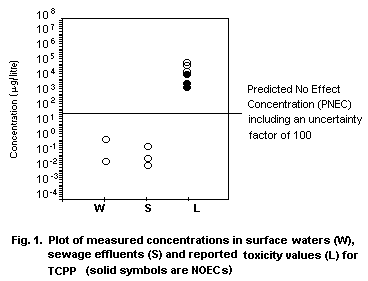
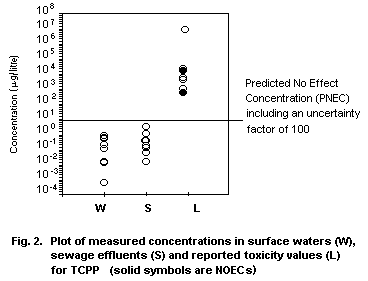 11. FURTHER RESEARCH
Further investigations of the tumorigenicity of TDCPP and the
mechanisms underlying it are needed.
TRIS(2-CHLOROETHYL) PHOSPHATE
A1. SUMMARY
Tris(2-chloroethyl) phosphate (TCEP) is a colourless to pale
yellow liquid, which is used as a flame retardant mainly in the
production of liquid unsaturated polyester resins. It is also used in
textile back-coating formulations, PVC compounds, cellulose ester
compounds and coatings. It is not volatile and its solubility in water
is 8 g/litre. It is soluble in most organic solvents. Its log
octanol/water partition coefficient is 1.7.
Analysis is by GC/MS. Concentration of TCEP from water prior to
analysis can be achieved using XAD resin or activated charcoal,
followed by extraction with various organic solvents.
TCEP is manufactured from phosphorus oxychloride and ethylene
oxide. Production and use of TCEP has been in decline since the 1980s.
Annual worldwide demand was less than 4000 tonnes in 1997.
TCEP is not readily biodegradable. Bioconcentration factors are
low and the half-life of elimination in fish is 0.7 h.
Traces of TCEP have been detected in river water, seawater,
drinking-water, sediment, biota (fish and shellfish) and in a few
samples of various foods.
In rats, oral doses of TCEP are absorbed and distributed around
the body to various organs, particularly the liver and kidney, but
also the brain. Metabolites in rats and mice include
bis(2-chloroethyl) carboxymethyl phosphate; bis(2-chloroethyl)
hydrogen phosphate; and bis(2-chloroethyl)-2-hydroxyethyl phosphate
glucuronide. Excretion is rapid, nearly complete and mainly via the
urine.
TCEP is of low to moderate acute oral toxicity (oral LD50 in the
rat = 1150 mg/kg body weight).
In repeat dose studies, TCEP caused adverse effects on the brain
(hippocampal lesions in rats), liver and kidneys. The NOEL was 22
mg/kg body weight per day and the LOEL 44 mg/kg body weight per day
for increased weights of liver and kidneys in rats.
TCEP is non-irritant to skin and eyes, but has not been tested
for sensitization potential.
TCEP is not teratogenic. It adversely affects the fertility of
male rats and mice.
No conclusions can be drawn about the mutagenicity of TCEP as
in vitro test results were inconsistent and an in vivo bone
marrow micronucleus test gave equivocal results.
TCEP causes benign and malignant tumours at various organ sites
in rats and mice.
A very high oral dose of TCEP caused some inhibition of plasma
cholinesterase and brain neuropathy target esterase in hens, but did
not cause delayed neurotoxicity. In rats, a high dose of TCEP caused
convulsions, brain lesions and impaired performance in a water maze.
The LC50/EC50 values for organisms in the environment range from
90 to 5000 mg/litre.
A2. IDENTITY, PHYSICAL AND CHEMICAL PROPERTIES, AND ANALYTICAL METHODS
A2.1 Identity
Chemical formula: C6H12Cl3O4P
Chemical structure:
11. FURTHER RESEARCH
Further investigations of the tumorigenicity of TDCPP and the
mechanisms underlying it are needed.
TRIS(2-CHLOROETHYL) PHOSPHATE
A1. SUMMARY
Tris(2-chloroethyl) phosphate (TCEP) is a colourless to pale
yellow liquid, which is used as a flame retardant mainly in the
production of liquid unsaturated polyester resins. It is also used in
textile back-coating formulations, PVC compounds, cellulose ester
compounds and coatings. It is not volatile and its solubility in water
is 8 g/litre. It is soluble in most organic solvents. Its log
octanol/water partition coefficient is 1.7.
Analysis is by GC/MS. Concentration of TCEP from water prior to
analysis can be achieved using XAD resin or activated charcoal,
followed by extraction with various organic solvents.
TCEP is manufactured from phosphorus oxychloride and ethylene
oxide. Production and use of TCEP has been in decline since the 1980s.
Annual worldwide demand was less than 4000 tonnes in 1997.
TCEP is not readily biodegradable. Bioconcentration factors are
low and the half-life of elimination in fish is 0.7 h.
Traces of TCEP have been detected in river water, seawater,
drinking-water, sediment, biota (fish and shellfish) and in a few
samples of various foods.
In rats, oral doses of TCEP are absorbed and distributed around
the body to various organs, particularly the liver and kidney, but
also the brain. Metabolites in rats and mice include
bis(2-chloroethyl) carboxymethyl phosphate; bis(2-chloroethyl)
hydrogen phosphate; and bis(2-chloroethyl)-2-hydroxyethyl phosphate
glucuronide. Excretion is rapid, nearly complete and mainly via the
urine.
TCEP is of low to moderate acute oral toxicity (oral LD50 in the
rat = 1150 mg/kg body weight).
In repeat dose studies, TCEP caused adverse effects on the brain
(hippocampal lesions in rats), liver and kidneys. The NOEL was 22
mg/kg body weight per day and the LOEL 44 mg/kg body weight per day
for increased weights of liver and kidneys in rats.
TCEP is non-irritant to skin and eyes, but has not been tested
for sensitization potential.
TCEP is not teratogenic. It adversely affects the fertility of
male rats and mice.
No conclusions can be drawn about the mutagenicity of TCEP as
in vitro test results were inconsistent and an in vivo bone
marrow micronucleus test gave equivocal results.
TCEP causes benign and malignant tumours at various organ sites
in rats and mice.
A very high oral dose of TCEP caused some inhibition of plasma
cholinesterase and brain neuropathy target esterase in hens, but did
not cause delayed neurotoxicity. In rats, a high dose of TCEP caused
convulsions, brain lesions and impaired performance in a water maze.
The LC50/EC50 values for organisms in the environment range from
90 to 5000 mg/litre.
A2. IDENTITY, PHYSICAL AND CHEMICAL PROPERTIES, AND ANALYTICAL METHODS
A2.1 Identity
Chemical formula: C6H12Cl3O4P
Chemical structure:
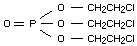 Relative molecular mass: 285.49
CAS name: tris(2-chloroethyl) phosphate
CAS registry number: 115-96-8
IUPAC name: phosphoric acid, tris(2-chloroethyl) ester
Synonyms: phosphoric acid, tris(2-chloroethyl) ester;
tris(beta chloroethyl) phosphate;
tris(chloroethyl) phosphate;
tris(2-chloroethyl) phosphate;
tris(2-chloroethyl) orthophosphate;
2-chloroethanol phosphate (3:1); ethanol,
2-chlorophosphate (3:1)
Trade names: Celanese Celluflex CEF; Celluflex CEF;
Disflamoll TCA; Fyrol CEF; Fyrol CF; Genomoll
P; Niax 3CF; Niax Flame retardant 3
(nospaa)CF; Hosta flam UP 810; Amgard TCEP;
Tolgard TCEP; Antiblaze TCEP; Levagard EP;
Nuogard TCEP
Common name: TCEP
A2.2 Physical and chemical properties
TCEP is a clear, colourless to pale yellow liquid with a slight
odour.
Boiling point: 351°C (at 760 mmHg)
Specific gravity: 1.425 at 20°C
Solubility: slightly soluble in water (8 g/litre at
20°C); soluble in aliphatic hydrocarbons,
polar organic solvents such as alcohols,
esters, ketones, and in aromatic hydrocarbons
and chlorinated hydrocarbons
Vapour pressure: < 10 mmHg at 25°C
Flash point: 202°C (Pensky Martin closed cup)
Stability: Rapid decomposition occurs above 220°C;
stable to short-term exposure at 150°C.
The products of thermal decomposition are
carbon monoxide, hydrogen chloride,
2-chloroethane and dichloroethane.
Hydrolytic stability decreases with
increasing temperature and pressure or
extreme pH.
Refractive index: 1.4721 at 20°C
Viscosity: 34 cP at 25°C
Henry's law constant: 3.29 × 10⁻⁶
n-Octanol/water
partition coefficient
(log Pow): 1.7
A2.3 Conversion factors
1 mg/m3 = 11.68 ppm
1 ppm = 0.0856 mg/m3
A2.4 Analytical methods
Selected methods for the analysis of TCEP are presented in Table
7.
Table 7. Methods for the analysis of tris(2-chloroethyl) phosphate
Sample matrix Sample preparation Assay procedurea Limit of References
detection
Air Sample on glass-fibre filter GC/NPD 0.04-0.1 ng Haraguchi et al. (1985)
or XAD-7 resin;
prefractionate on
silica gel column
Water Extract with dichloromethane; GC/MS 10 ng/litre Ishikawa et al. (1985a);
dry (anhydrous sodium sulfate); Ishikawa & Baba (1988)
concentrate
Extract with dichloromethane GC/FPD 2 ng/litre Burchill et al. (1983)
Drinking-water Adsorb on XAD resin cartridge; GC/NPD 0.3 ng/litreb LeBel et al. (1981)
extract with dichloromethane;
dry (anhydrous sodium sulfate);
concentrate
Adsorb on XAD resin cartridge; GC/MS and GC/NPD 0.1 ng/litre LeBel et al. (1987)
elute with acetone/ hexane; dry
(anhydrous sodium sulfate);
concentrate; extract (dichloromethane)
Sediment Extract with acetone; filter; add GC/MS 5 ng/g Ishikawa et al. (1985a)
filtrate to purified water, extract
with dichloromethane; dry (anhydrous
sodium sulfate); concentrate
Table 7. Methods for the analysis of tris(2-chloroethyl) phosphate
Sample matrix Sample preparation Assay procedurea Limit of References
detection
Seawater, fish,
sea sediment Extract with acetonitrile and GC/MS 1-5 ng/g Kenmotsu et al. (1980b)
dichloromethane; adsorb; extract
on activated charcoal column; (fish)
extract with sulfuric acid; wash
with sodium hydroxide; purify by
Florisil chromatography GC/FPD
a GC/NPD = gas chromatography/nitrogen phosphorus detection;
GC/MS = gas chromatography/ mass spectrometry;
GC/FPD = gas chromatography/flame photometric detection.
b By direct fortification, in the concentration range of 1 up to 100 ng/litre, a recovery of 90% was obtained.
A3. SOURCES OF HUMAN AND ENVIRONMENTAL EXPOSURE
A3.1 Natural occurrence
TCEP is not a natural product.
A3.2 Anthropogenic sources
A3.2.1 Production and processes
TCEP production and use has been in rapid decline since the 1980s
as its historic use in rigid and flexible polyurethane foams and
systems has been substituted by other flame retardants.
Global TCEP consumption peaked at over 9000 tonnes in 1989 but
had declined to below 4000 tonnes by 1997.
All commercial TCEP has been produced by the reaction of
phosphorus oxychloride with ethylene oxide followed by subsequent
purification (personal communication by EFRA to IPCS, 1998).
A3.2.2 Uses
Historically TCEP was used in polyurethane foams and systems,
mainly for rigid foam but with minor use in flexible polyurethane.
TCEP is currently mainly used in the production of liquid
unsaturated polyester resins. It is also used in textile back-coating
formulations, PVC compounds, cellulose ester compounds and coatings.
TCEP is not recommended by producers for use as a flame retardant
additive for use in textiles nor for use in block polyurethane foams
because of the probability of its decomposition (personal
communication by EFRA to IPCS, 1998).
A4. ENVIRONMENTAL TRANSPORT, DISTRIBUTION AND TRANSFORMATION
A4.1 Transport and distribution between media
The Henry's law constant has been estimated to be 3.29 × 10⁻⁶,
indicating very slow volatilization from surface waters. Estimates for
Koc range from 34 to 141, indicating low adsorption to soil or
aquatic sediment and, therefore, high mobility of TCEP. It can be
assumed that TCEP released to the environment would, therefore, be
predominantly in the water compartment (National Medical Library,
1998).
A4.2 Transformation
A4.2.1 Abiotic
TCEP hydrolyses slowly in water. Hydrolysis increases with
temperature and at the extremes of the pH range (personal
communication by Courtaulds to IPCS).
A4.2.2 Biotic
TCEP has been evaluated as "inherently biodegradable" in tests
conducted aerobically under OECD guidelines (ECB, 1995).
There was virtually no uptake of TCEP into killifish
(Oryzias latipes) or goldfish (Carassius auratus) over a 100-h
period and, consequently, little metabolism of the compound (Sasaki et
al., 1981).
A4.3 Bioaccumulation
Bioconcentration factors (BCF) of 1.4-2.2 were measured for
killifish (Oryzias latipes) exposed to TCEP concentrations of
0.3-8.5 mg/litre for 96 h. BCF values for the same species, exposed
for 5 or 11 days to concentrations of 12.7 or 2.3 mg/litre,
respectively, in continuous-flow systems, were 1.1 and 1.3,
respectively. The half-life for elimination in clean water following
continuous-flow exposure was 0.7 h (Sasaki et al., 1982).
Goldfish (Carassius auratus) exposed to TCEP at 4 mg/litre for
96 h under static conditions showed a BCF of 0.9 (Sasaki et al.,
1981).
A5. ENVIRONMENTAL LEVELS AND HUMAN EXPOSURE
A5.1 Environmental levels
A5.1.1 Air
No data on the levels of TCEP in air are available.
A5.1.2 Water
A5.1.2.1 Surface water
Water samples were analysed in 1975 and 1978 in Japan for TCEP.
In 1975, 8/40 water samples contained 0.1-0.34 µg TCEP/litre (limit of
determination, 0.013-0.1 µg/litre). In 1978 the values were 0.09
µg/litre (limit of determination, 0.01-1 µg/litre) for 3/114 water
samples (Environmental Agency Japan, 1983, 1987).
A 1980 survey around Kitakyushu, Japan, identified TCEP in 14/16
samples at levels in the range of 0.017-0.347 µg/litre in river water
and in 9/9 samples (0.014-0.060 µg/litre) of seawater (limit of
detection 10 ng/litre) (Ishikawa et al., 1985a). TCEP was also
detected in river water and sewage sludge from the Okayama area
(Kenmochi et al., 1981).
In Canadian rivers at 13 sites, TCEP was found at a mean
concentration of 0.0087 µg/litre. Water from the Great Lakes contained
TCEP at a mean concentration of 0.0017 µg/litre at 10 Canadian sites
(US EPA, 1988).
TCEP was detected in water from the River Rhine at Lobith in the
Netherlands at 1 µg/litre in 1979 (Zoeteman, 1980) and at levels from
0.16 to 0.35 µg/litre in 1986 (Brauch & Kühn, 1988). The compound was
also found in the Dutch river Waal in 1974 (Meijers & van der Leer,
1976). In Italy, Galassi (1991) reported concentration ranging from
< 10 up to 293 ng/litre at one river station (River Po) and two
marine stations in the Adriatic Sea in sample collected at three
periods in 1988. Barcelo et al. (1990) identified TCEP in a Spanish
river (Llobregat) in May and June 1988 at concentrations of 0.4 and
0.3 µg/litre, respectively.
TCEP was detected at levels of up to 5.5 µg/litre in raw water
samples from the River Trent, United Kingdom, in 1979-1980 (Burchill
et al., 1983).
A5.1.2.2 Drinking-water
In a study of drinking-water from surface supplies in Northern
Italy, Galassi et al. (1989) found TCEP at concentrations between 0.01
µg/litre and 0.04 µg/litre.
TCEP has also been identified in drinking-water from Canada;
0.0003-0.0092 µg/litre in six eastern Ontario treatment plants in 1978
(LeBel et al., 1981); 0.0002-0.052 µg/litre in 22 of 29 municipalities
in 1979 (Williams & LeBel, 1981); 0.0003-0.0138 µg/litre in 11 of 12
Great Lakes municipalities in 1980 (Williams et al., 1982); and
0.003-0.0096 µg/litre in 1982 and 1983 in four out of five Great Lakes
areas (LeBel et al., 1987).
Drinking-water was collected at six Great Lakes water treatment
plants from Eastern Ontario, Canada and analysed for TCEP. From each
plant two samples were taken. The concentrations ranged from 0.6 to
3.7 ng/litre as determined by GC/MS; determination by GC/NPD showed
concentrations of 3.0 up to 9.6 ng/litre (LeBel et al., 1987).
In the USA, 15 pooled drinking-water samples contained an average
of 0.0026 µg/litre (US EPA, 1988).
Drinking-water was collected in Japan over a period of 1 year and
a mean concentration of 0.0174 (range 0.002-0.060) µg/litre was found
(Adachi et al., 1984) (no details).
In a survey of infant and toddler dietary intake conducted in the
USA from October 1978 to September 1979, 1 sample of drinking-water
containing 0.3 µg TCEP/litre was identified (Gartrell et al., 1985a).
A5.1.2.3 Effluents
Industrial and domestic wastewater effluents in Kitakyushu,
Japan, contained detectable levels of TCEP (limit of determination,
0.03 µg/litre). Concentrations were not detectable (ND) to 0.087
µg/litre at 3 food factories, 0.043-0.74 µg/litre at 8 chemical
factories, ND to 14.0 µg/litre at 5 steel factories, ND to 11.0
µg/litre at 6 other industrial sites, and 0.5-1.2 µg/litre in effluent
(0.54 to 1.2 in influent) at 5 sewage treatment plants. Concentrations
in river water samples ranged from ND to 0.35 µg/litre (limit of
determination 0.01 µg/litre) (Ishikawa et al., 1985b).
A5.1.2.4 Leachates
Oman & Hynning (1993) using GC-MS (detection limit 1-10 µ/litre)
showed the presence of TCEP in one sample of a municipal landfill
leachate.
TCEP was identified at a mean concentration of 0.57 µg/litre in
two monitoring wells adjacent to a municipal wastewater infiltration
system at Fort Devens (near Boston), Massachusetts, USA (Bedient et
al., 1983).
A5.2 Sediment
Sediment samples were analysed for TCEP in 1975 and 1978 in
Japan. In 1975, 1/20 sediment samples contained 0.07 mg/kg (limit of
determination, 0.025 mg/kg). In 1978, 114 sediment samples did not
contain TCEP (limit of determination, 0.001-0.05 mg/kg) (Environmental
Agency Japan, 1983, 1987).
A survey conducted in Japan in 1977 and 1978 did not detect TCEP
in 99 samples of sediment from rivers, estuaries or the sea. In 1980,
however, 5/6 samples taken around Kitakyushu showed TCEP at
concentrations of 0.013-0.028 µg/kg sediment (limit of detection 5
ng/kg) (Ishikawa et al., 1985a).
A5.3 Biota and food
A5.3.1 Biota
Fish samples collected in Japan in 1975 and 1978 were analysed.
In 1975 20 fish samples did not contain TCEP (limit of determination
0.025 mg/kg), but in 1978 9/93 fish samples contained 0.005-0.14 mg/kg
(limit of determination 0.001-0.05 mg/kg) (Environmental Agency Japan,
1983, 1987).
TCEP was found at levels ranging between < 0.005 and 0.019 mg/kg
in fish and shellfish sampled in the Okayama area (Kenmochi et al.,
1981).
A5.3.2 Food
When fruit and fruit juices were sampled for TCEP from ten cities
in the USA in 1979, one contained 0.002 mg/kg (Gartrell et al.,
1985a,b). In oil and fat from toddler foods sampled from 1980 to 1982
in 13 different US cities, TCEP was found in one sample at a
concentration of 0.0385 mg/kg. Over the same period, samples of meat,
fish and poultry for adult consumption were collected in 27 different
US cities. TCEP was found in one sample at a concentration of 0.0067
mg/kg (Gartrell et al., 1986).
The daily intake of TCEP by infants and toddlers in 1978, 1979,
1980 and 1981/1982 was ND, 0.016, 0.004 and ND µg/kg body weight for
infants and ND, 0.009, ND and 0.028 µg/kg body weight for toddlers
(Gartrell et al., 1986).
In another survey of infant and toddler diets over the period
October 1979 to September 1980, TCEP was found in 1 sample of
composite fruit and fruit juice at a concentration of 0.2 µg/litre. It
was not detected in other foods tested (Gartrell et al., 1985b).
A6. KINETICS AND METABOLISM IN LABORATORY ANIMALS
A6.1 Mice
In a study on male B6C3F1 mice, more than 70% of an oral dose of
175 mg 14C-labelled TCEP/kg body weight was excreted in urine within
8 h. Identified urinary metabolites of TCEP in mice were
bis(2-chloroethyl) carboxymethyl phosphate, bis(2-chloroethyl)
hydrogen phosphate and bis(2-chloroethyl) 2-hydroxyethyl phosphate
glucuronide (Burka et al., 1991).
A6.2 Rats
Male and female Fischer-344 rats were gavaged with 14C-labelled
TCEP at 0, 175, 350 or 700 mg/kg body weight. Plasma concentrations of
TCEP and its metabolites in rats dosed at 175 mg/kg peaked by 30 min.
Concentrations were higher in females at the peak but by 4 h there
were no sex differences. TCEP concentrations in the hippocampus, the
site of the major lesions, were no higher than in other brain tissues
and there were no sex differences (Herr et al., 1991).
Minegishi et al. (1988) studied the distribution and excretion of
14C-labelled TCEP in 5-week-old male Wistar rats orally dosed with 50
µmol/kg body weight. The label was concentrated by various tissues,
especially the liver and kidney, during the first 6 h following
administration and then rapidly decreased. Most of the label was
excreted by 24 h and by 168 h less than 1% remained in tissues. Urine
accounted for 96%, faeces for 6%, and expired air for 2% of the label.
Rapid urinary excretion was confirmed by Burka et al. (1991), who
found 40% of the label in urine within 8 h after a dose of 175 mg 14C
TCEP/kg body weight in male and female rats. They identified the same
urinary metabolites as those listed above for mice.
Chapman et al. (1991) found that the hepatic microsomal fraction
from male rats, but not female rats, metabolized TCEP. Liver slices
and blood plasma, however, of both sexes metabolized the compound,
demonstrating that at least part of the metabolism is extramicrosomal.
Liver slices and microsomes from both male and female humans
metabolized TCEP, but plasma and whole blood did not.
Urinary elimination of TCEP in rats was not increased by 9 daily
doses of 175 mg/kg, indicating that TCEP is not capable of inducing
its own metabolism (Burka et al., 1991).
A7. EFFECTS ON LABORATORY MAMMALS AND IN VITRO TEST SYSTEMS
A7.1 Single exposure
The acute oral LD50 for TCEP was 1.23 g/kg body weight following
a 30-day observation period in rats. An oral LD50 of 0.5 g/kg body
weight was found in a second study with male rats. Treated rats died
within 24 h and showed spasmodic contractions and acute depressions.
The LD50 values for female rats were reported to be 0.79, 0.50 and
0.43 g/kg body weight with three different lots of the chemical
(Ulsamer et al., 1980). Smyth et al. (1951) reported an LD50 of 1.41
g/kg body weight in rats.
In a study conducted according to OECD Test Guidelines 401,
groups of 5 male and 5 female Sprague-Dawley rats received 800, 1000
or 1260 mg/kg body weight by oral gavage. One female receiving 1000
mg/kg died on day 2 and 4/5 males and 4/5 females receiving 1260 mg/kg
body weight died by day 4. The LD50 was calculated to be 1150 mg/kg
body weight. Clinical signs of toxicity included piloerection and
increased salivation amongst all animals; hunched posture, abnormal
gait, lethargy, laboured respiration, ptosis and pale extremities were
observed amongst all animals receiving 1000 and 1260 mg/kg body
weight. No clinical signs of toxicity were observed in surviving
animals from day 4 onwards. No microscopic pathology abnormalities
were seen amongst decedent animals or those killed on completion of
the 14-day observation period (Kynoch & Denton, 1990)
In an earlier study conducted at the same location, male and
female CD rats (5 animals per group) received 2.5, 3.2, 4.0 and 5.0
g/kg body weight by oral gavage. Signs of reaction to treatment
observed in all animals within one half-hour of dosing were
piloerection, hunched posture, abnormal gait and increased salivation.
The calculated LD50 was 3.6 g/kg body weight for males and females
combined (Gardner, 1987).
A7.2 Short-term exposure
A7.2.1 Mice
Groups of five B6C3F1 mice of each sex were gavaged with 0, 44,
88, 175, 350 or 700 mg TCEP/kg body weight in corn oil 5 days/week for
2 weeks. Mice given 350 and 700 mg/kg exhibited ataxia and convulsive
movements during the first 3 days of dosing. No changes of body weight
gain, absolute and relative organ weight or histopathological
abnormalities were observed (US NTP, 1990; Matthews et al., 1990).
A7.2.2 Rats
A 30-day feeding study, in which up to 0.5% of TCEP was given in
the diet to male and female rats, resulted in no adverse effects on
growth, appearance and behaviour, liver and kidney weights or changes
in pathological examinations of survivors (Ulsamer et al., 1980).
Groups of five rats of each sex of the strain F-344/N were
administered by gavage 0, 22, 44, 88, 175 or 350 mg TCEP/kg body
weight 5 days/week for 2 weeks. No difference in body weight gain was
found in the treated animals versus controls. The mean absolute and
relative kidney weights of the males given 175 and 350 mg/kg body
weight were increased (10% and 12%, respectively). Liver weights of
the high-dose females were also significantly increased (17%). Serum
cholinesterase activity was not reduced in males, but was decreased by
18% and 20% in female at 175 and 350 mg/kg body weight. No gross or
histopathological abnormalities were found (US NTP, 1990; Matthews et
al., 1990).
A7.3 Long-term exposure
A7.3.1 Mice
Groups of 10 male and 10 female B6C3F1 mice (9-10 weeks old)
were administered by gavage 0, 44, 88, 175, 350 or 700 TCEP mg/kg body
weight in corn oil 5 days/week for 16 weeks. During week 4, the two
highest doses were incorrectly prepared and administered for the first
3 days of this week. The mice of the two highest dose levels received
double the target levels. No difference in body weight gain or serum
cholinesterase activity was found between the treated groups and the
control group. The absolute liver weights were significantly increased
(P <0.01) in females receiving 175, 375 and 700 mg/kg body weight
(14%, 20% and 13%, respectively) and in males receiving 700 mg/kg
(5%). The liver-to-body weight ratios, however, were not increased.
Male mice in the 175, 350 and 700 mg/kg body weight groups had
significantly (P <0.01) reduced absolute kidney weights (5%, 10%
and 20%, respectively). The kidney-to-body weight ratio, however, was
not affected. No gross abnormalities were observed, but epithelial
cells with enlarged nuclei (mild cytomegaly and karyomegaly) were
observed in the renal tubules in all animals given 700 mg/kg body
weight. The lesions were observed primarily in the proximal convoluted
tubules of the inner cortex and outer strip of the outer medulla and
to a lesser extent in the straight portion of the loops of Henle in
the medulla (US NTP, 1990; Matthews et al., 1990).
A7.3.2 Rats
Groups of 10 male and 10 female F-344/N rats (8-9 weeks old) were
administered 0, 22, 44, 88, 175 or 350 TCEP mg/kg body weight in corn
oil by gavage, 5 days/week for 16 weeks (females) and 18 weeks
(males). The animals with the two highest dose levels received a
double dose for 3 days in week 4. Consequently two females of each
dose level died and a few other animals showed signs of intoxication;
ataxia, excessive salivation, gasping and convulsions. During the
16-week exposure additional animals died in these two groups; the
deaths of one male of the 175 mg/kg body weight group and 4 males and
3 females of the 350 mg/kg body weight group were attributed to
chemical toxicity. Body weight was comparable with the controls. The
relative liver and kidney weights were significantly (P < 0.01)
increased in the high-dose males and in females receiving 44 to 350
mg/kg body weight. In males given 350 mg/kg per day the increases in
relative liver and kidney weights were 22% and 26%, respectively. In
females the increases in relative liver weight were 13%, 13%, 19% and
50% in the 44, 88, 175 and 350 mg/kg body weight groups, respectively;
the increases in relative kidney weight were 8%, 11%, 11% and 22% in
the 44, 88, 175 and 350 mg/kg groups, respectively.
Cholinesterase activity determined in serum at necropsy was 75%
and 59% of the control value at 175 and 350 mg/kg body weight,
respectively, in female rats, but was not reduced in males. No gross
lesions were observed, but necrosis of neurons, mainly of the
dorsomedial portion of the pyramidal row of the hippocampus, was
observed in 10/10 females and 2/10 males of the 350 mg/kg group and in
8/10 females of the 175 mg/kg group. Mineral deposits were present in
the affected areas of the brain. In the high-dose females, neuronal
necrosis was seen in the thalamus. Based on the increases in relative
liver and kidney weights in females, the NOEL in this study was 22
mg/kg per day and the LOEL 44 mg/kg per day (US NTP, 1990; Matthews et
al., 1990)
A7.4 Skin and eye irritation or sensitization
A7.4.1 Skin irritation
In a study conducted according to modern protocol standards, 0.5
ml TCEP was applied to the skin of three New Zealand white rabbits
under a semi-occlusive dressing for 4 h. Slight erythema (grade 1) was
observed in each animal on day 1 only. Thereafter there were no signs
of skin irritation (Liggett & McRae, 1991c).
A7.4.2 Eye irritation
In a study conducted according to modern protocol standards, 0.1
ml TCEP was instilled into the eye of each of 3 New Zealand white
rabbits (Liggett & McRae, 1991d). Slight conjunctival redness (grade
1) was observed in each animal on day 1 and in one animal on day 2.
Thereafter, there were no signs of eye irritation.
A7.4.3 Sensitization
No data on the possible sensitizing effects of TCEP are
available.
A7.5 Reproductive toxicity, embryotoxicity and teratogenicity
A7.5.1 Developmental toxicity
Development toxicity was tested by the Chernoff/Kavlock
preliminary development toxicity test by treating pregnant CD-1 mice
on gestation days 6-15 at an overtly maternally toxic dose of TCEP.
The dose used was 940 mg/kg per day. The depression in maternal body
weight gain was 12%. There were no significant adverse effects on
maternal mortality, pup survival rate, litter size, weight gain of
pups, or birth weight of pups (Hardin, 1987; Hardin et al., 1987).
Wistar rats were given by gavage 50, 100 or 200 mg TCEP/kg body
weight suspended in olive oil on days 7-15 of gestation. No change in
maternal body weight gain, food consumption or general appearance was
found in the low- and mid-dose groups. In the high-dose group,
maternal food consumption was markedly suppressed; piloerection and
general weakness occurred and 7/30 dams died. On day 20 of gestation,
no increase in fetal death or malformations attributable to treatment
were observed in any group. There was some increase (not statistically
significant) in the incidence of supernumerary cervical and lumbar
ribs in the high-dose group (this end-point is considered a variation
not a malformation). Postnatal examination revealed normal development
in the offspring of all groups; no abnormalities on morphological
examination or in functional behaviour tests (open field, water maze,
rota rod, inclined plane test, pain reflex or Preyer's reflex) were
found (Kawashima et al., 1983a,b).
A7.5.2 Fertility
In a study in B6C3F1 mice, animals were dosed by gavage at dose
levels of 44, 175 and 700 mg/kg body weight for 13 weeks. In the
males, no effects were noted regarding body weight, absolute and
relative cauda weights, relative epididymis weight, motility or sperm
concentration. The absolute epididymis weight and absolute and
relative testes weights were decreased and an increase in the number
of sperm with abnormal morphology were noted. In the females, no
increase in estrous cycle length was noted in any of the treatment
groups (Morrissey et al., 1988).
TCEP was tested for its effects on fertility and reproduction in
Swiss CD-1 mice according to a continuous breeding protocol. Animals
were exposed via gavage to doses of 175, 350 and 700 mg/kg body
weight. Males and females (F0 generation) were exposed daily for 7
days pre-cohabitation and 98 days cohabitation periods. In the F0
generation, TCEP decreased the number of litters per pair and the
number of live pups per litter. Both sexes were affected, but the
males were relatively more sensitive. All sperm end-points
(concentration, motility and percentage of abnormal sperm) were
adversely affected. Due to poor fertility in the 700 mg/kg body weight
per day group, only one F0 pair delivered a litter. None of these
pups survived to postnatal day 4. The data indicated reduced fertility
due to TCEP exposure at doses of 175 mg/kg body weight or more (Gulati
et al., 1991).
In a study on F-344 rats, animals were dosed by gavage at levels
of 22, 88 and 175 mg/kg body weight for 13 weeks. In the males no
effects were noted on body weight, absolute and relative cauda
weights, absolute and relative epididymal weights, absolute and
relative testes weights, sperm concentration, and number of abnormal
sperm. However, sperm motility was reduced. In the females, no
increase in estrous cycle length was noted in any of the treatment
groups (Morrissey et al., 1988).
In an inhalation study using whole body exposure, male rats
(strain and group size not specified) were continuously exposed to 0.5
or 1.5 mg TCEP/m3 for 4 months. Testicular toxicity was seen at both
dose levels, with most severe effects at the highest dose. There were
decreased sperm counts, decreased sperm mortility and abnormal sperm
morphology. Histology of the testes showed an increased number of
spermatogonia but decreased numbers of sperm in the later stages of
development. When the treated males were mated, there was decreased
fertility at the 1.5 mg/m3 dose, with increased pre- and
post-implantation loss, and litter sizes were decreased (Shepel'skaya
& Dyshinevich, 1981).
A7.6 Mutagenicity and related end-points
A7.6.1 In vitro studies
TCEP was found not to be mutagenic in Salmonella typhimurium
strains TA1535, TA1537, TA1538, TA98 and TA100 at dose levels up to 5
mg/plate, both with and without metabolic activation with Aroclor
1254-induced rat liver S9 (Simmon et al., 1977).
Negative results were obtained when TCEP was tested at doses of
3.3, 10, 33, 100 and 333 µg/plate in liquid pre-incubation assays
employing Salmonella typhimurium TA1535, TA1537, TA98 and TA100,
both with and without a metabolic system from Aroclor 1254-induced rat
liver or Syrian hamster liver S9 (Haworth et al., 1983).
In contrast, TCEP at dose levels of 285, 755, 2850 and 8550
µg/plate produced a dose-related increase in mutations (with a maximum
7.6-fold increase of revertants over the control at 2850 µg/plate) in
Salmonella typhimurium TA1535 in the presence but not in the absence
of metabolic system from Kanechlor 500-induced Wistar rat liver S9.
The same doses produced a dose-related increase in mutations in TA100
with a maximum 1.8-fold increase in revertants at 2850 µg/plate
(Nakamura et al., 1979).
TCEP (5 to 1600 µg/ml) was tested for CA and SCE in Chinese
hamster ovary cells both with and without an exogenous metabolism
system from liver of Sprague-Dawley rats induced by Aroclor 1254. TCEP
did not induce CAs. The results of the SCE test were regarded as
equivocal because a positive response was seen only in one trial with
S9 fraction at 500 and 1600 µg/ml but was not observed in a repeated
trial under the same conditions (Galloway et al., 1987).
The frequency of 6-thioguanine-resistant mutants using V79 cells
without S9 was determined at 0, 500, 1000 and 2000 µg/ml. TCEP did not
significantly increase the number of 6-thioguanine-resistant mutants
(Sala et al., 1982).
TCEP was tested for SCEs in V79 cells in two separate experiments
at concentration levels of 343, 490, 700 and 1000 µg/ml (exp. I) and
2000 and 3000 (exp. II). In the first experiment, a statistical
increase in the number of SCEs was noted at 700 and 1000 µg/ml with S9
(3-methylcholanthrene-induced rat liver) and at 700 µg/ml without S9
(1000 µg/ml was not tested without S9). In the second experiment, TCEP
was only tested without S9 and was positive at both concentrations
tested. However, the 3000 µg/ml concentration caused cytotoxicity
(Sala et al., 1982).
In the presence of S9 from livers of Wistar rats induced with
methylcholanthrene, TCEP at 900 and 1500 µg/ml gave a negative result
in a transformation assay using C3H10T1/2 cells.
A high level of transformation of Syrian hamster embryo cells was
observed with TCEP at concentrations of 400 and 500 µg/ml. The two
highest dose concentrations (600 and 800 µg/ml) were toxic and no
transformation was seen at these concentrations (Sala et al., 1982).
TCEP caused a dose-related (343-1000 µg/ml) increase in the
incidence of sister chromatid exchange in the Chinese hamster V79 cell
line, but doses from 500 to 2000 µg/ml did not induce mutations at the
HPRT locus in the same cell line (Sala et al., 1982).
A7.6.2 In vivo studies
TCEP was administered intraperitoneally at dose levels of 63.5,
125, 250 mg/kg body weight to groups of male and female Chinese
hamsters. There was no clear dose-dependent increase in the number of
micronuclei isolated from bone marrow cells. However, in some of the
dose groups an approximate doubling in the number of micronuclei was
noted (females at 62.5 and 125 mg/kg body weight, and males at 250
mg/kg body weight) (Sala et al., 1982).
TCEP gave a negative response in the w/w+ bioassay for somatic
cell damage in Drosophila melanogaster (Vogel & Nivard, 1993).
A7.7 Carcinogenicity
A7.7.1 Oral
A7.7.1.1 Mice
Groups of 50 male and 50 female Slc:ddy mice received
approximately 0, 12, 60, 300 or 1500 mg/kg body weight per day by
dietary administration (assuming 30 g body weight and 3 g/day food
consumption) for 18 months (Takada et al., 1989). Distension of the
abdomen was noted in males receiving 1500 mg/kg per day from week 65.
Reduced survival was noted in males and females receiving 1500 mg/kg
per day (approximately 40% survival compared to around 65% survival in
controls). A marked reduction in body weight gain was noted in males
and females receiving 1500 mg/kg per day (approximately 60% lower than
the control value). Other groups were not adversely affected, and
there were no changes in food consumption. There were no significant
changes in haematological parameters recorded at termination.
Histologically, hyperplasia, hypertrophy and karyomegaly were observed
in the kidney of all treated animals although the incidence and
severity of effects in the kidneys was unclear. In addition, cysts of
the kidneys, necrosis and interstitial fibrosis were reported only
amongst animals given 1500 mg/kg per day, although no further details
were available. An increased incidence of renal adenomas was noted in
males (0/50, 0/49, 0/49, 2/49, 9/50) and females (0/49, 0/49, 0/50,
0/49, 2/50). In addition, there was an increased incidence of renal
carcinomas in males (2/50, 0/49, 2/49, 3/47, 32/50) and females (1/50
at 1500 mg/kg per day and zero in all other groups). In the liver,
there was an increased incidence of adenomas in males and females
(3/50, 4/49, 3/49, 10/47, 16/50 in males, and 2/50 in females at 1500
mg/kg per day with zero in all other groups). In addition, there was a
slight, but not dose-related, increase in the incidence of liver
carcinomas in males (1/50, 1/49, 4/49, 2/47, 3/50). A slight increase
in the incidence of forestomach papillomas and carcinomas was reported
in treated males and females.
Groups of 60 males and 60 females B6C3F1 mice received 0, 175 or
350 mg/kg 5 days/week by gavage for 103 weeks (US NTP, 1990). An
interim sacrifice was performed on groups of 10 males and 10 females.
At 66 weeks, there were no effects seen on body weight gain,
haematology or clinical chemistry. At 103 weeks there were no adverse
effects on survival or body weight gain. Non-neoplastic lesions were
seen in the kidney; karyomegaly in the proximal convoluted tubules
(2/50, 16/50 and 39/50 in males and 0/50, 5/49 and 44/50 in females).
In the liver, an increased incidence of eosinophilic foci was observed
in males (0/50, 3/50, 8/50). Neoplastic lesions in the kidney were
observed: adenoma, 1/50, 0/50 and 1/50 in males and 0/50, 1/49 and
0/50 in females; adenocarcinoma, 0/50, 0/50 and 1/50 in males. In the
liver of males an increased incidence of adenomas was seen: 20/50,
18/50 and 28/50. In addition, there was a slight increase in the
incidence of Harderian gland adenomas in females.
A7.7.1.2 Rats
Groups of 60 males and 60 females F-344 rats received 0, 44 or 88
mg/kg 5 days/week by gavage for 103 weeks (US NTP, 1990). An interim
sacrifice was performed on groups of 10 males and 10 females. At 66
weeks, there were no adverse effects seen on body weight gain or
haematology. There were unquantified decreases in serum alkaline
phosphatase and alanine aminotransferase in females receiving 88 mg/kg
per day. Slight increases in liver and kidney weights were recorded in
males at 88 mg/kg per day (14% and 20%, respectively, greater than
controls). Also observed at this time point were renal tubule adenomas
in one male receiving 88 mg/kg per day and local necrosis and
accumulation of inflammatory cells in the cerebrum and thalamus of the
brains of 3/10 females given 88 mg/kg per day.
At 103 weeks there were no adverse effects on body weight gain
and no clinical signs of toxicity. Reduced survival was noted in males
and females at 88 mg/kg per day (males 51% survival compared to 78% in
controls; females 37% compared to 66% in controls). No organ weight
data were presented for this time point. Non-neoplastic findings in
the kidneys were hyperplasia: 0/50, 2/50 and 24/50 in males and 0/50,
3/50, 16/50 in females.
A marked increase in the incidence of degenerative lesions of the
brain stem and cerebrum (thalamus, hypothalamus and basal ganglia)
(such as gliosis, haemorrhage, necrosis and mineralization) was noted
at 88 mg/kg per day (occurring in approximately 40% of females at 88
mg/kg per day compared to 2% of controls).
Neoplastic lesions were observed in the kidney; the frequency of
adenomas was 1/50, 5/50 and 24/50 in males and 0/50, 2/50, 5/50 in
females. In the brain, benign granular cell tumours were observed in
3/50 males at 88 mg/kg per day only. There were no treatment-related
increases in the incidence of tumours in the brain of females. A
slight increase in the incidence of thyroid follicular adenomas was
noted in males (1/50, 2/48, 3/50), and of carcinomas in males and
females (0/50, 0/48, 2/50 in males; 0/50, 2/50, 3/50 in females).
There were increased occurrences of mononuclear cell leukaemia in
males (5/50, 14/50, 13/50) and in females (14/50, 16/50, 20/50). These
occurrences, however, were within the range of historical controls
(2-44%).
A7.7.2 Dermal
A7.7.2.1 Mice
There was no significant increase in tumours in female Slc/ddy
mice whose shaved skin was treated twice weekly for 79 weeks with
ethanol solutions containing 5% or 50% of TCEP. However, the amount of
the solution applied to skin was not reported (Takada et al., 1991).
An in vivo short-term skin test for sebaceous gland suppression
and the induction of epidermal hyperplasia was carried out. Groups of
25 Swiss mice (45 days of age) received dorsal applications on days 1,
3 and 5 of TCEP at 0, 31.9, 53.2 and 74.5 mg (total dose applied in
three applications). Benzo (a)pyrene was used as positive control.
TCEP did not suppress the sebaceous gland and did not induce
hyperplasia (Sala et al., 1982).
Groups of Swiss mice were used to test TCEP for skin initiation
and/or promoter activity. TCEP showed no significant complete
carcinogenic, initiating or promoter activity on mouse skin (Sala et
al., 1982). A working group of IARC (1990) noted that the promoting
activity and complete carcinogenicity of TCEP in the Sala et al.
(1982) study could not be evaluated because of the lack of control.
A7.8 Other special studies
A7.8.1 Neurotoxicity
The neurotoxicity effects of TCEP were evaluated in adult (12-14
months old) White Leghorn hens given 14 200 mg/kg body weight of the
chemical in corn oil followed 3 weeks later by a second dose. Four out
of 18 treated hens died within 6 weeks of the first dose. Egg
production ceased, body weights fell and feather loss began shortly
after the first treatment. No microscopic changes in brain, spinal
cord or sciatic nerve were found after the treatment. In a separate
group of hens, the activities of brain neuropathy target esterase and
plasma cholinesterase were determined 24 h after the first dose of
TCEP. Plasma cholinesterase activity was inhibited by 87% and brain
neuropathy target esterase by 30%. No delayed neurotoxicity was
observed (Sprague et al., 1981).
White Leghorn hens (12 months old) were orally exposed to 420 mg
TECP/kg body weight per day for 5 consecutive days. After 21 days of
observation there was no signs of neurotoxicity as compared with TDCP
(positive control) which induced an inability to walk, hypertension,
ataxia and prostration (Bullock & Kamienski, 1972).
Female Fischer-344 rats gavaged with 275 mg TCEP/kg body weight
convulsed within 60-90 min and had extensive loss of CA1 hippocampal
pyramidal cells when examined after 7 days. When convulsions were
controlled, the histological lesions were diminished, indicating
possibly that the lesions were due to convulsions and not directly due
to TCEP. In a second study, rats gavaged with 275 mg/kg TCEP body
weight had impaired acquisition of a reference memory task in a water
maze when trained and tested starting 3 weeks following exposure,
suggesting long-term impairment of some brain functions (Tilson et
al., 1990).
A8. EFFECTS ON HUMANS
No data concerning the effects of TCEP on humans are available.
A9. EFFECTS ON OTHER ORGANISMS IN THE LABORATORY AND FIELD
A9.1 Microorganisms
The toxicity of TCEP to aerobic bacteria (Pseudomonas putida)
and anaerobic bacterial cultures from sewage sludge is very low with
LC50 values in excess of 5000 mg/litre (Bayer, 1986) and 1000
mg/litre (Hoechst, 1985), respectively.
A9.2 Aquatic organisms
A9.2.1 Algae
The EC50 for growth of Tetrahymena pyriformis was reported to
be 126 mg/litre (Yoshioka et al., 1986)
A9.2.2 Invertebrates
Yoshioka et al. (1986) reported an LC50 of 1000 mg/litre for a
daphnid (Moina macropoda) and an LC50 of 158 mg/litre for a
flatworm (Dugesia japonica).
A9.2.3 Fish
Sasaki et al. (1981) reported 96-h LC50 values for killifish
(Oryzias latipes) and goldfish (Carassius auratus) of 210 and 90
mg/litre, respectively. Killifish exposed to TCEP at 200 mg/litre for
72 h showed spinal deformities. Yoshioka et al. (1986) reported an
LC50 for the killifish (Oryzias latipes) of 251 mg/litre.
Unpublished studies gave the following acute toxicity values for
fish: 48-h LC50 for killifish (Oryzias latipes) of 300 mg/litre
(MITI, 1992); and 96-h LC50 for rainbow trout
(Oncorhynchus mykiss) of 249 mg/litre (NOEC, 50 mg/litre) (Akzo,
1990).
A10. EVALUATION
Traces of TCEP have been found in food items and drinking-water.
The low volatility of TCEP precludes significant exposure from air.
Exposure to TCEP from these sources will not present an acute hazard
to the general population. The genetic toxicity data are ambiguous.
TCEP has been found to be carcinogenic in rats and mice. The mechanism
of carcinogenicity has not been elucidated. However, because of the
low exposure, the risk of adverse health effects from TCEP to the
general population is expected to be very low.
TCEP has been tested at three trophic levels for acute and two
trophic levels for chronic exposure of organisms relevant to the
environment. The lowest reported chronic NOEC is more than 3 orders of
magnitude higher than the highest reported concentration in sewage
effluent and surface waters (Fig. 3). There will be no adverse effects
on the environment from the use of TCEP.
Relative molecular mass: 285.49
CAS name: tris(2-chloroethyl) phosphate
CAS registry number: 115-96-8
IUPAC name: phosphoric acid, tris(2-chloroethyl) ester
Synonyms: phosphoric acid, tris(2-chloroethyl) ester;
tris(beta chloroethyl) phosphate;
tris(chloroethyl) phosphate;
tris(2-chloroethyl) phosphate;
tris(2-chloroethyl) orthophosphate;
2-chloroethanol phosphate (3:1); ethanol,
2-chlorophosphate (3:1)
Trade names: Celanese Celluflex CEF; Celluflex CEF;
Disflamoll TCA; Fyrol CEF; Fyrol CF; Genomoll
P; Niax 3CF; Niax Flame retardant 3
(nospaa)CF; Hosta flam UP 810; Amgard TCEP;
Tolgard TCEP; Antiblaze TCEP; Levagard EP;
Nuogard TCEP
Common name: TCEP
A2.2 Physical and chemical properties
TCEP is a clear, colourless to pale yellow liquid with a slight
odour.
Boiling point: 351°C (at 760 mmHg)
Specific gravity: 1.425 at 20°C
Solubility: slightly soluble in water (8 g/litre at
20°C); soluble in aliphatic hydrocarbons,
polar organic solvents such as alcohols,
esters, ketones, and in aromatic hydrocarbons
and chlorinated hydrocarbons
Vapour pressure: < 10 mmHg at 25°C
Flash point: 202°C (Pensky Martin closed cup)
Stability: Rapid decomposition occurs above 220°C;
stable to short-term exposure at 150°C.
The products of thermal decomposition are
carbon monoxide, hydrogen chloride,
2-chloroethane and dichloroethane.
Hydrolytic stability decreases with
increasing temperature and pressure or
extreme pH.
Refractive index: 1.4721 at 20°C
Viscosity: 34 cP at 25°C
Henry's law constant: 3.29 × 10⁻⁶
n-Octanol/water
partition coefficient
(log Pow): 1.7
A2.3 Conversion factors
1 mg/m3 = 11.68 ppm
1 ppm = 0.0856 mg/m3
A2.4 Analytical methods
Selected methods for the analysis of TCEP are presented in Table
7.
Table 7. Methods for the analysis of tris(2-chloroethyl) phosphate
Sample matrix Sample preparation Assay procedurea Limit of References
detection
Air Sample on glass-fibre filter GC/NPD 0.04-0.1 ng Haraguchi et al. (1985)
or XAD-7 resin;
prefractionate on
silica gel column
Water Extract with dichloromethane; GC/MS 10 ng/litre Ishikawa et al. (1985a);
dry (anhydrous sodium sulfate); Ishikawa & Baba (1988)
concentrate
Extract with dichloromethane GC/FPD 2 ng/litre Burchill et al. (1983)
Drinking-water Adsorb on XAD resin cartridge; GC/NPD 0.3 ng/litreb LeBel et al. (1981)
extract with dichloromethane;
dry (anhydrous sodium sulfate);
concentrate
Adsorb on XAD resin cartridge; GC/MS and GC/NPD 0.1 ng/litre LeBel et al. (1987)
elute with acetone/ hexane; dry
(anhydrous sodium sulfate);
concentrate; extract (dichloromethane)
Sediment Extract with acetone; filter; add GC/MS 5 ng/g Ishikawa et al. (1985a)
filtrate to purified water, extract
with dichloromethane; dry (anhydrous
sodium sulfate); concentrate
Table 7. Methods for the analysis of tris(2-chloroethyl) phosphate
Sample matrix Sample preparation Assay procedurea Limit of References
detection
Seawater, fish,
sea sediment Extract with acetonitrile and GC/MS 1-5 ng/g Kenmotsu et al. (1980b)
dichloromethane; adsorb; extract
on activated charcoal column; (fish)
extract with sulfuric acid; wash
with sodium hydroxide; purify by
Florisil chromatography GC/FPD
a GC/NPD = gas chromatography/nitrogen phosphorus detection;
GC/MS = gas chromatography/ mass spectrometry;
GC/FPD = gas chromatography/flame photometric detection.
b By direct fortification, in the concentration range of 1 up to 100 ng/litre, a recovery of 90% was obtained.
A3. SOURCES OF HUMAN AND ENVIRONMENTAL EXPOSURE
A3.1 Natural occurrence
TCEP is not a natural product.
A3.2 Anthropogenic sources
A3.2.1 Production and processes
TCEP production and use has been in rapid decline since the 1980s
as its historic use in rigid and flexible polyurethane foams and
systems has been substituted by other flame retardants.
Global TCEP consumption peaked at over 9000 tonnes in 1989 but
had declined to below 4000 tonnes by 1997.
All commercial TCEP has been produced by the reaction of
phosphorus oxychloride with ethylene oxide followed by subsequent
purification (personal communication by EFRA to IPCS, 1998).
A3.2.2 Uses
Historically TCEP was used in polyurethane foams and systems,
mainly for rigid foam but with minor use in flexible polyurethane.
TCEP is currently mainly used in the production of liquid
unsaturated polyester resins. It is also used in textile back-coating
formulations, PVC compounds, cellulose ester compounds and coatings.
TCEP is not recommended by producers for use as a flame retardant
additive for use in textiles nor for use in block polyurethane foams
because of the probability of its decomposition (personal
communication by EFRA to IPCS, 1998).
A4. ENVIRONMENTAL TRANSPORT, DISTRIBUTION AND TRANSFORMATION
A4.1 Transport and distribution between media
The Henry's law constant has been estimated to be 3.29 × 10⁻⁶,
indicating very slow volatilization from surface waters. Estimates for
Koc range from 34 to 141, indicating low adsorption to soil or
aquatic sediment and, therefore, high mobility of TCEP. It can be
assumed that TCEP released to the environment would, therefore, be
predominantly in the water compartment (National Medical Library,
1998).
A4.2 Transformation
A4.2.1 Abiotic
TCEP hydrolyses slowly in water. Hydrolysis increases with
temperature and at the extremes of the pH range (personal
communication by Courtaulds to IPCS).
A4.2.2 Biotic
TCEP has been evaluated as "inherently biodegradable" in tests
conducted aerobically under OECD guidelines (ECB, 1995).
There was virtually no uptake of TCEP into killifish
(Oryzias latipes) or goldfish (Carassius auratus) over a 100-h
period and, consequently, little metabolism of the compound (Sasaki et
al., 1981).
A4.3 Bioaccumulation
Bioconcentration factors (BCF) of 1.4-2.2 were measured for
killifish (Oryzias latipes) exposed to TCEP concentrations of
0.3-8.5 mg/litre for 96 h. BCF values for the same species, exposed
for 5 or 11 days to concentrations of 12.7 or 2.3 mg/litre,
respectively, in continuous-flow systems, were 1.1 and 1.3,
respectively. The half-life for elimination in clean water following
continuous-flow exposure was 0.7 h (Sasaki et al., 1982).
Goldfish (Carassius auratus) exposed to TCEP at 4 mg/litre for
96 h under static conditions showed a BCF of 0.9 (Sasaki et al.,
1981).
A5. ENVIRONMENTAL LEVELS AND HUMAN EXPOSURE
A5.1 Environmental levels
A5.1.1 Air
No data on the levels of TCEP in air are available.
A5.1.2 Water
A5.1.2.1 Surface water
Water samples were analysed in 1975 and 1978 in Japan for TCEP.
In 1975, 8/40 water samples contained 0.1-0.34 µg TCEP/litre (limit of
determination, 0.013-0.1 µg/litre). In 1978 the values were 0.09
µg/litre (limit of determination, 0.01-1 µg/litre) for 3/114 water
samples (Environmental Agency Japan, 1983, 1987).
A 1980 survey around Kitakyushu, Japan, identified TCEP in 14/16
samples at levels in the range of 0.017-0.347 µg/litre in river water
and in 9/9 samples (0.014-0.060 µg/litre) of seawater (limit of
detection 10 ng/litre) (Ishikawa et al., 1985a). TCEP was also
detected in river water and sewage sludge from the Okayama area
(Kenmochi et al., 1981).
In Canadian rivers at 13 sites, TCEP was found at a mean
concentration of 0.0087 µg/litre. Water from the Great Lakes contained
TCEP at a mean concentration of 0.0017 µg/litre at 10 Canadian sites
(US EPA, 1988).
TCEP was detected in water from the River Rhine at Lobith in the
Netherlands at 1 µg/litre in 1979 (Zoeteman, 1980) and at levels from
0.16 to 0.35 µg/litre in 1986 (Brauch & Kühn, 1988). The compound was
also found in the Dutch river Waal in 1974 (Meijers & van der Leer,
1976). In Italy, Galassi (1991) reported concentration ranging from
< 10 up to 293 ng/litre at one river station (River Po) and two
marine stations in the Adriatic Sea in sample collected at three
periods in 1988. Barcelo et al. (1990) identified TCEP in a Spanish
river (Llobregat) in May and June 1988 at concentrations of 0.4 and
0.3 µg/litre, respectively.
TCEP was detected at levels of up to 5.5 µg/litre in raw water
samples from the River Trent, United Kingdom, in 1979-1980 (Burchill
et al., 1983).
A5.1.2.2 Drinking-water
In a study of drinking-water from surface supplies in Northern
Italy, Galassi et al. (1989) found TCEP at concentrations between 0.01
µg/litre and 0.04 µg/litre.
TCEP has also been identified in drinking-water from Canada;
0.0003-0.0092 µg/litre in six eastern Ontario treatment plants in 1978
(LeBel et al., 1981); 0.0002-0.052 µg/litre in 22 of 29 municipalities
in 1979 (Williams & LeBel, 1981); 0.0003-0.0138 µg/litre in 11 of 12
Great Lakes municipalities in 1980 (Williams et al., 1982); and
0.003-0.0096 µg/litre in 1982 and 1983 in four out of five Great Lakes
areas (LeBel et al., 1987).
Drinking-water was collected at six Great Lakes water treatment
plants from Eastern Ontario, Canada and analysed for TCEP. From each
plant two samples were taken. The concentrations ranged from 0.6 to
3.7 ng/litre as determined by GC/MS; determination by GC/NPD showed
concentrations of 3.0 up to 9.6 ng/litre (LeBel et al., 1987).
In the USA, 15 pooled drinking-water samples contained an average
of 0.0026 µg/litre (US EPA, 1988).
Drinking-water was collected in Japan over a period of 1 year and
a mean concentration of 0.0174 (range 0.002-0.060) µg/litre was found
(Adachi et al., 1984) (no details).
In a survey of infant and toddler dietary intake conducted in the
USA from October 1978 to September 1979, 1 sample of drinking-water
containing 0.3 µg TCEP/litre was identified (Gartrell et al., 1985a).
A5.1.2.3 Effluents
Industrial and domestic wastewater effluents in Kitakyushu,
Japan, contained detectable levels of TCEP (limit of determination,
0.03 µg/litre). Concentrations were not detectable (ND) to 0.087
µg/litre at 3 food factories, 0.043-0.74 µg/litre at 8 chemical
factories, ND to 14.0 µg/litre at 5 steel factories, ND to 11.0
µg/litre at 6 other industrial sites, and 0.5-1.2 µg/litre in effluent
(0.54 to 1.2 in influent) at 5 sewage treatment plants. Concentrations
in river water samples ranged from ND to 0.35 µg/litre (limit of
determination 0.01 µg/litre) (Ishikawa et al., 1985b).
A5.1.2.4 Leachates
Oman & Hynning (1993) using GC-MS (detection limit 1-10 µ/litre)
showed the presence of TCEP in one sample of a municipal landfill
leachate.
TCEP was identified at a mean concentration of 0.57 µg/litre in
two monitoring wells adjacent to a municipal wastewater infiltration
system at Fort Devens (near Boston), Massachusetts, USA (Bedient et
al., 1983).
A5.2 Sediment
Sediment samples were analysed for TCEP in 1975 and 1978 in
Japan. In 1975, 1/20 sediment samples contained 0.07 mg/kg (limit of
determination, 0.025 mg/kg). In 1978, 114 sediment samples did not
contain TCEP (limit of determination, 0.001-0.05 mg/kg) (Environmental
Agency Japan, 1983, 1987).
A survey conducted in Japan in 1977 and 1978 did not detect TCEP
in 99 samples of sediment from rivers, estuaries or the sea. In 1980,
however, 5/6 samples taken around Kitakyushu showed TCEP at
concentrations of 0.013-0.028 µg/kg sediment (limit of detection 5
ng/kg) (Ishikawa et al., 1985a).
A5.3 Biota and food
A5.3.1 Biota
Fish samples collected in Japan in 1975 and 1978 were analysed.
In 1975 20 fish samples did not contain TCEP (limit of determination
0.025 mg/kg), but in 1978 9/93 fish samples contained 0.005-0.14 mg/kg
(limit of determination 0.001-0.05 mg/kg) (Environmental Agency Japan,
1983, 1987).
TCEP was found at levels ranging between < 0.005 and 0.019 mg/kg
in fish and shellfish sampled in the Okayama area (Kenmochi et al.,
1981).
A5.3.2 Food
When fruit and fruit juices were sampled for TCEP from ten cities
in the USA in 1979, one contained 0.002 mg/kg (Gartrell et al.,
1985a,b). In oil and fat from toddler foods sampled from 1980 to 1982
in 13 different US cities, TCEP was found in one sample at a
concentration of 0.0385 mg/kg. Over the same period, samples of meat,
fish and poultry for adult consumption were collected in 27 different
US cities. TCEP was found in one sample at a concentration of 0.0067
mg/kg (Gartrell et al., 1986).
The daily intake of TCEP by infants and toddlers in 1978, 1979,
1980 and 1981/1982 was ND, 0.016, 0.004 and ND µg/kg body weight for
infants and ND, 0.009, ND and 0.028 µg/kg body weight for toddlers
(Gartrell et al., 1986).
In another survey of infant and toddler diets over the period
October 1979 to September 1980, TCEP was found in 1 sample of
composite fruit and fruit juice at a concentration of 0.2 µg/litre. It
was not detected in other foods tested (Gartrell et al., 1985b).
A6. KINETICS AND METABOLISM IN LABORATORY ANIMALS
A6.1 Mice
In a study on male B6C3F1 mice, more than 70% of an oral dose of
175 mg 14C-labelled TCEP/kg body weight was excreted in urine within
8 h. Identified urinary metabolites of TCEP in mice were
bis(2-chloroethyl) carboxymethyl phosphate, bis(2-chloroethyl)
hydrogen phosphate and bis(2-chloroethyl) 2-hydroxyethyl phosphate
glucuronide (Burka et al., 1991).
A6.2 Rats
Male and female Fischer-344 rats were gavaged with 14C-labelled
TCEP at 0, 175, 350 or 700 mg/kg body weight. Plasma concentrations of
TCEP and its metabolites in rats dosed at 175 mg/kg peaked by 30 min.
Concentrations were higher in females at the peak but by 4 h there
were no sex differences. TCEP concentrations in the hippocampus, the
site of the major lesions, were no higher than in other brain tissues
and there were no sex differences (Herr et al., 1991).
Minegishi et al. (1988) studied the distribution and excretion of
14C-labelled TCEP in 5-week-old male Wistar rats orally dosed with 50
µmol/kg body weight. The label was concentrated by various tissues,
especially the liver and kidney, during the first 6 h following
administration and then rapidly decreased. Most of the label was
excreted by 24 h and by 168 h less than 1% remained in tissues. Urine
accounted for 96%, faeces for 6%, and expired air for 2% of the label.
Rapid urinary excretion was confirmed by Burka et al. (1991), who
found 40% of the label in urine within 8 h after a dose of 175 mg 14C
TCEP/kg body weight in male and female rats. They identified the same
urinary metabolites as those listed above for mice.
Chapman et al. (1991) found that the hepatic microsomal fraction
from male rats, but not female rats, metabolized TCEP. Liver slices
and blood plasma, however, of both sexes metabolized the compound,
demonstrating that at least part of the metabolism is extramicrosomal.
Liver slices and microsomes from both male and female humans
metabolized TCEP, but plasma and whole blood did not.
Urinary elimination of TCEP in rats was not increased by 9 daily
doses of 175 mg/kg, indicating that TCEP is not capable of inducing
its own metabolism (Burka et al., 1991).
A7. EFFECTS ON LABORATORY MAMMALS AND IN VITRO TEST SYSTEMS
A7.1 Single exposure
The acute oral LD50 for TCEP was 1.23 g/kg body weight following
a 30-day observation period in rats. An oral LD50 of 0.5 g/kg body
weight was found in a second study with male rats. Treated rats died
within 24 h and showed spasmodic contractions and acute depressions.
The LD50 values for female rats were reported to be 0.79, 0.50 and
0.43 g/kg body weight with three different lots of the chemical
(Ulsamer et al., 1980). Smyth et al. (1951) reported an LD50 of 1.41
g/kg body weight in rats.
In a study conducted according to OECD Test Guidelines 401,
groups of 5 male and 5 female Sprague-Dawley rats received 800, 1000
or 1260 mg/kg body weight by oral gavage. One female receiving 1000
mg/kg died on day 2 and 4/5 males and 4/5 females receiving 1260 mg/kg
body weight died by day 4. The LD50 was calculated to be 1150 mg/kg
body weight. Clinical signs of toxicity included piloerection and
increased salivation amongst all animals; hunched posture, abnormal
gait, lethargy, laboured respiration, ptosis and pale extremities were
observed amongst all animals receiving 1000 and 1260 mg/kg body
weight. No clinical signs of toxicity were observed in surviving
animals from day 4 onwards. No microscopic pathology abnormalities
were seen amongst decedent animals or those killed on completion of
the 14-day observation period (Kynoch & Denton, 1990)
In an earlier study conducted at the same location, male and
female CD rats (5 animals per group) received 2.5, 3.2, 4.0 and 5.0
g/kg body weight by oral gavage. Signs of reaction to treatment
observed in all animals within one half-hour of dosing were
piloerection, hunched posture, abnormal gait and increased salivation.
The calculated LD50 was 3.6 g/kg body weight for males and females
combined (Gardner, 1987).
A7.2 Short-term exposure
A7.2.1 Mice
Groups of five B6C3F1 mice of each sex were gavaged with 0, 44,
88, 175, 350 or 700 mg TCEP/kg body weight in corn oil 5 days/week for
2 weeks. Mice given 350 and 700 mg/kg exhibited ataxia and convulsive
movements during the first 3 days of dosing. No changes of body weight
gain, absolute and relative organ weight or histopathological
abnormalities were observed (US NTP, 1990; Matthews et al., 1990).
A7.2.2 Rats
A 30-day feeding study, in which up to 0.5% of TCEP was given in
the diet to male and female rats, resulted in no adverse effects on
growth, appearance and behaviour, liver and kidney weights or changes
in pathological examinations of survivors (Ulsamer et al., 1980).
Groups of five rats of each sex of the strain F-344/N were
administered by gavage 0, 22, 44, 88, 175 or 350 mg TCEP/kg body
weight 5 days/week for 2 weeks. No difference in body weight gain was
found in the treated animals versus controls. The mean absolute and
relative kidney weights of the males given 175 and 350 mg/kg body
weight were increased (10% and 12%, respectively). Liver weights of
the high-dose females were also significantly increased (17%). Serum
cholinesterase activity was not reduced in males, but was decreased by
18% and 20% in female at 175 and 350 mg/kg body weight. No gross or
histopathological abnormalities were found (US NTP, 1990; Matthews et
al., 1990).
A7.3 Long-term exposure
A7.3.1 Mice
Groups of 10 male and 10 female B6C3F1 mice (9-10 weeks old)
were administered by gavage 0, 44, 88, 175, 350 or 700 TCEP mg/kg body
weight in corn oil 5 days/week for 16 weeks. During week 4, the two
highest doses were incorrectly prepared and administered for the first
3 days of this week. The mice of the two highest dose levels received
double the target levels. No difference in body weight gain or serum
cholinesterase activity was found between the treated groups and the
control group. The absolute liver weights were significantly increased
(P <0.01) in females receiving 175, 375 and 700 mg/kg body weight
(14%, 20% and 13%, respectively) and in males receiving 700 mg/kg
(5%). The liver-to-body weight ratios, however, were not increased.
Male mice in the 175, 350 and 700 mg/kg body weight groups had
significantly (P <0.01) reduced absolute kidney weights (5%, 10%
and 20%, respectively). The kidney-to-body weight ratio, however, was
not affected. No gross abnormalities were observed, but epithelial
cells with enlarged nuclei (mild cytomegaly and karyomegaly) were
observed in the renal tubules in all animals given 700 mg/kg body
weight. The lesions were observed primarily in the proximal convoluted
tubules of the inner cortex and outer strip of the outer medulla and
to a lesser extent in the straight portion of the loops of Henle in
the medulla (US NTP, 1990; Matthews et al., 1990).
A7.3.2 Rats
Groups of 10 male and 10 female F-344/N rats (8-9 weeks old) were
administered 0, 22, 44, 88, 175 or 350 TCEP mg/kg body weight in corn
oil by gavage, 5 days/week for 16 weeks (females) and 18 weeks
(males). The animals with the two highest dose levels received a
double dose for 3 days in week 4. Consequently two females of each
dose level died and a few other animals showed signs of intoxication;
ataxia, excessive salivation, gasping and convulsions. During the
16-week exposure additional animals died in these two groups; the
deaths of one male of the 175 mg/kg body weight group and 4 males and
3 females of the 350 mg/kg body weight group were attributed to
chemical toxicity. Body weight was comparable with the controls. The
relative liver and kidney weights were significantly (P < 0.01)
increased in the high-dose males and in females receiving 44 to 350
mg/kg body weight. In males given 350 mg/kg per day the increases in
relative liver and kidney weights were 22% and 26%, respectively. In
females the increases in relative liver weight were 13%, 13%, 19% and
50% in the 44, 88, 175 and 350 mg/kg body weight groups, respectively;
the increases in relative kidney weight were 8%, 11%, 11% and 22% in
the 44, 88, 175 and 350 mg/kg groups, respectively.
Cholinesterase activity determined in serum at necropsy was 75%
and 59% of the control value at 175 and 350 mg/kg body weight,
respectively, in female rats, but was not reduced in males. No gross
lesions were observed, but necrosis of neurons, mainly of the
dorsomedial portion of the pyramidal row of the hippocampus, was
observed in 10/10 females and 2/10 males of the 350 mg/kg group and in
8/10 females of the 175 mg/kg group. Mineral deposits were present in
the affected areas of the brain. In the high-dose females, neuronal
necrosis was seen in the thalamus. Based on the increases in relative
liver and kidney weights in females, the NOEL in this study was 22
mg/kg per day and the LOEL 44 mg/kg per day (US NTP, 1990; Matthews et
al., 1990)
A7.4 Skin and eye irritation or sensitization
A7.4.1 Skin irritation
In a study conducted according to modern protocol standards, 0.5
ml TCEP was applied to the skin of three New Zealand white rabbits
under a semi-occlusive dressing for 4 h. Slight erythema (grade 1) was
observed in each animal on day 1 only. Thereafter there were no signs
of skin irritation (Liggett & McRae, 1991c).
A7.4.2 Eye irritation
In a study conducted according to modern protocol standards, 0.1
ml TCEP was instilled into the eye of each of 3 New Zealand white
rabbits (Liggett & McRae, 1991d). Slight conjunctival redness (grade
1) was observed in each animal on day 1 and in one animal on day 2.
Thereafter, there were no signs of eye irritation.
A7.4.3 Sensitization
No data on the possible sensitizing effects of TCEP are
available.
A7.5 Reproductive toxicity, embryotoxicity and teratogenicity
A7.5.1 Developmental toxicity
Development toxicity was tested by the Chernoff/Kavlock
preliminary development toxicity test by treating pregnant CD-1 mice
on gestation days 6-15 at an overtly maternally toxic dose of TCEP.
The dose used was 940 mg/kg per day. The depression in maternal body
weight gain was 12%. There were no significant adverse effects on
maternal mortality, pup survival rate, litter size, weight gain of
pups, or birth weight of pups (Hardin, 1987; Hardin et al., 1987).
Wistar rats were given by gavage 50, 100 or 200 mg TCEP/kg body
weight suspended in olive oil on days 7-15 of gestation. No change in
maternal body weight gain, food consumption or general appearance was
found in the low- and mid-dose groups. In the high-dose group,
maternal food consumption was markedly suppressed; piloerection and
general weakness occurred and 7/30 dams died. On day 20 of gestation,
no increase in fetal death or malformations attributable to treatment
were observed in any group. There was some increase (not statistically
significant) in the incidence of supernumerary cervical and lumbar
ribs in the high-dose group (this end-point is considered a variation
not a malformation). Postnatal examination revealed normal development
in the offspring of all groups; no abnormalities on morphological
examination or in functional behaviour tests (open field, water maze,
rota rod, inclined plane test, pain reflex or Preyer's reflex) were
found (Kawashima et al., 1983a,b).
A7.5.2 Fertility
In a study in B6C3F1 mice, animals were dosed by gavage at dose
levels of 44, 175 and 700 mg/kg body weight for 13 weeks. In the
males, no effects were noted regarding body weight, absolute and
relative cauda weights, relative epididymis weight, motility or sperm
concentration. The absolute epididymis weight and absolute and
relative testes weights were decreased and an increase in the number
of sperm with abnormal morphology were noted. In the females, no
increase in estrous cycle length was noted in any of the treatment
groups (Morrissey et al., 1988).
TCEP was tested for its effects on fertility and reproduction in
Swiss CD-1 mice according to a continuous breeding protocol. Animals
were exposed via gavage to doses of 175, 350 and 700 mg/kg body
weight. Males and females (F0 generation) were exposed daily for 7
days pre-cohabitation and 98 days cohabitation periods. In the F0
generation, TCEP decreased the number of litters per pair and the
number of live pups per litter. Both sexes were affected, but the
males were relatively more sensitive. All sperm end-points
(concentration, motility and percentage of abnormal sperm) were
adversely affected. Due to poor fertility in the 700 mg/kg body weight
per day group, only one F0 pair delivered a litter. None of these
pups survived to postnatal day 4. The data indicated reduced fertility
due to TCEP exposure at doses of 175 mg/kg body weight or more (Gulati
et al., 1991).
In a study on F-344 rats, animals were dosed by gavage at levels
of 22, 88 and 175 mg/kg body weight for 13 weeks. In the males no
effects were noted on body weight, absolute and relative cauda
weights, absolute and relative epididymal weights, absolute and
relative testes weights, sperm concentration, and number of abnormal
sperm. However, sperm motility was reduced. In the females, no
increase in estrous cycle length was noted in any of the treatment
groups (Morrissey et al., 1988).
In an inhalation study using whole body exposure, male rats
(strain and group size not specified) were continuously exposed to 0.5
or 1.5 mg TCEP/m3 for 4 months. Testicular toxicity was seen at both
dose levels, with most severe effects at the highest dose. There were
decreased sperm counts, decreased sperm mortility and abnormal sperm
morphology. Histology of the testes showed an increased number of
spermatogonia but decreased numbers of sperm in the later stages of
development. When the treated males were mated, there was decreased
fertility at the 1.5 mg/m3 dose, with increased pre- and
post-implantation loss, and litter sizes were decreased (Shepel'skaya
& Dyshinevich, 1981).
A7.6 Mutagenicity and related end-points
A7.6.1 In vitro studies
TCEP was found not to be mutagenic in Salmonella typhimurium
strains TA1535, TA1537, TA1538, TA98 and TA100 at dose levels up to 5
mg/plate, both with and without metabolic activation with Aroclor
1254-induced rat liver S9 (Simmon et al., 1977).
Negative results were obtained when TCEP was tested at doses of
3.3, 10, 33, 100 and 333 µg/plate in liquid pre-incubation assays
employing Salmonella typhimurium TA1535, TA1537, TA98 and TA100,
both with and without a metabolic system from Aroclor 1254-induced rat
liver or Syrian hamster liver S9 (Haworth et al., 1983).
In contrast, TCEP at dose levels of 285, 755, 2850 and 8550
µg/plate produced a dose-related increase in mutations (with a maximum
7.6-fold increase of revertants over the control at 2850 µg/plate) in
Salmonella typhimurium TA1535 in the presence but not in the absence
of metabolic system from Kanechlor 500-induced Wistar rat liver S9.
The same doses produced a dose-related increase in mutations in TA100
with a maximum 1.8-fold increase in revertants at 2850 µg/plate
(Nakamura et al., 1979).
TCEP (5 to 1600 µg/ml) was tested for CA and SCE in Chinese
hamster ovary cells both with and without an exogenous metabolism
system from liver of Sprague-Dawley rats induced by Aroclor 1254. TCEP
did not induce CAs. The results of the SCE test were regarded as
equivocal because a positive response was seen only in one trial with
S9 fraction at 500 and 1600 µg/ml but was not observed in a repeated
trial under the same conditions (Galloway et al., 1987).
The frequency of 6-thioguanine-resistant mutants using V79 cells
without S9 was determined at 0, 500, 1000 and 2000 µg/ml. TCEP did not
significantly increase the number of 6-thioguanine-resistant mutants
(Sala et al., 1982).
TCEP was tested for SCEs in V79 cells in two separate experiments
at concentration levels of 343, 490, 700 and 1000 µg/ml (exp. I) and
2000 and 3000 (exp. II). In the first experiment, a statistical
increase in the number of SCEs was noted at 700 and 1000 µg/ml with S9
(3-methylcholanthrene-induced rat liver) and at 700 µg/ml without S9
(1000 µg/ml was not tested without S9). In the second experiment, TCEP
was only tested without S9 and was positive at both concentrations
tested. However, the 3000 µg/ml concentration caused cytotoxicity
(Sala et al., 1982).
In the presence of S9 from livers of Wistar rats induced with
methylcholanthrene, TCEP at 900 and 1500 µg/ml gave a negative result
in a transformation assay using C3H10T1/2 cells.
A high level of transformation of Syrian hamster embryo cells was
observed with TCEP at concentrations of 400 and 500 µg/ml. The two
highest dose concentrations (600 and 800 µg/ml) were toxic and no
transformation was seen at these concentrations (Sala et al., 1982).
TCEP caused a dose-related (343-1000 µg/ml) increase in the
incidence of sister chromatid exchange in the Chinese hamster V79 cell
line, but doses from 500 to 2000 µg/ml did not induce mutations at the
HPRT locus in the same cell line (Sala et al., 1982).
A7.6.2 In vivo studies
TCEP was administered intraperitoneally at dose levels of 63.5,
125, 250 mg/kg body weight to groups of male and female Chinese
hamsters. There was no clear dose-dependent increase in the number of
micronuclei isolated from bone marrow cells. However, in some of the
dose groups an approximate doubling in the number of micronuclei was
noted (females at 62.5 and 125 mg/kg body weight, and males at 250
mg/kg body weight) (Sala et al., 1982).
TCEP gave a negative response in the w/w+ bioassay for somatic
cell damage in Drosophila melanogaster (Vogel & Nivard, 1993).
A7.7 Carcinogenicity
A7.7.1 Oral
A7.7.1.1 Mice
Groups of 50 male and 50 female Slc:ddy mice received
approximately 0, 12, 60, 300 or 1500 mg/kg body weight per day by
dietary administration (assuming 30 g body weight and 3 g/day food
consumption) for 18 months (Takada et al., 1989). Distension of the
abdomen was noted in males receiving 1500 mg/kg per day from week 65.
Reduced survival was noted in males and females receiving 1500 mg/kg
per day (approximately 40% survival compared to around 65% survival in
controls). A marked reduction in body weight gain was noted in males
and females receiving 1500 mg/kg per day (approximately 60% lower than
the control value). Other groups were not adversely affected, and
there were no changes in food consumption. There were no significant
changes in haematological parameters recorded at termination.
Histologically, hyperplasia, hypertrophy and karyomegaly were observed
in the kidney of all treated animals although the incidence and
severity of effects in the kidneys was unclear. In addition, cysts of
the kidneys, necrosis and interstitial fibrosis were reported only
amongst animals given 1500 mg/kg per day, although no further details
were available. An increased incidence of renal adenomas was noted in
males (0/50, 0/49, 0/49, 2/49, 9/50) and females (0/49, 0/49, 0/50,
0/49, 2/50). In addition, there was an increased incidence of renal
carcinomas in males (2/50, 0/49, 2/49, 3/47, 32/50) and females (1/50
at 1500 mg/kg per day and zero in all other groups). In the liver,
there was an increased incidence of adenomas in males and females
(3/50, 4/49, 3/49, 10/47, 16/50 in males, and 2/50 in females at 1500
mg/kg per day with zero in all other groups). In addition, there was a
slight, but not dose-related, increase in the incidence of liver
carcinomas in males (1/50, 1/49, 4/49, 2/47, 3/50). A slight increase
in the incidence of forestomach papillomas and carcinomas was reported
in treated males and females.
Groups of 60 males and 60 females B6C3F1 mice received 0, 175 or
350 mg/kg 5 days/week by gavage for 103 weeks (US NTP, 1990). An
interim sacrifice was performed on groups of 10 males and 10 females.
At 66 weeks, there were no effects seen on body weight gain,
haematology or clinical chemistry. At 103 weeks there were no adverse
effects on survival or body weight gain. Non-neoplastic lesions were
seen in the kidney; karyomegaly in the proximal convoluted tubules
(2/50, 16/50 and 39/50 in males and 0/50, 5/49 and 44/50 in females).
In the liver, an increased incidence of eosinophilic foci was observed
in males (0/50, 3/50, 8/50). Neoplastic lesions in the kidney were
observed: adenoma, 1/50, 0/50 and 1/50 in males and 0/50, 1/49 and
0/50 in females; adenocarcinoma, 0/50, 0/50 and 1/50 in males. In the
liver of males an increased incidence of adenomas was seen: 20/50,
18/50 and 28/50. In addition, there was a slight increase in the
incidence of Harderian gland adenomas in females.
A7.7.1.2 Rats
Groups of 60 males and 60 females F-344 rats received 0, 44 or 88
mg/kg 5 days/week by gavage for 103 weeks (US NTP, 1990). An interim
sacrifice was performed on groups of 10 males and 10 females. At 66
weeks, there were no adverse effects seen on body weight gain or
haematology. There were unquantified decreases in serum alkaline
phosphatase and alanine aminotransferase in females receiving 88 mg/kg
per day. Slight increases in liver and kidney weights were recorded in
males at 88 mg/kg per day (14% and 20%, respectively, greater than
controls). Also observed at this time point were renal tubule adenomas
in one male receiving 88 mg/kg per day and local necrosis and
accumulation of inflammatory cells in the cerebrum and thalamus of the
brains of 3/10 females given 88 mg/kg per day.
At 103 weeks there were no adverse effects on body weight gain
and no clinical signs of toxicity. Reduced survival was noted in males
and females at 88 mg/kg per day (males 51% survival compared to 78% in
controls; females 37% compared to 66% in controls). No organ weight
data were presented for this time point. Non-neoplastic findings in
the kidneys were hyperplasia: 0/50, 2/50 and 24/50 in males and 0/50,
3/50, 16/50 in females.
A marked increase in the incidence of degenerative lesions of the
brain stem and cerebrum (thalamus, hypothalamus and basal ganglia)
(such as gliosis, haemorrhage, necrosis and mineralization) was noted
at 88 mg/kg per day (occurring in approximately 40% of females at 88
mg/kg per day compared to 2% of controls).
Neoplastic lesions were observed in the kidney; the frequency of
adenomas was 1/50, 5/50 and 24/50 in males and 0/50, 2/50, 5/50 in
females. In the brain, benign granular cell tumours were observed in
3/50 males at 88 mg/kg per day only. There were no treatment-related
increases in the incidence of tumours in the brain of females. A
slight increase in the incidence of thyroid follicular adenomas was
noted in males (1/50, 2/48, 3/50), and of carcinomas in males and
females (0/50, 0/48, 2/50 in males; 0/50, 2/50, 3/50 in females).
There were increased occurrences of mononuclear cell leukaemia in
males (5/50, 14/50, 13/50) and in females (14/50, 16/50, 20/50). These
occurrences, however, were within the range of historical controls
(2-44%).
A7.7.2 Dermal
A7.7.2.1 Mice
There was no significant increase in tumours in female Slc/ddy
mice whose shaved skin was treated twice weekly for 79 weeks with
ethanol solutions containing 5% or 50% of TCEP. However, the amount of
the solution applied to skin was not reported (Takada et al., 1991).
An in vivo short-term skin test for sebaceous gland suppression
and the induction of epidermal hyperplasia was carried out. Groups of
25 Swiss mice (45 days of age) received dorsal applications on days 1,
3 and 5 of TCEP at 0, 31.9, 53.2 and 74.5 mg (total dose applied in
three applications). Benzo (a)pyrene was used as positive control.
TCEP did not suppress the sebaceous gland and did not induce
hyperplasia (Sala et al., 1982).
Groups of Swiss mice were used to test TCEP for skin initiation
and/or promoter activity. TCEP showed no significant complete
carcinogenic, initiating or promoter activity on mouse skin (Sala et
al., 1982). A working group of IARC (1990) noted that the promoting
activity and complete carcinogenicity of TCEP in the Sala et al.
(1982) study could not be evaluated because of the lack of control.
A7.8 Other special studies
A7.8.1 Neurotoxicity
The neurotoxicity effects of TCEP were evaluated in adult (12-14
months old) White Leghorn hens given 14 200 mg/kg body weight of the
chemical in corn oil followed 3 weeks later by a second dose. Four out
of 18 treated hens died within 6 weeks of the first dose. Egg
production ceased, body weights fell and feather loss began shortly
after the first treatment. No microscopic changes in brain, spinal
cord or sciatic nerve were found after the treatment. In a separate
group of hens, the activities of brain neuropathy target esterase and
plasma cholinesterase were determined 24 h after the first dose of
TCEP. Plasma cholinesterase activity was inhibited by 87% and brain
neuropathy target esterase by 30%. No delayed neurotoxicity was
observed (Sprague et al., 1981).
White Leghorn hens (12 months old) were orally exposed to 420 mg
TECP/kg body weight per day for 5 consecutive days. After 21 days of
observation there was no signs of neurotoxicity as compared with TDCP
(positive control) which induced an inability to walk, hypertension,
ataxia and prostration (Bullock & Kamienski, 1972).
Female Fischer-344 rats gavaged with 275 mg TCEP/kg body weight
convulsed within 60-90 min and had extensive loss of CA1 hippocampal
pyramidal cells when examined after 7 days. When convulsions were
controlled, the histological lesions were diminished, indicating
possibly that the lesions were due to convulsions and not directly due
to TCEP. In a second study, rats gavaged with 275 mg/kg TCEP body
weight had impaired acquisition of a reference memory task in a water
maze when trained and tested starting 3 weeks following exposure,
suggesting long-term impairment of some brain functions (Tilson et
al., 1990).
A8. EFFECTS ON HUMANS
No data concerning the effects of TCEP on humans are available.
A9. EFFECTS ON OTHER ORGANISMS IN THE LABORATORY AND FIELD
A9.1 Microorganisms
The toxicity of TCEP to aerobic bacteria (Pseudomonas putida)
and anaerobic bacterial cultures from sewage sludge is very low with
LC50 values in excess of 5000 mg/litre (Bayer, 1986) and 1000
mg/litre (Hoechst, 1985), respectively.
A9.2 Aquatic organisms
A9.2.1 Algae
The EC50 for growth of Tetrahymena pyriformis was reported to
be 126 mg/litre (Yoshioka et al., 1986)
A9.2.2 Invertebrates
Yoshioka et al. (1986) reported an LC50 of 1000 mg/litre for a
daphnid (Moina macropoda) and an LC50 of 158 mg/litre for a
flatworm (Dugesia japonica).
A9.2.3 Fish
Sasaki et al. (1981) reported 96-h LC50 values for killifish
(Oryzias latipes) and goldfish (Carassius auratus) of 210 and 90
mg/litre, respectively. Killifish exposed to TCEP at 200 mg/litre for
72 h showed spinal deformities. Yoshioka et al. (1986) reported an
LC50 for the killifish (Oryzias latipes) of 251 mg/litre.
Unpublished studies gave the following acute toxicity values for
fish: 48-h LC50 for killifish (Oryzias latipes) of 300 mg/litre
(MITI, 1992); and 96-h LC50 for rainbow trout
(Oncorhynchus mykiss) of 249 mg/litre (NOEC, 50 mg/litre) (Akzo,
1990).
A10. EVALUATION
Traces of TCEP have been found in food items and drinking-water.
The low volatility of TCEP precludes significant exposure from air.
Exposure to TCEP from these sources will not present an acute hazard
to the general population. The genetic toxicity data are ambiguous.
TCEP has been found to be carcinogenic in rats and mice. The mechanism
of carcinogenicity has not been elucidated. However, because of the
low exposure, the risk of adverse health effects from TCEP to the
general population is expected to be very low.
TCEP has been tested at three trophic levels for acute and two
trophic levels for chronic exposure of organisms relevant to the
environment. The lowest reported chronic NOEC is more than 3 orders of
magnitude higher than the highest reported concentration in sewage
effluent and surface waters (Fig. 3). There will be no adverse effects
on the environment from the use of TCEP.
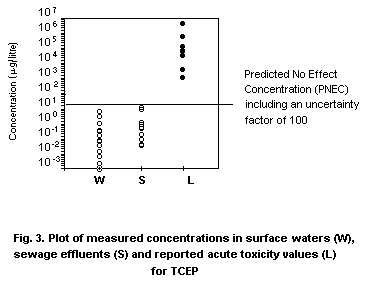 A11. FURTHER RESEARCH
Further investigations of the mechanisms underlying the
tumorigenicity of TCEP are needed.
A12. PREVIOUS EVALUATIONS BY INTERNATIONAL BODIES
The International Agency for Research on Cancer evaluated
tris(2-chloroethyl) phosphate in 1989 and concluded:
a) "There is inadequate evidence for the carcinogenicity of
tris(2-chloroethyl) phosphate in experimental animals.
b) No data were available from studies in humans on the
carcinogenicity of tris(2-chloroethyl) phosphate.
c) Tris(2-chloroethyl) phosphate is not classifiable as to its
carcinogenicity to humans" (Group 3) (IARC, 1990).
REFERENCES
Adachi K, Mitsuhashi M, & Ohkuni N (1984) Pesticides and trialkyl
phosphates in tap water (Japan). Hyogo-ken Eisei Kenkyusho Kenkyu
Hokoku, 19: 1-6 (Abstract).
Ahrens VD, Maylin GA, Henion JD, St. John LE Jr, & Lisk DJ (1979)
Fabric release, fish toxicity and water stability of the flame
retardant, Fyrol Fr-2. Bull Environ Contam Toxicol, 21 (3): 409-412.
Akzo (1995) Safety data sheet: Fyrol PCF. Amersfoort, The Netherlands,
Akzo Nobel.
Akzo (1997a) Material safety data sheet: Fyrol PCF. Amersfoort, The
Netherlands, Akzo Nobel.
Akzo (1997b) Material safety data sheet: Fyrol FR-2. Amersfoort, The
Netherlands, Akzo Nobel.
Anderson BT (1990a) Amgard TMCP: Acute inhalation toxicity study in
rats. Tranent, Scotland, Inveresk Research International (Report No.
7292).
Anderson BT (1990b) Amgard TDCP: Acute inhalation toxicity study in
rats. Tranent, Scotland, Inveresk Research International (Report No.
7293).
Anon (1980) An Ames Salmonella/mammalian microsome mutagenesis assay
for determination of potential mutagenecity of tris (2-chloropropyl)
phosphate (Report No. 471-80).
Anon (1981a) The acute oral toxicity of tris (2-chloropropyl)
phosphate Antiblaze 80 in albino rats (Report No. 2427-80).
Anon (1981b) A murine lymphoma mutagenesis assay, heterezygous at the
thymidine kinase locus for the determination of the potential
mutagenicity of Antiblaze 80 (Report No. 2422-80).
Aulette CS & Hogan GK (1981) A two-year oral toxicity/carcinogenicity
study of Fyrol FR-2 in rats. East Millstone, New Jersey, Bio/dynamics,
Inc. (Report No. 77-2016).
Barcelo D, Porte C, Cid J, & Albaigés J (1990) Determination of
organophosphorus compounds in Mediterranean coastal waters and biota
samples using gas chromatography with nitrogen -- phosphorus and
chemical -- ionization mass spectrometric detection. Int J Environ
Anal Chem, 38: 199-209.
Bayer AG (1986) Din safety data sheet: Disflamoll. Leverkusen,
Germany, Bayer AG.
Bedient PB, Springer NK, Baca E, Bouvette TC, Hutchins SR, & Tomson MB
(1983) Ground-water transport from wastewater infiltration. J Environ
Eng, 109: 485-501.
Benoit FM & Lebel GL (1986) Precision and accuracy of concurrent
multicomponent multiclass analysis of drinking water extracts by
GC/MS. Bull Environ Contam Toxicol, 37: 686-691.
Bertoniere NR & Rowland SP (1977) Effectiveness of prepolymers from
tris (1,3-dichloro-2-propyl) phosphate and polyethyleneimine as flame
retardants for cotton-containing fabrics. Text Res J, 47(2): 82-86.
Brauch HJ & Kühn W (1988) Organic micropollutants in the River Rhine
and in drinking water treatment (Ger.). Gas-Wasserfach
Wasser/Abwasser, 129: 189-196.
Brusick DJ & Jagannath DR (1977) Sex-linked recessive lethal assay in
Drosophila evaluation of Fyrol FR-2: Final report. Richmond,
California, Stauffer Chemical Company, Western Research Center.
Brusick D, Matheson D, Jagannath DR, Goode S, Lebowitz H, Reed M, Roy
G, & Benson S (1980) A comparison of the genotoxic properties of tris
(2,3-dibromopropyl) phosphate and tris (1,3-dichloropropyl) phosphate
in a battery of short-term bioassays. J Environ Pathol Toxicol,
3: 207-226.
Bullock CH & Kamienski FX (1972) Richmond, California, Stauffer
Chemical Company, Western Research Center (Report No. T-4055).
Burchill P, Herod AA, Marsh KM, & Pritchard E (1983) Gas
chromatography in water analysis. II. Selective detection methods.
Water Res, 17: 1905-1916.
Burka LT, Sanders JM, Herr DW, & Matthews HB (1991) Metabolism of tris
(2-chloroethyl) phosphate in rats and mice. Drug Metab Dispos, 19(2):
443-447.
Chapman DE, Michener SR, & Powis G (1991) Metabolism of the flame
retardant plasticizer tris (2-chloroethyl) phosphate by human and rat
liver preparations. Fundam Appl Toxicol, 17: 215-224.
Chemical Information Systems (1988) Information system for hazardous
organics in water (ISHOW). Baltimore, Maryland, Infrared Search System
(IRSS), Mass Spectral Search System (MSSS).
Cuthbert JA (1989a) Tolgard TDCP MK1: Acute oral toxicity (LD50) test
in rats. Musselburgh, Scotland, Inveresk Research International
(Report No. 5689).
Cuthbert JA (1989b) Tolgard TDCP MK1: Acute dermal toxicity (LD50)
test in rats. Musselburgh, Scotland, Inveresk Research International
(Report No. 5690).
Cuthbert JA (1989c) Tolgard TDCP MK1: Acute dermal irritation test in
rabbits. Musselburgh, Scotland, Inveresk Research International
(Report No. 5691).
Cuthbert JA (1989d) Tolgard TMCP: Acute oral toxicity (LD50) test in
rats. Musselburgh, Scotland, Inveresk Research International (Report
No. 5694).
Cuthbert JA (1989e) Tolgard TMCP: Acute dermal irritation test in
rabbits. Musselburgh, Scotland, Inveresk Research International
(Report No. 5696).
Cuthbert JA (1989f) Tolgard TMCP: Acute dermal toxicity (LD50) test
in rats. Musselburgh, Scotland, Inveresk Research International
(Report No. 5695).
Cuthbert JA & Jackson D (1990a) Tolgard TDCP MK1: Acute eye irritation
test in rabbits. Tranent, Scotland, Inveresk Research International
(Report No. 7200).
Cuthbert JA & Jackson D (1990b) Tolgard TMCP: Acute eye irritation
test in rabbits. Tranent, Scotland, Inveresk Research International
(Report No. 7202).
Draft JL (1982) Identification of aryl/alkyl phosphate residues in
foods. Bull Environ Contam. Toxicol, 29: 221-227.
ECB (1995) International uniform chemical information database
(IUCLID): Data sheet on tris (2-chloro-1-methylethyl) phosphate.
Ispra, Italy, European Chemical Bureau.
Eldefrawi AT, Mansour NA, Brattsten LB, Ahrens VD, & Lisk DJ (1977)
Further toxicologic studies with commercial and candidate flame
retardant chemicals: Part II. Bull Environ Contam Toxicol, 17(6):
720-726.
Environmental Agency Japan (1983) Environmental monitoring of
chemicals: Environmental survey report of FY 1980 and 1981. Tokyo,
Environmental Agency Japan, Office of Health Studies, Department of
Environmental Health.
Environmental Agency Japan (1987) Chemicals in the environment: Report
on environmental survey and wildlife monitoring of chemicals in FY
1984 and 1985. Tokyo, Environmental Agency Japan, Office of Health
Studies, Department of Environmental Health.
Fincher KW, Guise GB, & White MA (1973) Machine-washable
flame-resistant wool. Text Res J, 43(10): 623-625.
Fukushima M, Kawai S, Chikami S, & Morioka T (1986) Urban runoff as a
source of selected chemicals to river waters: An observation at
Isojima sampling station in the Yodo River Basin (Annual Report of the
Osaka City Institute of Public Health). Health Environ Sci, 49: 11-20.
Fukushima M, Kawai S, & Yamaguchi Y (1992) Behavior of
organophosphoric acid triesters in Japanese riverine and coastal
environment. Water Sci Technol, 25(11): 271-278.
Galassi S (1991) Organophosphorus compounds in the River Po and in the
Northern Adriatic. Toxicol Environ Chem, 31/32: 291-296.
Galassi S, Guzzella L, & Sora S (1989) Mutagenic potential of drinking
waters from surface supplies in Northern Italy. Environ Toxicol Chem,
8: 109-116.
Galloway SM, Armstrong MJ, Reuben C, Colman S, Brown B, Cannon C,
Bloom AD, Nakamura F, Ahmed M, Duk S, Rimpo J, Margolin BH, Resnick
MA, Anderson B, & Zeiger E (1987) Chromosome aberrations and sister
chromatid exchanges in Chinese hamster ovary cells: Evaluations of 108
chemicals. Environ Mol Mutagen, 10(suppl 10): 1-175.
Gardner JR (1987) Acute oral toxicity to rats of trichloropropyl
phosphate. Huntingdon, England, Huntingdon Research Centre Ltd (Report
No. 871285D/CLD 23/AC).
Gartrell MJ, Craun JC, Podrebarac DS, & Gunderson EL (1985a)
Pesticides, selected elements and other chemicals in infant and
toddler total diet samples, 1978-1979. J Assoc Off Anal Chem, 68(5):
842-861.
Gartrell MJ, Craun JC, Podrebarac DS, & Gunderson EL (1985b)
Pesticides, selected elements, and other chemicals in infant and
toddler total diet samples, 1979-1980. J Assoc Off Anal Chem, 68(6):
1163-1183.
Gartrell MJ, Craun JC, Podrebarac DS, & Gunderson EL (1986) Chemical
contaminants monitoring: Pesticides, selected elements and other
chemicals in infant and toddler total diet samples, October 1980-March
1982. J Assoc Off Anal Chem, 69(1): 123-145.
Gold MD, Blum A, & Ames BN (1978) Another flame retardant, tris
(1,3-dichloro-2-propyl) phosphate, and its expected metabolites are
mutagens. Science, 200(4342): 785-787.
Gordon EB (1980) Dermal toxicity of tris (2-chloropropyl) phosphate,
Lot PP-28, in albino rabbits after a single exposure (revised).
Princeton, New Jersey, Mobil Environmental and Health Science
Laboratory (Study No. 462-80).
Gulati DK, Barnes LH, Chapin RE, & Heindel J (1991) Final report on
the reproductive toxicity of tris (2-chloroethyl) phosphate:
Reproduction and fertility assessment in Swiss CD-1 mice when
administered via gavage. Springfield, Virginia, National Technical
Information Service.
Haraguchi K, Yamashita T, & Shigemori N (1985) Sampling and analysis
of phosphoric acid triesters in ambient air. Air Pollut Ind Hyg, 20
(6): 407-415.
Hardin BD (1987) A recommended protocol for the Chernoff/Kavlock
preliminary developmental toxicity test and a proposed method for
assigning priority scores based on results of that test. Teratog
Carcinog Mutagen, 7: 85-94.
Hardin BD, Schuler RL, Burg JR, Booth GM, Hazelden KP, Mackenzie KM,
Piccirillo VJ, & Smith KN (1987) Evaluation of 60 chemicals in a
preliminary developmental toxicity test. Teratog Carcinog Mutagen,
7: 29-48.
Hattori Y, Ishitani H, Kuge Y, & Nakamoto M (1981) Environmental fate
of organic phosphate esters. Suishitsu Odaku Kenkyu, 4(3): 137-141.
Haworth S, Lawlor T, Mortelmans K, Speck W, & Zeiger E (1983)
Salmonella mutagenicity test results for 250 chemicals. Environ
Mutagen, 5(suppl 1): 3-142.
Herr DW, Sanders JM, & Matthews HB (1991) Brain distribution and fate
of tris (2-chloroethyl) phosphate in Fischer 344 rats. Drug Metab
Dispos, 19(2): 436-442.
Hoechst (1985) Wastewater - Biological investigation of Genomoll.
Frankfurt-am-Main, Germany, Hoechst AG.
Hollifield HC (1979) Rapid nephelometric estimate of water solubility
of highly insoluble organic chemicals of environmental interest. Bull
Environ Contam Toxicol, 23: 579-586.
Hudec T, Thean J, Kuehl D, & Dougherty RC (1981) Tris (dichloropropyl)
phosphate, a mutagenic flame retardant: frequent occurrence in human
seminal plasma. Science, 211: 951-952.
Huntingdon Life Sciences Ltd (1997) Amgard TMCP 1: Acute oral toxicity
to the rat. Huntingdon, England, Huntingdon Life Sciences Ltd.
Huntingdon Life Sciences Ltd (1997) Amgard TMCP 2: Acute oral toxicity
to the rat. Huntingdon, England, Huntingdon Life Sciences Ltd.
IARC (1990) Some flame retardants and textile chemicals, and exposures
in the textile manufacturing industry. Lyon, International Agency for
Research on Cancer, pp 85-93 (IARC Monographs on the Evaluation of
Carcinogenic Risks to Humans, Volume 48).
Ishidate M, Sofuni T, & Yoshikawa K (1981) Chromosomal aberration
tests in vitro as a primary screening tool for environmental
mutagens or carcinogens. Gann Monogr Cancer Res, 27: 95-108.
Ishikawa S & Baba K (1988) Reaction of organic phosphate esters with
chlorine in aqueous solution. Bull Environ Contam Toxicol, 41(1):
143-150.
Ishikawa S, Taketomi M, & Shinohara R (1985a) Determination of
trialkyl and triaryl phosphates in environmental samples. Water Res,
19(1): 119-125.
Ishikawa S, Shigezumi K, Yasuda K, & Shigemori N (1985b) Determination
of organic phosphate esters in factory effluent and domestic effluent.
Suishitsu Odaku Kenkyu, 8(8): 529-535.
Kamata E, Naito K, Nakaji Y, Ogawa Y, Suzuki S, Kaneko T, Takada K,
Kurokawa Y, Tobe M, (1989) Acute and subacute toxicity studies of
tris(1,3-dichloro-2-propyl) phosphate on mice. Bull Natl Inst Hyg Sci,
107: 36-43.
KAN-DO Office and Pesticides Team (1995) Accumulated pesticide and
industrial chemical findings from a ten-year study of ready-to-eat
foods. J Assoc Off Anal Chem, 78(3): 614-631.
Kawachi T, Komatsu T, & Kada T (1980) Results of recent studies on the
relevance of various short-term screening tests in Japan: The
predictive value of short-term screening tests in carcinogenicity
evaluation. Appl Methods Oncol, 3: 253-267.
Kawashima K, Tanaka S, Nakaura S, Nagao S, Endo T, Onoda K, Takanaka
A, & Omori Y (1983a) Effect of oral administration of
tris(2-chloroethyl) phosphate to pregnant rats on prenatal and
postnatal developments. Bull Natl Inst Hyg Sci, 101: 55-61.
Kawashima K, Tanaka S, Nakaura S, Nagao S, Endo T, Onoda K, Takanaka
A, & Omori Y (1983b) Effect of phosphoric acid tri-esters flame
retardants on the prenatal and postnatal developments of the rats.
J Toxicol Sci, 8: 339 (Abstract).
Kenmochi U, Matsunaga K, & Ishida R (1981) The effects of
environmental pollutants on biological systems: 6. Organic phosphates
in environments (Japan). Okayama-ken Kankyo Hoken Senta Nenpo, 5:
167-175.
Kenmotsu K, Matsunaga K, & Ishida T (1980b) Multiresidue determination
of phosphoric acid triesters in fish, sea sediment and sea water.
Shokuhin Eiseigaku Zasshi, 2(1): 18-31.
Kouri RE & Parmar AS (1977) Activity of TCPP in a test for
differential inhibition of repair deficient and repair competent
strains of Escherichia coli: repair test. Bethesda, Maryland,
Microbiological Associates (Project No. T1108).
Kynoch SR & Denton SM (1990) Acute oral toxicity to rats of tris
(2-chloroethyl) phosphate. Huntingdon, England, Huntingdon Research
Centre Ltd (Report No. 891299D/CLD 48/AC).
LeBel GL & Williams DT (1983) Determination of organic phosphate
triesters in human adipose tissue. J Assoc Off Anal Chem, 66(1):
691-699.
LeBel GL & Williams DT (1986) Levels of triaryl/alkyl phosphates in
human adipose tissue from eastern Ontario. Bull Environ Contam
Toxicol, 37: 41-46.
LeBel GL, Williams DT, & Benoit FM (1981) Gas chromatographic
determination of trialkyl/aryl phosphates in drinking water, following
isolation using macroreticular resin. J Assoc Off Anal Chem, 64(4):
991-998.
LeBel GL, Williams DT, & Benoit FM (1987) Use of large volume resin
cartridges for the determination of organic contaminants in drinking
water derived from the Great Lakes. Adv Chem Ser, 214: 309-325.
LeBel GL, Williams DT, & Berard D (1989) Triaryl/alkyl phosphate
residues in human adipose autopsy samples from six Ontario
municipalities. Bull Environ Contam Toxicol, 43: 225-230.
Liggett MP & McRae LA (1991a) Skin irritation to the rabbit of tris
(2-chloroisopropyl) phosphate. Huntingdon, England, Huntingdon
Research Centre Ltd (Report No. 91198D/CLD 58/SE).
Liggett MP & McRae LA (1991b) Eye irritation to the rabbit of tris
(2-chloroisopropyl) phosphate. Huntingdon, England, Huntingdon
Research Centre Ltd (Report No 91209D/CLD 59/SE).
Liggett MP & McRae LA (1991c) Skin irritation to the rabbit of tris
2-chloro-ethyl phosphate. Huntingdon, England, Huntingdon Research
Centre Ltd (Report No. 901196D/CLD 57/SE).
Liggett MP & McRae LA (1991d) Eye irritation to the rabbit of
tris-2-chloro-ethyl phosphate. Huntingdon, England, Huntingdon
Research Centre Ltd (Report No. 91210D/CLD 60/SE).
Luster MI, Dean JH, Boorman GA, Archer DL, Lauer L, Dawson LD, Moore
JA, & Wilson RE (1981) The effects of orthophenylphenol, tris
(2,3-dichloropropyl) phosphate and cyclophosphamide on the immune
system and host susceptibility of mice following subchronic exposure.
Toxicol Appl Pharmacol, 58: 252-261.
Lynn RK, Wong K, Dickinson RG, Gerber N, & Kennish JM (1980) Diester
metabolites of the flame retardant chemicals tris
(1,3-dichloro-2-propyl) phosphate and tris (2,3-dibromopropyl)
phosphate in the rat: Identification and quantification. Res Commun
Chem Pathol Pharmacol, 28: 351-359.
Lynn RK, Wong K, Garvie-Gould C, & Kennish JM (1981) Disposition of
the flame retardant, tris(1,3-dichloro-2-propyl)phosphate in the rat.
Drug Metab Dispos, 9(5): 434-441.
Matthews HB, Dixon D, Herr DW, & Tilson H (1990) Subchronic toxicity
studies indicate that tris(2-chloroethyl) phosphate administration
results in lesions in the rat hippocampus. Toxicol Ind Health, 6(1):
1-15.
Mehlman MA, Mackerer CR, & Schreiner A (1980) An Ames
Salmonella/mammalian microsome mutagenesis assay for determination
of potential mutagenecity of tris (2-chloropropyl). Princeton, New
Jersey, Mobil Environmental and Health Science Laboratory (Study No.
471-80).
Mehlman MA & Singer EJ (1981) Four hour acute inhalation toxicity
study in Sprague-Dawley rats with 2425-80. Baton Rouge, Louisiana,
Gulf South Research Institute (Study No. 2425-80).
Mehlman MA & Smart CL (1981) An acute inhalation toxicity study of
tris (2-chloropropyl) phosphate. East Millstone, New Jersey,
Bio/dynamics, Inc. (Study No. 465-80).
Mehsl (1980) Oral LD50 of tris (2-chloropropyl) phosphate, Lot PP-2B,
in Sprague-Dawley rats after a single administration. Princeton, New
Jersey, Mobil Environmental and Health Science Laboratory (Study No.
461-80).
Meijers AP & Van Der Leer RC (1976) The occurrence of organic
micropollutants in the River Rhine and the River Maas in 1974. Water
Res, 10: 597-604.
Minegishi K-I, Kurebayashi H, Seiichi N, Morimoto K, Takahashi T, &
Yamaha T (1988) Comparative studies on absorption, distribution, and
excretion of flame retardants halogenated alkyl phosphate in rats.
Eisei Kagaku, 34(2): 102-114.
MITI (1992) In: CITI (Japan Chemical Industry Ecology-Toxicology &
Information Center) ed. Biodegradation and bioaccumulation data on
existing chemicals based on the CSCL Japan. Tokyo, Ministry of
International Trade and Industry.
Mobil (1985a) Static 48 hour acute toxicity of Antiblaze 80 to
Daphnia magna. Princeton, New Jersey, Mobil Environmental and Health
Science Laboratory (Unpublished report No. 50591).
Mobil (1985b) Static 48 hour acute toxicity of Antiblaze 80 to fathead
minnows. Princeton, New Jersey, Mobil Environmental and Health Science
Laboratory (Unpublished report No. 50593).
Mobil (1985c) Static 48 hour acute toxicity of Antiblaze 80 to
bluegill sunfish. Princeton, New Jersey, Mobil Environmental and
Health Science Laboratory (Unpublished report No. 50592).
Morales NM & Matthews HB (1980) In vitro binding of the flame
retardant tris (2,3-dibromopropyl) phosphate and tris
(1,3-dichloro-2-propyl) phosphate to macromolecules of mouse liver,
kidney and muscle. Bull Environ Contam Toxicol, 25(1): 34-38.
Morrissey RE, Schwetz BA, Lamb JC IV, Ross MD, Teague JL, & Morris RW
(1988) Evaluation of rodent sperm, vaginal cytology, and reproductive
organ weight data from National Toxicology Program 13-week studies.
Fundam Appl Toxicol, 11: 343-358.
Mortelmans K, Haworth S, Lawlor T, Speck W, Tainer B, & Zeiger E
(1986) Salmonella mutagenicity tests: II. Results from the testing
of 270 chemicals. Environ Mutagen, 8(suppl 7): 1-119.
Nakamura A, Tateno N, Kojima S, Kaniwa M-A, & Kawamura T (1979) The
mutagenicity of halogenated alkanols and their phosphoric acid esters
for Salmonella typhimurium. Mutat Res, 66: 373-380.
National Medical Library (1998) Hazardous substance database.
Washington, DC, National Medical Library.
Nomeir AA, Kato S, & Matthews HB (1981) The metabolism and disposition
of tris (1,3-dichloro-2-propyl) phosphate (Fyrol FR-2) in the rat.
Toxicol Appl Pharmacol, 57: 401-413.
Oman C & Hynning P-A (1993) Identification of organic compounds in
municipal landfill leachates. Environ Pollut, 80: 265-271.
Parmar AS (1977) Activity of trichloropropylene phosphate in the
Salmonella/microsomal assay for bacterial mutagenicity. Bethesda,
Maryland, Microbiological Associates (Project No. T1108).
Paxéus N (1996) Organic pollutants in the effluents of large
wastewater treatment plants in Sweden. Water Res, 30(5): 1115-1122.
SafePharm (1979a) Determination of the contact sensitization potential
of tris mono chloropropyl phosphate. Derby, England, SafePharm
Laboratories (Experiment No. 480/911).
SafePharm (1979b) Determination of the degree of ocular irritation
caused by tris mono chloropropyl phosphate. Derby, England, SafePharm
Laboratories (Experiment No. 1/912).
SafePharm (1979c) Determination of the degree of primary cutaneous
irritation caused by tris mono chloropropyl phosphate. Derby, England,
SafePharm Laboratories (Experiment No. 119/912).
SafePharm (1993a) Acute toxicity to Daphnia magna (Amgard TDCP).
Derby, England, SafePharm Laboratories (Unpublished report No.
071/271).
SafePharm (1993b) Acute toxicity to rainbow trout (Amgard TDCP).
Derby, England, SafePharm Laboratories (Unpublished report No.
071/272).
SafePharm (1994) Assessment of the algistatic effect of Amgard TDCP.
Derby, England, SafePharm Laboratories (Unpublished report No.
071/273).
SafePharm (1996a) Assessment of inherent biodegradability (Amgard
TMCP). Derby, England, SafePharm Laboratories (Unpublished report No.
071/457).
SafePharm (1996b) Assessment of inherent biodegradability (Amgard
TDCP). Derby, England, SafePharm Laboratories (Unpublished report No.
071/455).
SafePharm (1996c) Acute toxicity to earthworms (Amgard TMCP). Derby,
England, SafePharm Laboratories (Unpublished report No. 071/458).
SafePharm (1996d) Acute toxicity to earthworms (Amgard TDCP). Derby,
England, SafePharm Laboratories (Unpublished report No. 071/456).
SafePharm (undated/a) Amgard TMCP: Acute oral toxicity test in the
rat. Derby, England, SafePharm Laboratories (Project No. 071/269).
SafePharm (undated/b) TCPP: Daphnia magna reproduction test. Derby,
England, SafePharm Laboratories (Unpublished report No. 071/386).
SafePharm (undated/c) Amgard TMCP (CMW 067): Acute oral toxicity test
in the rat. Derby, England, SafePharm Laboratories (Project No.
071/497).
SafePharm (undated/d) Amgard TMCP: Acute oral toxicity test in the
rat. Derby, England, SafePharm Laboratories (Project No. 071/51).
SafePharm (undated/e) TCPP: Acute oral toxicity test in the rat.
Derby, England, SafePharm Laboratories (Project No. 071/545).
Sala M, Gu, ZG, Moens G, & Chouroulinkov I (1982) In vivo and
in vitro biological effects of the flame retardants
tris(2,3-dibromopropyl) phosphate and tris(2-chloroethyl)
orthophosphate. Eur J Cancer, 18: 1337-1344.
Sasaki K, Takeda M, & Uchiyama M (1981) Toxicity absorption and
elimination of phosphoric acid triesters by killifish and goldfish.
Bull Environ Contam Toxicol, 27: 775-782.
Sasaki K, Suzuki T, Takeda M, & Uchiyama M (1982) Bioconcentration and
excretion of phosphoric acid triesters by killifish
(Oryzeas latipes). Bull Environ Contam Toxicol, 28: 752-759.
Sasaki K, Suzuki T, Takeda M, & Uchiyama M (1984) Metabolism of
phosphoric acid triesters by rat liver homogenate. Bull Environ Contam
Toxicol, 33: 281-288.
Sellström U & Jansson B (1987) Mass spectrometric determination of
tris (1,3-dichloro-2-propyl) phosphate (TDCP) using NCI-technique. Int
J Environ Anal Chem, 29(4): 277-287.
Shepel'Skaya NR & Dyshinevich NE (1981) [An experimental study of the
gonadotoxic effect of tris(chloroethyl) phosphate.] Gig i Sanit,
6: 20-21 (in Russian with English summary).
Simmon VF, Kauhanen K, & Tardiff RG (1977) Mutagenic activity of
chemicals identified in drinking water. Toxicol Environ Sci,
2: 249-258.
Smithey WR Jr (1980a) Eye irritation of tris (2-chloropropyl)
phosphate, Lot PP-28, in albino rabbits after a single exposure.
Princeton, New Jersey, Mobil Environmental and Health Science
Laboratory (Study No. 463-80).
Smithey WR Jr (1980b) Skin irritation of tris (2-chloropropyl)
phosphate, Lot PP-28, after a single application to albino rabbits.
Princeton, New Jersey, Mobil Environmental and Health Science
Laboratory (Sudy No. 464-80).
Smithey WR Jr (1981a) Primary eye irritant of tris (2-chloropropyl)
phosphate "Antiblaze 80" in albino rabbits. Princeton, New Jersey,
Mobil Environmental and Health Science Laboratory (Study No. 2423-80).
Smithey WR Jr (1981b) Primary skin irritation of tris (2-chloropropyl)
phosphate "Antiblaze 80" after a single application to albino rabbits
(Study 2424-80). Princeton, New Jersey, Mobil Environmental and Health
Science Laboratory.
Smithey WR Jr (1981c) The acute dermal toxicity of tris
(2-chloropropyl) phosphate "Antiblaze 80" in albino rabbits.
Princeton, New Jersey, Mobil Environmental and Health Science
Laboratory (Study No. 2426-80).
Smyth HF, Carpenter CP, & Weil CS (1951) Range-finding toxicity data:
List IV. Arch Ind Hyg Occup Med, 4: 119-122.
Soderlund EJ, Dybing E, Holme JA, Hongslo JK, Rivedal E, Sanner T, &
Nelson SD (1985) Comparative genotoxicity and nephrotoxicity studies
of the two halogenated flame retardants tris (1,3-dichloro-2-propyl)
phosphate and tris (2,3-dibromopropyl) phosphate. Acta Pharmacol
Toxicol, 56: 20-29.
Sprague GL, Sandvik LL, Brookins-Hendricks MJ, & Bickford AA (1981)
Neurotoxicity of two organophosphorus ester flame retardants in hens.
J Toxicol Environ Health, 8: 507-518.
Stauffer (1970) Acute toxicity of Fyrol PCF. Westport, Connecticut,
Stauffer Chemical Company (Report No. T1453).
Stauffer (1972) Acute toxicity of Fyrol PCF. Westport, Connecticut,
Stauffer Chemical Company (Report No. T4030).
Stauffer (1978a) Mutagenicity evaluation of Fyrol PCF in the mouse
lymphoma forward mutation assay. Westport, Connecticut, Stauffer
Chemical Company (Report No. T6343A).
Stauffer (1978b) Evaluation of Fyrol PCF Lot 8400-3-10 in the
unscheduled DNA synthesis in Human WI-38 cells assay. Westport,
Connecticut, Stauffer Chemical Company (Litton Project No. 20991)
(Report No. T6359).
Stauffer (1978c) Mutagenicity evaluation of Fyrol PCF in the Ames
Salmonella/microsome plate test. Westport, Connecticut, Stauffer
Chemical Company (Report No. T6361).
Stauffer (1979) Acute toxicity of Fyrol PCF - Lot No. 4800-3-10.
Westport, Connecticut, Stauffer Chemical Company (Report No. T6556).
Stauffer (1980) Fyrol PCF a two-week acute dietary range finding study
in male and female Charles River Sprague-Dawley derived rats.
Westport, Connecticut, Stauffer Chemical Company (Report No. T10112).
Stauffer (1983a) A morbidity survey or workers employed at a Fyrol
FR-2 manufacturing plant. Westport, Connecticut, Stauffer Chemical
Company.
Stauffer (1983b) A mortality study of workers employed at a Fyrol FR-2
manufacturing plant. Westport, Connecticut, Stauffer Chemical Company.
Takada K, Yasuhara K, Nakaji Y, Yoshimoto H, Momma J, Kurokawa Y,
Yoshitaka A, & Tobe M (1989) Carcinogenicity study of tris
(2-chloroethyl) phosphate in ddY mice. J Toxicol Pathol, 2: 213-222.
Takada K, Yoshimoto H, Yasuhara K, Momma J, Yoshitaka A, Saito M,
Kurokawa Y, & Tobe M (1991) [Combined chronic toxicity/carcinogenicity
test of tris (2-chloroethyl) phosphate (TCEP) applied to female mouse
skin.] Bull Natl Inst Hyg Sci, 109: 18-24 (in Japanese).
Takahashi Y & Morita M (1988) Studies on organic compounds in water.
(3) Organochlorine herbicides, organophosphorus pesticides and
organophosphate triesters in raw and finished water. Suishitsu Odaku
Kenkyu, 11(3): 161-168.
Tanaka S, Nakaura S, Kawashima K, Nagao S, Endo T, Onoda K, Kasuya Y,
& Omori Y (1981) Effect of oral administration of
tris(1,3-dichloroisopropyl)phosphate to pregnant rats on prenatal and
postnatal developments. Eisei Shikenjo Hokuku, 81: 50-55.
Thomas MB & Collier TA (1985) Tolgard T.D.C.P.LV: OECD 474
Micronucleus study in the mouse. Derby, England, SafePharm
Laboratories (Experiment No. 164/8507).
Tilson HA, Veronesi B, McLamb RL, & Matthews HB (1990) Acute exposure
to tris(2-chloroethyl) phosphate produces hippocampal neuronal loss
and impairs learning in rats. Toxicol Appl Pharmacol, 106: 254-269.
Ulsamer AG, Osterberg REc & McLaughlin J Jr (1980) Flame-retardant
chemicals in textiles. Clin Toxicol, 17(1): 101-131.
US EPA (1976) A study of flame retardants for textiles. Washington,
DC, US Environmental Protection Agency (EPA 560/1-76-001; PB-251 44).
US EPA (1988) TCEP, TCPP, TDCPP, TCIP and TCEEP. Fed Reg, 53(221):
46266-46273.
US NTP (1990) Toxicology and carcinogenesis studies of
tris(2-chloroethyl) phosphate (CAS No. 115-96-8) in F344/N rats and
B6C3F1 mice (gavage studies). Research Triangle Park, North Carolina,
US Department of Health and Human Services, National Toxicology
Program (TR 391; NIH Publication No. 90-2846).
Vogel EW & Nivard MJM (1993) Performance of 181 chemicals in a
Drosophila assay predominantly monitoring interchromosomal mitotic
recombination. Mutagenesis, 8(1): 57-81.
Weil ED (1980) Phosphorus compounds. In: Kirk-Othmer encyclopedia of
chemical technology. New York, John Wiley and Sons, vol 10, pp
488-489.
Wilczynski SL, Killinger JM, Zwicker GM, & Freudenthal RI (1983) Fyrol
FR-2 fertility study in male rabbits. Toxicologist, 3(1): 22
(Abstract).
Williams DT & Lebel GL (1981) A national survey of tri (haloalkyl)-,
trialkyl-, and triarylphosphates in Canadian drinking water. Bull
Environ Contam Toxicol, 27(4): 450-457.
Williams DT, Nestmann ER, Lebel GL, Benoit FM, Otson R, & Lee EGH
(1982) Determination of mutagenic potential and organic contaminants
of Great Lakes drinking water. Chemosphere, 11(3): 263-276.
Williams GM, Mori H, & McQueen CA (1989) Structure-activity
relationship in the rat hepatocyte DNA-repair test for 300 chemicals.
Mutat Res, 221: 263-286.
Windholz M ed. (1983) The Merck index, 11th ed. Rahway, New Jersey,
Merck and Co., Inc.
Yoshioka Y, Ose Y, & Sato T (1986) Correlation of five test methods to
assess chemical toxicity and relation to physical properties.
Ecotoxicol Environ Saf, 12: 15-21.
Zeiger E, Anderson B, Haworth S, Lawlor T, & Mortelmans K (1992)
Salmonella mutagenicity tests: V. Results from the testing of 311
chemicals. Environ Mol Mutagen, 19(suppl 21): 2-141.
Zoeteman BCJ, Harmsen K, Linders JBHJ, Morra CFH, & Slooff W (1980)
Persistent organic pollutants in river water and ground water of the
Netherlands. Chemosphere, 9: 231-249.
RÉSUMÉ
1. Le phosphate de tris(1-chloro-2-propyle) (TCPP)
Le phosphate de tris(1-chloro-2-propyle) ou TCPP se présente sous
la forme d'un liquide incolore. On l'utilise comme retardateur de
flamme, principalement dans les mousses de polyuréthanne. Il n'est pas
volatil. Sa solubilité dans l'eau est de 1,6 g/litre; il est soluble
dans la plupart des solvants organiques et son coefficient de partage
entre l'octanol et l'eau (log Kow) est égal à 2,59.
L'analyse s'effectue par chromatographie en phase gazeuse couplée
à la spectrométrie de masse. Pour doser le TCPP présent dans l'eau, on
commence par le concentrer sur résine XAD puis on procède à une
extraction avec divers solvants organiques.
Le TCCP est produit à partir de l'époxypropane et de
l'oxychlorure de phosphore. La demande mondiale a dépassé 40 000
tonnes en 1997.
Le TCPP est difficilement biodégradé dans les inoculums de boues
d'égout. Les poissons le métabolisent rapidement.
On a décelé des traces de TCPP dans des effluents industriels et
domestiques, à l'exclusion des eaux superficielles. Les contrôles
effectués sur des sédiments n'en n'ont pas décelé la présence. Il a
été mis en évidence à l'état de traces dans des pêches et des poires
crues ainsi que dans du poisson.
On ne dispose d'aucune donnée sur sa cinétique ni sur son
métabolisme chez les mammifères.
La toxicité aigüe du TCPP se révèle faible à modérée après
ingestion (DL50 pour le rat= 1017 à 4200 mg/kg de poids corporel),
contact cutané (DL50 pour le rat et le lapin > 5000 mg/kg de poids
corporel) ou inhalation (CL50 pour le rat > 4,6 mg/litre).
Des études sur le pouvoir irritant du TCPP pour la muqueuse
oculaire et l'épiderme effectuées sur des lapins ont montré que ce
composé n'est pas irritant ou tout au plus légèrement irritant. Une
étude de sensibilisation cutanée a montré que le TCPP n'avait aucune
action sensibilisatrice.
On n'a pas étudié la toxicité génésique et immunologique du TCPP
ni sa cancérogénicité. Les résultats des études de mutagénicité in
vitro et in vivo, portant sur un ensemble approprié de points
d'aboutissement, indiquent que le composé n'est pas génotoxique.
La neurotoxicité retardée du TCPP a été étudiée sur des poules.
L'ingestion de deux doses de composé (égales chacune à 13 320 mg/kg
p.c.) à 3 semaines d'intervalle n'a pas fait apparaître de signes de
neurotoxicité retardée.
Il n'existe pas d'étude consacrée aux effet du TCPP sur l'homme.
En ce qui concerne la toxicité du TCPP pour les êtres vivants
dans leur milieu naturel, on a relevé, pour la CL50, des valeurs
allant de 3,6 à 180 mg/litre. La concentration sans effet observable
pour les algues, les daphnies et les poissons est respectivement égale
à 6, 32 et 9,8 mg/litre.
2. Le phosphate de tris(1,3-dichloro-2-propyle) (TDCPP)
Le phosphate de tris(1,3-dichloro-2-propyle) ou TDCPP se présente
sous la forme d'un liquide incolore de consistance visqueuse. Il est
utilisé comme retardateur de flamme dans diverses mousses plastiques,
résines et latex. Il n'est pas volatil. Sa solubilité dans l'eau est
de 0,1 g/litre et il est soluble dans la plupart des solvants
organiques. Son coefficient de partage entre l'octanol et l'eau (log
Kow) est de 3,8.
L'analyse s'effectue par chromatographie en phase gazeuse couplée
à la spectrométrie de masse. Pour doser le TDCPP présent dans l'eau,
on commence par le concentrer sur résine XAD et on procède ensuite à
une extraction au moyen de divers solvants organiques.
Le TDCPP est produit à partir de l'épichlorhydrine et de
l'oxychlorure de phosphore. Le produit commercial est constitué
principalement de TDCPP avec des traces de phosphate de
tris(2,3-dichloropropyle). La demande mondiale a été de 8000 tonnes en
1997.
Le TDCPP est difficilement biodégradé dans les inoculums de boues
d'égout.
Selon certaines études, la décomposition du TDCPP est limitée
dans les eaux naturelles. Les poissons le métabolisent rapidement.
La valeur du facteur de bioconcentration est faible (de 3 à 107).
Sa demi-vie d'élimination est égale à 1,65 h chez les cyprinodontes.
Des traces de TDCPP ont été mises en évidence dans des effluents
d'égouts, des cours d'eau, dans la mer, dans de l'eau destinée à la
boisson, des sédiments et des poissons. On en a également trouvé dans
certains échantillons de tissus adipeux humains.
Les études cinétiques effectuées sur des rats à l'aide de TDCPP
marqué au carbone-14 montrent que le produit marqué se répartit dans
l'ensemble de l'organisme après administration par voie buccale ou
percutanée. Le principal métabolite du TDCPP identifié dans l'urine
des rats était le phosphate de bis(1,3-dichloro-2-propyle).
L'élimination du marqueur radioactif s'est effectuée principalement
dans les matière fécales et les urines, une petite fraction étant
également rejetée dans l'air expiré sous forme de CO2.
La toxicité aiguë du TDCPP est faible à modérée par la voie
buccale (DL50 chez le rat = 2830 mg/kg p.c.); elle est faible par la
voie percutanée (DL50 par voie percutanée chez le rat >2000 mg/kg
p.c.).
Lors d'une étude de 3 mois sur des souris, une exposition
correspondant à une dose journalière d'environ 1800 mg/ kg p.c. a été
fatale aux animaux en l'espace d'un mois. La dose sans effet
observable (NOEL) était de 15,3 mg/kg p.c. par jour. La dose la plus
faible provoquant un effet observable (LOEL)- en l'espèce, une
augmentation du poids du foie- était de 62 mg/kg p.c. par jour.
Le pouvoir sensibilisateur du TDCPP n'a pas été étudié.
On ne peut pas dire avec certitude si le TDCPP est susceptible
d'affecter la fonction de reproduction masculine car on a observé un
effet toxique sur le testicule du rat mais aucun effet de ce genre sur
le lapin mâle. Les éventuels effets qu'il pourrait avoir sur la
fonction génitale femelle n'ont pas été étudiés.
Une étude tératologique effectuée sur des rats a montré que le
TDCPP était fétotoxique par voie buccale à la dose journalière de 400
mg/kg p.c.; le composé était toxique pour les rattes gravides aux
doses journalières de 100 et 400 mg/ kg p.c. Aucun signe de
tératogénicité n'a été relevé.
Globalement, les données de mutagénicité montrent que le TDCPP
n'est pas génotoxique in vivo.
Une unique étude d'alimentation portant sur deux ans a été
consacrée à la cancérogénicité du TDCPP. Le composé s'est
effectivement révélé cancérogène pour le rat (augmentation de la
fréquence des cancers du foie) à toutes les doses administrées (5-80
mg/kg p.c. par jour), tant chez les mâles que chez les femelles. On a
également constaté la présence de tumeurs des reins, des testicules et
de l'encéphale ainsi que des lésions non malignes au niveau de la
moelle osseuse, de la rate, des testicules, du foie et des reins. Les
lésions rénales et testiculaires étaient présentes à toutes les doses.
En revanche les effets sur la moelle osseuse et la rate n'ont été
étudiés que dans le groupe témoin et chez les animaux soumis aux doses
les plus fortes. Dans ces conditions, il était impossible de
déterminer s'il existait une relation dose-effet au niveau de ces
organes.
Il semblerait également que le TDCPP ait une certaine
immunotoxicité chez la souris, mais uniquement à forte dose.
On dispose des résultats d'études limitées effectuées sur l'homme
à l'occasion d'expositions professionnelles au TDCPP, mais ils
n'apportent pas grand chose à la connaissance du degré de sécurité
qu'offre ce composé.
3. Le phosphate de tris(2-chloéthyle) (TCEP)
Le phosphate de tris(2-chloréthyle) se présente sous la forme
d'un liquide jaune pâle que l'on utilise comme retardateur de flamme,
surtout dans la production de résines polyesters liquides insaturées.
On l'utilise aussi dans les enduits destinés à certains textiles, le
PVC ainsi que les matériaux et enduits à base d'esters cellulosiques.
Il n'est pas volatil et sa solubilité dans l'eau est de 8 g/litre. Il
est soluble dans la plupart des solvants organiques. Son coefficient
de partage entre l'octanol et l'eau (log Kow) est égal à 1,7.
L'analyse s'effectue par chromatographie en phase gazeuse couplée
à la spectrométrie de masse. Pour doser le TCEP présent dans l'eau, on
peut commencer par le concentrer sur résine XAD ou charbon actif, puis
l'extraire au moyen de divers solvants organiques.
Le TCEP est produit à partir de l'époxyéthane et de l'oxychlorure
de phosphore. Depuis les années 1980, la production et l'usage de ce
composé sont en déclin. En 1997, la demande mondiale de TCEP a été
inférieure à 4000 tonnes.
Le TCEP n'est pas aisément biodégradable. Le facteur de
bioconcentration est faible, et la demi-vie d'élimination est de 0,7 h
chez les poissons.
Des traces de TCEP ont été décelées dans des cours d'eau, dans la
mer, dans de l'eau destinée à la boisson, dans divers biotes (poissons
et invertébrés aquatiques) ainsi que dans certaines denrées
alimentaires.
Chez le rat, le TCEP administré par ingestion se répartit dans
les divers organes, en particulier dans le foie et les reins, mais
aussi dans l'encéphale. Chez le rat et la souris, on a relevé la
présence, entre autres, des métabolites suivants: phosphate de
carboxyméthyle et de bis(2-chloréthyle), hydrogénophosphate de
bis(2-chloréthyle) et glucuronide du phosphate de
bis(2-chloréthyl)-2-hydroxyéthyle. L'excrétion est rapide,
pratiquement complète et s'effectue principalement par la voie
urinaire.
La toxicité aiguë du TCEP par voie buccale est faible à modérée
(DL50 par voie buccale = 1150 mg/kg p.c. chez le rat).
Lors d'études comportant des doses réitérées, le TCEP a provoqué
des effets indésirables sur l'encéphale (lésions de l'hippocampe chez
le rat), le foie et les reins. La dose sans effet observable (NOEL)
était égale à 22 mg/kg p.c. par jour et la dose la plus faible
produisant un effet (LOEL), à 44 mg/kg p.c. par jour, l'effet pris en
compte étant l'augmentation du poids du foie et du rein chez le rat.
Le TCEP n'est irritant ni pour la peau ni pour les yeux, mais son
pouvoir sensibilisateur n'a pas été étudié.
Le TCEP n'est pas tératogène. En revanche, il a un effet négatif
sur la fécondité des rats et des souris mâles.
Il n'est pas possible de se prononcer sur le pouvoir mutagène du
TCEP car les épreuves in vitro n'ont pas donné de résultats
cohérents; par ailleurs, les résultats du test des micronoyaux sur la
moelle osseuse sont douteux.
Chez le rat et la souris, le TCEP provoque l'apparition de
tumeurs bénignes et malignes de localisations diverses.
Une dose très élevée administrée par la voie buccale a entraîné
une certaine inhibition de la cholinestérase plasmatique et de
l'estérase cérébrale neuropathogénique chez la poule, sans toutefois
manifester une neurotoxicité retardée. Chez le rat, une forte dose de
TCEP a provoqué des convulsions, des lésions cérébrales et une
diminution des performances en labyrinthe.
Pour les êtres vivants dans leur milieu naturel, on trouve des
valeurs de la CL50 et de la CE50 qui vont de 90 à 5000 mg/litre.
RESUMEN
1. Tris(1-cloro-2-propil) fosfato (TCPP)
El tris(1-cloro-2-propil) fosfato (TCPP) es un líquido incoloro
que se utiliza como pirorretardante, principalmente en espumas de
poliuretano. No es volátil. Su solubilidad en agua es de 1,6 g/litro,
es soluble en la mayor parte de los disolventes orgánicos y tiene un
coeficiente de reparto octanol/agua de 2,59.
El análisis se realiza mediante cromatografía de
gases/espectrometría de masas (CG/EM). La concentración de TCPP a
partir del agua antes del análisis se puede conseguir mediante el uso
de resina XAD, seguido de la extracción con diversos disolventes
orgánicos.
El TCPP se fabrica a partir del óxido de propileno y el
oxicloruro de fósforo. La demanda anual en todo el mundo superó en
1997 las 40 000 toneladas.
El TCPP no es fácilmente degradable en inóculos de fangos
cloacales. Se metaboliza rápidamente en los peces.
Se han detectado trazas de TCPP en efluentes industriales y
domésticos, pero no en las aguas superficiales. No se ha observado en
análisis de sedimentos. Se han encontrado trazas en melocotones
crudos, peras crudas y pescado.
No se dispone de datos sobre la cinética y metabolismo del TCPP
en los mamíferos.
Su toxicidad aguda es de baja a moderada por vía oral (DL50 en
ratas = 1017-4200 mg/kg de peso corporal), cutánea (DL50 en ratas y
conejos es > 5000 mg/kg de peso corporal) y por inhalación (DL50 en
ratas > 4,6 mg/litro).
En estudios de irritación ocular y cutánea realizados en conejos
se ha puesto de manifiesto que el TCPP tiene una capacidad irritante
nula o leve. En estudios de sensibilización cutánea se ha demostrado
que no tiene propiedades de sensibilización.
No se ha investigado la toxicidad reproductiva, la
inmunotoxicidad y el potencial carcinogénico del TCPP. Los resultados
de los estudios de mutagenicidad in vivo e in vitro realizados
para investigar una gama apropiada de efectos finales indican que no
es genotóxico.
Se ha investigado su potencial de neurotoxicidad retardada en las
gallinas. No se encontraron pruebas de dicho efecto en un estudio
realizado con dos dosis orales (de 13 230 mg/kg de peso corporal cada
una) administradas a una distancia de tres semanas.
No se dispone de estudios de los efectos del TCPP en el ser
humano.
Se conocen valores de toxicidad para organismos del medio
ambiente, oscilando los correspondientes a la CL50 entre 3,6 y 180
mg/litro. Las concentraciones sin efectos observados para las algas,
los dáfnidos y los peces son de 6, 32 y 9,8 mg/litro, respectivamente.
2. Tris(1,3-dicloro-2-propil) fosfato TDCPP
El Tris(1,3-dicloro-2-propil) fosfato (TDCPP) es un líquido
incoloro viscoso que se utiliza como pirorretardante en diversas
espumas de plástico, resinas y látex. No es volátil. Su solubilidad en
agua es de 0,1 g/litro, es soluble en la mayor parte de los
disolventes orgánicos y el logaritmo del coeficiente de reparto
octanol/agua es de 3,8.
Se analiza mediante CG/EM. La concentración de TDCPP a partir del
agua antes del análisis se puede conseguir mediante el uso de resina
XAD, seguido de la extracción con diversos disolventes orgánicos.
El TDCPP se fabrica a partir de la epiclorohidrina y el
oxicloruro de fósforo. El producto comercial consiste fundamentalmente
en TDCPP con cantidades traza de tris(2,3-dicloropropil) fosfato. La
demanda total en todo el mundo fue en 1997 de 8000 toneladas.
El TDCPP no se degrada fácilmente en inóculos de fangos
cloacales.
En diversos estudios se ha puesto de manifiesto una degradación
limitada del TDCPP en las aguas naturales. Los peces lo metabolizan
con rapidez.
Los factores de bioconcentración son bajos (3-107). La semivida
de eliminación en peces del género Phundulus es de 1,65 h.
Se han detectado trazas de TDCPP en aguas residuales, fluviales,
marinas y potable, y en sedimentos y en los peces. Se ha encontrado
asimismo en algunas muestras de tejido adiposo humano.
Los estudios cinéticos en ratas utilizando TDCPP marcado con 14C
mostraron que, tras la administración oral o cutánea, el marcador
radiactivo se distribuía por todo el cuerpo. El metabolito principal
del TDCPP identificado en la orina de ratas fue el
bis(1,3-dicloro-2-propil) fosfato. La eliminación del marcador
radiactivo se produjo fundamentalmente por las heces y la orina, con
una pequeña cantidad en el aire expirado como CO2.
La toxicidad aguda del TDCPP es de baja a moderada por vía oral
(DL50 en ratas = 2830 mg/kg de peso corporal) y baja por vía cutánea
(DL50 cutánea en ratas > 2000 mg/kg de peso corporal).
En un estudio de tres meses realizado en ratones, la exposición a
unos 1800 mg/kg de peso corporal al día provocó la muerte en el plazo
de un mes. La concentración sin efectos observados (NOEL) del estudio
fue de 15,3 mg/kg de peso corporal al día; la concentración más baja
observada (LOEL) para el aumento de peso del hígado fue de 62 mg/kg de
peso corporal al día.
No se ha investigado su potencial de sensibilización.
No está claro si puede afectar a la capacidad reproductiva
masculina en el ser humano, habida cuenta de su toxicidad testicular
en las ratas y de la falta de efectos en el rendimiento reproductivo
de los conejos machos. No se han investigado los posibles efectos en
la reproducción de las hembras.
En un estudio teratológico en ratas se observó fetotoxicidad a
una dosis oral de 400 mg/kg de peso corporal al día. No se observaron
efectos teratogénicos.
En conjunto, los datos de mutagenicidad demuestran que el TDCPP
no es genotóxico in vivo.
La carcinogenicidad del TDCPP se ha investigado en un estudio
único de alimentación de dos años de duración. Fue carcinogénico
(aumento de la frecuencia de carcinomas hepáticos) en todas las
concentraciones utilizadas en las pruebas (5-80 mg/kg de peso corporal
al día) en ratas tanto machos como hembras. Se detectaron asimismo
tumores renales, testiculares y cerebrales. Además, se observaron
efectos adversos no neoplásicos en la médula ósea, el bazo, los
testículos, el hígado y el riñón. Los efectos en el riñón y los
testículos aparecieron con todas las concentraciones. Los efectos en
la médula ósea y el bazo sólo se evaluaron en los animales sometidos a
las dosis más altas y los grupos testigo. Por consiguiente, fue
imposible determinar si había una relación dosis-respuesta para estos
efectos en dichos órganos.
La exposición al TDCPP produjo algunos signos de inmunotoxicidad
en ratones, pero sólo en dosis elevadas.
Se dispone de estudios humanos limitados tras la exposición
ocupacional, pero añaden poca información a lo que se conoce acerca de
los aspectos de la inocuidad del TDCPP.
3. Tris(2-cloroetil) fosfato (TCEP)
El tris(2-cloroetil) fosfato (TCEP) es un líquido entre incoloro
y amarillo pálido que se utiliza como pirorretardante, principalmente
en la producción de resinas líquidas de poliésteres insaturados. Se
usa también en formulaciones de revestimientos de refuerzo de
textiles, compuestos de PVC, compuestos de ésteres de celulosa y
revestimientos. No es volátil y su solubilidad en agua es de 8
g/litro. Es soluble en la mayor parte de los disolventes orgánicos. El
logaritmo del coeficiente de reparto octanol/agua es de 1,7.
El análisis se realiza mediante CG/EM. La concentración de TCEP a
partir del agua antes del análisis se puede conseguir mediante el uso
de resina XAD o carbón activado, seguido de la extracción con diversos
disolventes orgánicos.
El TCEP se fabrica a partir del oxicloruro de fósforo y el óxido
de etileno. La producción y uso de este producto ha ido disminuyendo
desde los años ochenta. La demanda anual en todo el mundo fue en 1997
inferior a 4000 toneladas.
El TCEP no es fácilmente biodegradable. Los factores de
biodegradación son bajos, y la semivida de eliminación en los peces es
de 0,7 h.
Se han detectado trazas de TCEP en aguas fluviales, marinas y
potable, en sedimentos, en la biota (peces y moluscos) y en algunas
muestras de diversos alimentos.
En las ratas, las dosis orales de TCEP se absorben y distribuyen
por todo el cuerpo hasta alcanzar diversos órganos, en particular el
hígado y el riñón, pero también el cerebro. Entre los metabolitos
detectados en ratas y ratones figuran el bis(3-cloroetil) carboximetil
fosfato; el bis(2-cloroetil) bifosfato y el
bis(2-cloroetil)-2-hidroxietil fostato glucurónido. La excreción es
rápida, casi completa y fundamentalmente por la orina.
El TCEP tiene una toxicidad aguda por vía oral entre baja y
moderada (DL50 en la rata=1150 mg/kg de peso corporal).
En estudios de dosis repetidas, el TCEP produjo efectos adversos
en el cerebro (lesiones del hipocampo en ratas), el hígado y los
riñones. La NOEL fue de 22 mg/kg de peso corporal al día y la LOEL de
44 mg/kg de peso corporal al día para el aumento de peso del hígado y
el riñón en ratas.
No es irritante de la piel ni de los ojos, pero no se han
realizado pruebas para estudiar una posible sensibilización.
El TCEP no es teratogénico. Afecta negativamente a la fecundidad
de ratas y ratones machos.
No se pueden sacar conclusiones acerca de la mutagenicidad del
TCEP, puesto que los resultados de las pruebas in vitro no fueron
uniformes y una prueba del micronúcleo de médula ósea in vivo dio
resultados equívocos.
El TCEP provoca tumores benignos y malignos en diversos puntos de
los órganos de las ratas y los ratones.
Una dosis oral muy alta de TCEP provocó una cierta inhibición de
la colinesterasa del plasma y neuropatía cerebral a través de la
esterasa en las gallinas, pero no produjo neurotoxicidad retardada. En
ratas, una dosis elevada de TCEP causó convulsiones, lesiones
cerebrales y alteraciones del comportamiento en un laberinto de agua.
Los valores de la CL50/CE50 para organismos del medio ambiente
oscilan entre 90 y 5000 mg/litro.
A11. FURTHER RESEARCH
Further investigations of the mechanisms underlying the
tumorigenicity of TCEP are needed.
A12. PREVIOUS EVALUATIONS BY INTERNATIONAL BODIES
The International Agency for Research on Cancer evaluated
tris(2-chloroethyl) phosphate in 1989 and concluded:
a) "There is inadequate evidence for the carcinogenicity of
tris(2-chloroethyl) phosphate in experimental animals.
b) No data were available from studies in humans on the
carcinogenicity of tris(2-chloroethyl) phosphate.
c) Tris(2-chloroethyl) phosphate is not classifiable as to its
carcinogenicity to humans" (Group 3) (IARC, 1990).
REFERENCES
Adachi K, Mitsuhashi M, & Ohkuni N (1984) Pesticides and trialkyl
phosphates in tap water (Japan). Hyogo-ken Eisei Kenkyusho Kenkyu
Hokoku, 19: 1-6 (Abstract).
Ahrens VD, Maylin GA, Henion JD, St. John LE Jr, & Lisk DJ (1979)
Fabric release, fish toxicity and water stability of the flame
retardant, Fyrol Fr-2. Bull Environ Contam Toxicol, 21 (3): 409-412.
Akzo (1995) Safety data sheet: Fyrol PCF. Amersfoort, The Netherlands,
Akzo Nobel.
Akzo (1997a) Material safety data sheet: Fyrol PCF. Amersfoort, The
Netherlands, Akzo Nobel.
Akzo (1997b) Material safety data sheet: Fyrol FR-2. Amersfoort, The
Netherlands, Akzo Nobel.
Anderson BT (1990a) Amgard TMCP: Acute inhalation toxicity study in
rats. Tranent, Scotland, Inveresk Research International (Report No.
7292).
Anderson BT (1990b) Amgard TDCP: Acute inhalation toxicity study in
rats. Tranent, Scotland, Inveresk Research International (Report No.
7293).
Anon (1980) An Ames Salmonella/mammalian microsome mutagenesis assay
for determination of potential mutagenecity of tris (2-chloropropyl)
phosphate (Report No. 471-80).
Anon (1981a) The acute oral toxicity of tris (2-chloropropyl)
phosphate Antiblaze 80 in albino rats (Report No. 2427-80).
Anon (1981b) A murine lymphoma mutagenesis assay, heterezygous at the
thymidine kinase locus for the determination of the potential
mutagenicity of Antiblaze 80 (Report No. 2422-80).
Aulette CS & Hogan GK (1981) A two-year oral toxicity/carcinogenicity
study of Fyrol FR-2 in rats. East Millstone, New Jersey, Bio/dynamics,
Inc. (Report No. 77-2016).
Barcelo D, Porte C, Cid J, & Albaigés J (1990) Determination of
organophosphorus compounds in Mediterranean coastal waters and biota
samples using gas chromatography with nitrogen -- phosphorus and
chemical -- ionization mass spectrometric detection. Int J Environ
Anal Chem, 38: 199-209.
Bayer AG (1986) Din safety data sheet: Disflamoll. Leverkusen,
Germany, Bayer AG.
Bedient PB, Springer NK, Baca E, Bouvette TC, Hutchins SR, & Tomson MB
(1983) Ground-water transport from wastewater infiltration. J Environ
Eng, 109: 485-501.
Benoit FM & Lebel GL (1986) Precision and accuracy of concurrent
multicomponent multiclass analysis of drinking water extracts by
GC/MS. Bull Environ Contam Toxicol, 37: 686-691.
Bertoniere NR & Rowland SP (1977) Effectiveness of prepolymers from
tris (1,3-dichloro-2-propyl) phosphate and polyethyleneimine as flame
retardants for cotton-containing fabrics. Text Res J, 47(2): 82-86.
Brauch HJ & Kühn W (1988) Organic micropollutants in the River Rhine
and in drinking water treatment (Ger.). Gas-Wasserfach
Wasser/Abwasser, 129: 189-196.
Brusick DJ & Jagannath DR (1977) Sex-linked recessive lethal assay in
Drosophila evaluation of Fyrol FR-2: Final report. Richmond,
California, Stauffer Chemical Company, Western Research Center.
Brusick D, Matheson D, Jagannath DR, Goode S, Lebowitz H, Reed M, Roy
G, & Benson S (1980) A comparison of the genotoxic properties of tris
(2,3-dibromopropyl) phosphate and tris (1,3-dichloropropyl) phosphate
in a battery of short-term bioassays. J Environ Pathol Toxicol,
3: 207-226.
Bullock CH & Kamienski FX (1972) Richmond, California, Stauffer
Chemical Company, Western Research Center (Report No. T-4055).
Burchill P, Herod AA, Marsh KM, & Pritchard E (1983) Gas
chromatography in water analysis. II. Selective detection methods.
Water Res, 17: 1905-1916.
Burka LT, Sanders JM, Herr DW, & Matthews HB (1991) Metabolism of tris
(2-chloroethyl) phosphate in rats and mice. Drug Metab Dispos, 19(2):
443-447.
Chapman DE, Michener SR, & Powis G (1991) Metabolism of the flame
retardant plasticizer tris (2-chloroethyl) phosphate by human and rat
liver preparations. Fundam Appl Toxicol, 17: 215-224.
Chemical Information Systems (1988) Information system for hazardous
organics in water (ISHOW). Baltimore, Maryland, Infrared Search System
(IRSS), Mass Spectral Search System (MSSS).
Cuthbert JA (1989a) Tolgard TDCP MK1: Acute oral toxicity (LD50) test
in rats. Musselburgh, Scotland, Inveresk Research International
(Report No. 5689).
Cuthbert JA (1989b) Tolgard TDCP MK1: Acute dermal toxicity (LD50)
test in rats. Musselburgh, Scotland, Inveresk Research International
(Report No. 5690).
Cuthbert JA (1989c) Tolgard TDCP MK1: Acute dermal irritation test in
rabbits. Musselburgh, Scotland, Inveresk Research International
(Report No. 5691).
Cuthbert JA (1989d) Tolgard TMCP: Acute oral toxicity (LD50) test in
rats. Musselburgh, Scotland, Inveresk Research International (Report
No. 5694).
Cuthbert JA (1989e) Tolgard TMCP: Acute dermal irritation test in
rabbits. Musselburgh, Scotland, Inveresk Research International
(Report No. 5696).
Cuthbert JA (1989f) Tolgard TMCP: Acute dermal toxicity (LD50) test
in rats. Musselburgh, Scotland, Inveresk Research International
(Report No. 5695).
Cuthbert JA & Jackson D (1990a) Tolgard TDCP MK1: Acute eye irritation
test in rabbits. Tranent, Scotland, Inveresk Research International
(Report No. 7200).
Cuthbert JA & Jackson D (1990b) Tolgard TMCP: Acute eye irritation
test in rabbits. Tranent, Scotland, Inveresk Research International
(Report No. 7202).
Draft JL (1982) Identification of aryl/alkyl phosphate residues in
foods. Bull Environ Contam. Toxicol, 29: 221-227.
ECB (1995) International uniform chemical information database
(IUCLID): Data sheet on tris (2-chloro-1-methylethyl) phosphate.
Ispra, Italy, European Chemical Bureau.
Eldefrawi AT, Mansour NA, Brattsten LB, Ahrens VD, & Lisk DJ (1977)
Further toxicologic studies with commercial and candidate flame
retardant chemicals: Part II. Bull Environ Contam Toxicol, 17(6):
720-726.
Environmental Agency Japan (1983) Environmental monitoring of
chemicals: Environmental survey report of FY 1980 and 1981. Tokyo,
Environmental Agency Japan, Office of Health Studies, Department of
Environmental Health.
Environmental Agency Japan (1987) Chemicals in the environment: Report
on environmental survey and wildlife monitoring of chemicals in FY
1984 and 1985. Tokyo, Environmental Agency Japan, Office of Health
Studies, Department of Environmental Health.
Fincher KW, Guise GB, & White MA (1973) Machine-washable
flame-resistant wool. Text Res J, 43(10): 623-625.
Fukushima M, Kawai S, Chikami S, & Morioka T (1986) Urban runoff as a
source of selected chemicals to river waters: An observation at
Isojima sampling station in the Yodo River Basin (Annual Report of the
Osaka City Institute of Public Health). Health Environ Sci, 49: 11-20.
Fukushima M, Kawai S, & Yamaguchi Y (1992) Behavior of
organophosphoric acid triesters in Japanese riverine and coastal
environment. Water Sci Technol, 25(11): 271-278.
Galassi S (1991) Organophosphorus compounds in the River Po and in the
Northern Adriatic. Toxicol Environ Chem, 31/32: 291-296.
Galassi S, Guzzella L, & Sora S (1989) Mutagenic potential of drinking
waters from surface supplies in Northern Italy. Environ Toxicol Chem,
8: 109-116.
Galloway SM, Armstrong MJ, Reuben C, Colman S, Brown B, Cannon C,
Bloom AD, Nakamura F, Ahmed M, Duk S, Rimpo J, Margolin BH, Resnick
MA, Anderson B, & Zeiger E (1987) Chromosome aberrations and sister
chromatid exchanges in Chinese hamster ovary cells: Evaluations of 108
chemicals. Environ Mol Mutagen, 10(suppl 10): 1-175.
Gardner JR (1987) Acute oral toxicity to rats of trichloropropyl
phosphate. Huntingdon, England, Huntingdon Research Centre Ltd (Report
No. 871285D/CLD 23/AC).
Gartrell MJ, Craun JC, Podrebarac DS, & Gunderson EL (1985a)
Pesticides, selected elements and other chemicals in infant and
toddler total diet samples, 1978-1979. J Assoc Off Anal Chem, 68(5):
842-861.
Gartrell MJ, Craun JC, Podrebarac DS, & Gunderson EL (1985b)
Pesticides, selected elements, and other chemicals in infant and
toddler total diet samples, 1979-1980. J Assoc Off Anal Chem, 68(6):
1163-1183.
Gartrell MJ, Craun JC, Podrebarac DS, & Gunderson EL (1986) Chemical
contaminants monitoring: Pesticides, selected elements and other
chemicals in infant and toddler total diet samples, October 1980-March
1982. J Assoc Off Anal Chem, 69(1): 123-145.
Gold MD, Blum A, & Ames BN (1978) Another flame retardant, tris
(1,3-dichloro-2-propyl) phosphate, and its expected metabolites are
mutagens. Science, 200(4342): 785-787.
Gordon EB (1980) Dermal toxicity of tris (2-chloropropyl) phosphate,
Lot PP-28, in albino rabbits after a single exposure (revised).
Princeton, New Jersey, Mobil Environmental and Health Science
Laboratory (Study No. 462-80).
Gulati DK, Barnes LH, Chapin RE, & Heindel J (1991) Final report on
the reproductive toxicity of tris (2-chloroethyl) phosphate:
Reproduction and fertility assessment in Swiss CD-1 mice when
administered via gavage. Springfield, Virginia, National Technical
Information Service.
Haraguchi K, Yamashita T, & Shigemori N (1985) Sampling and analysis
of phosphoric acid triesters in ambient air. Air Pollut Ind Hyg, 20
(6): 407-415.
Hardin BD (1987) A recommended protocol for the Chernoff/Kavlock
preliminary developmental toxicity test and a proposed method for
assigning priority scores based on results of that test. Teratog
Carcinog Mutagen, 7: 85-94.
Hardin BD, Schuler RL, Burg JR, Booth GM, Hazelden KP, Mackenzie KM,
Piccirillo VJ, & Smith KN (1987) Evaluation of 60 chemicals in a
preliminary developmental toxicity test. Teratog Carcinog Mutagen,
7: 29-48.
Hattori Y, Ishitani H, Kuge Y, & Nakamoto M (1981) Environmental fate
of organic phosphate esters. Suishitsu Odaku Kenkyu, 4(3): 137-141.
Haworth S, Lawlor T, Mortelmans K, Speck W, & Zeiger E (1983)
Salmonella mutagenicity test results for 250 chemicals. Environ
Mutagen, 5(suppl 1): 3-142.
Herr DW, Sanders JM, & Matthews HB (1991) Brain distribution and fate
of tris (2-chloroethyl) phosphate in Fischer 344 rats. Drug Metab
Dispos, 19(2): 436-442.
Hoechst (1985) Wastewater - Biological investigation of Genomoll.
Frankfurt-am-Main, Germany, Hoechst AG.
Hollifield HC (1979) Rapid nephelometric estimate of water solubility
of highly insoluble organic chemicals of environmental interest. Bull
Environ Contam Toxicol, 23: 579-586.
Hudec T, Thean J, Kuehl D, & Dougherty RC (1981) Tris (dichloropropyl)
phosphate, a mutagenic flame retardant: frequent occurrence in human
seminal plasma. Science, 211: 951-952.
Huntingdon Life Sciences Ltd (1997) Amgard TMCP 1: Acute oral toxicity
to the rat. Huntingdon, England, Huntingdon Life Sciences Ltd.
Huntingdon Life Sciences Ltd (1997) Amgard TMCP 2: Acute oral toxicity
to the rat. Huntingdon, England, Huntingdon Life Sciences Ltd.
IARC (1990) Some flame retardants and textile chemicals, and exposures
in the textile manufacturing industry. Lyon, International Agency for
Research on Cancer, pp 85-93 (IARC Monographs on the Evaluation of
Carcinogenic Risks to Humans, Volume 48).
Ishidate M, Sofuni T, & Yoshikawa K (1981) Chromosomal aberration
tests in vitro as a primary screening tool for environmental
mutagens or carcinogens. Gann Monogr Cancer Res, 27: 95-108.
Ishikawa S & Baba K (1988) Reaction of organic phosphate esters with
chlorine in aqueous solution. Bull Environ Contam Toxicol, 41(1):
143-150.
Ishikawa S, Taketomi M, & Shinohara R (1985a) Determination of
trialkyl and triaryl phosphates in environmental samples. Water Res,
19(1): 119-125.
Ishikawa S, Shigezumi K, Yasuda K, & Shigemori N (1985b) Determination
of organic phosphate esters in factory effluent and domestic effluent.
Suishitsu Odaku Kenkyu, 8(8): 529-535.
Kamata E, Naito K, Nakaji Y, Ogawa Y, Suzuki S, Kaneko T, Takada K,
Kurokawa Y, Tobe M, (1989) Acute and subacute toxicity studies of
tris(1,3-dichloro-2-propyl) phosphate on mice. Bull Natl Inst Hyg Sci,
107: 36-43.
KAN-DO Office and Pesticides Team (1995) Accumulated pesticide and
industrial chemical findings from a ten-year study of ready-to-eat
foods. J Assoc Off Anal Chem, 78(3): 614-631.
Kawachi T, Komatsu T, & Kada T (1980) Results of recent studies on the
relevance of various short-term screening tests in Japan: The
predictive value of short-term screening tests in carcinogenicity
evaluation. Appl Methods Oncol, 3: 253-267.
Kawashima K, Tanaka S, Nakaura S, Nagao S, Endo T, Onoda K, Takanaka
A, & Omori Y (1983a) Effect of oral administration of
tris(2-chloroethyl) phosphate to pregnant rats on prenatal and
postnatal developments. Bull Natl Inst Hyg Sci, 101: 55-61.
Kawashima K, Tanaka S, Nakaura S, Nagao S, Endo T, Onoda K, Takanaka
A, & Omori Y (1983b) Effect of phosphoric acid tri-esters flame
retardants on the prenatal and postnatal developments of the rats.
J Toxicol Sci, 8: 339 (Abstract).
Kenmochi U, Matsunaga K, & Ishida R (1981) The effects of
environmental pollutants on biological systems: 6. Organic phosphates
in environments (Japan). Okayama-ken Kankyo Hoken Senta Nenpo, 5:
167-175.
Kenmotsu K, Matsunaga K, & Ishida T (1980b) Multiresidue determination
of phosphoric acid triesters in fish, sea sediment and sea water.
Shokuhin Eiseigaku Zasshi, 2(1): 18-31.
Kouri RE & Parmar AS (1977) Activity of TCPP in a test for
differential inhibition of repair deficient and repair competent
strains of Escherichia coli: repair test. Bethesda, Maryland,
Microbiological Associates (Project No. T1108).
Kynoch SR & Denton SM (1990) Acute oral toxicity to rats of tris
(2-chloroethyl) phosphate. Huntingdon, England, Huntingdon Research
Centre Ltd (Report No. 891299D/CLD 48/AC).
LeBel GL & Williams DT (1983) Determination of organic phosphate
triesters in human adipose tissue. J Assoc Off Anal Chem, 66(1):
691-699.
LeBel GL & Williams DT (1986) Levels of triaryl/alkyl phosphates in
human adipose tissue from eastern Ontario. Bull Environ Contam
Toxicol, 37: 41-46.
LeBel GL, Williams DT, & Benoit FM (1981) Gas chromatographic
determination of trialkyl/aryl phosphates in drinking water, following
isolation using macroreticular resin. J Assoc Off Anal Chem, 64(4):
991-998.
LeBel GL, Williams DT, & Benoit FM (1987) Use of large volume resin
cartridges for the determination of organic contaminants in drinking
water derived from the Great Lakes. Adv Chem Ser, 214: 309-325.
LeBel GL, Williams DT, & Berard D (1989) Triaryl/alkyl phosphate
residues in human adipose autopsy samples from six Ontario
municipalities. Bull Environ Contam Toxicol, 43: 225-230.
Liggett MP & McRae LA (1991a) Skin irritation to the rabbit of tris
(2-chloroisopropyl) phosphate. Huntingdon, England, Huntingdon
Research Centre Ltd (Report No. 91198D/CLD 58/SE).
Liggett MP & McRae LA (1991b) Eye irritation to the rabbit of tris
(2-chloroisopropyl) phosphate. Huntingdon, England, Huntingdon
Research Centre Ltd (Report No 91209D/CLD 59/SE).
Liggett MP & McRae LA (1991c) Skin irritation to the rabbit of tris
2-chloro-ethyl phosphate. Huntingdon, England, Huntingdon Research
Centre Ltd (Report No. 901196D/CLD 57/SE).
Liggett MP & McRae LA (1991d) Eye irritation to the rabbit of
tris-2-chloro-ethyl phosphate. Huntingdon, England, Huntingdon
Research Centre Ltd (Report No. 91210D/CLD 60/SE).
Luster MI, Dean JH, Boorman GA, Archer DL, Lauer L, Dawson LD, Moore
JA, & Wilson RE (1981) The effects of orthophenylphenol, tris
(2,3-dichloropropyl) phosphate and cyclophosphamide on the immune
system and host susceptibility of mice following subchronic exposure.
Toxicol Appl Pharmacol, 58: 252-261.
Lynn RK, Wong K, Dickinson RG, Gerber N, & Kennish JM (1980) Diester
metabolites of the flame retardant chemicals tris
(1,3-dichloro-2-propyl) phosphate and tris (2,3-dibromopropyl)
phosphate in the rat: Identification and quantification. Res Commun
Chem Pathol Pharmacol, 28: 351-359.
Lynn RK, Wong K, Garvie-Gould C, & Kennish JM (1981) Disposition of
the flame retardant, tris(1,3-dichloro-2-propyl)phosphate in the rat.
Drug Metab Dispos, 9(5): 434-441.
Matthews HB, Dixon D, Herr DW, & Tilson H (1990) Subchronic toxicity
studies indicate that tris(2-chloroethyl) phosphate administration
results in lesions in the rat hippocampus. Toxicol Ind Health, 6(1):
1-15.
Mehlman MA, Mackerer CR, & Schreiner A (1980) An Ames
Salmonella/mammalian microsome mutagenesis assay for determination
of potential mutagenecity of tris (2-chloropropyl). Princeton, New
Jersey, Mobil Environmental and Health Science Laboratory (Study No.
471-80).
Mehlman MA & Singer EJ (1981) Four hour acute inhalation toxicity
study in Sprague-Dawley rats with 2425-80. Baton Rouge, Louisiana,
Gulf South Research Institute (Study No. 2425-80).
Mehlman MA & Smart CL (1981) An acute inhalation toxicity study of
tris (2-chloropropyl) phosphate. East Millstone, New Jersey,
Bio/dynamics, Inc. (Study No. 465-80).
Mehsl (1980) Oral LD50 of tris (2-chloropropyl) phosphate, Lot PP-2B,
in Sprague-Dawley rats after a single administration. Princeton, New
Jersey, Mobil Environmental and Health Science Laboratory (Study No.
461-80).
Meijers AP & Van Der Leer RC (1976) The occurrence of organic
micropollutants in the River Rhine and the River Maas in 1974. Water
Res, 10: 597-604.
Minegishi K-I, Kurebayashi H, Seiichi N, Morimoto K, Takahashi T, &
Yamaha T (1988) Comparative studies on absorption, distribution, and
excretion of flame retardants halogenated alkyl phosphate in rats.
Eisei Kagaku, 34(2): 102-114.
MITI (1992) In: CITI (Japan Chemical Industry Ecology-Toxicology &
Information Center) ed. Biodegradation and bioaccumulation data on
existing chemicals based on the CSCL Japan. Tokyo, Ministry of
International Trade and Industry.
Mobil (1985a) Static 48 hour acute toxicity of Antiblaze 80 to
Daphnia magna. Princeton, New Jersey, Mobil Environmental and Health
Science Laboratory (Unpublished report No. 50591).
Mobil (1985b) Static 48 hour acute toxicity of Antiblaze 80 to fathead
minnows. Princeton, New Jersey, Mobil Environmental and Health Science
Laboratory (Unpublished report No. 50593).
Mobil (1985c) Static 48 hour acute toxicity of Antiblaze 80 to
bluegill sunfish. Princeton, New Jersey, Mobil Environmental and
Health Science Laboratory (Unpublished report No. 50592).
Morales NM & Matthews HB (1980) In vitro binding of the flame
retardant tris (2,3-dibromopropyl) phosphate and tris
(1,3-dichloro-2-propyl) phosphate to macromolecules of mouse liver,
kidney and muscle. Bull Environ Contam Toxicol, 25(1): 34-38.
Morrissey RE, Schwetz BA, Lamb JC IV, Ross MD, Teague JL, & Morris RW
(1988) Evaluation of rodent sperm, vaginal cytology, and reproductive
organ weight data from National Toxicology Program 13-week studies.
Fundam Appl Toxicol, 11: 343-358.
Mortelmans K, Haworth S, Lawlor T, Speck W, Tainer B, & Zeiger E
(1986) Salmonella mutagenicity tests: II. Results from the testing
of 270 chemicals. Environ Mutagen, 8(suppl 7): 1-119.
Nakamura A, Tateno N, Kojima S, Kaniwa M-A, & Kawamura T (1979) The
mutagenicity of halogenated alkanols and their phosphoric acid esters
for Salmonella typhimurium. Mutat Res, 66: 373-380.
National Medical Library (1998) Hazardous substance database.
Washington, DC, National Medical Library.
Nomeir AA, Kato S, & Matthews HB (1981) The metabolism and disposition
of tris (1,3-dichloro-2-propyl) phosphate (Fyrol FR-2) in the rat.
Toxicol Appl Pharmacol, 57: 401-413.
Oman C & Hynning P-A (1993) Identification of organic compounds in
municipal landfill leachates. Environ Pollut, 80: 265-271.
Parmar AS (1977) Activity of trichloropropylene phosphate in the
Salmonella/microsomal assay for bacterial mutagenicity. Bethesda,
Maryland, Microbiological Associates (Project No. T1108).
Paxéus N (1996) Organic pollutants in the effluents of large
wastewater treatment plants in Sweden. Water Res, 30(5): 1115-1122.
SafePharm (1979a) Determination of the contact sensitization potential
of tris mono chloropropyl phosphate. Derby, England, SafePharm
Laboratories (Experiment No. 480/911).
SafePharm (1979b) Determination of the degree of ocular irritation
caused by tris mono chloropropyl phosphate. Derby, England, SafePharm
Laboratories (Experiment No. 1/912).
SafePharm (1979c) Determination of the degree of primary cutaneous
irritation caused by tris mono chloropropyl phosphate. Derby, England,
SafePharm Laboratories (Experiment No. 119/912).
SafePharm (1993a) Acute toxicity to Daphnia magna (Amgard TDCP).
Derby, England, SafePharm Laboratories (Unpublished report No.
071/271).
SafePharm (1993b) Acute toxicity to rainbow trout (Amgard TDCP).
Derby, England, SafePharm Laboratories (Unpublished report No.
071/272).
SafePharm (1994) Assessment of the algistatic effect of Amgard TDCP.
Derby, England, SafePharm Laboratories (Unpublished report No.
071/273).
SafePharm (1996a) Assessment of inherent biodegradability (Amgard
TMCP). Derby, England, SafePharm Laboratories (Unpublished report No.
071/457).
SafePharm (1996b) Assessment of inherent biodegradability (Amgard
TDCP). Derby, England, SafePharm Laboratories (Unpublished report No.
071/455).
SafePharm (1996c) Acute toxicity to earthworms (Amgard TMCP). Derby,
England, SafePharm Laboratories (Unpublished report No. 071/458).
SafePharm (1996d) Acute toxicity to earthworms (Amgard TDCP). Derby,
England, SafePharm Laboratories (Unpublished report No. 071/456).
SafePharm (undated/a) Amgard TMCP: Acute oral toxicity test in the
rat. Derby, England, SafePharm Laboratories (Project No. 071/269).
SafePharm (undated/b) TCPP: Daphnia magna reproduction test. Derby,
England, SafePharm Laboratories (Unpublished report No. 071/386).
SafePharm (undated/c) Amgard TMCP (CMW 067): Acute oral toxicity test
in the rat. Derby, England, SafePharm Laboratories (Project No.
071/497).
SafePharm (undated/d) Amgard TMCP: Acute oral toxicity test in the
rat. Derby, England, SafePharm Laboratories (Project No. 071/51).
SafePharm (undated/e) TCPP: Acute oral toxicity test in the rat.
Derby, England, SafePharm Laboratories (Project No. 071/545).
Sala M, Gu, ZG, Moens G, & Chouroulinkov I (1982) In vivo and
in vitro biological effects of the flame retardants
tris(2,3-dibromopropyl) phosphate and tris(2-chloroethyl)
orthophosphate. Eur J Cancer, 18: 1337-1344.
Sasaki K, Takeda M, & Uchiyama M (1981) Toxicity absorption and
elimination of phosphoric acid triesters by killifish and goldfish.
Bull Environ Contam Toxicol, 27: 775-782.
Sasaki K, Suzuki T, Takeda M, & Uchiyama M (1982) Bioconcentration and
excretion of phosphoric acid triesters by killifish
(Oryzeas latipes). Bull Environ Contam Toxicol, 28: 752-759.
Sasaki K, Suzuki T, Takeda M, & Uchiyama M (1984) Metabolism of
phosphoric acid triesters by rat liver homogenate. Bull Environ Contam
Toxicol, 33: 281-288.
Sellström U & Jansson B (1987) Mass spectrometric determination of
tris (1,3-dichloro-2-propyl) phosphate (TDCP) using NCI-technique. Int
J Environ Anal Chem, 29(4): 277-287.
Shepel'Skaya NR & Dyshinevich NE (1981) [An experimental study of the
gonadotoxic effect of tris(chloroethyl) phosphate.] Gig i Sanit,
6: 20-21 (in Russian with English summary).
Simmon VF, Kauhanen K, & Tardiff RG (1977) Mutagenic activity of
chemicals identified in drinking water. Toxicol Environ Sci,
2: 249-258.
Smithey WR Jr (1980a) Eye irritation of tris (2-chloropropyl)
phosphate, Lot PP-28, in albino rabbits after a single exposure.
Princeton, New Jersey, Mobil Environmental and Health Science
Laboratory (Study No. 463-80).
Smithey WR Jr (1980b) Skin irritation of tris (2-chloropropyl)
phosphate, Lot PP-28, after a single application to albino rabbits.
Princeton, New Jersey, Mobil Environmental and Health Science
Laboratory (Sudy No. 464-80).
Smithey WR Jr (1981a) Primary eye irritant of tris (2-chloropropyl)
phosphate "Antiblaze 80" in albino rabbits. Princeton, New Jersey,
Mobil Environmental and Health Science Laboratory (Study No. 2423-80).
Smithey WR Jr (1981b) Primary skin irritation of tris (2-chloropropyl)
phosphate "Antiblaze 80" after a single application to albino rabbits
(Study 2424-80). Princeton, New Jersey, Mobil Environmental and Health
Science Laboratory.
Smithey WR Jr (1981c) The acute dermal toxicity of tris
(2-chloropropyl) phosphate "Antiblaze 80" in albino rabbits.
Princeton, New Jersey, Mobil Environmental and Health Science
Laboratory (Study No. 2426-80).
Smyth HF, Carpenter CP, & Weil CS (1951) Range-finding toxicity data:
List IV. Arch Ind Hyg Occup Med, 4: 119-122.
Soderlund EJ, Dybing E, Holme JA, Hongslo JK, Rivedal E, Sanner T, &
Nelson SD (1985) Comparative genotoxicity and nephrotoxicity studies
of the two halogenated flame retardants tris (1,3-dichloro-2-propyl)
phosphate and tris (2,3-dibromopropyl) phosphate. Acta Pharmacol
Toxicol, 56: 20-29.
Sprague GL, Sandvik LL, Brookins-Hendricks MJ, & Bickford AA (1981)
Neurotoxicity of two organophosphorus ester flame retardants in hens.
J Toxicol Environ Health, 8: 507-518.
Stauffer (1970) Acute toxicity of Fyrol PCF. Westport, Connecticut,
Stauffer Chemical Company (Report No. T1453).
Stauffer (1972) Acute toxicity of Fyrol PCF. Westport, Connecticut,
Stauffer Chemical Company (Report No. T4030).
Stauffer (1978a) Mutagenicity evaluation of Fyrol PCF in the mouse
lymphoma forward mutation assay. Westport, Connecticut, Stauffer
Chemical Company (Report No. T6343A).
Stauffer (1978b) Evaluation of Fyrol PCF Lot 8400-3-10 in the
unscheduled DNA synthesis in Human WI-38 cells assay. Westport,
Connecticut, Stauffer Chemical Company (Litton Project No. 20991)
(Report No. T6359).
Stauffer (1978c) Mutagenicity evaluation of Fyrol PCF in the Ames
Salmonella/microsome plate test. Westport, Connecticut, Stauffer
Chemical Company (Report No. T6361).
Stauffer (1979) Acute toxicity of Fyrol PCF - Lot No. 4800-3-10.
Westport, Connecticut, Stauffer Chemical Company (Report No. T6556).
Stauffer (1980) Fyrol PCF a two-week acute dietary range finding study
in male and female Charles River Sprague-Dawley derived rats.
Westport, Connecticut, Stauffer Chemical Company (Report No. T10112).
Stauffer (1983a) A morbidity survey or workers employed at a Fyrol
FR-2 manufacturing plant. Westport, Connecticut, Stauffer Chemical
Company.
Stauffer (1983b) A mortality study of workers employed at a Fyrol FR-2
manufacturing plant. Westport, Connecticut, Stauffer Chemical Company.
Takada K, Yasuhara K, Nakaji Y, Yoshimoto H, Momma J, Kurokawa Y,
Yoshitaka A, & Tobe M (1989) Carcinogenicity study of tris
(2-chloroethyl) phosphate in ddY mice. J Toxicol Pathol, 2: 213-222.
Takada K, Yoshimoto H, Yasuhara K, Momma J, Yoshitaka A, Saito M,
Kurokawa Y, & Tobe M (1991) [Combined chronic toxicity/carcinogenicity
test of tris (2-chloroethyl) phosphate (TCEP) applied to female mouse
skin.] Bull Natl Inst Hyg Sci, 109: 18-24 (in Japanese).
Takahashi Y & Morita M (1988) Studies on organic compounds in water.
(3) Organochlorine herbicides, organophosphorus pesticides and
organophosphate triesters in raw and finished water. Suishitsu Odaku
Kenkyu, 11(3): 161-168.
Tanaka S, Nakaura S, Kawashima K, Nagao S, Endo T, Onoda K, Kasuya Y,
& Omori Y (1981) Effect of oral administration of
tris(1,3-dichloroisopropyl)phosphate to pregnant rats on prenatal and
postnatal developments. Eisei Shikenjo Hokuku, 81: 50-55.
Thomas MB & Collier TA (1985) Tolgard T.D.C.P.LV: OECD 474
Micronucleus study in the mouse. Derby, England, SafePharm
Laboratories (Experiment No. 164/8507).
Tilson HA, Veronesi B, McLamb RL, & Matthews HB (1990) Acute exposure
to tris(2-chloroethyl) phosphate produces hippocampal neuronal loss
and impairs learning in rats. Toxicol Appl Pharmacol, 106: 254-269.
Ulsamer AG, Osterberg REc & McLaughlin J Jr (1980) Flame-retardant
chemicals in textiles. Clin Toxicol, 17(1): 101-131.
US EPA (1976) A study of flame retardants for textiles. Washington,
DC, US Environmental Protection Agency (EPA 560/1-76-001; PB-251 44).
US EPA (1988) TCEP, TCPP, TDCPP, TCIP and TCEEP. Fed Reg, 53(221):
46266-46273.
US NTP (1990) Toxicology and carcinogenesis studies of
tris(2-chloroethyl) phosphate (CAS No. 115-96-8) in F344/N rats and
B6C3F1 mice (gavage studies). Research Triangle Park, North Carolina,
US Department of Health and Human Services, National Toxicology
Program (TR 391; NIH Publication No. 90-2846).
Vogel EW & Nivard MJM (1993) Performance of 181 chemicals in a
Drosophila assay predominantly monitoring interchromosomal mitotic
recombination. Mutagenesis, 8(1): 57-81.
Weil ED (1980) Phosphorus compounds. In: Kirk-Othmer encyclopedia of
chemical technology. New York, John Wiley and Sons, vol 10, pp
488-489.
Wilczynski SL, Killinger JM, Zwicker GM, & Freudenthal RI (1983) Fyrol
FR-2 fertility study in male rabbits. Toxicologist, 3(1): 22
(Abstract).
Williams DT & Lebel GL (1981) A national survey of tri (haloalkyl)-,
trialkyl-, and triarylphosphates in Canadian drinking water. Bull
Environ Contam Toxicol, 27(4): 450-457.
Williams DT, Nestmann ER, Lebel GL, Benoit FM, Otson R, & Lee EGH
(1982) Determination of mutagenic potential and organic contaminants
of Great Lakes drinking water. Chemosphere, 11(3): 263-276.
Williams GM, Mori H, & McQueen CA (1989) Structure-activity
relationship in the rat hepatocyte DNA-repair test for 300 chemicals.
Mutat Res, 221: 263-286.
Windholz M ed. (1983) The Merck index, 11th ed. Rahway, New Jersey,
Merck and Co., Inc.
Yoshioka Y, Ose Y, & Sato T (1986) Correlation of five test methods to
assess chemical toxicity and relation to physical properties.
Ecotoxicol Environ Saf, 12: 15-21.
Zeiger E, Anderson B, Haworth S, Lawlor T, & Mortelmans K (1992)
Salmonella mutagenicity tests: V. Results from the testing of 311
chemicals. Environ Mol Mutagen, 19(suppl 21): 2-141.
Zoeteman BCJ, Harmsen K, Linders JBHJ, Morra CFH, & Slooff W (1980)
Persistent organic pollutants in river water and ground water of the
Netherlands. Chemosphere, 9: 231-249.
RÉSUMÉ
1. Le phosphate de tris(1-chloro-2-propyle) (TCPP)
Le phosphate de tris(1-chloro-2-propyle) ou TCPP se présente sous
la forme d'un liquide incolore. On l'utilise comme retardateur de
flamme, principalement dans les mousses de polyuréthanne. Il n'est pas
volatil. Sa solubilité dans l'eau est de 1,6 g/litre; il est soluble
dans la plupart des solvants organiques et son coefficient de partage
entre l'octanol et l'eau (log Kow) est égal à 2,59.
L'analyse s'effectue par chromatographie en phase gazeuse couplée
à la spectrométrie de masse. Pour doser le TCPP présent dans l'eau, on
commence par le concentrer sur résine XAD puis on procède à une
extraction avec divers solvants organiques.
Le TCCP est produit à partir de l'époxypropane et de
l'oxychlorure de phosphore. La demande mondiale a dépassé 40 000
tonnes en 1997.
Le TCPP est difficilement biodégradé dans les inoculums de boues
d'égout. Les poissons le métabolisent rapidement.
On a décelé des traces de TCPP dans des effluents industriels et
domestiques, à l'exclusion des eaux superficielles. Les contrôles
effectués sur des sédiments n'en n'ont pas décelé la présence. Il a
été mis en évidence à l'état de traces dans des pêches et des poires
crues ainsi que dans du poisson.
On ne dispose d'aucune donnée sur sa cinétique ni sur son
métabolisme chez les mammifères.
La toxicité aigüe du TCPP se révèle faible à modérée après
ingestion (DL50 pour le rat= 1017 à 4200 mg/kg de poids corporel),
contact cutané (DL50 pour le rat et le lapin > 5000 mg/kg de poids
corporel) ou inhalation (CL50 pour le rat > 4,6 mg/litre).
Des études sur le pouvoir irritant du TCPP pour la muqueuse
oculaire et l'épiderme effectuées sur des lapins ont montré que ce
composé n'est pas irritant ou tout au plus légèrement irritant. Une
étude de sensibilisation cutanée a montré que le TCPP n'avait aucune
action sensibilisatrice.
On n'a pas étudié la toxicité génésique et immunologique du TCPP
ni sa cancérogénicité. Les résultats des études de mutagénicité in
vitro et in vivo, portant sur un ensemble approprié de points
d'aboutissement, indiquent que le composé n'est pas génotoxique.
La neurotoxicité retardée du TCPP a été étudiée sur des poules.
L'ingestion de deux doses de composé (égales chacune à 13 320 mg/kg
p.c.) à 3 semaines d'intervalle n'a pas fait apparaître de signes de
neurotoxicité retardée.
Il n'existe pas d'étude consacrée aux effet du TCPP sur l'homme.
En ce qui concerne la toxicité du TCPP pour les êtres vivants
dans leur milieu naturel, on a relevé, pour la CL50, des valeurs
allant de 3,6 à 180 mg/litre. La concentration sans effet observable
pour les algues, les daphnies et les poissons est respectivement égale
à 6, 32 et 9,8 mg/litre.
2. Le phosphate de tris(1,3-dichloro-2-propyle) (TDCPP)
Le phosphate de tris(1,3-dichloro-2-propyle) ou TDCPP se présente
sous la forme d'un liquide incolore de consistance visqueuse. Il est
utilisé comme retardateur de flamme dans diverses mousses plastiques,
résines et latex. Il n'est pas volatil. Sa solubilité dans l'eau est
de 0,1 g/litre et il est soluble dans la plupart des solvants
organiques. Son coefficient de partage entre l'octanol et l'eau (log
Kow) est de 3,8.
L'analyse s'effectue par chromatographie en phase gazeuse couplée
à la spectrométrie de masse. Pour doser le TDCPP présent dans l'eau,
on commence par le concentrer sur résine XAD et on procède ensuite à
une extraction au moyen de divers solvants organiques.
Le TDCPP est produit à partir de l'épichlorhydrine et de
l'oxychlorure de phosphore. Le produit commercial est constitué
principalement de TDCPP avec des traces de phosphate de
tris(2,3-dichloropropyle). La demande mondiale a été de 8000 tonnes en
1997.
Le TDCPP est difficilement biodégradé dans les inoculums de boues
d'égout.
Selon certaines études, la décomposition du TDCPP est limitée
dans les eaux naturelles. Les poissons le métabolisent rapidement.
La valeur du facteur de bioconcentration est faible (de 3 à 107).
Sa demi-vie d'élimination est égale à 1,65 h chez les cyprinodontes.
Des traces de TDCPP ont été mises en évidence dans des effluents
d'égouts, des cours d'eau, dans la mer, dans de l'eau destinée à la
boisson, des sédiments et des poissons. On en a également trouvé dans
certains échantillons de tissus adipeux humains.
Les études cinétiques effectuées sur des rats à l'aide de TDCPP
marqué au carbone-14 montrent que le produit marqué se répartit dans
l'ensemble de l'organisme après administration par voie buccale ou
percutanée. Le principal métabolite du TDCPP identifié dans l'urine
des rats était le phosphate de bis(1,3-dichloro-2-propyle).
L'élimination du marqueur radioactif s'est effectuée principalement
dans les matière fécales et les urines, une petite fraction étant
également rejetée dans l'air expiré sous forme de CO2.
La toxicité aiguë du TDCPP est faible à modérée par la voie
buccale (DL50 chez le rat = 2830 mg/kg p.c.); elle est faible par la
voie percutanée (DL50 par voie percutanée chez le rat >2000 mg/kg
p.c.).
Lors d'une étude de 3 mois sur des souris, une exposition
correspondant à une dose journalière d'environ 1800 mg/ kg p.c. a été
fatale aux animaux en l'espace d'un mois. La dose sans effet
observable (NOEL) était de 15,3 mg/kg p.c. par jour. La dose la plus
faible provoquant un effet observable (LOEL)- en l'espèce, une
augmentation du poids du foie- était de 62 mg/kg p.c. par jour.
Le pouvoir sensibilisateur du TDCPP n'a pas été étudié.
On ne peut pas dire avec certitude si le TDCPP est susceptible
d'affecter la fonction de reproduction masculine car on a observé un
effet toxique sur le testicule du rat mais aucun effet de ce genre sur
le lapin mâle. Les éventuels effets qu'il pourrait avoir sur la
fonction génitale femelle n'ont pas été étudiés.
Une étude tératologique effectuée sur des rats a montré que le
TDCPP était fétotoxique par voie buccale à la dose journalière de 400
mg/kg p.c.; le composé était toxique pour les rattes gravides aux
doses journalières de 100 et 400 mg/ kg p.c. Aucun signe de
tératogénicité n'a été relevé.
Globalement, les données de mutagénicité montrent que le TDCPP
n'est pas génotoxique in vivo.
Une unique étude d'alimentation portant sur deux ans a été
consacrée à la cancérogénicité du TDCPP. Le composé s'est
effectivement révélé cancérogène pour le rat (augmentation de la
fréquence des cancers du foie) à toutes les doses administrées (5-80
mg/kg p.c. par jour), tant chez les mâles que chez les femelles. On a
également constaté la présence de tumeurs des reins, des testicules et
de l'encéphale ainsi que des lésions non malignes au niveau de la
moelle osseuse, de la rate, des testicules, du foie et des reins. Les
lésions rénales et testiculaires étaient présentes à toutes les doses.
En revanche les effets sur la moelle osseuse et la rate n'ont été
étudiés que dans le groupe témoin et chez les animaux soumis aux doses
les plus fortes. Dans ces conditions, il était impossible de
déterminer s'il existait une relation dose-effet au niveau de ces
organes.
Il semblerait également que le TDCPP ait une certaine
immunotoxicité chez la souris, mais uniquement à forte dose.
On dispose des résultats d'études limitées effectuées sur l'homme
à l'occasion d'expositions professionnelles au TDCPP, mais ils
n'apportent pas grand chose à la connaissance du degré de sécurité
qu'offre ce composé.
3. Le phosphate de tris(2-chloéthyle) (TCEP)
Le phosphate de tris(2-chloréthyle) se présente sous la forme
d'un liquide jaune pâle que l'on utilise comme retardateur de flamme,
surtout dans la production de résines polyesters liquides insaturées.
On l'utilise aussi dans les enduits destinés à certains textiles, le
PVC ainsi que les matériaux et enduits à base d'esters cellulosiques.
Il n'est pas volatil et sa solubilité dans l'eau est de 8 g/litre. Il
est soluble dans la plupart des solvants organiques. Son coefficient
de partage entre l'octanol et l'eau (log Kow) est égal à 1,7.
L'analyse s'effectue par chromatographie en phase gazeuse couplée
à la spectrométrie de masse. Pour doser le TCEP présent dans l'eau, on
peut commencer par le concentrer sur résine XAD ou charbon actif, puis
l'extraire au moyen de divers solvants organiques.
Le TCEP est produit à partir de l'époxyéthane et de l'oxychlorure
de phosphore. Depuis les années 1980, la production et l'usage de ce
composé sont en déclin. En 1997, la demande mondiale de TCEP a été
inférieure à 4000 tonnes.
Le TCEP n'est pas aisément biodégradable. Le facteur de
bioconcentration est faible, et la demi-vie d'élimination est de 0,7 h
chez les poissons.
Des traces de TCEP ont été décelées dans des cours d'eau, dans la
mer, dans de l'eau destinée à la boisson, dans divers biotes (poissons
et invertébrés aquatiques) ainsi que dans certaines denrées
alimentaires.
Chez le rat, le TCEP administré par ingestion se répartit dans
les divers organes, en particulier dans le foie et les reins, mais
aussi dans l'encéphale. Chez le rat et la souris, on a relevé la
présence, entre autres, des métabolites suivants: phosphate de
carboxyméthyle et de bis(2-chloréthyle), hydrogénophosphate de
bis(2-chloréthyle) et glucuronide du phosphate de
bis(2-chloréthyl)-2-hydroxyéthyle. L'excrétion est rapide,
pratiquement complète et s'effectue principalement par la voie
urinaire.
La toxicité aiguë du TCEP par voie buccale est faible à modérée
(DL50 par voie buccale = 1150 mg/kg p.c. chez le rat).
Lors d'études comportant des doses réitérées, le TCEP a provoqué
des effets indésirables sur l'encéphale (lésions de l'hippocampe chez
le rat), le foie et les reins. La dose sans effet observable (NOEL)
était égale à 22 mg/kg p.c. par jour et la dose la plus faible
produisant un effet (LOEL), à 44 mg/kg p.c. par jour, l'effet pris en
compte étant l'augmentation du poids du foie et du rein chez le rat.
Le TCEP n'est irritant ni pour la peau ni pour les yeux, mais son
pouvoir sensibilisateur n'a pas été étudié.
Le TCEP n'est pas tératogène. En revanche, il a un effet négatif
sur la fécondité des rats et des souris mâles.
Il n'est pas possible de se prononcer sur le pouvoir mutagène du
TCEP car les épreuves in vitro n'ont pas donné de résultats
cohérents; par ailleurs, les résultats du test des micronoyaux sur la
moelle osseuse sont douteux.
Chez le rat et la souris, le TCEP provoque l'apparition de
tumeurs bénignes et malignes de localisations diverses.
Une dose très élevée administrée par la voie buccale a entraîné
une certaine inhibition de la cholinestérase plasmatique et de
l'estérase cérébrale neuropathogénique chez la poule, sans toutefois
manifester une neurotoxicité retardée. Chez le rat, une forte dose de
TCEP a provoqué des convulsions, des lésions cérébrales et une
diminution des performances en labyrinthe.
Pour les êtres vivants dans leur milieu naturel, on trouve des
valeurs de la CL50 et de la CE50 qui vont de 90 à 5000 mg/litre.
RESUMEN
1. Tris(1-cloro-2-propil) fosfato (TCPP)
El tris(1-cloro-2-propil) fosfato (TCPP) es un líquido incoloro
que se utiliza como pirorretardante, principalmente en espumas de
poliuretano. No es volátil. Su solubilidad en agua es de 1,6 g/litro,
es soluble en la mayor parte de los disolventes orgánicos y tiene un
coeficiente de reparto octanol/agua de 2,59.
El análisis se realiza mediante cromatografía de
gases/espectrometría de masas (CG/EM). La concentración de TCPP a
partir del agua antes del análisis se puede conseguir mediante el uso
de resina XAD, seguido de la extracción con diversos disolventes
orgánicos.
El TCPP se fabrica a partir del óxido de propileno y el
oxicloruro de fósforo. La demanda anual en todo el mundo superó en
1997 las 40 000 toneladas.
El TCPP no es fácilmente degradable en inóculos de fangos
cloacales. Se metaboliza rápidamente en los peces.
Se han detectado trazas de TCPP en efluentes industriales y
domésticos, pero no en las aguas superficiales. No se ha observado en
análisis de sedimentos. Se han encontrado trazas en melocotones
crudos, peras crudas y pescado.
No se dispone de datos sobre la cinética y metabolismo del TCPP
en los mamíferos.
Su toxicidad aguda es de baja a moderada por vía oral (DL50 en
ratas = 1017-4200 mg/kg de peso corporal), cutánea (DL50 en ratas y
conejos es > 5000 mg/kg de peso corporal) y por inhalación (DL50 en
ratas > 4,6 mg/litro).
En estudios de irritación ocular y cutánea realizados en conejos
se ha puesto de manifiesto que el TCPP tiene una capacidad irritante
nula o leve. En estudios de sensibilización cutánea se ha demostrado
que no tiene propiedades de sensibilización.
No se ha investigado la toxicidad reproductiva, la
inmunotoxicidad y el potencial carcinogénico del TCPP. Los resultados
de los estudios de mutagenicidad in vivo e in vitro realizados
para investigar una gama apropiada de efectos finales indican que no
es genotóxico.
Se ha investigado su potencial de neurotoxicidad retardada en las
gallinas. No se encontraron pruebas de dicho efecto en un estudio
realizado con dos dosis orales (de 13 230 mg/kg de peso corporal cada
una) administradas a una distancia de tres semanas.
No se dispone de estudios de los efectos del TCPP en el ser
humano.
Se conocen valores de toxicidad para organismos del medio
ambiente, oscilando los correspondientes a la CL50 entre 3,6 y 180
mg/litro. Las concentraciones sin efectos observados para las algas,
los dáfnidos y los peces son de 6, 32 y 9,8 mg/litro, respectivamente.
2. Tris(1,3-dicloro-2-propil) fosfato TDCPP
El Tris(1,3-dicloro-2-propil) fosfato (TDCPP) es un líquido
incoloro viscoso que se utiliza como pirorretardante en diversas
espumas de plástico, resinas y látex. No es volátil. Su solubilidad en
agua es de 0,1 g/litro, es soluble en la mayor parte de los
disolventes orgánicos y el logaritmo del coeficiente de reparto
octanol/agua es de 3,8.
Se analiza mediante CG/EM. La concentración de TDCPP a partir del
agua antes del análisis se puede conseguir mediante el uso de resina
XAD, seguido de la extracción con diversos disolventes orgánicos.
El TDCPP se fabrica a partir de la epiclorohidrina y el
oxicloruro de fósforo. El producto comercial consiste fundamentalmente
en TDCPP con cantidades traza de tris(2,3-dicloropropil) fosfato. La
demanda total en todo el mundo fue en 1997 de 8000 toneladas.
El TDCPP no se degrada fácilmente en inóculos de fangos
cloacales.
En diversos estudios se ha puesto de manifiesto una degradación
limitada del TDCPP en las aguas naturales. Los peces lo metabolizan
con rapidez.
Los factores de bioconcentración son bajos (3-107). La semivida
de eliminación en peces del género Phundulus es de 1,65 h.
Se han detectado trazas de TDCPP en aguas residuales, fluviales,
marinas y potable, y en sedimentos y en los peces. Se ha encontrado
asimismo en algunas muestras de tejido adiposo humano.
Los estudios cinéticos en ratas utilizando TDCPP marcado con 14C
mostraron que, tras la administración oral o cutánea, el marcador
radiactivo se distribuía por todo el cuerpo. El metabolito principal
del TDCPP identificado en la orina de ratas fue el
bis(1,3-dicloro-2-propil) fosfato. La eliminación del marcador
radiactivo se produjo fundamentalmente por las heces y la orina, con
una pequeña cantidad en el aire expirado como CO2.
La toxicidad aguda del TDCPP es de baja a moderada por vía oral
(DL50 en ratas = 2830 mg/kg de peso corporal) y baja por vía cutánea
(DL50 cutánea en ratas > 2000 mg/kg de peso corporal).
En un estudio de tres meses realizado en ratones, la exposición a
unos 1800 mg/kg de peso corporal al día provocó la muerte en el plazo
de un mes. La concentración sin efectos observados (NOEL) del estudio
fue de 15,3 mg/kg de peso corporal al día; la concentración más baja
observada (LOEL) para el aumento de peso del hígado fue de 62 mg/kg de
peso corporal al día.
No se ha investigado su potencial de sensibilización.
No está claro si puede afectar a la capacidad reproductiva
masculina en el ser humano, habida cuenta de su toxicidad testicular
en las ratas y de la falta de efectos en el rendimiento reproductivo
de los conejos machos. No se han investigado los posibles efectos en
la reproducción de las hembras.
En un estudio teratológico en ratas se observó fetotoxicidad a
una dosis oral de 400 mg/kg de peso corporal al día. No se observaron
efectos teratogénicos.
En conjunto, los datos de mutagenicidad demuestran que el TDCPP
no es genotóxico in vivo.
La carcinogenicidad del TDCPP se ha investigado en un estudio
único de alimentación de dos años de duración. Fue carcinogénico
(aumento de la frecuencia de carcinomas hepáticos) en todas las
concentraciones utilizadas en las pruebas (5-80 mg/kg de peso corporal
al día) en ratas tanto machos como hembras. Se detectaron asimismo
tumores renales, testiculares y cerebrales. Además, se observaron
efectos adversos no neoplásicos en la médula ósea, el bazo, los
testículos, el hígado y el riñón. Los efectos en el riñón y los
testículos aparecieron con todas las concentraciones. Los efectos en
la médula ósea y el bazo sólo se evaluaron en los animales sometidos a
las dosis más altas y los grupos testigo. Por consiguiente, fue
imposible determinar si había una relación dosis-respuesta para estos
efectos en dichos órganos.
La exposición al TDCPP produjo algunos signos de inmunotoxicidad
en ratones, pero sólo en dosis elevadas.
Se dispone de estudios humanos limitados tras la exposición
ocupacional, pero añaden poca información a lo que se conoce acerca de
los aspectos de la inocuidad del TDCPP.
3. Tris(2-cloroetil) fosfato (TCEP)
El tris(2-cloroetil) fosfato (TCEP) es un líquido entre incoloro
y amarillo pálido que se utiliza como pirorretardante, principalmente
en la producción de resinas líquidas de poliésteres insaturados. Se
usa también en formulaciones de revestimientos de refuerzo de
textiles, compuestos de PVC, compuestos de ésteres de celulosa y
revestimientos. No es volátil y su solubilidad en agua es de 8
g/litro. Es soluble en la mayor parte de los disolventes orgánicos. El
logaritmo del coeficiente de reparto octanol/agua es de 1,7.
El análisis se realiza mediante CG/EM. La concentración de TCEP a
partir del agua antes del análisis se puede conseguir mediante el uso
de resina XAD o carbón activado, seguido de la extracción con diversos
disolventes orgánicos.
El TCEP se fabrica a partir del oxicloruro de fósforo y el óxido
de etileno. La producción y uso de este producto ha ido disminuyendo
desde los años ochenta. La demanda anual en todo el mundo fue en 1997
inferior a 4000 toneladas.
El TCEP no es fácilmente biodegradable. Los factores de
biodegradación son bajos, y la semivida de eliminación en los peces es
de 0,7 h.
Se han detectado trazas de TCEP en aguas fluviales, marinas y
potable, en sedimentos, en la biota (peces y moluscos) y en algunas
muestras de diversos alimentos.
En las ratas, las dosis orales de TCEP se absorben y distribuyen
por todo el cuerpo hasta alcanzar diversos órganos, en particular el
hígado y el riñón, pero también el cerebro. Entre los metabolitos
detectados en ratas y ratones figuran el bis(3-cloroetil) carboximetil
fosfato; el bis(2-cloroetil) bifosfato y el
bis(2-cloroetil)-2-hidroxietil fostato glucurónido. La excreción es
rápida, casi completa y fundamentalmente por la orina.
El TCEP tiene una toxicidad aguda por vía oral entre baja y
moderada (DL50 en la rata=1150 mg/kg de peso corporal).
En estudios de dosis repetidas, el TCEP produjo efectos adversos
en el cerebro (lesiones del hipocampo en ratas), el hígado y los
riñones. La NOEL fue de 22 mg/kg de peso corporal al día y la LOEL de
44 mg/kg de peso corporal al día para el aumento de peso del hígado y
el riñón en ratas.
No es irritante de la piel ni de los ojos, pero no se han
realizado pruebas para estudiar una posible sensibilización.
El TCEP no es teratogénico. Afecta negativamente a la fecundidad
de ratas y ratones machos.
No se pueden sacar conclusiones acerca de la mutagenicidad del
TCEP, puesto que los resultados de las pruebas in vitro no fueron
uniformes y una prueba del micronúcleo de médula ósea in vivo dio
resultados equívocos.
El TCEP provoca tumores benignos y malignos en diversos puntos de
los órganos de las ratas y los ratones.
Una dosis oral muy alta de TCEP provocó una cierta inhibición de
la colinesterasa del plasma y neuropatía cerebral a través de la
esterasa en las gallinas, pero no produjo neurotoxicidad retardada. En
ratas, una dosis elevada de TCEP causó convulsiones, lesiones
cerebrales y alteraciones del comportamiento en un laberinto de agua.
Los valores de la CL50/CE50 para organismos del medio ambiente
oscilan entre 90 y 5000 mg/litro.