
INTERNATIONAL PROGRAMME ON CHEMICAL SAFETY
ENVIRONMENTAL HEALTH CRITERIA 27
GUIDELINES ON STUDIES IN ENVIRONMENTAL EPIDEMIOLOGY
This report contains the collective views of an international group of
experts and does not necessarily represent the decisions or the stated
policy of the United Nations Environment Programme, the International
Labour Organisation, or the World Health Organization.
Published under the joint sponsorship of
the United Nations Environment Programme,
the International Labour Organisation,
and the World Health Organization
World Health Orgnization
Geneva, 1983
The International Programme on Chemical Safety (IPCS) is a
joint venture of the United Nations Environment Programme, the
International Labour Organisation, and the World Health
Organization. The main objective of the IPCS is to carry out and
disseminate evaluations of the effects of chemicals on human health
and the quality of the environment. Supporting activities include
the development of epidemiological, experimental laboratory, and
risk-assessment methods that could produce internationally
comparable results, and the development of manpower in the field of
toxicology. Other activities carried out by the IPCS include the
development of know-how for coping with chemical accidents,
coordination of laboratory testing and epidemiological studies, and
promotion of research on the mechanisms of the biological action of
chemicals.
ISBN 92 4 154087 7
The World Health Organization welcomes requests for permission
to reproduce or translate its publications, in part or in full.
Applications and enquiries should be addressed to the Office of
Publications, World Health Organization, Geneva, Switzerland, which
will be glad to provide the latest information on any changes made
to the text, plans for new editions, and reprints and translations
already available.
(c) World Health Organization 1983
Publications of the World Health Organization enjoy copyright
protection in accordance with the provisions of Protocol 2 of the
Universal Copyright Convention. All rights reserved.
The designations employed and the presentation of the material
in this publication do not imply the expression of any opinion
whatsoever on the part of the Secretariat of the World Health
Organization concerning the legal status of any country, territory,
city or area or of its authorities, or concerning the delimitation
of its frontiers or boundaries.
The mention of specific companies or of certain manufacturers'
products does not imply that they are endorsed or recommended by the
World Health Organization in preference to others of a similar
nature that are not mentioned. Errors and omissions excepted, the
names of proprietary products are distinguished by initial capital
letters.
CONTENTS
PREFACE
1. INTRODUCTION
1.1. Interrelationships with toxicological studies
1.2. Design
1.3. Environmental agents and assessment of exposures
1.4. Effects on health
1.5. Organization and conduct
1.6. Analysis and interpretation of results
1.7. Uses of epidemiological information
REFERENCES
2. STUDY DESIGNS
2.1. Introduction
2.2. Preliminary review of state of knowledge
2.3. Descriptive studies and use of existing records
2.3.1. Mortality statistics
2.3.2. Morbidity statistics
2.3.3. Populations at risk
2.3.4. Geographical differences in mortality and morbidity
2.3.5. Time trends
2.3.6. Associations with environmental indices
2.3.7. Case registers
2.3.8. General surveys
2.4. Formulation of hypotheses
2.5. Cross-sectional studies
2.6. Prospective and follow-up studies
2.7. Retrospective cohort studies
2.8. Time-series studies
2.9. Case-control studies
2.10. Controlled exposure studies
2.11. Monitoring and surveillance
REFERENCES
3. ASSESSMENT OF EXPOSURE
3.1. Introduction
3.2. Exposure and dose
3.2.1. Systematic agents
3.2.2. Local exposure
3.2.3. Physical factors
3.3. Combined exposure, physical and chemical
interactions
3.3.1. Same agent, various sources
3.3.2. Various agents, same source
3.3.3. Various agents, various sources
3.3.4. Impurities
3.3.5. Interactions
3.4. Qualitative assessment of exposure
3.5. Environmental assessment of exposure
3.5.1. Quality of data
3.5.2. Monitoring strategy for air pollutants
3.5.2.1 What to sample, how long, how frequently?
3.5.2.2 Representativeness
3.5.3. Monitoring of pollutants in food and water
3.5.3.1 Overall assessment of dietary
intake of toxic elements
3.5.3.2 Indirect assessment of intake
3.5.3.3 Direct assessment of intake
3.5.4. Monitoring of physical factors
3.5.4.1 Noise
3.5.4.2 Vibration
3.5.4.3 Ionizing radiation
3.5.4.4 Non-ionizing radiation
3.6. Personal sampling
3.7. Biological assessment of exposure
3.7.1. Advantages, disadvantages, limitations
3.7.2. Collection for future reference
3.7.3. Index specimens for various pollutants
3.7.4. Example of environmental versus biological
assessment of exposure: inorganic lead
3.7.4.1 Lead in blood (Pb-B)
3.7.4.2 Lead in urine (Pb-U)
3.7.4.3 Lead in faeces (Pb-F)
3.7.4.4 Lead in deciduous teeth (Pb-T)
3.8. Assessment of the subjective environment
3.8.1. Assessment of odour
3.8.2. Assessment of taste
3.8.3. Example of sensory assessment of drinking-water
3.9. Interindividual and intergroup variability in
exposure: population at risk
3.10. Outdoor/indoor exposure
3.11. Time-weighted exposure
REFERENCES
4. HEALTH EFFECTS, THEIR MEASUREMENT AND INTERPRETATION
4.1. Introduction
4.1.1. General comments on effects
4.1.2. General comments on measurements of effects
4.1.2.1 Inter- and intrainstrument variation
4.1.2.2 Inter- and intralaboratory differences
4.1.2.3 Inter- and intraobserver variations
4.2. Mortality and morbidity statistics
4.2.1. Mortality statistics
4.2.2. Routine morbidity statistics
4.3. Cancer
4.3.1. Cancer and environmental factors
4.3.2. Measurements of cancer
4.3.2.1 Incidence and mortality rate
4.3.2.2 Variations of incidence with age
4.3.2.3 Geographical differences
4.3.2.4 Cancer and life-style
4.3.2.5 Cancer in migrants
4.3.2.6 Time trends
4.3.2.7 Correlation studies
4.3.2.8 Hospital data
4.3.2.9 Cancer and occupation
4.3.2.10 Case reports
4.3.2.11 Epidemiological uses of pathological findings
4.4. Respiratory and cardiovascular effects
4.4.1. Symptom questionnaires
4.4.2. Tests of system function
4.4.3. Standardization of methods
4.4.4. Radiographic measurements
4.4.5. Hypersensitivity measurements
4.4.6. Example: Effects of manganese on
respiratory and cardiovascular systems
4.5. Effects on nervous system and organs of sense
4.5.1. Central and peripheral nervous systems
4.5.2. Ear: Effects of sound
4.5.3. Eye and vision
4.6. Behavioural effects
4.6.1. Effects of environmental exposure
4.6.2. Indicators and measurements of effects
4.6.3. Interpretation of data
4.7. Haemopoietic effects
4.7.1. Environmental agents inducing direct toxic
effects in the haematological system
4.7.2. Environmental agents inducing indirect
toxic effects in the haematological system
4.7.3. Measurements and their interpretation
4.7.4. Example: Effects of low lead
concentrations on workers' health
4.8. Effects on the musculoskeletal system and growth
4.8.1. Effects of environmental exposure
4.8.2. Identification of effects
4.8.3. Intrinsic liability
4.8.4. Extraneous influences
4.8.5. Development states
4.8.6. Example: Endemic fluorosis
4.9. Effects on skin
4.9.1. Environmentally caused skin diseases
4.9.2. Epidemiological methods of study
4.10. Reproductive effects
4.10.1. Effects on reproductive organs
4.10.2. Genetic effects
4.10.2.1 Assessment of genetic risks
4.10.3. Fetotoxic effects
4.10.3.1 Measurement of fetotoxic effects
4.10.4. Registries of genetic diseases and
malformations
4.10.5. Example: EEC study of congenital
malformations
4.11. Effects on other major internal organs
4.11.1. Renal system
4.11.1.1 Detection of renal diseases
4.11.2. Bladder
4.11.3. Gastrointestinal tract
4.11.3.1 Oesophagus
4.11.3.2 Stomach and duodenum
4.11.3.3 Intestines
4.11.4. Liver
4.11.5. Pancreas
REFERENCES
5. ORGANIZATION AND CONDUCT OF STUDIES
5.1. Introduction
5.2. Study protocol
5.2.1. Description of problems and hypothesis formulation
5.2.2. Description of methods
5.2.3. Evaluation of institutional-based data sources
5.2.4. Analysis and reporting of data
5.2.5. Resources required
5.2.6. Studies in developing countries
5.3. Ethical and legal considerations
5.3.1. Medical confidentiality
5.4. Time schedule of study
5.4.1. Preparatory phase
5.4.2. Pilot study
5.4.3. Main study
5.5. Composition of the study team
5.5.1. Team leadership and epidemiology
5.5.2. Clinical specialist
5.5.3. Statistical expertise
5.5.4. Environmental scientists
5.5.5. Interviewers and technicians
5.5.6. Support staff
5.5.7. Special considerations for developing countries
5.5.8. Example: Study teams of Itai-Itai disease
and chronic cadmium poisoning
5.6. Implementation of study
5.6.1. Arrangements with local authorities and study population
5.6.2. Picking samples
5.6.2.1 Example: Sampling procedures
5.6.3. Designing recording forms and questionnaires
5.6.4. Planning for control of data and computer programming
5.6.5. Training of personnel
5.6.6. Pilot study
5.6.6.1 Example: Testing of spirometers
and assessment of observer error
5.6.6.2 Example: Assessment of X-ray observer error
5.6.7. Main study
5.6.7.1 Advance contact
5.6.7.2 Interview studies
5.6.7.3 Medical and laboratory examinations
5.6.7.4 Environmental measurements
5.6.7.5 Linkage and evaluation of data
5.6.7.6 Reporting of results
5.6.8. Examples of cohort studies
5.6.8.1 Michigan polybrominated biphenyls study
5.6.8.2 Study on air pollution and
adverse health effects in Bombay
5.6.8.3 Tucson chronic obstructive lung disease study
5.6.8.4 The Tecumseh community health study
5.6.8.5 Late effects of atomic bomb radiation
5.7. International collaborative studies
5.7.1. Study protocol and timetable
5.7.2. Organizational and sampling procedures
5.7.3. Questionnaires
5.7.4. Standardization of measurement instruments
and methods and quality assurance
5.7.5. Reporting forms
REFERENCES
6. ANALYSIS, INTERPRETATION AND REPORTING
6.1. Introduction
6.2. Data preparation
6.2.1. Coding
6.2.2. Key punching
6.2.3. Data monitoring and editing
6.3. Data description (or reduction)
6.3.1. Purpose
6.3.2. Frequency distributions and histograms
6.3.3. Bivariate distributions and scattergrams
6.3.4. Discrete variables and contingency tables
6.3.5. Independent and related data
6.3.6. General points on tables and graphs
6.3.7. Summary statistics and indices
6.3.7.1 Averages
6.3.7.2 Scatter (or dispersion)
6.3.7.3 Morbidity and mortality indices
6.3.7.4 Standardization
6.3.7.5 Proportional mortality
6.3.7.6 Relative risk and attributable risk
6.3.7.7 Concluding remarks about summary
statistics and indices
6.4. Analysis and interpretation
6.4.1. Statistical ideas about the interpretation of data
6.4.2. Errors
6.4.3. Analysing results from cross-sectional studies
6.4.3.1 Qualitative data
6.4.3.2 Quantitative data: response and
explanatory variables
6.4.3.3 Statisticians and computers
6.4.3.4 Analysis of variance
6.4.3.5 Correlations
6.4.3.6 Multiple regression
6.4.3.7 Additive linear models
6.4.3.8 More complicated models
6.4.3.9 Dummy variables
6.4.3.10 Selection of variables
6.4.3.11 Evaluating "goodness of fit"
6.4.3.12 Evaluating the stability of models
6.4.3.13 Predicted normal values
6.4.3.14 Other methods for studying multivariate data
6.4.4. Analysis of data from prospective and
follow-up studies
6.4.4.1 Nomenclature
6.4.4.2 Time as a measured variable
6.4.4.3 Person-years method
6.4.4.4 Modified life-table method
6.4.4.5 Overlap of exposure and observation periods
6.4.4.6 Lagged exposures
6.4.4.7 Measures of latency
6.4.4.8 Some analytical techniques
6.4.5. Analysis of data from case-control studies
6.4.5.1 Relative and absolute risks
6.4.5.2 Relation between prospective and
case-control studies
6.4.5.3 Analysis of stratified samples
6.4.5.4 Analysis of matched samples
6.4.5.5 Effect of ignoring the matching
6.4.5.6 Alternative methods of analysis
6.4.6. Drawing conclusions from analyses
6.5. Reporting
6.5.1. The variety of epidemiological reports
6.5.2. Main scientific report
6.5.2.1 Introduction
6.5.2.2 Methods
6.5.2.3 Results
6.5.2.4 Discussion
6.5.2.5 Abstract
6.5.3. Non-technical reports
REFERENCES
7. USES OF EPIDEMIOLOGICAL INFORMATION
7.1. Introduction
7.2. Communication with the public
7.3. Important features and limitations of epidemiological information
7.4. Standard setting
7.4.1. Factors in standard setting
7.4.2. Interim standards
7.5. Assessment of effectiveness of control measures taken
7.6. Policy of openness
REFERENCES
NOTE TO READERS OF THE CRITERIA DOCUMENTS
While every effort has been made to present information in
the criteria documents as accurately as possible without
unduly delaying their publication, mistakes might have
occurred and are likely to occur in the future. In the
interest of all users of the environmental health criteria
documents, readers are kindly requested to communicate any
errors found to the Manager of the International Programme on
Chemical Safety, World Health Organization, Geneva,
Switzerland, in order that they may be included in corrigenda
which will appear in subsequent volumes.
In addition, experts in any particular field dealt with in
the criteria documents are kindly requested to make available
to the WHO Secretariat any important published information
that may have inadvertently been omitted and which may change
the evaluation of health risks from exposure to the
environmental agent under examination, so that the information
may be considered in the event of updating and re-evaluation
of the conclusions contained in the criteria documents.
PREFACE
For more than a century, epidemiological studies have
played an important part in investigations on the ways in
which infectious diseases spread through the community. At
the same time, intensive experimental work has resulted, in
many cases, in the identification of the bacterial, viral, or
other biological agents involved and therapeutic, preventive,
and control procedures have been introduced. Epidemiological
studies of biological agents and the effective control of
infectious diseases have paved the way to the use of
epidemiological methods in studying effects of non-biological
agents present in the environment. However, it is generally
more difficult to reach unequivocal conclusions in studies
involving physical and chemical agents than in those involving
biological ones. This is because the various factors involved
in studies of non-biological agents and their interactions are
usually more complex.
The relationship between environmental hazards and the
health of human communities is of growing concern and
increasing interest to governmental and public health
administrators, politicians, and the public. Despite the
substantial efforts made during the past two decades to expand
epidemiological studies on the effects of environmental
agents, there is a paucity of good studies that are useful in
establishing health criteria and a lack of adequate guidance
for the design and execution of studies and for the evaluation
of results. There are numerous papers and published reports
scattered throughout the literature. However, perhaps because
of the rapid development of the subject or of the pressure for
action once a new problem has been recognized, a large
proportion of the studies published to date have suffered from
deficiencies in design, analysis, or interpretation. There is
an urgent need, therefore, for a publication that sets out
appropriate methodology for such studies, which would help
Member States, relevant scientific institutions and individual
research workers to conduct epidemiological studies in a more
correct manner.
The concept of a monograph on the "Guidelines on Studies
in Environmental Epidemiology" was born at the meeting of the
WHO Study Group on Epidemiological Methods for Assessment of
the Effects of Environmental Agents on Human Health convened
in Geneva from 7-13 October 1975. The Study Group considered
that the underlying principles of environmental epidemiology,
particularly with regard to biological agents, had been
sufficiently well established, and that the main problem was
their proper application to the study of the health effects of
physical and chemical agents present in the environment.
The Study Group therefore recommended, among other
proposals, the preparation of a WHO monograph to provide
guidelines on epidemiological methods for assessing the
effects of environmental agents on human health. This
recommendation was unanimously endorsed by the Executive
Board of WHO at its fifty-eighth session in 1976.
In order to fulfil this recommendation, the first meeting
of the editorial group to prepare the monograph was held at
the Medical Research Council Toxicology Unit, St. Bartholomew's
Hospital Medical College, London, on 30 January - 1 February
1978.a The group agreed on the outline of the monograph,
on the tentative list of over 60 contributors or chapter
coordinators, and on the time schedule for preparation of
publication.
The second meeting of the editorial group was held in
London on 26-29 February l980. The group reviewed the first
draft of chapters prepared by coordinators, based on
contributions received, and made suggestions for further
editorial work. It was decided to make clear that the chapters
were not the work of individual coordinators, as the basic
material was being prepared by numerous contributors and
some material was being transposed from one chapter to another
during the course of editing. The chapter coordinators had a
dual role, compiling the chapters from individual contributions,
and also serving both as editors of individual chapters and
members of the editorial group for the monograph as a whole.
The members of the editorial group and all contributors are
shown on pages 14 - 18, respectively. Individual contributions
do not generally appear in their original form, as they have
been merged into various chapters; however, some of them have
been more extensively quoted and appear almost as originally
written.
The editorial group last met for two days at the Institute
of Occupational Medicine in Edinburgh from 20-2l August 1981.
The members of the editorial group were able to consider and
comment on the structure of the individual chapters and on the
volume as a whole. The arrangements for the joint IEA/WHO
workshop on the monograph, which was to take place the
following week during the IXth Scientific Meeting of the IEA,
were also discussed and the work plan for the final editing of
the monograph was agreed upon.
Thirty-eight environmental health scientists, including
six members of the editorial group, attended the joint IEA/WHO
workshop, coming from 16 countries and from the Commission of
-----------------------------------------------------------------
a Professor J. Kostrzewski, then the President of the
International Epidemiological Association (IEA),
participated in this meeting and was elected chairman of
the editorial group. He emphasized the preparedness of
the IEA to offer full technical support to the project.
European Communities. The workshop was held in Edinburgh on
24 August 1981. The members reviewed the drafts of individual
chapters and the monograph as a whole, making valuable comments
and suggestions for improvement. A list of the participants
appears on pages 19 and 21.
The final discussion on the draft of the monograph was held
in Moscow from 30 November - 3 December 1981, attended by a group
of international experts from all WHO regions, five members of
the editorial group, and two WHO staff members. The participants
are shown on pages 22 and 23. This meeting was convened with
the financial assistance of the United Nations Environment
Programme (UNEP) and was hosted by the Centre for International
Projects of the USSR State Committee on Science and Technology
and the A.N. Sysin Institute of General and Communal Hygiene of
the USSR, Moscow, which is also a WHO Collaborating Centre for
for Environmental Health Effects. Comments and proposals made by
this group greatly helped in making the monograph a more cohesive
work.
Thus, a total of 102 experts from 26 Member States were
involved in the preparation of the monograph.
In 1980, WHO, together with UNEP and ILO, launched an
International Programme on Chemical Safety (IPCS) and the present
project has become one of the priority projects within the frame-
work of this new international programme.
Although efforts have been made to avoid inconsistency in
terminology, uniformity has not been possible; indeed, this is
something beyond the scope of the present monograph. However,
within the IPCS, a project is under way to compile internationally
agreed definitions for the terms most frequently used in toxicological
and epidemiological studies. At present, therefore, it is important
to understand that some terms may have various meanings and
implications in different countries or in different scientific
circles and that it may be highly misleading to employ them outside
the national pattern of use or outside the context of a specialized
field, without precise definition. The reader is therefore warned
to be wary of the uncritical transfer of technical terms from one
set of circumstances to another.
The present monograph should serve as a useful guide to
the conduct of epidemiological studies on the effects of
non-biological agents on the health of human communities. An
epidemiological investigation would involve not only
epidemiologists but also other experts (e.g., clinicians,
statisticians, engineers, chemists, and nurses), and the
monograph is intended to address such a broad audience. The
editorial group believes that this publication will pave the
way for future studies.a
The final editing of the monograph was carried out during
1982 by M. Lebowitz and R. Waller, assisted by J. Kostrzewski,
M. Jacobsen, and Y. Hasegawa.
A special tribute should be paid to the late Dr F. Sawicki,
in recognition of his valuable contribution to this monograph,
and his extensive work on environmental factors in relation to
respiratory diseases.
The Editorial Group
* * *
Partial financial support for the development of this
criteria document was kindly provided by the Department of
Health and Human Services through a contract from the National
Institute of Environmental Health Sciences, Research Triangle
Park, North Carolina, USA - an IPCS Lead Institution.
---------------------------------------------------------------------------
a For instance, collaborative epidemiological studies on the
health effects of several chemicals being initiated under
the coordination of the WHO Regional Office for Europe
will apply the principles set out in this publication.
The editorial group was aware that a manual on epidemiology
for occupational health was being prepared jointly by the
World Health Organization in Geneva and the WHO Regional
Office for Europe; although the present Monograph has cited
several occupational health studies, it is addressed to
problems in the general population rather than among
specific occupational groups.
GUIDELINES ON STUDIES IN ENVIRONMENTAL EPIDEMIOLOGY
Editorial Groupa
Dr K.P. Duncan, Health and Safety Executive, London, England
(Coordinator for Chapter 7)
Dr M. Greenberg, Health and Safety Executive, London, England
(Coordinator for Chapter 4)
Dr Y. Hasegawa, Environmental Hazards and Food Protection,
Division of Environmental Health, World Health
Organization, Geneva, Switzerland (Secretary)
Professor I.T.T. Higgins, School of Public Health, University
of Michigan, Ann Arbor, Michigan, USA (Coordinator for
Chapter 2)
Dr M. Jacobsen, Institute of Occupational Medicine, Edinburgh,
Scotland (Coordinator for Chapter 6)
Professor J. Kostrzewski, Department of Epidemiology, National
Institute of Hygiene, Warsaw, Poland (Chairman)
Professor P.J. Lawther, MRC Toxicology Unit, Clinical Section,
St. Bartholomew's Hospital Medical College, London, England
Professor M.D. Lebowitz, Division of Respiratory Sciences,
Health Sciences Center, University of Arizona, Tucson,
Arizona, USA (Coordinator for Chapter 5)
Dr I. Shigematsu, Radiation Effects Research Foundation,
Hiroshima, Japan
Mr R. E. Waller, Toxicology and Environmental Protection,
Department of Health and Social Security, London, England
(Coordinator for Chapter 1)
Professor R.L. Zielhuis, University of Amsterdam, Coronel
Laboratorium, Netherlands (Coordinator for Chapter 3)
---------------------------------------------------------------------------
a Professor W.W. Holland and Dr C. du V. Florey, St.
Thomas's Hospital Medical School, London, were initially
the Coordinators for Chapter 4. As they were unable to
continue the work it has been taken over by Dr Greenberg.
The Secretariat wishes to thank Professor Holland and Dr
Florey for their efforts.
GUIDELINES ON STUDIES IN ENVIRONMENTAL EPIDEMIOLOGY
Contributors
Professor M. Alderson, Institute of Cancer Research, Surrey,
England (contributor to section 4.2)
Professor K. Biersteker, Agricultural University, Wageningen,
Netherlands (contributor to Chapter 2)
Professor N.P. Bochkov, Institute of Medical Genetics, Moscow,
USSR (contributor to section 4.10)
Professor D.S. Borgaonkar, North Texas State University,
Denton, Texas, USA (contributor to section 4.10)
Dr N. Breslow, International Agency for Research on Cancer,
Lyon, France (contributor to Chapter 6)
Dr D.G. Clegg, Food Directorate, Department of National Health
and Welfare, Ottawa, Canada (contributor to section 3.5)
Dr J.H. Cummings, Dunn Clinical Nutrition Centre, Addenbrookes
Hospital, Cambridge, England (contributor to section 4.11)
Professor W.J. Eylenbosch, University of Antwerp, Wilrijk,
Belgium (contributor to sections 4.10 and 4.11)
Dr C. Favaretti, Institute of Hygiene, University of Padua,
Italy (contributor to Chapter 7)
Dr A.J. Fox, The City University, London, England (contributor
to Chapter 6)
Mrs M. Fugas, Institute of Medical Research and Occupational
Health, Zagreb, Yugoslavia (contributor to Chapter 3)
Professor J.R. Goldsmith, Ben Gurion University, Beer Sheva,
Israel (contributor to Chapter 3)
Professor B.D. Goldstein, New York University Medical Center,
New York, USA (contributor to section 4.7)
Professor I.F. Goldstein, Columbia University, School of
Public Health, New York, USA (contributor to Chapter 6)
Professor M. Hashimoto, Graduate School of Environmental
Sciences, Tsukuba University, Ibaraki-ken, Japan
(contributor to Chapter 7)
Professor M.W. Higgins, School of Public Health, University of
Michigan, Ann Arbor, Michigan, USA (contributor to section
5.6)
Contributors (contd.)
Dr A.W. Hubbard, Ministry of Agriculture, Fisheries and Food,
London, England (contributor to section 3.5)
Dr A. Jablensky, Division of Mental Health, World Health
Organization, Geneva, Switzerland (contributor to section
4.6)
Dr A. Jakubowski, Institute of Occupational Medicine and Rural
Hygiene, Lublin, Poland (contributor to section 3.5)
Dr H. P. Jammet, Centre for Nuclear Studies,
Fontenay-aux-Roses, France (contributor to section 3.5)
Professor F. Kaloyanova, Institute of Hygiene and Occupational
Health, Sofia, Bulgaria (contributor to Chapter 3)
Professor S.R. Kamat, Department of Chest Medicine, K.E.M.
Hospital, Bombay, India (contributor to sections 4.8 and
5.6)
Dr H. Kato, Radiation Effects Research Foundation, Hiroshima,
Japan (contributor to section 5.6)
Professor L.T. Kurland, Mayo Clinic, Rochester, Minnesota, USA
(contributor to section 4.5)
Dr J.F. Kurtzke, Veterans Administration Hospital, Washington,
DC, USA (contributor to section 4.5)
Dr P.J. Landrigan, National Institute for Occupational Safety
and Health Cincinnati, Ohio, USA (contributor to Chapter 5)
Professor M.F. Lechat, Catholic University of Louvain,
Brussels, Belgium (contributor to section 4.10)
Professor S.R. Leeder, University of Newcastle, New South
Wales, Australia (contributor to section 4.4)
Dr D.T. Mage, Health Effects Research Laboratory,
Environmental Protection Agency, Research Triangle Park,
North Carolina, USA (contributor to Chapter 3)
Dr P.B. Meijer, TNO Research Institute for Environmental
Hygiene, Delft, Netherlands (contributor to Chapter 3)
Dr W.E. Miall, MRC Epidemiology and Medical Care Unit, Harrow,
England (contributor to Chapter 5)
Dr C.S. Muir, International Agency for Research on Cancer,
Lyons, France (contributor to Chapter 2 and section 4.3)
Profesor M. Nikonorow, National Institute of Hygiene, Warsaw,
Poland (contributor to section 3.5)
Contributors (contd.)
Dr B.R. Ordo]ez, Autonomous Metropolitan University, Mexico
City, Mexico (contributor to Chapter 7)
Professor B. Paccagnella, Institute of Hygiene, University of
Padua, Italy (contributor to Chapter 7)
Dr R.F. Packham, Water Research Centre, Medmenham, England
(contributor to section 3.5)
Professor B.S. Pasternack, New York University Medical Center,
New York, USA (contributor to Chapter 6)
Professor W.O. Phoon, University of Singapore, Singapore
(contributor to Chapter 5)
Dr I. Purcell, University of Newcastle, New South Wales,
Australia (contributor to section 4.4)
Professor A.V. Roscin, Central Institute for Advanced Medical
Training, Moscow, USSR (contributor to section 4.7)
Dr M. Saric, Institute for Medical Research and Occupational
Health, Zagreb, Yugoslavia (contributor to section 4.4)
Dr F. Sawicki, National Institute of Hygiene, Warsaw, Poland
(contributor to Chapter 5)
Dr M.A. Schneiderman, National Cancer Institute, Bethesda,
Maryland, USA (contributor to Chapter 2)
Dr I. Shigematsu, Radiation Effects Research Foundation,
Hiroshima, Japan (contributor to section 5.5 and Chapter 7)
Dr C. Silverman, Bureau of Radiological Health, US Food and
Drug Administration, Rockville, Maryland, USA (contributor
to section 3.5)
Professor F.H. Sobels, University of Leiden, Leiden,
Netherlands (contributor to section 4.10)
Dr E. Somers, Environmental Health Directorate, Department of
National Health and Welfare, Ottawa, Canada (contributor
to Chapter 7)
Dr J. H. Stebbings, Jr., Los Alamos Scientific Laboratory, Los
Alamos, New Mexico, USA (contributor to Chapter 6)
Dr A. H. Suter, Occupational Safety and Health Administration,
Department of Labor, Washington, DC, USA (contributor to
section 3.5)
Dr H. Tamashiro, Institute of Public Health, Tokyo, Japan
(contributor to section 5.5 and Chapter 7)
Contributors (contd.)
Dr M.P. van Sprundel, University of Antwerp, Wilrijk, Belgium
(contributor to sections 4.10 and 4.11)
Dr M. Violaki-Paraskeva, Ministry of Social Services, Athens,
Greece (contributor to Chapter 7)
Professor D. Wassermann, The Hebrew University Hadassah
Medical School, Jerusalem, Israel (contributor to Chapter
4)
Professor M. Wassermann, The Hebrew University Hadassah
Medical School, Jerusalem, Israel (contributor to Chapter
4)
Professor W.E. Waters, Community Medicine, Southampton General
Hospital, Southampton, England (contributor to section 5.3)
Dr J.A.C. Weatherall, Office of Population Censuses and
Surveys, London, England (contributor to section 4.10)
Professor P.H.N. Wood, The Arthritis and Rheumatism Council
Epidemiology Research Unit, University of Manchester,
Manchester, England (contributor to section 4.8)
Dr M. Zaphiropoulos, Ministry of Social Services, Athens,
Greece (contributor to Chapter 7)
IEA/WHO JOINT WORKSHOP: MONOGRAPH ON GUIDELINES ON STUDIES IN
ENVIRONMENTAL EPIDEMIOLOGY
Members
Dr E. Bennet, Health and Safety Directorate, Commission of the
European Communities, Luxembourg
Dr S. Beresford, Royal Free Hospital School of Medicine,
London, England
Dr G. W. Brebe, Clinical Epidemiology, National Cancer
Institute, National Institutes of Health, Bethesda,
Maryland, USA
Professor L. Breslow, School of Public Health, University of
California Los Angeles, California, USA
Dr D. Brille, Studies and Research Mission, Ministry of the
Environment, Paris, France
Dr P.G.J. Burney, Department of Community Medicine, St Thomas'
Hospital Medical School, London, England
Miss M. Deane, Epidemiological Studies Section, California State
Department of Health Services, Berkeley, California, USA
Dr A.R. Eltom, Faculty of Medicine, Khartoum, Sudan
Professor W.S. Eylenbosch, Department of Epidemiology and
Social Medicine, University of Antwerp, Wilrijk, Belgium
Professor G.M. Fara, Institute of Hygiene, Milan, Italy
Dr J.J. Feldman, Analysis and Epidemiology, National Center
for Health Statistics, Hyattsville, Maryland, USA
Dr I.F. Goldstein, Environmental Epidemiology Research Unit,
Columbia University, School of Public Health, New York, USA
Dr Y. Hasegawa, Environmental Hazards and Food Protection,
Division of Environmental Health, World Health
Organization, Geneva, Switzerland
Dr N. M. Hanis, Epidemiology Unit, Research and Environmental
Division, Medical Department, Exxon Corporation, E.
Millstone, New Jersey, USA and Cornell University Medical
School, New York, USA
Professor I.T.T. Higgins, School of Public Health, University
of Michigan, Ann Arbor, Michigan, USA
Professor M.W. Higgins, Department of Epidemiology, School of
Public Health, University of Michigan, Ann Arbor,
Michigan, USA
Members (contd.)
Dr M. Hitosugi, Department of Public Health, School of
Medicine, Kitasato University, Sagami-hara City,
Kanagawa-Ken, Japan
Professor A.C. Irwin, Department of Preventive Medicine,
Dalhousie University, Halifax, Nova Scotia, Canada
Dr M. Jacobsen, Institute of Occupational Medicine, Edinburgh,
Scotland
Professor H. Kasuga, Department of Public Health, School of
Medicine, Tokai University, Isehara-Shi, Kanagawa-Ken,
Japan
Dr M. Khogali, Faculty of Medicine, Kuwait University, Safat,
Kuwait
Professor M.A. Klinberg, Department of Preventive and Social
Medicine, Tel-Aviv University School of Medicine, Ramat
Aviv, Israel
Professor J. Kostrzewski, Department of Epidemiology, National
Institute of Hygiene, Warsaw, Poland
Professor L.T. Kurland, Department of Medical Statistics and
Epidemiology, Mayo Clinic, Rochester, Minnesota, USA
Professor R.A. Kurtz, Faculty of Medicine, Kuwait University,
Safat, Kuwait
Professor M. Lebowitz, Division of Respiratory Sciences,
Health Sciences Center, University of Arizona, Tucson,
Arizona, USA
Dr S. Mazumdar, Department of Biostatistics, University of
Pittsburgh, Pittsburgh, Pennsylvania, USA
Dr U. G. Oleru, College of Medicine, University of Lagos,
Lagos, Nigeria
Professor B.S. Pasternack, Department of Environmental
Medicine, New York University, Medical Center, New York,
USA
Professor M.R. Pandey, Thapathali, Katmandu, Nepal
Professor W.O. Phoon, Department of Social Medicine and Public
Health, National University of Singapore, Singapore
Dr M.P. Sprundel, Department of Epidemiology and Social
Medicine, University of Antwerp, Wilrijk, Belgium
Members (contd.)
Professor R. Steele, Department of Community Health and
Epidemiology, Queen's University, Kingston, Ontario, Canada
Dr H. Tamashiro, National Institute for Minamata Disease,
Minamata City, Kumamoto-Ken, Japan
Professor K.W. Tietze, Federal Health Office, Berlin (West)
Dr M. Wahdan, Regional Adviser on Epidemiology, WHO Regional
Office for Eastern Mediterranean, Alexandria, Egypt
Mr R.E. Waller, Toxicology and Environmental Protection,
Department of Health and Social Security, London, England
Professor W. Winkelstein, School of Public Health, University
of California, Berkeley, California, USA
FINAL REVIEW MEETING ON GUIDELINES ON STUDIES IN ENVIRONMENTAL
EPIDEMIOLOGY
Members
Dr L.K.A. Derban, Medical Officer, Volta River Authority,
Accra, Ghana
Dr C. Favaretti, Institute of Hygiene, University of Padua,
Italy
Dr M. Jacobsen, Institute of Occupational Medicine, Edinburgh,
Scotland
Professor S.R. Kamat, Department of Chest Medicine, K.E.M.
Hospital, Bombay, India
Professor J. Kostrzewski, Department of Epidemiology, National
Intitute of Hygiene, Warsaw, Poland (Chairman)
Professor M.D. Lebowitz, Division of Respiratory Sciences,
Health Sciences Center, University of Arizona, Tucson,
Arizona, USA (Co-rapporteur)
Professor A. Massoud, Department of Community, Industrial and
Environmental Medicine, Ain Shams University, Cairo, Egypt
Dr B.R. Ordonez, Environmental Health Programme, Autonomous
Metropolitan University, Mexico City, Mexico
Professor A.V. Roscin, Central Institute for Advanced Medical
Training, Moscow, USSR
Dr I. Shigematsu, Radiation Effects Research Foundation,
Hiroshima, Japan
Academician G.J. Sidorenko, A.N. Sysin Institute of General
and Communal Hygiene, Academy of Medical Sciences of the
USSR, Moscow, USSR (Vice Chairman)
Mr R.E. Waller, Toxicology and Environmental Protection,
Department of Health and Social Security, London, England
(Co-rapporteur)
WHO Secretariat
Dr I. Farkas, Promotion of Environmental Health, WHO Regional
Office for Europe, Copenhagen, Denmark
Dr Y. Hasegawa, Medical Officer, Environmental Hazards and
Food Protection, Division of Environmental Health, WHO,
Geneva, Switzerland (Secretary)
Other participants
Dr I.R. Golubev, Department of Public Health, USSR State
Committee for Science and Technology, Moscow, USSR
Dr Z.P. Grigorievskaya, A.N. Sysin Institute of General and
Communal Hygiene, Moscow, USSR
Dr Y.E. Korneyev, Laboratory of Epidemiological Methods of
Study, A.N. Sysin Institute of General and Communal
Hygiene, Moscow, USSR (Co-rapporteur)
Dr N.N. Litvinov, A.N. Sysin Institute of General and Communal
Hygiene, Moscow, USSR
Dr Y.I. Prokopenko, Department of the Influence of
Environmental Factors of Public Health, A.N. Sysin
Institute of General and Communal Hygiene, Moscow, USSR
Dr Ya.I. Zvinjackovskij, Laboratory of the Influence of
Environmental Factors of Public Health, Marseev Institute
of General and Communical Hygiene, Kiev, USSR
* * *
OTHER REVIEWERS
Dr A. David, Office of Occupational Health, Division of
Noncommunicable Diseases, WHO, Geneva, Switzerland
Mr J. Duppenthaler, Division of Epidemiological Surveillance
and Health Situation and Trend Assessment, WHO, Geneva,
Switzerland
Dr K. Hemminki, Institute of Occupational Health, Helsinki,
Finland
Dr J. Stjernswärd, Cancer, Division of Noncommunicable
Diseases, WHO, Geneva, Switzerland
Dr C. Xintaras, Office of Occupational Health, Division of
Noncommunicable Diseases, WHO, Geneva, Switzerland
1. INTRODUCTION
1.1. Interrelationships with Toxicological Studies
In some respects the present volume is intended to complement
an earlier publication in the Environmental Health Criteria series,
"Principles and methods for evaluating the toxicity of chemicals -
Part I", which dealt with experimental work using mainly animals
and other biological assay systems (WHO, 1978). There are some
parallels between such laboratory studies and epidemiological
investigations of the effects of hazardous substances on human
populations. The object, in each case, is to compare the effects
on groups subjected to different levels of the suspect agent,
always ensuring that the groups are matched as far as possible in
respect of other relevant factors (which may include sex, age,
temperature etc). Much experimental work is indeed done on human
subjects, restricted to doses that will evoke only relatively minor
physiological or biochemical responses that are readily reversible.
The borderline between laboratory experimentation and epidemological
work is not clearly defined. For the present purposes, however,
straight-forward toxicological studies on human beings, in which
the effects of specified doses of suspect agents administered
to small groups of subjects in the laboratory are examined, will
not be considered.
There are extensions of this approach which form a bridge
between laboratory work and that in the general environment, and
some mention should be made of these. Environmental chambers have
been constructed by some research groups, where small numbers of
subjects may spend periods of hours, days, or weeks under closely
controlled conditions. These have application in studies on acute
effects, and have been used, for example, to investigate the
effects of exposure to polluted urban air, drawn in from the
general atmosphere and carrying out control experiments with clean
air (Kerr, 1973). In isolated instances, this approach can be taken
a little further, for example, studies on the effects of lead
intake can be done by controlling the air and/or diet of groups
such as prisoners living in confined conditions (Cole & Lynam,
1973). More generally, however, the investigator cannot control
either the exposure of the subjects or their activities. Advantage
must then be taken of existing contrasts in environmental exposures
to obtain evidence on effects on health. In many cases, both
toxicological and epidemiological data are essential in
establishing sound health criteria and they are complementary to
each other.
1.2. Design
Perhaps as an over-reaction to a number of environmental
"disasters" that have occurred around the world, there has been a
tendency in recent years to carry out epidemiological imvestigations
without first posing any specific questions. There is indeed a
place for exploratory studies, often based on existing routinely
collected data on mortality or morbidity together with general
observations on environmental factors, but further studies
need to be carefully designed to test specific hypotheses. Then
one has to ask:
Who should be studied? Are particular subgroups of the
population at risk? How should control groups be selected?
What should be measured? Can specific agents be
identified? Is there a single pathway (for example, via
inhalation) or have several ways of entry to be considered
simultaneously? How are effects on health to be assessed?
Where has the study to take place? Should geographical
position, altitude, meteorology, etc., be taken into account
in selecting a locality? Are there existing monitoring
stations or sets of data relating to the environmental factors
in question?
When should the study be carried out? Are seasonal
effects likely to be important? Is the available time-span
long enough to provide a satisfactory estimate of long-term
exposures? Should exposures be averaged over months or years,
or are short-term peaks relevant in some cases?
In designing a special investigation or survey in the field of
environmental health, the objects of the exercise must first be
considered carefully. Without advocating a strict cost/benefit
approach to such studies, the question of the amount of time and
money spent in relation to the probable yield of information must
obviously be of importance. At one end of the spectrum, one might
consider monitoring the health records of the whole population, and
linking the information with as many data on environmental factors
as possible. Certainly, the monitoring of national death
statistics and of some aspects of morbidity records is possible,
looking particularly for the emergence of new trends or patterns of
distribution in congenital abnormalities and relatively rare
diseases. The need for this was underlined by the thalidomide
episode and, although the use of therapeutic drugs is not being
considered specifically in the present context, there are many
parallels between present-day enquiries into the safety of drugs
and the conduct of epidemiological studies on environmental agents.
However, to go beyond a broad surveillance such as this, with
enquiries into "health and habits" on a national scale, might be
regarded as an intrusion on personal privacy, apart from the
prohibitive cost. Even so, there is evidence that careful scanning
of linked records maintained on a regional, if not national, scale
can reveal new problems, as in the case of the occurrence of nasal
cancer among furniture makers (Acheson et al., 1967).
In this particular example, suspicions had been aroused by
clinical investigations on a few cases; however often, with a
relatively rare disease the "clustering" of a few cases in one area
or within one small subgroup of the population is sufficient to
give a positive lead on a new environmental hazard. In general,
when there is some indication of adverse effects of a particular
agent, the most effective way to conduct further epidemiological
studies is to concentrate attention on groups of people considered
to be particularly at risk. An example of this for a physical
agent - noise - is the investigation of exposure to "pop" music,
conducted among young college students (Hanson & Fearn, 1975). In
this study, dose-response relationships were examined within the
group selected, but, in general, it may be necessary to include
appropriate control groups, not exposed to the suspect agent.
An alternative approach, still directed towards high-risk
subgroups, is to consider a specific disease or effect, and to
compare the available information on exposures to environmental
agents with those of a control group. This is the "case-control"
type of study that was so successful in the early stages of the
investigation of the role of environmental factors in the
development of lung cancer (Doll & Hill, 1950; Wynder & Graham,
1950).
On wider issues, where the interrelationships between agents
and effects are more diffuse or more tenuous, relatively expensive
general community surveys may be needed, based on random samples of
the population concerned, or of particular age or occupational
groups. This technique has been particularly valuable in studies
on the role of environmental factors in the development of
bronchitis.
The types of survey that have proved to be of value in the
study of the effects of environmental agents are described in
Chapter 2. The dividing lines between them are not always clearly
defined, and there may be advantages in combining several
approaches within a single survey. The choice will depend on the
objects of the study and on the resources available.
1.3. Environmental Agents and Assessment of Exposures
As indicated in the preface, epidemiological methods were
developed initially to investigate the distribution and determinants
of communicable diseases, but their scope has now been widened to
include all aspects of health and wellbeing in relation to
biological or non-biological agents. Much of the discussion that
follows in later chapters on the design, conduct, and analysis of
epidemiological studies could apply to any field of interest, but
the prime concern here is with effects of chemical and physical
agents. The interaction of bacteria, viruses, fungi, yeasts,
protozoa, and higher animal agents or vectors with non-biological
agents is, however, recognized as contributing to human disease.
The term "agent" is a neutral one with no intrinsic implication
of "beneficial" or "adverse" characteristics. Most agents have the
potential for one or other or both of these effects, varying with
the precise nature of the agent, the level and duration of
exposure, and the state of nutrition and other acquired or
inherited characteristics of the subject. Thus, for example, the
chemical agents constituting vitamins and their analogues, that may
serve as essential food factors, are claimed to offer protection
against certain diseases (e.g., vitamin A against carcinogenesis),
or to have severe toxic effects, according to dose, to the state of
nutrition and acquired characteristics of the subject, and to other
agents operating coincidentally.
When studying these chemical and physical agents, it is
necessary to characterize them and to determine their absorption,
concentration in air, water, etc. with careful attention to
precision. For example, when describing a mineral, it is not
enough to give the name, chemical formula, and dose. An adequate
description involves specifying its contaminants, its physical form
(amorphous, crystalline, discrete particulate or fibrous), and
particle size distribution, and sometimes its physicochemical
surface properties. Due consideration has to be given to demo-
graphic and sociocultural factors that may affect the degree of
exposure or uptake as well as to special host characteristics,
including immunological status, before extrapolating the experience
in one population to that of another.
Chemical agents involved in environmental considerations have
been characterized as natural and manufactured organic (but not
living) and inorganic substances occurring in food, air, water,
soil, and other media. While living materials are excluded from
this category, their products are widely distributed in the
environment, in the form of metabolites, cell bodies, or bio-
chemical extracts. Thus, many foodstuffs are infested by, or
require for their synthesis, micro-organisms that are also found in
the wild and may contaminate the general environment.
Physical agents that impinge on man may occur naturally or be
man-made or man-intensified. They include ionizing and non-
ionizing radiation, the latter ranging from ultraviolet through
visible light and infrared to microwave, radio frequency and
extremely low frequency electromagnetic fields. Climatic
conditions of temperature and humidity play important direct and
indirect roles in environmental health. Noise and vibration at the
intensities experienced occupationally are associated with
objective evidence of damage; lesser intensities occurring outside
occupational environments, apart from affecting amenity, are a
source of concern in case they present health hazards.
The assessment of exposures is the most difficult aspect of
epidemiological research on environmental agents, and the one that
requires most careful thought, if any attempt is to be made to
establish "exposure/effect" relationships. For mixtures of
pollutants that are found under actual environmental conditions,
some integrated approach would be required for adequate exposure
assessment. However, such an approach has still to be developed.
The commonest practice is to monitor concentrations or
intensities (in air, water, etc.) at fixed points in order to make
estimates of the exposure of the community being investigated.
Measurements may have to be specially made for each investigation,
but advantage can often be taken of existing monitoring networks.
There has been a rapid expansion of monitoring activities
throughout the world in recent years: many reports have been
written about national and international programmes (Munn, 1973;
Department of the Environment, 1974), and a computer-based record
of current work is maintained in the United States of America
(Whitman, 1975). Although it is possible to monitor environmental
variables continuously at a large number of sites, it is impossible
to use that information in an undigested form in epidemiological
studies in which the health indices are generally crude. Provision
must therefore be made for statistical analyses of the data, once
collected, and, in some schemes operating with automatic
instruments, statistical analysers are incorporated, or the
instruments are "on line" to a central computer. A scheme of this
type in the field of air pollution monitoring has been described by
Lauer & Benson (1974). There is a risk however of becoming
overwhelmed with data from such complex networks and in most
epidemiological studies, it is more important to consider what is
the minimum requirement for a reasonable assessment of exposures
than to collect a vast array of data from which to select a few
figures.
"Personal" monitors may sometimes be applicable. This is
particularly true in assessing exposures to ionizing radiation, as
simple integrating devices (such as film badges) are available. It
is more difficult to measure most other environmental agents with
light portable equipment, but personal samplers for air pollutants,
such as suspended particulate matter and sulfur dioxide, are
available. Even so, the initial cost and maintenance problems
associated with these are at present deterrents to their use in
large-scale epidemiological studies.
For multimedia and non- or less-degradable pollutants, such as
metals and many organochlorine compounds, the biological monitoring
method, namely, the measurement of levels of polllutants in
tissues and fluids, has proved to be a useful tool for exposure
assessment.
Procedures for the assessment of exposures and for their
quality control are described in detail in Chapter 3: in general
the principles involved are meant to apply to any type of
environmental agent, though measurement methods are specific to
the one in question.
1.4. Effects on Health
Physical and chemical agents generated by man's activities
may have various effects on human being. Some substances may not
produce any adverse effects, while others, may be liable, if
exposures are sufficient, to affect such basic phenomena as
growth and development. Sometimes, environmental exposures may
affect host susceptibility or resistance, or produce functional or
prepathological changes. Behaviour may be modified by exposure,
especially to physical agents such as noise, light, and heat. A
wide range of pathological states in different organs may be
induced by exposure to environmental agents, and even death may be
caused or hastened by such exposures.
The starting point for many studies on the effects of
environmental agents has been the examination of existing records
of mortality or morbidity. The interpretation of findings from
these may itself be hazardous, but to determine which effects
should be studied, this retrospective approach is often considered
first.
In most countries, there are well-established systems of
registration of deaths, in which the cause of death is reported
(with varying accuracy) along with the age, date and place of
death, place of usual residence, marital status, occupation, and,
in some cases, additional information that may allow links to be
established with birth registration or other particulars of the
same individual.
Examination of long-term trends in death rates, or of
differences between countries, can occasionally give leads on
suspect environmental agents, but the most fruitful analyses in the
past have been those of local and regional differences in death
rates from specific diseases, within single countries. Thus, an
excess of cancer of the oesophagus could be seen in certain areas
of France, or of bronchitis in the industrial towns of the United
Kingdom, and, in these and many other examples, the findings have
been confirmed and investigated further in carefully designed
epidemiological surveys.
Occupational mortality studies can also be very valuable, but
those based on nationally-collected statistics are difficult to
interpret, since "occupation" may be inadequately described by the
relatives who have to give the information entered on death
certificates. Adelstein (1972) has also drawn attention to the
difficulty in distinguishing occupational risks from those of
"social" origin (notably tobacco smoking) in the more recent
records, and occupational studies are now better done as special
surveys within industries.
Short-term changes in death rates can provide information on a
limited range of agents that are subject to large variations in
intensity over periods of months, weeks, or days, and are
potentially lethal to some sections of the community. Many
diseases spread by bacterial and viral agents fall into this
category, but the main examples among physical and chemical agents
are air pollution and climatic conditions. Tabulations of deaths
on a monthly or weekly basis may be of some value in seeking any
evidence of acute effects of these factors, but ideally daily
tabulations are required, for selected areas containing large
populations.
Death is a crude but clearly defined index of response and it
is the one that has been most widely used in studies of the effects
of environmental agents. Where a small number of otherwise healthy
people die suddenly in one incident, perhaps as the result of an
accidental release of toxic materials in industry, cause and effect
relationships are easily established, but, in the general
community, associations are usually far more tenuous. It is
commonly the weakest sections of the community that are most
sensitive to potentially lethal effects of environmental agents:
the very old, the chronic sick, and the very young. In studies of
acute effects, it may be sufficient to study changes in the total
number of deaths in a given area, but specificity can often be
improved by considering deaths within limited age-ranges or for
certain causes only. Surprisingly, even the effects of major
insults to health may not be immediately obvious, if they impinge
mainly on the very old, among whom death rates are normally
relatively high. In the London fog of December 1952, there were
general indications of an exceptional death rate, such as a
shortage of coffins and flowers for funerals, but it was not until
all the returns of deaths from local registrars were collected
together and scrutinized that it was realized that the number of
deaths during and just after the fog was about 4000 more than would
normally have been expected (Ministry of Health, 1954).
Illness, as defined in various ways in routinely collected
morbidity statistics, can be regarded as a further index of
response. The more it is qualified in terms of age-range and
disease category the better it is, but there are many hazards in
accepting information collected largely for administrative
purposes, because of possible biases. Morbidity data are far more
subject to interference from social factors than mortality data;
weekends and holidays, for example, have little effect on death
rates, but they have a profound effect on consultation rates with
general practitioners and on hospital admissions. Provided these
reservations are borne in mind, it is still possible to make use of
some existing information for epidemiological studies.
The range of indices of effects on health available for use in
specially designed epidemiological surveys is very wide and covers
all organ systems. It is described in detail in Chapter 4 and it
can include death, the onset or prevalence of specific illnesses,
measurements of developmental, behavioural, functional, and
prepathological changes, and biochemical indices. There are,
however, limitations of costs, usage, and acceptability of some of
the tests.
1.5. Organization and Conduct
There are many practical problems to consider in the
organization and conduct of epidemiological studies and the
recommended procedures are described in Chapter 5. Both the level
of study to be conducted (simple to complex) and the resources
required to do it must be considered. As in the rest of the
monograph, studies are described which can be conducted in various
settings in the world. There is often preliminary work to do in
contacting organizations that may be able to provide, or help in
collection of, the health and environmental data, or may merely
need to be made aware of the aims and existence of the survey.
Some advance publicity may be desirable to gain the cooperation of
subjects and, where occupational groups are concerned, discussions
with managements and unions are essential.
Having selected the population required for the study, initial
contacts with individuals may need to be made by letter, prior to
any interview or examination. One of the major difficulties is to
obtain an adequate response from the population selected. Particu-
larly in studies of chronic effects, where contrasts are being
sought between people living in different areas, it is essential to
ensure that failure to contact or to follow up some of the subjects
does not bias the result. The possibility of observer bias must
also be considered. Where a number of observers are engaged in
interviewing or examining subjects in different localities, joint
training sessions are required to ensure uniformity of approach and
it may be necessary to interchange the teams to reduce risk of
bias. Even where objective assessments are being made, for example
with peak flow measurements in surveys of respiratory disease, it
is important to ensure uniformity of procedure and to check
regularly the performance or calibration of the instruments being
used. Careful standardization of methods of measuring the related
environmental agents is also required and, if biological indices of
effects are being used, it may be necessary to ensure that all
these measurements are made in a single laboratory.
The conduct of the field work itself will depend on the nature
of the survey. Surveys can be simple or complex. Subjects may be
seen only by field workers, but preferably by those who know the
community and its culture. Subjects may be asked to come to one of
several bases that might be set up in the areas near where the
subjects live or to a central laboratory or clinic. In surveys
requiring instruments for the measurement of lung function, etc.,
mobile laboratories are sometimes used. Where the subjects are
grouped together, for example in selected schools, offices, or
factories, the survey team will normally visit them there, by prior
arrangement with the authorities concerned. The most labour-
intensive survey, but often the most satisfactory, where the
effects of common environmental agents are being studied on
samples of the general population, is where the field workers
visit the subjects in their own homes.
Ethical problems sometimes arise; for example, if some of the
tests involved are regarded as intrusive. In surveys of exposure
to lead, blood samples may be required and, although there is
relatively little difficulty in taking these with the prior
permission of the subject in the case of adults, problems arise
with children, for parents and others cannot properly give
permission for samples to be taken in this way, if it is not for
the benefit of the child. Apart from this, confidentiality of
all information obtained in surveys must be maintained at all
times, hence it is common practice to exclude names and addresses
at all stages of the preparation and analysis of results, beyond
the original survey form.
1.6. Analysis and Interpretation of Results
In some surveys of modest size and quite often in the case of
studies on acute effects of environmental agents, the findings may
be tabulated manually and/or presented graphically in a straight-
forward manner. More generally, however, the data will be
transcribed on to punched cards, paper tape, or magnetic tape for
analysis by computer. Procedures for the preparation of the data,
and for the analysis and interpretation of findings are described
in detail in Chapter 6, in which the need for the close involvement
of statistical staff throughout the study is stressed.
The statistical analysis of epidemiological studies has been
revolutionized by the application of "package" programmes. These
have been written as general purpose statistical routines and
survey analyses and, although they may be handled by people with
relatively little statistical and computing experience, it is
essential to have expert advice and guidance to avoid misapplying
the techniques or misinterpreting the findings. The more complex
the technique, the more necessary it is to pause to consider the
relevance of the data, and, if possible, to try to provide some
visual presentation of the main features, for example, in the form
of a graph that may be displayed on a screen linked with the
computer, or plotted out on microfilm or by line-printer.
A fundamental point in relation to the control of
environmental pollutants is whether there is any kind of level of
exposure, below which effects of an environmental agent are not
detectable (with the techniques used), but beyond which effects
increase gradually in a defined relationship. A feature such as
this may be extremely difficult to establish, since the effects of
very low levels of exposure cannot be assessed with a degree of
precision great enough to allow much discrimination between
alternative hypotheses.
The greatest risks of mistaken interpretation occur in multiple
regression analysis where attempts are made to assess the extent to
which each of several variables affects some index of health; for
example, the prevalence of respiratory symptoms in a number of
communities may be studied in relation to several different
measures of air pollution, to climatic factors, and to the levels
of cigarette smoking. In such cases, there is a need to consider
whether a linear relationship is appropriate for each of the
variables, but beyond that, if some of those variables included are
correlated with one another (as is likely with measures of air
pollution and climate) then the regression coefficients cannot be
determined with any satisfactory degree of precision, and there is
a serious risk of overestimating the effect of one variable at the
expense of another (McDonald & Schwing, 1973).
Even when a significant correlation is found between an index
of health and one or more environmental factors, the relevance of
this must be considered carefully, for example in terms of
biological plausibility. If the number of observations in a study
is large, a correlation coefficient as low as 0.2 may be
statistically significant, but it would account for only 4% of the
variance in the health index, leaving 96% to be explained some
other way, perhaps in part by environmental factors that were not
measured.a In such cases, it may be necessary to consider
whether the assessments of environmental exposures were adequate,
or whether the overall effect of any environmental factors may have
been trivial in relation to that of other determinants.
Above all, the fact that correlation does not necessarily imply
causation must be recognised. Many unrelated factors exhibit
similar time trends or geographical distributions, and much
supporting evidence is required before there can be any presumption
of causation.
1.7. Uses of Epidemiological Information
The problem of considering whether a statistical association,
observed between indices of health and various chemical and
physical agents in the environment, suggests any cause and effect
relationship, is much more difficult than in the case of classical
epidemiological studies concerned with communicable diseases. The
basic difficulty is that few of the non-biological agents have
unique effects on health, and conversely the effects considered may
often be related to a wide range of factors. Thus, when decisions
have to be made about the need for control of suspect agents,
within industry or in the community at large, many aspects of the
situation may have to be taken into account, such as the strength
and consistency of associations seen in epidemiological studies,
related toxicological and clinical findings, and economic or social
implications of control measures.
Clearly many different disciplines become involved at this
stage and a full discussion is beyond the scope of the present
monograph, but this very important facet, which should involve the
scientist as well as the administrator, is introduced in Chapter 7.
--------------------------------------------------------------------------
a In general terms, the proportion of variance explained by
a regression is r2, where r is the correlation
coefficient; hence r = 1 (perfect agreement), all the
variance is explained: for r = 0.2, r2 = 0.04 (i.e. 4%).
The standard error of a correlation coefficient is
1
approximately -- where n is the number of observations.
n´
1 1
Hence for n = 10000, -- = --- = 0.01 and a coefficient r
n´ 100
in excess of 0.02 would be significant at the 5% level.
REFERENCES
ACHESON, E.D., HADFIELD, E.H., & MACBETH, R.G. (1967) Carci-
noma of the nasal cavity and accessory sinuses in wood-
workers. Lancet, 1: 311-312.
ADELSTEIN, A.M. (1972) Occupational mortality: cancer. Ann.
occup. Hyg., 15: 53-57.
COLE, J.F. & LYNAM, D.R. (1973) ILZRO's research to define
lead's impact on man. In: Environmental aspects of lead,
Luxembourg, Commission of the European Communities, pp.
169-187.
DEPARTMENT OF THE ENVIRONMENT (1974) The monitoring of the
environment in the United Kingdom. London, Her Majesty's
Stationery Office.
DOLL, R. & HILL, A.B. (1950) Smoking and carcinoma of the
lung. Br. med. J., 2: 739.
HANSON, D.R. & FEARN, R.W. (1975) Hearing acuity in young
people exposed to pop music and other noise. Lancet, 2:
203-205.
KERR, H.D. (1973) Diurnal variation of respiratory function
independent of air quality. Experience with an environ-
mentally controlled exposure chamber for human subjects.
Arch. environ. Health, 26: 144-152.
LAUER, G. & BENSON, F.B. (1974) The CHAMP air quality moni-
toring program. In: Proceedings of the International
Symposium, Recent Advances in the Assessment of the Health
Effects of Environmental Pollution (Paris). Luxembourg,
Commission of the European Communities.
MCDONALD, G.C. & SCHWING, R.C. (1973) Instabilities of
regression estimates relating air pollution to mortality.
Technometrics, 15: 463-481.
MINISTRY OF HEALTH (1954) Mortality and morbidity during the
London fog of December 1952. London, Her Majesty's Stationery
Office.
MUNN, R.E. (1973) Global environmental monitoring systems.
Toronto (SCOPE Report 3).
WHITMAN, J. (1975) More on monitoring. Environ. Sci.
Technol., 9: 611.
WYNDER, E.L. & GRAHAM, E.A. (1950) Tobacco smoking as a
possible etiologic factor in bronchiogenic carcinoma. J. Am.
med. Assoc., 143: 329.
WHO (1978) Environmental Health Criteria 6: Principles and
methods for evaluating the toxicity of chemicals. Part I.
Geneva, World Health Organization.
2. STUDY DESIGNS
2.1. Introduction
This chapter is concerned with the type of approach to be used
in an epidemiological study, starting with exploratory investigations,
which may be based on existing mortality or morbidity records, on
general health surveys, or sometimes on quite small-scale clinical
observations, and are aimed at seeking indications of the role of
environmental factors in a particular disease or condition. Such
investigations may be of value in formulating hypotheses that can
be followed up by studies designed specially to test them and,
where appropriate, to try to assess relationships between exposure
and effect in a quantitative manner.
Generally, it is an unusual distribution of disease in a
locality or a particular population that prompts the enquiry (which
could be regarded then as "effect-oriented"), though sometimes
concern arises because of some characteristic of the environment
that is thought, either on toxicological or more general grounds,
to have adverse effects on health ("agent-oriented"). In the
former category, an example is the recent epidemic of a severe
respiratory and generally debilitating disease in Spain (Tabuenca,
1981; Aldridge & Connors, 1982). This affected people over a wide
range of ages in several parts of the country, and it was at first
thought to be due to a respiratory infection. Astute clinical
enquiries concentrating attention on infants in the first instance,
because of their more closely confined environments and more
readily specified diets, revealed that each case was related to the
use of a particular supply of cooking oil that proved to be
chemically contaminated. These initial enquiries constituted the
exploratory study that generated a hypothesis capable of being
tested by both toxicological and epidemiological techniques.
The investigation of long-term effects of exposure to ionizing
radiation, following the 1945 atomic bomb explosions in Japan,
could be regarded as falling in the agent-oriented category. While
immediate effects were disastrous and there was every indication
that survivors would be liable to develop further radiation-induced
illnesses over the years, the exact nature of the effects and the
form of exposure/effect relationships were unknown. A longitudinal
study, in which defined populations were to be followed through to
death, was designed to examine these questions, and this is
referred to in detail in section 5.6.8.5.
In the following sections, some of the more commonly used types
of design in epidemiological studies are described, but it is
essential to stress that they are not alternatives that can be
chosen freely for any given situation. The choice of design
depends primarily on the questions being asked (the objectives of
the study) and on constraints imposed by factors such as resources
available, the time limit within which at least provisional answers
are required, accessibility of the population to be studied, and
ethical considerations. It is vital that a sensible hypothesis,
supported wherever possible by toxicological evidence, is
formulated first and the art of good survey design is to reconcile
conflicts between the ideal and what is possible in a way that will
maximize the acquisition of useful data.
2.2. Preliminary Review of State of Knowledge
The available literature on the clinical features and natural
history of the disease or condition being considered, on what is
known of its causes and distribution in the population, and on
trends with time, should be critically reviewed. Often, there are
conflicting findings between different published studies in the
field of environmental epidemiology and it is important to try to
establish which findings can be regarded as reasonably well-
founded.
At the same time, a review is required of information on all
the relevant environmental factors, including physical and chemical
properties, possible interactions with other agents, and anything
known about their spatial and temporal distribution. Any data
available on toxicological properties from animal experiments or
other biological testing procedures also needs to be examined
carefully.
In some instances, where new problems are encountered suddenly
and immediate action is required, as in the Spanish cooking-oil
problem cited above, or the Seveso accident in which dioxin was
dispersed in the vicinity of a chemical works (see section 7.3),
there may be little prior information on the agents concerned or
their effects, and, in any case, little time to study it. Even so,
it remains vitally important to consider carefully the types of
epidemiological studies that could and should be undertaken. A
false move in the beginning could completely undermine the chances
of yielding results that would contribute to the identification of
causal agents, and to the specification of exposure/effect
relationships.
2.3. Descriptive Studies and Use of Existing Records
Investigations of the general distribution of disease and of
possible environmental determinants on the basis of existing
records are referred to as descriptive studies: they describe the
situation as it exists in the community, without special efforts to
investigate symptoms, physiological functions, or exposures to
particular agents in defined groups. They may be included among
the exploratory investigations mentioned above, but they can
nonetheless be major undertakings in their own right, as in the
case of the construction of the detailed atlases of cancer
mortality that have now been prepared in a number of countries
(Mason et al., 1975; Editorial Committee for the Atlas of Cancer
Mortality in the People's Republic of China, 1979; Japan Health
Promotion Foundation, 1981).
Although past records frequently suffer from lack of
reliability, they also have certain advantages and have been used
not only for descriptive studies but for other types of
epidemiological studies including retrospective studies and case-
control studies (sections 2.7 and 2.9). For example, many of the
diseases and conditions of importance in environmental health
studies, as in the case of a number of cancers, occur many years
after significant exposure has taken place. In these circumtances,
it is usually wise to consider using information about the effects
of past exposures as the basis for providing answers to the
questions of interest.
Another advantage of existing records is economics. In most
situations, it will be found that the length of time required to
gather relevant new data would justify some initial investment of
effort in the study of past records.
There are two further reasons why such an approach should
always be considered. First, environmental hygiene changes with
time; recent exposures are generally at lower levels than those in
the more distant past. The effects of exposure are likely to be
more evident in people exposed to higher levels than in those
exposed to lower levels. If, therefore, the aim is to seek an
answer to a preliminary question as to whether or not there is a
real association between the hazard and the suspected environmental
agent, then attention must be focused initially on so-called "high-
risk" groups who are most likely to demonstrate an effect, if it
exists. The second reason is based on ethical considerations.
Knowing that a group of people has been exposed to a certain toxic
substance, it seems incumbent on society to assess the possible
health effects from such exposures in order to take preventive
action.
2.3.1. Mortality statistics
The routine collection of national mortality data commenced in
a number of countries in the mid-nineteenth century; for example,
since 1837, material has been collected for virtually every death
occurring in the United Kingdom. The World Health Organization
(WHO) has been responsible for sponsoring and encouraging the
collection of accurate mortality statistics throughout the world,
and the majority of developing countries now have some system for
the recording, collection, processing, and production of mortality
data.
All sets of routine data have disadvantages however. The
majority of deaths are certified by the practitioner attending the
patients, or sometimes by an official responsible for investigations
in cases of doubt or of violent or unnatural death, which may
include occupationally-associated disease. Though many systems
suffer from delay in data collection, legal requirements to
register the death and the establishment of registrars responsible
for handling this material usually result in a steady flow of data
into the central processing system. Insofar as autopsy contributes
to accurate diagnosis, varying rates will affect the validity of
comparisons between different countries and different periods
(Moriyama et al., 1966). Diagnostic vogues and differing vigilance
may also introduce bias.
Waldron & Vickerstaff (1977) have reviewed the subject of the
accuracy of diagnoses of fatal conditions and the quality of
certification. Although a clinician may be clear in his own mind
about the diagnosis, he does not always record it on the death
certificate in a way that can be appropriately coded. For a number
of years, it has been recognized that death is commonly the result
of a complex of diseases, and the international system for the
derivation of a single underlying cause of death from a full death
certificate can produce unrealistic statistics. This issue has
been discussed by a number of authors, for example, Alderson
(1976). For all its imperfections, the International Statistical
Classification of Diseases, Injuries and Causes of Death (WHO,
1977) is of great value. It contains definitions and recommendations
together with rules for medical certification, for the clerical
coding of primary causes of death and for quality control.
If death certificates themselves are used for epidemiological
purposes rather than the officially published statistics, then the
person undertaking the coding of cause of death should check his
performance against that of national coding staff. It is possible
to undertake analyses of morbid conditions mentioned on death
certificates apart from the primary cause of death. These can be
of value in studying health service requirements as well as their
relationship with environmental hazards. In some countries (e.g.,
Scotland, Sweden, and the USA) it is considered worth coding all
the conditions mentioned on the death certificates.
2.3.2. Morbidity statistics
A wide range of routine morbidity statistics is now available
in many developed countries. These may include data on abortion,
cancer, congenital abnormalities, hospital inpatients, infectious
diseases, school health, and sickness absence, including accidents
at work and occupational diseases.
WHO plays a major role in the standardization of morbidity
statistics. Various contributions to the World Health Statistics
Quarterly have discussed aspects of the methods required to
collect, analyse, and present material on all aspects of health
care. A general review of this topic has been published by WHO
(1965). Wagner (1976) reviewed 91 projects in 25 European
countries, concerning processed data on patients discharged from
hospital in-patient care. This report provides detailed
information about the capture, coding, and processing of the data
but limited indication of how the output from these systems was
used. A conference of the Commission of the European Community
discussed the relationship between health interview surveys, health
examination surveys, and routinely processed data on hospital
inpatient discharge records; Armitage (l977) indicated the
possibilities of international collaboration and the topics for
which this seemed feasible.
Despite the extensive data base on morbidity in a number of
countries, much care is generally required in using this type of
information, even for exploratory studies in environmental
epidemiology. The records may not provide complete coverage of the
population and there may be many in-built biases, particularly in
relation to socioeconomic class. Thus official sickness/absence
records show large variations in the apparent extent of illness
between different occupations, but these are often connected with
social factors or the amount of physical or mental effort required
in the job rather than with specific hazards precipitating illness.
Data assembled at cancer registries can, however, provide a
valuable supplement to those obtained from mortality records. Each
newly diagnosed case of cancer enters the system and near-complete
coverage of the population has been achieved in many countries.
The techniques involved have been reviewed by McLennan and co-
workers (1978). While both cancer registry and mortality data
suffer from differences in diagnostic standards and practice that
make international comparisons difficult, the former avoids some of
the problems introduced by different treatment regimes in the
interpretation of mortality statistics, and they are particularly
valuable for studies on conditions such as skin cancer that have a
low fatality rate.
2.3.3. Populations at risk
Occasionally, the absolute numbers of deaths or cases of a
particular disease can be of value in establishing relationships
with environmental factors without reference to the size or age
structure of the population at risk. This is particularly true of
rare conditions: for example, the identification of just a few
cases of angiosarcoma of the blood vessels of the liver was
sufficient, coupled with experimental animal studies, to
demonstrate a clear link with occupational exposure to vinyl
chloride. Similarly, clusters of cases of mesothelioma of the
pleura demonstrated links with particular types of fibres
(crocidolite asbestos, among occupational groups in South Africa
and elsewhere, and a local volcanic rock with an unusual fibrous
structure in the case of a village community in Turkey). Also, the
proportion of deaths attributed to a certain cause among all deaths
in a defined group can provide useful clues about environmental
factors, providing that basic data on sex and age are taken into
account (section 6.3.7.5).
More generally, however, detailed information on the size, sex,
and age structure of the population at risk is required for the
proper interpretation of mortality and morbidity statistics. The
calculation of appropriate rates is discussed further in section
6.3.7, and it is necessary here only to stress the importance of
obtaining adequate information on the denominators (the populations
at risk) as well as on the numerators (the numbers of deaths, or
cases of disease).
In most countries, complete censuses of the population are done
at intervals of the order of 10 years, and estimates of changes in
the intervening period are made from records of births, deaths, and
migration. Such records are capable of providing a detailed break-
down by sex and age, not only on the national scale but also for
individual towns and smaller communities within them. Even so,
much care is required in studies confined to small local areas and
it may be necessary to check or supplement the official data, even
to the extent of carrying out an unofficial census. This type of
approach may, in any case, be necessary in countries where census
data are incomplete or where internal migration rates are high.
2.3.4. Geographical differences in mortality and morbidity
Contrasts in appropriately standardized mortality and morbidity
rates (section 6.3.7.3) can be made between countries, or within
countries between groups characterized by their area of residence
or any other qualifier (such as ethnic group) that may be included
on the official records. These characteristics may, to a limited
extent, provide a qualitative guide to exposures to environmental
agents, thus allowing some exploratory studies to be done.
International comparisons are, however, fraught with difficulties,
due to differences in diagnostic practice or other factors. For
example, in the 1950s, mortality from bronchitis was about 25 times
higher in Scandinavia than in the United Kingdom. It was suspected
that this was partly an artifact of definition, and it led to
studies on variations between countries on the certification of
bronchitis and emphysema on death certificates (Fletcher et al.,
1965). In this particular case, it appeared that while differences
in terminology and in rules for assigning cause of death explained
quite a large part of the difference in mortality between the
United Kingdom and other countries, environmental factors probably
also contributed. To pursue this question further, however, it was
necessary to set up specially designed studies (Holland et al.,
1965).
In general, geographical contrasts between areas within a
single country are likely to be less than those between countries,
but they can be more revealing in relation to environmental
influences. Possibly, one of the most exciting intracountry
variations hitherto uncovered is the 30-fold difference in
oesophageal cancer risk for women in different areas along the
Caspian Littoral of Iran where, in the high incidence areas, this
form of cancer, generally rare in females (Kmet & Mahboubi, 1972),
is two to three times commoner than the relatively high incidence
of breast cancer in North American and European women.
It is not only in developing countries that such variations are
to be found. In England, stomach cancer is 50% commoner in
Liverpool than in Oxford. While some of the differences
demonstrated in the recently published maps of cancer morality,
referred to at the beginning of section 2.3, will turn out, when
examined closely, to be due to artefacts, others will prove to be
real and suitable for study.
Some of these contrasts can be linked with differences in
social class distribution between areas, implying effects of broad
environmental factors related to lifestyle, to concentrations of
recent immigrants or ethnic groups or to the selective migration of
relatively fit members of the community in or out of the areas
concerned.
Studies based on routinely collected mortality and morbidity
data usually have to be confined to comparisons based on area of
residence at the time of death or of occurrence of the illness in
question, and this is a limiting factor in studies on chronic
diseases, particularly in countries with high internal migration
rates. However, in the case of migrants between countries,
official records of country of origin are often maintained, and it
is possible to compare the experience of migrants with that of
their compatriots in both the country of origin and that of
subsequent residence. This sheds some light on the relative roles
of environmental and genetic factors in the development of disease.
The migrant exchanges one environment and its associated
exposures for another. If the international differences in various
disease risks observed are due to genetic factors, then incidence
should not be influenced by migration. Yet, as the pioneer studies
of Haenszel & Kurihara (1968) have shown, cancer morbidity and
mortality rates in migrant populations gradually come to approximate
those of the host country.
2.3.5. Time trends
Long-term trends with time in the mortality or morbidity rates
for specific diseases can be of value in indicating possible
effects of environmental factors, though interpretation is
complicated by the effects of improvement in therapeutic treatment,
etc. There has, for example, been a massive decline in mortality
from pulmonary tuberculosis in most developed countries during the
present century. It is difficult however to separate out all the
factors responsible: much of the decline occurred before the
really effective treatment by antibiotics became available, and, to
some extent, it can be attributed to environmental factors in the
broadest sense, i.e., to improved housing and social conditions and
to better medical care generally.
In many countries, the incidence of cancer of the breast, lung,
pancreas, and prostate is rising. It has been suggested, particularly
for lung cancer, that these increases are artefactual, being due to
better diagnosis, changes in classification, etc. (Percy et al.,
1974). While such factors probably have had some influence, it is
very difficult to believe that for an organ as accessible as the
breast they explain more than a small proportion of the observed
increase. The increase in malignant melanoma of the skin, a very
accessible cancer, has been carefully investigated by Magnus (1973)
and others who conclude that the rise is real. In the United
States of America, cancer of the oesophagus has doubled in persons
of Negroid origin, since 1935. Nonetheless, it is worth while
remembering that were it not for tobacco-caused lung cancers, the
overall cancer mortality in the USA for Caucasian males would be
falling and that for Caucasian females, the overall cancer
incidence is falling slowly (Devesa & Silverman, 1978).
When examining trends over an extended period, it is always
important to ensure either that sex/age specific rates are used or
that the data are standardized with respect to age (section
6.3.7.4), since there have been considerable changes in the age-
structure of the population in most countries during recent
decades. Sometimes, contrasts in trends between men and women can
provide clues about the factors responsible, as in the case of lung
cancer, for which death rates began to increase sharply sooner in
men than in women (consistent with an effect of cigarette smoking).
2.3.6. Associations with environmental indices
Apart from the general guidance that can be obtained from the
examination of geographical differences and trends in mortality and
morbidity, it is often possible to use observations on dietary
factors, or on air or water pollution, etc. to carry out further
descriptive studies.
For example, a large number of studies concerned with
associations between mortality and routine observations of urban
air pollution have been reviewed by Holland and co-workers (1979).
While most of these indicate positive correlations with measurements
of pollutants such as smoke, total suspended particulates or sulfur
dioxide, there is probably an interaction with other confounding
factorsa not taken into account, notably tobacco smoking. These
initial studies were however valuable as exploratory ones, leading
to the development of studies designed specifically to test the
hypothesis that exposure to urban air pollution contributes to the
development of chronic respiratory disease.
2.3.7. Case registers
As mentioned in section 2.3.3, it is sometimes possible to
identify environmental agents related to the development of
relatively rare conditions, simply from the clustering of a few
cases in local areas or in particular occupations. It is seldom
possible to recognize associations between common exposures and
common conditions in this way, but one effect-oriented approach is
to establish case registers through hospitals and/or general
practitioners for selected conditions for which there is already
some indication (e.g., an irregular geographical distribution)
that environmental factors may play a part. It may then be
possible, through careful enquiry into domestic and occupational
histories, to identify some common factor that can be followed up
further with additional epidemiological and toxicological
studies.
---------------------------------------------------------------------------
a Defined in section 6.4.5.3.
In developing countries, careful appraisal of a wider range of
cases and their associated histories can, however, help to provide
background information in the absence of comprehensive official
statistics. Even so, with the 3000-5000 people for whom a single
primary health care worker may be responsible, the wide random
fluctuations in morbidity or mortality rates that would be likely
to occur, would have little real meaning, and it would probably be
necessary to assemble information at a district or provincial level
in order to seek evidence of unusual local patterns of disease
(WHO, 1982).
2.3.8. General surveys
While survey techniques, considered in greater detail in
subsequent sections of this chapter, form an essential part of most
of the study designs, in many countries, regular surveys of the
population, made for administrative purposes, can be of value as
exploratory studies in relation to environmental factors. Thus, in
the United Kingdom, there is a General Household Survey that
enquires into family expenditure on foods, etc., and within this,
questions are asked on recent illnesses. There are possibilities
of adding additional questions on matters that may affect health
and, in this way, data have been obtained that could be used in
conjunction with mortality records to demonstrate strong
interrelationships between smoking and occupation and, in turn,
with lung cancer mortality (Office of Population Censuses and
Surveys, 1978). The application of information from other types of
surveys is discussed further in section 4.2.2.
2.4. Formulation of Hypotheses
Studies are most likely to be productive if they are based on
clearly stated hypotheses. These can be developed from the results
of various descriptive studies, as discussed above. Basically,
this is to try to demonstrate an association between carefully
specified effects on health and assessments of exposure to
specified environmental agents. Epidemiological studies cannot by
themselves prove that a particular agent causes a particular health
effect; they may, however, demonstrate quantitatively the strength
of an association between the presence of the agent and the
occurrence of the hypothesized effect. Appropriate statistical
analyses may in turn determine the probability that an association
as strong as that observed might have occurred by chance (section
6.4.1). Whether the correct agent has been identified or whether
the apparent association has arisen artefactually, because of
correlations with exposure to other agents or factors that were not
studied, is a question requiring further epidemiological studies
and, where possible, also toxicological work.
Most investigations in the field of environmental epidemiology
are necessarily of an observational nature, that is, they are
observations based on existing situations. Associations can be
demonstrated most clearly if it is possible to compare groups
exposed to several levels of the agent in question, but, in the
last resort, hypotheses about the exact form of exposure/effect
relationships can be tested effectively in experimental situations,
where the research worker has some control over exposures.
While the working hypothesis must be as simple as possible, it
has to be recognized that causes of ill-health are commonly multi-
factorial, and that the environment, though it comprises many
individual components, acts as an entity, having effects liable to
be greater than the total of those of the components. It may be
that, in the subsequent statistical analysis, a complex variable
can be developed to describe the combined effects of exposures to a
range of different agents as measured within the study (Cassell &
Lebowitz, 1976), but such ideas are difficult to incorporate into
the initial hypotheses.
It may be helpful to view the formulation and testing of
hypotheses in environmental epidemiology as an example of the
essentially iterative process of science, which comprises an
initial (or crude) hypothesis, assembling of data from available
sources or from planned investigations, testing of the validity of
the hypothesis, rejection of the hypothesis leading to its revision
or refinement, and the further assembling of data to test a revised
version.
The main types of study designs in environmental epidemiology
and some of the salient features of each are presented in Table
2.1, and described further in the sections below.
2.5. Cross-sectional Studies
Cross-sectional studies, sometimes called prevalence studies,
provide information on disease frequency (prevalence) at a given
time. Estimates of exposures, and measurements of personal
characteristics and biological effects may be made at the same time
or may be derived from existing records. Thus, for example, an
investigator might pose the question: Are small opacities on a
chest radiograph more often found in welders than in other men (of
the same age)? He might attempt to answer this question by
obtaining 1000 chest radiographs of welders and 1000 chest radio-
graphs of other men. After mixing the films to ensure blinding
with respect to which film was of a welder and which of a non-
welder, the 2000 films would be examined and categorized by two
independent readers and then the changes observed would be
compared, between welders and the non-welders, within 5- or 10-year
age groups. This would be a pure cross-sectional study. In
practice, it is seldom that a cross-sectional study is so precisely
limited with respect to time.
Usually, historical information is collected so that a
retrospective component is included in the study. Thus, information
would be collected on past as well as current smoking habits, an
occupational history would be taken, comprising details of all jobs
held since leaving school, and often residential details of each
community in which the subject had lived, and dietary information
and data on any other present and past exposures of potential
significance would be obtained. On the disease side of the
equation, attempts are often made to establish the time of onset,
mode of development and course of disease, and any relevant
antecedent conditions. Thus, although the information may be
collected at one time, it often refers to events that may have
taken place over a period of years. Hospital records, information
from physicians about past episodes of disease, and any measurements
that may have been made on relevant environmental factors may be
used, if they are likely to contribute useful information to the
study.
(a) Choice of population
Cross-sectional studies are often designed to compare the
prevalence of disease in different places and in different groups
of people according to their measured, assessed, or surmised
exposures. The two most common population types that need to be
considered are: the general population, comprising the whole
community or some segment of it, based on age, sex, and race; and
the occupational group. The former will usually be more
appropriate to the investigation of wider community exposures (air
pollution, water quality and contaminants, effects of hot or cold
weather, neighbourhood pollution from some plant or factory).
Sometimes, the families of workers may be exposed to pollutants of
industrial origin not only because of local emissions, but also
through dust being brought home on the workers' clothes. Many
studies concentrate on the health of children (for example, Golubev
et al., 1979; Dantov et al., 1980); apart from the importance of
this topic in its own right, where concern is primarily with
general environmental agents, the confounding effects of
occupational exposures and of smoking can be minimized in this way.
Among adults, a single occupational group may be chosen for the
investigation of community problems, in order to avoid interference
from specific occupational factors.
Table 2.1. Major features of various study designs in environmental epidemiology
---------------------------------------------------------------------------------------------------------
Study Population Exposure Health effect Confounders Problems Advantages
design are:
---------------------------------------------------------------------------------------------------------
Descrip- Various Records Mortality and Difficult Hard to establish Cheap, useful
tive sub- of past morbidity to sort cause-result and to formulate
study populations measure- statistics, out exposure-effect hypothesis
ments case regist- relationships
ries, etc.
Cross- Community Current Current Usually easy Hard to establish Can be done
sectional or special to measure cause-relation- quickly; can
study groups; ship; current use large popu-
exposed vs. exposure may be lations; can
non-exposed irrelevant to estimate extent
groups current disease of problem
(prevalence)
Prospec- Community Defined at To be deter- Usually easy Expensive and Can estimate
tive or special outset of mined during to measure time consuming; incidence and
study groups; study (can course of exposure cate- relative risk;
exposed vs. change dur- study gories can can study many
non-exposed ing course change; high diseases; can
groups of study) dropout rate infer cause-
result rela-
tionship
Retro- Special Occurred in Occurred in Often Changes in Less expensive
spective groups such past - need past - need difficult exposure/effect and quicker
cohort as occupa- records records of to measure over time of than cohort
study tional groups, of past past diagnosis because of study; need to prospective
patients, measure- and measure- retrospective rely on records study giving
and insured ments ments nature (e.g., that may not be similar
persons past smoking accurate enough response, if
habits) sufficient
past records
are available
---------------------------------------------------------------------------------------------------------
Table 2.1. (contd.)
---------------------------------------------------------------------------------------------------------
Study Population Exposure Health effect Confounders Problems Advantages
design are:
---------------------------------------------------------------------------------------------------------
Time- Large com- Current, Current, Often Many confounding Useful for
series munity with e.g., daily e.g., daily difficult factors, often studies on
study several mil- changes in variations in to sort out, difficult to acute effects
lion people; exposure mortality e.g., effects measure
susceptible of influenza
groups such
as asthmatics
Case- Usually small Occurred Known at Possible to Difficult to Relatively
control groups; in past start eliminate generalize cheap and
study diseased and deter- of study by matching due to small quick; useful
(cases) vs. mined by for them study group; for studying
non-diseased records or some incor- rare diseases
(controls) interview porated biases
Experi- Community Controlled/ To be measured Can be Expensive; Well accepted
mental or special known during course measured; ethical results; strong
(inter- groups of study can be consider- evidence for
vention) controlled by ation study causality
study randomization subjects'
of subjects compliance
required;
drop-outs
Monitor- Community Current Current Difficult Difficult to Cheap when
ing and or special to sort out relate exposure using existing
surveil- groups data with monitoring and
lance effects surveillance
data
---------------------------------------------------------------------------------------------------------
(b) Assessment of exposure and effects on health
The index of occurrence of disease in a cross-sectional study
is prevalence, or the prevalence rate, i.e., the number of persons
in the group who are affected, expressed as a proportion of the
total number in the group. For physiological or biochemical
variables, the average and the distribution are the parameters of
interest (section 6.3.7.1). However, as in the case of exposure,
some assessment of the onset, development, and progression of the
effect may be obtained from judicious questioning; available
information may also be sought from records.
(c) Confounding variables
It is not possible to list all the confounding factors that
need to be considered. These will vary from study to study
according to the condition under investigation and, in many cases,
it may not be possible to avoid confounding factors entirely.
However, it is necessary to ensure that potential confounding
variables are identified at the design stage and that all the
available information on them is recorded. Unless a single sex/age
group is being examined, it may be necessary to ensure that the
contrasting groups that are being selected for study have similar
age and sex distributions, by stratified random sampling. For age,
10-year groups are sufficient for most purposes. Smoking has been
found to be such an important factor in so many of the effects
likely to be investigated, that it should always be recorded. Some
index of social circumstances, number of years of education,
occupation, type and quality of housing, degree of overcrowding and
so on should often be included. Other factors will need to be
considered in certain studies though not necessarily in all. In
short, the appropriate attention to confounding factors can only be
given if the epidemiological and other knowledge about the causation
of the effect of interest is carefully reviewed before and during
the design stage.
(d) Analysis
In many parts of the world, only limited and non-specialized
statistical help may be available for research workers. The
absence of elaborate statistical facilities should not deter would-
be researchers from undertaking prevalence surveys. Full exploitation
of results from such studies may require the application of fairly
complex methods, but important new knowledge about relationships
between environmental factors and indices of health can be
established without sophisticated statistics. The essential
requirements are: attention to the principles of study design
mentioned above; conscientious adherence to protocols and survey
methods (chapter 5); and careful description of the results, as
discussed in section 6.3.
(e) Advantages and disadvantages
A cross-sectional study may provide the answers to many
questions. Thus, this method has been extensively used to compare
the prevalence of respiratory symptoms and levels of lung function
in different groups of people, living in different places and
working in different jobs with various potential levels of
exposure. Prevalence studies have been used to study such diverse
chronic conditions as rheumatoid arthritis, asymptomatic bacteriuria,
diabetes mellitus, hypertension, peptic ulcer, stroke, and coronary
disease. In the occupational setting, cross-sectional studies of
exposure to chemicals, dusts, fumes, and gases have often provided
valuable information to guide decisions on permissible levels of
different substances in the workplace. The threshold limit value
for mercury in the workplace, for example, was initially based on a
cross-sectional study (Neal et al., 1937) and, in the absence of
new relevant data, remained unchanged for 25 years. Cross-
sectional studies were also the basis for standards of cotton dust
in the workplace (Roach & Schilling, 1960).
Thus, despite some difficulties of interpretation, as discussed
below, determination of the prevalence of a disease in groups at a
particular time may give important information required for
preventive action. In any case, a cross-sectional study is a
necessary prerequisite for any longitudinal or prospective study.
Thus, if the incidence of a disease (i.e., the rate of occurrence
of new cases) is to be measured, it is essential to identify persons
who already have the disease in question.
Difficulties may arise because of selection within groups.
Much publicity has been given to the so-called "healthy worker
effect" in occupational health studies, but there is a danger that
this will lead to the underestimation of risk in some cases. How-
ever, this is only one of several population-selection artefacts
that may occur (Fox & Collier, 1976).
It should be noted that certain jobs preferentially attract
persons who may be less fit than the average. In the 1950s, the
attraction to the boot and shoe industry of the tuberculous worker
was noted by Stewart & Hughes (1951). Selection may occur within
occupations. In coalmining, fitter men may work in dustier jobs
where the pay is higher, disabled miners may leave the coalface and
work on haulage or eventually take up lighter jobs on the surface.
Disabled workers may, of course, also leave the industry altogether
and consequently will not be included in a prevalence study. The
impact of these movements may be hard to detect in a cross-
sectional study. Thus, an early study of lung cancer in relation
to chromate manufacture, based on a cross-sectional study (Bidstrup
& Case, 1956), failed to reveal any increased risk of cancer in
relation to chromate exposure, whereas a subsequent prospective
survey revealed an increased risk.
There are important selective factors within local communities
that also have a bearing on the design of cross-sectional studies.
Apart from the "polarization" of different social classes into
different parts of a town, there is a tendency for the less fit to
be left behind in the less favoured areas as others move out. In
the rapidly growing cities in developing countries, new residents
may gather in particular areas, and it has been noted that migrants
into cities are affected more by urban pollution than are the
earlier residents, who may have become adapted to it.
2.6. Prospective and Follow-up Studies
These two types of study may be considered together, though
conceptually they differ to some extent. In prospective studies,
study subjects are observed over a period of time according to the
study protocols that are set out at the start of a study. In a
follow-up of a cross-sectional study, the original findings may be
analysed in greater depth using additional information that has
become available. However, in a follow-up study, unlike a
prospective study that is planned as such from the start, it may
not be possible to follow all of the procedures used during the
cross-sectional study itself. In the discussions that follow,
reference is made only to "typical" prospective studies.
Prospective studies permit the investigator to measure the
rate of development (incidence), the rate of deterioration
(progression or complications), the rate of improvement
(remission), and the rate of mortality of the disease. Repeated
measurements of functions of various organs will reveal how these
are changing over time. Studies of this kind have been carried
out, for example, on chronic respiratory diseases such as chronic
bronchitis, emphysema, and pneumoconiosis, and on hypertension
with particular reference to the factors influencing the level of
blood pressure and its change over time.
(a) Choice of population
Prospective studies can be carried out on the general community
or some special subpopulations. Examples include the Framingham
Heart Study in Massachusetts (Gordon & Kannel, 1970), the Tecumseh
Community Health Study in Michigan (section 5.6.8.4), the Atomic
Bomb Casualty Commission's study of survivors in Hiroshima and
Nagasaki (section 5.6.8.5), the investigation of a number of
diseases by Cochrane and his colleagues in the Rhondda fach and
Vale of Glamorgan (Cochrane, 1960), the studies of air pollution in
New Hampshire by Ferris and his colleagues (1973), in the
Netherlands by Van der Lende and co-workers (1973) and Douglas &
Waller (1966) and the studies of respiratory disease in Arizona
(section 5.6.8.3).
For reasons of economy, prospective studies have often
exploited the potential opportunities of data from occupational or
insured groups, or from rosters of patients who have been treated
in some manner that may possibly raise questions about untoward
side-effects later on. Examples of prospective studies using
occupational groups are the study on British doctors of smoking in
relation to respiratory cancer and other causes of death (Doll &
Peto, 1976), the studies of coronary heart disease such as those of
Stamler and co-workers (1975) and Doyle and co-workers (1957), and
the studies of cardiovascular and respiratory diseases by Fletcher
& Tinker (1961). Prospective studies focusing on patients include
the studies of cancer in children treated by thymus irradiation,
and leukaemia in persons with ankylosing spondylitis treated with
radiotherapy.
The British Pneumoconiosis Field Research on coalminers
provides one of the best illustrations of a prospective study
designed to investigate the influence of occupational exposures on
various respiratory conditions in coal workers (Jacobsen, 1981).
Briefly, a sample of 24 collieries in England, Scotland and Wales
were selected for the study. All the men employed in these
collieries were examined by a respiratory-symptoms questionnaire,
spirometry, anthropometry, and chest radiography on several
occasions over 20-year periods. Dust sampling was carried out in
the coalmines in order to be able to estimate a cumulative dust
exposure for each man. These dust measurements were related to
various indices of disease derived both from the initial cross-
sectional data and from the longitudinal findings. In this way,
the most accurate estimate was made of the influence of coalmine
dust exposure on respiratory conditions (bronchitis, lung function,
pneumoconiosis, and mortality) that is ever likely to be attempted.
The paper by Jacobsen illustrates many of the more interesting
features of this work, and his summary of the way that the study
developed is reproduced in Table 2.2.
(b) Choice of controls (or comparison group)
For prospective studies, either external or internal controls
may be chosen. The general population or a particular segment of
it is often used as an external control. The mortality or
morbidity experienced by members of the population (usually
specific for age, sex, and race) over the period of observation
becomes the standard to which the observed mortality or morbidity
of the cohort is compared. In prospective studies of occupational
groups, the use of the general population as a control group
introduces a bias commonly known as the "healthy worker" effect.
This selection bias appears to be higher for long-term chronic
conditions, such as hypertension and rheumatic heart disease, than
for diseases having a fairly short duration and no early warning
signs, but the effect is detectable also for malignancies,
including respiratory cancer (Fox & Collier, 1976). The ideal
controls would be individuals similar in every respect to the group
under study, except for exposure to the agent of interest. For
example, workers in the same industry or factory, who are not
exposed to the agent in question, often serve as internal controls
for a cohort of workers who have been exposed to the agent.
Measurements of different cumulative exposures for individuals or
subgroups in a cohort constitute the most effective internal
control and lead directly to estimates of exposure/effect
relationships.
(c) Assessment of exposure
In a carefully planned prospective study, exposure is measured
at the start and periodically afterwards. The most appropriate
methods can be used and checks to ensure good quality control can
be incorporated into the design.
(d) Assessment of effects
Since, in prospective studies, the decision on diagnostic
criteria is taken at the start of a study, the investigator has
ample opportunity to specify these with precision and to take due
precautions to ensure that they are applied in a uniform and
standardized manner. Any manifestations that may indicate an
earlier stage in the development of the condition of interest can
also be recorded. Identification and categorization of persons
with disease in a prospective study takes place after they have
been categorized with respect to exposure but the time varies. It
is clearly desirable that, as far as possible, investigators
categorizing the population with respect to disease should not be
aware of the particular exposure category of any subject.
Table 2.2. Progress and development of the pneumoconiosis field researcha
------------------------------------------------------------------------------------------------
1953 1958 1963 1968 1973
------------------------------------------------------------------------------------------------
1st surveys 2nd surveys 3rd surveys 4th surveys 5th surveys
24 collieries 24 collieries 24 collieries 10 collieries 16 collieriesb
31 629 miners 21 849 (69%) 14 888 (47%) 4 077 (13%) 5 709 (18%)
of original group of original group of original group of original groupb
(+477 others from (+8 463 others) (+11 649 others) (+6 311 others) (+5 755 others)
a 25th colliery)
------------------------------------------------------------------------------------------------
a From: Jacobsen (1981).
b Including some ex-miners seen in the "Follow-up" surveys. Complete radiological and dust
exposure data available for 2 600 (8%) of the original group at 10 callieries.
Note: 1. Radiography and interviews on previous occupational history at all surveys.
2. Records of attendance in occupational groups kept throughout.
3. Spirometry, anthropometry, and questionnaire on respiratory symptoms and
smoking habits at 2nd and subsequent surveys.
4. More complex lung function measurements in sample at 4th and 5th surveys.
5. Dust sampling in occupational groups:
1952 With Thermal Precipator.
1965 With Gravimetric Sampler.
6. 1971 Study of mortality in a (56%) sample of men seen at the 1st surveys.
7. 1974 Start of follow-up surveys of survivors in the same sample (miners and ex-miners).
8. 1977 Extension of mortality study to include all (31 629) miners seen at 1st surveys.
(e) Confounding factors
The important point is to consider and record necessary
information on any confounding factors. A review of the
etiological factors should be carried out before starting the study
and a thorough check of the protocol should be made to ensure that
information on important potential confounding factors has not been
omitted.
One particular problem in prospective studies, liable to affect
the assessment of both exposure and effects, is the tendency for
methods to change as technology progresses. Changes may have to be
resisted if bias is to be avoided. At least the effects of such
changes must be investigated in carefully designed comparative
trials.
(f) Exposure/effect
With a carefully performed prospective study it will be
possible to establish relationships between exposure and effect.
If measurements are made early enough in life, a study of this kind
provides perhaps the best estimates of risk based on lifetime
exposures. The study of effects of air pollution on the health of
children carried out by Douglas & Waller (1966) is a good example.
Had this been directed initially at air pollution instead of
ingeniously exploiting a set of data as an afterthought, the
exposures might have been better measured.
(g) Advantages
Prospective studies, if properly conducted, may provide
measures of incidence, estimates of relative risk and inference
about cause/effect relationships with greater confidence than most
other types of epidemiological investigations.
(h) Disadvantages
Prospective studies are usually very expensive and time-
consuming. Loss of study participants in a follow-up is another
serious problem. A follow-up of persons who left an industry can
usually be done only with considerable effort. Changes in the
quantity and quality of exposure over time have to be taken into
account.
2.7. Retrospective Cohort Studies
When data are available from observations and/or measurements
that have been made in the past, it may be possible to design a
study that avoids the long waiting time of a prospective study.
This is often the case in industry, where records may have been
kept of all the departments in which employees have worked and also
of the actual job held since the worker was recruited into the
industry. Examples include the studies of cancer of the urinary
bladder in chemical and rubber workers (Case et al., 1954), cancer
of the lung in smelter workers (Lee & Fraumeni, 1969), cancer of
the respiratory system in chromate workers (Bidstrup & Case, 1956),
and mortality from all causes in miners and millers of asbestos in
Quebec (McDonald et al., 1971). Insured persons often provide a
good opportunity for studies of this kind.
The same principle has been applied for epidemiological studies
concerning side-effects of therapies and diagnostic procedures in
groups of patients. For example, the relation between radiation
and breast cancer has been studied in patients with pulmonary
tuberculosis; patients with tuberculosis, who had been treated with
isoniazid, and mental hospital patients, who had received pheno-
barbital, have both constituted cohorts for the study of possible
relationships between the use of these drugs and the incidence of
bladder cancer.
Sometimes, material collected during the course of a prospective
study may be stored for future analyses, should a hypothesis that
was not included in the original plan subsequently appear worth
investigation. Materials may also be stored for subsequent testing
in the interest of economy. In a study of viral infections in
pregnancy in relation to subsequent congenital malformations, Evans
& Brown (1963) collected and stored sera during pregnancy.
Virological tests were carried out later, if the child was born
with a congenital malformation. Similar methods have been used for
the storage of blood samples for subsequent analysis, should
questions become relevant later in continuing studies of coronary
heart disease. Other samples such as food may also be stored for
subsequent analysis.
(a) Assessment of exposure
Assessment of exposure in a retrospective study is dependent on
the subject's memory and reliable past records. For those who have
died, some information will have to be obtained from a proxy. Its
quality will inevitably be more questionable than that obtained
from the subject himself, and means of checking the validity of
such proxy information should be incorporated into the study
design.
(b) Assessment of effects
Usually reliance will be placed on mortality. Valid morbidity
data were seldom available in the past with a few exceptions from
occupational health studies such as Morris and his colleagues'
study of coronary disease in the transport industry in the l950s
and 1960s (Morris et al., 1966). Many industries are now
collecting morbidity information in a way that should provide
usable diagnostic data (Pell et al., 1978) and, as discussed in
section 2.3.2, various morbidity statistics may be available in
more developed countries.
(c) Confounding factors
Information on factors such as smoking and social class is
often not available from existing records. Sometimes, it is
possible to remedy the gap, but the effort required is time-
consuming, and the reliability of proxy information about those
who have died may be questionable.
(d) Advantages/disadvantages
This approach is generally much less expensive and quicker than
a prospective cohort study. However, as mentioned above, a
retrospective study relies entirely on past records, which usually
do not provide precise information. It is therefore seldom
possible to extract a valid quantitative exposure/effect relation-
ship. Methods may have changed so that past and present exposures
may be hard to combine. Usually a qualitative relationship is all
that is possible (Lee & Fraumeni, 1969). A notable exception is
the study of asbestos miners and millers in Quebec (McDonald &
McDonald, 1971), though even here the study shows the problems
introduced by changes in measurement methods for the asbestos
exposures (Health and Safety Executive, 1979).
2.8. Time-series Studies
When exposure to some environmental hazard varies substantially
over short periods, it may be particularly useful to observe how
this variation affects some biological effect. Ambient temperature
varies from day to day. Does this have any effect on mortality or
morbidity? Does it affect symptomatology or functional capacity?
Thus, a study in which daily temperatures and daily changes in the
number of deaths or cases of illness, or in the values of some
physiological function are compared, might be envisaged. Such
investigations have been used most effectively to study the acute
effects of exposure to air pollution. For example, daily mortality
and hospital admissions data were related to daily concentrations
of smoke and sulfur dioxide and to weather by Martin & Bradley
(1960) and Martin (1964). This type of study is effective only
when it involves large communities of several million people,
presumably because the contribution of air pollution to day-to-day
variations in mortality is relatively small compared with that of
the other factors that determine death or would lead to hospitalization.
Simple procedures for collecting self-recorded information on the
health of bronchitic patients using pocket diaries have also proved
valuable in establishing relationships between exacerbations of
their illness and air pollution (Lawther et al., 1970). There are
advantages in concentrating attention on particularly sensitive
groups in studies of this kind, as mentioned above.
(a) Confounding factors
Many factors influence daily mortality and morbidity. For
example, in studies of the effects of air pollution, temperature,
humidity, and other climatic variables are important as they affect
both air pollution levels and health indices. Either extremely
high or low temperatures may be lethal, thus posing considerable
problems in the analysis and interpretation of effects of pollu-
tion. Epidemics of communicable diseases such as influenza could
be troublesome confounding factors. Ethnic group or sex, major
confounding factors in most epidemiological studies, would not be
great problems in time-series studies, since day-to-day changes in
the relative distributions of these variables among subgroups under
study are likely to be small. However, problems may arise if
studies persist over many years, because the effect of differential
migration may then be considerable.
2.9. Case-control Studies
The focus of a case-control study is on a disease or on some
other condition of health that has already developed. The
questions asked relate to personal characteristics and antecedent
exposures which may be responsible for the condition studied. In
particular, the investigator wishes to determine if the environmental
exposures of those who have the condition of interest differ from
those of persons who do not.
Such studies are relatively cheap and quick, but they depend on
the ability of cases and controls to recall information on past
habits and exposures, often in a quantitative manner, or on the
availability of relevant records.
When the accumulation of cases and controls extends over a
lengthy period, then the data available for study may include a
variety of genetic, immunological, biochemical, virological, and
serological measurements, but apparent differences between cases
and controls may be due to the presence of the disease and cannot
be interpreted as indicating a causal relationship.
Case-control studies can be indicative and economical when the
suspect agent is distributed in say 50-70% of the population, and
the hypothesized effect is relatively rare. On the other hand, if
cases occur frequently in the population being studied and the
suspected agent is only one of several causal factors, then it may
be difficult to establish an association using the case-control
approach. In general, apparent associations in case-control
studies need to be confirmed, in the same as well as in different
settings, before they can be interpreted as indicating a causal
relationship (see also the discussion in section 6.5.6 and Crombie,
1981).
(a) Population for study
By definition a case-control study involves two populations -
cases and controls. The problem is to ensure that the particular
cases and controls that are studied are representative and unbiased
samples from these populations. The majority of case-control
studies have been based on patients in or attending hospitals. For
diseases where most patients have to undergo diagnosis at hospital,
this is obviously a suitable method for identifying cases. It has
been used effectively for studies of many cancers and for other
serious conditions such as cirrhosis of the liver, lupus erythematosis,
and congestive heart failure. However, if most patients do not
have to go to hospital as in the case of, for example, chronic
bronchitis, maturity-onset diabetes, hypertension, etc., then
focusing on hospitalized patients will bias any conclusions.
If patients are to be obtained from hospitals, then all
hospitals in a geographically defined area should be included, so
that comprehensive and unbiased coverage is ensured, for many
hospitals cater for particular segments of the population.
Should all patients with the disease be included or should the
focus be on newly-diagnosed cases? The answer to this may depend
on the condition under study. Chronic long-term disease can
perhaps be adequately studied by considering all cases, but it is
usually recommended to take newly diagnosed cases; their recall is
better and their exposure history is less altered by the presence
of disease.
Patients with conditions of interest may be obtained from other
sources. For example, cancer cases can be drawn from a cancer
registry, birth defect cases from a malformation registry, etc.
Such sources are often more likely to be representative than
patients obtained from a sample of hospitals. Cases of rare fatal
disease have sometimes been identified by writing to all pathologists
in a particular area. Studies on mesothelioma, for example, have
been made in this way (McDonald & McDonald, 1971).
(b) Source of controls
Hospital controls, matched for relevant characteristics, have
often been used. In their early study of smoking and lung cancer,
Doll & Hill (1952) used persons with other cancers as one control
group. They also included a group of hospital patients with
diseases other than cancer who were matched for age, sex, and
hospital as a second control group. Hospital controls are
particularly useful to obtain initial information quickly and
relatively cheaply. Hospital sources of cases and controls, do,
however, introduce considerable difficulties with regard to the
representativeness of all patients with the disease of interest,
and in terms of the controls, the degree to which they are
representative of the general community. Furthermore, response
rates are liable to differ between cases and controls, especially
in those from hospitals. A random or stratified (age, sex) sample
of persons living in the area covered by the hospitals is perhaps
the best source for a control group. There are various ways of
obtaining such a group. A sample might be drawn using city
directory data, tax or electoral rolls, etc. One theoretically
simple, if taxing, way is to draw a domiciliary matched
("neighbourhood") sample. Here, a house is selected in the
neighbourhood of the patient's home and a search is made in a
systematic way, from house to house until a suitable control is
found. In a recent study of bladder cancer, conducted by the US
National Cancer Institute and sponsored by the Food and Drug
Administration, dialing of telephone numbers chosen at random was
used to identify one control group (Hoover & Strasser, 1980).
(c) Measurement of exposure
In most case-control studies, much reliance is usually placed
on past information elicited in a comparable manner from cases and
controls. Occasionally, measurements or records of past exposures
may be available, but, in most cases, it is unlikely that these
will be of comparable quality for cases and controls.
(d) Confounding factors
In a case-control study, these can be dealt with initially by
matching cases and controls in terms of major confounding factors.
"Matching" may refer to pairing individual controls with particular
cases according to the matching factors ("matched pairs"), or it
may refer to arranging that the distributions of the matching
factors among all controls are similar to those found among the
cases, without pairing individual controls with cases. These
design strategies need to be distinguished, because they attract
different approaches in the statistical analyses of results.
It is usually desirable to match for several potentially
confounding characteristics such as age, sex, ethnic groups, and
socioeconomic circumstances. In view of unavoidable differences
in diagnostic precision and entry characteristics, it is also
desirable to match for hospital, in hospital-based studies.
However, it is not possible to study the importance of a
potentially confounding factor in relation to the occurrence of
cases, if that factor has been matched in cases and controls. For
instance, data from a case-control study in which controls were
matched with cases with respect to hospitals, as described above,
would not provide information about the suspected differences
between the hospitals in diagnostic precision or entry characteristics.
It follows therefore that factors which are the subject of
investigation (including so-called "confounders") must never be
matched. Their relative importance and co-associations with
recurrence of cases may however be studied using appropriate
analytical methods, if (unmatched) controls are selected randomly
and provided that correlations between these factors themselves are
not too high. For further details, see section 6.5.4.3.
(e) Advantages and disadvantages
Case-control studies of hospital groups can be carried out
fairly quickly and cheaply. As a first approach to many diseases
about which causation is obscure, such studies are very valuable
for identifying hazards and suggesting hypotheses for more rigorous
testing. The method is particularly useful in studying rare
diseases. The main disadvantages are that bias may be incorporated
into any comparisons, because of greater preoccupation by the
cases than by the controls about the disease under study. Bias can
also arise rather easily because of preconceived ideas on the part
of the investigators. As a case-control study normally deals with
a small group, the wider application of its results has to be made
with caution. Temporal relations as to whether the disease
preceded or followed the exposure may at times be hard to establish
in a case-control study. In a prospective case-control study, loss
of study subjects from the case group may also be a problem.
Furthermore, a case-control study gives only an approximation of
relative or attributable risk.
2.10. Controlled Exposure Studies
The demonstration of prevention of some effect by a well-
designed controlled human exposure study is perhaps the most
convincing way of showing a relationship between cause and effect.
Unfortunately, "experimental" studies often raised insuperable
ethical and practical problems in the past. It has to be
emphasized that any controlled exposure study should be safe, that
any adverse biological changes that may be induced should be
reversible, and that no discomfort (or at most only minimal
discomfort) should be produced. There is also general agreement
about the desirability of informed consent, which may imply
understanding by participants of the study design in some cases
(section 5.3).
Studies of "natural experiments", such as those on
environmental accidents and adverse effects on health that have
ensued, have been a recognized epidemiological approach for a long
time. These include the studies conducted in London, after the
1952 December smog (Ministry of Health, 1954) and those performed
in Hiroshima and Nagasaki on survivors from the atomic bombs
(section 5.6.8.5). These examples have provided a great deal of
useful information on the acute effects of air pollution and on the
health effects of ionizing radiation, respectively.
On a more limited scale, studies of workers before and after
the working shift have provided useful information on the possible
hazards of exposure of the respiratory tract to vegetable and
mineral dusts and various toxic gases. Studying populations before
and after a pollutant has been removed is a reasonable approach to
design, especially when a latency period is part of the design;
certainly an improvement in health would be expected if the
pollutant were causing adverse effects. Sometimes, the
deterioration of the environment following industrial development
may be foreseen and observations may be made to exploit such an
opportunity in the most effective manner. One example of this type
is the pre- and post-studies in relation to the siting of a new
power plant. The possibility that the use of high sulfur fuel has
increased sulfur oxide emissions in some cities, but not in others,
should stimulate the collection of appropriate data in cities where
such changes are anticipated and in control cities where they are
unlikely.
(a) Choice of population
Controlled exposure studies can be based on the general
community or some particular subgroups, such as a specific age
group or occupational group. Such subgroups may be studied by
exploiting some fortuitous change that has divided the population
into the treated and control groups that are needed to test some
hypothesis. One classical example is John Snow's admirable
epidemiological analysis on the natural experiment of cholera
outbreaks in London in the nineteenth century (Snow, 1855). The
study by Harrington and his colleagues on cancer in relation to
asbestos fibres in drinking-water supplied by asbestos cement pipes
to half the households in Connecticut is another model example of
this approach (Harrington et al., 1978).
(b) Exposure, effects, and confounding factors
In controlled exposure studies, the levels of exposure are
known by the investigators. Effects are measured in the course of
study and confounding variables can be identified and controlled.
(c) Advantages/disadvantages
Cause/result and precise exposure/effect relationships can be
obtained. However, a study of this type tends to be costly. The
drop-out rate may be high. As already mentioned, great care must
be given to the ethical problems and the consent of the participants
is required.
2.11. Monitoring and Surveillance
As the network of monitoring stations to measure environmental
pollutants, in particular air pollutants, expands in many countries,
data from these monitoring activities are being increasingly used
for epidemiological studies. However, such monitoring being
primarily for the purpose of pollution control, the data do not
necessarily provide exposure information that is adequate to relate
to the health status of the study population. The use of routine
data for establishing exposure/effect relationships must be made
with great caution (section 3.5).
Assessment of exposure by personal monitoring and biological
monitoring would provide more precise exposure data (sections 3.6
and 3.7), but these methods tend to be expensive.
To relate data from routine monitoring activities to the
information on health effects from a variety of surveillance work,
would need the development of some means of linking records from
different sources.
REFERENCES
ALDERSON, M.R. (1976) An introduction to epidemiology. Lon-
don, Macmillan.
ALDRIDGE, W.N. & CONNORS, T.A. (1982) Rapid Communication:
Toxic oil syndrome in Spain. Food Chem. Toxicol., 20: 989-992.
ARMITAGE, P. (1977) National health survey systems in the
European Economic Community. Luxembourg, Commission of the
European Community.
BIDSTRUP, P.L. & CASE, R.A.M. (1956) Carcinoma of the lung
in workmen in the bichromates-producing industry in Great
Britain. Br. J. ind. Med., 13: 260-264.
CASE, R.A.M., HOSKER, M.E., MCDONALD, D.B., & PEARSON, J.T.
(1954) Tumours of the urinary bladder in workmen engaged in
the manufacture and use of certain dyestuff intermediates in
the British chemical industry. Part I. The role of aniline,
benzidine, alpha-naphthylamine and beta-napthylamine. Br. J.
ind. Med., 11: 75-104.
CASSELL, E.J. & LEBOWITZ, M.D. (1976) The utility of the
multiplex variable in understanding casuality. Perspect.
Biol. Med., 19: 338-341
COCHRANE, A.L. (1960) Epidemiology of coalworker's pneumo-
coniosis, Chapter l8. In : King, E.J. & Fletcher, C.M., ed.
Industrial pulmonary diseases. London, Churchill.
CROMBIE, I.K. (1981) The limitations of case control studies
in the detection of environmental carcinogens. J. Epidemiol.
commun. Health, 35: 281-287.
DANTOV, F.F., YARULLIN, A.H., GONCHAROV, A.T., & PECHKIN,
Yu.N. (1980) [The incidence of diseases in children living
in urban areas with different atmospheric air pollution
levels.] Gig. i Sanit., N.II: 3-4 (in Russian).
DEVESA, S.S. & SILVERMAN, D.T. (1978) Cancer incidence and
mortality trends in the United States, 1935-74. J. Natl
Cancer Inst., 60: 545-571.
DOLL, R. & HILL, A.B. (1952) A study of the aetiology of
carcinoma of the lung. Br. med. J., 2: 1271-1286.
DOLL, R. & PETO, R. (1976) Mortality in relation to smoking:
20 years observation on male British doctors. Br. med. J., 2:
1525-1536.
DOUGLAS, J.W.B. & WALLER, R.E. (1966) Air pollution and res-
piratory infection in children. Br. J. prev. soc. Med., 20:
1-8.
DOYLE, J.T., HESLIN, A.S., HILLEBOE, H.E., FORMEL, P.F., &
KORNS, R.F. (1957) A prospective study of degenerative
cardiovascular disease in Albany: Report of 3 years' ex-
perience. I. Ischaemic heart disease. Am. J. pub. Health,
47 (Suppl.): 25-32.
EDITORIAL COMMITTEE FOR THE ATLAS OF CANCER MORTALITY IN THE
PEOPLE'S REPUBLIC OF CHINA (1979) Atlas of cancer mortality
in the People's Republic of China, Beijing, China Map Press.
EVANS, T.N. & BROWN, G.C. (1963) Congenital anomalies and
virus infections. Am. J. Obstet. Gynecol., 87: 749.
FERRIS, B.G., Jr, HIGGINS, I.T.T., HIGGINS, M.W., & PETERS,
J.M. (1973) Chronic nonspecific respiratory disease, Berlin,
New Hampshire 1961-67. A follow-up study. Am. Rev. respir.
Dis., 107: 110-122.
FLETCHER, C.M., JONES, N.L., BURROWS, B., & NIDEN, A.H.
(1965) American emphysema and British bronchitis. A
standardized comparative study. Am. Rev. respir. Dis., 40: 112.
FLETCHER, C.M. & TINKER, C.M. (1961) Chronic bronchitis: a
further study of simple diagnostic methods in a working popu-
lation. Br. med. J., 1: 1491.
FOX, A.J. & COLLIER, P.F. (1976) Low mortality rates in in-
dustrial cohort studies due to selection for work and survival
in the industry. Br. J. prev. soc. Med., 30: 225-230.
GOLUBEV, I.R., BALATSKY, O.F., & CHUPIC, A.B. (1979) [On the
quantitative evaluation of the effects of atmospheric air pol-
lution on the incidence of diseases in children.] Gig. i
Sanit., N6: 50-53 (in Russian).
GORDON, T. & KANNEL, W.B. (1970) The Framingham,
Massachusetts study twenty years later. In: Kessler, I.I. &
Levin, M.L., ed. The community as an epidemiological labora-
tory. Baltimore, John Hopkins Press.
HARRINGTON, J.M., CRAUN, G.F., MEIGS, J.W., LANDRINGAN, P.J.,
FLANNERY, J.T., & WOODHILL, R.S. (1978) An investigation of
the use of asbestos cement pipes for public water supply and
the incidence of gastrointestinal cancer in Connecticut,
1935-1973. Am. J. Epidemiol., 107(3): 96-103.
HEALTH & SAFETY EXECUTIVE (1979) Asbestos report. Volumes 1
and 2, Final reports of Health & Safety Commission. London,
HM Stationery Office, pp. 100 and 103.
HEANSZEL, W. & KURIHARA, M. (1968) Studies of Japanese
migrants. I. Mortality from cancer and other diseases among
Japanese in the United States. J. Natl Cancer Inst., 40:
43-68.
HOLLAND, W.W., BENNETT, A.E., CAMERON, I.R., FLOREY, C. du V.,
LEEDER, S.R., SCHILLING, R.S.E., SWAN, A.V., & WALLER, R.E.
(1979) Health effects of particulate pollution: reappraising
the evidence. Am. J. Epidemiol., 110: 527-659.
HOLLAND, W.W., REID, D.D., & SELTSER, R. (1965) Respiratory
disease in England and the United States. Studies of compara-
tive prevalence. Arch. environ. Health, 10: 338-343.
HOOVER, R. & STRASSER, P.H. (1980) Artificial sweetners and
human bladder cancer: Preliminary results. Lancet, 1:
837-840.
JACOBSEN, M. (1981) The importance of epidemiology in
research on pneumoconiosis. In: Proceedings of Seminar on
Epidemiology and Technical and Medical Prevention of Coal
Miner's Pneumoconiosis. Luxembourg, Commission of the Euro-
pean Communities, pp. 5-25 (Industrial Health and Safety, EUR
6879).
JAPAN HEALTH PROMOTION FOUNDATION (1981) National atlas of
major disease mortalities for cities, towns and villages in
Japan 1969-1978. Tokyo, Research Committee on Geographical
Distribution of Diseases.
KMET, J. & MAHBOUBI, E. (1972) Oesophageal cancer studies in
the Caspian Littoral of Iran. Initial observations. Science,
175: 846-853.
LAWTHER, P.J., WALLER, R.E., & HENDERSON, M.M. (1970) Air
pollution and exacerbations of bronchitis. Thorax, 25:
525-539.
LEE, A.M. & FRAUMENI, J.F., Jr (1969) Arsenic and respira-
tory cancer in man: an occupational study. J. Natl Cancer
Inst., 42: 1045-1052.
MAGNUS, K. (1973) Incidence of malignant melanoma of skin in
Norway, 1955-70. Variations in time and space and solar
radiation. Cancer, 32: 1275-1286.
MARTIN, A.E. (1964) Mortality and morbidity statistics and
air pollution. Proc. Royal Soc. Med., 57: 969-975.
MARTIN, A.E. & BRADLEY, W.H. (1960) Mortality, fog and
atmospheric pollution - an investigation during the winter of
1958-59. Monthly Bull. Min. Health Public Lab. Service, 19:
56-72.
MASON, T.J., MCKAY, F.W., HOOVER, R., BLOT, W.J., & TRAUMENI,
F.R., Jr (1975) Atlas of Cancer Mortality for US counties,
1950-69. Bethesda, Md, US Dept of Health, Education and
Welfare, National Institutes of Health.
MCDONALD, A.D. & MCDONALD, J.C. (1971) Epidemiologic sur-
veillance of malignant mesothelioma in Canada. Can. Med.
Assoc. J., 109: 359-362.
MCDONALD, J.C., MCDONALD, A.D., GIBBS, G.W., SIEMIATYCKI, J.,
& ROSSITER, C.E. (1971) Mortality in the chrysotite asbestos
mines and mills of Quebec. Arch. environ. Health, 22: 677-686.
MCLENNAN, R., MUIR, C., STEINITZ, R., & WINKLER, A. (1978)
Cancer registration and its techniques. Lyons, IARC (IARC
Sci. Publ. No.2l).
MINISTRY OF HEALTH (1954) Mortality and morbidity during the
London fog of December l952. London, HM Stationery Office.
MORIYAMA, I.M., DAWBER, T.R., & KANNEL, W.B. (1966) Evalua-
tion of diagnostic information supporting medical certifica-
tion of deaths from cardiovascular disease. In: Haenszel,
W., ed. Epidemiological approaches to the study of cancer and
other chronic disease, Washington, DC, US Dept of Health,
Education and Welfare (Health Service Monograph 19).
MORRIS, J.N., KAGAN, A., PATTISON, D.C., GARDNER, M.J., &
RAFFLE, P.A.B. (1966) Incidence and prediction of ischaemic
heart disease in London busmen. Lancet, 2: 553-559.
NEAL, P.A., JONES, R.R., BLOOMFIELD, J.J., DALLA VALLE, J.M.,
& EDWARDS, T.I. (1937) Study of chronic mercurialism in the
hatters fur-cutting industry. Washington DC, USPHS (Public
Health Bulletin No. 234).
OFFICE OF POPULATION CENSUSES & SURVEYS (1978) Occupational
mortality decennial supplement England and Wales, 1970-72.
London, HM Stationery Office (Series DS No. 1).
PERCY, C., GARFINKEL, L., KRUEGER, D.E., & DOLMAN, A.B.
(1974) Apparent changes in cancer mortality 1968: A result
of the introduction of the Eighth Revision of the Inter-
national Classification of Diseases. Pub. Health Rep., 89:
418-428.
PELL, S., O'BERG, M.T., & KARRH, B.W. (1978) Cancer epi-
demiologic surveillance in the Du Pont Company. J. occup.
Med., 20: 725.
ROACH, S.A. & SCHILLING, R.S.F. (1960) A clinical and
environmental study of byssinosis in the Lancashire cotton
industry. Br. J. ind. Med., 17: 1-9.
SNOW, J. (1855) On the Mode of Communication of Cholera,
2nd. ed., London, Churchill. Reproduced in Snow on Cholera.
New York, Commonwealth Fund, 1936. Reprinted by Hafner, New
York, 1965.
STAMLER, J., RHOMBERG, P., SCHOENBERGER, J.A., SHEKELLE, R.B.,
DYER, A., SHEKELLE, S., STAMLER, R., & WANNAMAKER, J. (1975)
Multivariate analysis of the relationship of seven variables
to blood pressure: Findings of the Chicago Health Association
Detection Project in Industry, 1967-72. J. Chronic Dis.,
28(10): 527-548.
STEWART, A. & HUGHES, J.P.W. (1951) Mass radiography find-
ings in the Northamptonshire boot and shoe industry, 1945-6.
Br. med. J., 1: 899-906.
TABUENCA, J.M. (1981) Toxic-allergic syndrome caused by
ingestion of rapeseed oil denatured with aniline. Lancet, 2:
567-568.
VAN DER LENDE, R., VISSER, B.F., WEVER-HESS, J., TAMMELIFG,
G.J., DE VRIES, K., & ORIE, N.G.M. (1973) Epidemiological
investigations in the Netherlands into the influence of smok-
ing and atmospheric pollution on respiratory symptoms and lung
function disturbances. Pneumologie, 149: 119-126.
WAGNER, G. (1976) Uses of hospital discharge summary forms
in the European Region. Copenhagen, World Health Organiza-
tion Regional Office for Europe (ICP/SHS 029).
WALDRON, H.A. & VICKERSTAFF, L. (1977) Accuracy of diagnosis
of fatal conditions and quality of certification. London,
Nuffield Provincial Hospitals Trust.
WHO (1965) Trends in the study of morbidity and mortality.
Geneva, World Health Organization (Public Health Papers No.27).
WHO (1977) Manual of the international statistical classifi-
cation of diseases, injuries, and causes of death. Ninth
Revision. Volume 1, pp. 779 and Volume 2, pp. 659., Geneva,
World Health Organization.
WHO (1982) The place of epidemiology in local health work;
the experience of a group of developing countries. Geneva,
World Health Organization (Offset Publication No. 70).
3. ASSESSMENT OF EXPOSURE
3.1. Introduction
The validity of studies in the field of environmental
epidemiology depends both on the assessment of exposure and of the
effects on health. Each of these aspects is liable to present
difficulties and uncertainties. Thus, it is important that every-
one involved in the design and conduct of investigations and in the
interpretation of results, has a complete understanding of the
problems. It is the purpose of this chapter to discuss basic
aspects of exposure assessment, in order to improve the quality of
epidemiological studies, and consequently the scientific basis for
control measures. The emphasis is on general population studies,
but exposure assessment is also of major importance in occupational
health studies. The general approach is similar: much of what is
practised in population studies has been markedly influenced by the
practice of exposure assessment in workers. Moreover, for many
environmental agents, occupational exposure may contribute
substantially to the total exposure in some subgroup of the general
population.
The environment may be divided into two types with regard to
exposure assessment: (a) the objective environment, which means
the actual physical, chemical, and social environment as described
by objective measurements such as noise levels in decibels (dB)
and concentration of air polluting: and (b) the subjective
(perceived) environment, as it is perceived by persons who live in
it, e.g., annoyance caused by air pollution or noise, or pleasure
arising from good housing conditions. In this chapter most
sections deal with the objective assessment of exposure; in section
3.8, however, special emphasis will be laid on the assessment of
subjective exposure.
Epidemiological studies may be concerned with scattered
individuals, with groups living or working together, or with
populations in defined areas or countries; in each case appropriate
exposure assessments have to be made. For the present purpose the
environments in which people operate can be considered at the four
following levels:
(a) The domestic or "micro" environment, concerned with the
subject in the home. Exposure may be determined by
personal or family eating habits, cooking facilities,
hobbies, other personal habits (e.g., smoking or
drinking), use of therapeutics, drugs, or cosmetics,
pesticides applied in the home and garden, etc.
(b) The occupational environment. The subject may spend a
large part of his/her life in occupational environments
such as coal mines, steel works, etc., where there may be
specific environmental problems. Periods spent in schools
or other educational establishments might also be
considered under this heading.
(c) The local or community environment. In the immediate area
in which the subject lives he/she may be exposed for example
to ambient air pollution, aircraft and traffic noise, or
drinking water containing particular constituents.
(d) The regional environment. The subject lives in a
particular climatic zone, at a certain geographical
longitude, latitude, and altitude, etc.
A few examples of exposure to the same environmental factor at
various levels of operation are given in Table 3.1.
Table 3.1. Examples of exposure to environmental factors at various levels
of exposure
----------------------------------------------------------------------------
Level of Carbon UV Noise Solvents Ionizing
operation monoxide radiation radiation
----------------------------------------------------------------------------
Micro smoking, therapeu- music, cleaning, medical
or cooking, tics, hammering, hobbies diagnosis
domestic heating gardening, noise from and therapy,
sunbathing neighbours emissions
from struc-
tural
materials
Occupa- traffic laboratory construction workers in x-ray
tional policemen, workers, workers, solvents techni-
metallur- agricul- military manufac- cians;
gical tural service turing, workers
workers workers painters, in nuclear
dry cleaners plants
Local traffic sunlight aircraft, emissions tubercu-
exhaust town from losis mass
traffic industry screening
examination
Regional - high storm, - fallout
altitude, hurricane from atomic
tropics weapons
test,
altitude
----------------------------------------------------------------------------
In assessing individual and group exposure to specific agents,
the contribution from each of these four environmental levels to
the total exposure has to be taken into account; the intensity and
duration of exposure and the coexistence of other hazardous factors
may differ (section 3.3).
3.2. Exposure and Dose
In pharmacological and toxicological studies, the term, dose
is used to indicate the amount administered, and dose-rate to
indicate the dose per unit of time. The unit quantity, and the
frequency and duration of administration determine the total dose
received over a day, a week, or a year. In epidemiology, one often
hesitates to use the term dose, because generally it is only
possible to make an estimate of the actual dose received. There-
fore, the terms, exposure, instead of dose, and exposure/effect
relationships rather than dose/effect relationships are preferred.
The exposure may often be assessed by measuring the concentration
of a substance in air, water etc., or the intensity in the case of
sound or radiation, and some effects may be determined more by the
instantaneous concentration or intensity than by the total dose.
3.2.1. Systemic agents
There are four indices of exposure in the case of agents that
exert an effect after being absorbed into the body:
External exposure in a general sense. This is the
concentration that is present in, for example, food, drinking-water,
or air, in relation to frequency and duration of exposure.
External exposure in a narrow sense - intake. Often the
only data available are concerned with the concentrations of
agents (mg/kg in food, mg/litre in water, mg/m3 in air) and not
the amounts of food, drinking water, and air, to which man is
exposed per unit of time. In medicine, however, the dose
administered is never expressed as the concentration, but as the
amount ingested, injected, or inhaled. In work and sports
physiology, energy consumption is not calculated in concentrations
of oxygen in inhaled and exhaled air, but as the difference between
the amount of oxygen inhaled and exhaled. Therefore, in exposure
assessment, an effort should also be made to measure the
concentration of the agent in its vehicle and the amount of food,
water, and air, consumed by an individual, i.e., the intake. In
most studies reported so far, no endeavour has even been made to
estimate respiratory volume or actual food and water intake. The
oxygen consumption for an adult man (70 kg) at rest is about 0.3
litre/min; the uptake of 1 litre of oxygen requires an intake of
about 25 litres of air; therefore, the respiratory volume/h, at
rest, is about 0.5m3; in moderately heavy work, which can be
sustained during a 8-h working day, the respiratory volume/8 h will
be 8-10m3; for 24 h, the respiratory volume will be 15-20m3.
The energy requirement for a child of 1-3 years is about 420 kJ/kg
body weight, for an adult about 170 kJ/kg body weight; the relative
exposure to a food contaminant per unit of body weight, therefore,
may be higher in children than in adults by a factor of 2-3. The
intake of drinking-water may vary considerably from subject to
subject, consequently the amounts of pollutants ingested through
drinking-water will differ greatly among the subjects.
For particulates in inhaled air, the particle size
distribution determines the fraction that reaches various parts of
the airways, and thus the possibility of local action or pulmonary
absorption will also be determined. Particles with a diameter
> 5 µm tend to be deposited in the nasopharyngotracheal region.
The chemical composition may vary with particle size: carbon,
lead, and sulfates, for example, occur mainly in very fine
particles, generally < 1 µm diameter. The particle size
distribution in occupational exposure may differ greatly from that
in ambient exposure. Fibres of materials such as asbestos, with
very small diameters, tend to follow the air-flow through the
respiratory system and even ones up to some 200 µm in length may
penetrate into the deeper airways.
Highly water-soluble gases, for example sulfur dioxide and
formaldehyde, are trapped by the moist environment of the upper
airways, whereas the less soluble nitrogen dioxide or phosgene
penetrate into the bronchiolar and aveolar regions. Agents in food
also differ in the degree of absorption according to their chemical
composition. The presence of vegetable fibres may produce bulky
gastrointestinal content and increase the speed of passage; the
decreased exposure time might be one of the reasons why the fibre
content of food could have a preventive effect on colonic tumours.
In South Africa, bowel cancer is much rarer in the Bantu peoples
than in the Caucasians; even among the Bantu, intestinal transit
times have been found to be markedly different, probably because of
differences in the fibre content of food (Walker, 1978). Hardness
of drinking water may determine whether elements are leached from
vegetables during cooking or whether their concentration is
increased (Moore et al., 1979).
These examples show that the true intake may differ considerably
from the levels of exposure calculated from concentrations in ambient
air, food, or drinking-water.
Internal exposure - uptake. The agents available for absorption
are usually only partially absorbed into the body: uptake = intake
x (fractional) absorption rate. The degree of absorption varies
widely, for example, in the gastrointestinal tract, methylmercury
is absorbed almost completely, whereas metallic mercury is hardly
absorbed at all. Absorption of lead is higher in an empty stomach
than in a full one, and it is probably higher in children than in
adults.
In the case of inhaled gases or vapours, the concentrations
in both inhaled (Ci) and exhaled (Ce) air must be measured
and multiplied by the respiratory minute volume (V). The uptake
will be (Ci - Ce) x V x t (where t = time). As soon as an
equilibrium has been achieved between uptake and elimination
(such as by biotransformation and excretion), the level of uptake
becomes constant at constant Ci and V. During physical activity,
V increases and equilibrium is achieved earlier than at rest.
Carbon monoxide provides a good example: toxic levels in blood
are achieved earlier during physical activity than at rest, and
sooner in children than in adults.
Exposure at the target organs. In epidemiological studies,
it is usually not possible to measure the concentrations (or
amounts) of agents present at the target organs, for example,
liver, brain, etc., although it is true that determination of the
concentrations (or amount) of cadmium in liver and kidney is
possible by neutron activation analysis (Ellis et al., 1981). The
Task Group on Metal Toxicity (Nordberg, 1976) presented a few
definitions, which not only can be used in metal toxicity studies,
but are also applicable in the study of many other environmental
hazards.
Critical concentration for a cell. This is the concentration
at which an adverse functional change, reversible or irreversible,
occurs in the cell.
Critical organ concentration. This is the mean concentration
in the organ at the time when the most sensitive types of cell
reach the critical concentration.
Critical organ. This term is used for the particular organ
that first attains the critical concentration under specified
circumstances or exposure and for a given population.
Assessment of exposure through biological monitoring or
analysis of samples from specimen banks (section 3.7) may provide
data that approximate the relevant exposure at the target organs
much better than those obtained through environmental monitoring
(section 3.5).
3.2.2. Local exposure
Some agents act on the surface linings of eyes and airways or
on the skin. Oxidants, such as peroxyacetylnitrate (PAN), exert an
irritant effect on the eyes as a function of the number of oxidant
molecules that are absorbed in the eye fluids per unit of time.
Exposure is a function of the ambient concentration of PAN and of
the physical properties of the fluid, such as solubility and
diffusion coefficient. Because the physical properties may be
assumed to be constant, the intensity of exposure will be
determined by the concentration in ambient air and the frequency
and duration of exposure.
Some agents may penetrate the skin; this depends on physio-
chemical properties of the agent, properties of the skin (variable
at different sites in one individual, and variable between
individuals), environmental temperature and humidity, presence of
skin disease, etc.
3.2.3. Physical factors
The considerations under sections 3.2.1. and 3.2.2. apply
mainly to chemical agents, but also apply to compounds with
radioactive properties. However, in the case of physical factors,
for example, noise, vibration, and ultraviolet radiation, the
actual exposure of the subjects has to be assessed as carefully as
possible, using measurements of intensity, frequency, and duration
(section 3.5.4).
3.3. Combined Exposure, Physical and Chemical Interactions
Health effects due to environmental factors are manifested in
various ways (Chapter 4). However, the range of effects is limited
compared with the large variety of chemical and physical factors
that may produce them. To a large extent, health effects are non-
specific; the causative agents can seldom be identified from the
effects manifested. This is the main crux of exposure/health
effect studies.
Simultaneous or consecutive exposure to several agents may
modify risks to health. Nelson (1976) summarized existing data on
the role of the interactions of environmental agents that may
modify biological activity, distinguishing synergism (potentiation),
antagonism, or merely additive effects. Potentiation and
antagonism may be due either to modified toxicokinetics (affecting
internal exposure) or modified toxicodynamics (relating to health
effects).
3.3.1. Same agent, various sources
A well-known example is exposure to noise. In a study in
Japan, Kono and his coworkers (1982) measured total noise exposure
per day as the summation of exposure during work, in the domestic
environment, and while travelling. For housewives, the equivalent
level over 24-h periods (Leq 24) (section 3.5.4.1) was 70.2 dB(A)a
in an industrial area and 67.4 dB(A) in a residential area. As
regards noise exposure in the home, the Leq 24 was higher in
housewives of less than 40 years of age, than in older age groups,
because of different patterns of activity.
3.3.2. Various agents, same source
It is well known that air, food and water carry mixtures of
many environmental agents. In the air pollution situation the
general population may be exposed to a mixture of sulfur dioxide,
sulfuric acid, smoke, sulfates, ozone, oxides of nitrogen,
peroxyacetylnitrate, hydrocarbons, aldehydes, etc. Assessment of
exposure to indicator agents is a valid procedure, provided that
the composition of the pollutants is well known. However, there
has been a considerable change in the composition of pollutants
in urban air and in water supplies in the past few decades,
making it difficult to use any one component as an indicator in
long-term studies.
-------------------------------------------------------------------
a The expression dB(A) is commonly used to refer to the
A-filter frequency weighting, which usually provides the
highest correlation between physical measurements and
subjective evaluations of the loudness of noise, by
modifying the effects of the low and high frequencies with
respect to the medium frequencies (WHO, l980b).
Food may contain a wide range of trace metals (e.g., cobalt,
copper, iron, manganese, selenium, and zinc); however the
proportions may differ from place to place and from time to time.
If only one factor is to be selected for the assessment of
exposure, at least approximate data concerning the composition of
the mixture must be obtained.
In elucidating the so-called "soft water story", i.e., the
observed inverse relation between water hardness and cardio-
vascular mortality, the sum of the calcium and magnesium content of
drinking-water had, until recently, been relied on. However, in
recent years, there have been indications that the magnesium
content might be more relevant than calcium. Generally, with
increasing hardness, the corrosiveness of the water decreases;
however, the ability of hard water to dissolve metals from pipes
is not always less than that of the soft water. The "natural"
relationship between metal concentration and softness of water has
disappeared in the Netherlands in recent decades (Zielhuis &
Haring, 1981). Vos et al. (1978) found higher lead, cadmium, and
zinc (but not copper) concentrations in hard than in soft tap-water
in two adjoining communities; higher lead, cadmium, and zinc levels
in blood were also found in the hard-water town. In addition, hard
water often contains higher concentrations of silicon and lithium.
A valid epidemiological study, therefore, should assess exposure to
a multitude of agents in tap water, which may vary with geographical
areas and with water distribution systems.
In occupational health studies, a relation has been established
between the incidence of lung cancer and exposure to nickel and
chromium compounds and there is evidence that certain medium-
or slightly-soluble compounds of both nickel and chromium are
carcinogenic. If only the total nickel and/or chromium contents of
workroom air are measured, not taking into account individual
compounds, an overestimation of health risk may occur.
3.3.3. Various agents, various sources
The most important example under this heading concerns inter-
actions between tobacco smoking and exposure to environmental
pollutants (particularly by inhalation). For example, it has
been established that the risk of lung cancer in asbestos workers
or uranium miners who smoke is much higher than that in smokers who
are not exposed to asbestos or uranium, or in non-smoking workers;
the risk is not additive, but is more or less multiplicative. In
foundry workers, silicon dioxide dust affects the condition of the
airways and smoking increases its health risk (Kärävä et al.,
1976). Not only the chemical factors should be considered. The
high risk of skin tumours in road-tar workers exposed to the
ultraviolet rays of sunlight is well known.
3.3.4. Impurities
In industry and in chemical applications in the environment,
compounds of commercial quality that may contain up to several
percent of impurities are often used. If trace amounts of such
impurities are responsible for the health risk, then the
exposure/effect relationship of the parent compound is not
representative of the true one. A well known example is the
herbicide 2,4,5-trichlorophenoxyacetic acid (2,4,5-T), which
contains trace amounts (< 0.1 mg/kg) of the extremely toxic
2,3,7,8-tetrachlorodibenzo- p-dioxin (TCDD). Due to dilution
during formulation, the process of application, etc., the final
levels of TCDD in food are usually not detectable, but exposure of
workers may be high enough to cause health effects.
Nitrosamine formation may take place during the production of
some pesticides (e.g., trifluorolin and dinitramine); the
nitrosamine levels in the technical products may occasionally
exceed even 100 mg/kg and therefore become detectable in crops. In
addition, nitrosamines may also be formed owing to reactions
between the pesticides and naturally occurring amines (chemical
interaction, section 3.3.5).
In exposure assessment, therefore, due attention should be paid
to the presence of impurities that may be more toxic than the
parent compounds.
3.3.5. Interactions
Three types of interaction can be distinguished, leading to a
change in the composition of chemical compounds between the point
of emission and the target organs:
- change in the chemical composition and/or physical form
within the environment;
- physical interaction between chemical agents and particulates
within the environment; and
- change in physical and/or chemical composition within the
human body.
Such interactions may essentially change the nature of exposure
and, consequently, the health risk.
Some examples of changes in chemical composition in the
environment are; formation of alkylmercury compounds in sediments
from inorganic mercury compounds; secondary oxidation of sulfur
dioxide to sulfuric acid and sulfates; the build-up of photo-
chemical smog in ambient air. As the chemical reactions in air are
time-dependent, the resultant composition of the mixture may change
over a large distance because of air movements. Furthermore, the
source of emission may also affect the ultimate composition. In a
study from the Netherlands, the ratio of ozone to peroxyacetyl-
nitrate was higher when the main source was automotive exhaust than
when it was the petrochemical industry (Guicherit, 1979).
The Proceedings of the International Workshop on Factors
influencing Metabolism and Toxicity of Metals (Nordberg, 1978)
summarized the present state of knowledge on the interaction of
metals. Among toxic metals, mercury provides a well-known example
of transformation into a more toxic compound, methylmercury, in the
environment. On the contrary, methylation of inorganic arsenic
probably leads to non-toxic organic arsenic compounds, present in
marine food. Within the human body, in the intestines after
ingestion, and in organs after absorption, interaction also may
take place between metals and nutritional factors, either
increasing or decreasing the health risk. At present, only a few
human data are available. However, a number of animal studies
indicate that such interactions might possibly influence human
health risks. Physical agents, e.g., ultraviolet radiation, may
induce changes in the body that affect the subsequent action of
chemical agents.
A low intake of calcium and vitamin D in patients with Itai-
Itai disease (section 5.5.8) may have contributed to high
accumulation of cadmium and to the development of bone changes
associated with high cadmium exposure. Increases in the cadmium/
zinc ratios in blood (or kidney) at higher cadmium exposure may
constitute a more relevant index of exposure than cadmium levels
as such.
In non-occupationally exposed groups, effects of the inter-
action of lead and iron are most often seen in children: iron
deficiency is associated with increased lead levels in the blood,
probably because of increased enteric absorption of lead; more-
over, both iron deficiency and lead overexposure may induce the
same effect - an increase in porphyrin in erythrocytes. A low
nutritional intake of calcium and proteins also may increase lead
absorption. Very probably the intake of selenium counteracts the
toxicity of mercury. In miners exposed to inorganic mercury, a
parallel increase in mercury and selenium levels in the blood has
been demonstrated, suggesting a biological interaction.
Within the body, biotransformation of many organic compounds
takes place, usually mediated by enzymes. Exposure may increase
the production of enzymes (enzyme induction), and thus internal
exposure to the original agent may be changed; in not a few cases,
the parent compound is transformed into metabolites that constitute
the true toxic agents. Assessment of exposure by means of
biological monitoring (section 3.7) also aims at measuring these
relevant metabolites in biological specimens.
Simultaneous exposure to pharmaceuticals may affect the
metabolism of environmental chemicals. In epileptic workers
exposed to DDT and receiving anti-epileptic drugs, the DDT level in
adipose tissue was found to be considerably lower than in non-
epileptic fellow workers. Consecutive exposure to trichloro-
ethylene and alcoholic drinks (after work) may cause skin flushing,
probably because of interference with the metabolic transformation
of ethanol. Industrial exposures may influence the therapeutic
effects of drugs. For example, the anticoagulatory effect of
warfarin may be decreased during exposure to chlorinated
pesticides.
In the gastrointestinal tract, nitrites from food may interact
with secondary amines, and carcinogenic nitrosamines may be formed.
High dietary fat may increase the concentration of bile acids in
the large bowel with subsequent metabolism by bacterial flora to
carcinogens or cocarcinogens; research workers at the International
Agency for Research on Cancer (IARC, 1977) observed differences in
faecal flora between two Scandinavian populations with low and high
risk from carcinoma of the colon.
There also exists physical interaction. A well-known example
is the absorption of gases or vapours on to particulates in air,
thus increasing exposure of the lower airways to agents that might
otherwise have been trapped in the higher airways.
These examples only serve as illustrations and certainly do not
present an exhaustive review. Both in environmental assessment
(section 3.5) and in biological assessment (section 3.7) of
exposure, account must always be taken of the possibility of chemical
or physical interaction, because it may change the nature of health
effects, both qualitatively and quantitatively.
3.4. Qualitative Assessment of Exposure
While the ultimate aim in an epidemiological study should be
the assessment of exposure in quantitative terms, to allow the
derivation of dose/effect relationships, there is a place for
qualitative assessment within exploratory studies, or for the
formulation of hypotheses, as has been discussed in Chapter 2.
In chronic disease studies, it is usually necessary to assess
exposure retrospectively, and since quantitative data are seldom
available for periods extending back for some 40 years or more,
qualitative indices of exposure may have to be used as the
independent variable. In occupational studies, these may be
provided by job histories, together with information on the types
of materials that people in each job might be exposed to, and on
the degree of control that existed in the past. In community
studies, area of residence, information on migration and on ethnic
and racial characteristics may be used as indices, and personal
habits such as smoking, alcohol intake, betelnut chewing,
sunbathing, etc. may provide indicators of exposure to agents of
interest in their own right or as factors interacting with other
environmental pollutants.
3.5. Environmental Assessment of Exposure
The most general method of assessing exposure in quantitative
terms is referred to as environmental monitoring. The definition
of monitoring adopted by the 1974 Intergovernmental Meeting on
Monitoring convened by the UNEP was "the system of continued
observation, measurement, and evaluation for defined purposes"
(WHO, 1975). An International Workshop cosponsored by the
Commission of the European Community (CEC), the US Environmental
Protection Agency (USEPA), and WHO defined the term "environmental
monitoring" as "the systematic collection of environmental samples
for analysis of pollutant concentrations" (Berlin et al., 1979).
In epidemiological studies, the observations must be made in a way
that relates as closely as possible to the exposure of the
population being considered, but they need not necessarily be of a
repetitive or continuous form as required for some other monitoring
purposes.
In designing a monitoring programme, general questions of the
type posed in Chapter 1 have to be considered again, namely:
- what agents need to be studied?
- how long and how often should samples be taken?
- where should samples be drawn from, or instruments located?
- what quality of data is needed?
- which instruments or analytical techniques should be used?
In practice, it is not always possible to meet all these
requirements in a faultless manner because of, for example,
budgetary or technological limitations. However, it should be
emphasized that, if the quality of exposure assessment is below a
certain minimum, the data obtained may be valueless. Many
epidemiological studies, both in occupational and public health,
lack even an adequate qualitative assessment of exposure.
It should be realized, that environmental monitoring, under-
taken to determine whether ambient levels meet legal quality
standards for ambient air, water, occupational environment etc.,
usually does not provide adequate data on exposure for use in
exposure/health-effect studies.
3.5.1. Quality of data
To describe the quality of data, a number of concepts are used,
for example:
- Repeatability: the difference between measurements
carried out at a given time with the same instrument, by
the same person, determining the same property of the same
material.
- Reproducibility: the difference between measurements,
carried out at different times, with different instruments
usually of the same type, by different persons determining
the same property of the same material.
- Precision: the magnitude of the deviations of a series of
measurements, usually expressed as the coefficient of
variation (standard deviation as a percentage of the mean).
- Accuracy: the difference between the measured value and
the true value.
- Resolution: the smallest difference of the measured
property which can still be quantitatively distinguished.
- Time constant and band width: the way an instrument
follows sudden changes in magnitude of the property to be
measured, to be derived from its response to a step
function.
- Detection limit: the smallest measured quantity that can
be distinguished from zero.
The quality is determined both by sampling and by analytical
procedures. In recent years, developments in sampling instruments
and in analytical techniques have been substantial and the quality
of data has improved considerably. Many exposure data, used in
epidemiological studies a few years ago, however, were of a
comparatively low quality. Ferris (1978) presented several
examples of measurement errors in monitoring concentrations of air
pollutants. There have been interferences with measurement: for
bubblers there may be thermal effects (reaction does not take place
if the vehicle is too cold; or there is decay or evaporation, if
it is too hot). Most ambient air monitoring systems for
particulates in Europe have used the standard smoke method - a non-
gravimetric method using light reflectance from a stained filter
paper - the reflectance is calibrated and expressed in terms of
equivalent concentrations of standard smoke. The results cannot
however be taken to be equivalent to those obtained by a high
volume sampler with direct weighing, since refectance/weight
relationships vary widely with the composition of the particulates.
In measuring photochemical oxidants, the quality of the potassium
iodide method, previously used in Los Angeles County, USA and
elsewhere, has been seriously questioned, which places many air
quality data in doubt.
Another recent example is the development in sampling and
analytical techniques for the determination of asbestos fibres.
Before 1964, in the United Kingdom, the commonest instrument was
the thermal precipitator, while in Canada and the USA, most data
were derived from midget impingers. After 1964, membrane filters
were used in the United Kingdom; these allow fibres to be counted
specifically, whereas impingers give general particle counts.
Comparability between particle counts and fibre counts is poor.
Since 1970, personal sampling (section 3.6) has, to a large extent,
replaced static sampling. In 1969, a new method of fibre counting
(eye-piece graticule) was introduced, which increased the fibre
count by a factor of 2-3. This change in sampling and analytical
techniques resulted in 5 times larger fibre counts in 1979 compared
with those in 1970, for the same levels of exposure to chrysotile
fibre (Health & Safety Executive, 1979).
Particularly in health-effects studies over long durations of
exposure, special attention has to be paid to possible changes in
sampling and analytical methods, that may invalidate the
comparability of data; the same applies to the comparison of data
published in the literature.
3.5.2. Monitoring strategy for air pollutants
Reviews on monitoring and/or instrumentation have been
presented by WHO (1976), Stern, ed. (l976), WHO (l977b), the
American Conference of governmental Industrial Hygienists (ACGIH)
(l978), Atherley (l978), NATO/CCMS (l979), and Katz (l980). Before
developing a strategy for the assessment of exposure to ambient air
pollutants, it is important first to evaluate published quantita-
tive or semi-quantitative studies to determine whether there is any
evidence at all of adverse effects on health. Such an exploratory
evaluation may save unnecessary expenditure of time and money, and
moreover, may be essential for a valid design or exposure
assessment.
3.5.2.1. What to sample, how long, how frequently?
In the case of exposure to chemicals, differences in expected
health effects require differences in sampling strategy:
- Irritants: Sampling has to be carried out with high time
resolution: the frequency of peak concentrations may be
more relevant than time-weighted average concentrations.
- Narcotic agents: Sampling may also have to be carried out
with high time resolution, particularly in assessing
occupational exposure at high concentration levels.
- Systemic agents, including teratogens: These agents exert
a toxic action after being absorbed and may cause effects
in the liver, haematopoetic system, kidney, nervous system,
etc. The time resolution of sampling should be geared to
the biological half-livesa of the agent (or its
metabolites) at the target organs (Roach, 1977). For
teratogens, the time of exposure during pregnancy may be
decisive.
- Carcinogens, mutagens: The latent period before health
effects become manifest may have to be counted in years,
or even decades. In most epidemiological studies, the
assessment of exposure is performed retrospectively, and
consequently the assessment is only qualitative or
semi-quantitative. Information on peak concentrations,
however, should not be neglected, because - at least for
some agents - temporary overloading of biological
detoxication systems may open up deviant metabolic
pathways resulting in carcinogenic/mutagenic metabolites.
---------------------------------------------------------------------
a Biological half-life or half-time is the "time required
for the amount of a particular substance in a biological
system to be reduced to one-half of its value by
biological processes when the rate of removal is
approximately exponential" (ISO, l972).
- Agents that may cause pneumoconiosis: Long-term local
deposition of certain chemical compounds in the lungs
results in silicosis, asbestosis, talcosis, etc., in
workers exposed. Average concentrations over months or
over years are particularly relevant for the assessment of
exposure to these compounds.
- Agents that cause asthma, chronic bronchitis, or emphysema
through local action in the airways are usually sampled in
order to obtain the time-weighted average exposures for a
working day (8 h) or for the whole day (ambient exposure,
24 h). However, peak concentrations may be relevant in
some cases, particularly in occupational exposures.
Some agents may exert two or more effects. For instance,
benzene acts as a narcotic agent at high concentrations, and as a
carcinogen, probably at much lower levels; cadmium oxide acts
directly on the airways and is also a systemic kidney poison;
inorganic mercury at high concentrations acts on the airways and,
after absorption, on the brain, whereas, in long-term exposure to
low concentrations effects may be found only on the brain; toluene
diisocyanate and formaldehyde act as irritants in short-term
exposures to high concentrations and as sensitizers in long-term
exposures to low concentrations.
The time resolution has to be adapted to the technological
process in the case of occupational exposures, in order to
characterize those at different phases of production. The basic
considerations, therefore, concern the agent as such, the health
effects under study, and technology. For occupational agents
causing pneumoconiosis, rules for sampling frequency have been
derived, on the basis of the assumption that fluctuations are
caused by stationary stochastic processes (Coenen, 1976, 1977).
Concentrations in ambient air not only depend on the intensity
of emission (often related to season), but also on meteorology.
This variability in concentration should be taken into account,
particularly for agents that exert immediate effects on eyes or
airways, and for those that induce both short-term and long-
term effects. Therefore, both the distribution of concentrations
over time and the toxicodynamics should determine the strategy of
exposure assessment. Larsen (1970) observed that, for many ambient
air pollutants (carbon monoxide, hydrocarbons, nitric oxide,
nitrogen dioxide, oxidants, and sulfur dioxide), the concentration
can be described by a mathematical model with the following
characteristics:
- concentrations are approximately log-normally distributed
for all pollutants in all cities for all averaging times;
- the median concentration (50 percentile for all averaging
times) is proportional to averaging time raised to an
exponent; and
- maximum concentrations are approximately inversely
proportional to averaging time raised to an exponent.
Two parameters may adequately describe exposure over a period
of, say, one year: for example, 50 percentile and 95 or 98
percentile for 1 h or 24 h concentrations. On log-probability
paper, the percentiles follow a straight line. This method of
presentation allows easier interpretation of data than the
corresponding use of geometric average and standard deviation.
This subject has been discussed in greater detail in WHO (1980a).
Ideally, assessment of exposure to these pollutants should be based
on the percentile distributions of averages over 24 h or less, but,
in practice, arithmetic means over months or whole years are often
used as indicators of long-term exposures. Whether the basic
sampling period should be 1 h, 8 h or 24 h depends on the type of
health effects studied. In epidemiological studies, data with
high time resolution, but moderate precision, may be more valuable
than those with high precision, but low time resolution.
3.5.2.2. Representativeness
It is essential to obtain exposure data that are representative
of the exposure of the population at risk (section 3.9). Although
this statement may appear to be self-evident, it still needs to be
re-emphasized. Many studies are based on estimated exposure from
data obtained at monitoring sites selected for regulatory purposes
rather than for estimating the exposure of the population. More-
over, sites tend to be selected at which relatively high
concentrations are expected. Sampling points are often placed at a
much higher level than the human breathing zone. Many sampling
stations are erected at, or near, research institutes for the sake
of convenience. A single site may be assumed to represent a large
area and the number of sites is often limited because of budgetary
restrictions. Modelling techniques are only a partial answer to
the measurement of actual exposure.
If data corresponding to the true exposures are to be obtained,
a monitoring system must be established that is especially designed
for the study. With static sampling, it is possible to measure air
quality at fixed sites. However, even in occupational settings,
people move about and therefore are exposed at various work sites;
exposure may occur in corridors, canteens, offices, or even in the
vicinity of the industry. Non-occupational indoor monitoring has
seldom been carried out. Thus, total exposure is often either
underestimated or the indoor exposure is missed entirely, as for
example in the case of formaldehyde (National Academy of Sciences,
1981). It is an enormous task to derive true time-weighted
exposures by means of static sampling (section 3.11). Two methods
are available for approximating the true exposure more adequately:
personal sampling (section 3.6) and biological monitoring (section
3.7).
3.5.3. Monitoring of pollutants in food and water
The principles discussed in section 3.5.2 for monitoring air
apply equally to the assessment of exposure by ingestion of food
and water. However, the variability in actual exposure is likely
to be much larger in the case of ingestion than in the case of
respiratory exposure, because, in the same ambient or occupational
environment, subjects inhale the same air, but the intake of food,
water, and beverages is purely a personal matter. Consumption of
contaminated food or beverages constitutes a variable part of total
food and water consumption. In addition, cleaning, washing, and
cooking may change the concentration of contaminants considerably.
Therefore, assessment of exposure to contaminants in food and water
has to take into account the individual habits in food preparation
and in the choice of various foods and beverages. Furthermore,
people may consume contaminated food and water that have been
brought from outside, even though local food and water may be
clean. "Ready food" may constitute a mixture from various sources.
Water monitoring can be simple, through the frequent evaluation
of coliform organisms, or more complex, as for trace metals and
organic compounds such as halothane, polychlorinated biphenyls
(PCBs), ketones etc. Some chemical analyses can be performed in
routine laboratories, while others require more specialized
instrumentation, e.g., gas-liquid chromatography/mass spectrometry
equipment (WHO, 1983).
In practice, reliable and representative data are difficult to
obtain, particularly in areas where the population consumes a
heterogeneous diet, where family units are not very uniform, or
where the same element may be distributed throughout many items of
the diet. Within a population, cultural habits and availability
largely affect the choice of food and beverages. Consequently,
many approaches have been adopted with wide differences in accuracy
and representativeness. Overall exposure is a function of
concentration, amount, frequency of intake, and duration. All
dietary studies should be devised to enable such data to be
obtained. In food consumption, the emphasis is placed on long-term
exposure. In such a case, the time resolution and frequency of
sampling may be less important.
Food and beverages may contain chemicals which as such have no
nutritional value:
- intended additives: added to obtain or change certain
qualities, e.g., colouring agents, emulsifiers,
sweeteners; these regulated chemicals will not be
discussed;
- accidental additives: entering food, water, or beverages
from containers, transportation accidents, etc.; and
- incidental additives: present in original raw food or in
water; pesticides, fertilizers, fungi (e.g., aflatoxins),
naturally-occurring chemicals, fall-out, etc. In the case
of breast milk the mammary excretion of pollutants, such
as polychlorinated biphenyls, has to be considered.
Various approaches are being followed in the assessment of
exposure.
3.5.3.1. Overall assessment of dietary intake of toxic elements
Information is collected about the types and quantities of
food/beverages consumed, so that it is representative of national
consumption patterns or those of subgroups within the population.
National data have been obtained by surveys based on:
- The total amount available per person, as an annual
average, from information on the amounts of food and
beverages produced, after adjustment for imports and
exports (FAO, 1971; OECD, 1973). Correction is necessary
for food wastage, subsistence food production, use of food
for animal production, and non-food uses.
- The purchase of food or the amount of food entering a
representative sample of homes in a given week, during
each season of the year (FAO, 1962). This again only
allows calculation of average food purchases, and requires
a knowledge of the wasted amount associated with culinary
preparation and the amount of left-over food.
- Questionnaires, interviewing, or weighing all the food,
beverages, and water being consumed over several days
(Marr, 1971; Haring et al., 1979). This is the only
approach by which information on individual consumption
can be obtained and which therefore provides the most
accurate account. Exposure to specific chemicals can then
be assessed, if data are available on the overall
concentration of the substance under discussion in
foodstuffs and beverages.
In their review of studies on the relationship between organic
chemical contamination of drinking water and cancers, Wilkins et
al. (1979) discussed the pitfalls to avoid in such studies.
Amongst the pitfalls are: the chosen indicator agents (e.g.,
chloroform), which may not necessarily represent potential
carcinogens; non-uniform distribution of contaminants in place and
in time; no data available on levels in past years; routinely-kept
records are not adequate for generating "ideal" exposure data;
aggregate migration data may be an inadequate index of mobility;
classification of individuals on the basis of residence may be
inaccurate with respect to total exposure; considerable individual
variation in water consumption; consumption of bottled water; and
differences between administrative districts and water-distribution
areas. All these pitfalls point to one main difficulty - the
linking of individual exposures to all potential drinking-water
carcinogens over a long period, with medical histories.
In epidemiological studies on relationships between the
hardness of drinking-water and cardiovascular mortality or
morbidity, the composition of mains-water has generally been used
as the indicator of exposure. However, an area may be served by
several water sources, resulting in variable composition. The
Water Research Centre in the United Kingdom has worked out various
mathematical procedures to achieve an estimate of the weighted mean
for the population under study over a certain period (Lacey &
Powell, 1976). Formulae can be applied to a group of important
water determinants, or simply element by element. It may show that
homogeneity exists for one element, but not for another. For the
study of long-term exposure, it would be preferable to define
areas, served by one water plant, with water of a reasonably stable
composition over at least 10 years. Also, changes in water
composition may be taken as a criterion for change in both exposure
and health hazard, as has been done by Crawford et al. (1971).
There is a large variation in water composition according to
source. In the United Kingdom, for instance, the pH was shown to
vary from 3.6 to 7.9 (waters with low pH being more liable to
dissolve material from metal pipes); total hardness (CaCO3) ranged
from 16 to 270 mg/litre, total dissolved solids from 77 to 600
mg/litre and nitrates from 0.5 to 4.0 mg/litre (Packham, 1978). In
recent years, more account has been taken of the composition of
tap-water, particularly the levels of cadmium, copper, lead, and
zinc, which may change between the water mains and the tap,
depending on pH and type and length of the home distribution
system. Haring (1978) has developed a proportional sampler for
tap-water; 5% of the water flowing through the tap is sampled over
a whole week. The consumers are instructed to turn on the sampler
only when water is taken for preparation of food and drinks; this
yields the average intake of water (and pollutants) per household
per week.
In comparing the mortality or morbidity of population groups
from different towns, weighted intakes representative for those
respective populations have to be estimated. This calls for a
number of random samples in each town, increasing with the size of
the population. In the Netherlands, it has been estimated that for
towns of 20 000-50 000 inhabitants, tap-water in about 200 homes
should be sampled to achieve a representative weighted concentration
for metals that are liable to increase in concentration from source
to tap. For pollutants that do not change in concentration, sample
water at the outlet of the water treatment plant can be used
(Zielhuis & Haring, 1981).
3.5.3.2. Indirect assessment of intake
(a) Total diet or market basket studies (composite technique)
Food samples are prepared that are composed of the main
constituents such as cereals, meat, root vegetables etc., based on
national consumption data. They are analysed after normal
preparation and cooking. The mean concentration of toxic elements
in each constituent is measured and an average daily intake can be
calculated for each constituent and for the diet as a whole. Such
studies are repeated for different seasons and in different regions
to reflect local variations in the diet. A number of countries
have based their initial assessment of population exposure on data
obtained from such studies (Ushio & Doguchi, 1977; Dick et al.,
1978). These studies are particularly valuable when elements
(e.g., lead, cadmium) are widely distributed amongst all major food
items, or, as is the case with mercury and arsenic, where bio-
concentration occurs almost exclusively in fish and shellfish.
(b) Selective studies on individual foodstuffs
By measuring concentrations in representative samples of staple
foods, it is possible to use the modal levels found, together with
food consumption data, to calculate average daily intakes. Such an
approach is particularly useful, if the intake is predominantly
influenced by one or two items of food, and where food monitoring
programmes have established an average concentration in a commodity,
e.g., DDT in cereals. The following three groups of consumers may
require special attention (section 3.9): those who have different
patterns of food consumption from ordinary adults (e.g., infants or
the elderly); those whose metabolism is different from ordinary
adults (e.g., infants who normally absorb lead from the gastro-
intestinal tract at a higher rate than adults); and those who are
exposed to an above-average concentration of toxic chemicals in the
diet (e.g., fishermen on tuna boats - methylmercury).
(c) Habit survey (nutrition table method)
A sample is selected within a critical population to obtain
information about the food consumption of extreme consumers. In
the United Kingdom, such an approach has been used to determine the
consumption habits of a critical population by interview; from this
a reference level of consumption of the most extreme consumers is
calculated. This reference level is given as the arithmetic mean
of the consumption rates of a fixed number (usually 30) of the
people at the upper end of the distribution of consumption rates.
Such a reference level has been shown to reflect reasonably the
time-weighted average consumption levels of the most extreme
consumers (Shepherd, 1975), though recent duplicate diet studies
(section 3.5.3.3) have shown that consumption rates determined by
interview are usually an overestimate of actual consumption rates
(Haxton et al., 1979). However, the use of this method enables
consumers to be identified, who are subject to unacceptable
exposure because of their patterns of food consumption, and/or to
increased metabolic susceptibility to the toxic element (section
3.9). In these cases, further direct assessment of exposure must
be undertaken.
3.5.3.3. Direct assessment of intake
The external dose, in a narrower sense, can only be obtained by
the weighing and analysis of a duplicate sample of meals actually
consumed by an individual, including those consumed outside his
home (duplicate portion technique). Practical constraints invariably
limit the application of this approach to the collection of meals
for one or a few weeks from a limited number of subjects. Although
the exercise can be repeated, the demands on individual participants
are quite high and, ideally, the survey should be supervised.
Consequently, such studies are only undertaken if the information
from indirect exposure assessment techniques is such that;
- an average intake is not appreciably lower than the
acceptable or tolerable intake;
- there is a well-defined critical group within the
community; and
- the community is subject to an atypical level of
contamination in the area, in which they live, or in their
food.
In a sense this approach is comparable with the methods of
personal sampling described in section 3.6.
3.5.4. Monitoring of physical factors
3.5.4.1. Noise
Reviews on the assessment of exposure to noise have been
published by Broch (1971), Burns (1973), Persons & Bennett (1974),
Peterson & Gross (1974), Lipscomb (1978), and WHO (l980b).
Noise (i.e., unwanted sound) does not leave a residue; it
dissipates as soon as the vibrating source is discontinued. It is,
however, very pervasive. Environmental assessment of exposure is
possible but not biological assessment.
Noise occurs almost everywhere in a highly-mechanized society.
Occupational exposure to noise is widespread in the production
industry, in transportation, construction, mining, and even in
agriculture. Non-occupational exposure to noise occurs more
extensively in urban than in rural environments. Aircraft are
often regarded as the most annoying source of community noise. In
addition, there is increasing exposure during recreation, e.g.,
from discotheques, shooting, or motorcycling. In remote undeveloped
areas, noise levels are much lower than those in industralized
societies.
Noise is characterized by three basic parameters: frequency,
level (intensity), and duration. The frequency is the number of
oscillations per unit of time, stated in terms of cycles per
second (Hertz). Most common noises contain a complex combination
of frequencies. High frequency noise, in which the energy is
concentrated in a relatively narrow band, is generally more
annoying and damaging to the ear than low frequency broad-band
noise. Noise level, measured in decibels (dB), is perceived as
loudness; the noise level and duration of exposure are closely
correlated with adverse health effects. In exposure assessment, it
is necessary to quantify level (dB) and duration, and to some
extent frequency.
The type of noise should also be distinguished according to the
way it occurs in time. Continuous noise maintains a fairly
steady level over time. Intermittent noise is caused, for
example, by vehicles or aircraft passing by. Impulse or impact
noise (high level, short duration) is generated by two objects
striking together or by a sudden, forceful release of air pressure:
e.g., gunfire, sonic boom, explosions, hammering. The time
resolution of sampling should be geared to these different
characteristics.
One of the easiest, though not the most precise method, is to
use one's own ears. The ear is extemely sensitive and capable of
interpreting sound over a broad range of intensity. In industry
the following estimate is used as a "rule of thumb", on the basis
of being able to understand the spoken language: if loud speech
can be understood at 0.8, 0.45, 0.25, 0.14, or 0.08 m, the noise
level is 65, 70, 75, 80, or 85 dB(A), respectively (footnote to
section 3.3.1). This is an example of assessment of perceived
exposure.
However, instrumentation, such as sound level meters, impulse
noise meters and personal dosimeters (section 3.6) are needed in
order to quantify exposure. Accurate measurements are essential.
All measurements should be conducted and calibrations performed
according to the accepted standards, such as those of the
International Organization for Standardization (ISO). Since
frequency and duration are also essential parameters in the
assessment of exposure, equipment has been devised that incorporates
these characteristics. Some equipment gives direct measurement, as
in the case of frequency weighting networks built into sound level
meters; with other equipment, calculations are required from a
knowledge of the time pattern.
In occupational studies, in addition to a sound level meter, a
work study is needed to calculate the duration of exposure; this
demands a large number of measurements and a close follow-up of the
worker over the entire workshift. However, the recovery of the
temporary auditory threshold shift, caused by exposure to noise
> 80 dB(A), will depend on the noise exposure during commuting, in
the home, or during recreation. In epidemiological studies, the
overall exposure per day should be assessed. More sophisticated
equipment is available that makes use of tape recorders, which can
be taken to a site (workplace, community site); the tapes can
afterwards be analysed in a laboratory, so that a complete history
of noise can be obtained on the site, showing noise level and
spectral characteristics at various times. The noise can then be
described statistically as the amount of time that it exceeds a
certain level (for example, L10 means that the level is exceeded
for 10% of time).
In epidemiological studies on the effects of aircraft noise,
contour noise level lines, computed for areas around an airport can
be used; exposure of the general population can then be expressed
in terms of location of homes (and communities) on this contour
line map.
3.5.4.2. Vibration
Reviews of this topic have been prepared by Dupuis (1969),
Coerman (1970), Guignard & King (1972) (particularly vibration in
aeroplanes) and Wasserman & Taylor (1977).
Vibration is a series of reversals of velocity: both
displacements and accelerations take place. Vibration may be
defined as any sustained oscillating disturbance that is perceived
by the senses (Guignard & King, 1972). Distinction can be made
between deterministic (i.e., the variation can be predicted), non-
deterministic (random), and transient vibration (short-term).
Contact with vibration can be regarded as:
- intended, e.g., during work (or at home), medical
treatment, and nursing; or
- unintended, e.g., as a passenger in cars, aeroplanes,
etc., living in a house situated near factories or busy
traffic routes.
The health effects of vibration on workers are related to the
duration and to the intensity of exposure:
- vibration transferred to the body from tools or machines
through the upper limbs or other parts: local vibration;
and
- vibration transferred from the base, e.g., vibrating
platforms, through muscles and pelvic bones: whole-body
vibration.
From the physical point of view, vibration is a complex
oscillatory movement of a particle or a body with respect to a
given reference point; the movement is transferred in transverse
and longitudinal waves.
The least complicated form is simple vibration, also known as
harmonic vibration, mathematically represented as a sinusoidal
curve. The maximum deflection of a particle from its state of
equilibrium is called the amplitude, measured in cm, mm, or µm.
The overall deflection in both directions, performed by oscillatory
particles in a given time, is called the vibration cycle. The
number of cycles of full vibration per second is called frequency
and is measured in Hertz (Hz).
In practice, vibration is a complex of periodic movements
composed of many sinusoidal curves. Therefore, the amplitude
diagram as a function of time is not sufficient for describing the
number, character, and frequency of its components. The value that
best characterizes vibration is the root-mean-square value (RMS),
because it accounts for both the time and the magnitude of the
amplitude.
In assessing human exposure to vibration, four basic physical
parameters have to be considered, i.e., intensity, frequency,
direction, and duration. In the case of local vibration, the
quantity and direction of forces employed by the operator in
touching the tools or working materials, the position of upper
limbs or the position of the whole body, the type of vibrating
tool, climatic conditions, work methods, and energy consumption
should also be taken into account. In the case of whole-body
vibration, it is necessary to take into account the position of the
body, the direction of vibration, and microclimatic conditions.
Modern apparatus for the measurement of vibration is equipped
with an electronic integration system enabling measurement of
acceleration, velocity, and deflection. Experiments have shown
that the value of RMS of the amplitude is the best characteristic
of vibration in the range of 10-1000 Hz. In order to examine
individual components of a wide-band signal, it is necessary to
perform the analysis of frequency in one-third of an octave.
The measurement of the direction of the penetration of
vibration is of great importance in the case of whole-body
vibration. It is known that the human body is sensitive to
vibration directed parallel to the long-body axis.
In epidemiological studies, it is not necessary to make a
detailed spectral analysis of vibration emitted from various
sources. It is possible to conduct the assessment by measuring a
single parameter - the frequency weighting value of acceleration.
Guignard & King (1972) have presented a review of the
subjective assessment of exposure to vibration.
3.5.4.3. Ionizing radiation
The ionizing radiations to which man is exposed can be electro-
magnetic such as X- or gamma-rays or corpuscular radiation such as
alpha- or beta-rays. Methods for the assessment of exposure have
to be extremely sensitive, because, for ionizing radiation, it is
assumed that a no-adverse-effect-level does not exist.
These radiations can be emitted by radioactive elements
(radionuclides), the presence of which in the environment of man is
likely to lead to exposure. Exposure may occur within all levels
of the environment (domestic, occupational, local, or regional)
(section 3.1). Radon progeny generation from soil, rocks, and
building materials is an example. Thus, it is necessary to assess
the total exposure to the various types of ionizing radiation.
A number of radionuclides are of natural origin and are always
found in the environment; they lead, together with contributions
from cosmic rays, to background radiation. The total background
radiation varies according to altitude and longitude. Other
radionuclides are man-made, especially those derived from the use
of fission reaction as a source of energy, but exposures to
ionizing radiation may occur also from diagnostic and therapeutic
appliances and from some home equipment such as luminous watches.
As with a stable element, a radionuclide is characterized first
by a number of chemical properties, by the physical or physico-
chemical form in which it is found, and finally by its behaviour in
biological media, chiefly its metabolic properties. It also has
particular nuclear characteristics, namely, its disintegration rate
(represented by its radioactive half-life corresponding to the time
necessary for the disintegration of half the atoms present) and the
nature and energy of the emitted radiation.
The human body or some of its tissues or organs may be exposed
to radionuclides in two different ways, namely, externally or
internally.
External exposure may result from radionuclides present in the
environment outside the body. This is especially the case when
irradiation results directly from the source itself such as a
nuclear plant. This kind of exposure is almost exclusively
occupational. In addition, there may be external exposure from
diagnostic or therapeutic X-rays. It chiefly involves X- and
gamma-rays, which are penetrating radiations and therefore likely
to reach tissues lying at a distance from the point of emission.
Internal exposure occurs when radionuclides have been absorbed
by inhalation, ingestion, or percutaneous transfer. It involves
both penetrating gamma-radiation and the much less penetrating
alpha- and beta-radiations. After uptake, the radionuclides may
remain local (e.g., dust inhaled in mines) or may be distributed
throughout the body, according to the normal kinetics of the
element. It is essential to distinguish between the two modes of
exposure, since different methods of measurement and means of
protection apply.
Tissue damage is measured by the energy absorbed at the level
of the tissue, taking into account the type of radiation involved;
it is called "dose equivalent" and used to be expressed in "rem"
but this was replaced in l975 by the joule per kilogram (l rem =
10-2J/kg); more recently the sievert (1 rem = 10m Sv) has come
into use.
In the case of external exposure, many techniques make it
possible to measure the maximum dose equivalent received by the
organism directly from the radiation source itself. This
measurement can be carried out using well-developed and sensitive
techniques: ionization chambers, scintillation counters, thermo-
or photoluminescent dosimeters, etc. Workers likely to be exposed
can be equipped with direct reading personal samplers (but with-out
subsequent chemical analysis) (section 3.6).
In the case of internal exposure, dose equivalents cannot be
measured directly. The methods used consist of assessing exposure
from the evaluation of incorporated activity, derived from the
direct measurement of radioactivity in air, drinking-water, and
various foodstuffs. Many methods are available to determine such
radioactivity either directly on a sample, or after its physical or
chemical treatment, with sensitivities and accuracies that can
seldom be achieved when measuring other hazards.
3.5.4.4. Non-ionizing radiation
Non-ionizing radiation refers to all radiation in the electro-
magnetic spectrum exclusive of the ionizing range. It includes
the various forms of light waves, microwaves, and radiowaves.
It is part of the natural atmospheric background radiation to
which all living things are exposed to a varying degree. As a
result of technological advances in recent decades, man-made
electronic sources have added greatly to the environmental levels
of some forms of non-ionizing radiation in parts of the world.
The health significance of such exposures is related to the
physical characteristics of the radiation, the conditions and
duration of exposure, and the characteristics of the persons at
risk. Reviews on exposure assessment have been prepared by Czerski
and collaborators (1974), Scotto and co-workers (1976), WHO (1979),
and WHO (1981).
Light radiation includes the ultraviolet, visible and
infrared wavelengths of the electromagnetic spectrum. All are
found in various proportions in sunlight. These wavelengths may
also be emitted by man-made products or processes; in the case of
laser devices, the emissions are coherent monochromatic beams of
light.
Exposure is measured as radiant energy. Biological indicators
of human exposure are changes in the eye and skin, the principal
organs that absorb light. Ultraviolet radiation (UVR) is most
important from the standpoint of human health hazards. The UV
spectral range includes three regions (UV-A) extending from near to
far UVR that are referred to as: UV-A (black light region), UV-B
(erythemal range that is believed to be instrumental in producing
skin cancer), and UV-C (germicidal region). UVR is an important
factor essential for the normal functioning of the body: a
deficiency not only leads to specific adverse effects such as
disturbance of the phosphorus/calcium metabolism and rickets, but
there is evidence that it also reduces resistance to chemical
substances (Zabalyeva et al., 1973; Prokopenko, et al., 1981).
By making UVR measurements at specified times in several
locations, quantitative information can be obtained on the
association between solar UVR exposure and cancer of the skin.
This requires assessment of exposure intensities and durations.
Meteorological data combined with interviews on personal habits
(sunbathing, home-treatment, gardening, vitamin consumption, etc.)
may give an approximate estimate of exposure. Ethnic groups may
differ in susceptibility, which is greater in light-skinned races
than in dark-skinned; hereditary predisposition also exists
(xeroderma pigmentosum). A review on ultraviolet radiation has
been published by WHO (1979a).
Visible light from various types of lamps is used for photo-
therapy in hyperbilirubinaemia of the newborn. Combined drug/
light therapies have been developed for certain skin discorders.
Standardized conditions for such therapeutic exposures, including
specific wavelength limits, have not yet been achieved and
exposures are uncertain. Combined exposure to volatile tar
products and sunlight (e.g., among road-workers) has been shown to
lead to synergistic skin effects.
The principal sources of microwave (MW) and radiofrequency
(RF) radiation are electronic devices that generate and transmit
these frequencies. Electromagnetic pollution is becoming world-
wide because of the universal use of radar, heating techniques,
telecommunications, and broadcasting systems. Exposure to MW/RF
fields is generally assessed by the the measurement of average
power density under specified conditions. In the case of some
sources, such as radar, peak power density may also have to be
measured. The principles of measurement, together with a review of
effects on man, have been discussed in a recent WHO publication
(WHO, 1981). Dosimetry is complex and international standardization
of measurement techniques has not yet been reached.
Ultrasound is conventionally included in many non-ionizing
radiation programmes. Ultrasound-emitting devices are used for
therapy and most extensively for diagnostic imaging among various
medical and industrial applications, and in consumer products.
Average output power is measured for two types of ultrasonic
exposures: continuous wave and pulsed. Little is known about the
distribution or absorption of energy in man (WHO, l982b).
Another physical agent that might be considered are power
frequency electric fields (i.e., fields around power cables
operating at high voltage with frequencies in the range 50-60
Hertz). The physical implications of exposures of human beings to
such fields have been discussed in a recent review by Bridges &
Preache (1981).
3.6. Personal Sampling
Environmental monitoring of air (section 3.5.2) has many
drawbacks in procuring true and representative exposure data for
groups of subjects. In recent decades, particularly for the
assessment of occupational exposures, an alternative method has
been introduced: the subject carries a sampling instrument during
the whole (or part) of the working day with the sampling head in
the breathing zone. Within certain limits, sampling time and
frequency during a working day (8 h) can be adjusted to suit the
specific situation; however, monitoring with a high time resolution
is not feasible. Although the air thus monitored is more
representative of the air inhaled, the sampling rate does not
depend on the respiratory volume of the subject; therefore personal
sampling only gives an approximation of the respiratory intake.
The rapid development of personal air sampling instrumentation,
in recent years, has made it possible to monitor a large variety of
workroom air pollutants: metals, solvents, vinyl chloride, etc.
One of the first epidemiological studies in industry based on
personal sampling was performed by Williams et al. (1969) on the
assessment of exposure to lead in an electric accumulator factory.
Personal sampling methods in occupational health were revised by
Meyer (1975) and a review related more particularly to the
assessment of pollutants in the general environment has been
published by the US Environmental Protection Agency (1979).
There are considerable difficulties in using the personal
sampling technique in community health studies. These include:
the large number of subjects involved; at-risk groups may consist
of young children or the elderly; personal contact between the
subjects and the research worker is not as close as it would be in
a factory, and cooperation may not easily be achieved. Azar et al.
(1973) performed a study on lead exposure in taxi-drivers in
various cities in the USA, which showed that, notwithstanding the
difficulties encountered in assessment of exposure to ambient air
pollutants, the use of the personal sampling technique appeared to
be feasible in specific situations. In planning limited scale
epidemiological studies, use of this technique should always be
considered. A review on progress in this field has been published
by the US National Academy of Sciences (1981).
The personal sampling technique not only applies to the
monitoring of air pollution, but a similar approach is used in
assessing exposure to noise (section 3.5.4.1) and ionizing
radiation (section 3.5.4.3). A comparable approach is followed in
the duplicate portion technique of assessing exposure to chemicals
in food (section 3.5.3.3).
3.7. Biological Assessment of Exposure
The biological assessment of exposure is defined as the
systematic collection of human specimens for the determination of
pollutant concentrations (or metabolites). The joint CEC-WHO-EPA
Workshop in l977 distinguished between biological monitoring,
i.e., "a systematic collection for immediate application; analysis
and evaluation would be performed within a period of weeks after
collection" and collection for future reference, i.e., "a
systematic collection and respository of samples for deferred
examination; analysis and evaluation generally will be deferred for
a period of years or even decades following collection" (Berlin et
al., 1979).
Sampling and analysis of faeces may be regarded as a
combination of environmental and biological assessment: the amount
excreted per day reflects ingestion (minus absorption) and
excretion into the gastrointestinal tract, if fractional gastro-
intestinal absorption is low; for some agents (e.g., heavy metals)
both assessment possibilities exist simultaneously. Sampling of
breast milk assesses both the internal exposure of mothers and the
external exposure of infants.
Environmental and biological monitoring are not competitive,
but, depending on the objective of the study, on the environmental
factor(s) under consideration, and on the available expertise and
methods; either or both forms of monitoring may be preferred.
Sometimes a combined approach is required.
A pilot project on the assessment of human exposures to cadmium
and lead by means of biological monitoring has been undertaken as
part of the UNEP/WHO GEMS programmea. The final report (Vahter
et al., 1982) stresses the importance of quality assurance
procedures in this collaborative study. With these established, it
was possible to make valid comparisons of the blood levels of lead
and cadmium among residents in a number of cities around the world.
To avoid occupational factors that might affect the results,
observations were limited to a single group (schoolteachers).
While this project was not in itself part of an epidemiological
study, it provides a valuable example of procedures to be observed
in the biological assesment of exposure.
The method for the assessment of exposure to radiation is quite
different from that for chemicals. Many gamma-emitting radonuclides
can be determined directly by in vivo counting of subjects in a
wholebody counter; with this method it is possible to identify the
organs most affected. Moreover, in most cases chemical contamination
of reagents and apparatus does not influence the measurement. In
addition, unlike chemical contaminants, the elements concerned do
not undergo changes during metabolism, which may alter their
analytical behaviour.
Excreta (notably urine, faeces, and in a few cases, exhaled
air) or tissues taken from autopsy are also used for the biological
assessment of exposure to radiation. Fall-out surveys include
analysis of bone samples for strontium-90 and plutonium and
thyroid samples for iodine-131 and measurement of caesium-137 in
the total body by in vivo counting (UNSCEAR, 1972). Age has to
be taken into account, because both the metabolism of the particular
element and the expected exposure/response relationship may vary
with age. In contrast to the biological assessment of exposure to
chemicals, it is usually necessary to examine large samples, up to
several hundred grams of tissue or excreta, over several days.
-----------------------------------------------------------------------
a GEMS - Global Environmental Monitoring System.
Because of their rapid decay, short-lived radionuclides must be determined
quickly and storage of samples is not possible in such cases. A
review (with many literature sources) on analytical procedures for
biological exposure to radiation has been given by Harley (1979).
3.7.1. Advantages, disadvantages, limitations
In biological monitoring, parameters of internal exposure
(uptake) are measured as the result of external exposure through
ambient air, workroom air, smoking, indoor air pollution, use of
cosmetics, contaminated food and water pollution, etc. Total
exposure, irrespective of the source of pollution, is measured
indirectly. In environmental monitoring for total exposure, on the
other hand, it is necessary to measure simultaneously all sources
of external exposure, together with the duration; this is seldom
possible and may require an enormous input of manpower and money.
Internal exposure is the result of external exposure and of the
characteristics of the subjects exposed. In the case of respiratory
exposure, only concentrations in air are assessed in environmental
monitoring and not respiratory volume, which depends on physical
activity, whereas parameters of internal exposure may increase with
higher physical activity. The health-relevant exposure is much
better assessed in biological monitoring, because the impact on
internal exposure of personal behaviour, choice of foodstuffs,
biological characteristics such as age, sex, interindividual
differences in absorption and metabolism, disease states, and
anthropometry are taken into account. Biological monitoring pin-
points the groups and individuals actually at risk (section 3.9)
and studies may be possible of much larger numbers of subjects
than, for example, with personal exposure monitoring.
In examining biological specimens, measurements can sometimes
be made (in addition to parameters of internal exposure) of
possible health effects, such as changes in blood cells, enzymes,
proteins, lipids, kidney or liver function. In addition, it may be
possible to measure several exposure indices simultaneously, for
example, various metals in blood, hair, urine, or different
solvents in exhaled air.
In recent years, by analogy with environmental quality guides
for air, water, or food, much emphasis has been placed on the
development of biological exposure limits, namely, acceptable
concentrations of agents or metabolites in exhaled air, blood,
urine, etc. In order to fulfil the requirements for establishing
such biological exposure limits, it is necessary to conduct
epidemiological studies on the relationships between environmental
exposure, biological exposure, and health effects.
However, biological monitoring has limitations in comparison
with environmental monitoring. The main drawback is inconvenience
to the subjects; ethical aspects must be considered carefully
before starting such a programme. These may include questions of
inconvenience, health risk, confidentiality of information, and
freedom to refuse participation. Moreover, biological monitoring
can be applied only in the case of compounds that are taken up by
the body. It cannot be applied in the case of several highly
important environmental pollutants that exert their effects
primarily at the point of absorption (for example, sulfur dioxide,
nitrogen dioxide, ozone, and oxidants), or in the case of noise or
ionizing radiation. In general, biological monitoring is not
suitable for registering highly variable exposure, which may
constitute a limitation of this method of monitoring, if systemic
health effects depend on internal peak exposures (very short
biological half-time). In addition, for many chemical agents, not
enough basic data are available to design a biological monitoring
programme.
To sum up, exposure can be estimated in two ways: (a) by
assessing the external (environmental and/or occupational)
exposure, which only approximates the actual external dose; and
(b) by assessing the internal exposure, which approximates the
actual dose at target organs and provides a better estimate than
(a).
The recent publication from the l977 CEC-WHO-EPA Workshop
(Berlin et al., l979), together with those of Zielhuis (1973), and
Aitio and coeditors (1981) present a considerable amount of
information on instrumental, analytical and organizational aspects
of programmes for the assessment of environmental and occupational
exposure by means of biological monitoring.
3.7.2. Collection for future reference
This new approach was also extensively discussed in the CEC-
WHO-EPA Workshop (Berlin et al., 1979) and by Leupke (1979). With
repositories of samples, retrospective studies may be possible to
ascertain whether a pollutant observed in body tissues (or in
environmental samples) at a certain time, already existed in
earlier years, before its occurrence was investigated. Moreover,
with improvements in analytical techniques, it may be possible to
determine concentrations too low to be determined previously. In
some countries such as the United States of America and the Federal
Republic of Germany, pilot schemes are being developed to organize
such repositories. Many problems regarding organization, costs,
storage of various types of specimens, analysis, and evaluation
have still to be solved, before the data can be incorporated in
epidemiological studies. Some work has been done on the freezing
of aliquot diets for the subsequent determination of contaminants,
such as aflatoxins that may have, or later may be shown to have,
carcinogenic properties. In general, however, it should be said
that there is little point in "banking" all kinds of specimens for
the future, unless there is some reasonably well-defined object in
view.
3.7.3. Index specimens for various pollutants
The CEC-WHO-EPA Workshop (Berlin et al., 1979) prepared a
comprehensive table showing major environmental pollutants of
concern from the public health point of view and various human
tissues, organs, and fluids, which might be considered for
collection, either for biological monitoring or for collection for
future reference. A summary is presented in Table 3.2, covering
pollutants and specimens of major importance. The Workshop
concluded that the most important pollutants for which biological
monitoring programmes could be implemented, immediately, in order
to assess exposure of the general population, were: arsenic:
blood, urine, hair; cadmium: blood, urine, faeces, kidney,
liver, and sometimes placenta; chromium: urine; lead: blood,
urine, hair, faeces, kidney, liver, bone, and sometimes placenta;
inorganic mercury: blood, urine, kidney, brain; methylmercury:
blood, brain, hair; organochlorine pesticides: adipose tissue,
blood, milk; pentachlorophenol: urine, polychlorinated biphenyls:
adipose tissue, milk, blood; chlorinated solvents: blood, expired
air, and sometimes urine; benzene: blood, expired air; carbon
monoxide: blood, expired air.
3.7.4. An example of environmental versus biological assessment
of exposure: inorganic lead
The data are mainly based on reviews by Zielhuis (1975),
Nordberg (1976), and WHO (1977a).
The potential contribution of airborne lead to total lead
intake is presented in Fig. 3.1 (WHO 1977a): 6 of the 7 pathways
to man point to ingestion. This clearly indicates that in
epidemiological studies, environmental assessment of exposure will
require an enormous and complicated effort to assess lead levels
through ingestion of dust and soil (through pica) and through
consumption of water, beverages, vegetables, and animal food, as
well as by direct inhalation. Moreover, there are some other
sources that are not included in Fig. 3.1, for example, the use of
certain cosmetics containing lead and the use of lead-glazed ceramics.
 Table 3.2. Index specimens to be used in the biological assessment of exposurea
---------------------------------------------------------------------------------------------------------
As Cd Cr F Pb Hg MHgb DDT and Phenoxy PCB, Chlori- Fluori- Non-substi- Alcohols Organo- CO
organo- herbi- PBBc nated nated tuted aliph. phos-
chlorine cides solvents prope- arom. vola- phorus
pesti- llants tile hydro- esters
cides carbons
---------------------------------------------------------------------------------------------------------
Adipose + + 0
tissue
Blood + + + + + + + + + + +
Bone 0 0 + + 0 0 0 0 0 0 0 0 0
Brain + + 0
Expired 0 0 0 0 0 0 0 0 0 0 + + + + 0 +
air
Faeces + + 0 0 0
Hair, + + + 0 0 0
nails
Kidney + + + 0
Liver + + 0
Milk 0 + + 0
Placenta + + 0
Teeth 0 + + 0 0 0 0 0 0 0 0 0
Umbilical
cord blood + + + + + +
Urine + + + + + + 0 + + + + 0
---------------------------------------------------------------------------------------------------------
a From: Berlin et al. (1979).
b methylmercury.
c polychlorinated and polybrominated biphenyls.
+ pollutants and specimens for which there exists sufficient information
to suggest a valid biological monitoring approach.
0 such an approach is not (yet) feasible.
Where lead is used in petrol, it is generally the main
contributor to lead concentrations found in air, which,
consequently, vary sharply with the distance from busy streets and
the amount of automotive traffic on them. Concentrations may also
be elevated around smelters or other local sources (such as scrap-
metal yards).
Lead levels in drinking-water are usually low, except when soft
and/or acidic water flows through lead pipes; this may constitute
a serious health hazard in relation to private water wells, and
also in some public distribution systems. Studies in Glasgow
(Scotland) and in Verviers (Belgium) reported levels of lead up to
2 mg/litre. In exposure assessment, it is important to note water-
drinking habits: water left standing overnight in the pipes
usually contains relatively high lead levels and infant formulae,
morning coffee or tea made with this may be highly contaminated.
Many studies have been carried out measuring intake from food
according to methods discussed in section 3.5.3. Using duplicate
portion techniques, a daily intake of about 80-350 µg/day have been
established for adults (Finland, United Kingdom, USA); higher
levels (up to 500-600 µg/day) have usually been indicated using
composite techniques (Federal Republic of Germany, Italy, Japan).
The washing and processing of food may considerably reduce existing
lead contamination. On the other hand, vegetables cooked in lead-
containing water may take up some from that source. If it is
assumed that foodstuffs with a lead content below detection limits
contain a zero lead level, then the total exposure may be
underestimated.
On the basis of the assumption that 90-95% of orally-ingested
lead is not absorbed in the intestinal tract, intake can also be
measured indirectly from lead levels in the faeces. This method
has been used by Tepper & Levin (1972) who established an intake of
90-150 µg/day in adult females in the United States of America.
A matter for concern may be the lead content of milk,
particularly for infants; human breast milk has been reported to
contain < 5-12 µg/litre, cow's milk, 9 µg/litre; and processed
cow's milk, higher levels than fresh milk. Canning and packaging
may lead to contamination of foods and beverages. Another source
may be wine: it may become a substantial source of exposure in
countries in which the habit is to drink 1-2 litres of wine daily,
as occurs in France and Italy, because of contamination from lead-
containing caps. There are further risks from wines prepared at
home in lead-glazed vessels.
Tobacco smoking has been shown to increase exposure, probably
because of the use of lead-containing pesticides, but, because the
practice of using such pesticides has been abandoned to a large
extent, this source may become less important. A crude estimate of
uptake is 1-5 µg/day from smoking 20 cigarettes/day. However, in
occupational exposure, smoking during work may considerably
increase oral intake, through transfer from contaminated fingers.
Children undoubtedly constitute a group at high risk (section
3.9). Exposure to contaminated soil and dust and to lead-based
paints has been responsible for large epidemics of lead poisoning
in young children, particularly in the USA. This is related mainly
to indoor paint, but may also occur from outdoor paints and dust.
The hands of inner-city children are often more contaminated than
those of suburban children. The presence of lead in the home
environment is related to the socioeconomic and sociocultural
status of the family, and the behaviour of children also affects
exposure through personal hygiene (cleansing hands) or pica
(pathological mouthing). Another source of exposure for young
children is coloured newsprint; coloured pages have been found to
contain lead concentrations of 1140-3170 mg/kg. In section 3.10,
it is shown that occupational exposure of parents may also increase
the exposure of children.
Many epidemiological studies carried out so far have been
concerned with the assessment of exposure of, and possible effects
in, schoolchildren (e.g., 6-14 years of age), apparently because
they can more easily be approached and because the neuropsychological
tests required can be carried out more readily with this age group
than with younger age groups. However, it has been shown repeatedly
that young preschool children (2-4 years of age) have the highest
exposure, because of their behaviour. In Asian populations (and in
those migrating to other countries), cultural habits may increase
exposures, for example, through the use of lead-containing cosmetics.
This short review indicates that, in epidemiological studies on
segments of the general population, environmental assessment of
exposure to lead is an almost impossible task, if it is desired to
achieve a valid estimate of total dose. Even in occupational
studies, in which respiratory exposure is usually predominant,
workroom levels are poorly-related to lead levels in blood.
However, particularly in the last two decades, biological
assessment of exposure (section 3.7) has proved to be of great
value, both in the general and in the occupational environment.
3.7.4.1. Lead in blood (Pb-B)
For long-term steady exposures, blood-lead is a valid indicator
of total exposure over the previous few months. In blood, 90-95%
of lead is located in the erythrocytes. In the case of anaemia,
whole-blood lead levels may underestimate actual exposure; this can
be corrected by means of the haematocrit.
Pb-B levels do not provide direct information on the existence
of health effects. However, they can be used as an estimate of
exposure in exposure/effect relationships. Blood per se is not
the target organ, but, at equilibrium, there is a relationship
between total external exposure, total uptake, and levels in whole
blood and in target organs (the central and peripheral nervous
system, the haemopoetic system, and the kidneys). The duration of
exposure in adults does not affect levels in the blood or in the
target organs. Only the levels in bone (the main site for
deposition) and the aorta increase with duration of exposure and
age.
One method of estimating the lead level in target organs
indirectly is the "provocation test": administration of calcium
disodium edetate (Ca-EDTA) or penicillamine enhances urinary
excretion of lead and, in this way, an estimate can be obtained of
biologically available tissue lead that is not deposited in bone.
Chisolm et al. (1976) established a linear relationship in children
between Pb-B and the logarithmic values of mobile chelatable lead
levels in 24 h urine after administration of lead at 25 mg/kg body
weight. Data from both preschool children and adolescents gave a
common regression line. This important measure of assessment of
internal dose can only be carried out in hospitals and, in any
case, careful consideration must be given to ethical aspects.
3.7.4.2. Lead in urine (Pb-U)
Pb-U levels are also indicative of total exposure, but a normal
rate of lead excretion does not serve as a reliable means of
excluding excessive exposure. Moreover, there are risks of
contamination from clothes, collection vessels, etc. To minimize
the influence of diuresis on the Pb-U level, 24 h samples are
preferred. However, this again limits application to
institutionalized subjects. Measurement of Pb-U levels, therefore,
does not provide a practical method for assessing exposure.
3.7.4.3. Lead in faeces (Pb-F)
Pb-F levels, on the other hand, offer a good estimate of total
oral exposure in adults. The unknown, and probably higher rate of
absorption of lead in young children makes this method less
suitable for exposure assessment in this most important group.
3.7.4.4. Lead in deciduous teeth (Pb-T)
Pb-T and lead levels in hair (Pb-H) are being used increasingly
for estimating integrated long-term exposure. They have the
advantage that samples are easy to procure. Pb-T levels even
indicate exposures of previous years, offering a means of
estimating the history of exposure in children. Deciduous teeth
have been used in studies of the neuropsychological effects of lead
on children (Needleman et al., 1979). Two developments may make it
possible to measure Pb-T levels in situ: the chemical measurement
of lead in enamel biopsies (Brudevold et al., 1977) and X-ray
fluorescence analysis (Shapiro et al., 1978).
Surface contamination of hair has to be removed by careful
washing; it may be very difficult to ensure that measured Pb-H
levels are really due to increased body burden. Routine
application of these methods in exposure assessment has still to
await further research.
Thus, in the present state of the art, biological assessment
of exposure has first of all to be based on measurement of lead
levels in blood. The most reliable method of sampling is by
venepuncture; this demands highly trained personnel, experienced in
taking blood from young children. In some studies, reliance has
been placed on analysis of blood taken by finger-prick. These Pb-B
levels tend to be higher than those measured in venous blood,
partly through contamination from the skin. Only when extreme care
is taken, can similar Pb-B levels be obtained, although even then
capillary samples give higher levels than venous ones (Elwood et
al., 1977).
In the last few years, a simple method has been developed to
identify individuals with probable overexposure to lead. This is
the measurement of zincprotoporphyrin (ZPP) in blood obtained from
a finger- or ear-prick by means of an automated haematofluorimeter.
If, in the case of long-term lead exposure, ZPP is not increased in
comparison with an unexposed control group of the same age and sex,
there is no need to examine for Pb-B. This quick screening method
may save a lot of time and expense.
3.8. Assessment of the Subjective Environment
Two types of environment are distinguished: the "objective"
and the "subjective" (perceived) environment (section 3.1). Where
possible, objective (mostly instrumental) methods should be applied
in the assessment of exposures, but there are some exposures that
may defy objective assessment. Assessment of perceived exposure
differs fundamentally from biological assessment of exposure
(section 3.7), because, in the latter, parameters of internal
exposure are examined, while in the former information is
systematically collected on the subjective response (e.g., to odour
or taste). Because subjective response usually shows wide
interindividual differences in intensity and quality of perception,
exposure assessment has to be based on the response of carefully-
selected groups of subjects, under controlled test conditions.
Although in the case of exposure to noise (section 3.5.4.1)
annoyance reaction may constitute the most important response,
objective methods are widely available for exposure assessment.
The same is true for exposure to oxidants (section 3.5.2.1), that
may have irritation effects.
3.8.1. Assessment of odour
This short survey is based mainly on reviews by Sullivan
(l969), Turk et al. (1974), and the National Academy of Sciences
(l979a). Odorants are chemical compounds; even with sensitive
analytical methods (chromatography, mass spectrometry, etc.)
complete determination and identification of these substances are
often not possible. Physical and chemical determinants of odour
are not yet fully understood. Odours are sensations that have to
be measured as a perceptive human response.
The subjective properties of odour include intensity,
detectability, quality (character), and hedonic tone (pleasant
or unpleasant). Intensity (magnitude of sensation) can be
described in ordinal categorization: faint, moderate, strong, or
possibly with a numerical assignment of magnitude.
Some properties of olfaction can introduce errors into
subjective assessment; adaptation: a rapid decrease of odour
intensity during continuous exposure; recovery: restoration of
olfaction when exposure is removed; habituation: getting used to
the odours, which operates over much larger periods than adaptation
and recovery. Quiet breathing allows only about 3% of odorants to
enter the nose and to contact the olfactory epithelium, whereas
sniffing brings more odorants into contact with these perceptors.
Human sensory responses to individual compounds vary widely and, in
some cases, it may be possible to detect 1 mol of odorant per 109
mol of air. All these characteristics of olfaction require a very
rigid design for the assessment of exposure.
Up to now, a correlation has not been established between a
predicted or measured ambient odour intensity and community odour
annoyance mainly because of: (a) difficulty in obtaining an
unbiased measurement of community odour annoyance; (b) difficulty
in defining an ambient odour intensity level through diffusion
modelling of source odour intensity measurements; and (c)
difficulty in measuring ambient odour intensity, because of
variability in meteorological conditions (Franz, 1980).
3.8.2. Assessment of taste
In general, principles similar to those for odour assessment
apply (Zoeteman, 1978), though it is not the volatile compounds
that are concerned, but the substances dissolved in saliva, which
enter the pores of the taste buds, located on the tongue. The
sense of taste is much less sensitive than that of smell. There
are four classic tastes: sour, salty, bitter, and sweet. Inter-
individual sensitivity may vary up to a thousandfold. Sensitivity
for bitter tastes tends to decrease with age and with smoking.
Many sensations, commonly attributed to taste, are in fact a
combination of taste and odour.
3.8.3. Example of sensory assessment of drinking-water
Zoeteman (1978) conducted a study of sensory assessment of the
chemical composition of drinking-water in the Netherlands. The
purpose was to investigate the suitability of sensory assessment of
water quality as an indicator for the presence of chemical contaminants.
At first, an inquiry was held among a sample of the Dutch population
(n = 3073, 18 years of age and over). In 3.2% and 6.9% of the
subjects the water quality was rated as "offensive" or worse for
odour and for taste, respectively. Water taste proved to be the
main factor in assessment of the sensory quality.
In order to identify the compounds causing bad taste and odour,
20 types of drinking-water (8 of ground water, 5 of drinking-water
from dune filtration, 7 from reservoirs) were collected; a panel of
52 subjects assessed the quality. Because the taste proved to be
more noticeable than odour, sensory assessment was restricted to
taste assessment. The average taste scales clearly differed
between the various types of water. The measured levels of sodium,
calcium, and magnesium salts could not explain the large differences
in taste between various waters. Therefore, organic contaminants
seemed likely to be the cause of the observed differences.
In the 20 types of water, 280 organic substances were detected
(gas chromatographic-mass spectrometer-computer system), but nearly
100 could not be chemically identified. Nearly twice as many
organic compounds were found in drinking-water derived from surface
water, compared with that from ground water. In water derived from
surface water, several taste-impairing compounds could be
identified.
This example merely illustrates the sensory approach in
assessing exposure to organic compounds that have unpleasant
tastes.
3.9. Interindividual and Intergroup Variability in Exposure:
Population at Risk
Individuals vary greatly in exposure and susceptibility to
environmental pollutants. Therefore they should not be treated
like homogeneous groups of experimental animals. Close attention
should be paid to the frequency distribution of exposures, since
this will affect procedures in the statistical analysis (Chapter
6). A common form of distribution is the log-normal. Blood-lead
values, for example, generally follow this pattern, and the median
may then be more appropriate than the arithmetic mean as a central
value for a group. When several groups are being compared in
respect of exposures to environmental pollutants and the
corresponding effects on health, it is important to be able to look
at interindividual as well as intergroup variations in exposures.
As already stated, preschool children are liable to be at
greater risk of exposure to lead than adults living in the same
environment. Furthermore, a mother may act as an external source
of exposure for her child during pregnancy, because of the
transplacental passage of lead and methylmercury, or, during
lactation, more particularly for fat-soluble substances such as
organochlorine pesticides.
Subjects with specific food habits, for instance those
consuming merely macrobiotic foods such as seaweed, or those
consuming marine shellfish, tend to have a high intake of arsenic;
fish eaters may be exposed to a higher level of methylmercury. The
presence of moulds in foodstuffs, producing the highly toxic,
carcinogenic aflatoxin, may also lead to defined groups at risk.
Various groups at risk can also be distinguished with regard to
physical factors, for example, with regard to exposure to ultra-
violet radiation, those with light skin (in comparison with those
with dark skin), and subjects who spend much time outdoors
(fishermen, farmers, etc.).
3.10. Outdoor/Indoor Exposure
In investigating exposure-response relationships in the general
population exposed to air pollutants, the studies have usually been
designed to relate health effects with concentrations in the out-
side air. However, human beings usually spend about 80% of their
time indoors; those particularly at risk (young children, the
elderly, and the chronic sick) spend even more time indoors.
Concentrations of pollutants in the home, at the workplace, or in
public buildings etc., can be quite different from those outdoors.
In recent years, increased attention has been given to pollution
indoors, either in relation to the penetration of pollution from
outside, or to that from sources within the home itself (as from
smoking, heating, or cooking). Reviews have been prepared by
Benson et al. (1972), Henderson et al. (1973), Halpern (1978), WHO
(1979b), and the National Academy of Sciences (1981).
Biersteker (1966) measured the ratio between the concentrations
of sulfur dioxide (SO2) and smoke indoors and outdoors in 60 houses
in Rotterdam, for periods of at least one week. In the average
home, the ratio for SO2 was 0.20 and that for smoke, 0.80. In a
few homes, indoor pollution greatly exceeded outdoor pollution,
apparently because of faulty stoves and chimneys. Biersteker also
established a relation between windspeed (< 1 m/s versus > 6 m/s)
and mortality, which he believed might be due to accidental high
indoor carbon monoxide (CO) concentrations on days of low wind-
speed. Extreme examples of such problems are seen through the use
of coal, wood, or "non-standard" fuels such as dried cow dung for
heating or cooking in poorly constructed dwellings without proper
chimneys. Measurements of smoke and carbon monoxide in such homes
in Nigeria were reported by Sofoluwe (1968), who related cases of
bronchopneumonia among infants to exposure to pollution while on
their mothers' backs or laps during cooking. Fuel burning indoors
has also been demonstrated to lead to chronic bronchitis in Papua,
New Guinea, and Nepal (Anderson, 1979; Pandey et al., 1981).
Clearly, in such circumstances, exposure to pollution indoors is
liable to be vastly greater than that outdoors. Also, exposures to
transient peaks, while close to the fire, are likely to be more
important than those averaged over long periods, but it is
extremely difficult to obtain any proper assessment of them.
Another source of indoor pollution is para-occupational
exposure: workers take pollutants attached to their skin, hair,
clothes, and shoes into their homes. The increased incidence of
mesothelioma in female members of the family who have cleaned
asbestos-polluted workclothes is well known. Watson et al. (1978)
examined 1-6-year-old children of workers at a storage battery
plant, and compared them with as many controls. The levels of lead
in the blood and free erythrocyte porphyrin were higher in the
exposed group, and the workers' homes had much higher lead levels
in the domestic dust.
Jacobson et al. (1978) observed a peculiar source of indoor
pollution with radionuclides. They used thermoluminiscent
dosimeters (TLD) placed in wristbands and worn by members of
families, in each of which one family member had been treated with
iodine-131; in addition they monitored radioactivity in the air at
home. Adults and children received much higher direct exposure to
radiation through their skin than their thyroid; external doses
ranged from 6 to 2220 mrems (60 µSV to 22.2 mSv) and thyroid dose
equivalents from 4 to 1330 mrems (40 µSV to 13.3 mSv). In these
families, childhood exposure could double the risk of developing
thyroid malignancies.
Exposures to radiation of natural origin is generally greater
indoors than outdoors, primarily owing to the emission of the gas
radon from the soil below and from building materials such as
stone, brick, or concrete. This radionuclide decays to solid
materials (generally referred to as radon daughter products) that
become attached to other fine particulate matter in the air, and
concentrations indoors are largely a function of ventilation.
Another pollutant that may be liable to be at higher
concentration indoors than outdoors is formaldehyde, which is
emitted from the urea-formaldehyde resin used in chipboard
furniture, in fabrics, and in the insulating material sometimes
applied to the cavity walls of houses.
Particulates may be at similar levels indoors and outdoors,
though indoor particulates can be quite different in composition,
with contributions from smoking, house dust, aero-allergens, human,
and animal dandruff shedding, consumer products, and furnishings
(National Academy of Sciences, 1981).
The examples above indicate clearly that for a number of air
pollutants, overall human exposures are determined more by
conditions inside individual homes than by those outside. There
are major differences in this respect related to lifestyle, social
conditions, and the structure of buildings, and it is important to
consider the local situation very carefully before embarking on
studies requiring detailed assessments of air pollution exposures.
This topic has been discussed further in a recent WHO document
(l982) and much information on indoor pollution can be found in the
report of an international symposium held in the USA (Spengler et
al., 1982).
3.11. Time-weighted Exposure
While, for some purposes, it may be sufficient to assess the
exposures of defined groups by using average values for the
locality, where more detailed information is required, personal
sampling might be used (section 3.6) or biological monitoring may
be applicable in some cases (section 3.7). An intermediate
approach, however, is to calculate time-weighted averages by noting
the amount of time spent by individuals in different types of
environment and then relating this to concentrations measured in
those environments, using a combination of fixed site or personal
samplers as required.
Fugas (1976, 1977) calculated the time-weighted exposure of a
group of urban dwellers by using time spent and average concentration
in air at various places. She estimated the weighted weekly exposure
(WWE) of urban dwellers living and working in a combination of
situations as shown in Table 3.3.
Table 3.3. Time-weighted exposure (TWE) in urban dwellers
--------------------------------------------------------------
t(h per SO2 Pb Mn
Type of exposure week) Ca Ct C Ct C Ct
--------------------------------------------------------------
Home 110 89 9790 2.5 275 0.04 4.4
Occupation, 42 8 336 0.3 12.6 0.02 0.84
office
Street F 10 600 6000 6.0 60 0.80 8.0
Street B 4 180 720 3.5 14 0.12 0.48
Countryside 2 25 50 0.1 0.2 0.01 0.02
--------------------------------------------------------------
Total 168 16896 361.2 13.74
WWEb 101 2.2 0.08
--------------------------------------------------------------
a C = concentration in µg/m3.
b WWE = weighted weekly exposure in µg/m3.
Five urban dwellers spent an average of 14 h/week outdoors and
2 h/week out of town. The individual weighted weekly exposures (in
µg/m3) depending on the individual exposures in the home and in
the street (no. 5 being a traffic policeman), are given in Table
3.4.
Table 3.4. Individual weighted
weekly exposures (µg/m3) of five
urban dwellers spent an average of
14 h/wk outdoors and 2 h/wk out
of town
-----------------------------------
subject sulfur lead manganese
dioxide
-----------------------------------
1 33 1.0 0.05
2 101 2.2 0.08
3 108 1.5 0.10
4 55 1.0 0.06
5a 177 2.6 0.25
-----------------------------------
a Subject number 5 was a traffic
policeman.
This example shows the large interindividual variations in
exposure that may occur. Moreover, the time spent in the polluted
outdoor environment (streets) was only an average of 14 h in a week
(168 h). These data refer solely to concentrations in air, mostly
measured by means of personal sampling, without taking account of
variations in respiratory volume, in absorption, or in exposure
through food (for lead and manganese). Therefore, although the
time-weighted average concentration through inhalation is better
estimated in this example than in most exposure assessment, it only
improves the measurement of respiratory exposure in the general
sense; the data are still far from giving a measurement of the
actual dose, as such. Biological monitoring of lead and manganese
would have provided indices of total exposure in a far easier way,
including those through food and water.
No fixed rules can be laid down for computing time-weighted
exposures, since the relative importance of the different
contributions varies with the pollutant under consideration, and it
may change also from place to place or from time to time.
REFERENCES
AITIO, A., RIIHIMAKI, V. & VAINIO, H., ed. (1983) Biological
monitoring and surveillance of workers exposed to chemicals.
Washington DC, Hemisphere Publishing.
AMERICAN CONFERENCE OF GOVERNMENTAL INDUSTRIAL HYGIENISTS
(l978) Air sampling instruments, 5th ed., Washington DC,
ACGIH.
ANDERSON, H.R. (1979) Respiratory abnormalities, smoking
habits and ventilatory capacity in a highland community in
Papua New Guinea: prevalence and effect on mortality. Int.
J. Epidemiol., 8 (2): 127-135.
ATHERLEY, G.R.C. (1978) Occupational health and safety
concepts; chemical and processing hazards. London, Applied
Science Publishers.
AZAR, F., SNEL, R.D., & HABIBI, K. (1973) Relationship of
community levels of air lead and indices of lead absorption.
In: Proceedings of the International Symposium; Environmental
Health Aspects of Lead, Amsterdam, Oct. 1972, Luxembourg,
CEC-Directorate-General for Dissemination of Knowledge (EUR
5004 d-e-f), pp. 581-593.
BENSON, F.B., HENDERSON, J.J., & CALDWELL, D.E. (l972) Indoor/
outdoor air pollution relationships. A literature review.
Washington DC, A.P.-112 (Superintendent Docum., Aug. 1972).
BERLIN, A., WOLFF, A.H., & HASEGAWA, Y., ed. (1979) The use
of biological specimens for the assessment of human exposure
to environmental pollutants. In: Proceedings of the
International Workshop CEC-WHO-EPA, 1977, The Hague, Nijhoff,
368 pp.
BIERSTEKER, K. (1966) [Polluted air.] Thesis, University of
Amsterdam (in Dutch).
BRIDGES, J.E. & PREACHE, M. (1981) Biological influences of
power frequency electric fields. A tutorial review from a
physical and experimental viewpoint. Proc. Inst. Elect.
Electron. Eng. Inc., 69: 1092-1119.
BROCH, J.T. (1971) Acoustic noise measurements. 2nd ed.,
Naerum, Denmark, Bruel & Kjaer.
BRUDEVOLD, F., AASENDEN, R., SRINIVASIAN, B.N., & BAKHOS, Y.
(1977) Lead in enamel biopsies for measuring past exposure to
lead. J. dent. Res., 56: 1165-1171.
BURNS, W. (1973) Noise and man. 2nd ed., London, John
Murray.
CHISOLM, J.J., MELLITS, E.D., & BARRETT, M.B. (1976)
Interrelationships among blood lead concentrations,
quantitative daily ALA-U and urinary lead output following
calcium EDTA. In: Nordberg, G.F., ed. Effects and
dose-response relationships of toxic metals, Amsterdam,
Elsevier Publishing, pp.416-433.
COENEN. W. (1976) [Description of the time-related changes
of harmful substance concentrations by means of a continuous
Markow process.] Staub-Reinhalt. Luft, 36: 240-248 (in
German).
COENEN, W. (1977) [Description of the time-related changes
of harmful substance concentrations by means of a continuous
Markow process I.], Staub-Reinhalt. Luft, 37: 271-273 (in
German).
COERMAN, R. (1970) Mechanical vibrations. Occupational
Safety & Health Series, Geneva, International Labour Office,
21, p. 17.
CRAWFORD, M.D., GARDNER, M.J., & MORRIS, J.N. (1971) Changes
in water hardness and local death-rates. Lancet, 2: 327-329.
CZERSKI, P., OSTROWSKI, K., & SILVERMAN, C., ed. (1974)
Proceedings of an International Symposium on Biologic Effects
and Health Hazards of Microwave Radiation, Warsaw, Poland,
15-18 October 1973. Warsaw, Polish Medical Publishers.
DICK, G.L., HUGES, J.T., MITCHELL, J.W., & DAVIDSON, F.
(1978) Survey of trace elements and pesticide residues in the
New Zealand diet. N.Z. J. Sci., 21: 57-69.
DUPUIS, H. (1969) [The physiological strain on human beings
resulting from mechanical vibrations.] Düsseldorf Ver. Dtsch.
Ing., Nr.7, (in German).
ELLIS, K.J., MORGAN, W.D., ZANZI, I., YASUMURA, S., VARTSKY,
D., & COHN, S.H. (1981) Critical concentrations (or amount)
of cadmium in human renal cortex. Dose-effect studies in
cadmium smelter workers. J. Toxicol. environ. Health, 7:
691-703.
ELWOOD, U.J., CLAYTON, B.E., & COX, R.A. (1977) Lead in
human blood and in the environment near a battery factory.
Br. J. prevent. soc. Med., 31: 154-163.
FERRIS, B.G. (1978) Health effects of exposure to low levels
of regulated air pollutants. A critical review. J. Air
Pollut. Control Assoc., 28: 482-495.
FAO (1962) Manual on household food consumption surveys.
Rome, Food and Agricultural Organization of the United Nations
(FAO Nutritional Studies, Series No.18).
FAO (1971) Food balance sheets, l944-l966 average. Rome,
Food and Agricultural Organization of the United Nations.
FRANZ, J.J. (1980) Comments on the NAS-Report. J. Air
Pollut. Control Assoc., 30: 173-174.
FUGAS, M. (1976) Assessment of total exposure to an air
pollutant. In: Proceedings of the International Conference on
Environmental Sensing and Assessment, Las Vegas, 1975. Vol. 2,
pp. 1-3, New York, Inst. Elect. Electron Eng. Inc.
FUGAS, M. (1977) Biological significance of some metals as
air pollutants; Part I: Lead. Research Triangle Park, NC, US
Environmental Protection Agency (No. EPA-600/1-77-041).
GUICHERIT, R., ed. (1979) Photochemical smog formation in
the Netherlands. Delft, The Netherlands, 1978-1979, Delft,
Institute of Environmental Hygiene and Sanitary
Engineering-TNO.
GUIGNARD, J.C. & KING, P.K. (1972) Aeromedical aspects of
vibration and noise, Brussels, North Atlantic Treaty
Organization (AGARD graph No. 151).
HALPERN, M. (1978) Indoor/outdoor air pollution exposure
continuity relationships. J. Air Pollut. Control Assoc., 28:
689-691.
HARING, B.J.A. (1978) Human exposure to metals released from
water distribution systems, with particular reference to water
consumption patterns. Trib. Cebedeau, 31: 349-355.
HARING, B.J.A., KARRES, J.J.C., POEL, P. VAN DER, & ZOETEMAN,
B.C.J. (1979) [An investigation of the drinking water
consumption in the Netherlands.] H2O, 12: 213-216 (in Dutch).
HARLEY, J. (1979) Biological specimen collection for analysis
of radioactivity. In: Berlin, A., Wolff, A.H., & Hasegawa,
Y., ed. Proceedings of the International Workshop by
CEC-WHO-EPA, April l977, The Hague, Nijhoff, pp. 201-213.
HAXTON, J., LINDSAY, D.G., HISLOP, J.S., SALMON, L., DIXON,
E.J., EVANS, W.H., REID, J.R., HEWITT, C.J., & JEFFRIES, D.F.
(1979) Duplicate diet studies on fishing communities in the
U.K. Mercury exposure in a critical group. Environ. Res., 18:
351-368.
HEALTH & SAFETY EXECUTIVE (1979) Asbestos, Volumes 1 & 2.
In: Final Reports of the Advisory Committee, Health & Safety
Commission. London, Her Majesty's Stationery Office, pp. 100
and 103.
HENDERSON, H.J., BENSON, F.B., & CALDWELL, D.E. (1973)
Indoor/outdoor air pollution relationships. An annotated
bibliography, Springfield, VA National Technical Information
Service (EPA-112 B).
INTERNATIONAL AGENCY FOR RESEARCH ON CANCER (1977)
Intestinal microecology group. Dietary fibre, transit-time,
faecal bacteria, steroids and colon cancer in two Scandinavian
populations. Lancet, 8031: 207-211.
ISO (l972) Nuclear energy glossary, Geneva, International
Organization for Standardization (Ref. No. ISO 92l).
JACOBSON, A.P., PLATO, P.A., & TOEROEK, D. (1978) Contamina-
tion of the home environment by patients treated with
iodine131: Initial results. Am. J. Public Health, 68: 225-230.
KÄRÄVÄ, R., HERNBERG, S., KOSKELA, R., & LUOMA, K. (l976)
Prevalence of penumoconiosis and chronic bronchitis in foundry
workers. Scand. J. Work environ. Health, 22 (Suppl. 1): 64-72.
KONO, S., SONE, T., & NIMURA, T. (1982) Personal reaction to
daily noise exposure. Noise Control Eng., 19: 4-16.
KATZ, M. (1980) Advances in the analysis of air
contaminants. J. Air Pollut. Control Assoc., 30: 528-557.
LACEY, R.F. & POWELL, P. (1976) Water quality statistics for
the MRC-WRC study, Marlow, Bucks, Water Research Centre.
LARSEN, R.J. (1970) Relating air pollutant effects to
concentration and control. J. Air Pollut. Control Assoc., 20:
214-225.
LEUPKE, N.P. (1979) Monitoring environmental materials and
specimen banking, The Hague, Nijhoff.
LIPSCOMB, D.M., ed. (1978) Noise and audiology, Baltimore,
University Park Press, pp.488.
MARR, J.W. (1971) Individual dietary surveys; purpose and
methods. World Rev. Nutrit. Diet., 13: 105-164.
MEYER, P.B. (1975) The use of personal sampling methods in
the assessment of the toxicological risk at the working
place. In: Transactions of the FEICRO Conference on
Technology and Working Conditions, Rotterdam, Sept. 1975,
Delft, TNO Research Institute for Environmental Hygiene.
MOORE, M.R., HUGHES, M.A., & GOLDBERG, D.J. (1979) Lead
absorption in man from dietary sources. The effect of cooking
upon lead concentrations of certain foods and beverages. Int.
Arch. occup. environ. Health, 44: 81-90.
NATIONAL ACADEMY OF SCIENCES (1979) Odors from stationary
and mobile sources. Washington, DC., National Research
Council.
NATIONAL ACADEMY OF SCIENCES (1981) Indoor pollutants,
Washington, DC, National Research Council.
NATO/CCMS (1979) Air pollution assessment methodology and
modelling, Brussels, NATO Committee on the challenges of
modern society.
NEEDLEMAN, H.L., GUNNOE, C., LEVITON, A., REED, R., PERESIE,
H., MAHER, C., & BARRETT, P. (1979) Deficits in
psychologic and classroom performance of children with
elevated dentine lead levels. New England J. Med., 300:
689-696.
NELSON, N. (1976) The role of interaction of environmental
agents in modifying their biological activity. In: Mehlman,
M.S., Shapiro, R.E., & Blumenthal, H., ed. New concepts in
safety evaluation, London, Wiley, pp.3-10.
NORDBERG, G.F., ed. (1976) Effects and dose-response
relationships of toxic metals, Amsterdam, Elsevier Publishing.
NORDBERG, G.F., ed. (1978) Factors influencing metabolism
and toxicity of metals: a consensus report. Environ. Health
Perspect., 25: 3-41.
OECD (1973) Food consumption statistics, 1955-1971, Paris,
Organisation for Economic Co-operation and Development.
PACKHAM, R.F. (1978) Water Uses, Sources and Chemical
Composition, Symposium, January, 1978, Marlow, Bucks, Water
Research Centre.
PANDEY, M.R., UPADHYAY, L.R., PILLAI, K.K., REGMI, H.N., &
NEUPANE, R.P. (1981) Domestic smoke pollution and chronic
bronchitis and corpulmonale - an epidemiological study in a
rural community of Nepal. In: Proceedings of the 9th
Scientific Meeting of the International Epidemiological
Association, Edinburgh, August 1981.
PERSONS, K.S. & BENNETT, R.L. (1974) Handbook of noise
ratings. Washington DC, National Aeronautics and Space
Administration (NASA Constructor Report CR-2376).
PETERSON, A.P.G. & GROSS, E.E. (1974) Handbook of noise
measurements. 7th ed., Concord, Massachusetts, Genrad.
PROKOPENKO, Ju, I., ILYIN, V.P., & ZURKOV, V.S. (1981) [The
effect of long-wave UV radition on the mutagenic and
embryotoxic effects of exposure to chemical substances.] Gig.
i Sanit., 7: 13-15 (in Russian).
ROACH, S.A. (1977) A most rational basis for air sampling
programs. Ann. occup. Hyg., 20: 65-84.
SCOTTO, J., FEARS, T.R., & GORI, G.B. (1976) Measurements of
ultraviolet radiation in the United States and comparisons
with skin cancer data, Washington, US National Cancer
Institute (DHEW No. (NIH) 76-1029).
SHAPIRO, J.M., BURKE, A., MITCHELL, G., & BLOCH, P. (1978)
X-ray fluorescence analysis of lead in teeth on urban children
in situ: correlation between the tooth lead level and the
concentration of blood lead and free erythroporphyrins.
Environ. Res., 17: 46-52.
SHEPHARD, J.G. (1975) The application of the critical group
concept. Ministry of Agriculture, Fish, and Food. Lowestoft,
UK, Technical Note RL/4/75.
SPENGLER, J., HOLLOWELL, C., MOSCHANDREAS, D., & FANGERO, O.,
ed. (1982) Indoor air pollution. Amherst, 1981. Environ.
Int., 8: 1-534.
STERN, A.C., ed. (1976) Air pollution, Vol. III. Measuring,
monitoring and surveillance of air pollution, New York,
Academic Press.
SOFOLUWE, G.D. (1968) Smoke pollution in dwellings of
infants with broncho-pneumonia. Arch. environ. Health, 16:
670-672.
SULLIVAN, R.J. (1969) Preliminary air pollution review of
odorous compounds, a literature review. Raleigh, US DHEW,
Public Health Service, NAPCA.
TEPPER, L.B. & LEVIN, L.S. (l972) A survey of air and
population lead levels in selected American communities.
(Final report to the US Environmental Protection Agency.)
TURK, A., JOHNSTON, J.W., & MOULTON, D.G. (1974) Human
responses to environmental odors, New York, Academic Press.
UNSCEAR. (1972) Ionizing radiation: levels and effects.
New York, United Nations (Report of the UN Scientific
Committee on the Effects of Atomic Radiation).
US ENVIRONMENTAL PROTECTION AGENCY (1979) Proceedings of the
Symposium on the Development and Usage of Personal Monitors
for Exposure and Health Effect Studies. Research Triangle
Park, NC, US EPA (EPA-600/9-79-032).
USHIO, F. & DOGUCHI, M. (1977) Dietary intakes of some
chlorinated hydrocarbons and heavy metals on experimentally
prepared diets. Bull. Environ. Contam. & Toxicol., 17:
707-711.
VAHTER, M., ed. (1982) Assessment of human exposure to
cadmium and lead through biological monitoring. Stockholm,
Karolinska Institute, pp. 136 (Prepared for United National
Environment Programme and World Health Organization by
National Swedish Institute of Environmental Medicine and
Department of Environmental Hygiene, Karolinska Institute,
Stockholm).
VOS, M., BIERSTEKER, K., HARING, B.J.A., HABBEMA, J.D.F.,
HERBER, R.F.M., & CASTILHO, P. (1978) [An explorative study
of the relations between water and blood metal levels in two
communities.] Tijdschr. Soc. Geneeskd., 56: 110-114 (in
Dutch).
WALKER, A.R.P. (1978) The relationship between bowel cancer
and fiber content in the diet. Am. J. clin. Nutr., 31
(Suppl.): S 248 - S 251.
WATSON, W.N., WITHERELL, L.E., & GIGUERE, G.C. (1978)
Increased lead absorption in children of workers in a lead
storage battery plant. J. occup. Med., 20: 759-761.
WASSERMAN, D. & TAYLOR, W. (1977) Proceedings of the
International Occupational Hand-arm Vibration Conference,
l977, Cincinnati, US DHEW, Public Health Service, NIOSH.
WILLIAMS, M.K., KING, E., & WALFORD, J. (1969) An
investigation of lead absorption in an electric accumulator
factory with the use of personal sampler. Br. J. ind. Med.,
26: 202-216.
WILKINS, J.R., REITHES, N.A., & KRUSE, C.W. (1979) Organic
chemical contaminants in drinking water and cancer. Am. J.
Epidemiol., 110: 421-448.
WHO (1975) WHO Environmental Health Monitoring Programme.
Report of a WHO Meeting. Geneva, World Health Organization
unpublished document (EHE/75.1).
WHO (l976) Selected methods for measuring air pollutants.
Geneva, World Health Organization (WHO Offset Publication No.
24).
WHO (1977a) Environmental Health Criteria, 3: Lead.
Geneva, World Health Organization.
WHO (1977b) Air monitoring programme design for urban and
industrial areas. Geneva, World Health Organization (WHO
Offset Publication No. 33).
WHO (l979a) Environmental Health Criteria, l4: Ultraviolet
radiation. Geneva, World Health Organization.
WHO (l979b) Environmental Health Criteria, 8: Sulfur oxides
and suspended particulate matter. Geneva, World Health
Organization.
WHO (l980a) Analysing and interpreting air monitoring data.
Geneva, World Health Organization (WHO Offset Publication No.
51).
WHO (l980b) Environmental Health Criteria, l2: Noise.
Geneva, World Health Organization.
WHO (l98l) Environmental Health Criteria, 16: Radiofrequency
and microwaves. Geneva, World Health Organization.
WHO (l982a) Estimating human exposure to air pollutants.
Geneva, World Health Organization (WHO Offset Publication No.
69).
WHO (l982b) Environmental Health Criteria, 22: Ultrasound.
Geneva, World Health Organization.
WHO (l983) Guidelines for drinking water quality. Vol. I.
Geneva, World Health Organization.
ZABALYEVA, A.P., PROPOPENKO, Ju.I., & DANTSIG, N.M. (1973)
[On the mechanism of adaptogenic effect of UV radiation.]
Vestn. AMN SSSR., 3: 23-26 (in Russian).
ZIELHUIS, R.L. (1975) Dose-response relationships for
inorganic lead. I. Biochemical and haematological responses.
II. Subjective and functional responses. Chronic sequela. No
response levels. Int. Arch. occup. Health, 35: 1-18, 19-35.
ZIELHUIS, R.L. (1978) Biological monitoring. Scand. J. Work
environ. Health, 4: 1-l8.
ZIELHUIS, R.L. & HARING, B.J.A. (l98l) Water quality and
mortality in the Netherlands. Published in: Water Supply and
Health, Amsterdam, Elsevier, p. 397.
ZOETEMAN, B.C.J. (1978) Sensory assessment and chemical
composition of drinking water. Thesis, University of Utrecht.
4. HEALTH EFFECTS, THEIR MEASUREMENT AND INTERPRETATION
4.1. Introduction
Historically, much of the information on the effects of
environmental agents on health has come from rather crude counts of
deaths or of clinically-recognized cases of disease, but, with the
passage of time, assessment of symptoms, of specific pathological
conditions, or of biochemical, physiological or neurological
dysfunction has progressed, providing a wealth of tools for the
epidemiologist. Caution is required, however, in proceeding along
such lines for, if the only effect of an agent at a given intensity
is a small change in function, well within the normal physiological
range of variation in an individual, then its importance in
comparison with other factors affecting health must be weighed
carefully. Judgement is required taking into account the duration
of the effects, the number of persons likely to be affected, and
the relative importance of immediate but relatively minor effects
and of long-delayed but more serious ones. In a sense, the
population's health could be an integral index of environmental
quality, and the effects of various environmental agents are
multifactorial (Sidorenko, 1978). Some effects are specific to an
agent, but most are non-specific (Bustueva & Sluchanko, 1979).
In this chapter, the measurement of effects in terms of the
relatively crude, but widely available mortality statistics and
routinely-collected morbidity statistics are discussed in some
detail, followed by a section devoted to one important disease
group (cancer). Techniques available for the more objective
measurement of effects of environmental agents have been arranged
on the basis of anatomical systems, starting with the respiratory
and cardiovascular systems followed by the nervous system and a
section on behavioural effects; though the latter are not strictly
effects on an anatomical system, they are closely associated.
While it is probably true that more measurement techniques have
been developed for the first two systems than for others, the order
in which the systems are discussed does not otherwise imply any
order of their individual importance.
In the study of adverse health effects, the effects under study
must be clearly defined in advance and the terminology employed
must not be confusing.
4.1.1. General comments on effects
A biological effect may be a subjective or objective phenomenon
experienced or measured in the short term or over a long term.
Such phenomena may be ranked in some order or measured on a scale,
if they are graded effects, or simply be registered as "present" or
"absent", as for example with death or cancer morbidity (quantal).
Each measure of health effects depends on the definition of what is
a biological effect. It is risky to generalize beyond any given
definition.
Effects may be described as either "stochastic" or "non-
stochastic". A stochastic effect is one for which the probability
of occurrence, rather than the severity, depends on the absorbed
dose and there may be no threshold. Carcinogenesis asssociated
with ionizing radiation is placed in this category, although it is
possible that a threshold exists for certain other cancer-producing
processes. The non-stochastic effect is one where the severity
varies with the exposure level and for which there may be a
threshold. Damage to the lens of the eye from electromagnetic
radiation constitutes such an effect.
Clinically, an effect may be an acute effect, for example,
chemical pneumonitis following shortly after exposure to a
substantial amount of an irritant, or a chronic effect such as
progressive interstitial pulmonary fibrosis following repeated
exposure to fine particulate allergenic agents, or after intense
exposure to certain fibrogenic dusts, or protracted deposits of
such dusts in the lungs of workers.
However, clinically acute effects may also result following
long-term exposures, for example, epileptic convulsions after long-
term exposure to dieldrin, myocardial infarction in workers
chronically exposed to carbon disulphide, or convulsions and acute
abdominal colic following long-term exposure to lead. On the other
hand, following short-term exposures to asphyxiants such as carbon
monoxide, or histotoxic agents such as nitrogen dioxide, chronic
after-effects may be observed. A special category relates to
sensitizing agents, where repeated exposure to levels that are non-
irritant will be uneventful in a clinical sense, until a degree of
sensitization occurs after which the next dose initiates an acute
clinical response: during the non-symptomatic (prepathological)
phase, the only objective sign may be elicited by serological
studies, though physiological function tests may reveal deficits
that are not yet appreciated by the exposed person.
An agent or combination of agents may induce an effect that can
be readily accepted as being harmful in the short term. Where a
physiological change occurs with no overt clinical benefit or
detriment, then there can be grounds for considerable disagreement
as to the significance to be attached to it. For example, it might
have to be considered whether minor departures from the normal
function might affect the ability to respond to other stresses and
diminish life expectation.
In any population, there will be a range of responses to an
agent with, at the two extremes of distribution, resistant and
susceptible persons; arbitrary cut-off points may define these
sectors. There is usually a number of subsets in a population in
which differing exposure/effect relationships are seen.
Because of differences in susceptibility of populations and
selection factors, exposure/effect relationships derived from one
group should only be used with reservation for other groups.
The terms "susceptible", "vulnerable", "hyperreactive",
"hypersensitive", and "high risk" are often used indiscriminately.
The following are some of the working definitions for these terms:
Susceptibility (vulnerability): The state of being readily
affected or acted upon. In hypersusceptible persons, "normal,
expected" effects occur, but with a lower exposure than in the
majority of the population. Vulnerability can be used inter-
changeably with susceptibility.
Hyperreactivity: In hyperreactive persons, the effects of
the agent are qualitatively those expected, but quantitatively
increased.
Hypersensitivity: To react with "allergic" effects following
reexposure to a certain substance (allergen) after having been
exposed to the same substance.
High risk: The term "risk" can be defined as the expected
frequency of undesirable effects arising from a given exposure to a
pollutant. Thus, the populations at risk are those who have been
exposed specifically to a defined pollutant that may produce a
particular adverse effect.
Susceptibility may be based on physiological factors. For
example, the very young and the very old are relatively vulnerable
to exposure to temperature extremes. Another variety of
susceptibility is associated with a genetically determined
reduction or a virtual absence of important enzymes involved in the
detoxication of compounds, or the repair or reversal of their
effects. Thus glucose-6-phosphate dehydrogenase deficiency renders
persons susceptible to the development of clinical methaemoglobinaemia
following exposure to a range of compounds occurring occupationally
and therapeutically. Exposure to low intensities of environmental
agents may not produce disease but may reduce host resistance
(Litvinov & Prokopenko, 1981).
4.1.2. General comments on measurements of effects
The effect should be defined and measured in as standardized a
manner as possible, whether it is measured using a physical test
(e.g., skin testing and radiography), or is physiologically or
biochemically measured, or some other index of morbidity or
mortality is used.
A number of aspects of measurement need to be considered before
embarking on a study or attempting to evaluate published data. The
results from measurement techniques, such as questionnaires and
function tests, are used with stated criteria to define the health
status of people in the study. The consistency or comparability of
these tools and of the criteria, from area to area or from study to
study, determine whether results can be compared, either as
specific rates or as trends. This, in turn, determines the
replicability of studies and the broader generalizations from
studies. Instruments from one study must be compared with those of
previous studies to maintain standardization. Errors and biases,
which may occur in all techniques, can be minimized with proper
usage, otherwise they may seriously affect the results.
The advantages or disadvantages of techniques or instruments
have to be judged on the basis of (i) acceptability by the study
population; (ii) the accuracy and reliability of the results
obtained using them; and (iii) their ease of use and the
availability of technicians or other persons who can use them.
Instruments for field studies must be simple and robust, with the
necessary supplies and, if possible, electric sources available in
the field.
The sensitivity of the test must be determined, i.e., the
proportion of all persons with a particular characteristic
such as a disease or variation in function that is detected by
the test. Similarly, the specificity needs to be determined,
meaning the proportion of persons lacking a particular
characteristic who are correctly identified by the test. The
purposes of the study will determine the acceptability of the
orders of insensitivity (rate of false positives) and non-
specificity (rate of false negatives). The determination of what
constitutes a true or false positive or negative will depend on the
standard employed, which itself may have been previously validated.
The two measures are related to one another; usually an increase in
sensitivity will mean a decrease in specificity. The degree of
sensitivity and specificity required depends on the objectives of
the study. Each objective will have different needs in terms of
the permissible rate of false positives and false negatives.
Instruments for measurement, whether electronic or mechanical
or in the nature of questionnaires or radiographs, have a number of
characteristics that need to be appreciated, if comparisons are to
be made sequentially within the same study or with other studies.
Some of the characteristics, such as accuracy, precision,
repeatability, and reproducibility, have been explained in
section 3.5.1. Other major characteristics are discussed below.
Reliability is the measure of consistency or reproducibility
and is dependent in particular on accuracy. The validity of a
measurement made by an instrument is determined by the extent to
which it relates to the effect that it is intended to measure. The
reliability of an instrument can be determined by frequent tests in
which everything is the same except the time (test-retest). Some
instruments are or can be set up to obtain measurements of
duplicate samples and results at the same time (split-half
testing); this method is often used in questionnaires where
"identical" questions are used in different parts of the
questionnaire (sections 4.4.1 and 5.6.3). Validity often depends
on the criteria of what is a true characteristic of disease. It
also depends on what is used as the standard. The validity of a
test procedure can often be checked by applying it, along with
other assessments, to a well-defined population.
Some conditions or physiological functions display distinct
cyclical (e.g., diurnal or seasonal) variations, and these must be
taken into account when making measurements related to them.
Effects themselves might also follow a cyclical pattern, as in some
occupational examples in which adverse effects can be more severe
at the beginning of the day's shift or the working week, so that
again the time at which measurements are made becomes critical.
4.1.2.1. Inter- and intrainstrument variation
All instruments have a certain degree of variation in addition
to limitations of accuracy. The instrument may have variations
over time or from place to place due to different circumstances,
such as environmental factors or electrical current, etc.
Questionnaires are also perceived differently in different social
settings. Each instrument has to be evaluated before use and in
any given setting. Changes in barometric pressure, temperature, or
humidity may also affect the functioning of physiological measuring
instruments. Any moveable part of an instrument, or any component
of an instrument may develop defects or change its characteristics
through a variety of causes, which might influence the readings
obtained at different times. The use of standardized protocols and
standardized instruments helps to minimize these problems.
Calibrations and frequent checks are required to examine
intramachine differences: if necessary, adjustments can be made or
correction factors can be determined and applied. The behaviour of
the instrument, such as its consistency or linearity has to be
determined (e.g., section 5.6.6.1). Interinstrument differences
need to be studied carefully, bearing in mind how far such
differences might introduce bias in the particular study in
question. It may sometimes be necessary to set up a special
randomized experiment in which a selected set of subjects
(conveniently research workers) are tested with all the instruments
to be used in a survey and the instruments should be interchanged
with one another during the course of the study in a randomized
manner.
4.1.2.2. Inter- and intralaboratory differences
Quality assurance procedures should be established within a
laboratory and between it and a reference laboratory. Such
procedures include not only analytical quality assurance, but also,
if the study involves biological material, quality assurance during
the sampling and storage of the material. Quality assurance checks
should be carried out before the start of the study as well as
during it.
The use of any instrument will, in part, depend on whether
there are reference values with which results can be compared.
"Normal" will always have to be defined in each study as to whether
that means either an ideal, average, or standard value, or any one
of a dozen other possible definitions.
4.1.2.3. Inter- and intraobserver variations
In any investigation in which there is more than one observer,
technician, or inteviewer, there may be differences between them.
These differences may be due to a large number of factors,
including the way in which tests are applied, information recorded,
or findings interpreted. Interobserver variation must be tested
regularly in a systematic fashion (section 5.6.6.2). An observer
varies in performing and interpreting tests, from time to time and
place to place. Sometimes, this variation can only be measured by
having the observer read a standard test or perform a standard test
at different times, or by evaluating random aliquots of an
observer's work to see if there are differences from time to time
and place to place.
In interviews, though a question may have been asked and an
answer given, the resulting information cannot be immediately
accepted as accurate. Even when independent checks have been
carried out and estimates of error rates produced, caution must be
exercised. There are likely to be errors from: random sampling;
bias from failure to respond or incomplete response; misunder-
standing; memory; inapproriate attempts to quantitate vague or
imprecise notions; deliberate distortion; and recording, coding,
analysis, or retrieval of the results. The sources of error in
interview surveys have been reviewed by Moser & Kalton (l97l),
Bennett & Ritchie (l975), Alderson (l977), and Abramson (l979).
4.2. Mortality and Morbidity Statistics
All sources of data have their advantages and disadvantages,
and their cost/benefit ratios. Existing sources of data are often
the easiest to use, the least costly, and require the least
recourse to subjects. On the other hand, they often lack the
information needed for a thorough examination of the objectives.
Usually, studies, in which existing sources of data are used, are
descriptive in nature, but are retrospective. Such information has
been used in many studies of geographical differences in the
distribution of disease.
4.2.1. Mortality statistics
Some mortality data adequately reflect certain medical
problems. Some conditions have a high mortality rate and death
occurs quickly; thus mortality data for malignant melanoma can
provide fairly accurate quantification of this disease, but such
data would be quite inadequate for quantifying squamous carcinoma
of the skin. Diseases that have a long natural history may be
susceptible to treatment or have a variable mortality: the longer
the natural history, the less indication mortality statistics can
provide about the causative factors in the disease. Though many
conditions create considerable discomfort for patients, this rarely
figures in the mortality data. An extreme example of this is the
common cold which is responsible for virtually no deaths. A more
severe disease is rheumatoid arthritis; again the mortality is so
low that routine mortality data are of limited value in its study.
Many routine data collection systems are relatively inflexible and
there is little facility for introducing new items into the system
and processing these alongside the original data. Flexibility can
only be provided by the special study of additional material
collected independently of the routine health statistics system.
Because of differences in death certification procedures, in
diagnoses, and in coding causes of death, international comparisons
are subject to possible biases. Furthermore, death certificates
usually indicate only the place of residence and the place of
occurrence of the death, thus precluding any estimate of lifelong
exposure that is so critical in the examination of mortality due to
chronic diseases. Death certificates do not contain information on
tobacco smoking, occupational exposures, ethnic groups, and other
host and environmental factors. Without multiple causes of death
coding and autopsies, the cause of death information that is coded
from the death certificate may often be misleading (Moriyama et
al., 1958). Co-morbidity data are rarely available, unless all
causes mentioned on the certificate have been specially coded
(immediate and contributory, as well as underlying). However, the
mortality data for a country can still show very important trends.
An additional dimension is added to mortality statistics when
the data are tabulated according to occupation. In many countries,
census questions have included the occupations of individuals
listed in each household and this can provide a denominator for the
calculation of occupational mortality rates. However, there are
some reservations about this approach: the onset of an
occupationally-induced disease might be associated with a decline
in ability to work and this could result in an individual changing
his job. Since mortality rates are calculated from the terminal
occupation, the true etiology of the disease may not then be
revealed. Occupational mortality statistics, however, provide a
very useful background for the study of occupational disease,
despite doubts about the validity of the data (Alderson, 1972;
Mason et al., l975; Fox, l977).
4.2.2. Routine morbidity statistics
Two indices are used to describe morbidity: incidence and
prevalence. Incidence is the number of newly diagnosed cases of a
disease occurring in a defined population in a defined period of
time. The incidence rate is often expressed as the number of
newly diagnosed cases occurring in 100 000 population in one year.
The second measure, prevalence, is the number of people with a
given disease alive at a point in time (point prevalence) or
over a period of time, say one year (period prevalence).
Again, the prevalence can be expressed as a fraction of the number
of persons in the population at that time: prevalence rate.
In general, morbidity is harder to ascertain than mortality,
but is generally a more sensitive indicator of the health effects
of pollutants. Aspects of the collection of morbidity statistics
have been discussed in various statistical reports (WHO, 1965).
Morbidity data are available in some countries where the
national or local health authorities regularly conduct a health
interview survey or a health examination survey.
(a) Health interview survey
This method involves interviewing a sample of individuals and
asking them questions about their social setting, their recognition
of signs and symptoms of disease, their attitude to sickness and
health, and their contact with health services in the past. It may
be applied to a representative sample of the total population, a
sample drawn from carefully selected locations throughout the
country, or subpopulations chosen by locality, age, occupation, or
other characteristics. The virtue of a health interview survey is
that data from a fairly large sample of respondents may be obtained
with limited expenditure of resources (compared with the use of
medical and other staff to investigate the subjects). In certain
circumstances, this indication of the knowledge, attitudes, and
practices of members of a population may provide a more appropriate
picture of their health care than that derived from other
approaches. In particular, the respondents' answers indicate how
much ill health they perceive, their reactions to this, and the
reported incapacity from the ailment. Perceived ill health may
also be studied in relation to such variables as age, sex,
socioeconomic status, occupational class, smoking and drinking
habits, and ethnic origin. Data may be obtained from subjects by a
variety of methods, such as the use of self-completion
questionnaires, direct interviews, group interviews, or diaries;
as has been mentioned in section 4.1.2, it is important to consider
the reliability and validity of data obtained from such approaches.
(b) Health examination survey
In this type of survey, data are collected by examination and
investigation of the respondents in a sample. Some data will have
to be collected by questioning the subject, but the aim is to cover
quite different issues by direct examination, or to complement any
responses with observations and investigations. It is essential
that the original test results, whether in the form of electro-
cardiographic (ECG) tracings, blood pressure observations,
ventilatory function indices, flow volume curves, or skinfold
thickness measurements, be preserved for study in addition to
diagnoses or judgements based on these results. Certain problems
that may be encountered in this type of survey include the
magnitude of resources required to carry out such a survey and the
fact that gossip about the study may have a marked effect upon the
response rate. By identifying variations from the physiological
and psychological norms, the investigator may be able to quantify
the "morbidity" in a population, which is not recognized by the
subjects themselves or by their families. Even with measurements
such as blood pressure, there is a grey area between normal levels
and those at which treatment is definitely justified.
(c) General practice morbidity data
In the absence of a national or local health interview survey
or health examination survey, it may be appropriate to use
morbidity data from general or family practice as a source of
relevant material. An extensive amount of literature is available
on the organization of medical records in general practice, the
coding of such material, and the use of such data to identify
morbidity in the population; this has been reviewed by Alderson &
Dowie (1979). In addition to considering problems involved in the
measurement of morbidity, the appropriateness of the available
denominator should be considered on the basis of practice size,
which is an essential component in the calculation of morbidity
rates by age and sex. Papers discussing the validity of data
recorded by general practitioners include those by Dawes (l972),
Hannay (l972), Morrell (1972), and Munro & Ratoff (1973).
(d) Hospital morbidity data
Such data are valuable in reference to malignant diseases
(section 4.3.2.8). For many other chronic diseases, hospital
discharge statistics are less useful; for example, where patients
suffer from an acute stroke, there may be strong pressure from the
patient or the family to nurse the patient at home. Hospital
morbidity data may thus not provide an accurate indication of the
load of disease in the community; if an appreciable proportion of
patients are cared for outside the hospital, the statistics will be
unreliable as measures of disease prevalence. Morbidity statistics
from hospital and general practice are biased, because they reflect
the use made of health care rather than the prevalence of
morbidity. Titmuss (1968) commented that the higher income groups
know how to make better use of the health service; they tend to
receive more specialist attention, occupy more beds in better-
equipped and better-staffed hospitals, receive more effective
surgery and better maternal care, and are more likely to get
psychiatric help and psychotherapy than low-income groups. Forsyth
& Logan (1960) indicated a close relationship between the use of
hospitals and the availability of hospital facilities - the more
acute beds in a district, the higher the admission rate and the
longer the length of stay. Vaananen (1970) suggested that
emergency admissions are a reflection of population structure,
whilst planned hospital admissions vary in relation to the
facilities available. Changes in hospital morbidity data may
indicate changes in facilities, rather than any underlying
alteration in the distribution of the disease in the population.
(e) Record linkage studies
The development of a record linkage study has been described by
Acheson (1967) and by Baldwin (1972). Record linkage requires the
construction of a cumulative file of events occurring in the lives
of individual patients. The longitudinal study described by the
Office of Population Censuses and Surveys of England and Wales
(Office of Population Censuses and Surveys, 1973) links birth
registration, domestic migration, overseas emigration, census of
population, notification of cancer, and death registration, for a
l% sample of the total population.
For linking an individual with his health and other relevant
records, a unique identifying marker is required. Some countries
attempt to use unique identification numbers for all or some of
their populations, when operating social security or health service
systems. The use of these numbers can be of considerable help,
even when they are limited to certain categories of persons, for
example, those in active employment.
Absenteeism. Records of leave from work or school due to
specific morbidity may be used to determine the effects of
pollutants on such morbidity. Generally, there is difficulty in
ascertaining the real causes of the absenteeism. This is more
directly related to the day of the week, the season, to epidemics
of some communicable diseases, such as influenza, to some social
event or to behavioural factors.
(f) Occupational morbidity studies
Data on number and duration of episodes of incapacity, in
relation to age, sex and cause of incapacity, have been published
regularly in the United Kingdom. These statistics can be used as
an indication of morbidity in the working population, though
incapacity may be influenced by: occupation; the worker's domestic
environment and access to medical care; selection 'into' and 'out
of' a particular occupation; the financial and social consequences
of declared illness; the completeness of notification; the
unemployment situation; industrial morale; and other subcultural
factors (Alderson, 1967). Specific statistics are produced on
industrial injuries and workers who develop prescribed industrial
diseases, but the general problems of routine statistics apply to
these data.
4.3. Cancer
4.3.1. Cancer and enviromental factors
Within a very broad definition, it may be true that some 80-90%
of cancers can be related to environmental influences, as has been
frequently stated (section 4.3.2.3). In fact, however, only a
relatively small proportion of cancers have as yet been related to
specific agents (Doll & Peto, 1981). The most important factor
identified so far is tobacco smoking, related not only to lung
cancer but also to cancer of other sites, such as the larynx,
buccal cavity, pancreas, and bladder. Excess consumption of
alcohol, when combined with the use of tobacco, increases the risk
of oesophageal and oropharyngeal cancers - frequently in a
multiplicative fashion. Occupational exposures to agents such as
asbestos, tars, radioactive materials, chromates, and products
associated with the refining of nickel also contribute to the
incidence of lung cancer, although their influence is small
compared with that of smoking.
Evidence from migrant and other studies shows that dietary
factors are likely to be of major importance for cancers of the
digestive tract and reproductive organs. Sunlight is an important
cause of malignant melanoma and other skin cancer in the less-
pigmented races. Small numbers of cancers are attributable to
ionizing radiation and chemotherapeutic agents.
4.3.2. Measurements of cancer
4.3.2.1. Incidence and mortality rate
The burden of cancer is measured by the determination of
incidence and mortality rates. When such data are not available,
the relative frequency of the various organs affected as a
proportion of all diagnosed cancers may provide useful information.
Prevalence rate is rarely used. The various sites of cancer are
divided into broad groups in the International Classification of
Diseases (ICD) (WHO, l977) and in the International Classification
of Diseases for Oncology (ICD-0) (WHO, l976).
Incidence data of good quality are available for relatively few
areas in the world (Waterhouse et al., 1982), and few cancer
registries have been in existence for longer than 20 years. The
World Health Organization maintains a data bank of mortality data
of cancer which are periodically analysed (Segi & Kurihara, 1972;
Segi, 1978).
Incidence data on cancer are preferable to the more widely
available mortality figures because mortality is influenced by the
rates of cure, which vary from centre to centre. Nonetheless,
relative frequency data can, if possible sources of bias are
assessed, indicate the likely cancer distribution in a region. The
high levels of nasopharynx cancer, seen in the population of
southern Chinese origin in Singapore, were known from relative
frequency studies long before cancer registration became
established.
4.3.2.2. Variations of incidence with age
Any theory of carcinogenesis must be consistent with observed
age patterns. Cook and collaborators (1969) examined the shape of
the age-incidence curve for many different tumours using data from
eleven different cancer registries; they concluded that epithelial
tumours probably arise from a similar process, part of which would
be continuous exposure to an environmental agent, and that, even if
there is a variation in susceptibility among the population, there
is no indication of a reduction in the relative size of the pool of
susceptibles with age.
Not all cancers behave in the same way and a series of such
age-incidence curves are shown in Fig. 4.1. These different curves
must be explicable in terms of causal factors. The ICD often
aggregates neoplasms with quite different age-distributions, e.g.,
osteosarcoma and chondrosarcoma, hence histology-specific and site-
specific incidence curves may be more informative.
Table 3.2. Index specimens to be used in the biological assessment of exposurea
---------------------------------------------------------------------------------------------------------
As Cd Cr F Pb Hg MHgb DDT and Phenoxy PCB, Chlori- Fluori- Non-substi- Alcohols Organo- CO
organo- herbi- PBBc nated nated tuted aliph. phos-
chlorine cides solvents prope- arom. vola- phorus
pesti- llants tile hydro- esters
cides carbons
---------------------------------------------------------------------------------------------------------
Adipose + + 0
tissue
Blood + + + + + + + + + + +
Bone 0 0 + + 0 0 0 0 0 0 0 0 0
Brain + + 0
Expired 0 0 0 0 0 0 0 0 0 0 + + + + 0 +
air
Faeces + + 0 0 0
Hair, + + + 0 0 0
nails
Kidney + + + 0
Liver + + 0
Milk 0 + + 0
Placenta + + 0
Teeth 0 + + 0 0 0 0 0 0 0 0 0
Umbilical
cord blood + + + + + +
Urine + + + + + + 0 + + + + 0
---------------------------------------------------------------------------------------------------------
a From: Berlin et al. (1979).
b methylmercury.
c polychlorinated and polybrominated biphenyls.
+ pollutants and specimens for which there exists sufficient information
to suggest a valid biological monitoring approach.
0 such an approach is not (yet) feasible.
Where lead is used in petrol, it is generally the main
contributor to lead concentrations found in air, which,
consequently, vary sharply with the distance from busy streets and
the amount of automotive traffic on them. Concentrations may also
be elevated around smelters or other local sources (such as scrap-
metal yards).
Lead levels in drinking-water are usually low, except when soft
and/or acidic water flows through lead pipes; this may constitute
a serious health hazard in relation to private water wells, and
also in some public distribution systems. Studies in Glasgow
(Scotland) and in Verviers (Belgium) reported levels of lead up to
2 mg/litre. In exposure assessment, it is important to note water-
drinking habits: water left standing overnight in the pipes
usually contains relatively high lead levels and infant formulae,
morning coffee or tea made with this may be highly contaminated.
Many studies have been carried out measuring intake from food
according to methods discussed in section 3.5.3. Using duplicate
portion techniques, a daily intake of about 80-350 µg/day have been
established for adults (Finland, United Kingdom, USA); higher
levels (up to 500-600 µg/day) have usually been indicated using
composite techniques (Federal Republic of Germany, Italy, Japan).
The washing and processing of food may considerably reduce existing
lead contamination. On the other hand, vegetables cooked in lead-
containing water may take up some from that source. If it is
assumed that foodstuffs with a lead content below detection limits
contain a zero lead level, then the total exposure may be
underestimated.
On the basis of the assumption that 90-95% of orally-ingested
lead is not absorbed in the intestinal tract, intake can also be
measured indirectly from lead levels in the faeces. This method
has been used by Tepper & Levin (1972) who established an intake of
90-150 µg/day in adult females in the United States of America.
A matter for concern may be the lead content of milk,
particularly for infants; human breast milk has been reported to
contain < 5-12 µg/litre, cow's milk, 9 µg/litre; and processed
cow's milk, higher levels than fresh milk. Canning and packaging
may lead to contamination of foods and beverages. Another source
may be wine: it may become a substantial source of exposure in
countries in which the habit is to drink 1-2 litres of wine daily,
as occurs in France and Italy, because of contamination from lead-
containing caps. There are further risks from wines prepared at
home in lead-glazed vessels.
Tobacco smoking has been shown to increase exposure, probably
because of the use of lead-containing pesticides, but, because the
practice of using such pesticides has been abandoned to a large
extent, this source may become less important. A crude estimate of
uptake is 1-5 µg/day from smoking 20 cigarettes/day. However, in
occupational exposure, smoking during work may considerably
increase oral intake, through transfer from contaminated fingers.
Children undoubtedly constitute a group at high risk (section
3.9). Exposure to contaminated soil and dust and to lead-based
paints has been responsible for large epidemics of lead poisoning
in young children, particularly in the USA. This is related mainly
to indoor paint, but may also occur from outdoor paints and dust.
The hands of inner-city children are often more contaminated than
those of suburban children. The presence of lead in the home
environment is related to the socioeconomic and sociocultural
status of the family, and the behaviour of children also affects
exposure through personal hygiene (cleansing hands) or pica
(pathological mouthing). Another source of exposure for young
children is coloured newsprint; coloured pages have been found to
contain lead concentrations of 1140-3170 mg/kg. In section 3.10,
it is shown that occupational exposure of parents may also increase
the exposure of children.
Many epidemiological studies carried out so far have been
concerned with the assessment of exposure of, and possible effects
in, schoolchildren (e.g., 6-14 years of age), apparently because
they can more easily be approached and because the neuropsychological
tests required can be carried out more readily with this age group
than with younger age groups. However, it has been shown repeatedly
that young preschool children (2-4 years of age) have the highest
exposure, because of their behaviour. In Asian populations (and in
those migrating to other countries), cultural habits may increase
exposures, for example, through the use of lead-containing cosmetics.
This short review indicates that, in epidemiological studies on
segments of the general population, environmental assessment of
exposure to lead is an almost impossible task, if it is desired to
achieve a valid estimate of total dose. Even in occupational
studies, in which respiratory exposure is usually predominant,
workroom levels are poorly-related to lead levels in blood.
However, particularly in the last two decades, biological
assessment of exposure (section 3.7) has proved to be of great
value, both in the general and in the occupational environment.
3.7.4.1. Lead in blood (Pb-B)
For long-term steady exposures, blood-lead is a valid indicator
of total exposure over the previous few months. In blood, 90-95%
of lead is located in the erythrocytes. In the case of anaemia,
whole-blood lead levels may underestimate actual exposure; this can
be corrected by means of the haematocrit.
Pb-B levels do not provide direct information on the existence
of health effects. However, they can be used as an estimate of
exposure in exposure/effect relationships. Blood per se is not
the target organ, but, at equilibrium, there is a relationship
between total external exposure, total uptake, and levels in whole
blood and in target organs (the central and peripheral nervous
system, the haemopoetic system, and the kidneys). The duration of
exposure in adults does not affect levels in the blood or in the
target organs. Only the levels in bone (the main site for
deposition) and the aorta increase with duration of exposure and
age.
One method of estimating the lead level in target organs
indirectly is the "provocation test": administration of calcium
disodium edetate (Ca-EDTA) or penicillamine enhances urinary
excretion of lead and, in this way, an estimate can be obtained of
biologically available tissue lead that is not deposited in bone.
Chisolm et al. (1976) established a linear relationship in children
between Pb-B and the logarithmic values of mobile chelatable lead
levels in 24 h urine after administration of lead at 25 mg/kg body
weight. Data from both preschool children and adolescents gave a
common regression line. This important measure of assessment of
internal dose can only be carried out in hospitals and, in any
case, careful consideration must be given to ethical aspects.
3.7.4.2. Lead in urine (Pb-U)
Pb-U levels are also indicative of total exposure, but a normal
rate of lead excretion does not serve as a reliable means of
excluding excessive exposure. Moreover, there are risks of
contamination from clothes, collection vessels, etc. To minimize
the influence of diuresis on the Pb-U level, 24 h samples are
preferred. However, this again limits application to
institutionalized subjects. Measurement of Pb-U levels, therefore,
does not provide a practical method for assessing exposure.
3.7.4.3. Lead in faeces (Pb-F)
Pb-F levels, on the other hand, offer a good estimate of total
oral exposure in adults. The unknown, and probably higher rate of
absorption of lead in young children makes this method less
suitable for exposure assessment in this most important group.
3.7.4.4. Lead in deciduous teeth (Pb-T)
Pb-T and lead levels in hair (Pb-H) are being used increasingly
for estimating integrated long-term exposure. They have the
advantage that samples are easy to procure. Pb-T levels even
indicate exposures of previous years, offering a means of
estimating the history of exposure in children. Deciduous teeth
have been used in studies of the neuropsychological effects of lead
on children (Needleman et al., 1979). Two developments may make it
possible to measure Pb-T levels in situ: the chemical measurement
of lead in enamel biopsies (Brudevold et al., 1977) and X-ray
fluorescence analysis (Shapiro et al., 1978).
Surface contamination of hair has to be removed by careful
washing; it may be very difficult to ensure that measured Pb-H
levels are really due to increased body burden. Routine
application of these methods in exposure assessment has still to
await further research.
Thus, in the present state of the art, biological assessment
of exposure has first of all to be based on measurement of lead
levels in blood. The most reliable method of sampling is by
venepuncture; this demands highly trained personnel, experienced in
taking blood from young children. In some studies, reliance has
been placed on analysis of blood taken by finger-prick. These Pb-B
levels tend to be higher than those measured in venous blood,
partly through contamination from the skin. Only when extreme care
is taken, can similar Pb-B levels be obtained, although even then
capillary samples give higher levels than venous ones (Elwood et
al., 1977).
In the last few years, a simple method has been developed to
identify individuals with probable overexposure to lead. This is
the measurement of zincprotoporphyrin (ZPP) in blood obtained from
a finger- or ear-prick by means of an automated haematofluorimeter.
If, in the case of long-term lead exposure, ZPP is not increased in
comparison with an unexposed control group of the same age and sex,
there is no need to examine for Pb-B. This quick screening method
may save a lot of time and expense.
3.8. Assessment of the Subjective Environment
Two types of environment are distinguished: the "objective"
and the "subjective" (perceived) environment (section 3.1). Where
possible, objective (mostly instrumental) methods should be applied
in the assessment of exposures, but there are some exposures that
may defy objective assessment. Assessment of perceived exposure
differs fundamentally from biological assessment of exposure
(section 3.7), because, in the latter, parameters of internal
exposure are examined, while in the former information is
systematically collected on the subjective response (e.g., to odour
or taste). Because subjective response usually shows wide
interindividual differences in intensity and quality of perception,
exposure assessment has to be based on the response of carefully-
selected groups of subjects, under controlled test conditions.
Although in the case of exposure to noise (section 3.5.4.1)
annoyance reaction may constitute the most important response,
objective methods are widely available for exposure assessment.
The same is true for exposure to oxidants (section 3.5.2.1), that
may have irritation effects.
3.8.1. Assessment of odour
This short survey is based mainly on reviews by Sullivan
(l969), Turk et al. (1974), and the National Academy of Sciences
(l979a). Odorants are chemical compounds; even with sensitive
analytical methods (chromatography, mass spectrometry, etc.)
complete determination and identification of these substances are
often not possible. Physical and chemical determinants of odour
are not yet fully understood. Odours are sensations that have to
be measured as a perceptive human response.
The subjective properties of odour include intensity,
detectability, quality (character), and hedonic tone (pleasant
or unpleasant). Intensity (magnitude of sensation) can be
described in ordinal categorization: faint, moderate, strong, or
possibly with a numerical assignment of magnitude.
Some properties of olfaction can introduce errors into
subjective assessment; adaptation: a rapid decrease of odour
intensity during continuous exposure; recovery: restoration of
olfaction when exposure is removed; habituation: getting used to
the odours, which operates over much larger periods than adaptation
and recovery. Quiet breathing allows only about 3% of odorants to
enter the nose and to contact the olfactory epithelium, whereas
sniffing brings more odorants into contact with these perceptors.
Human sensory responses to individual compounds vary widely and, in
some cases, it may be possible to detect 1 mol of odorant per 109
mol of air. All these characteristics of olfaction require a very
rigid design for the assessment of exposure.
Up to now, a correlation has not been established between a
predicted or measured ambient odour intensity and community odour
annoyance mainly because of: (a) difficulty in obtaining an
unbiased measurement of community odour annoyance; (b) difficulty
in defining an ambient odour intensity level through diffusion
modelling of source odour intensity measurements; and (c)
difficulty in measuring ambient odour intensity, because of
variability in meteorological conditions (Franz, 1980).
3.8.2. Assessment of taste
In general, principles similar to those for odour assessment
apply (Zoeteman, 1978), though it is not the volatile compounds
that are concerned, but the substances dissolved in saliva, which
enter the pores of the taste buds, located on the tongue. The
sense of taste is much less sensitive than that of smell. There
are four classic tastes: sour, salty, bitter, and sweet. Inter-
individual sensitivity may vary up to a thousandfold. Sensitivity
for bitter tastes tends to decrease with age and with smoking.
Many sensations, commonly attributed to taste, are in fact a
combination of taste and odour.
3.8.3. Example of sensory assessment of drinking-water
Zoeteman (1978) conducted a study of sensory assessment of the
chemical composition of drinking-water in the Netherlands. The
purpose was to investigate the suitability of sensory assessment of
water quality as an indicator for the presence of chemical contaminants.
At first, an inquiry was held among a sample of the Dutch population
(n = 3073, 18 years of age and over). In 3.2% and 6.9% of the
subjects the water quality was rated as "offensive" or worse for
odour and for taste, respectively. Water taste proved to be the
main factor in assessment of the sensory quality.
In order to identify the compounds causing bad taste and odour,
20 types of drinking-water (8 of ground water, 5 of drinking-water
from dune filtration, 7 from reservoirs) were collected; a panel of
52 subjects assessed the quality. Because the taste proved to be
more noticeable than odour, sensory assessment was restricted to
taste assessment. The average taste scales clearly differed
between the various types of water. The measured levels of sodium,
calcium, and magnesium salts could not explain the large differences
in taste between various waters. Therefore, organic contaminants
seemed likely to be the cause of the observed differences.
In the 20 types of water, 280 organic substances were detected
(gas chromatographic-mass spectrometer-computer system), but nearly
100 could not be chemically identified. Nearly twice as many
organic compounds were found in drinking-water derived from surface
water, compared with that from ground water. In water derived from
surface water, several taste-impairing compounds could be
identified.
This example merely illustrates the sensory approach in
assessing exposure to organic compounds that have unpleasant
tastes.
3.9. Interindividual and Intergroup Variability in Exposure:
Population at Risk
Individuals vary greatly in exposure and susceptibility to
environmental pollutants. Therefore they should not be treated
like homogeneous groups of experimental animals. Close attention
should be paid to the frequency distribution of exposures, since
this will affect procedures in the statistical analysis (Chapter
6). A common form of distribution is the log-normal. Blood-lead
values, for example, generally follow this pattern, and the median
may then be more appropriate than the arithmetic mean as a central
value for a group. When several groups are being compared in
respect of exposures to environmental pollutants and the
corresponding effects on health, it is important to be able to look
at interindividual as well as intergroup variations in exposures.
As already stated, preschool children are liable to be at
greater risk of exposure to lead than adults living in the same
environment. Furthermore, a mother may act as an external source
of exposure for her child during pregnancy, because of the
transplacental passage of lead and methylmercury, or, during
lactation, more particularly for fat-soluble substances such as
organochlorine pesticides.
Subjects with specific food habits, for instance those
consuming merely macrobiotic foods such as seaweed, or those
consuming marine shellfish, tend to have a high intake of arsenic;
fish eaters may be exposed to a higher level of methylmercury. The
presence of moulds in foodstuffs, producing the highly toxic,
carcinogenic aflatoxin, may also lead to defined groups at risk.
Various groups at risk can also be distinguished with regard to
physical factors, for example, with regard to exposure to ultra-
violet radiation, those with light skin (in comparison with those
with dark skin), and subjects who spend much time outdoors
(fishermen, farmers, etc.).
3.10. Outdoor/Indoor Exposure
In investigating exposure-response relationships in the general
population exposed to air pollutants, the studies have usually been
designed to relate health effects with concentrations in the out-
side air. However, human beings usually spend about 80% of their
time indoors; those particularly at risk (young children, the
elderly, and the chronic sick) spend even more time indoors.
Concentrations of pollutants in the home, at the workplace, or in
public buildings etc., can be quite different from those outdoors.
In recent years, increased attention has been given to pollution
indoors, either in relation to the penetration of pollution from
outside, or to that from sources within the home itself (as from
smoking, heating, or cooking). Reviews have been prepared by
Benson et al. (1972), Henderson et al. (1973), Halpern (1978), WHO
(1979b), and the National Academy of Sciences (1981).
Biersteker (1966) measured the ratio between the concentrations
of sulfur dioxide (SO2) and smoke indoors and outdoors in 60 houses
in Rotterdam, for periods of at least one week. In the average
home, the ratio for SO2 was 0.20 and that for smoke, 0.80. In a
few homes, indoor pollution greatly exceeded outdoor pollution,
apparently because of faulty stoves and chimneys. Biersteker also
established a relation between windspeed (< 1 m/s versus > 6 m/s)
and mortality, which he believed might be due to accidental high
indoor carbon monoxide (CO) concentrations on days of low wind-
speed. Extreme examples of such problems are seen through the use
of coal, wood, or "non-standard" fuels such as dried cow dung for
heating or cooking in poorly constructed dwellings without proper
chimneys. Measurements of smoke and carbon monoxide in such homes
in Nigeria were reported by Sofoluwe (1968), who related cases of
bronchopneumonia among infants to exposure to pollution while on
their mothers' backs or laps during cooking. Fuel burning indoors
has also been demonstrated to lead to chronic bronchitis in Papua,
New Guinea, and Nepal (Anderson, 1979; Pandey et al., 1981).
Clearly, in such circumstances, exposure to pollution indoors is
liable to be vastly greater than that outdoors. Also, exposures to
transient peaks, while close to the fire, are likely to be more
important than those averaged over long periods, but it is
extremely difficult to obtain any proper assessment of them.
Another source of indoor pollution is para-occupational
exposure: workers take pollutants attached to their skin, hair,
clothes, and shoes into their homes. The increased incidence of
mesothelioma in female members of the family who have cleaned
asbestos-polluted workclothes is well known. Watson et al. (1978)
examined 1-6-year-old children of workers at a storage battery
plant, and compared them with as many controls. The levels of lead
in the blood and free erythrocyte porphyrin were higher in the
exposed group, and the workers' homes had much higher lead levels
in the domestic dust.
Jacobson et al. (1978) observed a peculiar source of indoor
pollution with radionuclides. They used thermoluminiscent
dosimeters (TLD) placed in wristbands and worn by members of
families, in each of which one family member had been treated with
iodine-131; in addition they monitored radioactivity in the air at
home. Adults and children received much higher direct exposure to
radiation through their skin than their thyroid; external doses
ranged from 6 to 2220 mrems (60 µSV to 22.2 mSv) and thyroid dose
equivalents from 4 to 1330 mrems (40 µSV to 13.3 mSv). In these
families, childhood exposure could double the risk of developing
thyroid malignancies.
Exposures to radiation of natural origin is generally greater
indoors than outdoors, primarily owing to the emission of the gas
radon from the soil below and from building materials such as
stone, brick, or concrete. This radionuclide decays to solid
materials (generally referred to as radon daughter products) that
become attached to other fine particulate matter in the air, and
concentrations indoors are largely a function of ventilation.
Another pollutant that may be liable to be at higher
concentration indoors than outdoors is formaldehyde, which is
emitted from the urea-formaldehyde resin used in chipboard
furniture, in fabrics, and in the insulating material sometimes
applied to the cavity walls of houses.
Particulates may be at similar levels indoors and outdoors,
though indoor particulates can be quite different in composition,
with contributions from smoking, house dust, aero-allergens, human,
and animal dandruff shedding, consumer products, and furnishings
(National Academy of Sciences, 1981).
The examples above indicate clearly that for a number of air
pollutants, overall human exposures are determined more by
conditions inside individual homes than by those outside. There
are major differences in this respect related to lifestyle, social
conditions, and the structure of buildings, and it is important to
consider the local situation very carefully before embarking on
studies requiring detailed assessments of air pollution exposures.
This topic has been discussed further in a recent WHO document
(l982) and much information on indoor pollution can be found in the
report of an international symposium held in the USA (Spengler et
al., 1982).
3.11. Time-weighted Exposure
While, for some purposes, it may be sufficient to assess the
exposures of defined groups by using average values for the
locality, where more detailed information is required, personal
sampling might be used (section 3.6) or biological monitoring may
be applicable in some cases (section 3.7). An intermediate
approach, however, is to calculate time-weighted averages by noting
the amount of time spent by individuals in different types of
environment and then relating this to concentrations measured in
those environments, using a combination of fixed site or personal
samplers as required.
Fugas (1976, 1977) calculated the time-weighted exposure of a
group of urban dwellers by using time spent and average concentration
in air at various places. She estimated the weighted weekly exposure
(WWE) of urban dwellers living and working in a combination of
situations as shown in Table 3.3.
Table 3.3. Time-weighted exposure (TWE) in urban dwellers
--------------------------------------------------------------
t(h per SO2 Pb Mn
Type of exposure week) Ca Ct C Ct C Ct
--------------------------------------------------------------
Home 110 89 9790 2.5 275 0.04 4.4
Occupation, 42 8 336 0.3 12.6 0.02 0.84
office
Street F 10 600 6000 6.0 60 0.80 8.0
Street B 4 180 720 3.5 14 0.12 0.48
Countryside 2 25 50 0.1 0.2 0.01 0.02
--------------------------------------------------------------
Total 168 16896 361.2 13.74
WWEb 101 2.2 0.08
--------------------------------------------------------------
a C = concentration in µg/m3.
b WWE = weighted weekly exposure in µg/m3.
Five urban dwellers spent an average of 14 h/week outdoors and
2 h/week out of town. The individual weighted weekly exposures (in
µg/m3) depending on the individual exposures in the home and in
the street (no. 5 being a traffic policeman), are given in Table
3.4.
Table 3.4. Individual weighted
weekly exposures (µg/m3) of five
urban dwellers spent an average of
14 h/wk outdoors and 2 h/wk out
of town
-----------------------------------
subject sulfur lead manganese
dioxide
-----------------------------------
1 33 1.0 0.05
2 101 2.2 0.08
3 108 1.5 0.10
4 55 1.0 0.06
5a 177 2.6 0.25
-----------------------------------
a Subject number 5 was a traffic
policeman.
This example shows the large interindividual variations in
exposure that may occur. Moreover, the time spent in the polluted
outdoor environment (streets) was only an average of 14 h in a week
(168 h). These data refer solely to concentrations in air, mostly
measured by means of personal sampling, without taking account of
variations in respiratory volume, in absorption, or in exposure
through food (for lead and manganese). Therefore, although the
time-weighted average concentration through inhalation is better
estimated in this example than in most exposure assessment, it only
improves the measurement of respiratory exposure in the general
sense; the data are still far from giving a measurement of the
actual dose, as such. Biological monitoring of lead and manganese
would have provided indices of total exposure in a far easier way,
including those through food and water.
No fixed rules can be laid down for computing time-weighted
exposures, since the relative importance of the different
contributions varies with the pollutant under consideration, and it
may change also from place to place or from time to time.
REFERENCES
AITIO, A., RIIHIMAKI, V. & VAINIO, H., ed. (1983) Biological
monitoring and surveillance of workers exposed to chemicals.
Washington DC, Hemisphere Publishing.
AMERICAN CONFERENCE OF GOVERNMENTAL INDUSTRIAL HYGIENISTS
(l978) Air sampling instruments, 5th ed., Washington DC,
ACGIH.
ANDERSON, H.R. (1979) Respiratory abnormalities, smoking
habits and ventilatory capacity in a highland community in
Papua New Guinea: prevalence and effect on mortality. Int.
J. Epidemiol., 8 (2): 127-135.
ATHERLEY, G.R.C. (1978) Occupational health and safety
concepts; chemical and processing hazards. London, Applied
Science Publishers.
AZAR, F., SNEL, R.D., & HABIBI, K. (1973) Relationship of
community levels of air lead and indices of lead absorption.
In: Proceedings of the International Symposium; Environmental
Health Aspects of Lead, Amsterdam, Oct. 1972, Luxembourg,
CEC-Directorate-General for Dissemination of Knowledge (EUR
5004 d-e-f), pp. 581-593.
BENSON, F.B., HENDERSON, J.J., & CALDWELL, D.E. (l972) Indoor/
outdoor air pollution relationships. A literature review.
Washington DC, A.P.-112 (Superintendent Docum., Aug. 1972).
BERLIN, A., WOLFF, A.H., & HASEGAWA, Y., ed. (1979) The use
of biological specimens for the assessment of human exposure
to environmental pollutants. In: Proceedings of the
International Workshop CEC-WHO-EPA, 1977, The Hague, Nijhoff,
368 pp.
BIERSTEKER, K. (1966) [Polluted air.] Thesis, University of
Amsterdam (in Dutch).
BRIDGES, J.E. & PREACHE, M. (1981) Biological influences of
power frequency electric fields. A tutorial review from a
physical and experimental viewpoint. Proc. Inst. Elect.
Electron. Eng. Inc., 69: 1092-1119.
BROCH, J.T. (1971) Acoustic noise measurements. 2nd ed.,
Naerum, Denmark, Bruel & Kjaer.
BRUDEVOLD, F., AASENDEN, R., SRINIVASIAN, B.N., & BAKHOS, Y.
(1977) Lead in enamel biopsies for measuring past exposure to
lead. J. dent. Res., 56: 1165-1171.
BURNS, W. (1973) Noise and man. 2nd ed., London, John
Murray.
CHISOLM, J.J., MELLITS, E.D., & BARRETT, M.B. (1976)
Interrelationships among blood lead concentrations,
quantitative daily ALA-U and urinary lead output following
calcium EDTA. In: Nordberg, G.F., ed. Effects and
dose-response relationships of toxic metals, Amsterdam,
Elsevier Publishing, pp.416-433.
COENEN. W. (1976) [Description of the time-related changes
of harmful substance concentrations by means of a continuous
Markow process.] Staub-Reinhalt. Luft, 36: 240-248 (in
German).
COENEN, W. (1977) [Description of the time-related changes
of harmful substance concentrations by means of a continuous
Markow process I.], Staub-Reinhalt. Luft, 37: 271-273 (in
German).
COERMAN, R. (1970) Mechanical vibrations. Occupational
Safety & Health Series, Geneva, International Labour Office,
21, p. 17.
CRAWFORD, M.D., GARDNER, M.J., & MORRIS, J.N. (1971) Changes
in water hardness and local death-rates. Lancet, 2: 327-329.
CZERSKI, P., OSTROWSKI, K., & SILVERMAN, C., ed. (1974)
Proceedings of an International Symposium on Biologic Effects
and Health Hazards of Microwave Radiation, Warsaw, Poland,
15-18 October 1973. Warsaw, Polish Medical Publishers.
DICK, G.L., HUGES, J.T., MITCHELL, J.W., & DAVIDSON, F.
(1978) Survey of trace elements and pesticide residues in the
New Zealand diet. N.Z. J. Sci., 21: 57-69.
DUPUIS, H. (1969) [The physiological strain on human beings
resulting from mechanical vibrations.] Düsseldorf Ver. Dtsch.
Ing., Nr.7, (in German).
ELLIS, K.J., MORGAN, W.D., ZANZI, I., YASUMURA, S., VARTSKY,
D., & COHN, S.H. (1981) Critical concentrations (or amount)
of cadmium in human renal cortex. Dose-effect studies in
cadmium smelter workers. J. Toxicol. environ. Health, 7:
691-703.
ELWOOD, U.J., CLAYTON, B.E., & COX, R.A. (1977) Lead in
human blood and in the environment near a battery factory.
Br. J. prevent. soc. Med., 31: 154-163.
FERRIS, B.G. (1978) Health effects of exposure to low levels
of regulated air pollutants. A critical review. J. Air
Pollut. Control Assoc., 28: 482-495.
FAO (1962) Manual on household food consumption surveys.
Rome, Food and Agricultural Organization of the United Nations
(FAO Nutritional Studies, Series No.18).
FAO (1971) Food balance sheets, l944-l966 average. Rome,
Food and Agricultural Organization of the United Nations.
FRANZ, J.J. (1980) Comments on the NAS-Report. J. Air
Pollut. Control Assoc., 30: 173-174.
FUGAS, M. (1976) Assessment of total exposure to an air
pollutant. In: Proceedings of the International Conference on
Environmental Sensing and Assessment, Las Vegas, 1975. Vol. 2,
pp. 1-3, New York, Inst. Elect. Electron Eng. Inc.
FUGAS, M. (1977) Biological significance of some metals as
air pollutants; Part I: Lead. Research Triangle Park, NC, US
Environmental Protection Agency (No. EPA-600/1-77-041).
GUICHERIT, R., ed. (1979) Photochemical smog formation in
the Netherlands. Delft, The Netherlands, 1978-1979, Delft,
Institute of Environmental Hygiene and Sanitary
Engineering-TNO.
GUIGNARD, J.C. & KING, P.K. (1972) Aeromedical aspects of
vibration and noise, Brussels, North Atlantic Treaty
Organization (AGARD graph No. 151).
HALPERN, M. (1978) Indoor/outdoor air pollution exposure
continuity relationships. J. Air Pollut. Control Assoc., 28:
689-691.
HARING, B.J.A. (1978) Human exposure to metals released from
water distribution systems, with particular reference to water
consumption patterns. Trib. Cebedeau, 31: 349-355.
HARING, B.J.A., KARRES, J.J.C., POEL, P. VAN DER, & ZOETEMAN,
B.C.J. (1979) [An investigation of the drinking water
consumption in the Netherlands.] H2O, 12: 213-216 (in Dutch).
HARLEY, J. (1979) Biological specimen collection for analysis
of radioactivity. In: Berlin, A., Wolff, A.H., & Hasegawa,
Y., ed. Proceedings of the International Workshop by
CEC-WHO-EPA, April l977, The Hague, Nijhoff, pp. 201-213.
HAXTON, J., LINDSAY, D.G., HISLOP, J.S., SALMON, L., DIXON,
E.J., EVANS, W.H., REID, J.R., HEWITT, C.J., & JEFFRIES, D.F.
(1979) Duplicate diet studies on fishing communities in the
U.K. Mercury exposure in a critical group. Environ. Res., 18:
351-368.
HEALTH & SAFETY EXECUTIVE (1979) Asbestos, Volumes 1 & 2.
In: Final Reports of the Advisory Committee, Health & Safety
Commission. London, Her Majesty's Stationery Office, pp. 100
and 103.
HENDERSON, H.J., BENSON, F.B., & CALDWELL, D.E. (1973)
Indoor/outdoor air pollution relationships. An annotated
bibliography, Springfield, VA National Technical Information
Service (EPA-112 B).
INTERNATIONAL AGENCY FOR RESEARCH ON CANCER (1977)
Intestinal microecology group. Dietary fibre, transit-time,
faecal bacteria, steroids and colon cancer in two Scandinavian
populations. Lancet, 8031: 207-211.
ISO (l972) Nuclear energy glossary, Geneva, International
Organization for Standardization (Ref. No. ISO 92l).
JACOBSON, A.P., PLATO, P.A., & TOEROEK, D. (1978) Contamina-
tion of the home environment by patients treated with
iodine131: Initial results. Am. J. Public Health, 68: 225-230.
KÄRÄVÄ, R., HERNBERG, S., KOSKELA, R., & LUOMA, K. (l976)
Prevalence of penumoconiosis and chronic bronchitis in foundry
workers. Scand. J. Work environ. Health, 22 (Suppl. 1): 64-72.
KONO, S., SONE, T., & NIMURA, T. (1982) Personal reaction to
daily noise exposure. Noise Control Eng., 19: 4-16.
KATZ, M. (1980) Advances in the analysis of air
contaminants. J. Air Pollut. Control Assoc., 30: 528-557.
LACEY, R.F. & POWELL, P. (1976) Water quality statistics for
the MRC-WRC study, Marlow, Bucks, Water Research Centre.
LARSEN, R.J. (1970) Relating air pollutant effects to
concentration and control. J. Air Pollut. Control Assoc., 20:
214-225.
LEUPKE, N.P. (1979) Monitoring environmental materials and
specimen banking, The Hague, Nijhoff.
LIPSCOMB, D.M., ed. (1978) Noise and audiology, Baltimore,
University Park Press, pp.488.
MARR, J.W. (1971) Individual dietary surveys; purpose and
methods. World Rev. Nutrit. Diet., 13: 105-164.
MEYER, P.B. (1975) The use of personal sampling methods in
the assessment of the toxicological risk at the working
place. In: Transactions of the FEICRO Conference on
Technology and Working Conditions, Rotterdam, Sept. 1975,
Delft, TNO Research Institute for Environmental Hygiene.
MOORE, M.R., HUGHES, M.A., & GOLDBERG, D.J. (1979) Lead
absorption in man from dietary sources. The effect of cooking
upon lead concentrations of certain foods and beverages. Int.
Arch. occup. environ. Health, 44: 81-90.
NATIONAL ACADEMY OF SCIENCES (1979) Odors from stationary
and mobile sources. Washington, DC., National Research
Council.
NATIONAL ACADEMY OF SCIENCES (1981) Indoor pollutants,
Washington, DC, National Research Council.
NATO/CCMS (1979) Air pollution assessment methodology and
modelling, Brussels, NATO Committee on the challenges of
modern society.
NEEDLEMAN, H.L., GUNNOE, C., LEVITON, A., REED, R., PERESIE,
H., MAHER, C., & BARRETT, P. (1979) Deficits in
psychologic and classroom performance of children with
elevated dentine lead levels. New England J. Med., 300:
689-696.
NELSON, N. (1976) The role of interaction of environmental
agents in modifying their biological activity. In: Mehlman,
M.S., Shapiro, R.E., & Blumenthal, H., ed. New concepts in
safety evaluation, London, Wiley, pp.3-10.
NORDBERG, G.F., ed. (1976) Effects and dose-response
relationships of toxic metals, Amsterdam, Elsevier Publishing.
NORDBERG, G.F., ed. (1978) Factors influencing metabolism
and toxicity of metals: a consensus report. Environ. Health
Perspect., 25: 3-41.
OECD (1973) Food consumption statistics, 1955-1971, Paris,
Organisation for Economic Co-operation and Development.
PACKHAM, R.F. (1978) Water Uses, Sources and Chemical
Composition, Symposium, January, 1978, Marlow, Bucks, Water
Research Centre.
PANDEY, M.R., UPADHYAY, L.R., PILLAI, K.K., REGMI, H.N., &
NEUPANE, R.P. (1981) Domestic smoke pollution and chronic
bronchitis and corpulmonale - an epidemiological study in a
rural community of Nepal. In: Proceedings of the 9th
Scientific Meeting of the International Epidemiological
Association, Edinburgh, August 1981.
PERSONS, K.S. & BENNETT, R.L. (1974) Handbook of noise
ratings. Washington DC, National Aeronautics and Space
Administration (NASA Constructor Report CR-2376).
PETERSON, A.P.G. & GROSS, E.E. (1974) Handbook of noise
measurements. 7th ed., Concord, Massachusetts, Genrad.
PROKOPENKO, Ju, I., ILYIN, V.P., & ZURKOV, V.S. (1981) [The
effect of long-wave UV radition on the mutagenic and
embryotoxic effects of exposure to chemical substances.] Gig.
i Sanit., 7: 13-15 (in Russian).
ROACH, S.A. (1977) A most rational basis for air sampling
programs. Ann. occup. Hyg., 20: 65-84.
SCOTTO, J., FEARS, T.R., & GORI, G.B. (1976) Measurements of
ultraviolet radiation in the United States and comparisons
with skin cancer data, Washington, US National Cancer
Institute (DHEW No. (NIH) 76-1029).
SHAPIRO, J.M., BURKE, A., MITCHELL, G., & BLOCH, P. (1978)
X-ray fluorescence analysis of lead in teeth on urban children
in situ: correlation between the tooth lead level and the
concentration of blood lead and free erythroporphyrins.
Environ. Res., 17: 46-52.
SHEPHARD, J.G. (1975) The application of the critical group
concept. Ministry of Agriculture, Fish, and Food. Lowestoft,
UK, Technical Note RL/4/75.
SPENGLER, J., HOLLOWELL, C., MOSCHANDREAS, D., & FANGERO, O.,
ed. (1982) Indoor air pollution. Amherst, 1981. Environ.
Int., 8: 1-534.
STERN, A.C., ed. (1976) Air pollution, Vol. III. Measuring,
monitoring and surveillance of air pollution, New York,
Academic Press.
SOFOLUWE, G.D. (1968) Smoke pollution in dwellings of
infants with broncho-pneumonia. Arch. environ. Health, 16:
670-672.
SULLIVAN, R.J. (1969) Preliminary air pollution review of
odorous compounds, a literature review. Raleigh, US DHEW,
Public Health Service, NAPCA.
TEPPER, L.B. & LEVIN, L.S. (l972) A survey of air and
population lead levels in selected American communities.
(Final report to the US Environmental Protection Agency.)
TURK, A., JOHNSTON, J.W., & MOULTON, D.G. (1974) Human
responses to environmental odors, New York, Academic Press.
UNSCEAR. (1972) Ionizing radiation: levels and effects.
New York, United Nations (Report of the UN Scientific
Committee on the Effects of Atomic Radiation).
US ENVIRONMENTAL PROTECTION AGENCY (1979) Proceedings of the
Symposium on the Development and Usage of Personal Monitors
for Exposure and Health Effect Studies. Research Triangle
Park, NC, US EPA (EPA-600/9-79-032).
USHIO, F. & DOGUCHI, M. (1977) Dietary intakes of some
chlorinated hydrocarbons and heavy metals on experimentally
prepared diets. Bull. Environ. Contam. & Toxicol., 17:
707-711.
VAHTER, M., ed. (1982) Assessment of human exposure to
cadmium and lead through biological monitoring. Stockholm,
Karolinska Institute, pp. 136 (Prepared for United National
Environment Programme and World Health Organization by
National Swedish Institute of Environmental Medicine and
Department of Environmental Hygiene, Karolinska Institute,
Stockholm).
VOS, M., BIERSTEKER, K., HARING, B.J.A., HABBEMA, J.D.F.,
HERBER, R.F.M., & CASTILHO, P. (1978) [An explorative study
of the relations between water and blood metal levels in two
communities.] Tijdschr. Soc. Geneeskd., 56: 110-114 (in
Dutch).
WALKER, A.R.P. (1978) The relationship between bowel cancer
and fiber content in the diet. Am. J. clin. Nutr., 31
(Suppl.): S 248 - S 251.
WATSON, W.N., WITHERELL, L.E., & GIGUERE, G.C. (1978)
Increased lead absorption in children of workers in a lead
storage battery plant. J. occup. Med., 20: 759-761.
WASSERMAN, D. & TAYLOR, W. (1977) Proceedings of the
International Occupational Hand-arm Vibration Conference,
l977, Cincinnati, US DHEW, Public Health Service, NIOSH.
WILLIAMS, M.K., KING, E., & WALFORD, J. (1969) An
investigation of lead absorption in an electric accumulator
factory with the use of personal sampler. Br. J. ind. Med.,
26: 202-216.
WILKINS, J.R., REITHES, N.A., & KRUSE, C.W. (1979) Organic
chemical contaminants in drinking water and cancer. Am. J.
Epidemiol., 110: 421-448.
WHO (1975) WHO Environmental Health Monitoring Programme.
Report of a WHO Meeting. Geneva, World Health Organization
unpublished document (EHE/75.1).
WHO (l976) Selected methods for measuring air pollutants.
Geneva, World Health Organization (WHO Offset Publication No.
24).
WHO (1977a) Environmental Health Criteria, 3: Lead.
Geneva, World Health Organization.
WHO (1977b) Air monitoring programme design for urban and
industrial areas. Geneva, World Health Organization (WHO
Offset Publication No. 33).
WHO (l979a) Environmental Health Criteria, l4: Ultraviolet
radiation. Geneva, World Health Organization.
WHO (l979b) Environmental Health Criteria, 8: Sulfur oxides
and suspended particulate matter. Geneva, World Health
Organization.
WHO (l980a) Analysing and interpreting air monitoring data.
Geneva, World Health Organization (WHO Offset Publication No.
51).
WHO (l980b) Environmental Health Criteria, l2: Noise.
Geneva, World Health Organization.
WHO (l98l) Environmental Health Criteria, 16: Radiofrequency
and microwaves. Geneva, World Health Organization.
WHO (l982a) Estimating human exposure to air pollutants.
Geneva, World Health Organization (WHO Offset Publication No.
69).
WHO (l982b) Environmental Health Criteria, 22: Ultrasound.
Geneva, World Health Organization.
WHO (l983) Guidelines for drinking water quality. Vol. I.
Geneva, World Health Organization.
ZABALYEVA, A.P., PROPOPENKO, Ju.I., & DANTSIG, N.M. (1973)
[On the mechanism of adaptogenic effect of UV radiation.]
Vestn. AMN SSSR., 3: 23-26 (in Russian).
ZIELHUIS, R.L. (1975) Dose-response relationships for
inorganic lead. I. Biochemical and haematological responses.
II. Subjective and functional responses. Chronic sequela. No
response levels. Int. Arch. occup. Health, 35: 1-18, 19-35.
ZIELHUIS, R.L. (1978) Biological monitoring. Scand. J. Work
environ. Health, 4: 1-l8.
ZIELHUIS, R.L. & HARING, B.J.A. (l98l) Water quality and
mortality in the Netherlands. Published in: Water Supply and
Health, Amsterdam, Elsevier, p. 397.
ZOETEMAN, B.C.J. (1978) Sensory assessment and chemical
composition of drinking water. Thesis, University of Utrecht.
4. HEALTH EFFECTS, THEIR MEASUREMENT AND INTERPRETATION
4.1. Introduction
Historically, much of the information on the effects of
environmental agents on health has come from rather crude counts of
deaths or of clinically-recognized cases of disease, but, with the
passage of time, assessment of symptoms, of specific pathological
conditions, or of biochemical, physiological or neurological
dysfunction has progressed, providing a wealth of tools for the
epidemiologist. Caution is required, however, in proceeding along
such lines for, if the only effect of an agent at a given intensity
is a small change in function, well within the normal physiological
range of variation in an individual, then its importance in
comparison with other factors affecting health must be weighed
carefully. Judgement is required taking into account the duration
of the effects, the number of persons likely to be affected, and
the relative importance of immediate but relatively minor effects
and of long-delayed but more serious ones. In a sense, the
population's health could be an integral index of environmental
quality, and the effects of various environmental agents are
multifactorial (Sidorenko, 1978). Some effects are specific to an
agent, but most are non-specific (Bustueva & Sluchanko, 1979).
In this chapter, the measurement of effects in terms of the
relatively crude, but widely available mortality statistics and
routinely-collected morbidity statistics are discussed in some
detail, followed by a section devoted to one important disease
group (cancer). Techniques available for the more objective
measurement of effects of environmental agents have been arranged
on the basis of anatomical systems, starting with the respiratory
and cardiovascular systems followed by the nervous system and a
section on behavioural effects; though the latter are not strictly
effects on an anatomical system, they are closely associated.
While it is probably true that more measurement techniques have
been developed for the first two systems than for others, the order
in which the systems are discussed does not otherwise imply any
order of their individual importance.
In the study of adverse health effects, the effects under study
must be clearly defined in advance and the terminology employed
must not be confusing.
4.1.1. General comments on effects
A biological effect may be a subjective or objective phenomenon
experienced or measured in the short term or over a long term.
Such phenomena may be ranked in some order or measured on a scale,
if they are graded effects, or simply be registered as "present" or
"absent", as for example with death or cancer morbidity (quantal).
Each measure of health effects depends on the definition of what is
a biological effect. It is risky to generalize beyond any given
definition.
Effects may be described as either "stochastic" or "non-
stochastic". A stochastic effect is one for which the probability
of occurrence, rather than the severity, depends on the absorbed
dose and there may be no threshold. Carcinogenesis asssociated
with ionizing radiation is placed in this category, although it is
possible that a threshold exists for certain other cancer-producing
processes. The non-stochastic effect is one where the severity
varies with the exposure level and for which there may be a
threshold. Damage to the lens of the eye from electromagnetic
radiation constitutes such an effect.
Clinically, an effect may be an acute effect, for example,
chemical pneumonitis following shortly after exposure to a
substantial amount of an irritant, or a chronic effect such as
progressive interstitial pulmonary fibrosis following repeated
exposure to fine particulate allergenic agents, or after intense
exposure to certain fibrogenic dusts, or protracted deposits of
such dusts in the lungs of workers.
However, clinically acute effects may also result following
long-term exposures, for example, epileptic convulsions after long-
term exposure to dieldrin, myocardial infarction in workers
chronically exposed to carbon disulphide, or convulsions and acute
abdominal colic following long-term exposure to lead. On the other
hand, following short-term exposures to asphyxiants such as carbon
monoxide, or histotoxic agents such as nitrogen dioxide, chronic
after-effects may be observed. A special category relates to
sensitizing agents, where repeated exposure to levels that are non-
irritant will be uneventful in a clinical sense, until a degree of
sensitization occurs after which the next dose initiates an acute
clinical response: during the non-symptomatic (prepathological)
phase, the only objective sign may be elicited by serological
studies, though physiological function tests may reveal deficits
that are not yet appreciated by the exposed person.
An agent or combination of agents may induce an effect that can
be readily accepted as being harmful in the short term. Where a
physiological change occurs with no overt clinical benefit or
detriment, then there can be grounds for considerable disagreement
as to the significance to be attached to it. For example, it might
have to be considered whether minor departures from the normal
function might affect the ability to respond to other stresses and
diminish life expectation.
In any population, there will be a range of responses to an
agent with, at the two extremes of distribution, resistant and
susceptible persons; arbitrary cut-off points may define these
sectors. There is usually a number of subsets in a population in
which differing exposure/effect relationships are seen.
Because of differences in susceptibility of populations and
selection factors, exposure/effect relationships derived from one
group should only be used with reservation for other groups.
The terms "susceptible", "vulnerable", "hyperreactive",
"hypersensitive", and "high risk" are often used indiscriminately.
The following are some of the working definitions for these terms:
Susceptibility (vulnerability): The state of being readily
affected or acted upon. In hypersusceptible persons, "normal,
expected" effects occur, but with a lower exposure than in the
majority of the population. Vulnerability can be used inter-
changeably with susceptibility.
Hyperreactivity: In hyperreactive persons, the effects of
the agent are qualitatively those expected, but quantitatively
increased.
Hypersensitivity: To react with "allergic" effects following
reexposure to a certain substance (allergen) after having been
exposed to the same substance.
High risk: The term "risk" can be defined as the expected
frequency of undesirable effects arising from a given exposure to a
pollutant. Thus, the populations at risk are those who have been
exposed specifically to a defined pollutant that may produce a
particular adverse effect.
Susceptibility may be based on physiological factors. For
example, the very young and the very old are relatively vulnerable
to exposure to temperature extremes. Another variety of
susceptibility is associated with a genetically determined
reduction or a virtual absence of important enzymes involved in the
detoxication of compounds, or the repair or reversal of their
effects. Thus glucose-6-phosphate dehydrogenase deficiency renders
persons susceptible to the development of clinical methaemoglobinaemia
following exposure to a range of compounds occurring occupationally
and therapeutically. Exposure to low intensities of environmental
agents may not produce disease but may reduce host resistance
(Litvinov & Prokopenko, 1981).
4.1.2. General comments on measurements of effects
The effect should be defined and measured in as standardized a
manner as possible, whether it is measured using a physical test
(e.g., skin testing and radiography), or is physiologically or
biochemically measured, or some other index of morbidity or
mortality is used.
A number of aspects of measurement need to be considered before
embarking on a study or attempting to evaluate published data. The
results from measurement techniques, such as questionnaires and
function tests, are used with stated criteria to define the health
status of people in the study. The consistency or comparability of
these tools and of the criteria, from area to area or from study to
study, determine whether results can be compared, either as
specific rates or as trends. This, in turn, determines the
replicability of studies and the broader generalizations from
studies. Instruments from one study must be compared with those of
previous studies to maintain standardization. Errors and biases,
which may occur in all techniques, can be minimized with proper
usage, otherwise they may seriously affect the results.
The advantages or disadvantages of techniques or instruments
have to be judged on the basis of (i) acceptability by the study
population; (ii) the accuracy and reliability of the results
obtained using them; and (iii) their ease of use and the
availability of technicians or other persons who can use them.
Instruments for field studies must be simple and robust, with the
necessary supplies and, if possible, electric sources available in
the field.
The sensitivity of the test must be determined, i.e., the
proportion of all persons with a particular characteristic
such as a disease or variation in function that is detected by
the test. Similarly, the specificity needs to be determined,
meaning the proportion of persons lacking a particular
characteristic who are correctly identified by the test. The
purposes of the study will determine the acceptability of the
orders of insensitivity (rate of false positives) and non-
specificity (rate of false negatives). The determination of what
constitutes a true or false positive or negative will depend on the
standard employed, which itself may have been previously validated.
The two measures are related to one another; usually an increase in
sensitivity will mean a decrease in specificity. The degree of
sensitivity and specificity required depends on the objectives of
the study. Each objective will have different needs in terms of
the permissible rate of false positives and false negatives.
Instruments for measurement, whether electronic or mechanical
or in the nature of questionnaires or radiographs, have a number of
characteristics that need to be appreciated, if comparisons are to
be made sequentially within the same study or with other studies.
Some of the characteristics, such as accuracy, precision,
repeatability, and reproducibility, have been explained in
section 3.5.1. Other major characteristics are discussed below.
Reliability is the measure of consistency or reproducibility
and is dependent in particular on accuracy. The validity of a
measurement made by an instrument is determined by the extent to
which it relates to the effect that it is intended to measure. The
reliability of an instrument can be determined by frequent tests in
which everything is the same except the time (test-retest). Some
instruments are or can be set up to obtain measurements of
duplicate samples and results at the same time (split-half
testing); this method is often used in questionnaires where
"identical" questions are used in different parts of the
questionnaire (sections 4.4.1 and 5.6.3). Validity often depends
on the criteria of what is a true characteristic of disease. It
also depends on what is used as the standard. The validity of a
test procedure can often be checked by applying it, along with
other assessments, to a well-defined population.
Some conditions or physiological functions display distinct
cyclical (e.g., diurnal or seasonal) variations, and these must be
taken into account when making measurements related to them.
Effects themselves might also follow a cyclical pattern, as in some
occupational examples in which adverse effects can be more severe
at the beginning of the day's shift or the working week, so that
again the time at which measurements are made becomes critical.
4.1.2.1. Inter- and intrainstrument variation
All instruments have a certain degree of variation in addition
to limitations of accuracy. The instrument may have variations
over time or from place to place due to different circumstances,
such as environmental factors or electrical current, etc.
Questionnaires are also perceived differently in different social
settings. Each instrument has to be evaluated before use and in
any given setting. Changes in barometric pressure, temperature, or
humidity may also affect the functioning of physiological measuring
instruments. Any moveable part of an instrument, or any component
of an instrument may develop defects or change its characteristics
through a variety of causes, which might influence the readings
obtained at different times. The use of standardized protocols and
standardized instruments helps to minimize these problems.
Calibrations and frequent checks are required to examine
intramachine differences: if necessary, adjustments can be made or
correction factors can be determined and applied. The behaviour of
the instrument, such as its consistency or linearity has to be
determined (e.g., section 5.6.6.1). Interinstrument differences
need to be studied carefully, bearing in mind how far such
differences might introduce bias in the particular study in
question. It may sometimes be necessary to set up a special
randomized experiment in which a selected set of subjects
(conveniently research workers) are tested with all the instruments
to be used in a survey and the instruments should be interchanged
with one another during the course of the study in a randomized
manner.
4.1.2.2. Inter- and intralaboratory differences
Quality assurance procedures should be established within a
laboratory and between it and a reference laboratory. Such
procedures include not only analytical quality assurance, but also,
if the study involves biological material, quality assurance during
the sampling and storage of the material. Quality assurance checks
should be carried out before the start of the study as well as
during it.
The use of any instrument will, in part, depend on whether
there are reference values with which results can be compared.
"Normal" will always have to be defined in each study as to whether
that means either an ideal, average, or standard value, or any one
of a dozen other possible definitions.
4.1.2.3. Inter- and intraobserver variations
In any investigation in which there is more than one observer,
technician, or inteviewer, there may be differences between them.
These differences may be due to a large number of factors,
including the way in which tests are applied, information recorded,
or findings interpreted. Interobserver variation must be tested
regularly in a systematic fashion (section 5.6.6.2). An observer
varies in performing and interpreting tests, from time to time and
place to place. Sometimes, this variation can only be measured by
having the observer read a standard test or perform a standard test
at different times, or by evaluating random aliquots of an
observer's work to see if there are differences from time to time
and place to place.
In interviews, though a question may have been asked and an
answer given, the resulting information cannot be immediately
accepted as accurate. Even when independent checks have been
carried out and estimates of error rates produced, caution must be
exercised. There are likely to be errors from: random sampling;
bias from failure to respond or incomplete response; misunder-
standing; memory; inapproriate attempts to quantitate vague or
imprecise notions; deliberate distortion; and recording, coding,
analysis, or retrieval of the results. The sources of error in
interview surveys have been reviewed by Moser & Kalton (l97l),
Bennett & Ritchie (l975), Alderson (l977), and Abramson (l979).
4.2. Mortality and Morbidity Statistics
All sources of data have their advantages and disadvantages,
and their cost/benefit ratios. Existing sources of data are often
the easiest to use, the least costly, and require the least
recourse to subjects. On the other hand, they often lack the
information needed for a thorough examination of the objectives.
Usually, studies, in which existing sources of data are used, are
descriptive in nature, but are retrospective. Such information has
been used in many studies of geographical differences in the
distribution of disease.
4.2.1. Mortality statistics
Some mortality data adequately reflect certain medical
problems. Some conditions have a high mortality rate and death
occurs quickly; thus mortality data for malignant melanoma can
provide fairly accurate quantification of this disease, but such
data would be quite inadequate for quantifying squamous carcinoma
of the skin. Diseases that have a long natural history may be
susceptible to treatment or have a variable mortality: the longer
the natural history, the less indication mortality statistics can
provide about the causative factors in the disease. Though many
conditions create considerable discomfort for patients, this rarely
figures in the mortality data. An extreme example of this is the
common cold which is responsible for virtually no deaths. A more
severe disease is rheumatoid arthritis; again the mortality is so
low that routine mortality data are of limited value in its study.
Many routine data collection systems are relatively inflexible and
there is little facility for introducing new items into the system
and processing these alongside the original data. Flexibility can
only be provided by the special study of additional material
collected independently of the routine health statistics system.
Because of differences in death certification procedures, in
diagnoses, and in coding causes of death, international comparisons
are subject to possible biases. Furthermore, death certificates
usually indicate only the place of residence and the place of
occurrence of the death, thus precluding any estimate of lifelong
exposure that is so critical in the examination of mortality due to
chronic diseases. Death certificates do not contain information on
tobacco smoking, occupational exposures, ethnic groups, and other
host and environmental factors. Without multiple causes of death
coding and autopsies, the cause of death information that is coded
from the death certificate may often be misleading (Moriyama et
al., 1958). Co-morbidity data are rarely available, unless all
causes mentioned on the certificate have been specially coded
(immediate and contributory, as well as underlying). However, the
mortality data for a country can still show very important trends.
An additional dimension is added to mortality statistics when
the data are tabulated according to occupation. In many countries,
census questions have included the occupations of individuals
listed in each household and this can provide a denominator for the
calculation of occupational mortality rates. However, there are
some reservations about this approach: the onset of an
occupationally-induced disease might be associated with a decline
in ability to work and this could result in an individual changing
his job. Since mortality rates are calculated from the terminal
occupation, the true etiology of the disease may not then be
revealed. Occupational mortality statistics, however, provide a
very useful background for the study of occupational disease,
despite doubts about the validity of the data (Alderson, 1972;
Mason et al., l975; Fox, l977).
4.2.2. Routine morbidity statistics
Two indices are used to describe morbidity: incidence and
prevalence. Incidence is the number of newly diagnosed cases of a
disease occurring in a defined population in a defined period of
time. The incidence rate is often expressed as the number of
newly diagnosed cases occurring in 100 000 population in one year.
The second measure, prevalence, is the number of people with a
given disease alive at a point in time (point prevalence) or
over a period of time, say one year (period prevalence).
Again, the prevalence can be expressed as a fraction of the number
of persons in the population at that time: prevalence rate.
In general, morbidity is harder to ascertain than mortality,
but is generally a more sensitive indicator of the health effects
of pollutants. Aspects of the collection of morbidity statistics
have been discussed in various statistical reports (WHO, 1965).
Morbidity data are available in some countries where the
national or local health authorities regularly conduct a health
interview survey or a health examination survey.
(a) Health interview survey
This method involves interviewing a sample of individuals and
asking them questions about their social setting, their recognition
of signs and symptoms of disease, their attitude to sickness and
health, and their contact with health services in the past. It may
be applied to a representative sample of the total population, a
sample drawn from carefully selected locations throughout the
country, or subpopulations chosen by locality, age, occupation, or
other characteristics. The virtue of a health interview survey is
that data from a fairly large sample of respondents may be obtained
with limited expenditure of resources (compared with the use of
medical and other staff to investigate the subjects). In certain
circumstances, this indication of the knowledge, attitudes, and
practices of members of a population may provide a more appropriate
picture of their health care than that derived from other
approaches. In particular, the respondents' answers indicate how
much ill health they perceive, their reactions to this, and the
reported incapacity from the ailment. Perceived ill health may
also be studied in relation to such variables as age, sex,
socioeconomic status, occupational class, smoking and drinking
habits, and ethnic origin. Data may be obtained from subjects by a
variety of methods, such as the use of self-completion
questionnaires, direct interviews, group interviews, or diaries;
as has been mentioned in section 4.1.2, it is important to consider
the reliability and validity of data obtained from such approaches.
(b) Health examination survey
In this type of survey, data are collected by examination and
investigation of the respondents in a sample. Some data will have
to be collected by questioning the subject, but the aim is to cover
quite different issues by direct examination, or to complement any
responses with observations and investigations. It is essential
that the original test results, whether in the form of electro-
cardiographic (ECG) tracings, blood pressure observations,
ventilatory function indices, flow volume curves, or skinfold
thickness measurements, be preserved for study in addition to
diagnoses or judgements based on these results. Certain problems
that may be encountered in this type of survey include the
magnitude of resources required to carry out such a survey and the
fact that gossip about the study may have a marked effect upon the
response rate. By identifying variations from the physiological
and psychological norms, the investigator may be able to quantify
the "morbidity" in a population, which is not recognized by the
subjects themselves or by their families. Even with measurements
such as blood pressure, there is a grey area between normal levels
and those at which treatment is definitely justified.
(c) General practice morbidity data
In the absence of a national or local health interview survey
or health examination survey, it may be appropriate to use
morbidity data from general or family practice as a source of
relevant material. An extensive amount of literature is available
on the organization of medical records in general practice, the
coding of such material, and the use of such data to identify
morbidity in the population; this has been reviewed by Alderson &
Dowie (1979). In addition to considering problems involved in the
measurement of morbidity, the appropriateness of the available
denominator should be considered on the basis of practice size,
which is an essential component in the calculation of morbidity
rates by age and sex. Papers discussing the validity of data
recorded by general practitioners include those by Dawes (l972),
Hannay (l972), Morrell (1972), and Munro & Ratoff (1973).
(d) Hospital morbidity data
Such data are valuable in reference to malignant diseases
(section 4.3.2.8). For many other chronic diseases, hospital
discharge statistics are less useful; for example, where patients
suffer from an acute stroke, there may be strong pressure from the
patient or the family to nurse the patient at home. Hospital
morbidity data may thus not provide an accurate indication of the
load of disease in the community; if an appreciable proportion of
patients are cared for outside the hospital, the statistics will be
unreliable as measures of disease prevalence. Morbidity statistics
from hospital and general practice are biased, because they reflect
the use made of health care rather than the prevalence of
morbidity. Titmuss (1968) commented that the higher income groups
know how to make better use of the health service; they tend to
receive more specialist attention, occupy more beds in better-
equipped and better-staffed hospitals, receive more effective
surgery and better maternal care, and are more likely to get
psychiatric help and psychotherapy than low-income groups. Forsyth
& Logan (1960) indicated a close relationship between the use of
hospitals and the availability of hospital facilities - the more
acute beds in a district, the higher the admission rate and the
longer the length of stay. Vaananen (1970) suggested that
emergency admissions are a reflection of population structure,
whilst planned hospital admissions vary in relation to the
facilities available. Changes in hospital morbidity data may
indicate changes in facilities, rather than any underlying
alteration in the distribution of the disease in the population.
(e) Record linkage studies
The development of a record linkage study has been described by
Acheson (1967) and by Baldwin (1972). Record linkage requires the
construction of a cumulative file of events occurring in the lives
of individual patients. The longitudinal study described by the
Office of Population Censuses and Surveys of England and Wales
(Office of Population Censuses and Surveys, 1973) links birth
registration, domestic migration, overseas emigration, census of
population, notification of cancer, and death registration, for a
l% sample of the total population.
For linking an individual with his health and other relevant
records, a unique identifying marker is required. Some countries
attempt to use unique identification numbers for all or some of
their populations, when operating social security or health service
systems. The use of these numbers can be of considerable help,
even when they are limited to certain categories of persons, for
example, those in active employment.
Absenteeism. Records of leave from work or school due to
specific morbidity may be used to determine the effects of
pollutants on such morbidity. Generally, there is difficulty in
ascertaining the real causes of the absenteeism. This is more
directly related to the day of the week, the season, to epidemics
of some communicable diseases, such as influenza, to some social
event or to behavioural factors.
(f) Occupational morbidity studies
Data on number and duration of episodes of incapacity, in
relation to age, sex and cause of incapacity, have been published
regularly in the United Kingdom. These statistics can be used as
an indication of morbidity in the working population, though
incapacity may be influenced by: occupation; the worker's domestic
environment and access to medical care; selection 'into' and 'out
of' a particular occupation; the financial and social consequences
of declared illness; the completeness of notification; the
unemployment situation; industrial morale; and other subcultural
factors (Alderson, 1967). Specific statistics are produced on
industrial injuries and workers who develop prescribed industrial
diseases, but the general problems of routine statistics apply to
these data.
4.3. Cancer
4.3.1. Cancer and enviromental factors
Within a very broad definition, it may be true that some 80-90%
of cancers can be related to environmental influences, as has been
frequently stated (section 4.3.2.3). In fact, however, only a
relatively small proportion of cancers have as yet been related to
specific agents (Doll & Peto, 1981). The most important factor
identified so far is tobacco smoking, related not only to lung
cancer but also to cancer of other sites, such as the larynx,
buccal cavity, pancreas, and bladder. Excess consumption of
alcohol, when combined with the use of tobacco, increases the risk
of oesophageal and oropharyngeal cancers - frequently in a
multiplicative fashion. Occupational exposures to agents such as
asbestos, tars, radioactive materials, chromates, and products
associated with the refining of nickel also contribute to the
incidence of lung cancer, although their influence is small
compared with that of smoking.
Evidence from migrant and other studies shows that dietary
factors are likely to be of major importance for cancers of the
digestive tract and reproductive organs. Sunlight is an important
cause of malignant melanoma and other skin cancer in the less-
pigmented races. Small numbers of cancers are attributable to
ionizing radiation and chemotherapeutic agents.
4.3.2. Measurements of cancer
4.3.2.1. Incidence and mortality rate
The burden of cancer is measured by the determination of
incidence and mortality rates. When such data are not available,
the relative frequency of the various organs affected as a
proportion of all diagnosed cancers may provide useful information.
Prevalence rate is rarely used. The various sites of cancer are
divided into broad groups in the International Classification of
Diseases (ICD) (WHO, l977) and in the International Classification
of Diseases for Oncology (ICD-0) (WHO, l976).
Incidence data of good quality are available for relatively few
areas in the world (Waterhouse et al., 1982), and few cancer
registries have been in existence for longer than 20 years. The
World Health Organization maintains a data bank of mortality data
of cancer which are periodically analysed (Segi & Kurihara, 1972;
Segi, 1978).
Incidence data on cancer are preferable to the more widely
available mortality figures because mortality is influenced by the
rates of cure, which vary from centre to centre. Nonetheless,
relative frequency data can, if possible sources of bias are
assessed, indicate the likely cancer distribution in a region. The
high levels of nasopharynx cancer, seen in the population of
southern Chinese origin in Singapore, were known from relative
frequency studies long before cancer registration became
established.
4.3.2.2. Variations of incidence with age
Any theory of carcinogenesis must be consistent with observed
age patterns. Cook and collaborators (1969) examined the shape of
the age-incidence curve for many different tumours using data from
eleven different cancer registries; they concluded that epithelial
tumours probably arise from a similar process, part of which would
be continuous exposure to an environmental agent, and that, even if
there is a variation in susceptibility among the population, there
is no indication of a reduction in the relative size of the pool of
susceptibles with age.
Not all cancers behave in the same way and a series of such
age-incidence curves are shown in Fig. 4.1. These different curves
must be explicable in terms of causal factors. The ICD often
aggregates neoplasms with quite different age-distributions, e.g.,
osteosarcoma and chondrosarcoma, hence histology-specific and site-
specific incidence curves may be more informative.
 4.3.2.3. Geographical differences
Comparison of data from different parts of the world is subject
to bias. The age-adjusted cancer incidence figures contained in
the Cancer Incidence in Five Continents monographs (UICC, 1970;
Waterhouse et al., 1982) show that the reported incidence of
cancer, taken as a whole, varies between countries by a factor of
around three; when separate anatomical sites are considered, the
difference may be as much as 100-fold. While such extremes are
unusual, for many common sites such as the breast, stomach, and
cervix uteri, risk ratios of 10-30 are observed (Muir, 1975).
Such differences in the geographical ditribution of cancer were
often ascribed to ethnic or genetic factors. Kennaway (1944)
studied primary liver cancer in Bantu in South Africa and Negroes
in the USA, and concluded that "the very high incidence of primary
cancer of the liver found among African negroes does not appear in
US negroes and is therefore not a purely racial character. Hence
the prevalence of this form of cancer in Africa may be due to some
extrinsic factor which should be studied".
Higginson (1960) concluded that these differences were due to
environmental factors. Extending this concept, he examined the
differences in cancer incidence by site reported in the first
volume of Cancer Incidence in Five Continents. Assuming that the
smallest recorded rate represented a level that should be
considered as due to genetic factors, he postulated that the
difference between this rate and the highest observed rate probably
represented those cancers due to exogenous factors. Doll (1967),
Boyland (1967), and Higginson & Muir (1976) have presented further
supportive evidence that most human cancers are due to
environmental causes.
These studies do not imply that genetic factors may not have a
role to play. Skin cancer is clearly influenced by a genetically
determined skin pigmentation, being particularly frequent in
northern Europeans with lightly pigmented skins who have emigrated
to Western Australia. However, objective measurements for
genetically determined susceptibility do not exist for most
cancers.
4.3.2.4. Cancer and lifestyle
Lifestyle is difficult to measure in an objective manner.
Ethnic effects may be involved indirectly through postulated
dietary influence on hormone levels, promoters, and inhibitors.
Some factors, such as age at first pregnancy or age at first
coitus, which are often socially determined, are clearly linked
with breast and cervix uteri cancer risk.
Some religious groups have cancer rates that differ
substantially from those of the general population. Wynder and
co-workers (1959) first reported a lower cancer mortality in a
population of Seventh Day Adventists who neither smoke tobacco nor
drink alcohol and who follow an ovo-lacto-vegetarian diet.
Phillips (1975) has confirmed these findings showing that cancer
death rates in lifetime Adventists, in California, USA, are 50-70%
of those of the general population.
4.3.2.5. Cancer in migrants
It has been reported that the very high incidence of gastric
cancer seen in Japan slowly decreases in Japanese migrants moving
to the USA, but that the incidence of large intestine cancer
increases much more rapidly reaching a level close to that found
among those born in the USA (Haenszel & Kurihara, 1968). Buell
(1973) has also shown that breast cancer morbidity rates in US-
born Japanese approximate to those of the non-Japanese population
of the USA, which could be interpreted as indicating that the
environment - perhaps the diet in the USA - may have manifested its
effect in successive generations to influence hormonal levels and
cancer risk.
4.3.2.6. Time trends
The incidence rates of some cancers are rising, but those of
others are falling over a period of years. The increasing
incidence of cancer of several sites, e.g., the pancreas, has been
interpreted as being due to the introduction of new environmental
agents that are largely unknown at the moment. It has been
relatively easy to link the rise in lung cancer to the increase in
the number of persons smoking cigarettes. Such a link has been
confirmed, for example, by the fact that the decline in the
proportion of physicians in the United Kingdom who smoke has been
followed by a fall in the lung cancer rates in the professional
group.
4.3.2.7. Correlation studies
Correlation techniques based on descriptive data have brought
out statistically significant associations between, for example,
cigarette smoking and lung cancer, spirit consumption and
oesophageal cancer, beer intake and large bowel cancer (Breslow &
Enstrom, 1974). However, by the laws of probability, a certain
number of the correlations that emerge will be due to chance alone
and others may be 'indirect', i.e., linked in some ways to the true
cause. A correlation between coronary heart disease and lung
cancer would merely reflect the fact that both are strongly linked
to cigarette smoking. As, in such studies, the pooled experience
of several populations is contrasted, the effect of intense
exposure within a small segment of a population, say an industry,
would be diluted out (Muir et al., 1976).
However, sizeable international differences in cancer risk are
more likely to be due to the existence of a widespread exposure in
one population compared with another, than to the presence of a
small group at a very high risk. The environmental data available
for use in the correlations are usually of poorer quality than the
cancer incidence figures, and because of the long latent period for
cancer, the correlations should be made using the environmental
data for 10, 20, 30, or 40 years ago and present day cancer
figures. Such historical information on the environment is rarely
obtainable.
Results of correlation studies should never be accepted without
further testing. Failure to demonstrate a correlation probably
indicates that no association exists, though these may fail to
emerge by chance alone.
4.3.2.8. Hospital data
Only a small proportion of patients, thought by the family
doctor to have a malignant disease, are not referred, either on
medical grounds or because of refusal of the patient to attend
hospital. For example, Alderson (1966) found that only 1.1% of 540
patients, dying from malignant disease in a defined population, had
not been referred to hospital. Identification of the presence of
malignant disease is still a problem, but the progress of the
disease is such that deterioration in a patient will usually lead
to hospital referral. Although Heasman & Lipworth (1966) have
demonstrated appreciable discrepancies between clinical and
postmortem diagnoses of patients dying in hospital, hospital
morbidity data may in general provide a good indication of the
distribution of cancer in the population.
4.3.2.9. Cancer and occupation
The Office of Population Census and Surveys of England and
Wales has published data on cancer risk by occupation since the
turn of the century (Office of Population Census and Surveys,
1978).
The frequency of a given occupation - as assessed at the
national census - is compared with the frequency of that occupation
for a given disease on death certificates and a standardized
mortality ratio (SMR) that takes age into account is computed.
Woodworkers, for example, have an excess risk of lung cancer (SMR
113) and of bladder cancer (SMR 145) and teachers a relatively low
risk of lung cancer (SMR 32). The interpretation of such findings
is complex (Gaffey, 1976). Fox & Adelstein (1978) estimated that
perhaps 12% of the excess cancer risk is due to carcinogenic
exposures at work, the remainder to the lifestyle that is
associated with an employment. They base their argument on the
fact that standardization for social class and cigarette smoking
removes, or substantially reduces, the difference in risk and on
the finding that the spouses of those in certain high risk
occupations, for example miners, also have very high risks for
stomach cancer. Thus, while analyses of the type carried out by
the Office of Population Census and Surveys can suggest where
workplace exposure to carcinogens may exist, the presence of such
carcinogens must be established by other methods.
4.3.2.10. Case reports
From time to time, reports are published of a patient or a
small group of patients, who have an unusual cancer and an out-of-
the-way ocupation or exposure: adenocarcinoma of the nasal passages
in furniture manufacturers and bootmakers (Acheson et al., 1968,
1970); adenocarcinoma of the vagina in the daughters of women given
diethylstilboestrol for miscarriage (Herbst et al., 1971);
mesothelioma of the pleura in shipyard workers using asbestos
(Stumphius, 1971). This type of evidence, correlation-based,
usually uncovered by alert clinicians, is unlikely to uncover risks
due to common exposures or to those causing common cancers. Never-
theless, it has resulted in the discovery of human carcinogens.
4.3.2.11. Epidemiological uses of pathological findings
The lack of accuracy of histopathological diagnosis in the
population studied is frequently such as to understate the true
burden of disease. For most tumours, there is a spectrum of
microscopic appearances ranging from marked anaplasia through
various degrees of development and organization, sometimes
differentiating into several patterns. These variations may appear
in different persons or in one block of tumour from a single case.
Attempts have been made, employing concensus diagnosis, to conduct
expert panel readings of sections from patients with mesothelial
tumours meeting agreed criteria (Greenberg & Lloyd-Davies, 1974).
More sophisticated methods have been employed for the diagnosis of
angiosarcoma, using mixed sections, read blind, and recycled for
the study of intraobserver variation (Baxter et al., 1980); this
has lead to reduced interobserver variation, too. Improving
diagnostic accuracy for a special tumour with its attendant
publicity may increase vigilance among non-panel pathologists, so
that an increase in reported cases may include an element of
increased recognition that has to be taken into account in
attempting to determine an increase in true incidence over time.
Further discussions on the contributions of pathology to
epidemiological knowledge are found in the review by Muir (1982).
4.4. Respiratory and Cardiovascular Effects
There has been much confusion in the past over the definition
of "bronchitis" or conditions known variously as chronic non-
specific respiratory disease or chronic obstructive lung disease.
Standardized questionnaires, together with lung function tests,
have played a vital role in establishing a common definition and in
allowing studies of prevalence to be undertaken among occupational
or general population groups in a comparable way throughout the
world. In this way, it has been shown that the dominant factor in
the development of the disease is tobacco smoking. Beyond this,
there are associations between the development of symptoms in adult
life and the earlier occurrence of acute respiratory illnesses.
The effects of environmental agents have been demonstrated in terms
of exposure to urban air pollution (notably by the sulfur
dioxide/particulates complex) and to a wide range of dusts and
fumes in industry.
Equally, investigations of the etiology of cardiovascular
diseases have been greatly aided by the use of questionnaires
together with electrocardiograms (ECGs) and other objective
assessments. In this case, the role of specific environmental
agents is not very clear, but many studies have indicated the
adverse effects of smoking, obesity, and dietary factors, and the
possibly protective effects of exercise on the development of
cardiovascular disease.
In this section, an account is provided of the ways in which
the occurrence of respiratory and cardiovascular disease can be
investigated in order to explore associations with environmental
agents, examining indices that have been developed, methods of
measurement, and interpretation of results.
4.4.1. Symptom questionnaires
One method of determining the environmental agents important in
the development of respiratory and cardiovascular disease has been
the use of standardized questionnaires. This approach, by obtaining
details of respiratory and cardiovascular symptoms, makes it
possible to compare symptom prevalence in groups of individuals
exposed and unexposed to different environmental agents.
The assessment of clinical symptoms is an important technique
in epidemiological surveys, because it can increase the yield of
positive cases of respiratory and cardiovascular disease and act as
an index of disease, measurement errors being different from those
of other methods, such as ECG and lung function tests.
In the construction of symptom questionnaires, it is essential
to formulate precise questions to reduce variations that may result
when different observers ask people about their respiratory or
cardiovascular symptoms. It is necessary to use identical, or at
least very similar, symptom questions to compare data from
different studies. An important advance was the publication, by
the British Medical Research Council's Committee on the Aetiology
of Chronic Bronchitis, of recommended questionnaires for recording
respiratory symptoms, together with instructions for their use
(Medical Research Council's Committee on the Aetiology of Chronic
Bronchitis, 1960; Medical Research Council, 1966, 1976). A similar
advance occurred with the development of the London School of
Hygiene Standardised Cardiovascular Questionnaire (Rose, 1962,
1965). These respiratory and cardiovascular symptom questionnaires
have been translated into different languages and used for surveys
in different countries (Higgins, 1974; Rose et al., 1982). A
recent development was the construction and testing of a standardized
questionnaire for use in respiratory epidemiology by the American
Thoracic Society and the Division of Lung Diseases of the United
States National Heart and Lung Institute (Ferris, 1978).
Self-completed versions of the symptom questionnaires have been
developed to avoid the problem of observer variation, to be used
when personal contact is not practicable, and because they are more
economical than personal interviewing. Epidemiologists have used
this method with various degrees of success to collect information
on respiratory and cardiovascular symptom prevalence. Fletcher &
Tinker (1961) noted that answers on cough, phlegm, dyspnoea, and
smoking habits on a self-completed questionnaire did not always
correspond with those on an interviewer-administered questionnaire.
Furthermore, the self-completed questionnaire was not returned or
was incomplete, in about 25% of the cases under study. This error
rate was only 7% in a group of post office clerks and the
investigators concluded that the self-completed questionnaire might
be particularly useful in persons with a clerical background.
Sharp and coworkers (1965) obtained satisfactory agreement between
the self-completed and the interviewer-administered questionnaires
on respiratory symptoms in an industrial population in Chicago.
Higgins & Keller (1970) used both self-completed and interviewer-
administered respiratory questionnaires successfully in Tecumseh,
Michigan but self-completed questionnaires were not satisfactory in
a survey by Higgins and coworkers (1968) in mining communities in
Marion County, West Virginia.
Lebowitz & Burrows (1976) compared the interviewer-administered
British Medical Research Council and the US National Heart and Lung
Institute respiratory symptom questionnaires with each other and
with a self-administered questionnaire, of their own design, in
Tucson, Arizona. There was a basic 10% agreement between responses
of any two questionnaires for all questions that asked about
symptoms, but less disagreement for more factual questions, such as
those concerning smoking. For questions with similar wording, the
British and USA questionnaires yielded very similar results in
terms of prevalence of responses, relationship to answers on an
independent questionnaire, and interrelationships of positive
responses. The Tucson self-completed questionnaire was a
satisfactory instrument in the population surveyed, detecting more
abnormalities and better delineating cough and phlegm "syndromes"
than the interviewer-administered versions.
Zeiner-Henriksen (1976) sent the London School of Hygiene
cardiovascular questionnaire, by post, to random national samples
in Norway with response rates of around 80%. There were relatively
few missing or incorrect answers and the estimates of mortality
prediction were broadly similar to those in Rose's (1971) follow-up
study of the interviewer-administered version. The evaluation of
these cardiovascular questionnaires by Rose and coworkers (1977)
found the yield of positives for "angina" and "history of possible
infarction" was about twice as high with interviewers than self-
administration, but the positive groups obtained by the two
techniques differed little in their association with electrocardio-
graphic findings or their ability to predict five-year coronary
mortality risk. This suggests self-completion does not produce any
major loss of specificity or dilution with less severe cases.
There is other research that suggests that self-completed
questionnaires can be used successfully to examine the effects of
different environments on the cardiovascular and respiratory
symptoms in migrants and people born in the USA (Krueger et al.,
1970; Reid et al., (1966), in twins in Sweden (Cederlöf et al.,
1966a,b) and in a sample of 37 to 67-year-old people in the United
Kingdom (Dear et al., 1978).
Validity and reproducibility are important criteria in the
assessment of the symptom questionnaires. Reproducibility can be
affected by the changing disease status of individuals or
measurement variability. Interobserver measurement variability in
a study can result in the indiscriminate pooling of heterogeneous
results. It can also produce systematic differences between
studies, so that measurement differences could be mistaken for
differences between populations. Consequently, the method of
administering the questionnaire should be standardized and the
interviewers comparably trained to reduce these systematic
differences.
Checks can be incorporated in the survey to examine inter-
observer reliability. Each observer may be allocated to a randomly
chosen group of subjects with each observer's results analysed
separately for means and standard deviations or their prevalence
estimates. Where practicable, subjects may be examined more than
once, each time by a different observer. Interviewing techniques
can be examined by the playing back of tape recordings.
The reproducibility of the answers to questions about symptoms
for the respiratory and cardiovascular questionnaires has been
studied (Fairbairn et al., 1959; Fletcher et al., 1959; Holland et
al., 1966; Rose, 1968; Zeiner-Henriksen, 1972; Lebowitz & Burrows,
1976). Despite the considerable reproducibility of symptoms on
re-examination, the use of estimates of prevalence based on single
interviews only can cause problems in the interpretation of
results. There is often a substantial proportion of subjects
initially reporting particular symptoms, who do not report these
characteristics on subsequent checks. Therefore, regular
questioning would make it possible to grade the subjects on the
basis of the number of times the subject has been classed as
positive.
To ensure the validity of the symptom questionnaires, the
respiratory and cardiovascular diseases being assessed must be
defined accurately and the symptoms described should be
manifestations of these disease entities. A problem in the
development of stricter diagnostic criteria is that improvements
in specificity (i.e., the yield of a few false positives) may
reduce the sensitivity (the yield of a few false negatives). To
compare the amounts of disease in different populations, it is
essential that the levels of sensitivity and specificity do not
vary from one population to another.
The problem of determining the exact number of false positives
and negatives for symptom questionnaires is complicated by the lack
of a perfect reference test. Therefore, validation must be based
on correlations with different indices of disease, e.g., ECG, FEV,
mortality, each of which is an indirect measure. Holland and co-
workers (1966) have shown answers to questions about respiratory
symptoms to discriminate among persons, categorized on the basis of
more objective measures such as FEV and 1-h sputum volume. Rose
(1971) has examined the relationship between cardiovascular
symptoms, electrocardiographic findings, and coronary heart disease.
ECG findings predicted a higher proportion of cases of coronary
heart disease than symptoms. However, because of a measure of
independence between the ECG and symptom findings, a combination was
more effective than either alone.
Generally, the symptom questionnaires have resulted in an
increased standardization and comparability of results from
different surveys. From an epidemiological perspective they are a
useful technique, because they amplify information from other tests
and may allow the identification of high-risk individuals.
However, in using symptoms questionnaires to compare groups from
different cultures or countries, it is a precaution to ensure the
findings are consistent with other measures of disease such as FEV,
ECG, and mortality.
4.4.2. Tests of system function
There are measurement techniques to assess the effect of
environmental agents on the cardiovascular and respiratory systems.
The major longitudinal studies on the incidence and prevalence of
coronary heart disease such as the Framingham Heart Disease
Epidemiological Study (Kannel, 1976) and the Tecumseh Health Study
(Epstein et al., 1965) have used ECG, blood pressure measurement
and various serum cholesterol determinations. Rose and his
collaborators (l982) describe these epidemiological methods and
other techniques such as chest radiography and the measurement of
heart size.
Holland and coworkers (1979) have reviewed the functional tests
used in the epidemiological study of respiratory disease. These
include the tests that assess airway function during an expiratory
manoeuvre, those that measure airway resistance using a body
plethysmograph, and the closing volume and the frequency dependence
of compliance tests of small airway function. Higgins (1974)
reviewed other tests that can be used to determine the impact of
environmental factors on respiratory function, including cough as
an objective measure, the collection, measurement, and
categorization of sputum, the measurement of morphological changes,
and chest radiography. Lebowitz (1981) reviewed other techniques
used to study both acute and chronic effects on health of air
pollution.
There are important criteria to be considered in the selection
and interpretation of a particular test to determine the effect of
the environment on cardiovascular and respiratory function. These
include the following:
(a) The test should be appropriate to the problem under study.
Some tests are able to determine functional abnormality
while others are more able to assess the specific site of
functional disturbance. If a study can be done only with
expensive and complex equipment, the investigators must
balance the relative importance of the problem against the
cost factors.
(b) Does the test measure one or more aspects of system
functioning, e.g., does it examine a specific physio-
logical quantity or a combination of functions? For
example, Bouhuys (1971) states that, to test the
hypothesis that the early stages of sarcoidosis are
characterized by increased stiffness of the lungs, the
static recoil curves of the lungs should be measured. A
less specific test would be to measure lung compliance, as
factors other than lung stiffness are involved in the
test.
(c) To what extent is the test able to distinguish normal from
abnormal functioning? Tests that depend on a forced
exhalation are the most frequently used in respiratory
epidemiology. PEFR (peak expiratory flow rate), FEV
(forced expiratory volume), and airway resistance can be
used to assess impaired lung function. However, these
tests cannot be used to determine specific diseases, and
may not be sensitive to small changes that can start in
the peripheral airways. The other indices of respiratory
function that involve reductions in expiratory flow rates
at 50% and 25% of vital capacity are more sensitive
indicators of early airways disease (Ingram & O'Cain,
1971). McFadden & Linden (1972) found that measurements
of mid-expiratory flow rate were reduced in heavy smokers
in whom FEV, airway resistance, and the maximum expiratory
flow rate were normal. Leeder and coworkers (1974) have
demonstrated that changes in maximum expiratory flow rates
at low lung volumes show greater differences between
normal and asthmatic children than FEV or PEFR. The tests
of small airway function are important since expiratory
flow rates at high lung volumes may be normal, but
measures of closing volume and frequency dependence of
compliance may reveal early functional abnormality. In a
study by Buist and coworkers (1973), an estimate of
nitrogen closing volume was found to be a more sensitive
test for distinguishing normal from abnormal individuals
than FEV, or expiratory flow rates. However, the closing
volume test involves a problem with reproducibility
(Martin et al., 1973). The PEFR is considered a useful
adjunct to clinical studies, but is not recommended
otherwise (Ferris, 1978). Ferris (1978) then concluded
that tests other than spirometry and, occasionally, in
occupational studies, the diffusion capacity/total lung
capacity ratio (DLco), are impractical and unnecessary in
epidemiological studies.
(d) The degree to which the test has been standardized, the
observer and instrument measurement variability assessed,
the relationship studied of the measure to variables such
as age, sex, and height and whether it can be administered
to large numbers of people, are further important
considerations in the selection of an epidemiological
test. Some of these points are discussed below in section
4.4.3.
4.4.3. Standardization of methods
The standardization of methods and criteria for defining
disease is essential to facilitate comparisons between different
studies. The pooling of data increases confidence concerning
the relationship of environmental risk factors in the development
of cardiovascular and respiratory diseases. The Epidemiology
Standardization Project (Ferris, 1978) was a major undertaking to
standardize tests of pulmonary function and chest radiographs for
epidemiological use in addition to a questionnaire on respiratory
symptoms. Evidence of the advantage of standardization was
reported by the Pooling Project Research Group (1978) who pooled
data from a number of major independent longitudinal studies of
risk factors such as serum cholesterol, blood pressure, smoking
habits, relative weight, and ECG abnormalities in the incidence of
major coronary illness.
Blackburn (1965) and Rose and his collaborators (1982) have
described a classification system, now in a revised form and known
as the Minnesota Code 1982, from which it is possible to evaluate
ECG measurements according to exact dimensional criteria, and which
has been used extensively in the earlier form in epidemiological
surveys. Schwartz & Hill (1972) examined the problem of
standardization for cholesterol analysis, as different laboratories
use different methods of extraction of cholesterol from serum and
of isolation of cholesterol, and different types of colour
reaction.
Comparability of results is affected if different investigators
use different methods. Problems occur if different investigators
use different numbers of practice and test trials and examine
different quantitative aspects of the measures of cardiovascular
and respiratory function. The British Medical Research Council
(Medical Research Council, 1966) recommended the use of three
technically satisfactory exhalations after two practice trials in
the forced expiratory manoeuvre. Tager and coworkers (1976) have
compared the three largest and the three last of five forced
expiratory manoeuvres and recommended that five forced exhalations
should be made and the three largest recorded. Epidemiological
studies based on a single measurement of blood pressure may give an
erroneous representation of the prevalence of hypertension (Armitage
et al., 1966; Carey et al., 1976; Hart, 1970). The mean value
derived from single measurements taken at relatively lengthy
intervals corresponds more closely to the subject's general level of
blood pressure than do single readings (Armitage et al., 1966;
Armitage & Rose, 1966).
The ability of the cardiovascular or respiratory test to detect
functional abnormality can be influenced by changes in diagnostic
criteria. For example, Rose & Blackburn (1968) state that the
definition of myocardial infarction to persons with Minnesota Code
1:1 (extensive Q/QS changes) may reduce the prevalence to well below
1%, even in countries where the incidence is high.
In blood pressure measurement using a sphygmomanometer, potential
sources of variability include variable size of cuff and deflation
speeds and observer preferences for certain terminal digits,
usually 0 or 5 (Rose et al., 1964). There have been several
studies (Blackburn, 1965; Higgins et al., 1965) of observer
variations in the coding of electrocardio-grams by the Minnesota
Code. If the interobserver and interinstrument variations are
substantial, the small difference observed between the
subpopulations being studied may lie within this range. To
eliminate these influences, which can confound the interpretation
of results, it is advisable to use random-zero sphygmomanometers
and standardization of the sound at which the blood pressure levels
are recorded.
Intrasubject variability can be affected by various factors
including age, sex, seasonal and diurnal variation, stress, genetic
characteristics, and drugs. Blood pressure readings can be
influenced as well by the time of day, amount of rest, physical
strain, and pain or excitement that precedes the measurement (Bevan
et al., 1969). Rose and his coworkers (1982) state that meals,
glucose administration, smoking, and heavy physical exercise in the
two hours preceding the ECG recording can influence the measurement.
The PEFR, FEV, and FVC (maximum expiratory volume with maximum
effort to full inspiration) can vary with season (Morgan et al.,
1964) and time of day (Guberan et al., 1969). Green and coworkers
(1974), in a study of the variability of maximum expiratory flow
volume curves found that flows above 70% of vital capacity varied
substantially between individuals, which was attributed to the
degree of individual efforts. There is some variability in
measures taken at low lung volumes owing to failure to reach the
same minimal lung volume on repeated efforts (Black et al., 1974).
The precise criteria for distinguishing normal from abnormal
functioning are complicated by the relationship of cardiovascular
and respiratory variables to age, sex, and other factors. Techniques
have been developed to overcome the problem of controlling for these
confounding effects. Ferris (1978) discussed such techniques for
respiratory tests. For blood pressure measurement (Tyroler, 1977),
these included the use of standardized blood pressure scores referred
to a common age and of age-specific standard deviations from the
means for that stratum, which is the most comonly used and reported
method for the adjustment of blood pressure for major age, sex, and
ethnic origin effects. Black and collaborators (1974) and Knudson
and coworkers (1976a,b) have determined "normal" values for the
expiratory flow volume curve at selected lung volumes. Although
they provide prediction equations based on height, age, and sex,
intrasubject variability in performance can reduce the ability of
the measure of expiratory volume to distinguish normal from abnormal
functioning.
4.4.4. Radiographic measurements
The epidemiological use of radiography has made considerable
advances, especially in developing methods for studying dust
diseases of the lung. Historically, schemes devised were related
to the diagnosis and classification of severity of disability for a
few specific diseases. The current concept is that observers
should describe and quantify the opacities observed in the chest
radiograph, rather than interpret these findings. Although changes
are considered to lie on a continuum, the ILO International
Classification of Radiographs of pneumoconioses provides a means
for the systematic recording and ranking, in a simple reproducible
way, of radiographic changes in the chest produced by dust (ILO,
1980). It provides a text and a set of standard films that define
the limits of normality and guide the film reader in the
classification and quantification of radiographic features. A full
plate posteroanterior film is required and the technical desiderata
for radiographic technique and reading conditions are specified.
Each film has to be read by several trained and quality controlled
readers. The derivation of a final score for the film is still a
matter for discussion (Fox, 1975), as is the sequential study of a
series of films (Reger et al., 1973). Nevertheless, valuable use
of the scheme has been made in epidemiological studies of coal-
miners for dust standard setting (Jacobsen, 1972) and it has been
used for studies in other industries as for example by the
Employment Medical Advisory Service, 1973 (asbestos), by Lloyd-
Davies, 1971 (foundries), and by Fox and co-workers, 1975
(potteries). It has been possible to detect interaction between
the occupational environment and the cigarette smoking habit.
On the other hand, radiographic signs of obstructive lung
diseases and their relation to morphology have not been very useful
nor have they been standardized (Higgins, 1974). Chest radiographs
can be used to obtain total lung capacity (TLC), but TLC is not a
critical epidemiological measurement (Ferris, 1978). Chest radio-
graphs are still a major tool for appraising the possibility of
lung cancer.
4.4.5. Hypersensitivity measurements
Immunological reactions are functional changes that can be
environmentally induced (Litvinov & Prokopenko, 1981). Immediate
hypersensitivity (IgE mediated) responses may be associated
directly or indirectly with air pollutants or smoking (Lebowitz,
1981). It is hypothesized that particulates of the size that
impact on the nasal pharyngeal area, or some gases such as sulfur
dioxide, may release mediators through a variety of pathways.
These mediators may lead to an asthmatic type reaction, that is
generally acute, but may be associated with chronic effects. There
are various skin tests for immediate hypersensitivity, including
those that use histamine or non-specific antigens. There are also
serological tests for IgE. Responses to skin tests have been used
as an intervening variate in the study of air pollution effects
(van der Lende, 1969). The tests are easy to administer and
measure, the standard protocols have been developed and studies
have been performed examining immediate hypersensitivity responses
to various environmental antigens (Pepys, 1968). Various B and T
cell immune mechanisms may be appropriately studied in chronic
obstructive pulmonary disease responses to environmental agents.
Bronchial challenge is another method by which the role of
immediate hypersensitivity and bronchoconstriction is assessed.
Standard protocols for challenges with spirometric measurements
before and after challenge have been formulated, such as for
histamine (van der Lende et al., 1973).
4.4.6. Example: Effects of manganese on the respiratory and
cardiovascular systemsa
Saric and colleagues (1975, 1977a, 1977b) studied the effects
of manganese aerosols in and around a ferro-maganese alloy smelter
in Yugoslavia that has been operating since before 1940. The
hypotheses were that the exposed workers and the community
population experienced more acute respiratory diseases, especially
pneumonia and bronchitis, and the exposed workers would show some
neurological signs and increased blood pressure. Unexposed control
workers and populations were used for comparisons. Ambient sulfur
dioxide, sulfate, and respirable manganese concentrations were
sampled within the factory, at five sites around the factory, and
at a control point, 25 km distant. Sulfur dioxide was low every-
where with an annual mean of 13-27 µg/m3 and a maximum of 47-122
µg/m3, and sulfate was about 9.9-13.9 µg/m3. Mean concentrations
of manganese were 0.3-20.4 µg/m3 in the plant (400 workers) and
0.002-0.302 µg/m3 in the control plants (about 800 workers).
Zones around the plant had annual mean manganese concentrations of
0.236-0.39 µg/m3 (8 700 people), 0.164-0.243 µg/m3 (17 100 people),
0.042-0.099 µg/m3 (5 300 people) and the manganese levels at the
control point were 0.024-0.04l µg/m3.
A retrospective study of work absenteeism due to pneumonia and
bronchitis from workers' medical files showed an increase in
incidence rates correlated with exposure. The British Medical
Research Council questionnaire (Medical Research Council, 1966), a
neurological questionnaire, spirometry, and blood pressure
measurements were used in the cross-sectional study of workers.
There was more chronic respiratory disease in exposed smokers
compared with unexposed smokers, but not in exposed non-smokers.
Spirometric results were lower in those exposed for more than
ten years. Neurological signs occurred in 16.8% of exposed workers
and less than 6% of controls, but clinical manganism was not
present in any group. Diastolic blood pressure was also higher in
exposed workers than controls. A prospective study of town
inhabitants using data available from the local chest clinic,
showed increased incidences of acute bronchitis and peribronchitis,
but not of pneumonia, related to the zone of residence. Children
under age 4 years were especially affected. School children and
their families were studied with spirometry and acute disease
questionnaires (as carried out by Shy et al., 1970). Those in the
exposed town showed a tendency towards lower spirometric values and
had a higher incidence of acute respiratory disease.
4.5. Effects on Nervous System and Organs of Sense
4.5.1. Central and peripheral nervous systems
Disorders of the nervous system are mediated by alteration in
structure or function of the various components of the central
nervous system, the motor and sensory portions of the peripheral
nervous system as well as functional and organic disorders of the
autonomic system. Environmental agents may act directly on the
nervous system or the injury may be mediated by circulatory
disturbance or by vascular accident.
-------------------------------------------------------------------
a Based on the contribution from Dr M. Saric, Institute of
Medical Research and Occupational Health, Zagreb, Yugoslavia.
Some signs may be observed clinically including alterations in
aim and sensation. Disorders of the autonomic system may be
manifested as functional disturbances of the cardiovascular system
(e.g., cardiac arrhythmia and vasospasticity). Vasospasticity can
be expressed clinically by signs of skin pallor and coldness. In
practice, while it is occasionally possible to observe the effects
mediated by a single lesion of a particular part of the central
nervous system, complex disorders may occur involving symptomatic
and behavioural changes that are gross enough to be detectable on
clinical examination or more subtle changes that require
electrophysiological examination and sophisticated behavioural
investigation for their detection.
Friedlander & Hearne (1980) reviewed available neurological
examination methods used for epidemiological studies including:
electroencephalography (EEG) for studies on styrene and mixed
solvents; nerve conduction velocity measurements for styrene and
mixed solvents; sensory nerve conduction velocity measurements
for mixed solvents; measurements of slow nerve fibres conduction
velocity for lead and trichloroethane; electromyography (EMG)
for trichloroethane, 2-hexanone (methylbutyl ketone), mixed
solvents and lead; electroneuromyography for mixed solvents;
specific questionnaires for chlordecone (Kepone) (tremor,
nervousness), methylmercury (paraesthesia), trichloroethane
(headache, nervousness) and maganese (tremor and other symptoms).
The neurological methods used for an epidemiological study of
employed workers exposed to lead and of controls (Baloh et al.,
1979) included clinical neurological examinations, oculomotor
function tests, nerve conduction studies and auditory measurements.
The clinical neurological examination, though known not to be
sensitive for detecting the early effects of increased lead
absorption, was carried out primarily to exclude confounding
conditions. The neurologist was required to pay special attention
to early signs of peripheral neuropathy. Oculomotor function tests
were carried out to make precise measurements of the extraocular
muscles and their brain control system. The test battery included
tests of saccadic and smooth pursuit and optokinetic nystagmus.
Nerve conduction studies included fast and slow motor conduction
velocities in ulnar and peroneal nerves and sensory latencies of
ulnar and sural nerves. Environmental and skin temperatures were
carefully controlled during these examinations. Under standard
acoustic conditions, a battery of tests was carried out to
determine the magnitude of hearing loss and to differentiate the
sites of lesion.
In a survey of shoe and leather workers exposed to solvents, a
very high prevalence of polyneuropathy was observed in persons,
supposedly normal according to clinical examination of muscle tone,
tendon reflexes, muscle wasting and normal sensation, when compared
with a control population (Buiatti et al., 1978). Electromyography
was carried out using needle electrodes and motor conduction
velocity was measured in the median and lateral popliteal nerves.
Conduction velocity was considered to be in the pathological range,
when it was lower than the 95% confidence limits for values in the
normal control population of the same age. For an electromyo-
graphical diagnosis of polyneuropathy, the presence of spontaneous
activity, polyphasia, and irregular potentials and a reduced
interference pattern were considered, as well as alteration in the
size of motor responses and sensory action potentials. Examining
motor nerve maximum conduction velocity, the authors observed not
only that maximum conduction velocity fell with age, but that
exposure to solvents increased the physiological lowering with age.
When analysing the decrease in maximum conduction velocity as a
function of age in the group of workers not considered to have
polyneuropathy, it was possible to differentiate between them and
the normal control population. However, it was not a reliable
criterion for the diagnosis of polyneuropathy, when taken in
isolation. These methods are not always considered suitable for
field work. The use of surface electrodes is more socially
advantageous than needle electrodes.
EMG and EEG have also been used for epidemiological studies of
exposures to organophosphorus compounds (Roberts, 1979; Duffy &
Burchfield, 1980).
With regard to the effects of physical factors, some
neurological tests have been used. In an epidemiological study of
vibration white finger (Pelmear et al., 1975), the objective tests
used included depth test aesthesiometry, two point discrimination
and the vibrotactile threshold. In another epidemiological
study on effects of vibration, Vaskevich (1978) employed
electroaesthesiometry to measure impairment of electrotactile
sensation and elevation of pain threshold as well as reflex
response times. He discussed other methods of measurement and how
they might be used for discriminating between the various sites in
the nervous system for the functional lesion. A range of electro-
physiological tests exists for sensory motor nerve conduction and
for the study of motor power and physiological and adventitious
movement of eyes and limbs. However, electroneurophysiologists
will not always agree on the battery of tests required or on their
interpretation.
4.5.2. Ear: Effects of sound
The study of the prevalence and degree of hearing loss lend
themselves to field studies employing screening audiometers or
diagnostic audiometers and the provision of transportable sound-
insulated booths. National and international standards have been
set for virtually all aspects of hearing monitoring. These
standards range from the specification for the design and operation
of audiometers and the practice of audiometry, to calibration and
testing of calibration, designs for headphones and their testing,
and for the design and performance of acoustic booths. Over the
past decade, there have been a number of changes in these standards.
Therefore, before embarking on an audiometric study, it would be
wise to refer to the appropriate national institute responsible for
standard setting or to the International Organization for
Standardization (ISO). Taking such standards into consideration,
it is possible to design methods suitable for epidemiological audio-
metric studies (Health and Safety Executive, 1978). Where
appropriate, further laboratory tests may be employed to pinpoint
the site of the lesion and to quantify the order of disability
(Baloh et al., 1979).
An example employing mobile facilities on a large scale, but
with relatively unsophisticated means of analysis, is given in an
occupational noise surveillance study in Austria involving 165 000
tests (Raber, 1973). Facilities have now been developed for the
direct recording of audiograms on tape or disc systems and for
their filing in a minicomputer for easier data handling and
subsequent analysis.
Apart from sound energy, neurotoxic agents may affect
perceptive hearing and balance, including lead and carbon monoxide,
as may barotrauma and electrical energy. Agents that produce
obstructive chronic inflamatory lesions in the nasopharynx may lead
to conductive disorders of hearing and disorders of balance. The
investigation of non-conductive deafness is a laboratory activity
as is the investigation of disorders of balance.
4.5.3. Eye and vision
Environmental and occupational eye diseases include: (a)
irritation of the cornea and conjunctiva (acute or chronic) from a
variety of gases, fumes, and dusts (e.g., bromine, chlorine
dioxide, hydrogen sulfide) leading to discomfort and temporary
visual impairment from coloured haloes; (b) corneal dystrophy, for
example, from occupational exposure to coaltar pitch, leading to
deformation of the cornea, keratoconus, and progressive
astigmatism; (c) staining of the cornea, by quinones and other
organic compounds, which may be intense enough to impair vision and
affect colour vision; (d) lens changes because of deposition of
metal or alteration of the lens material producing a range of
opacities (e.g., due to ultraviolet and infrared light) from
asymptomatic to blinding cataract formation; (e) retinal injury
which may be asymptomatic or, where the fovea is affected, lead to
a loss of central vision and fine discriminations; (f) optic
neuritis (e.g., due to alcohol or tobacco), with effects ranging
from peripheral field loss to total blindness; (g) visual cortical
atrophy, from alkylmercurial compounds, with various degrees of
visual impairment; (h) derangement of accommodation, due to some
organic compounds; (i) diplopia, due to carbon monoxide, methyl
chloride, or alkyltin compounds; (j) visual field constriction,
associated with exposure to carbon disulphide, carbon monoxide, or
ethyl glycol; and (k) nystagmus, due to poor illumination.
One of the earliest effects on the eyes demonstrated on the
victims from the atomic bomb explosions in Hiroshima and Nagasaki,
was the occurrence of lenticular opacities. A small number of
well-developed cataracts have been observed, but for the most part,
the lesions have consisted of a posterior lenticular sheen or of
small subcapsular plaques that do not interfere with vision (Finch
& Moriyama, 1980).
Eye strain, in numbers of persons affected, is the most
prominent condition. Even where refractive errors are absent or
have been corrected, it may occur under circumstances because of
lighting of inadequate intensity, poor contrast, glare, imperfect
visual presentation often compounded by psychological factors
including management deficiencies. Although it does not threaten
vision, it makes demands on nervous energy and may lead to
symptomatic complaints of headaches of various degrees of
intensity; there may also be signs of conjunctival irritation.
The study of organic lesions of the eye necessitates the
services of a clinical ophthalmologist: the apparatus required and
the conditions of examination do not lend themselves readily to
field study. Simple near and distant vision tests may be used,
which are designed to determine the ability to discriminate objects
that subtend particular angles at the eye. They have been designed
to deal with the literate and the non-literate, but it is necessary
to standardize the lighting and other conditions under which they
are carried out. Relatively easy tests exist for stereoscopic
vision and colour appreciation that commend themselves for field
use; however, their execution and interpretation may be difficult.
Transportable and portable instruments have been designed to
provide a battery of tests of visual functions under standardized
conditions for screening purposes. The study of visual fields has
been a time-consuming exercise, and current developments are
restricted to the clinic.
Any attempt to measure the effect of environment on functional
or organic disease in particular populations, unless the excesses
are extreme or the lesions are peculiar, requires that their
incidence or prevalence rate in a control population be determined.
For example, with the limited evidence on human exposure to the
electromagnetic spectrum, it is not possible to state an exposure/
response relationship for the appearance of lenticular opacities
from cataracts, nor to determine whether the disease of the eye is
commoner in exposed populations. However, contributions to the
determination of the prevalence of common eye disorders have been
made in a study, known as the HANES study, of a population of some
10 000 persons, using a symptom questionnaire and a standardized
ophthalmological examination (US National Health and Nutrition
Examination Survey, 1972; US Department of Health, Education and
Welfare, 1973). To test the hypothesis that radiant energy (sun-
light) was an important causal factor in the development of
cataracts, Hiller and collaborators (1977) used data from the HANES
study and from a group of blindness registries in the USA, and
related prevalences to average annual sunlight hours in each
geographical area, taking non-cataract disease as controls. A
technique for studying exposed and controlled persons employing two
ophthalmologists to minimize observer bias is given by Elofsson and
co-workers (1980) together with a protocol for ophthalmological
investigation.
4.6. Behavioural Effects
4.6.1. Effects of environmental exposure
The effects on mental health of environmental agents fall into
three broad categories. The first includes effects that are
directly attributable to structural or functional damage to the
central nervous system (CNS), such as those resulting from carbon
monoxide or carbon disulfide poisoning. The second category
includes effects that arise as a generalized behavioural (or
psychosocial) response of the individual to a physiological
impairment caused by a noxious factor, for example, the syndrome of
irritability, depression, and loss of interest in a person who has
developed a chronic lung disease following long-term exposure to
industrial dusts.
A classical epidemiological precedent was the study of the
etiology of pellagra (Goldberger, 1914), in which environmental
causes of what had been previously considered an endogenous
disease, were revealed by epidemiological mapping of the cases of
pellagra psychosis and the distribution of dietary patterns in the
population.
For the best results in applying epidemiological methods it is
necessary to be familiar with the clinical manifestations of CNS
responses to exogenous insults, and with the individual's ways of
coping with impairment. These responses, constituting the first of
the above categories, have been described as 'exogenous reaction
types' (Bonhoeffer, 1909), or as 'psychoorganic syndromes'
(Bleuler, 1951), and can be presented as shown in Table 4.1.
Table 4.1. Clinical manifestations of organic damage to the
central nervous system (CNS)
-------------------------------------------------------------------
Predominantly
CNS response Generalized Focal
Acute Confused states1 Epileptic seizures,
Other neurological
manifestations
-------------------------------------------------------------------
Chronic Korsakov-type psychosis2 Frontal lobe syndrome3
Dementia4 Temporal lobe syndrome5
Parietal lobe syndrome6
-------------------------------------------------------------------
1 Disorientation, excitement or stupor, incoherent speech,
hallucinations, acute anxiety or euphoria.
2 Memory disturbance, confabulations.
3 Personality change, loss of control over own behaviour.
4 Loss of learning ability, intellectual deterioration, apathy,
social withdrawal.
5 Language difficulties, apraxia, emotional instability.
6 Reading difficulties, arithmetic difficulties, disturbance of
body image.
The scheme in Table 4.1 does not exhaust the great variety of
clinical manifestations of organic damage to the central nervous
system, but the conditions listed are characteristic examples.
Distinctions between acute/chronic, and generalized/focal, are
never quite clearcut, and many transitional phenomena may occur
between them.
The second category of mental health effects, as mentioned
above, comprises a wide variety of behavioural responses of a
predominantly neurotic or emotional type, often accompanied by
characteristic physiological dysfunctions (psychosomatic
reactions). Such responses may arise, either under the influence
of unpleasant or stressful environmental stimuli (e.g., noise), or
as a behavioural (symbolic) overlay of physical impairment. In
both cases, they are mediated by the previous experience,
attitudes, and coping skills of the personality, as well as by the
social environment.
Until recently, knowledge about the mental health effects of
environmental agents was derived mainly from clinical studies,
following short- or long-term exposure to agents, such as lead,
mercury, organic mercury compounds, manganese, thallium, methyl-
bromide, tetraethyl lead, and carbon monoxide. A synthesis of such
knowledge has been provided by Lishman (1978). Many behavioural
toxicology studies have been focused on the effects of heavy metals
or chemicals that are common in industry, such as petroleum
distillates, jet fuel (Knave et al., 1978), organic solvents
(Hänninen et al., 1976; Lindström, 1973), and carbon disulfide
(Hänninen, 1971). A review of recent research in such areas is
provided by Horvath (1976). Environmental pollutants of a physical
nature have also been the subject of studies, for example, the
investigations of the mental health effects of aircraft noise
around airports (Gattoni & Tarnopolsky, 1973; Jenkins et al., 1979;
Shepherd, 1974).
4.6.2. Indicators and measurements of effects
The epidemiological approach requires suitable indicators and
the application of some standardized measurement of effects, though
cruder methods based on clinical records and hospital admission
data have been of use as well (Edmonds et al., 1979). The indicators
of behavioural effects of noxious environment agents fall into two
broad groups as shown in Table 4.2.
Psychological tests have proved to be effective in the dectection
and assessment of organic brain damage, and relatively simple
techniques, such as Raven's progressive matrices and vocabulary and
memory tests, can be both reliable and practical in field studies
involving the screening of a large number of individuals. A
concise guide to the most widely-used psychometric tests is included
in Lishman's review (1978).
Table 4.2. Indicators of behavioural effects of noxious
environmental agents
--------------------------------------------------------------------
Indicators Examples of methods of measurement
--------------------------------------------------------------------
1. Measures of psychological Psychological and psychophysiological
and psychophysiological tests (e.g., performance, verbal,
functioning learning tests; skin conductance
changes in response to standard
stimuli)
2. Measures of mental state Psychological and psychiatric
and behaviour screening questionnaires;
standardized psychiatric interviews
--------------------------------------------------------------------
Note: Neurological effects must be clarified first, using methods
previously described (section 4.5)
Instruments, used in the standardized assessment of mental
state and behaviour, fall into two groups:
(a) Screening instruments
Most of these are relatively short questionnaires that can be
self-administered or used as an interview by a research assistant,
for example, the General Health Questionnaire (GHQ) developed by
Goldberg (1972), which is now available in several languages. In a
modified form, this has been used in several WHO coordinated cross-
cultural psychiatric studies. The scoring of the "yes/no" responses
of the subject to a number of questions is simple, and cut-off
points are provided for the sorting of respondents into a group of
likely cases of psychological disorder and a group of likely non-
cases. The GHQ and other similar instruments are not diagnostic
tests, in the sense that they do not lead to a subclassification of
the detected cases into diagnostic categories. Therefore, their
great usefulness is as first-stage screening tools for the
selection of affected individuals for more detailed investigation.
(b) Mental state and psychosocial functioning assessment tools
These include the Present State Examination (PSE), which has
been the main assessment tool in major cross-cultural studies of
functional psychoses (WHO, 1974; WHO, 1979a) and is available in 19
different languages. The PSE is a structured interview guide based
on clinical concepts, and has been designed for use by psychiatrists,
who receive brief special training before applying the instrument
in research projects. It can be used to elicit and record
information about the presence or absence of 140 clinical symptoms
the operational definitions of which are provided in a glossary
(Wing et al., 1974). This information can be processed by a
computer diagnostic program (CATEGO) which produces a standard
diagnostic classification of cases. The PSE exists also in a
shorter version, the administration of which in an interview can
take 10-45 min (depending on the number of symptoms present) and
can be applied by interviewers who are not psychiatrists, provided
that they receive the special training required. Although the PSE
provides systematic coverage of all major areas of psychopathology,
it was not specifically designed for the study of organic brain
syndromes. It is necessary to combine the PSE interview with the
application of some simple tests for organic brain damage, if such
pathology is suspected among the population studied.
Among other instruments available for epidemiological research
is the Disability Assessment Schedule (DAS) developed by the World
Health Organization for standardized recording of information about
disturbances in social behaviour and adjustment. This is a semi-
structured interview that can be used as a complement to the PSE
and can be applied by a social worker or a research assistant.
4.6.3. Interpretation of data
Adequate consideration should be given to procedures necessary
for achieving and sustaining a high level of interobserver and
intraobserver reliability of the assessment of psychological and
behavioural variables (section 4.1.2).
Interaction effects are often the rule in behavioural research,
and these should be taken into account, both in the design of the
study and in data analyses (Cooper & Morgan, 1973). The mental
health effects of environmental agents will be influenced not only
by the length and intensity of exposure, but also by factors such
as age, sex, previous personality, learning, and social experience,
and various individual levels of susceptibility. Therefore, the
question of the selection of a control population is a more complex
one when behavioural effects are studied. However, the recognition
of many interacting factors must not lead to an unnecessary
proliferation of items in the research instruments as this would
make a meaningful analysis of the data collected impossible.
4.7. Haemopoietic Effects
The haematological system is affected by many environmental
agents, both chemical and physical. These environmental agents can
be loosely grouped under the following two headings, reflecting
their relative involvement in the haematological system in
toxicological action.
4.7.1. Environmental agents inducing direct toxic effects in the
haematological system
These include agents such as benzene and ionizing radiation
affecting haemopoietic precursor cells. In a recent retrospective
evaluation of the occupational history of patients with acute non-
lymphoblastic leukaemia in conjunction with cytogenetic findings,
it was suggested that perhaps 50% of such leukaemias had been
caused by environmental agents (Mitelman et al., 1978); though this
claim awaits confirmation. A number of environmental agents
directly affect circulating red cells. Inhalation of relatively
low levels of arsine (AsH3) induces acute haemolysis, which is
frequently fatal.
Methaemoglobinaemia is produced by certain aromatic hydro-
carbons, including aniline dyes and sulfonamide derivatives.
Alteration in the ability of haemoglobin to bind or release oxygen
is a potential mechanism of toxicity of environmental agents.
Chemicals with oxidizing properties can induce Heinz body
haemolytic anaemias. There are a number of inherited abnormalities
of red cell function that increase individual susceptibility to
environmental agents, producing methaemoglobinaemia or Heinz body
haemolytic anaemias. These include unstable haemoglobinopathies,
such as methaemoglobin reductase deficiency and glucose-6-phosphate
dehydrogenase (G-6-PD) deficiency. The latter is relatively common
in a mild form, possibly associated with systemic protection
against malaria. There are, however, more severe variants of G-6-
PD deficiency in which exacerbations due to environmental agents
could have potentially grave consequences.
Many environmental agents also affect immunoglobulins
circulating in the blood that are important in sensitization,
allergic reactivity, and general host resistance.
4.7.2. Environmental agents inducing indirect toxic effects in the
haematological system
The haemopoietic system may be indirectly affected by almost
any chronic disease state. For instance, environmental processes
producing chronic lung disease may lead to secondary polycythaemia,
while those causing chronic renal disease will generally result in
anaemia. An elevated granulocyte count is the usual response to
acute injury of any organ system. There are also agents that have
direct effects on the haematological system, but exert their
principal toxicity in other organs. An example is lead: the
anaemia and relatively specific changes in haem metabolism are of
diagnostic value and provide insight into certain mechanisms of
effect. However, the more important signs of dysfunction occur in
the central and peripheral nervous system, varying with age at
exposure and the nature and exposure levels of the lead compounds.
4.7.3. Measurements and their interpretation
Blood cells are one of the most accessible human tissues, and
therefore relatively more is known about these cells, both in terms
of understanding basic biomolecular processes as well as associating
changes in this system with disease processes. The information
obtainable from laboratory evaluation of blood cells is pertinent
both to disorders of the haematological system and to diseases
primarily affecting many other organs in which blood cell changes
occur as secondary manifestations. Its accessibility, at no
significant risk to the subject, makes it possible to include
fairly simple examination of mature blood cells in population
studies. Recent advances in medical technology have resulted in
improved ability to perform routine haematological studies that are
reproducible, rapid, and inexpensive. Thus, many formerly highly-
specialized laboratory procedures may be used now in epidemiological
studies.
The obvious haematological laboratory tests for use in
epidemiological studies are the standard procedures usually covered
by the term "complete blood count". There is a wide range of
"normal" values for most blood elements. The counts cited as
abnormal also vary greatly among laboratories. Unless particular
care, such as the analytical quality assurance procedures, is
taken, the use of routine blood counts can be an insensitive means
of detecting small but real differences between populations due to
differences in exposure to environmental agents.
For population studies of circulating erythrocytes, where
complex automated equipment is not available, the microhaematocrit
performed on approximately 0.1 ml of blood in a capillary
centrifuge is probably preferable to the spectrophotometric
determination of haemoglobin levels and certainly preferable to the
manual red cell count. One of the more recent advances in
automated cell counting is the use of machinery to perform
differential white cell counts. Though it is still too soon to
gauge the relative effectiveness of this procedure, accurate
differentials, in conjunction with a total leukocyte count, may be
of value in studying populations for the effects of environmental
pollutants. For instance, lymphocytopenia is known to be a
consequence of benzene exposure and there are suggestions that
lymphocyte levels may be affected by such diverse situations as
polybrominated biphenyl toxicity and zinc deficiency.
Modern instrumentation has also been developed for the rapid
evaluation of other specific haematological parameters of more
limited application. Two excellent recent examples are instruments
of use in the study of lead absorption and neonatal
hyperbilirubinaemia. A single drop of blood placed on a filter
paper, is then automatically inserted into a compact light-weight
fixed florometer providing an immediate digital read out of zinc
protoporphyrin, free erythrocyte protoporphyrin, and erythrocyte
protoporphyrin levels. These species of protoporphyrin are
increased following lead absorption and should therefore be an
excellent tool for population studies of inorganic lead effects
(Eisinger et al., 1978). For the interpretation of the results, a
knowledge of the chemobiokinetics of lead is essential. An
instrument, which depends on specific fluorescence, measures free
bilirubin in minute amounts of neonatal blood. A widely-adopted,
relatively simple and reproducible assay might make possible the
type of comparison studies that would lead to identification of
environmental factors involved in neonatal hyperbilirubinaemia.
4.7.4. Example: Effects of low lead concentrations on workers, healtha
Studies of low-intensity exposures to lead have been conducted
in the USSR on male and female solderers and on unexposed female
controls. The solderers were generally (64%) exposed to levels of
lead below 0.01 mg/m3 (the USSR maximum permissible level); 95%
-------------------------------------------------------------------
a Based on the contribution from Professor A.V. Roscin,
Order of Lenin Central Institute for Advanced Medical
Training, Moscow, USSR.
of samples were below 0.02 mg/m3. Lead on the skin ranged from
0.043 mg/100 cm2 (before work) to 0.057 mg/100 cm2 (after work),
and lead on the clothes averaged 0.22 mg/100 cm2. It was estimated
that intake by ingestion and absorption through any external
surface was less than that by inhalation and all three intake modes
at work were less than lead intake from food (0.3 mg/day).
To determine the possible effects of the exposure to lead,
various haematological and biochemical indices were measured. The
results showed disturbances of porphyrin metabolism and changes in
enzyme activity, protein fractions of blood serum, liver function,
and blood cell production. This indicates that exposure to
relatively low concentrations of lead, i.e., levels less than the
established health standard, produced a complex of haematomorpho-
logical and biochemical changes, which must be regarded as early
signs of effects of lead.
After termination of the lead exposure, the previous bio-
chemical and haematological deviations in the women workers tended
to return to normal, and the porphyrin metabolism and other indices
investigated showed normal values.
4.8. Effects on the Musculoskeletal System and Growth
4.8.1. Effects of environmental exposure
Only rarely do musculoskeletal disorders have a fatal out-
come and so virtually all studies are of morbidity, in terms of
disturbance of, or interference with, normal structure and
function. Apart from certain occupational disorders, the most
important target to be considered is bone. Physical development
may be affected by exposures to some chemicals.
Some of the reported environmental effects on the musculo-
skeletal system are summarized as follows (in most cases the
association is related to extreme occupational or accidental
exposures rather than to those that would normally be encountered
in the general environment): ionizing radiation, specifically
bone-seeking isotopes, may lead to bone necrosis or bone sarcoma
(as with strontium); ultraviolet radiation may precipitate
systemic lupus, through activation of lysosomal enzymes;
electrical shock, in which trauma may lead to cervical disc
degeneration; ultrasonics, which may lead to bone necrosis;
extremes of barometric pressure may, due to gas embolism, lead
to aseptic necrosis (head of the humerus and femur) in caisson
disease and related conditions; thermal sensitivity has been
associated with Raynaud's syndrome and aggravation of rheumatic
syndromes; vibration may lead to Raynaud's syndrome, carpal
decalcification, occasional soft tissue injury (bursitis, muscle
atrophy, Dupuytren's contacture), or arthrosis (especially in
elbow); fluoride exposure, skeletal fluorosis; iron exposure,
siderosis progressing to spinal osteoporosis, destructive lesions,
and arthropathy (especially in hands) as seen in Bantus; lead
exposure, gout associated with lead poisoning; arsenic exposure,
osteoarthropathy; cadmium exposure, secondary osteomalacia
resulting from renal damage; vinyl chloride exposure, osteolysis;
asbestos exposure, hypertrophic osteoarthropathy with pulmonary
disease; phosphorus exposure, bone necrosis (phossy jaw); poly-
chlorinated biphenyls (PCBs) exposure, diminished growth in boys
who had consumed rice oil contaminated with PCBs (Yoshimura, 1971)
and smaller babies than normal, born to mothers with this disease
(Yamaguchi et al., 1971).
4.8.2. Identification of effects
Many musculoskeletal disorders are diagnostically vague; they
usually lack a specific feature or diagnostic test and may as a
result be heterogeneous, with similar effects resulting from
different causes. The methods for detection have not been very
well developed. It is necessary to be alert to the array of
syndromes that may be encountered, but systematic searches are
cumbersome. By adopting a screening approach, it is possible to
limit consideration to three features, though each unfortunately
poses its own problems. The first, pain and weakness, can be
elicited by questionnaires, but with all the attendant difficulties
of behavioural phenomena related to subjective experience. The
second, functional changes, can be elicited by physical
examinations and functional tests, many of which are tests of other
systems, as musculoskeletal changes may be secondary (see above).
The third, structural changes particularly in bone, if they
call for radiographic detection, raise ethical problems about
radiation exposure as well as requiring technological sophistication
(i.e., X-ray equipment, film processing facilities, etc.) and
greater expense. For example, epiphysial deposition of lead (lead
line) may be detected in children by radiography. The epidemiological
use of radiography in the study of bone pathology, where small areas
of rarefaction or reaction to necrosis feature, merits the same
scrupulous attention to the establishment of reading standards, the
training of quality control readers, and the improvement of film
techniques, as in the case of chest radiography. Deformities such
as lordosis and kyphosis of the spine and limitation of movement of
joints may be measured objectively in a standard manner (Russe &
Gerhardt, 1975).
Indirect measures, such as incidence of disability or absence
statistics, lack specificity as they are associated with multiple
factors, as are population prevalence rates (Bennett & Burch,
1968a,b). Standardized epidemiological methods, diagnostic
techniques, and serological studies for rheumatic diseases have
been discussed by Bennett & Wood (1968).
4.8.3. Intrinsic liability
Biological and genetical factors contribute to variation
between individuals in their susceptibility to outside influences.
Differences in disease experience related to age and sex are very
evident, though most of these have still not been accounted for.
Human leukocyte antigens (HLA) and haemoglobinopathies of SS and SC
genotypes have been associated with several musculoskeletal
disorders in recent years. Other conditions such as spondylolis-
thesis may predispose individuals to the development of severe
musculoskeletal changes like an incapacitating back symptom (Wood,
1972).
4.8.4. Extraneous influences
The influence of very general and non-specific aspects of
the individual's surroundings and highly particular disturbances
of those circumstances may be confounding. This is very evident
with geographical variations; uncertainty arises about the
relative importance of ethnicity (cultural or genetic), lifestyle,
and specific agents in particular environments, such as minerals
in the water supply. The ubiquity of many rheumatic disorders
also gives rise to problems. Thus, the suggestion arises that
the frequency of a well-recognized existing disorder may be
increased in certain environmental circumstances. As in other
situations, the occurrence of graded variation rather than
discontinuous experience tends to blunt the precision of analysis
and to make establishment of a causal relationship more difficult.
4.8.5. Development states
In the case of studies of development, subjects may be
categorized in terms of weight/height relationships. Some
population studies are facilitated by not requiring persons
to remove footwear, in which case allowance requires to be made
for this artefact. Posture during measurement also requires to
be standardized. Alternatively, skin thickness may be measured
at standard sites using spring-loaded standardized calipers
(Billewicz et al., 1962).
Biological age standards and sexual development indices have
been determined for clinical use: they may be adapted for
epidemiological purposes. Studies of childhood physical
development as influenced by the environment have been conducted in
the USSR (Melekhina & Bustueva, 1979) and in Poland (Pilawska,
1979). In studying the effects of pollutants on growth and
nutrition, ethnic and cultural factors should be carefully taken
into account (Chandra, 1981).
4.8.6. Example : Endemic fluorosisa
For a number of years, signs and symptoms of endemic fluorosis
had been noted to occur in residents of several areas in India
(e.g., Punjab, Andhra Pradesh, Karnataka). Several epidemiological
studies were carried out in clusters of villages where the
population was affected. There was a high incidence of dental
mottling (50-70%) in those who had skeletal fluorosis. These
subjects had joint pains, muscle wasting, and developed severe bone
deformities, including sclerosis, kyphosis, and calcification, seen
on X-ray. Nerve compression, with signs of radiculomyelopathy, was
found on examination. The epidemiological studies showed higher
rates in males than in females, in areas with sandy soil and where
the summer water source was well water. Blood and urine samples
yielded high levels of fluoride - 6 mg/litre and up to 20 mg/litre
respectively (normal levelsb are only traces in blood and less than 1
mg/litre in urine). Some bone specimens had levels up to 7 g/litre
(the normal rangeb was less than 300 mg/litre). The water samples
obtained from the community had levels up to 14 mg/litre (Siddiqui,
1955; Singh et al., 1961; Singh & Jolly, 1962).
4.9. Effects on Skin
4.9.1. Environmentally-caused skin diseases
Diseases of the skin, except skin cancer, are rarely life-
threatening, though they can be a considerable annoyance, either in
terms of effects on an individual or in terms of the number of
persons that may be affected. The effects observed may result from
the direct local action of the agent or may be mediated as part of
a systemic disorder. In their causation, host factors such as
idiosyncracy, hyperreactivity, and hypersensitivity may play a
role.
Adverse effects observed following exposure to physical and
chemical agents include the following: unwanted pigmentation or
loss of pigmentation; premature ageing with alteration of
subepithelial connective tissue; inflammation, necrosis and
atrophy; eczematous dermatitis, photoactinic sensitization; skin
cancer (basal cell carcinoma, epithelioma and malignant melanoma),
precancerous skin conditions and similar conditions of the mucose
of the buccal cavity; acne; drying; maceration; hair loss or
dystrophy of scalp hair and alteration of body hair; and disorders
of the nails.
Infections with microorganisms may complicate these conditions
by aggravating a local skin lesion or by inducing adverse effects
mediated by immunological mechanisms at distant sites.
The agents associated with the disorders may be part of the
general environment or may be found in foods, drugs, cosmetics,
other consumer products, or occupationally. In the general
environment, ultraviolet light is responsible for skin cancers
among lightly pigmented inhabitants of sunny climates (section
4.3.2.3). Other portions of the electromagnetic spectrum, found
within the general environment, do not play a significant role in
the causation of skin disorders, unless there is a personal
idiosyncracy or sensitization by chemicals. Low relative humidity
and cold, again in association with personal susceptibility are
responsible for dry scaly erythematous lesions on exposed areas
(chapping). Cold on its own can produce injury on fingers and toes
(chilblains) and other exposed parts.
-------------------------------------------------------------------
a Based on the contribution of Professor S.R. Kamat, K.E.M.
Hospital, Bombay, India.
b Provided by the National Institute of Occupational Health,
Ahmedabad, India.
Food additives, drugs, and cosmetics have been responsible for
skin eruptions produced by relatively simple local sensitization as
well as photo- and actinosensitization. Additives that enhance the
keeping quality, or other performance, of foodstuffs have been
responsible for outbreaks of dermatitis. Colouring agents such as
tartrazine, used in drug formulae and foodstuffs, have produced
sensitization. Several materials used for cosmetic purposes may be
allergens, including orris root, bergamot, wool alcohol, parabens,
and eosin dyes.
Through occupation, a person may be exposed to a range of
irritant, sensitizing, and carcinogenic agents. For example,
coaltar materials have the potential for all three effects, with the
sensitization also extending to photosensitivity. Among the more
interesting recently-observed materials is vinyl chloride which, in
addition to its other systemic effects, is associated with scleroderma-
like skin lesions accompanied by micro-vascular changes (Maricq et
al., 1976). Excessive exposure to ionizing radiation is associated
with acute inflammatory effects, which may be followed by atrophic
changes and skin tumours. Ultraviolet light in substantial dosages,
which may be incidental to a process like welding or constitute the
essence of a process for the polymerization of resins, can be
phototoxic or photoallergic (WHO, 1979b). Formaldedehyde is also a
skin sensitizer through industrial as well as domestic exposures
(Gupta et al., 1982).
Predisposing conditions that render persons hypersusceptible
to environmental agents include the atopic diathesis, which
predisposes to sensitization, and inherited conditions. Xeroderma
pigmentosum, a recessive autosomal disease in which there is
absence of enzymes involved in DNA repair, renders persons
excessively sensitive to ultraviolet light and leads to a very high
frequency of skin cancer. Linking skin eruptions with systemic
disease is a hereditary form of photosensitivity reported among
North and South American Indians. This appears to be an autosomal
dominant state leading to pleomorphic light eruptions, which become
secondarily infected with nephritogenic organisms to form a hazard
for the individual.
Errors of porphyrin metabolism, where crises may be provoked by
drugs or ultraviolet light, are also important conditions in
certain populations and individuals. Malnutrition commonly
presenting with multiple deficiencies is associated with cutaneous
and mucosal dystrophy.
4.9.2. Epidemiological methods of study
Dermatological examinations are essentially clinical, but they
are susceptible to a standardized approach with a protocol designed
for ease of subsequent analysis. Thus, for example, a substantial
number of persons inadvertently exposed to polybrominated biphenyls
(PBBs) were subject to a range of investigations including a
detailed scrutiny of finger nails and toenails, scalp hair, body
hair, general skin lesions, acne, and lesions of the oral cavity
(Selikoff & Anderson, 1979). Studies on skin cancer have been
discussed in section 4.3.2.
The use of patch testing is primarily a clinical procedure; for
practical reasons, it may have limited application in field
studies. In population studies, it is common to discover a higher
prevalence of disease than is reported by spontaneous complaint.
Thus, while the use of general practice records and hospital
outpatient records may be of value for the study of skin cancer, an
assessment of the full burden of other skin lesions depends on a
systematic study of the population at risk and a carefully matched
control population.
4.10. Reproductive Effects
4.10.1. Effects on reproductive organs
A wide variety of environmental factors act directly on the
gonads, or indirectly by interfering with the complex regulatory
mechanisms of sexual and reproductive functions. Physical agents
most often mentioned in relation to genetic disorders include
ionizing radiation, non-ionizing electromagnetic waves, vibrations,
and high temperatures. The chemicals most likely to produce
genital disorders are heavy metals and organic solvents.
(a) Female
The only common and easily detectable index in women, that can
be asked for by questionnaire, is the occurrence of menstrual
disorders such as dysmenorrhoea, oligomenorrhoea, or amenorrhoea.
Other more complex assessments are not suitable for epidemiological
studies.
(b) Male
Symptoms of decreased libido and functional disorders can be
revealed by simple questionning, but are not specific enough to be
of much value. Testosterone blood levels yield more information
about hormonal production. Routine spermiograms for the early
assessment of the influence of environmental agents on reproductive
function are not suitable for environmental studies.
4.10.2. Genetic effects
Environmental factors such as ionizing radiation and some
chemical compounds may induce changes in human germ and somatic
cells. Evaluation of mutagenic effects in these cells should be
made separately, as methods of study for the two types of cells
differ significantly.
Mutagenic agents may induce different kinds of damage in the
genetic material. Methods for the detection of chemical mutagens
have been described by Hollaender (1971-1976), Hollaender & de
Serres (1978), and Kilbey and coworkers (1977). The time between
the origin of a mutation and its manifestation depends on its mode
of inheritance.
Mutations may be responsible for a sizeable fraction of
spontaneous abortions, congenital malformations, and mental and
physical defects, and it has been advised that sentinel diseases
known to be genetically determined or due to a mutation should be
monitored in human populations. Those recognizable at birth will
probably be picked up by a birth-defect recording system (section
4.10.4). Others, which develop later, will need to be detected by
other means - possibly notification, or the detection of "new"
cases, when they start to attend medical institutions - primary
care centres or hospitals.
The evaluation of mutagenic effects in germ cells under the
influence of environmental factors involves a comparison of
frequencies of gene and chromosome diseases in the control and
exposed groups. The most complete investigations of the genetic
effects of ionizing radiation have been carried out on the
population of Hiroshima and Nagasaki, exposed during atomic
bombing (Neel et al., 1974). In the progeny of persons
surviving after the explosion of atomic bombs, there were no
noticeable changes in the proportion of sexes (recessive lethal
mutations in X-chromosome), in the frequency of chromosome
diseases, or in the mortality rate (section 5.6.8.5). In the
USSR, the frequency of spontaneous abortions is regarded as a
major index of mutational impairments (Bochkov, 1971). Shandala
& Zvinjackovskij (1981) reported an increase in the frequency of
spontaneous abortions in relation to the level of ambient air
pollution.
Many chemicals may induce chromosome aberrations in somatic
cells. These include vinyl chloride monomer (Funes-Cravioto et
al., 1975; Purchase et al., 1978), and a number of other industrial
chemicals and drugs (Evans & Lloyd, 1978).
4.10.2.1. Assessment of genetic risks
Few methods are at present available to assess the presence of
mutagenic agents in the human body (Sobels, 1977). Ehrenberg and
co-workers (1977 a,b) have developed a method to estimate the
frequency of induced mutations by determining the degree of electro-
philic substitution of proteins as haemoglobin in the exposed
persons. In a study by Strauss & Albertini (1977), an autoradio-
graphic method was reported for the detection of 6-thioguanine-
resistant lymphocytes. The method should have the advantage of
being capable of detecting somatic cell mutations in vivo.
Another approach to assessing the presence of mutagenic agents
in the human body consists of testing samples of blood or urine
with sensitive microbial assay systems (Legator et al., 1978).
Mutagenic activity has also been assessed using human faeces and
breast milk. Indications for chromosome breakage activity can be
obtained in short-term lymphocyte cultures from peripheral blood
samples. These aberration yields in somatic cells cannot be
correlated, however, with the frequencies of translocations to be
expected in the germ cells. Other indicators for genetic activity
concern sister-chromatid exchanges in peripheral blood cells and
morphological abnormalities of spermatozoa (for the latter, see
Wyrobeck & Bruce, 1978). Thus, an increase in the proportion of
abnormal sperm atozoa has been observed in direct relation to the
degree of cigarette smoking (Viczian, 1969). Epidemiological
surveys relating heritable damage in man to exposure to chemical
mutagens have not yielded statistically convincing results, except,
perhaps, in the case of cigarette smoking (Mau & Netter, 1974).
4.10.3. Fetotoxic effects
Some substances absorbed by the mother pass across the
placenta, but others do not. The substances transported into the
fetus are not necessarily distributed within the fetal tissues in a
similar way to that in the mother's tissues. It is possible that a
substance administered to the mother or entering her blood stream
is not of a sufficient dosage itself to harm the fetus, but
metabolites developed during the elimination of a substance from
the mother may pass across the placenta and be harmful to the fetus
(Longo, 1980). Adverse effects on the fetus must be distinguished
from adverse effects on the germ cells, before fertilization. A
symposium, reported by Boué (1976), reviewed the knowledge, up to
that date, on this subject.
In order to interpret data about fetal toxicity, it is
desirable to measure the reproductive efficiency of couples
(Levine et al., 1980) and the number of spontaneous miscarriages as
distinct from abortions. The difficulties in the field of
reproductive epidemiology are well reviewed by Buffler (1978) and
Erickson (1978) and available methods have been reviewed by Hemminki
et al. (1983) and Leck (1978). All show the necessity of collecting
reliable data about exposure to substances that might be toxic to
the fetus.
4.10.3.1. Measurement of fetotoxic effects
To make a quantitative study of fetal loss, the pregnant women
must first be identified at an early stage of her pregnancy.
Loss of fetuses in the first trimester is difficult to quantify
because, in many women, irregularity of the menses may confuse the
identification of early pregnancy. Loss in the third month is more
easily recognised, because of the menstrual bleeding periods that
will have been missed, and it is more likely that the pregnancy has
been reported to a doctor. However, the chance that miscarriage
can occur without the women noting the event or receiving medical
care is high. It is likely that women observe and report
spontaneous abortions very individually, which makes interview
studies on these abortions liable to bias. Even though notes on
early spontaneous abortions are not found in medical records, it is
advisable, for confirmation of data, to consult such sources in
studies on spontaneous abortions (Hemminki et al., 1983).
Legal abortions may obscure attempts to measure spontaneous
fetal loss and means for counting the effect of this group should
be provided if early fetal loss is to be studied accurately. The
loss of a fetus may not be a matter of the mother's problems alone.
An abnormal fetus is frequently aborted (Alberman, 1976). Thus, to
measure abnormalities of aborted fetuses involves obtaining the
fetus for subsequent examination. Loss rates and the proportions
with specified abnormalities may be measured and analysed by
various factors, such as drug usage, substances used in employment,
food, water, and other environmental influences that may affect the
health of the fetus.
During the second trimester, there are three main types of
fetal loss: spontaneous loss, abortions (legal and quasi-legal) of
an unwanted child, and legal termination after the diagnosis of an
abnormal child. Again, discrimination among these three groups is
essential, if the toxic effects are to be distinguished from the
chromosomal effects. Although very difficult, attempts should be
made to examine dead fetuses from all three sources in order to
determine the number malformed, so that those in which genetic
damage is present may be distinguished from those where toxic
damage to the fetus has occurred in utero.
In the third trimester (after about 24 weeks), premature labour
or legal or quasi-legal termination is quite likely to result in
the delivery of a live baby and problems arise in many countries as
to whether the fetus from a termination is to be registered as a
live baby. Dead fetuses must be examined to distinguish between
those with chromosomal anomalies and those with other anomalies.
The latter should also be distinguished from those who have been
injured during the birth process or during antenatal examinations.
Occasionally, a fetus damaged during the intrauterine period may
not show damage till later in childhood.
If there are sufficiently rare malformations, retrospective
examination of the environmental factors prevailing during
pregnancy may help to identify a causal agent (Bakketeig, 1978).
This was done successfully in demonstrating the association of
thalidomide in pregnancy with gross limb malformations in the
offspring (Lenz, 1962).
Longitudinal studies of pregnancies with detailed case
histories give a good picture of toxic effects, though many years
may have passed by the time the data have been collected and
processed. Often, such studies indicate 'significant' effects but
lack replicate observation, thus necessitating other investigations
(Rumeau-Rouquette et al., 1978). To overcome this problem, in a
longitudinal study of l4 774 women who gave birth in 2l clinics in
the Fereral Republic of Germany between 1964 and 1972, data was
analysed in two sets so that the second set could be used to
corroborate or refute the findings in the first set (Deutsche
Forschungsgemein-schaft, 1977). The study involved recording many
details about normal pregnancies in order to obtain data on the
relatively few pregnancies that ended in spontaneous abortion, or
where the baby was born with anomalies.
An alternative strategy involves collecting data from mothers
of abnormal babies and from a control mother who has had a normal
baby (Saxen et al., 1974; Greenberg et al., 1977). If data are
recorded routinely for all pregnancies, the records can be examined
for mothers of abnormal babies and for a matched control mother;
such a procedure would substantially reduce the risk of bias being
introduced by the outcome of the pregnancy.
Transplacental carcinogenesis studies in human beings have to
date only conclusively established one such process, involving the
administration of diethylstilbestrol in high doses to mothers in
the first trimester whose daughters presented with the rare tumour
of adenocarcinoma of the vagina at 14-22 years of age (Herbst &
Scully, 1970).
The testing of a hypothesis that a given environmental factor
is causing malformations is probably demonstrated most convincingly
by a study in which the factor in question is excluded from some of
the mothers, i.e., a selective avoidance trial. When the incidence
of an abnormality is less than 5%, such a trial would need to be
extensive before a significant difference between mothers excluded
from, and mothers exposed to, the factor is demonstrated. However,
when women in such a study are at a known and high risk of having
abnormal babies, an avoidance trial can be used without using
control mothers, as was done by Nevin & Merrett (1975). They
studied mothers who had already given birth to infants with central
nervous system anomalies and who abstained from eating potatoes
during subsequent pregnancies and found that the avoidance of
potato eating did not reduce the risk of giving birth to infants
with these anomalies.
4.10.4. Registries of genetic diseases and malformations
Registration of spontaneous abortions, birth defects, and
perinatal deaths might not always reflect genetic effects, because
these events take place as a result of changes in the hereditary
structures in gametes as well as from a number of other non-genetic
causes.
Only a few programmes have so far developed genetic registries
on a wide scale with a defined population. For instance, genetic
disorders in the population are included in the Birth Defects
Registry (established in 1952) developed in British Columbia,
Canada. Originally concerned with the delivery of medical
services, it includes the provision of incidence and prevalence
statistics on handicapping illnesses in all age groups, and
provides a basis for surveillance, and genetic counselling. It has
attempted to ascertain and document all relevant cases in British
Columbia, though registration is not mandatory. Some data are
provided on certain genetic conditions such as cleft lip and per
palate, clubfoot, and Down's Syndrome. There were 1.42 liveborn
1000 live births with Down's Syndrome.
Borgaonkar and his co-workers at North Texas State University,
USA, established an International Registry of Abnormal Karyotypes -
later called Repository of Chromosomal Variants and Anomalies
(Borgaonkar, 1980; Borgaonkar et al., 1982). They contacted all
established cytogenetic laboratories around the world and have an
open-door recruitment policy. With the support of the World Health
Organization, they distributed several cumulative listings of the
Repository. The most recent, the Ninth Listing, has data from 140
contributors on about 200 000 cases. The modes of ascertainment of
cases and the total number of cases studied are included in the
report. All types of variations and anomalies are systematically
arranged in a format used earlier in preparing a catalogue of
chromosomal variants and anomalies - Chromosomal Variation in Man.
By analysing data in the Repository and the catalogue, it has been
possible to draw some conclusions about the origin of certain
chromosomal disorders.
Some specific types of new chromosomal mutations are almost
always "environmentally" induced. The ring chromosomes and
isochromosomes have been reported more than 600 times in the
Repository and there are about 500 more published cases. An
examination of the origin of these cases shows that with few
exceptions almost all the cases are new mutations; that is, the
parents, when examined, have been found to have normal chromosomes.
Most of the examples are also "genetic lethals" in that they do not
reproduce. Early death does not seem to be a characteristic of
these individuals. Almost all the cases come to attention because
of the medical problems that the individual encounters, including
developmental and maturational anomalies. Very few cases are
detected in general population surveys. Use of the Repository in
developing uniform growth patterns and syndrome delineation has
been well documented (Mulcahy, 1978).
The use of cytogenetic approaches in the monitoring of
industrial workers has been defined, presumably with systematic
development of registries. Records prior to and during employment
can provide data for assessment of the genetic effect of the
occupational exposure (Kilian et al., 1975).
Registries of birth defects exist in a number of countries.
For example, in Finland, there is a registry of all congenital
malformations reported from all hospital deliveries, with
registration of the various environmental factors involved. This
data base has been used for a study of the relationships between
solvent exposure of fathers and mothers and congenital abnormalities
of the nervous system (Holmberg & Nurminen, 1980).
The following European Economic Community (EEC) study of
congenital malformations provides an example of an international
collaborative study on their registration.
4.10.5. Example: EEC study of congenital malformationsa
In 1974, the Committee of Medical and Public Health Research of
the EEC decided to promote, as its concerted action, an international
cooperative study on the registration of congenital malformations.
After a feasibility study conducted in 1975 and 1976, the
Concerted Action on Congenital Abnormalities and Multiple Births
was established in February 1978. The study is supervized by a
steering committee whose members are nominated by the participating
member countries. Initially, 15 study areas were proposed within 9
countries (Belgium, Denmark, France, Federal Republic of Germany,
Italy, Ireland, Luxembourg, Netherlands, and the United Kingdom).
In 1979, the participation of Greece with an additional area was
approved. The Concerted Action Project in Registration of
Congenital Abormalities and Twins has received the acronym -
EUROCAT.
The long-term objective of this study is to test the
feasibility of carrying out epidemiological surveillance in the
countries of the EEC, taking surveillance of congenital
abnormalities and multiple births as an example.
The specific objectives of the study are:
(a) To set up, within each selected area in each country, a
population-based register of congenital abnormalities and
multiple deliveries. In order to achieve full recording,
ideally the outcome of each conception in women resident in
the defined area should be known. This involves searching for
congenital malformations, and biochemical and chromosomal
anomalies in aborted fetuses, in live and stillborn infants,
in dead children, and during childhood. Babies from multiple
deliveries should be recorded at birth.
(b) To study the methods of data collection in each centre,
to evaluate the effects of these in biasing the data
collected, and to propose and test ways to circumvent these
difficulties.
(c) To monitor the incidence rates reported in different
population groups at different times in order to identify
possible etiological factors.
(d) To create, in each country, an area where reporting is
reliable, so that base line rates are available for use in
calibrating any national warning system established for the
detection of adverse environmental influences by allowing the
interpretation of a reported increasing rate.
--------------------------------------------------------------------------
a Based on the contribution from Professor M.F. Lechat,
Catholic University of Louvain, Brussels, Belgium, with
the help of Dr J.A.C. Weatherall, Office of Population
Censuses and Surveys, London, England.
(e) To evaluate the effectiveness and efficiency of screening
programmes and preventive measures.
(f) To provide a well-documented set of individuals recorded
in a defined population for further specific studies, such as
follow-up studies of cases with specified malformations, in
order to compare the results of different treatment regimens.
(g) To establish the means by which multiple births can be
efficiently registered at birth and how information can be
collected that will make possible the reliable and cheap
recording of zygosity.
A feasibility study showed that considerable variations existed
in the recording of malformations in different countries and in the
collection of morbidity and mortality statistics and of other
relevant epidemiological data concerning children, both in the
definitions used and in the methods of processing of the data. To
ensure valid comparability of the data, it was decided to concentrate
first on well-defined geographical areas in each country where
studies could be performed.
The study has concentrated, at the start, on recording malformed
infants at birth. Special studies are being undertaken to measure
the efficiency of the reporting of cases among the births to women
living in each area. As soon as good birth coverage is achieved,
the observations will be extended to the recording of all the
abnormalities found in the children born in the area during their
childhood. Those discovered in spontaneously- and legally-aborted
fetuses will be recorded as well. By 1980, the recording of
multiple births was being carried out in only a few areas, but
other areas will start to record multiple births, when the methods
for recording zygosity have been established in each area.
4.11. Effects on Other Major Internal Organs
Environmental factors may have beneficial or harmful effects on
internal organs. The gastrointestinal system, especially, receives
beneficial essential metals and other minerals from the environment.
On the other hand, some metals and many other chemical compounds
are hazardous to these organs, if concentrations are sufficiently
high.
4.11.1. Renal system
Renal damage can be caused by many chemical compounds or
physical factors. Depending on the kind and concentration of
noxious agents, and the intensity and duration of exposure, an be
caused by nephrotoxic products such as mercury, chromium, arsenic,
and ethylene glycol.
Subacute and chronic renal diseases are caused by a wide
variety of environmental factors and can generally be related to
either glomerular or tubular injury. Nephrotoxic agents may lead
to a quantitative alteration in the filtration rate or to
qualitative changes in the filtration pattern by influencing
glomerular permeability. Inorganic mercury, cadmium, potassium
perchlorate, and different chelating agents increase glomerular
permeability. Hydrocarbon solvents and pertroleum products may
produce antiglomerular basement-membrane-mediated glomerulone-
phritis (Van Der Laan, 1980).
The most common type of chronic renal impairment of toxic
origin is tubular injury with suppression of tubular reabsorption.
Proximal tubular damage is produced by all the nephrotoxic heavy
metals such as lead, mercury, cadmium, uranium, and bismuth. X-
radiation produces renal disorders, mainly of the tubular type.
4.11.1.1. Detection of renal diseases
Most tests suitable for epidemiological studies do not yield
much information about the specific causes of renal dysfunction,
but they provide a crude measure of the degree of renal damage.
The early stages of renal damage are seldom accompanied by
symptoms. Thus, questionnaires are useless in the early detection
of renal impairment, and laboratory tests are imperative.
(a) Functional change
One of the simplest tests is the assessment of renal
concentrating capacity by measuring urinary specific gravity after
a period of restricted fluid intake. Results can be biased by the
presence of glucose, proteins or other substances in the urine or
by extrarenal factors such as hypertension or a low-protein diet.
(b) Test for urinary sediment
Analysis of urinary sediment may indicate generalized kidney
damage as for instance the number of epithelial cells excreted in
the urine. The presence of even microscopic haematuria must evoke
the possibility of cancer of the urinary tract, especially in high-
risk groups.
(c) Test for glomerular function
Except under certain physiological conditions characterized by
a temporarily increased output of proteins, normal urine contains
only small amounts of proteins. Significant proteinuria is always
pathological and generally reflects glomerular dysfunction
characterized by a high relative molecular mass protein output.
The appearance of low relative molecular mass proteins in the urine
must be interpreted as a sign of tubular damage. Proteinuria is
considered an early sign of renal injury, preceding other signs
such as aminoaciduria or glycosuria. These tests can be used in
epidemiological surveys.
(d) Test for tubular function
All substances excreted or reabsorbed in the tubular area can
be used as indices of tubular function. Normal phenosulfon-
phthalein (PSP) and para-aminohippurate secretion tests indicate
tubular functional integrity. In general the performance of
clearance tests requires a clinical setting and therefore they are
not useful in masssurveys for renal dysfunction. However, if
comparison is made with urinary creatinine, ambulant clearance
testing can be carried out, as was done for example by Nogawa et
al. (l980).
A Fanconi-like syndrome of glucosuria, phosphaturia, and
aminoaciduria is precipitated by most heavy metal intoxications.
Ammonium ion excretion after acid loading may serve as an indicator
of distal tubular function. Renal tubular damage in persons with
excessive cadmium intake is accompanied by an increase in urinary
excretion of beta-2-microglobulin. Nowadays, quantitative
immunological methods for the measurement of beta-2-microglobulin
(Evrin et al., l97l) and retinol-binding proteins (Bernard et al.,
l982) in urine are available and these methods facilitate the
detection of tubular dysfunction. The methods of diagnosing
cadmium-induced proteinuria have been reviewed by Piscator (l982).
Quantitative protein excretion should be relied on in preference to
simple paper tests (Lauwerys et al., 1979; Roels et al., 1981).
Various other factors involved in the effects of cadmium on renal
function have been reported (Friberg et al., 1974; Tsuchiya, 1979;
Commission of the European Communities, 1982).
(e) Tests for enzymuria
Disruption of kidney cells by nephrotoxic agents results in the
release of specific renal enzymes in the lumen of the nephron.
Enzymes present in both serum and kidney tissue can often be
distinguished from each other as isoenzymes and separated by
electrophoresis. Since the enzyme patterns of the different parts
of the nephron are well characterized, study of enzymuria often
makes it possible to localize the injury (for example, a rise in
urinary acid phosphatase (EC 3.1.3.2) indicates glomerular lesions,
while an increase in alkaline phosphatase (EC 3.1.3.1) suggests
proximal tubular damage).
Distal tubular injury gives rise to the appearance of lactate
dehydrogenase (EC 1.1.1.27) or carbonic anhydrase (EC 4.2.1.1) in
the urine. Other enzymes, not found in serum, appear in urine
after toxic renal damage as, for instance, beta- N-acetylgucosamin-
idase (EC 3.2.1.30), glycine amidinotransferase (EC 2.6.1.4), etc.
Aminopeptidase-activity (EC 3.4.11.1) increase occurs in many
pathological conditions of the kidney, especially in the case of
tubular lesions induced by many chemicals. Enzymuria is a highly
sensitive and specific criterion for the early assessment of renal
damage and precedes any other symptom either functional or
morphological. The usefulness of the assessment of enzymuria in
epidemiological surveys is limited by its high cost and the need
for specialized laboratories.
4.11.2. Bladder
Bladder cancer is a known hazard in many industries resulting
principally from exposure to carcinogenic amines. Screening for
early tumour development may be done by the determination of
urinary beta-glucuronidase (EC 3.2.1.3l), or by cytodiagnosis of
tumour cells exfoliated in the urine. The second method, however,
requires a high degree of skill and experience for reliable
diagnosis, but it has been accepted as a good screening method.
4.11.3. Gastrointestinal tract
The gastrointestinal tract is particularly susceptible to
environmentally-determined disease, because it is the first system
in contact with chemicals contained in food and drink. In addition,
through the liver and biliary system, the gut provides a route for
the excretion of toxic chemicals, drugs, and products of metabolism.
There are many tests available for the detection of existing
gastrointestinal diseases and some for the identification of
persons at risk of them. Not all of the tests are suitable for use
on an epidemiological scale, because they involve sophisticated
equipment, significant doses of radiation, or are so labour-
intensive as to be uneconomic. The methods mentioned below are the
minimum necessary for the identification of these diseases. All
are fully described in standard texts (Russell, 1978; Sleisinger &
Fordtran, 1978; Bateson & Bouchier, 1982). These text books also
contain information concerning other more detailed tests, suitable
for use in smaller groups of people, provided adequate resources are
available.
4.11.3.1. Oesophagus
Cancer is the main environmentally-determined disease of the
oesophagus. It can be detected readily by a combination of a
clinical history and either X-ray or fibroptic endoscopy.
Endoscopy has been found acceptable, on a population basis, in Iran
(Crespi et al., 1979), where precursor inflammatory changes were
detected in the oesophagus, often in quite young subjects. In
China, X-ray examination is widely used to screen populations at
risk (Coordinating Group, 1975). Exfoliative cytology of the
oesophagus is also a valuable screening test for oesophageal
neoplasms. Only a simple apparatus is needed to obtain the sample,
although a trained cytologist must look at the specimen. The test
is positive in 70-94% of cases with 1-2% false positives.
4.11.3.2. Stomach and duodenum
Gastric cancer is amongst the world's commonest fatal
malignancies. It may be detected best by X-ray, which is the most
accurate simple screening test for established disease. Fibroptic
endoscopy is also a useful diagnostic procedure and may be
essential in distinguishing large gastric ulcers from malignant
ulcers. In these situations, multiple biopsies must be made;
80-90% of malignancies are detected in this way. Much effort,
especially in Japan, has gone into the detection of early stages of
gastric malignancy in an effort to prevent this disease. Population
screening by X-ray has been widely used (Nagayo & Yokoyama, 1974).
Exfoliative cytology is also useful and can be performed by a
medical assistant. Gastric lavage is carried out, usually with
chymotrypsin, on fasting patients and the whole test requires only
a small stomach tube, syringe, and centrifuge. Accuracy of
diagnosis of 90% has been claimed for proved tumours with only 1-2%
false positive (Brandborg, 1978).
4.11.3.3. Intestines
The small bowel plays a vital role in digestion and absorption,
but few environmental causes of small bowel diseases are known. On
the other hand, in many industralized countries the large bowel is
one of the major sites of cancer.
The simplest and most widely applicable test for large bowel
disease is examination of the faeces. Depending on the cooperation
of the population under study, anything from a random sample of
stool to a full 5-day collection can be made. Stool samples have
been collected from randomly selected members of the public in
studies of the etiology of large bowel cancer (International Agency
for Research on Cancer; Intestinal Microecology Group, 1977).
These were used for the measurement of faecal bile acid
concentrations and faecal microflora studies. Also valuable is
the stool test for occult blood. In the early detection of bowel
cancer, this test, if done under properly controlled dietary
conditions, can be organized for a very large number of people.
4.11.4. Liver
Hepatic tumours, particularly primary tumours, often produce no
change in standard function tests. They may be demonstrated by any
of a number of radioisotopic scans now available, but all involve
considerable doses of isotope. Hepatic ultrasonography offers a
useful non-invasive alternative and computerized axial tomography
scanning may also prove to be a valuable alternative, although
expensive. Serum alpha 1-fetoprotein appears in the blood of
patients with primary hepatic tumours. The proportion of positives
varies from 30-80% depending on the area under investigation.
A great number of tests of hepatic function are available and
should be tailored to the particular objective of any epidemiological
study. Standard texts on the subjects should be consulted (Schiff,
1975; Sherlock, 1975). Some of these tests are simple and accurate
while others require great resources and are inherently dangerous.
Examination of the urine can be most useful in liver disease.
The presence of conjugated bilirubin or urobilinogen is often an
early index of disease. Faecal examination is much less useful.
Serum tests of liver function are widely available and easy to
perform. These include bilirubin, aspartate (EC 2.6.1.1) and other
aminotransferases (EC 2.6.1), gamma-glutamyltransferase (EC
2.3.2.2), alkaline phosphatase (EC 3.1.3.1), 5'-nucleotidase (EC
3.1.3.5), serum proteins, blood cholesterol and ammonia.
4.11.5. Pancreas
Pancreatic cancer and pancreatitis have been often implicated
to be related to environmental factors such as smoking and intake
of alcohol and coffee (Wynder et al, 1973; Lin & Kessler, 1981;
MacMahon et al., 1981).
However, the pancreas is one of the least accessible internal
organs and is thus difficult to investigate. No simple tests for
epidemiological study are available, though some pancreatic
function tests may be used (Mottaleb et al., 1973; Mitchell et al.,
1977) and indirect evidence of pancreatic disease may also be
obtained from determination of serum amylase and lipase levels.
REFERENCES
ABRAMSON, J.H. (1979) Survey methods in community medicine,
2nd ed., Edinburgh, Churchill Livingstone, 229 pp.
ACHESON, E.D. (1967) Medical record linkage, London, Oxford
University Press, for Nuffield Provincial Hospital Trust, 213
pp.
ACHESON, E.D., HADFIELD, E., & MACBETH, R.G. (1968) Nasal
cancer in woodworkers in the furniture industry. Br. med. J.,
2: 587.
ACHESON, E.D., COWDELL, R.H., & JOLLES, B. (1970) Nasal
cancer in the Northamptonshire boot and shoe industry. Br.
med. J., l: 385.
ALBERMAN, E. (1976) The epidemiology of spontaneous abortion
and their chromosome constitution. In: Boué, A. & Thibault,
C., ed. Chromosomal errors in relation to reproductive
failure. Paris, INSERM.
ALDERSON, M.R. (1966) Referral to hospital amongst a repre-
sentative sample of adults who die. Proc. R. Soc. Med., 59:
7l9-72l.
ALDERSON, M.R. (1967) Data on sickness absence in some
recent publications of the Ministry of Pensions and National
Insurance. Br. J. prev. soc. Med., 21: 1-6.
ALDERSON, M.R. (1972) Some sources of error in British
occupational mortality data. Br. J. ind. Med., 29: 245-254.
ALDERSON, M.R. (1977) An introduction to epidemiology,
London, Macmillan, 226 pp.
ALDERSON, M.R. & DOWIE, R. (1979) Health surveys and related
studies, Oxford, Pergamon, 356 pp.
ARMITAGE, P. & ROSE, G.A. (1966) The variability of measure-
ments of casual blood pressure: I. A laboratory study.
Clin. Sci., 30: 325-335.
ARMITAGE, P., FOX, W., ROSE, G.A., & TINKER, C.M. (1966) The
variability of measurements of casual blood pressure: II.
Survey experience. Clin. Sci., 30: 337-344.
BAKKETEIG, L.S. (1978) Detection of teratogens by monitoring
human births. Contr. Epidem. Biostat. (Basle), 1: 53-56.
BALDWIN, J.A. (1972) Linked record health data systems.
Statistician, 21: 325-331.
BALOH, R.W., SPIVEY, G.H., BROWN, C.P., MORGAN, D., CAMPION,
D.S., BROWDY, B.L., VALENTINE, J.L., GONICK, H.C., MASSEY,
F.J., & CULVER, B.D. (1979) Subclinical effects of chronic
increased lead absorption - A prospective study. J. occup.
Med., 21: 490-496.
BATESON, M.C. & BOUCHIER, I.A.D. (1982) Clinical
investigation of gastrointestinal function, 2nd ed., pp.
1-232, Blackwell Scientific Publications, Oxford.
BAXTER, P.J., ANTHONY, P.P., MACSWEEN, P.N.M., & SCHEUER,
P.J. (l980) Agiosarcoma of the liver: Annual occurrence and
aetiology in Great Britian. Br. J. ind. Med., 37: 213-221.
BENNETT, A.E. & RITCHIE, K. (1975) Questionnaires in medi-
cine: A guide to their design and use, London, Oxford
University Press, 110 pp.
BENNETT, P.H. & BURCH, T.A. (1968a) The epidemiology of
rheumatoid arthritis. Med. Clin. N. Am., 52: 479-91.
BENNETT, P.H. & BURCH, T.A. (1968b) The distribution of
rheumatoid factor and rheumatoid arthritis in the families of
Blackfeet and Pima Indians. Arth. Rheum., 11: 546-53.
BENNETT, P.H. & WOOD, P.H.N. (ed.) (1968) Population
studies of rheumatic diseases. In: Proceedings of the Third
International Symposium, Amsterdam, Exerpta Medica Foundation.
BERNARD, A.M., MOREAU, D., & LAUWERYS, R.R. (l982)
Comparison of retinol-binding protein and beta2-microglobulin
determination in urine for the early detection of tubular
proteinuria. Clin. Chim. Acta, l26: l-7.
BEVAN, A.T., HONOUR, A.J., & SCOTT, F.H. (1969) Direct
arterial pressure recording in unrestricted man. Clin. Sci.,
36: 329-344.
BILLEWICZ, W.Z., KEMSLEY, W.F.F., & THOMSON, A.M. (1962)
Indices of adiposity. Br. J. prev. soc. Med., 16: 183-188.
BLACK, L.F., OFFORD, K., & HYATT, R.E. (1974) Variability in
the maximal expiratory flow volume curve in asymptomatic
smokers and non-smokers. Am. Rev. resp. Dis., 110: 282-292.
BLACKBURN, H. (1965) The electrocardiogram in cardiovascular
epidemiology: Problems in standardized applications. Ann. N.
Y. Acad. Sci., 126: 882-905.
BLEULER, M. (1951) Psychiatry of cerebral diseases. Br.
med. J., 2: 1233-1238.
BOCKOV, N.P. (1971) [Human chromosomes and radiation.]
Moscow, Atomizdat, 180 pp (in Russian).
BONHOEFFER, K. (1909) Exogenous psychoses. In: Hirsch, S.R.
& Shepherd, M., ed. Themes and variations in European
psychiatry, pp. 499-505, Bristol, J. Wright.
BORGAONKAR, D.S. (1980) Chromosomal variation in Man. A
catalog of chromosomal variants and anomalies, 3rd ed., New
York, Alan R. Liss, 7l4 pp.
BORGAONKAR, D.S., SHAFFER, R., REED, W.C., JACKSON, L.G.,
BRESNAHAN, K., BORGAONKAR, M., ELEUTERIO, M., HUNTINGTON, C.,
LEVITSKY, K., & SOKOLOFF, B. (l982) Repository of chromoso-
mal variants and anomalies in man - An international registry
of abnormal karyotypes. Ninth Listing. Philadelphia, Thomas
Jefferson University Press, 5l3 pp.
BOUE, A., ed. (1976) Prenatal diagnosis. Paris, INSERM, 329
pp (Colloques, Vol. 61).
BOUHUYS, A. (1971) Pulmonary function measurements in epi-
demiological studies. Bull. Physiopathol. Respir., 6: 561-578.
BOYLAND, E. (1967) A chemist's view of cancer prevention.
Proc. R. Soc. Med., 60: 93-99.
BRANDBORG, L.L. (1978) Polyps, tumours and cancer of the
stomach. In: Sleisenger, M.H. & Fordtran, J.S., ed. Gastro-
intestinal disease, 2nd ed., Philadelphia, USA, W.B. Saunders,
pp. 752-776.
BRESLOW, N.E. & ENSTROM. J.E. (1974) Geographic correlations
between cancer mortality rates and alcohol-tobacco consumption
in the United States. J. Natl Cancer Inst., 53: 631-639.
BUELL, P. (1973) Changing incidence of breast cancer in
Japanese-American women. J. Natl Cancer Inst., 51: 1479-1483.
BUFFLER, P.A. (1978) Some problems involved in recognising
teratogens used in industry. Contr. Epidemiol. Biostat.
(Basle), 1: 118-137.
BUIATTI, E., CECCHINI, S., RONCHI, O., DOLARA, P., &
BULGARELLI, G. (1978) Relationship between clinical and
electromyographic findings and exposure to solvents, in shoe
and leather workers. Br. J. ind. Med., 35 (2): 168-173.
BUIST, A.S., VAN FLEET, D.L., & ROSS, B.B. (1973) A compari-
son of conventional spirometric tests and the test of closing
volume in an emphysema screening centre. Am. Rev. respir.
Dis., 107: 735-743.
BUSTUEVA, K.A. & SLUCANKO, I.S. (1979) [Methods and criteria
of the evaluation of the health of the population in relation
to environmental pollution.] Moscow, Meditsyna (in Russian).
CAREY, R.M., REID, R.A., AYERS, C.R., LYNCH, S.S., MCLAIN,
W.L., III, & VAUGHAN, E.D., Jr (1976) The Charlottesville
blood pressure survey. Value of repeated blood pressure
measurements. J. Am. Med. Soc., 236: 847-851.
CEDERLOF, R., FRIBERG, L., JONSSON, E., & KAIJ, L. (1966a)
Respiratory symptoms and "angina pectoris" in twins with
reference to smoking habits. An epidemiological study with
mailed questionnaires. Arch. environ. Health, 13: 743-748.
CEDERLOF, R., JONSSON, E., & LUNDMAN, T. (1966b) On the
validity of mailed questionnaires in diagnosing "angina
pectoris" and "bronchitis". Arch. environ. Health, 13:
738-742.
CHANDRA, R.K. (1981) Immuno-complex as a functional index of
nutritional status. Br. med. Bull., 37: 89.
COMMISSION OF THE EUROPEAN COMMUNITIES (1982) The toxicology
of cadmium. Report presented by R.R. Lauwerys to the
toxicology section of the Scientific Advisory Committee,
Commission of European Communities (EUR 7649 EN), Luxembourg,
82 pp.
COOK, P.J., DOLL, R., & FELLINGHAM, S.A. (1969) A mathema-
tical model for the age distribution of cancer in man. Int.
J. Cancer, 4: 93-112.
COOPER, B. & MORGAN, G. (1973) Epidemiological psychiatry.
Springfield, Illinois, Thomas, 2ll pp.
COORDINATING GROUP FOR RESEARCH ON ETIOLOGY OF OESOPHAGEAL
CANCER IN NORTH CHINA (1975) The epidemiology and etiology
of oesophageal cancer in China: A preliminary report.
Chinese med. J., 1 (3): 167-183.
CRESPI, M., GRASS, A., AMIRI, G., MUNOZ, N., ARAMESH, B.,
MOJTABAI, A., & CASALE, V. (1979) Oesophageal lesions in
Northern Iran: a premalignant condition? Lancet, 2: 217-220.
DAWES, K.S. (1972) Survey of general practice records. Br.
med. J., 3: 219-223.
DEAR, G., LEE, P.N. TODD, G.F., WICKEN, A.J., & SPARKS, D.N.
(1978) Factors related to respiratory and cardiovascular
symptoms in the United Kingdom. J. Epidemiol. community
Health, 32: 82-96.
DEUTSCHE FORSCHUNGSGEMEINSCHAFT (1977) [The course of
pregnancy and the development of the child.] Harald Boldt.
Verlag KG, Boppard (in German).
DOLL, R. (1967) Prevention of cancer - pointers from epi-
demiology. The Rock Carling Fellowship 1967 - Nuffield
Provincial Hospitals Trust. London, Whitefriars Press, l44 pp.
DOLL, R. & PETO, R. (1981) The causes of cancer, Oxford,
Oxford University Press, 116 pp.
DUFFY, F.H. & BURCHFIELD, J.L. (1980) Long-term effects of
the organophosphate sarin in EEG's in monkeys and humans.
Neurotoxicology, l: 667-689.
EDMONDS, L.D., LAYDE, P.M., & ERICKSON, J.D. (1979) Airport
noise and teratogenesis. Arch. environ. Health, 34: 243-247.
EHRENBERG, L. & OSTERMAN-GOLKAR, D. (1977a) Reaction kine-
tics of chemical pollutants as a basis of risk estimates in
terms of rad-equivalence. In: Chanet, R., ed. Radiological
protection. First European Symposium on rad-equivalence.
Luxembourg. Commission of the European Communities. pp.
199-205 (Eur. 5725e).
EHRENBERG, L.S., OSTERMAN-GOLKAR, D., SEGERBACK, K., SVENSSON,
K., & CALLEMAN, C.J. (1977b) Evaluation of the genetic risks
of alkylating agents. III. Alkylation of haemoglobin after
metabolic conversion of ethene to ethene oxide in vivo.
Mutat. Res., 45: 175-184.
EISINGER, J., BLUMBERG, W.E., FISHBEIN, A., LILIS, R., &
SELIKOFF, I.J. (1978) Zinc protoporphyrin in blood as a bio-
logical indicator of chronic lead intoxication. J. environ.
Pathol. Toxicol., 1: 897-910.
ELOFSSON, S.A., GAMBERALE, F., HINDMARSH, T., IREGREN, A.,
ISAKSSON, A., JOHNSON, I., KNAVE, B., LYDAHL, E., MINDUS, P.,
PERSSON, H.E., PHILIPSON, B., STEBY, M., STRUWE, G., SODERMAN,
E., WENNBERG, A., & WIDEN, L. (1980) Exposure to organic
solvents. Scand. J. Work Environ. Health, 6: 239-273.
EMPLOYMENT MEDICAL ADVISORY SERVICE (1973) Occasional Paper
3. A study of asbestos workers. London, Department of
Employment, 2l pp.
EPSTEIN, F.H., OSTRANDER, L.D., JOHNSON, B.C., PAYNE, M.W.,
HAYNER, N.S., CELLER, J.B., & FRANCIS, R., Jr (1965)
Epidemiological studies of cardiovascular disease in a total
community - Tecumseh, Michigan, Ann. intern. Med., 62:
1170-1187.
ERICKSON, J.D., COCHRAN, W.M., & ANDERSON, C.E. (1978)
Parental occupation and birth defects. Contr. Epidemiol.
Biostat. (Basle), 1: 107-117.
EVANS, H.J. & LLOYD, D.C., ed. (1978) Mutagen-induced
chromosome damage in man. Edinburgh, Edinburgh University
Press, 355 pp.
EVRIN, P.E., PETERSON, P.A., WIDE, L., & BERGGARD, I. (l97l)
Radioimmunoassay of beta-2-microglobulin in human biological
fluids, Scand. J. clin. lab. Invest., 28: 439.
FAIRBAIRN, A.A., WOOD, C.W., & FLETCHER, C.M. (1959)
Variability in answers to a questionnaire on respiratory
symptoms. Br. J. prev. soc. Med., 13: 175-193.
FERRIS, B.G. (1978) Epidemiology standardization project.
Am. Rev. Res. Dis., 118 (6): l-l20.
FINCH, S.C. & MORIYAMA, I.M. (1980) The delayed effects of
radiation exposure among atomic bomb survivors, Hiroshima and
Nagasaki, 1945-79: A brief summary. pp. 16-78 (Radiation
Effects Research Foundation Technical Report).
FLETCHER, C.M. & TINKER, C.M. (1961) Chronic bronchitis. A
further study of simple diagnostic methods in a working
population. Br. med. J., 1: 1481-1498.
FLETCHER, C.M., ELMES, P.C., FAIRBAIRN, A.S., & WOOD, C.W.
(1959) The significance of respiratory symptoms and the
diagnosis of chronic bronchitis in a working population. Br.
med. J., 2: 257-266.
FORSYTH, G. & LOGAN, R.F.L. (1960) The demand for medical
care: a study of the case load in the Barrow-in-Furness group
of hospitals. London, Oxford University Press for Nuffield
Provincial Hospital Trust, 153 pp.
FOX, A.J. (1975) Classification of radiological appearance
and the derivation of a numerical score. Br. J. ind. Med.,
32: 273-282.
FOX, A.J. & ADELSTEIN, A.M. (1978) Occupational mortality:
work or way of life? Epidemiol. community Health, 32: 73-78.
FOX, A.J., GREENBERG, M., RITCHIE, G.L., & BARRACLOUGH,
R.N.J. (1975) A survey of respiratory disease in the pottery
industry, London, HMSO, 20 pp.
FOX, J. (1977) Occupational mortality: a new study. Popu-
lation Trends, 9: 8-15.
FRIBERG, L., PISCATOR, M., NORDBERG, G.F., & KJELLSTROM, T.
(1974) Cadmium in the environment, 2nd ed., Cleveland, CRC
Press.
FRIEDLANDER, B.R. & HEARNE, F.T. (1980) Epidemiologic
consideration in studying neurotoxic disorders. In: Spencer,
P.S. & Schaumburg, H.H., ed. Experimental and clinical
neurotoxicology, Baltimore, Williams & Wilkins, pp. 650-662.
FUNES-CRAVIOTO, F., LAMBERT, B., LINDSTEN, J., EHRENBERG, L.,
NATARAJAN, A.T., & OSTERMAN-GOLKAR, S. (1975) Chromosome
aberrations in workers exposed to vinyl chloride. Lancet, 1:
459-461.
GAFFEY, W.R. (1976) A critique of the standardized mortality
ratio. J. occup. Med., 18: 157-160.
GATTONI, F. & TARNOPOLSKY, A. (1973) Aircraft noise and
psychiatric morbidity. Psychol. Med., 3: 516.
GOLDBERG, D. (1972) The detection of psychiatric illness by
questionnaire. London, Maudsley Monograph, 156 pp.
GOLDBERGER, J. (1914) The etiology of pellagra. Public
Health Reports, 29: 26.
GREEN, M., MEAD, J., & TURNER, J.M. (1974) Variability of
maximum expiratory flow-volume and curves. J. appl. Physiol.,
26 : 121-125.
GREENBERG, G., INMAN, W.J., WEATHERALL, J.A.C., ADELSTEIN,
A.M., & HASKEY, J.C. (1977) Maternal drug history and
congenital abnormalities. Br. med. J., 11: 853-856.
GREENBERG, M. & LLOYD-DAVIES, T.A. (1974) Mesothelioma
Register, 1967-68. Br. J. ind. Med., 31: 91-104.
GUBERAN, E., WILLIAMS, M.K., & WALFORD, J. (1969) Circadian
variation of FEV in shift workers, Br. J. ind. Med., 26:
121-125.
GUPTA, K.C., ULSAMER, A.G., & PREUSS, P.W. (1982)
Formaldehyde in indoor air; sources and toxicity. Environ.
Int., 8: 349-358.
HAENSZEL, W. & KURIHARA, M. (1968) Studies of Japanese
migrants. I. Mortality from cancer and other diseases among
Japanese in the United States. J. Natl Cancer Inst., 40:
43-68.
HANNAY, D.R. (1972) Accuracy of health centre records.
Lancet, 2: 371-373.
HANNINEN, H. (1971) Psychological picture of manifest and
latent carbon disulfide poisoning. Br. J. ind. Med., 28: 374.
HANNINEN, H. ESKELINEN, L., HUSMAN, K., & NURMINEN, M.
(1976) Behavioural effects of long-term exposure to a mixture
of organic solvents. Scand. J. Work environ. Health., 2:
240-255.
HART, J.T. (1970) Semicontinuous screening of a whole com-
munity for hypertension. Lancet, 2: 233-266.
HEALTH AND SAFETY EXECUTIVE (1978) Audiometry in industry:
Report of the HSE Working Group on Audiometry, London, HMSO,
18 pp.
HEASMAN, M.A. & LIPWORTH, L. (1966) Accuracy of
certification of cause of death. London, HMSO, 133 pp
(General Register Officer Studies on Medical Population
Subjects, No.20).
HEMMINKI, K., AXELSON, O., NIEMI, M., & AHLBORG, G. (1983)
Assessment of methods and results of reproductive occupational
epidemiology: Spontaneous abortions and malformations in the
offspring of working women. Am. J. ind. Med., 4: 293-307.
HERBST, A.L. & SCULLY, R.E. (1970) Adenocarcinoma of the
vagina in adolescence. A report of 7 cases including 6
clear-cell carcinomas. Cancer, 25: 745-757.
HERBST, A.L., ULFELDER, H., & POSKANZER, D.C. (1971)
Adenocarcinoma of the vagina. Association of maternal
stilbestrol therapy with tumour appearance in young women.
New Engl. J. Med., 284: 878.
HIGGINS, I.T.T. (1974) Epidemiology of chronic respiratory
disease; a literature review. Research Triangle Park, NC,
Environmental Protection Agency, 129 pp (Environmental Health
Effects Research Series EPA - 650/1 - 74-007).
HIGGINS, I.T.T. & KELLER, J.B. (1970) Predictions of
mortality in the adult population of Tecumseh; Respiratory
symptoms, chronic respiratory disease and ventilatory lung
function. Arch. environ. Health, 21: 418-424.
HIGGINS, I.T.T., HIGGINS, M.W., LOCKSHIN, M.D., & CANALE, N.
(1968) Chronic respiratory disease in mining communities in
Marion County, West Virginia. Br. J. ind. Med., 25: 165-176.
HIGGINS, I.T.T., KANNEL, W.B., & DAWBER, T.R. (1965) The
electrocardiogram in epidemiological studies: reproducibility,
validity and international comparison. Br. J. prev. soc. Med.,
19: 53-68.
HIGGINSON, J. (1960) Population studies in cancer. Acta.
Um. Int. Cancrum, 16: 1667-1670.
HIGGINSON, J. & MUIR, C.S. (1976) The role of epidemiology
in elucidating the importance of environmental factors in
human cancer. Cancer Prev. Det., 1: 79-105.
HILLER, R., GIACOMETTI, L., & YUEN, K. (1977) Sunlight and
cataract: An epidemiological investigation. Am. J.
Epidemiol., 105: 450-459.
HOLLAENDER, A. (1971-1976) Chemical mutagens. Principles
and methods for their detection, New York, Plenum Press.
Vol. 1-2, 610 pp, Vol. 3, 304 pp, Vol. 4., 364 pp.
HOLLAENDER, A. & DE SERRES, F.J. (1978) Chemical mutagens.
Principles and methods for their detection, New York, Plenum
Press, Vol. 5, 348 pp.
HOLLAND, W.W., ASHFORD, J.R., COLLEY, J.R.T., MORGAN, D.C., &
PEARSON, N.J. (1966) A comparison of two respiratory symptom
questionnaires. I. Methodology and observer variation. Br.
J. prev. soc. Med., 20: 76-96.
HOLLAND, W.W., BENNET, A.E., CAMERON, I.R., FLOREY, C. du V.,
LEEDER, S.R., SHILLING, R.S.F., SWAN, A.V., & WALLER, R.E.
(1979) 7. Tests of lung function. Special issue on
particulate air pollution. Am. J. Epidemiol., 110: 635-650.
HOLMBERG, P.C. & NURMINEN, M. (1980) Congenital effects of
the central nervous system and occupational factors during
pregnancy. Am. J. ind. Health, l: 167-176.
HORVATH, M., ed. (1976) Adverse effects of environmental
chemicals and psychotropic drugs. Amsterdam, Elsevier, 334 pp.
INGRAM, R.H. & O'CAIN, C.F. (1971) Frequency dependence of
compliance in apparently healthy smokers versus non-smokers.
Bull. Physiopathol. Respir., 7: 195-210.
INTERNATIONAL AGENCY FOR RESEARCH ON CANCER; INTESTINAL
MICROECOLOGY GROUP (1977) Dietary fibre, transit-time faecal
bacteria, steroids, and colon cancer in two Scandinavian
populations. Lancet, 2: 207-212.
ILO (1980) International Classification of Radiographs of
Penumoconiosis. Geneva, International Labour Organisation, 48
pp (Revised Occupational Health and Safety Series, No. 22).
JACOBSEN, M. (1972) The basis for the new coal dust
standards. Mining Engineer, 131: 269-279.
JENKINS, L.M., TARNOPOLSKY, A., HAND, D.J., & BARKER, S.M.
(1979) Comparison of three studies of aircraft noise and
psychiatric hospital admissions conducted in the same area.
Psychol. Med., 9: 681-693.
KANNEL, W.B., (1976) Some lessons in cardiovascular epi-
demiology from Farmingham. Am. J. Cardiol., 37: 269-282.
KENNAWAY, E.L. (1944) Cancer of the liver in the negro in
Africa and America. Cancer Res., 4: 571-577.
KILBEY, B.J., LEGATOR, M., NICHOLS, W., & RAMEL, C. (1977)
Handbook of mutagenicity test procedures, Amsterdam, Elsevier,
485 pp.
KILIAN, D.J., PICCIANO, D.J., & JACOBSON, C.B. (1975)
Industrial monitoring: a cytogenetic approach. Ann. N.Y.
Acad. Sci., 269: 4-11.
KNAVE, B., OLSE, B.A., ELOFSSON, G., CAMBERALE, F., ISAKSSON,
A., MINDUS, P., PERSSON, H.E., STRUWE, G., WENNBERG, A., &
WESTERHOLM, P. (1978) Long-term exposure to jet fuel. II.
A cross-sectional epidemiologic investigation on occupationally
exposed industrial workers with special reference to the
nervous system. Scand. J. Work environ. Health, 4: 19-45.
KNUDSON, R.J., BURRROWS, B., & LEBOWITZ, M.D. (1976a) The
maximum expiratory flow-volume curve: Its use in the detec-
tion of ventilatory abnormalities in a population study. Am.
Rev. respir. Dis., 114: 871-879.
KNUDSON, R.J., SLATIN, R.C., LEBOWITZ, M.D., & BURROWS, B.
(1976b) The maximum expiratory flow-volume curve. Normal
standards, variability, and effects of age. Am. Rev. respir.
Dis., 113: 587-600.
KRUEGER, D.E., ROGOT, E., BLACKWELDER, W.C. & REID, D.D.
(1970) The predictive value of a postal questionnaire on
cardio-respiratory symptoms. J. chronic. Dis., 23: 411-421.
LAUWERYS, R.R., ROELS, H., BUCHET, J.P., BERNARD, A., &
STANESCU, D. (1979) Investigations on the lung and kidney
functions in workers exposed to cadmium. Environ. health
Perspect., 28: 137-145.
LEBOWITZ, M.D. & BURROWS, B. (1976) Comparison of
questionnaires: The BMRC and NHLI Respiratory Questionnaires
and a new self-completion questionnaire. Am. Rev. respir.
Dis., 113: 627-635.
LEBOWITZ, M.D. (1981) Respiratory indicators. Environ.
Res., 25: 225-235.
LECK, I. (1978) Teratogenic risks of disease and therapy.
Contr. Epidem. Biostat. (Basle), 1: 23-34.
LEEDER, S.R., WOOLCOCK, A.J., PEAT, J.K., & BLACKBURN, C.R.B.
(1974) Assessment of ventilatory function in an
epidemiological study of Sydney schoolchildren. Bull.
Physiopathol. Respir., 10: 635-641.
LEGATOR, M., TRUONG, L., & CONNOR, T.H. (1978) Analysis of
body fluids including alkylation of macromolecules for
detection of mutagenic agents. In: Holleander, A. & De
Serres, F.J., ed. Chemical mutagens. Principles and methods
for their detection. New York, Plenum Press, Vol. 5, pp. 1-23.
LENZ, W. (1962) Thalidomide and congenital abnormalities
(Letter). Lancet, 1: 7219: 45-46.
LEVINE, R.J., SYMONS, M.J., BALOCH, S.A., ARNDT, D.M.,
KASWANDIK, N.T., & GENTILE, J.W. (1980) A method for
monitoring the fertility of workers. J. occup. Med., 32:
781-791.
LIN, R.S. & KESSLER, I.I. (1981) A multifactorial model for
pancreatic cancer in man: epidemiologic evidence J. Am. Med.
Assoc., 245: 147-52.
LINDSTRÖM, K. (1973) Psychological performance of workers
exposed to various solvents. Work Environ. Health, 10:
151-155.
LISHMAN, W.A. (1978) Organic psychiatry. The psychological
consequences of cerebral disorder. Oxford, Blackwell, 996 pp.
LITVINOV, N.N. & PROKOPENKO, Ju.I. (1981) [Problem of
evaluating the degree of human health hazards caused by
environmental factors.] Gig. i Sanit., 10: 71-74 (in Russian).
LLOYD-DAVIES, T.A. (1971) Respiratory disease in foundrymen,
London, HMSO, 73 pp.
LONGO, L.D. (1980) Environmental pollution and pregnancy;
Risks and uncertainties for the fetus and infant. Am. J.
Obstet. Gynecol., 137: 162-73.
MACMAHON, B., YEN, S., TRICHOPOULOS, D., WARREN, K., & NARDI,
G. (1981) Coffee and cancer of the pancreas. New England J.
Med., 304: 630-633.
MARICQ, H.R., JOHNSON, M.N., WHETSTONE, C.L., & LEROY, E.C.
(1976) Capillary abnormalities in polyvinyl chloride
production workers. J. Am. Med. Assoc., 236 (12): 1368-1371.
MARTIN, R.R., LEMELIN, C., ZUTTER, M., & ANTHONISEN, N.R.
(1973) Measurement of closing volume: Application and
limitations. Bull. Physiopathol. Respir., 9: 979-995.
MASON, T.J., MCKAY, F.W., HOOVER, R., BLOT, W.J., & FRAUMENI,
J.F., Jr (1975) Atlas of cancer mortality for U.S.
countries: 1950-1969. Bethesda, US Department of Health,
Education and Welfare, National Institutes of Health, l03 pp.
MAU, G. & NETTER, P. (1974) [The effects of paternal
cigarette smoking on perinatal mortality and the frequency of
malformations.] Dtsch Med. Wochenschr., 99: 1113-1118 (in
German).
MCFADDEN, E.R., Jr & LINDEN, D.A. (1972) A reduction in
maximum mid-expiratory flow rate. A spirographic manifesta-
tion of small airway disease. Am. J. Med., 52: 725-737.
MEDICAL RESEARCH COUNCIL (1966) Questionnaire on respiratory
symptoms and instructions for its use (1966), London, Medical
Research Council, 30 pp.
MEDICAL RESEARCH COUNCIL (1976) Questionnaire on respiratory
symptoms and instructions for its use (1976), London, Medical
Research Council, 6 pp.
MEDICAL RESEARCH COUNCIL'S Committee on the Aetiology of
Chronic Bronchitis (1960) Standardised questionnaire on
respiratory symptoms. Br. med. J., 2: 1665.
MELEHINA, V.P. & BUSTUEVA, K.A. (1979) [The informativeness
of individual indices of physical development in studies
concerned with the health effects of air pollution in
children.] Gig. i Sanit., 9: 8-l0 (in Russian).
MITCHELL, C.J., HUMPHREY, C.S., BULLEN, A.W., & KELLEHER, J.
(1977) Diagnostic value of the oral pancreatic function test
(PFT). Gut, 19: A979-A980.
MITELMAN, F., BRANDT, L., & NILSSON, P.G. (1978) Relation
among occupational exposure to potential mutagenic/carcino-
genic agents, clinical findings, and bone marrow chromosomes
in acute nonlymphocytic leukaemia. Blood, 52: l229-l237.
MORGAN, D.C., PASQUAL, R.S.H., & ASHFORD, J.R. (1964)
Seasonal variations in the measurement of ventilatory capacity
and in the answers of working coal miners to a respiratory
symptoms questionnaire. Br. J. prev. soc. Med., 18: 88-97.
MORIYAMA, I.M., BAUS, W.S., HAENZEL, W.M., & MATTISON, B.
(1958) Inquiry into diagnostic evidence supporting medical
certification of death. Am. J. public Health, 48: 1376-87.
MORRELL, D.C. (1972) Symptom interpretation in general
practice. J.R. Coll. gen. Pract., 22: 297-309.
MOSER, C.A. & KALTON, G. (1971) Survey methods in social
investigation. London, Heinemann, 549 pp.
MOTTALEB, A., KAPP, F., NOGUERA, E.C.A., KELLOCK. T.D.,
WIGGINS, H.S., & WALLER, S.L. (1973) The Lundh test in the
diagnosis of pancreatic disease: A review of five years' ex-
perience. Gut, 14: 835-841.
MUIR, C.S. (1975) International variation in high-risk
populations. In: Fraumeni, J.F., ed. Persons at high risk
for cancer: An approach to cancer etiology and control. New
York, Academic Press. pp. 293-305.
MUIR, C.S. (1982) The pathologist's role in cancer epidemio-
logy. In: Grundmann, E., ed. Cancer campaign, Vol. 6, Cancer
epidemiology, New York, Gustav Fischer Verlag, pp. 259-273.
MUIR, C.S., MAC LENNAN, R., WATERHOUSE, J.A.H., & MAGNUS, K.
(1976) Feasibility of monitoring populations to detect
environmental factors, In: Rosenfield, C. & Davis, N., ed.
Environmental pollution and carcinogenic risk. IARC
Scientific Publications No.13: INSERM Symposia Series, 52:
Paris, Institut national de la Santé et de la Recherche
médicale, pp. 279-293.
MULCAHY, M.T. (1978) Another case of 9P-syndrome. Ann.
Genet., 2l: 47-49.
MUNRO, J.E. & RATOFF, L. (l973) The accuracy of general
practice records. J. R. Coll. gen. Pract., 23: 82l-826.
NAGAYO, T. & YOKOYAMA, H. (1974) Cancer of gastrointestinal
tract. Early phases and diagnostic features. J. Am. Med.
Assoc., 228: 888.
NEEL, J.V., KATO, H., & SCHULL, W.L. (1974) Mortality in the
children of atomic bomb survivors and controls. Genetics, 76:
311-326.
NEVIN, N. C. & MERRETT, J.D. (1975) Potato avoidance during
pregnancy in women with a previous infant with either
anencephaly and/or spina bifida. Br. J. prev. soc. Med., 29:
111-115.
NOGAWA, K., KOBAYSAHI, E., HONDA, R., ISHIZAKI, A., KAWANO,
S., & MATSUDA, H. (1980) Renal dysfunctions of inhabitants
in a cadmium-polluted area. Environ. Res., 23: 13-23.
OFFICE OF POPULATION CENSUSES AND SURVEYS (1973) Cohort
studies, new developments. Studies on Medical and Population
Subjects No.25: London, HMSO, 13 pp.
OFFICE OF POPULATION CENSUSES AND SURVEYS (1978)
Occupational mortality. The Registrar General's Decennial
Supplement for England and Wales, 1970-1972. London, Her
Majesty's Stationery Office, 224 pp (Series DS No.1).
PELMEAR, P.L., TAYLOR, W., & PEARSON, J.C.G. (1975) Clinical
objective tests for vibration white finger. In: Taylor, W. &
Pelmear, P.L., ed. Vibration white finger in industry,
London, Academic Press, pp.53-81.
PEPYS, J. (1968) Immunological mechanisms in allergic
diseases of the lungs, J. clin. Pathol., 2l: 127-131.
PHILLIPS, R.L. (1975) Role of life-style and dietary habits
in risk of cancer among Seventh-Day Adventists. Cancer Res.,
35: 3513-3522.
PILAWSKA, H. (1979) Physical development of children in
Szizecin, Poland. In: Holland, W., Ibsen, J., & Kostrzewski,
J., ed. Measurement of levels of health, Copenhagen, World
Health Organization Regional Office for Europe, pp. 373-379
(European Series, No. 7).
PISCATOR, M. (l982) Cadmium and cancer of the prostate.
In: Cadmium 8l, Proceedings of the Third International
Cadmium Conference, Miami, Februry l98l, London, Cadmium
Association, pp. l35-l37.
POOLING PROJECT RESEARCH GROUP (1978) Relationship of blood
pressure, serum cholesterol, smoking habit, relative weight
and ECG abnormalities to incidence of major coronary events:
Final report of the Pooling Project. J. chron. Dis., 31:
201-306.
PURCHASE, I.F.H., RICHARDSON, C.R., ANDERSON, D., PADDLE,
G.M., & ADAMS, W.G.F. (1978) Chromosomal analysis in vinyl
chloride-exposed workers. Mutat. Res., 57: 325-334.
RABER, A. (1973) The incidence of impaired hearing in rela-
tion to years of exposure and continuous sound level (pre-
liminary analysis of 26,179 cases). Proceedings of an Inter-
national Congress on Noise, Dubrovnik, pp. 115-138.
REGER, R.B., BUTCHER, D.F., & MORGAN, W.K.C. (1973) Assessing
changes in the pneumoconioses using serial radiographs. Am.
J. Epidemiol., 98: 243-254.
REID, D.D., CORNFIELD, J., MARKUSH, R.E., & SIEGEL, D.
(1966) Studies of disease among migrants and native
populations, Great Britain, Norway and the United Stated.
III. Prevalence of cardiorespiratory symptoms among migrants
and native born in the United States. Natl Cancer Inst. Mon.,
19: 321-346.
ROBERTS, D.V. (1979) A longitudinal electromyographic study
of six men occupationally exposed to organophosphorus
compounds. Int. Arch. occup. environ. Health, 38: 221-229.
ROELS, H.A., LAWERYS, R.R., BUCHET, J.P., & BERNARD, A.
(1981) Environmental exposure to cadmium and renal function
of aged women in three areas of Belgium. Environ. Res., 24:
117-130.
ROSE, G.A. (1962) The diagnosis of ischaemic heart pain and
intermittent claudication in field surveys. Bull. WHO, 27:
645-686.
ROSE, G.A. (1965) Ischaemic heart disease chest pain. Mill-
bank Mem. Fund. Q., 43: 32-39.
ROSE, G.A. (1968) Variability of angina. Some implications
for epidemiology. Br. J. prev. soc. Med., 22: 12-15.
ROSE, G.A. (1971) Predicting coronary heart disease from
minor symptoms and electrocardiographic findings. Br. J.
prev. soc. Med., 25: 94-97.
ROSE, G.A. & BLACKBURN, H. (l968) Cardiovascular survey
methods. Geneva, World Health Organization, l88 pp (Monograph
Series No. 56).
ROSE, G.A., BLACKBURN, H. GILLUM, R.A., & PRINEAS, R.J.
(1982) Cardiovascular survey methods. 2nd ed., Geneva, World
Health Organization, l78 pp (Monograph Series, No. 56).
ROSE, G.A., HOLLAND, W.W., & CROWLEY, E.A. (1964) A
spygamomanometer for epidemiologists. Lancet, 1: 296.
ROSE, G.A., MCCARTNEY, T., & REID, D.D. (1977) Self
administration of a questionnaire on chest pain and inter-
mittent claudication. Br. J. prev. soc. Med., 32: 42-48.
RUMEAU-ROUQUETTE C., GOUJARD J., HUEL, G., & KAMINSKI, M.,
ed. (1978) Malformations congenitales. Risques perinatals,
Paris, INSERM, 491 pp.
RUSSE, O.A. & GERHARDT, J.J. (1975) International S.F.T.R.
method of measuring and recording joint motion. Berne, Hans
Huber, 8l pp.
RUSSEL, R.I. (1978) Clinics in gastroenterology. Vol. 7,
Investigative tests and techniques, pp 1-552, New York,
Saunders.
SANDALA, M.G. & ZVINJACKOVSKIJ, Y.I. (1981) [Identification
of the role of separate factors in the complex exposure of
human population to environmental factors.] Gig. i Sanit.,
pp. 4-6 (in Russian).
SARIC, M. & HRUSTIC, O. (1975) Exposure to airborne manga-
nese and arterial blood pressure. Environ. Res., 10: 314-318.
SARIC, M., MARKICEVIC, A., & HRUSTIC, O. (1977a) Occupational
exposure to manganese. Br. J. ind. Med., 34: 114-116.
SARIC, M., OFNER, E., & HOLETIC, A. (1977b) Acute respira-
tory diseases in a manganese contaminated area. Proceedings
of the International Conference on Heavy Metals in Environ-
ment, Toronto 1975, Institute of Environmental Studies,
University of Toronto, Symp. Proc., III: 389-398.
SAXEN, L., KLEMETTI, A., & HARO, A.S. (1974) A matched-pair
register for studies of selected congenital defects. Am. J.
Epidemiol., 100: 297-306.
SCHIFF, L. (1975) Disease of the liver, 4th ed., pp 1-1461.
Philadelphia, USA, J.B. Lippincott Co.
SCHWARTZ, M.K. & HILL, P. (1972) Problems in the interpre-
tation of serum cholesterol values. Prev. Med., 1: 167-177.
SEGI, M. (1978) Age-adjusted rates for cancer for selected
sites (A-classification) in 52 countries in 1973, Segi
Institute of Cancer Epidemiology, Nagoya, Japan, 30 pp.
SEGI, M. & KURIHARA, M. (1972) Cancer mortality for selected
sites in 24 countries. No.6 (1966-1967), Segi Institute of
Cancer Epidemiology, Nagoya, Japan, l37 pp.
SELIKOFF, I.J. & ANDERSON, H.A. (1979) A survey of the
general population of Michigan for health effects of poly-
brominated biphenyl exposure. Report to the Michigan Depart-
ment of Public Health. Environmental Sciences Laboratory, Mt.
Sinai School of Medicine, N.Y. 264 pages.
SHARP, J.T., PAUL, O., & LEPPER, M.H. (1965) Prevalence of
chronic bronchitis in an American male urban industrial
population. Am. Rev. respir. Dis., 91: 510-520.
SHEPHERD, M. (1974) Pollution and mental health, with
particular reference to the problem of noise. Psychiatr.
Clin., 7: 226-236.
SHERLOCK, S. (1975) Diseases of the liver. 5th ed., Oxford,
Blackwell, pp 1-821.
SHY, M.C., CREASON, J.P., PERLMAN, M.E., MCCLAIN, K.E., &
BENSON, F.B. (1970) The Chattanooga School Children Study:
Effects of community exposure to nitrogen dioxide, I. Methods,
description of pollutant exposure, and results of ventilatory
function testing, J. Air. Pollut. Control Assoc., 20:
539-545. II. Incidence of acute respiratory illness. J.
Air. Pollut. Control Assoc., 20: 582-588.
SIDDIQUI, A.H. (1955) Endemic fluorosis. Br. med. J., 2:
1408.
SIDORENKO, G.I. (1978) [Modern problems of environmental
health science.] Gig. i Sanit., 10: 9-15 (in Russian).
SINGH, A. & JOLLY, S.S. (1962) Endemic fluorosis. Ind. J.
med. Res., 50: 387.
SINGH, A., JOLLY, S.S., & BANSAL, C.C. (1961) Skeletal
fluorosis and its neurological complications. Lancet, 1: 197.
SLEISENGER, M.H. & FORDTRAN, J.S. (1978) Gastrointestinal
disease. 2nd ed., pp 1-1977, Philadelphia, USA, W.B. Saunders.
SOBELS, F.H. (1977) Some problems associated with the
testing for environmental mutagens and a perspective for
studies in "Comparative Mutagenesis". Mutat. Res., 46:
245-260.
STRAUSS, G.H. & ALBERTINI, R.J. (1977) 6-thioguanine-
resistant lymphocytes in human peripheral blood. In: Scott,
D., Bridges, B., & Sobels, F.H., ed. Progress in genetic
toxicology, Amsterdam, Elsevier/North-Holland, pp. 327-334.
STUMPHIUS, J. (1971) Epidemiology of mesothelioma on
Walchern Island. Br. J. ind. Med., 28: 59-66.
TAGER, I., SPEIZER, F.E., ROSUER, B., & PRAIG, G. (1976) A
comparison between the three largest and three last of five
forced expiratory manoeuvres in a population study. Am. Rev.
respir. Dis., 114: 1201-1203.
TITMUSS, R.M. (1968) Commitment to welfare. London, Allen &
Unwin, 272 pp.
TSUCHIYA, K., ed. (1978) Cadmium studies in Japan: A review.
Amsterdam Elsevier/North Holland, 376 pp.
TYROLER, H.A. (1977) The Detroit Project Studies of Blood
Pressure. A prologue and review of related studies and
epidemiological issues. J. chronic. Dis., 30: 613-624.
UICC (1970) Cancer incidence in five continents, Vol. II.
Berlin, Springer-Verlag, 388 pp.
US DEPARTMENT OF HEALTH, EDUCATION AND WELFARE: (1973) Plan
and operation of the health and nutrition examination survey.
United States 1971-1973 (DHEW, PHS Publ. No. (HSM) 73-1310,
Series l, No.10a, 1973, and No. 10b, 1973).
US NATIONAL HEALTH AND NUTRITION EXAMINATION SURVEY (l972)
Ophthalmic examination protocol: B. Disease definition.
National Center for Disease Statistics, DHEW, PHS, Revised
l972. Washington DC, US Government Printing Office.
VAANANEN, I. (1970) The role of the Medical record in hospi-
tal planning systems. In: Anderson, J. & Forsythe, J.M., ed.
Information processing of medical records, Amsterdam, North
Holland, pp. l60-168.
VAN DER LAAN, G. (1980) Chronic glomerulonephritis and
organic solvents, a case control study. Int. Arch. occup.
environ. Health, 47: 1-8.
VAN DER LENDE, R. (1969) Epidemiology of chronic non-speci-
fic lung disease (chronic brochitis), Thesis, University of
Groningen, Assen, Van Gorcum.
VAN DER LENDE, R., VISSER, B.F., WEVER-HESS, J., TAMMELIFG,
G.J., DE VRIES, K., & ORIE, N.G.M. (1973) Epidemiological
investigations in the Netherlands into the influence of
smoking and atmospheric pollution on respiratory symptoms and
lung function disturbances. Pneumologie, 149: 119-126.
VASKEVIC, N.N. (1978) [Electroesthesiometry in vibration
disease.] Gig. Trud. Prof. Zab., 8: 52-54 (in Russian).
VICZIAN, M. (1969) [Results of the examination of the sperm
of cigarette smokers.] Zschr. Haut-Geschl - Krck., Berlin,
44: l83-l87 (in German).
WATERHOUSE, J.A.H., MUIR, C.S., CORREA, P., & POWELL, J., ed.
(1982) Cancer incidence in five continents, Vol. IV, Lyons,
International Agency for Research on Cancer, 8ll pp, (IARC
Scientific Publications No.42).
WING, J.K., COOPER, J.E., & SARTORIUS, N. (1974) Measurement
and classification of psychiatric symptoms, Cambridge,
University Press, 233 pp.
WOOD, P.H.N. (1972) Radiology in the diagnosis of arthritis
and rehumatism. Trans. Soc. Occ. Med., 22: 69-73.
WHO (1965) Trends in the study of morbidity and mortality.
Geneva, World Health Organization, l96 pp (Public Health
Papers, No. 27).
WHO (1974) International Pilot Study of Schizophrenia,
Geneva, World Health Organization, Vol. l, 427 pp (WHO Offset
Publication No. 2).
WHO (l976) International Classification of Diseases for
Oncology (ICD-O). Geneva, World Health Organization, l3l pp.
WHO (1977) Manual of the International Statistical Classifi-
cation of Diseases, Injuries, and Causes of Death, (Ninth
Revision) Geneva, World Health Organization, Volumes I & II.
779 and 659 pp.
WORLD HEALTH ORGANIZATION (1979a) Schizophrenia. An inter-
national follow-up study, Chichester, Wiley 436 pp.
WHO (1979b) Environmental Health Criteria 14, Ultraviolet
radiation, Geneva, World Health Organization, pp. 76-78.
WYNDER, E.L., LEMON, F.R., & BROSS, I.J. (1959) Cancer and
coronary artery disease among Seventh-Day Adventists. Cancer,
12: 1016-1028.
WYNDER, E.L., MABUCHI, K., MARUCHI, N., & FORTNER, J.G.
(1973) Epidemiology of cancer of the pancreas. J. Natl
Cancer Inst., 50: 645-67.
WYROBECK, A.J. & BRUCE, W.R. (1978) The induction of sperm-
shaped abnormalities in mice and humans. In: Hollaender, A. &
de Serres, F.J., ed. Chemical mutagens. Principles and
methods for their detection. New York, Plenum Press, Vol. 5,
pp. 257-285.
YAGAMUCHI, A., YOSHIMURA, T., & KURATSUNE, M. (1971) [A sur-
vey on pregnant women having consumed rice oil contaminated
with chlorobiphenyls and their babies.] Fukuoka Acta Med.,
62: 112-117 (in Japanese).
YOSHIMURA, T. (1971) [Epidemiological analysis of "Yosho"
patients with special reference to sex, age, clinical grades
and oil consumption.] Fukuoka Acta Med., 62: 109-116 (in
Japanese).
ZEINER-HENRIKSEN, T. (1972) The repeatability at interview
of symptoms of angina and possible infarction. J. chronic.
Dis., 25: 407-414.
ZEINER-HENRIKSEN, T. (1976) Six year mortality related to
cardio-respiratory symptoms and environmental risk factors in
a sample of the Norwegian population. J. chronic. Dis., 29:
15-33.
5. ORGANIZATION AND CONDUCT OF STUDIES
5.1. Introduction
The plan, organization, and conduct of epidemiological studies
on health effects of environmental pollution depend on the
objectives and types of studies. In geographical comparison
studies, mortality and morbidity rates are compared for areas with
different environmental risks (e.g., pollution levels). Existing
data may be used in this type of study, as in case-control studies
(Chapter 2). They are useful in initial risk assessment. However,
many studies, in which the long-term effects of environmental risks
are examined, are prospective (cohort) studies (section 2.6). This
chapter concentrates more on prospective studies and various
examples are provided. These types of studies would require the
cooperation of governmental authorities and institutions, some
professional organizations such as a local medical association, and
the populations concerned.
5.2. Study Protocol
The study protocol is a formal document prepared by the leader
of the study team, who is usually an epidemiologist, in consultation
with the members of his team and with any outside experts who can
provide pertinent information and advice. Preparation of the
protocol serves several purposes; (a) it helps the investigator to
focus on the critical issues of the proposed study; (b) it
delineates objectives, hypotheses, study design, study populations,
methods of measurement, ethical and legal matters involved, methods
for the analysis of data, and expected results; and (c) it is often
used as a prospectus to be presented to funding agencies.
The study protocol should also include a detailed description
of all activities to be performed during the preparatory phase, the
pilot study, and the main study, in order to achieve the established
study objectives. Thus, the points of protocols should include:
- subject;
- objectives;
- background, past work;
- detailed time-table of the whole study including time
schedules of each phase of the study;
- methods for measurement of exposure and effects
including specifications of measurements to be
performed with the indication of place and time of
measurements, questionnaires, recording forms and
instructions;
- characteristics and size of study populations;
- methods for selection of study samples;
- list of all anticipated activities and specifications
(including post-descriptions) of all members of the
study team; plan of recruitment and training of the
field workers; plan of testing of instruments and
observers;
- details of the required resources including premises,
equipment, materials, administrative services, etc.;
and
- plan of arrangements with the local authorities as
well as other relevant organizations such as the
local medical association.
The decision concerning the conduct of a study should be
preceded by a thorough review of the relevant literature and an
awareness of related studies that have been completed or are in
progress (Zvinjackovskij et al., 1981).
5.2.1. Description of problems and hypothesis formulation
The first task in preparing a protocol is to describe the
problem to be examined, to describe previous studies of the
problem, and to state the object of the proposed study. The object
is best stated in the form of an hypothesis - i.e., of a question
posed, the answer to which, it is hoped, will shed light on the
etiology, prevention, or treatment of the disease problem under
study.
The second task is to ensure that the study protocol indicates
the generic type of epidemiological study planned (Chapter 2) and
describes the details of the study design. The investigator must
weigh the advantages and disadvantages of different designs
applicable to a particular study (Merkov, 1979; Litvinov &
Prokopenko, 1981).
5.2.2. Description of methods
The protocol should describe in full detail the type and size
of study samples and the methods for the collection of data,
including the sampling scheme, questionnaires and instruments to be
used, procedures for measurements of environmental exposure and
effects, and methods for the laboratory analysis of specimens
obtained. Procedures for quality assurance checks should also be
mentioned. An effort must be made to specify and standardize the
methods to be used. It would be useful, when relevant, to indicate
the influence that the pilot study experience has had on the
inclusion or modification of a particular procedure in the final
study plan. It is also useful, for planning purposes, to indicate
the length of time that will be required for the collection of each
set of data on each subject.
The measuring instruments required should be known when the
study design and variables to be measured are decided. The testing
of the instruments is essential and instructions should indicate
any difficulties in use and inadequacies in the precision and
accuracy of measurements.
Questionnaires should be employed as frequently as the study
objectives warrant. They provide (subjective) perceptions of
health status by the study subjects. Designing questionnaires is
more difficult than those without experience may imagine and the
value of testing of the questionnaire before starting a study
cannot be overstressed. An explanation should be provided as to
why each proposed question is to be asked. Special arrangements
must be made, when studying illiterate subjects.
5.2.3. Evaluation of institutional-based data sources
In some epidemiological studies, institutional-based data may
be used, routinely collected in hospitals, outpatient settings,
other health departments, and in environmental departments. In
such circumstances, a pretext is necessary, consisting of visits to
the institution to see whether the information is recorded in such
a way that it will be possible to gather data in accordance with
previously-established study objectives. Often, routine health
data, as with routine environmental monitoring data, are of only
limited use for epidemiological studies (sections 2.3 and 2.1l).
On the other hand, they are often useful for generating hypotheses
(Litvinov, 1978).
5.2.4. Analysis and reporting of data
The methods of computerizing the data base, where possible,
should be determined prior to the study. Thus, plans must be made
as to how the data are to be put into the computer, how it is to be
edited and checked on the computer, and how data reports are to be
generated from the computer.
The most useful procedure is to make specific plans at the
beginning of the study for carrying out the final tabulations. The
tabulations flow directly from the hypotheses and from the
selection of a particular type of study design. It may be
desirable to construct "dummy" tables and figures, fully labelled,
which will portray the final results. The methods of analysis and
presentation can be tested in the pilot study, if one is performed.
The protocol should state specifically the format and manner in
which results will be reported publicly as well as to individual
participants. It should state also the clearances to be sought,
before release of the data (sections 5.6.7.6 and 6.5.1). If any
adverse effects have been found in the study participants, these
conditions should be referred to their physicians for further
clinical observation, examination, or treatment. Agreement on
these arrangements must be reached with the clinicians in advance
of the study, as far as this is feasible.
5.2.5. Resources required
It is essential that detailed estimates of the personnel,
equipment, and financial resources required be presented in the
protocol. Such information is required for internal planning as
well as for presentation to funding agencies. Preparation of a
detailed budget for a large-scale study requires a good deal of
skill and experience. There is no worse eventuality in a study
than to exhaust allocated funds, three-quarters of the way through
the project or, because of inadequate planning, to have the project
last twice as long as anticipated. The importance of a limited,
but full-dress pilot study (where appropriate) as a means of
testing the estimated costs of a proposed study will be of great
benefit in helping to refine those estimates.
5.2.6. Studies in developing countries
In 1979, health workers from 7 developing countriesa from 5 WHO
regions exchanged their national experiences on the need and
feasibility of using simple epidemiological techniques at the
periphery of the health system (WHO, 1982). There was a consensus
that the most innovative and useful aspect of this approach was the
development of appropriate epidemiological thinking by the
community health workers themselves.
The general epidemiological thinking suggested by them is shown
in Fig. 5.1 and the use of epidemiology at the periphery of health
care is shown in Fig. 5.2.
It is expected that the use of appropriate epidemiology would
enable workers at the periphery to attain a degree of self-reliance
in the guidance of their own work by their own scientific
interpretation of the local reality. This would help them to give
better support to the community for its informed participation, and
to manage more effectively the local health services.
The conclusions drawn from the epidemiological interpretation
of data by the peripheral health workers themselves may be used,
first, to guide their practical day-to-day activities in trying to
solve local health problems and health care demands. Second, the
conclusions may be presented in such a way that they can be
conveyed directly to community members and local government
officials. Such presentations will also be useful in communicating
with other levels of the health services and with other
governmental sectors that operate at the periphery, such as
education, agriculture, community development, and public works.
-------------------------------------------------------------------------
a Burma, Botswana, Ecuador, the Islamic Republic of Iran,
Malaysia, Niger, and Thailand.
4.3.2.3. Geographical differences
Comparison of data from different parts of the world is subject
to bias. The age-adjusted cancer incidence figures contained in
the Cancer Incidence in Five Continents monographs (UICC, 1970;
Waterhouse et al., 1982) show that the reported incidence of
cancer, taken as a whole, varies between countries by a factor of
around three; when separate anatomical sites are considered, the
difference may be as much as 100-fold. While such extremes are
unusual, for many common sites such as the breast, stomach, and
cervix uteri, risk ratios of 10-30 are observed (Muir, 1975).
Such differences in the geographical ditribution of cancer were
often ascribed to ethnic or genetic factors. Kennaway (1944)
studied primary liver cancer in Bantu in South Africa and Negroes
in the USA, and concluded that "the very high incidence of primary
cancer of the liver found among African negroes does not appear in
US negroes and is therefore not a purely racial character. Hence
the prevalence of this form of cancer in Africa may be due to some
extrinsic factor which should be studied".
Higginson (1960) concluded that these differences were due to
environmental factors. Extending this concept, he examined the
differences in cancer incidence by site reported in the first
volume of Cancer Incidence in Five Continents. Assuming that the
smallest recorded rate represented a level that should be
considered as due to genetic factors, he postulated that the
difference between this rate and the highest observed rate probably
represented those cancers due to exogenous factors. Doll (1967),
Boyland (1967), and Higginson & Muir (1976) have presented further
supportive evidence that most human cancers are due to
environmental causes.
These studies do not imply that genetic factors may not have a
role to play. Skin cancer is clearly influenced by a genetically
determined skin pigmentation, being particularly frequent in
northern Europeans with lightly pigmented skins who have emigrated
to Western Australia. However, objective measurements for
genetically determined susceptibility do not exist for most
cancers.
4.3.2.4. Cancer and lifestyle
Lifestyle is difficult to measure in an objective manner.
Ethnic effects may be involved indirectly through postulated
dietary influence on hormone levels, promoters, and inhibitors.
Some factors, such as age at first pregnancy or age at first
coitus, which are often socially determined, are clearly linked
with breast and cervix uteri cancer risk.
Some religious groups have cancer rates that differ
substantially from those of the general population. Wynder and
co-workers (1959) first reported a lower cancer mortality in a
population of Seventh Day Adventists who neither smoke tobacco nor
drink alcohol and who follow an ovo-lacto-vegetarian diet.
Phillips (1975) has confirmed these findings showing that cancer
death rates in lifetime Adventists, in California, USA, are 50-70%
of those of the general population.
4.3.2.5. Cancer in migrants
It has been reported that the very high incidence of gastric
cancer seen in Japan slowly decreases in Japanese migrants moving
to the USA, but that the incidence of large intestine cancer
increases much more rapidly reaching a level close to that found
among those born in the USA (Haenszel & Kurihara, 1968). Buell
(1973) has also shown that breast cancer morbidity rates in US-
born Japanese approximate to those of the non-Japanese population
of the USA, which could be interpreted as indicating that the
environment - perhaps the diet in the USA - may have manifested its
effect in successive generations to influence hormonal levels and
cancer risk.
4.3.2.6. Time trends
The incidence rates of some cancers are rising, but those of
others are falling over a period of years. The increasing
incidence of cancer of several sites, e.g., the pancreas, has been
interpreted as being due to the introduction of new environmental
agents that are largely unknown at the moment. It has been
relatively easy to link the rise in lung cancer to the increase in
the number of persons smoking cigarettes. Such a link has been
confirmed, for example, by the fact that the decline in the
proportion of physicians in the United Kingdom who smoke has been
followed by a fall in the lung cancer rates in the professional
group.
4.3.2.7. Correlation studies
Correlation techniques based on descriptive data have brought
out statistically significant associations between, for example,
cigarette smoking and lung cancer, spirit consumption and
oesophageal cancer, beer intake and large bowel cancer (Breslow &
Enstrom, 1974). However, by the laws of probability, a certain
number of the correlations that emerge will be due to chance alone
and others may be 'indirect', i.e., linked in some ways to the true
cause. A correlation between coronary heart disease and lung
cancer would merely reflect the fact that both are strongly linked
to cigarette smoking. As, in such studies, the pooled experience
of several populations is contrasted, the effect of intense
exposure within a small segment of a population, say an industry,
would be diluted out (Muir et al., 1976).
However, sizeable international differences in cancer risk are
more likely to be due to the existence of a widespread exposure in
one population compared with another, than to the presence of a
small group at a very high risk. The environmental data available
for use in the correlations are usually of poorer quality than the
cancer incidence figures, and because of the long latent period for
cancer, the correlations should be made using the environmental
data for 10, 20, 30, or 40 years ago and present day cancer
figures. Such historical information on the environment is rarely
obtainable.
Results of correlation studies should never be accepted without
further testing. Failure to demonstrate a correlation probably
indicates that no association exists, though these may fail to
emerge by chance alone.
4.3.2.8. Hospital data
Only a small proportion of patients, thought by the family
doctor to have a malignant disease, are not referred, either on
medical grounds or because of refusal of the patient to attend
hospital. For example, Alderson (1966) found that only 1.1% of 540
patients, dying from malignant disease in a defined population, had
not been referred to hospital. Identification of the presence of
malignant disease is still a problem, but the progress of the
disease is such that deterioration in a patient will usually lead
to hospital referral. Although Heasman & Lipworth (1966) have
demonstrated appreciable discrepancies between clinical and
postmortem diagnoses of patients dying in hospital, hospital
morbidity data may in general provide a good indication of the
distribution of cancer in the population.
4.3.2.9. Cancer and occupation
The Office of Population Census and Surveys of England and
Wales has published data on cancer risk by occupation since the
turn of the century (Office of Population Census and Surveys,
1978).
The frequency of a given occupation - as assessed at the
national census - is compared with the frequency of that occupation
for a given disease on death certificates and a standardized
mortality ratio (SMR) that takes age into account is computed.
Woodworkers, for example, have an excess risk of lung cancer (SMR
113) and of bladder cancer (SMR 145) and teachers a relatively low
risk of lung cancer (SMR 32). The interpretation of such findings
is complex (Gaffey, 1976). Fox & Adelstein (1978) estimated that
perhaps 12% of the excess cancer risk is due to carcinogenic
exposures at work, the remainder to the lifestyle that is
associated with an employment. They base their argument on the
fact that standardization for social class and cigarette smoking
removes, or substantially reduces, the difference in risk and on
the finding that the spouses of those in certain high risk
occupations, for example miners, also have very high risks for
stomach cancer. Thus, while analyses of the type carried out by
the Office of Population Census and Surveys can suggest where
workplace exposure to carcinogens may exist, the presence of such
carcinogens must be established by other methods.
4.3.2.10. Case reports
From time to time, reports are published of a patient or a
small group of patients, who have an unusual cancer and an out-of-
the-way ocupation or exposure: adenocarcinoma of the nasal passages
in furniture manufacturers and bootmakers (Acheson et al., 1968,
1970); adenocarcinoma of the vagina in the daughters of women given
diethylstilboestrol for miscarriage (Herbst et al., 1971);
mesothelioma of the pleura in shipyard workers using asbestos
(Stumphius, 1971). This type of evidence, correlation-based,
usually uncovered by alert clinicians, is unlikely to uncover risks
due to common exposures or to those causing common cancers. Never-
theless, it has resulted in the discovery of human carcinogens.
4.3.2.11. Epidemiological uses of pathological findings
The lack of accuracy of histopathological diagnosis in the
population studied is frequently such as to understate the true
burden of disease. For most tumours, there is a spectrum of
microscopic appearances ranging from marked anaplasia through
various degrees of development and organization, sometimes
differentiating into several patterns. These variations may appear
in different persons or in one block of tumour from a single case.
Attempts have been made, employing concensus diagnosis, to conduct
expert panel readings of sections from patients with mesothelial
tumours meeting agreed criteria (Greenberg & Lloyd-Davies, 1974).
More sophisticated methods have been employed for the diagnosis of
angiosarcoma, using mixed sections, read blind, and recycled for
the study of intraobserver variation (Baxter et al., 1980); this
has lead to reduced interobserver variation, too. Improving
diagnostic accuracy for a special tumour with its attendant
publicity may increase vigilance among non-panel pathologists, so
that an increase in reported cases may include an element of
increased recognition that has to be taken into account in
attempting to determine an increase in true incidence over time.
Further discussions on the contributions of pathology to
epidemiological knowledge are found in the review by Muir (1982).
4.4. Respiratory and Cardiovascular Effects
There has been much confusion in the past over the definition
of "bronchitis" or conditions known variously as chronic non-
specific respiratory disease or chronic obstructive lung disease.
Standardized questionnaires, together with lung function tests,
have played a vital role in establishing a common definition and in
allowing studies of prevalence to be undertaken among occupational
or general population groups in a comparable way throughout the
world. In this way, it has been shown that the dominant factor in
the development of the disease is tobacco smoking. Beyond this,
there are associations between the development of symptoms in adult
life and the earlier occurrence of acute respiratory illnesses.
The effects of environmental agents have been demonstrated in terms
of exposure to urban air pollution (notably by the sulfur
dioxide/particulates complex) and to a wide range of dusts and
fumes in industry.
Equally, investigations of the etiology of cardiovascular
diseases have been greatly aided by the use of questionnaires
together with electrocardiograms (ECGs) and other objective
assessments. In this case, the role of specific environmental
agents is not very clear, but many studies have indicated the
adverse effects of smoking, obesity, and dietary factors, and the
possibly protective effects of exercise on the development of
cardiovascular disease.
In this section, an account is provided of the ways in which
the occurrence of respiratory and cardiovascular disease can be
investigated in order to explore associations with environmental
agents, examining indices that have been developed, methods of
measurement, and interpretation of results.
4.4.1. Symptom questionnaires
One method of determining the environmental agents important in
the development of respiratory and cardiovascular disease has been
the use of standardized questionnaires. This approach, by obtaining
details of respiratory and cardiovascular symptoms, makes it
possible to compare symptom prevalence in groups of individuals
exposed and unexposed to different environmental agents.
The assessment of clinical symptoms is an important technique
in epidemiological surveys, because it can increase the yield of
positive cases of respiratory and cardiovascular disease and act as
an index of disease, measurement errors being different from those
of other methods, such as ECG and lung function tests.
In the construction of symptom questionnaires, it is essential
to formulate precise questions to reduce variations that may result
when different observers ask people about their respiratory or
cardiovascular symptoms. It is necessary to use identical, or at
least very similar, symptom questions to compare data from
different studies. An important advance was the publication, by
the British Medical Research Council's Committee on the Aetiology
of Chronic Bronchitis, of recommended questionnaires for recording
respiratory symptoms, together with instructions for their use
(Medical Research Council's Committee on the Aetiology of Chronic
Bronchitis, 1960; Medical Research Council, 1966, 1976). A similar
advance occurred with the development of the London School of
Hygiene Standardised Cardiovascular Questionnaire (Rose, 1962,
1965). These respiratory and cardiovascular symptom questionnaires
have been translated into different languages and used for surveys
in different countries (Higgins, 1974; Rose et al., 1982). A
recent development was the construction and testing of a standardized
questionnaire for use in respiratory epidemiology by the American
Thoracic Society and the Division of Lung Diseases of the United
States National Heart and Lung Institute (Ferris, 1978).
Self-completed versions of the symptom questionnaires have been
developed to avoid the problem of observer variation, to be used
when personal contact is not practicable, and because they are more
economical than personal interviewing. Epidemiologists have used
this method with various degrees of success to collect information
on respiratory and cardiovascular symptom prevalence. Fletcher &
Tinker (1961) noted that answers on cough, phlegm, dyspnoea, and
smoking habits on a self-completed questionnaire did not always
correspond with those on an interviewer-administered questionnaire.
Furthermore, the self-completed questionnaire was not returned or
was incomplete, in about 25% of the cases under study. This error
rate was only 7% in a group of post office clerks and the
investigators concluded that the self-completed questionnaire might
be particularly useful in persons with a clerical background.
Sharp and coworkers (1965) obtained satisfactory agreement between
the self-completed and the interviewer-administered questionnaires
on respiratory symptoms in an industrial population in Chicago.
Higgins & Keller (1970) used both self-completed and interviewer-
administered respiratory questionnaires successfully in Tecumseh,
Michigan but self-completed questionnaires were not satisfactory in
a survey by Higgins and coworkers (1968) in mining communities in
Marion County, West Virginia.
Lebowitz & Burrows (1976) compared the interviewer-administered
British Medical Research Council and the US National Heart and Lung
Institute respiratory symptom questionnaires with each other and
with a self-administered questionnaire, of their own design, in
Tucson, Arizona. There was a basic 10% agreement between responses
of any two questionnaires for all questions that asked about
symptoms, but less disagreement for more factual questions, such as
those concerning smoking. For questions with similar wording, the
British and USA questionnaires yielded very similar results in
terms of prevalence of responses, relationship to answers on an
independent questionnaire, and interrelationships of positive
responses. The Tucson self-completed questionnaire was a
satisfactory instrument in the population surveyed, detecting more
abnormalities and better delineating cough and phlegm "syndromes"
than the interviewer-administered versions.
Zeiner-Henriksen (1976) sent the London School of Hygiene
cardiovascular questionnaire, by post, to random national samples
in Norway with response rates of around 80%. There were relatively
few missing or incorrect answers and the estimates of mortality
prediction were broadly similar to those in Rose's (1971) follow-up
study of the interviewer-administered version. The evaluation of
these cardiovascular questionnaires by Rose and coworkers (1977)
found the yield of positives for "angina" and "history of possible
infarction" was about twice as high with interviewers than self-
administration, but the positive groups obtained by the two
techniques differed little in their association with electrocardio-
graphic findings or their ability to predict five-year coronary
mortality risk. This suggests self-completion does not produce any
major loss of specificity or dilution with less severe cases.
There is other research that suggests that self-completed
questionnaires can be used successfully to examine the effects of
different environments on the cardiovascular and respiratory
symptoms in migrants and people born in the USA (Krueger et al.,
1970; Reid et al., (1966), in twins in Sweden (Cederlöf et al.,
1966a,b) and in a sample of 37 to 67-year-old people in the United
Kingdom (Dear et al., 1978).
Validity and reproducibility are important criteria in the
assessment of the symptom questionnaires. Reproducibility can be
affected by the changing disease status of individuals or
measurement variability. Interobserver measurement variability in
a study can result in the indiscriminate pooling of heterogeneous
results. It can also produce systematic differences between
studies, so that measurement differences could be mistaken for
differences between populations. Consequently, the method of
administering the questionnaire should be standardized and the
interviewers comparably trained to reduce these systematic
differences.
Checks can be incorporated in the survey to examine inter-
observer reliability. Each observer may be allocated to a randomly
chosen group of subjects with each observer's results analysed
separately for means and standard deviations or their prevalence
estimates. Where practicable, subjects may be examined more than
once, each time by a different observer. Interviewing techniques
can be examined by the playing back of tape recordings.
The reproducibility of the answers to questions about symptoms
for the respiratory and cardiovascular questionnaires has been
studied (Fairbairn et al., 1959; Fletcher et al., 1959; Holland et
al., 1966; Rose, 1968; Zeiner-Henriksen, 1972; Lebowitz & Burrows,
1976). Despite the considerable reproducibility of symptoms on
re-examination, the use of estimates of prevalence based on single
interviews only can cause problems in the interpretation of
results. There is often a substantial proportion of subjects
initially reporting particular symptoms, who do not report these
characteristics on subsequent checks. Therefore, regular
questioning would make it possible to grade the subjects on the
basis of the number of times the subject has been classed as
positive.
To ensure the validity of the symptom questionnaires, the
respiratory and cardiovascular diseases being assessed must be
defined accurately and the symptoms described should be
manifestations of these disease entities. A problem in the
development of stricter diagnostic criteria is that improvements
in specificity (i.e., the yield of a few false positives) may
reduce the sensitivity (the yield of a few false negatives). To
compare the amounts of disease in different populations, it is
essential that the levels of sensitivity and specificity do not
vary from one population to another.
The problem of determining the exact number of false positives
and negatives for symptom questionnaires is complicated by the lack
of a perfect reference test. Therefore, validation must be based
on correlations with different indices of disease, e.g., ECG, FEV,
mortality, each of which is an indirect measure. Holland and co-
workers (1966) have shown answers to questions about respiratory
symptoms to discriminate among persons, categorized on the basis of
more objective measures such as FEV and 1-h sputum volume. Rose
(1971) has examined the relationship between cardiovascular
symptoms, electrocardiographic findings, and coronary heart disease.
ECG findings predicted a higher proportion of cases of coronary
heart disease than symptoms. However, because of a measure of
independence between the ECG and symptom findings, a combination was
more effective than either alone.
Generally, the symptom questionnaires have resulted in an
increased standardization and comparability of results from
different surveys. From an epidemiological perspective they are a
useful technique, because they amplify information from other tests
and may allow the identification of high-risk individuals.
However, in using symptoms questionnaires to compare groups from
different cultures or countries, it is a precaution to ensure the
findings are consistent with other measures of disease such as FEV,
ECG, and mortality.
4.4.2. Tests of system function
There are measurement techniques to assess the effect of
environmental agents on the cardiovascular and respiratory systems.
The major longitudinal studies on the incidence and prevalence of
coronary heart disease such as the Framingham Heart Disease
Epidemiological Study (Kannel, 1976) and the Tecumseh Health Study
(Epstein et al., 1965) have used ECG, blood pressure measurement
and various serum cholesterol determinations. Rose and his
collaborators (l982) describe these epidemiological methods and
other techniques such as chest radiography and the measurement of
heart size.
Holland and coworkers (1979) have reviewed the functional tests
used in the epidemiological study of respiratory disease. These
include the tests that assess airway function during an expiratory
manoeuvre, those that measure airway resistance using a body
plethysmograph, and the closing volume and the frequency dependence
of compliance tests of small airway function. Higgins (1974)
reviewed other tests that can be used to determine the impact of
environmental factors on respiratory function, including cough as
an objective measure, the collection, measurement, and
categorization of sputum, the measurement of morphological changes,
and chest radiography. Lebowitz (1981) reviewed other techniques
used to study both acute and chronic effects on health of air
pollution.
There are important criteria to be considered in the selection
and interpretation of a particular test to determine the effect of
the environment on cardiovascular and respiratory function. These
include the following:
(a) The test should be appropriate to the problem under study.
Some tests are able to determine functional abnormality
while others are more able to assess the specific site of
functional disturbance. If a study can be done only with
expensive and complex equipment, the investigators must
balance the relative importance of the problem against the
cost factors.
(b) Does the test measure one or more aspects of system
functioning, e.g., does it examine a specific physio-
logical quantity or a combination of functions? For
example, Bouhuys (1971) states that, to test the
hypothesis that the early stages of sarcoidosis are
characterized by increased stiffness of the lungs, the
static recoil curves of the lungs should be measured. A
less specific test would be to measure lung compliance, as
factors other than lung stiffness are involved in the
test.
(c) To what extent is the test able to distinguish normal from
abnormal functioning? Tests that depend on a forced
exhalation are the most frequently used in respiratory
epidemiology. PEFR (peak expiratory flow rate), FEV
(forced expiratory volume), and airway resistance can be
used to assess impaired lung function. However, these
tests cannot be used to determine specific diseases, and
may not be sensitive to small changes that can start in
the peripheral airways. The other indices of respiratory
function that involve reductions in expiratory flow rates
at 50% and 25% of vital capacity are more sensitive
indicators of early airways disease (Ingram & O'Cain,
1971). McFadden & Linden (1972) found that measurements
of mid-expiratory flow rate were reduced in heavy smokers
in whom FEV, airway resistance, and the maximum expiratory
flow rate were normal. Leeder and coworkers (1974) have
demonstrated that changes in maximum expiratory flow rates
at low lung volumes show greater differences between
normal and asthmatic children than FEV or PEFR. The tests
of small airway function are important since expiratory
flow rates at high lung volumes may be normal, but
measures of closing volume and frequency dependence of
compliance may reveal early functional abnormality. In a
study by Buist and coworkers (1973), an estimate of
nitrogen closing volume was found to be a more sensitive
test for distinguishing normal from abnormal individuals
than FEV, or expiratory flow rates. However, the closing
volume test involves a problem with reproducibility
(Martin et al., 1973). The PEFR is considered a useful
adjunct to clinical studies, but is not recommended
otherwise (Ferris, 1978). Ferris (1978) then concluded
that tests other than spirometry and, occasionally, in
occupational studies, the diffusion capacity/total lung
capacity ratio (DLco), are impractical and unnecessary in
epidemiological studies.
(d) The degree to which the test has been standardized, the
observer and instrument measurement variability assessed,
the relationship studied of the measure to variables such
as age, sex, and height and whether it can be administered
to large numbers of people, are further important
considerations in the selection of an epidemiological
test. Some of these points are discussed below in section
4.4.3.
4.4.3. Standardization of methods
The standardization of methods and criteria for defining
disease is essential to facilitate comparisons between different
studies. The pooling of data increases confidence concerning
the relationship of environmental risk factors in the development
of cardiovascular and respiratory diseases. The Epidemiology
Standardization Project (Ferris, 1978) was a major undertaking to
standardize tests of pulmonary function and chest radiographs for
epidemiological use in addition to a questionnaire on respiratory
symptoms. Evidence of the advantage of standardization was
reported by the Pooling Project Research Group (1978) who pooled
data from a number of major independent longitudinal studies of
risk factors such as serum cholesterol, blood pressure, smoking
habits, relative weight, and ECG abnormalities in the incidence of
major coronary illness.
Blackburn (1965) and Rose and his collaborators (1982) have
described a classification system, now in a revised form and known
as the Minnesota Code 1982, from which it is possible to evaluate
ECG measurements according to exact dimensional criteria, and which
has been used extensively in the earlier form in epidemiological
surveys. Schwartz & Hill (1972) examined the problem of
standardization for cholesterol analysis, as different laboratories
use different methods of extraction of cholesterol from serum and
of isolation of cholesterol, and different types of colour
reaction.
Comparability of results is affected if different investigators
use different methods. Problems occur if different investigators
use different numbers of practice and test trials and examine
different quantitative aspects of the measures of cardiovascular
and respiratory function. The British Medical Research Council
(Medical Research Council, 1966) recommended the use of three
technically satisfactory exhalations after two practice trials in
the forced expiratory manoeuvre. Tager and coworkers (1976) have
compared the three largest and the three last of five forced
expiratory manoeuvres and recommended that five forced exhalations
should be made and the three largest recorded. Epidemiological
studies based on a single measurement of blood pressure may give an
erroneous representation of the prevalence of hypertension (Armitage
et al., 1966; Carey et al., 1976; Hart, 1970). The mean value
derived from single measurements taken at relatively lengthy
intervals corresponds more closely to the subject's general level of
blood pressure than do single readings (Armitage et al., 1966;
Armitage & Rose, 1966).
The ability of the cardiovascular or respiratory test to detect
functional abnormality can be influenced by changes in diagnostic
criteria. For example, Rose & Blackburn (1968) state that the
definition of myocardial infarction to persons with Minnesota Code
1:1 (extensive Q/QS changes) may reduce the prevalence to well below
1%, even in countries where the incidence is high.
In blood pressure measurement using a sphygmomanometer, potential
sources of variability include variable size of cuff and deflation
speeds and observer preferences for certain terminal digits,
usually 0 or 5 (Rose et al., 1964). There have been several
studies (Blackburn, 1965; Higgins et al., 1965) of observer
variations in the coding of electrocardio-grams by the Minnesota
Code. If the interobserver and interinstrument variations are
substantial, the small difference observed between the
subpopulations being studied may lie within this range. To
eliminate these influences, which can confound the interpretation
of results, it is advisable to use random-zero sphygmomanometers
and standardization of the sound at which the blood pressure levels
are recorded.
Intrasubject variability can be affected by various factors
including age, sex, seasonal and diurnal variation, stress, genetic
characteristics, and drugs. Blood pressure readings can be
influenced as well by the time of day, amount of rest, physical
strain, and pain or excitement that precedes the measurement (Bevan
et al., 1969). Rose and his coworkers (1982) state that meals,
glucose administration, smoking, and heavy physical exercise in the
two hours preceding the ECG recording can influence the measurement.
The PEFR, FEV, and FVC (maximum expiratory volume with maximum
effort to full inspiration) can vary with season (Morgan et al.,
1964) and time of day (Guberan et al., 1969). Green and coworkers
(1974), in a study of the variability of maximum expiratory flow
volume curves found that flows above 70% of vital capacity varied
substantially between individuals, which was attributed to the
degree of individual efforts. There is some variability in
measures taken at low lung volumes owing to failure to reach the
same minimal lung volume on repeated efforts (Black et al., 1974).
The precise criteria for distinguishing normal from abnormal
functioning are complicated by the relationship of cardiovascular
and respiratory variables to age, sex, and other factors. Techniques
have been developed to overcome the problem of controlling for these
confounding effects. Ferris (1978) discussed such techniques for
respiratory tests. For blood pressure measurement (Tyroler, 1977),
these included the use of standardized blood pressure scores referred
to a common age and of age-specific standard deviations from the
means for that stratum, which is the most comonly used and reported
method for the adjustment of blood pressure for major age, sex, and
ethnic origin effects. Black and collaborators (1974) and Knudson
and coworkers (1976a,b) have determined "normal" values for the
expiratory flow volume curve at selected lung volumes. Although
they provide prediction equations based on height, age, and sex,
intrasubject variability in performance can reduce the ability of
the measure of expiratory volume to distinguish normal from abnormal
functioning.
4.4.4. Radiographic measurements
The epidemiological use of radiography has made considerable
advances, especially in developing methods for studying dust
diseases of the lung. Historically, schemes devised were related
to the diagnosis and classification of severity of disability for a
few specific diseases. The current concept is that observers
should describe and quantify the opacities observed in the chest
radiograph, rather than interpret these findings. Although changes
are considered to lie on a continuum, the ILO International
Classification of Radiographs of pneumoconioses provides a means
for the systematic recording and ranking, in a simple reproducible
way, of radiographic changes in the chest produced by dust (ILO,
1980). It provides a text and a set of standard films that define
the limits of normality and guide the film reader in the
classification and quantification of radiographic features. A full
plate posteroanterior film is required and the technical desiderata
for radiographic technique and reading conditions are specified.
Each film has to be read by several trained and quality controlled
readers. The derivation of a final score for the film is still a
matter for discussion (Fox, 1975), as is the sequential study of a
series of films (Reger et al., 1973). Nevertheless, valuable use
of the scheme has been made in epidemiological studies of coal-
miners for dust standard setting (Jacobsen, 1972) and it has been
used for studies in other industries as for example by the
Employment Medical Advisory Service, 1973 (asbestos), by Lloyd-
Davies, 1971 (foundries), and by Fox and co-workers, 1975
(potteries). It has been possible to detect interaction between
the occupational environment and the cigarette smoking habit.
On the other hand, radiographic signs of obstructive lung
diseases and their relation to morphology have not been very useful
nor have they been standardized (Higgins, 1974). Chest radiographs
can be used to obtain total lung capacity (TLC), but TLC is not a
critical epidemiological measurement (Ferris, 1978). Chest radio-
graphs are still a major tool for appraising the possibility of
lung cancer.
4.4.5. Hypersensitivity measurements
Immunological reactions are functional changes that can be
environmentally induced (Litvinov & Prokopenko, 1981). Immediate
hypersensitivity (IgE mediated) responses may be associated
directly or indirectly with air pollutants or smoking (Lebowitz,
1981). It is hypothesized that particulates of the size that
impact on the nasal pharyngeal area, or some gases such as sulfur
dioxide, may release mediators through a variety of pathways.
These mediators may lead to an asthmatic type reaction, that is
generally acute, but may be associated with chronic effects. There
are various skin tests for immediate hypersensitivity, including
those that use histamine or non-specific antigens. There are also
serological tests for IgE. Responses to skin tests have been used
as an intervening variate in the study of air pollution effects
(van der Lende, 1969). The tests are easy to administer and
measure, the standard protocols have been developed and studies
have been performed examining immediate hypersensitivity responses
to various environmental antigens (Pepys, 1968). Various B and T
cell immune mechanisms may be appropriately studied in chronic
obstructive pulmonary disease responses to environmental agents.
Bronchial challenge is another method by which the role of
immediate hypersensitivity and bronchoconstriction is assessed.
Standard protocols for challenges with spirometric measurements
before and after challenge have been formulated, such as for
histamine (van der Lende et al., 1973).
4.4.6. Example: Effects of manganese on the respiratory and
cardiovascular systemsa
Saric and colleagues (1975, 1977a, 1977b) studied the effects
of manganese aerosols in and around a ferro-maganese alloy smelter
in Yugoslavia that has been operating since before 1940. The
hypotheses were that the exposed workers and the community
population experienced more acute respiratory diseases, especially
pneumonia and bronchitis, and the exposed workers would show some
neurological signs and increased blood pressure. Unexposed control
workers and populations were used for comparisons. Ambient sulfur
dioxide, sulfate, and respirable manganese concentrations were
sampled within the factory, at five sites around the factory, and
at a control point, 25 km distant. Sulfur dioxide was low every-
where with an annual mean of 13-27 µg/m3 and a maximum of 47-122
µg/m3, and sulfate was about 9.9-13.9 µg/m3. Mean concentrations
of manganese were 0.3-20.4 µg/m3 in the plant (400 workers) and
0.002-0.302 µg/m3 in the control plants (about 800 workers).
Zones around the plant had annual mean manganese concentrations of
0.236-0.39 µg/m3 (8 700 people), 0.164-0.243 µg/m3 (17 100 people),
0.042-0.099 µg/m3 (5 300 people) and the manganese levels at the
control point were 0.024-0.04l µg/m3.
A retrospective study of work absenteeism due to pneumonia and
bronchitis from workers' medical files showed an increase in
incidence rates correlated with exposure. The British Medical
Research Council questionnaire (Medical Research Council, 1966), a
neurological questionnaire, spirometry, and blood pressure
measurements were used in the cross-sectional study of workers.
There was more chronic respiratory disease in exposed smokers
compared with unexposed smokers, but not in exposed non-smokers.
Spirometric results were lower in those exposed for more than
ten years. Neurological signs occurred in 16.8% of exposed workers
and less than 6% of controls, but clinical manganism was not
present in any group. Diastolic blood pressure was also higher in
exposed workers than controls. A prospective study of town
inhabitants using data available from the local chest clinic,
showed increased incidences of acute bronchitis and peribronchitis,
but not of pneumonia, related to the zone of residence. Children
under age 4 years were especially affected. School children and
their families were studied with spirometry and acute disease
questionnaires (as carried out by Shy et al., 1970). Those in the
exposed town showed a tendency towards lower spirometric values and
had a higher incidence of acute respiratory disease.
4.5. Effects on Nervous System and Organs of Sense
4.5.1. Central and peripheral nervous systems
Disorders of the nervous system are mediated by alteration in
structure or function of the various components of the central
nervous system, the motor and sensory portions of the peripheral
nervous system as well as functional and organic disorders of the
autonomic system. Environmental agents may act directly on the
nervous system or the injury may be mediated by circulatory
disturbance or by vascular accident.
-------------------------------------------------------------------
a Based on the contribution from Dr M. Saric, Institute of
Medical Research and Occupational Health, Zagreb, Yugoslavia.
Some signs may be observed clinically including alterations in
aim and sensation. Disorders of the autonomic system may be
manifested as functional disturbances of the cardiovascular system
(e.g., cardiac arrhythmia and vasospasticity). Vasospasticity can
be expressed clinically by signs of skin pallor and coldness. In
practice, while it is occasionally possible to observe the effects
mediated by a single lesion of a particular part of the central
nervous system, complex disorders may occur involving symptomatic
and behavioural changes that are gross enough to be detectable on
clinical examination or more subtle changes that require
electrophysiological examination and sophisticated behavioural
investigation for their detection.
Friedlander & Hearne (1980) reviewed available neurological
examination methods used for epidemiological studies including:
electroencephalography (EEG) for studies on styrene and mixed
solvents; nerve conduction velocity measurements for styrene and
mixed solvents; sensory nerve conduction velocity measurements
for mixed solvents; measurements of slow nerve fibres conduction
velocity for lead and trichloroethane; electromyography (EMG)
for trichloroethane, 2-hexanone (methylbutyl ketone), mixed
solvents and lead; electroneuromyography for mixed solvents;
specific questionnaires for chlordecone (Kepone) (tremor,
nervousness), methylmercury (paraesthesia), trichloroethane
(headache, nervousness) and maganese (tremor and other symptoms).
The neurological methods used for an epidemiological study of
employed workers exposed to lead and of controls (Baloh et al.,
1979) included clinical neurological examinations, oculomotor
function tests, nerve conduction studies and auditory measurements.
The clinical neurological examination, though known not to be
sensitive for detecting the early effects of increased lead
absorption, was carried out primarily to exclude confounding
conditions. The neurologist was required to pay special attention
to early signs of peripheral neuropathy. Oculomotor function tests
were carried out to make precise measurements of the extraocular
muscles and their brain control system. The test battery included
tests of saccadic and smooth pursuit and optokinetic nystagmus.
Nerve conduction studies included fast and slow motor conduction
velocities in ulnar and peroneal nerves and sensory latencies of
ulnar and sural nerves. Environmental and skin temperatures were
carefully controlled during these examinations. Under standard
acoustic conditions, a battery of tests was carried out to
determine the magnitude of hearing loss and to differentiate the
sites of lesion.
In a survey of shoe and leather workers exposed to solvents, a
very high prevalence of polyneuropathy was observed in persons,
supposedly normal according to clinical examination of muscle tone,
tendon reflexes, muscle wasting and normal sensation, when compared
with a control population (Buiatti et al., 1978). Electromyography
was carried out using needle electrodes and motor conduction
velocity was measured in the median and lateral popliteal nerves.
Conduction velocity was considered to be in the pathological range,
when it was lower than the 95% confidence limits for values in the
normal control population of the same age. For an electromyo-
graphical diagnosis of polyneuropathy, the presence of spontaneous
activity, polyphasia, and irregular potentials and a reduced
interference pattern were considered, as well as alteration in the
size of motor responses and sensory action potentials. Examining
motor nerve maximum conduction velocity, the authors observed not
only that maximum conduction velocity fell with age, but that
exposure to solvents increased the physiological lowering with age.
When analysing the decrease in maximum conduction velocity as a
function of age in the group of workers not considered to have
polyneuropathy, it was possible to differentiate between them and
the normal control population. However, it was not a reliable
criterion for the diagnosis of polyneuropathy, when taken in
isolation. These methods are not always considered suitable for
field work. The use of surface electrodes is more socially
advantageous than needle electrodes.
EMG and EEG have also been used for epidemiological studies of
exposures to organophosphorus compounds (Roberts, 1979; Duffy &
Burchfield, 1980).
With regard to the effects of physical factors, some
neurological tests have been used. In an epidemiological study of
vibration white finger (Pelmear et al., 1975), the objective tests
used included depth test aesthesiometry, two point discrimination
and the vibrotactile threshold. In another epidemiological
study on effects of vibration, Vaskevich (1978) employed
electroaesthesiometry to measure impairment of electrotactile
sensation and elevation of pain threshold as well as reflex
response times. He discussed other methods of measurement and how
they might be used for discriminating between the various sites in
the nervous system for the functional lesion. A range of electro-
physiological tests exists for sensory motor nerve conduction and
for the study of motor power and physiological and adventitious
movement of eyes and limbs. However, electroneurophysiologists
will not always agree on the battery of tests required or on their
interpretation.
4.5.2. Ear: Effects of sound
The study of the prevalence and degree of hearing loss lend
themselves to field studies employing screening audiometers or
diagnostic audiometers and the provision of transportable sound-
insulated booths. National and international standards have been
set for virtually all aspects of hearing monitoring. These
standards range from the specification for the design and operation
of audiometers and the practice of audiometry, to calibration and
testing of calibration, designs for headphones and their testing,
and for the design and performance of acoustic booths. Over the
past decade, there have been a number of changes in these standards.
Therefore, before embarking on an audiometric study, it would be
wise to refer to the appropriate national institute responsible for
standard setting or to the International Organization for
Standardization (ISO). Taking such standards into consideration,
it is possible to design methods suitable for epidemiological audio-
metric studies (Health and Safety Executive, 1978). Where
appropriate, further laboratory tests may be employed to pinpoint
the site of the lesion and to quantify the order of disability
(Baloh et al., 1979).
An example employing mobile facilities on a large scale, but
with relatively unsophisticated means of analysis, is given in an
occupational noise surveillance study in Austria involving 165 000
tests (Raber, 1973). Facilities have now been developed for the
direct recording of audiograms on tape or disc systems and for
their filing in a minicomputer for easier data handling and
subsequent analysis.
Apart from sound energy, neurotoxic agents may affect
perceptive hearing and balance, including lead and carbon monoxide,
as may barotrauma and electrical energy. Agents that produce
obstructive chronic inflamatory lesions in the nasopharynx may lead
to conductive disorders of hearing and disorders of balance. The
investigation of non-conductive deafness is a laboratory activity
as is the investigation of disorders of balance.
4.5.3. Eye and vision
Environmental and occupational eye diseases include: (a)
irritation of the cornea and conjunctiva (acute or chronic) from a
variety of gases, fumes, and dusts (e.g., bromine, chlorine
dioxide, hydrogen sulfide) leading to discomfort and temporary
visual impairment from coloured haloes; (b) corneal dystrophy, for
example, from occupational exposure to coaltar pitch, leading to
deformation of the cornea, keratoconus, and progressive
astigmatism; (c) staining of the cornea, by quinones and other
organic compounds, which may be intense enough to impair vision and
affect colour vision; (d) lens changes because of deposition of
metal or alteration of the lens material producing a range of
opacities (e.g., due to ultraviolet and infrared light) from
asymptomatic to blinding cataract formation; (e) retinal injury
which may be asymptomatic or, where the fovea is affected, lead to
a loss of central vision and fine discriminations; (f) optic
neuritis (e.g., due to alcohol or tobacco), with effects ranging
from peripheral field loss to total blindness; (g) visual cortical
atrophy, from alkylmercurial compounds, with various degrees of
visual impairment; (h) derangement of accommodation, due to some
organic compounds; (i) diplopia, due to carbon monoxide, methyl
chloride, or alkyltin compounds; (j) visual field constriction,
associated with exposure to carbon disulphide, carbon monoxide, or
ethyl glycol; and (k) nystagmus, due to poor illumination.
One of the earliest effects on the eyes demonstrated on the
victims from the atomic bomb explosions in Hiroshima and Nagasaki,
was the occurrence of lenticular opacities. A small number of
well-developed cataracts have been observed, but for the most part,
the lesions have consisted of a posterior lenticular sheen or of
small subcapsular plaques that do not interfere with vision (Finch
& Moriyama, 1980).
Eye strain, in numbers of persons affected, is the most
prominent condition. Even where refractive errors are absent or
have been corrected, it may occur under circumstances because of
lighting of inadequate intensity, poor contrast, glare, imperfect
visual presentation often compounded by psychological factors
including management deficiencies. Although it does not threaten
vision, it makes demands on nervous energy and may lead to
symptomatic complaints of headaches of various degrees of
intensity; there may also be signs of conjunctival irritation.
The study of organic lesions of the eye necessitates the
services of a clinical ophthalmologist: the apparatus required and
the conditions of examination do not lend themselves readily to
field study. Simple near and distant vision tests may be used,
which are designed to determine the ability to discriminate objects
that subtend particular angles at the eye. They have been designed
to deal with the literate and the non-literate, but it is necessary
to standardize the lighting and other conditions under which they
are carried out. Relatively easy tests exist for stereoscopic
vision and colour appreciation that commend themselves for field
use; however, their execution and interpretation may be difficult.
Transportable and portable instruments have been designed to
provide a battery of tests of visual functions under standardized
conditions for screening purposes. The study of visual fields has
been a time-consuming exercise, and current developments are
restricted to the clinic.
Any attempt to measure the effect of environment on functional
or organic disease in particular populations, unless the excesses
are extreme or the lesions are peculiar, requires that their
incidence or prevalence rate in a control population be determined.
For example, with the limited evidence on human exposure to the
electromagnetic spectrum, it is not possible to state an exposure/
response relationship for the appearance of lenticular opacities
from cataracts, nor to determine whether the disease of the eye is
commoner in exposed populations. However, contributions to the
determination of the prevalence of common eye disorders have been
made in a study, known as the HANES study, of a population of some
10 000 persons, using a symptom questionnaire and a standardized
ophthalmological examination (US National Health and Nutrition
Examination Survey, 1972; US Department of Health, Education and
Welfare, 1973). To test the hypothesis that radiant energy (sun-
light) was an important causal factor in the development of
cataracts, Hiller and collaborators (1977) used data from the HANES
study and from a group of blindness registries in the USA, and
related prevalences to average annual sunlight hours in each
geographical area, taking non-cataract disease as controls. A
technique for studying exposed and controlled persons employing two
ophthalmologists to minimize observer bias is given by Elofsson and
co-workers (1980) together with a protocol for ophthalmological
investigation.
4.6. Behavioural Effects
4.6.1. Effects of environmental exposure
The effects on mental health of environmental agents fall into
three broad categories. The first includes effects that are
directly attributable to structural or functional damage to the
central nervous system (CNS), such as those resulting from carbon
monoxide or carbon disulfide poisoning. The second category
includes effects that arise as a generalized behavioural (or
psychosocial) response of the individual to a physiological
impairment caused by a noxious factor, for example, the syndrome of
irritability, depression, and loss of interest in a person who has
developed a chronic lung disease following long-term exposure to
industrial dusts.
A classical epidemiological precedent was the study of the
etiology of pellagra (Goldberger, 1914), in which environmental
causes of what had been previously considered an endogenous
disease, were revealed by epidemiological mapping of the cases of
pellagra psychosis and the distribution of dietary patterns in the
population.
For the best results in applying epidemiological methods it is
necessary to be familiar with the clinical manifestations of CNS
responses to exogenous insults, and with the individual's ways of
coping with impairment. These responses, constituting the first of
the above categories, have been described as 'exogenous reaction
types' (Bonhoeffer, 1909), or as 'psychoorganic syndromes'
(Bleuler, 1951), and can be presented as shown in Table 4.1.
Table 4.1. Clinical manifestations of organic damage to the
central nervous system (CNS)
-------------------------------------------------------------------
Predominantly
CNS response Generalized Focal
Acute Confused states1 Epileptic seizures,
Other neurological
manifestations
-------------------------------------------------------------------
Chronic Korsakov-type psychosis2 Frontal lobe syndrome3
Dementia4 Temporal lobe syndrome5
Parietal lobe syndrome6
-------------------------------------------------------------------
1 Disorientation, excitement or stupor, incoherent speech,
hallucinations, acute anxiety or euphoria.
2 Memory disturbance, confabulations.
3 Personality change, loss of control over own behaviour.
4 Loss of learning ability, intellectual deterioration, apathy,
social withdrawal.
5 Language difficulties, apraxia, emotional instability.
6 Reading difficulties, arithmetic difficulties, disturbance of
body image.
The scheme in Table 4.1 does not exhaust the great variety of
clinical manifestations of organic damage to the central nervous
system, but the conditions listed are characteristic examples.
Distinctions between acute/chronic, and generalized/focal, are
never quite clearcut, and many transitional phenomena may occur
between them.
The second category of mental health effects, as mentioned
above, comprises a wide variety of behavioural responses of a
predominantly neurotic or emotional type, often accompanied by
characteristic physiological dysfunctions (psychosomatic
reactions). Such responses may arise, either under the influence
of unpleasant or stressful environmental stimuli (e.g., noise), or
as a behavioural (symbolic) overlay of physical impairment. In
both cases, they are mediated by the previous experience,
attitudes, and coping skills of the personality, as well as by the
social environment.
Until recently, knowledge about the mental health effects of
environmental agents was derived mainly from clinical studies,
following short- or long-term exposure to agents, such as lead,
mercury, organic mercury compounds, manganese, thallium, methyl-
bromide, tetraethyl lead, and carbon monoxide. A synthesis of such
knowledge has been provided by Lishman (1978). Many behavioural
toxicology studies have been focused on the effects of heavy metals
or chemicals that are common in industry, such as petroleum
distillates, jet fuel (Knave et al., 1978), organic solvents
(Hänninen et al., 1976; Lindström, 1973), and carbon disulfide
(Hänninen, 1971). A review of recent research in such areas is
provided by Horvath (1976). Environmental pollutants of a physical
nature have also been the subject of studies, for example, the
investigations of the mental health effects of aircraft noise
around airports (Gattoni & Tarnopolsky, 1973; Jenkins et al., 1979;
Shepherd, 1974).
4.6.2. Indicators and measurements of effects
The epidemiological approach requires suitable indicators and
the application of some standardized measurement of effects, though
cruder methods based on clinical records and hospital admission
data have been of use as well (Edmonds et al., 1979). The indicators
of behavioural effects of noxious environment agents fall into two
broad groups as shown in Table 4.2.
Psychological tests have proved to be effective in the dectection
and assessment of organic brain damage, and relatively simple
techniques, such as Raven's progressive matrices and vocabulary and
memory tests, can be both reliable and practical in field studies
involving the screening of a large number of individuals. A
concise guide to the most widely-used psychometric tests is included
in Lishman's review (1978).
Table 4.2. Indicators of behavioural effects of noxious
environmental agents
--------------------------------------------------------------------
Indicators Examples of methods of measurement
--------------------------------------------------------------------
1. Measures of psychological Psychological and psychophysiological
and psychophysiological tests (e.g., performance, verbal,
functioning learning tests; skin conductance
changes in response to standard
stimuli)
2. Measures of mental state Psychological and psychiatric
and behaviour screening questionnaires;
standardized psychiatric interviews
--------------------------------------------------------------------
Note: Neurological effects must be clarified first, using methods
previously described (section 4.5)
Instruments, used in the standardized assessment of mental
state and behaviour, fall into two groups:
(a) Screening instruments
Most of these are relatively short questionnaires that can be
self-administered or used as an interview by a research assistant,
for example, the General Health Questionnaire (GHQ) developed by
Goldberg (1972), which is now available in several languages. In a
modified form, this has been used in several WHO coordinated cross-
cultural psychiatric studies. The scoring of the "yes/no" responses
of the subject to a number of questions is simple, and cut-off
points are provided for the sorting of respondents into a group of
likely cases of psychological disorder and a group of likely non-
cases. The GHQ and other similar instruments are not diagnostic
tests, in the sense that they do not lead to a subclassification of
the detected cases into diagnostic categories. Therefore, their
great usefulness is as first-stage screening tools for the
selection of affected individuals for more detailed investigation.
(b) Mental state and psychosocial functioning assessment tools
These include the Present State Examination (PSE), which has
been the main assessment tool in major cross-cultural studies of
functional psychoses (WHO, 1974; WHO, 1979a) and is available in 19
different languages. The PSE is a structured interview guide based
on clinical concepts, and has been designed for use by psychiatrists,
who receive brief special training before applying the instrument
in research projects. It can be used to elicit and record
information about the presence or absence of 140 clinical symptoms
the operational definitions of which are provided in a glossary
(Wing et al., 1974). This information can be processed by a
computer diagnostic program (CATEGO) which produces a standard
diagnostic classification of cases. The PSE exists also in a
shorter version, the administration of which in an interview can
take 10-45 min (depending on the number of symptoms present) and
can be applied by interviewers who are not psychiatrists, provided
that they receive the special training required. Although the PSE
provides systematic coverage of all major areas of psychopathology,
it was not specifically designed for the study of organic brain
syndromes. It is necessary to combine the PSE interview with the
application of some simple tests for organic brain damage, if such
pathology is suspected among the population studied.
Among other instruments available for epidemiological research
is the Disability Assessment Schedule (DAS) developed by the World
Health Organization for standardized recording of information about
disturbances in social behaviour and adjustment. This is a semi-
structured interview that can be used as a complement to the PSE
and can be applied by a social worker or a research assistant.
4.6.3. Interpretation of data
Adequate consideration should be given to procedures necessary
for achieving and sustaining a high level of interobserver and
intraobserver reliability of the assessment of psychological and
behavioural variables (section 4.1.2).
Interaction effects are often the rule in behavioural research,
and these should be taken into account, both in the design of the
study and in data analyses (Cooper & Morgan, 1973). The mental
health effects of environmental agents will be influenced not only
by the length and intensity of exposure, but also by factors such
as age, sex, previous personality, learning, and social experience,
and various individual levels of susceptibility. Therefore, the
question of the selection of a control population is a more complex
one when behavioural effects are studied. However, the recognition
of many interacting factors must not lead to an unnecessary
proliferation of items in the research instruments as this would
make a meaningful analysis of the data collected impossible.
4.7. Haemopoietic Effects
The haematological system is affected by many environmental
agents, both chemical and physical. These environmental agents can
be loosely grouped under the following two headings, reflecting
their relative involvement in the haematological system in
toxicological action.
4.7.1. Environmental agents inducing direct toxic effects in the
haematological system
These include agents such as benzene and ionizing radiation
affecting haemopoietic precursor cells. In a recent retrospective
evaluation of the occupational history of patients with acute non-
lymphoblastic leukaemia in conjunction with cytogenetic findings,
it was suggested that perhaps 50% of such leukaemias had been
caused by environmental agents (Mitelman et al., 1978); though this
claim awaits confirmation. A number of environmental agents
directly affect circulating red cells. Inhalation of relatively
low levels of arsine (AsH3) induces acute haemolysis, which is
frequently fatal.
Methaemoglobinaemia is produced by certain aromatic hydro-
carbons, including aniline dyes and sulfonamide derivatives.
Alteration in the ability of haemoglobin to bind or release oxygen
is a potential mechanism of toxicity of environmental agents.
Chemicals with oxidizing properties can induce Heinz body
haemolytic anaemias. There are a number of inherited abnormalities
of red cell function that increase individual susceptibility to
environmental agents, producing methaemoglobinaemia or Heinz body
haemolytic anaemias. These include unstable haemoglobinopathies,
such as methaemoglobin reductase deficiency and glucose-6-phosphate
dehydrogenase (G-6-PD) deficiency. The latter is relatively common
in a mild form, possibly associated with systemic protection
against malaria. There are, however, more severe variants of G-6-
PD deficiency in which exacerbations due to environmental agents
could have potentially grave consequences.
Many environmental agents also affect immunoglobulins
circulating in the blood that are important in sensitization,
allergic reactivity, and general host resistance.
4.7.2. Environmental agents inducing indirect toxic effects in the
haematological system
The haemopoietic system may be indirectly affected by almost
any chronic disease state. For instance, environmental processes
producing chronic lung disease may lead to secondary polycythaemia,
while those causing chronic renal disease will generally result in
anaemia. An elevated granulocyte count is the usual response to
acute injury of any organ system. There are also agents that have
direct effects on the haematological system, but exert their
principal toxicity in other organs. An example is lead: the
anaemia and relatively specific changes in haem metabolism are of
diagnostic value and provide insight into certain mechanisms of
effect. However, the more important signs of dysfunction occur in
the central and peripheral nervous system, varying with age at
exposure and the nature and exposure levels of the lead compounds.
4.7.3. Measurements and their interpretation
Blood cells are one of the most accessible human tissues, and
therefore relatively more is known about these cells, both in terms
of understanding basic biomolecular processes as well as associating
changes in this system with disease processes. The information
obtainable from laboratory evaluation of blood cells is pertinent
both to disorders of the haematological system and to diseases
primarily affecting many other organs in which blood cell changes
occur as secondary manifestations. Its accessibility, at no
significant risk to the subject, makes it possible to include
fairly simple examination of mature blood cells in population
studies. Recent advances in medical technology have resulted in
improved ability to perform routine haematological studies that are
reproducible, rapid, and inexpensive. Thus, many formerly highly-
specialized laboratory procedures may be used now in epidemiological
studies.
The obvious haematological laboratory tests for use in
epidemiological studies are the standard procedures usually covered
by the term "complete blood count". There is a wide range of
"normal" values for most blood elements. The counts cited as
abnormal also vary greatly among laboratories. Unless particular
care, such as the analytical quality assurance procedures, is
taken, the use of routine blood counts can be an insensitive means
of detecting small but real differences between populations due to
differences in exposure to environmental agents.
For population studies of circulating erythrocytes, where
complex automated equipment is not available, the microhaematocrit
performed on approximately 0.1 ml of blood in a capillary
centrifuge is probably preferable to the spectrophotometric
determination of haemoglobin levels and certainly preferable to the
manual red cell count. One of the more recent advances in
automated cell counting is the use of machinery to perform
differential white cell counts. Though it is still too soon to
gauge the relative effectiveness of this procedure, accurate
differentials, in conjunction with a total leukocyte count, may be
of value in studying populations for the effects of environmental
pollutants. For instance, lymphocytopenia is known to be a
consequence of benzene exposure and there are suggestions that
lymphocyte levels may be affected by such diverse situations as
polybrominated biphenyl toxicity and zinc deficiency.
Modern instrumentation has also been developed for the rapid
evaluation of other specific haematological parameters of more
limited application. Two excellent recent examples are instruments
of use in the study of lead absorption and neonatal
hyperbilirubinaemia. A single drop of blood placed on a filter
paper, is then automatically inserted into a compact light-weight
fixed florometer providing an immediate digital read out of zinc
protoporphyrin, free erythrocyte protoporphyrin, and erythrocyte
protoporphyrin levels. These species of protoporphyrin are
increased following lead absorption and should therefore be an
excellent tool for population studies of inorganic lead effects
(Eisinger et al., 1978). For the interpretation of the results, a
knowledge of the chemobiokinetics of lead is essential. An
instrument, which depends on specific fluorescence, measures free
bilirubin in minute amounts of neonatal blood. A widely-adopted,
relatively simple and reproducible assay might make possible the
type of comparison studies that would lead to identification of
environmental factors involved in neonatal hyperbilirubinaemia.
4.7.4. Example: Effects of low lead concentrations on workers, healtha
Studies of low-intensity exposures to lead have been conducted
in the USSR on male and female solderers and on unexposed female
controls. The solderers were generally (64%) exposed to levels of
lead below 0.01 mg/m3 (the USSR maximum permissible level); 95%
-------------------------------------------------------------------
a Based on the contribution from Professor A.V. Roscin,
Order of Lenin Central Institute for Advanced Medical
Training, Moscow, USSR.
of samples were below 0.02 mg/m3. Lead on the skin ranged from
0.043 mg/100 cm2 (before work) to 0.057 mg/100 cm2 (after work),
and lead on the clothes averaged 0.22 mg/100 cm2. It was estimated
that intake by ingestion and absorption through any external
surface was less than that by inhalation and all three intake modes
at work were less than lead intake from food (0.3 mg/day).
To determine the possible effects of the exposure to lead,
various haematological and biochemical indices were measured. The
results showed disturbances of porphyrin metabolism and changes in
enzyme activity, protein fractions of blood serum, liver function,
and blood cell production. This indicates that exposure to
relatively low concentrations of lead, i.e., levels less than the
established health standard, produced a complex of haematomorpho-
logical and biochemical changes, which must be regarded as early
signs of effects of lead.
After termination of the lead exposure, the previous bio-
chemical and haematological deviations in the women workers tended
to return to normal, and the porphyrin metabolism and other indices
investigated showed normal values.
4.8. Effects on the Musculoskeletal System and Growth
4.8.1. Effects of environmental exposure
Only rarely do musculoskeletal disorders have a fatal out-
come and so virtually all studies are of morbidity, in terms of
disturbance of, or interference with, normal structure and
function. Apart from certain occupational disorders, the most
important target to be considered is bone. Physical development
may be affected by exposures to some chemicals.
Some of the reported environmental effects on the musculo-
skeletal system are summarized as follows (in most cases the
association is related to extreme occupational or accidental
exposures rather than to those that would normally be encountered
in the general environment): ionizing radiation, specifically
bone-seeking isotopes, may lead to bone necrosis or bone sarcoma
(as with strontium); ultraviolet radiation may precipitate
systemic lupus, through activation of lysosomal enzymes;
electrical shock, in which trauma may lead to cervical disc
degeneration; ultrasonics, which may lead to bone necrosis;
extremes of barometric pressure may, due to gas embolism, lead
to aseptic necrosis (head of the humerus and femur) in caisson
disease and related conditions; thermal sensitivity has been
associated with Raynaud's syndrome and aggravation of rheumatic
syndromes; vibration may lead to Raynaud's syndrome, carpal
decalcification, occasional soft tissue injury (bursitis, muscle
atrophy, Dupuytren's contacture), or arthrosis (especially in
elbow); fluoride exposure, skeletal fluorosis; iron exposure,
siderosis progressing to spinal osteoporosis, destructive lesions,
and arthropathy (especially in hands) as seen in Bantus; lead
exposure, gout associated with lead poisoning; arsenic exposure,
osteoarthropathy; cadmium exposure, secondary osteomalacia
resulting from renal damage; vinyl chloride exposure, osteolysis;
asbestos exposure, hypertrophic osteoarthropathy with pulmonary
disease; phosphorus exposure, bone necrosis (phossy jaw); poly-
chlorinated biphenyls (PCBs) exposure, diminished growth in boys
who had consumed rice oil contaminated with PCBs (Yoshimura, 1971)
and smaller babies than normal, born to mothers with this disease
(Yamaguchi et al., 1971).
4.8.2. Identification of effects
Many musculoskeletal disorders are diagnostically vague; they
usually lack a specific feature or diagnostic test and may as a
result be heterogeneous, with similar effects resulting from
different causes. The methods for detection have not been very
well developed. It is necessary to be alert to the array of
syndromes that may be encountered, but systematic searches are
cumbersome. By adopting a screening approach, it is possible to
limit consideration to three features, though each unfortunately
poses its own problems. The first, pain and weakness, can be
elicited by questionnaires, but with all the attendant difficulties
of behavioural phenomena related to subjective experience. The
second, functional changes, can be elicited by physical
examinations and functional tests, many of which are tests of other
systems, as musculoskeletal changes may be secondary (see above).
The third, structural changes particularly in bone, if they
call for radiographic detection, raise ethical problems about
radiation exposure as well as requiring technological sophistication
(i.e., X-ray equipment, film processing facilities, etc.) and
greater expense. For example, epiphysial deposition of lead (lead
line) may be detected in children by radiography. The epidemiological
use of radiography in the study of bone pathology, where small areas
of rarefaction or reaction to necrosis feature, merits the same
scrupulous attention to the establishment of reading standards, the
training of quality control readers, and the improvement of film
techniques, as in the case of chest radiography. Deformities such
as lordosis and kyphosis of the spine and limitation of movement of
joints may be measured objectively in a standard manner (Russe &
Gerhardt, 1975).
Indirect measures, such as incidence of disability or absence
statistics, lack specificity as they are associated with multiple
factors, as are population prevalence rates (Bennett & Burch,
1968a,b). Standardized epidemiological methods, diagnostic
techniques, and serological studies for rheumatic diseases have
been discussed by Bennett & Wood (1968).
4.8.3. Intrinsic liability
Biological and genetical factors contribute to variation
between individuals in their susceptibility to outside influences.
Differences in disease experience related to age and sex are very
evident, though most of these have still not been accounted for.
Human leukocyte antigens (HLA) and haemoglobinopathies of SS and SC
genotypes have been associated with several musculoskeletal
disorders in recent years. Other conditions such as spondylolis-
thesis may predispose individuals to the development of severe
musculoskeletal changes like an incapacitating back symptom (Wood,
1972).
4.8.4. Extraneous influences
The influence of very general and non-specific aspects of
the individual's surroundings and highly particular disturbances
of those circumstances may be confounding. This is very evident
with geographical variations; uncertainty arises about the
relative importance of ethnicity (cultural or genetic), lifestyle,
and specific agents in particular environments, such as minerals
in the water supply. The ubiquity of many rheumatic disorders
also gives rise to problems. Thus, the suggestion arises that
the frequency of a well-recognized existing disorder may be
increased in certain environmental circumstances. As in other
situations, the occurrence of graded variation rather than
discontinuous experience tends to blunt the precision of analysis
and to make establishment of a causal relationship more difficult.
4.8.5. Development states
In the case of studies of development, subjects may be
categorized in terms of weight/height relationships. Some
population studies are facilitated by not requiring persons
to remove footwear, in which case allowance requires to be made
for this artefact. Posture during measurement also requires to
be standardized. Alternatively, skin thickness may be measured
at standard sites using spring-loaded standardized calipers
(Billewicz et al., 1962).
Biological age standards and sexual development indices have
been determined for clinical use: they may be adapted for
epidemiological purposes. Studies of childhood physical
development as influenced by the environment have been conducted in
the USSR (Melekhina & Bustueva, 1979) and in Poland (Pilawska,
1979). In studying the effects of pollutants on growth and
nutrition, ethnic and cultural factors should be carefully taken
into account (Chandra, 1981).
4.8.6. Example : Endemic fluorosisa
For a number of years, signs and symptoms of endemic fluorosis
had been noted to occur in residents of several areas in India
(e.g., Punjab, Andhra Pradesh, Karnataka). Several epidemiological
studies were carried out in clusters of villages where the
population was affected. There was a high incidence of dental
mottling (50-70%) in those who had skeletal fluorosis. These
subjects had joint pains, muscle wasting, and developed severe bone
deformities, including sclerosis, kyphosis, and calcification, seen
on X-ray. Nerve compression, with signs of radiculomyelopathy, was
found on examination. The epidemiological studies showed higher
rates in males than in females, in areas with sandy soil and where
the summer water source was well water. Blood and urine samples
yielded high levels of fluoride - 6 mg/litre and up to 20 mg/litre
respectively (normal levelsb are only traces in blood and less than 1
mg/litre in urine). Some bone specimens had levels up to 7 g/litre
(the normal rangeb was less than 300 mg/litre). The water samples
obtained from the community had levels up to 14 mg/litre (Siddiqui,
1955; Singh et al., 1961; Singh & Jolly, 1962).
4.9. Effects on Skin
4.9.1. Environmentally-caused skin diseases
Diseases of the skin, except skin cancer, are rarely life-
threatening, though they can be a considerable annoyance, either in
terms of effects on an individual or in terms of the number of
persons that may be affected. The effects observed may result from
the direct local action of the agent or may be mediated as part of
a systemic disorder. In their causation, host factors such as
idiosyncracy, hyperreactivity, and hypersensitivity may play a
role.
Adverse effects observed following exposure to physical and
chemical agents include the following: unwanted pigmentation or
loss of pigmentation; premature ageing with alteration of
subepithelial connective tissue; inflammation, necrosis and
atrophy; eczematous dermatitis, photoactinic sensitization; skin
cancer (basal cell carcinoma, epithelioma and malignant melanoma),
precancerous skin conditions and similar conditions of the mucose
of the buccal cavity; acne; drying; maceration; hair loss or
dystrophy of scalp hair and alteration of body hair; and disorders
of the nails.
Infections with microorganisms may complicate these conditions
by aggravating a local skin lesion or by inducing adverse effects
mediated by immunological mechanisms at distant sites.
The agents associated with the disorders may be part of the
general environment or may be found in foods, drugs, cosmetics,
other consumer products, or occupationally. In the general
environment, ultraviolet light is responsible for skin cancers
among lightly pigmented inhabitants of sunny climates (section
4.3.2.3). Other portions of the electromagnetic spectrum, found
within the general environment, do not play a significant role in
the causation of skin disorders, unless there is a personal
idiosyncracy or sensitization by chemicals. Low relative humidity
and cold, again in association with personal susceptibility are
responsible for dry scaly erythematous lesions on exposed areas
(chapping). Cold on its own can produce injury on fingers and toes
(chilblains) and other exposed parts.
-------------------------------------------------------------------
a Based on the contribution of Professor S.R. Kamat, K.E.M.
Hospital, Bombay, India.
b Provided by the National Institute of Occupational Health,
Ahmedabad, India.
Food additives, drugs, and cosmetics have been responsible for
skin eruptions produced by relatively simple local sensitization as
well as photo- and actinosensitization. Additives that enhance the
keeping quality, or other performance, of foodstuffs have been
responsible for outbreaks of dermatitis. Colouring agents such as
tartrazine, used in drug formulae and foodstuffs, have produced
sensitization. Several materials used for cosmetic purposes may be
allergens, including orris root, bergamot, wool alcohol, parabens,
and eosin dyes.
Through occupation, a person may be exposed to a range of
irritant, sensitizing, and carcinogenic agents. For example,
coaltar materials have the potential for all three effects, with the
sensitization also extending to photosensitivity. Among the more
interesting recently-observed materials is vinyl chloride which, in
addition to its other systemic effects, is associated with scleroderma-
like skin lesions accompanied by micro-vascular changes (Maricq et
al., 1976). Excessive exposure to ionizing radiation is associated
with acute inflammatory effects, which may be followed by atrophic
changes and skin tumours. Ultraviolet light in substantial dosages,
which may be incidental to a process like welding or constitute the
essence of a process for the polymerization of resins, can be
phototoxic or photoallergic (WHO, 1979b). Formaldedehyde is also a
skin sensitizer through industrial as well as domestic exposures
(Gupta et al., 1982).
Predisposing conditions that render persons hypersusceptible
to environmental agents include the atopic diathesis, which
predisposes to sensitization, and inherited conditions. Xeroderma
pigmentosum, a recessive autosomal disease in which there is
absence of enzymes involved in DNA repair, renders persons
excessively sensitive to ultraviolet light and leads to a very high
frequency of skin cancer. Linking skin eruptions with systemic
disease is a hereditary form of photosensitivity reported among
North and South American Indians. This appears to be an autosomal
dominant state leading to pleomorphic light eruptions, which become
secondarily infected with nephritogenic organisms to form a hazard
for the individual.
Errors of porphyrin metabolism, where crises may be provoked by
drugs or ultraviolet light, are also important conditions in
certain populations and individuals. Malnutrition commonly
presenting with multiple deficiencies is associated with cutaneous
and mucosal dystrophy.
4.9.2. Epidemiological methods of study
Dermatological examinations are essentially clinical, but they
are susceptible to a standardized approach with a protocol designed
for ease of subsequent analysis. Thus, for example, a substantial
number of persons inadvertently exposed to polybrominated biphenyls
(PBBs) were subject to a range of investigations including a
detailed scrutiny of finger nails and toenails, scalp hair, body
hair, general skin lesions, acne, and lesions of the oral cavity
(Selikoff & Anderson, 1979). Studies on skin cancer have been
discussed in section 4.3.2.
The use of patch testing is primarily a clinical procedure; for
practical reasons, it may have limited application in field
studies. In population studies, it is common to discover a higher
prevalence of disease than is reported by spontaneous complaint.
Thus, while the use of general practice records and hospital
outpatient records may be of value for the study of skin cancer, an
assessment of the full burden of other skin lesions depends on a
systematic study of the population at risk and a carefully matched
control population.
4.10. Reproductive Effects
4.10.1. Effects on reproductive organs
A wide variety of environmental factors act directly on the
gonads, or indirectly by interfering with the complex regulatory
mechanisms of sexual and reproductive functions. Physical agents
most often mentioned in relation to genetic disorders include
ionizing radiation, non-ionizing electromagnetic waves, vibrations,
and high temperatures. The chemicals most likely to produce
genital disorders are heavy metals and organic solvents.
(a) Female
The only common and easily detectable index in women, that can
be asked for by questionnaire, is the occurrence of menstrual
disorders such as dysmenorrhoea, oligomenorrhoea, or amenorrhoea.
Other more complex assessments are not suitable for epidemiological
studies.
(b) Male
Symptoms of decreased libido and functional disorders can be
revealed by simple questionning, but are not specific enough to be
of much value. Testosterone blood levels yield more information
about hormonal production. Routine spermiograms for the early
assessment of the influence of environmental agents on reproductive
function are not suitable for environmental studies.
4.10.2. Genetic effects
Environmental factors such as ionizing radiation and some
chemical compounds may induce changes in human germ and somatic
cells. Evaluation of mutagenic effects in these cells should be
made separately, as methods of study for the two types of cells
differ significantly.
Mutagenic agents may induce different kinds of damage in the
genetic material. Methods for the detection of chemical mutagens
have been described by Hollaender (1971-1976), Hollaender & de
Serres (1978), and Kilbey and coworkers (1977). The time between
the origin of a mutation and its manifestation depends on its mode
of inheritance.
Mutations may be responsible for a sizeable fraction of
spontaneous abortions, congenital malformations, and mental and
physical defects, and it has been advised that sentinel diseases
known to be genetically determined or due to a mutation should be
monitored in human populations. Those recognizable at birth will
probably be picked up by a birth-defect recording system (section
4.10.4). Others, which develop later, will need to be detected by
other means - possibly notification, or the detection of "new"
cases, when they start to attend medical institutions - primary
care centres or hospitals.
The evaluation of mutagenic effects in germ cells under the
influence of environmental factors involves a comparison of
frequencies of gene and chromosome diseases in the control and
exposed groups. The most complete investigations of the genetic
effects of ionizing radiation have been carried out on the
population of Hiroshima and Nagasaki, exposed during atomic
bombing (Neel et al., 1974). In the progeny of persons
surviving after the explosion of atomic bombs, there were no
noticeable changes in the proportion of sexes (recessive lethal
mutations in X-chromosome), in the frequency of chromosome
diseases, or in the mortality rate (section 5.6.8.5). In the
USSR, the frequency of spontaneous abortions is regarded as a
major index of mutational impairments (Bochkov, 1971). Shandala
& Zvinjackovskij (1981) reported an increase in the frequency of
spontaneous abortions in relation to the level of ambient air
pollution.
Many chemicals may induce chromosome aberrations in somatic
cells. These include vinyl chloride monomer (Funes-Cravioto et
al., 1975; Purchase et al., 1978), and a number of other industrial
chemicals and drugs (Evans & Lloyd, 1978).
4.10.2.1. Assessment of genetic risks
Few methods are at present available to assess the presence of
mutagenic agents in the human body (Sobels, 1977). Ehrenberg and
co-workers (1977 a,b) have developed a method to estimate the
frequency of induced mutations by determining the degree of electro-
philic substitution of proteins as haemoglobin in the exposed
persons. In a study by Strauss & Albertini (1977), an autoradio-
graphic method was reported for the detection of 6-thioguanine-
resistant lymphocytes. The method should have the advantage of
being capable of detecting somatic cell mutations in vivo.
Another approach to assessing the presence of mutagenic agents
in the human body consists of testing samples of blood or urine
with sensitive microbial assay systems (Legator et al., 1978).
Mutagenic activity has also been assessed using human faeces and
breast milk. Indications for chromosome breakage activity can be
obtained in short-term lymphocyte cultures from peripheral blood
samples. These aberration yields in somatic cells cannot be
correlated, however, with the frequencies of translocations to be
expected in the germ cells. Other indicators for genetic activity
concern sister-chromatid exchanges in peripheral blood cells and
morphological abnormalities of spermatozoa (for the latter, see
Wyrobeck & Bruce, 1978). Thus, an increase in the proportion of
abnormal sperm atozoa has been observed in direct relation to the
degree of cigarette smoking (Viczian, 1969). Epidemiological
surveys relating heritable damage in man to exposure to chemical
mutagens have not yielded statistically convincing results, except,
perhaps, in the case of cigarette smoking (Mau & Netter, 1974).
4.10.3. Fetotoxic effects
Some substances absorbed by the mother pass across the
placenta, but others do not. The substances transported into the
fetus are not necessarily distributed within the fetal tissues in a
similar way to that in the mother's tissues. It is possible that a
substance administered to the mother or entering her blood stream
is not of a sufficient dosage itself to harm the fetus, but
metabolites developed during the elimination of a substance from
the mother may pass across the placenta and be harmful to the fetus
(Longo, 1980). Adverse effects on the fetus must be distinguished
from adverse effects on the germ cells, before fertilization. A
symposium, reported by Boué (1976), reviewed the knowledge, up to
that date, on this subject.
In order to interpret data about fetal toxicity, it is
desirable to measure the reproductive efficiency of couples
(Levine et al., 1980) and the number of spontaneous miscarriages as
distinct from abortions. The difficulties in the field of
reproductive epidemiology are well reviewed by Buffler (1978) and
Erickson (1978) and available methods have been reviewed by Hemminki
et al. (1983) and Leck (1978). All show the necessity of collecting
reliable data about exposure to substances that might be toxic to
the fetus.
4.10.3.1. Measurement of fetotoxic effects
To make a quantitative study of fetal loss, the pregnant women
must first be identified at an early stage of her pregnancy.
Loss of fetuses in the first trimester is difficult to quantify
because, in many women, irregularity of the menses may confuse the
identification of early pregnancy. Loss in the third month is more
easily recognised, because of the menstrual bleeding periods that
will have been missed, and it is more likely that the pregnancy has
been reported to a doctor. However, the chance that miscarriage
can occur without the women noting the event or receiving medical
care is high. It is likely that women observe and report
spontaneous abortions very individually, which makes interview
studies on these abortions liable to bias. Even though notes on
early spontaneous abortions are not found in medical records, it is
advisable, for confirmation of data, to consult such sources in
studies on spontaneous abortions (Hemminki et al., 1983).
Legal abortions may obscure attempts to measure spontaneous
fetal loss and means for counting the effect of this group should
be provided if early fetal loss is to be studied accurately. The
loss of a fetus may not be a matter of the mother's problems alone.
An abnormal fetus is frequently aborted (Alberman, 1976). Thus, to
measure abnormalities of aborted fetuses involves obtaining the
fetus for subsequent examination. Loss rates and the proportions
with specified abnormalities may be measured and analysed by
various factors, such as drug usage, substances used in employment,
food, water, and other environmental influences that may affect the
health of the fetus.
During the second trimester, there are three main types of
fetal loss: spontaneous loss, abortions (legal and quasi-legal) of
an unwanted child, and legal termination after the diagnosis of an
abnormal child. Again, discrimination among these three groups is
essential, if the toxic effects are to be distinguished from the
chromosomal effects. Although very difficult, attempts should be
made to examine dead fetuses from all three sources in order to
determine the number malformed, so that those in which genetic
damage is present may be distinguished from those where toxic
damage to the fetus has occurred in utero.
In the third trimester (after about 24 weeks), premature labour
or legal or quasi-legal termination is quite likely to result in
the delivery of a live baby and problems arise in many countries as
to whether the fetus from a termination is to be registered as a
live baby. Dead fetuses must be examined to distinguish between
those with chromosomal anomalies and those with other anomalies.
The latter should also be distinguished from those who have been
injured during the birth process or during antenatal examinations.
Occasionally, a fetus damaged during the intrauterine period may
not show damage till later in childhood.
If there are sufficiently rare malformations, retrospective
examination of the environmental factors prevailing during
pregnancy may help to identify a causal agent (Bakketeig, 1978).
This was done successfully in demonstrating the association of
thalidomide in pregnancy with gross limb malformations in the
offspring (Lenz, 1962).
Longitudinal studies of pregnancies with detailed case
histories give a good picture of toxic effects, though many years
may have passed by the time the data have been collected and
processed. Often, such studies indicate 'significant' effects but
lack replicate observation, thus necessitating other investigations
(Rumeau-Rouquette et al., 1978). To overcome this problem, in a
longitudinal study of l4 774 women who gave birth in 2l clinics in
the Fereral Republic of Germany between 1964 and 1972, data was
analysed in two sets so that the second set could be used to
corroborate or refute the findings in the first set (Deutsche
Forschungsgemein-schaft, 1977). The study involved recording many
details about normal pregnancies in order to obtain data on the
relatively few pregnancies that ended in spontaneous abortion, or
where the baby was born with anomalies.
An alternative strategy involves collecting data from mothers
of abnormal babies and from a control mother who has had a normal
baby (Saxen et al., 1974; Greenberg et al., 1977). If data are
recorded routinely for all pregnancies, the records can be examined
for mothers of abnormal babies and for a matched control mother;
such a procedure would substantially reduce the risk of bias being
introduced by the outcome of the pregnancy.
Transplacental carcinogenesis studies in human beings have to
date only conclusively established one such process, involving the
administration of diethylstilbestrol in high doses to mothers in
the first trimester whose daughters presented with the rare tumour
of adenocarcinoma of the vagina at 14-22 years of age (Herbst &
Scully, 1970).
The testing of a hypothesis that a given environmental factor
is causing malformations is probably demonstrated most convincingly
by a study in which the factor in question is excluded from some of
the mothers, i.e., a selective avoidance trial. When the incidence
of an abnormality is less than 5%, such a trial would need to be
extensive before a significant difference between mothers excluded
from, and mothers exposed to, the factor is demonstrated. However,
when women in such a study are at a known and high risk of having
abnormal babies, an avoidance trial can be used without using
control mothers, as was done by Nevin & Merrett (1975). They
studied mothers who had already given birth to infants with central
nervous system anomalies and who abstained from eating potatoes
during subsequent pregnancies and found that the avoidance of
potato eating did not reduce the risk of giving birth to infants
with these anomalies.
4.10.4. Registries of genetic diseases and malformations
Registration of spontaneous abortions, birth defects, and
perinatal deaths might not always reflect genetic effects, because
these events take place as a result of changes in the hereditary
structures in gametes as well as from a number of other non-genetic
causes.
Only a few programmes have so far developed genetic registries
on a wide scale with a defined population. For instance, genetic
disorders in the population are included in the Birth Defects
Registry (established in 1952) developed in British Columbia,
Canada. Originally concerned with the delivery of medical
services, it includes the provision of incidence and prevalence
statistics on handicapping illnesses in all age groups, and
provides a basis for surveillance, and genetic counselling. It has
attempted to ascertain and document all relevant cases in British
Columbia, though registration is not mandatory. Some data are
provided on certain genetic conditions such as cleft lip and per
palate, clubfoot, and Down's Syndrome. There were 1.42 liveborn
1000 live births with Down's Syndrome.
Borgaonkar and his co-workers at North Texas State University,
USA, established an International Registry of Abnormal Karyotypes -
later called Repository of Chromosomal Variants and Anomalies
(Borgaonkar, 1980; Borgaonkar et al., 1982). They contacted all
established cytogenetic laboratories around the world and have an
open-door recruitment policy. With the support of the World Health
Organization, they distributed several cumulative listings of the
Repository. The most recent, the Ninth Listing, has data from 140
contributors on about 200 000 cases. The modes of ascertainment of
cases and the total number of cases studied are included in the
report. All types of variations and anomalies are systematically
arranged in a format used earlier in preparing a catalogue of
chromosomal variants and anomalies - Chromosomal Variation in Man.
By analysing data in the Repository and the catalogue, it has been
possible to draw some conclusions about the origin of certain
chromosomal disorders.
Some specific types of new chromosomal mutations are almost
always "environmentally" induced. The ring chromosomes and
isochromosomes have been reported more than 600 times in the
Repository and there are about 500 more published cases. An
examination of the origin of these cases shows that with few
exceptions almost all the cases are new mutations; that is, the
parents, when examined, have been found to have normal chromosomes.
Most of the examples are also "genetic lethals" in that they do not
reproduce. Early death does not seem to be a characteristic of
these individuals. Almost all the cases come to attention because
of the medical problems that the individual encounters, including
developmental and maturational anomalies. Very few cases are
detected in general population surveys. Use of the Repository in
developing uniform growth patterns and syndrome delineation has
been well documented (Mulcahy, 1978).
The use of cytogenetic approaches in the monitoring of
industrial workers has been defined, presumably with systematic
development of registries. Records prior to and during employment
can provide data for assessment of the genetic effect of the
occupational exposure (Kilian et al., 1975).
Registries of birth defects exist in a number of countries.
For example, in Finland, there is a registry of all congenital
malformations reported from all hospital deliveries, with
registration of the various environmental factors involved. This
data base has been used for a study of the relationships between
solvent exposure of fathers and mothers and congenital abnormalities
of the nervous system (Holmberg & Nurminen, 1980).
The following European Economic Community (EEC) study of
congenital malformations provides an example of an international
collaborative study on their registration.
4.10.5. Example: EEC study of congenital malformationsa
In 1974, the Committee of Medical and Public Health Research of
the EEC decided to promote, as its concerted action, an international
cooperative study on the registration of congenital malformations.
After a feasibility study conducted in 1975 and 1976, the
Concerted Action on Congenital Abnormalities and Multiple Births
was established in February 1978. The study is supervized by a
steering committee whose members are nominated by the participating
member countries. Initially, 15 study areas were proposed within 9
countries (Belgium, Denmark, France, Federal Republic of Germany,
Italy, Ireland, Luxembourg, Netherlands, and the United Kingdom).
In 1979, the participation of Greece with an additional area was
approved. The Concerted Action Project in Registration of
Congenital Abormalities and Twins has received the acronym -
EUROCAT.
The long-term objective of this study is to test the
feasibility of carrying out epidemiological surveillance in the
countries of the EEC, taking surveillance of congenital
abnormalities and multiple births as an example.
The specific objectives of the study are:
(a) To set up, within each selected area in each country, a
population-based register of congenital abnormalities and
multiple deliveries. In order to achieve full recording,
ideally the outcome of each conception in women resident in
the defined area should be known. This involves searching for
congenital malformations, and biochemical and chromosomal
anomalies in aborted fetuses, in live and stillborn infants,
in dead children, and during childhood. Babies from multiple
deliveries should be recorded at birth.
(b) To study the methods of data collection in each centre,
to evaluate the effects of these in biasing the data
collected, and to propose and test ways to circumvent these
difficulties.
(c) To monitor the incidence rates reported in different
population groups at different times in order to identify
possible etiological factors.
(d) To create, in each country, an area where reporting is
reliable, so that base line rates are available for use in
calibrating any national warning system established for the
detection of adverse environmental influences by allowing the
interpretation of a reported increasing rate.
--------------------------------------------------------------------------
a Based on the contribution from Professor M.F. Lechat,
Catholic University of Louvain, Brussels, Belgium, with
the help of Dr J.A.C. Weatherall, Office of Population
Censuses and Surveys, London, England.
(e) To evaluate the effectiveness and efficiency of screening
programmes and preventive measures.
(f) To provide a well-documented set of individuals recorded
in a defined population for further specific studies, such as
follow-up studies of cases with specified malformations, in
order to compare the results of different treatment regimens.
(g) To establish the means by which multiple births can be
efficiently registered at birth and how information can be
collected that will make possible the reliable and cheap
recording of zygosity.
A feasibility study showed that considerable variations existed
in the recording of malformations in different countries and in the
collection of morbidity and mortality statistics and of other
relevant epidemiological data concerning children, both in the
definitions used and in the methods of processing of the data. To
ensure valid comparability of the data, it was decided to concentrate
first on well-defined geographical areas in each country where
studies could be performed.
The study has concentrated, at the start, on recording malformed
infants at birth. Special studies are being undertaken to measure
the efficiency of the reporting of cases among the births to women
living in each area. As soon as good birth coverage is achieved,
the observations will be extended to the recording of all the
abnormalities found in the children born in the area during their
childhood. Those discovered in spontaneously- and legally-aborted
fetuses will be recorded as well. By 1980, the recording of
multiple births was being carried out in only a few areas, but
other areas will start to record multiple births, when the methods
for recording zygosity have been established in each area.
4.11. Effects on Other Major Internal Organs
Environmental factors may have beneficial or harmful effects on
internal organs. The gastrointestinal system, especially, receives
beneficial essential metals and other minerals from the environment.
On the other hand, some metals and many other chemical compounds
are hazardous to these organs, if concentrations are sufficiently
high.
4.11.1. Renal system
Renal damage can be caused by many chemical compounds or
physical factors. Depending on the kind and concentration of
noxious agents, and the intensity and duration of exposure, an be
caused by nephrotoxic products such as mercury, chromium, arsenic,
and ethylene glycol.
Subacute and chronic renal diseases are caused by a wide
variety of environmental factors and can generally be related to
either glomerular or tubular injury. Nephrotoxic agents may lead
to a quantitative alteration in the filtration rate or to
qualitative changes in the filtration pattern by influencing
glomerular permeability. Inorganic mercury, cadmium, potassium
perchlorate, and different chelating agents increase glomerular
permeability. Hydrocarbon solvents and pertroleum products may
produce antiglomerular basement-membrane-mediated glomerulone-
phritis (Van Der Laan, 1980).
The most common type of chronic renal impairment of toxic
origin is tubular injury with suppression of tubular reabsorption.
Proximal tubular damage is produced by all the nephrotoxic heavy
metals such as lead, mercury, cadmium, uranium, and bismuth. X-
radiation produces renal disorders, mainly of the tubular type.
4.11.1.1. Detection of renal diseases
Most tests suitable for epidemiological studies do not yield
much information about the specific causes of renal dysfunction,
but they provide a crude measure of the degree of renal damage.
The early stages of renal damage are seldom accompanied by
symptoms. Thus, questionnaires are useless in the early detection
of renal impairment, and laboratory tests are imperative.
(a) Functional change
One of the simplest tests is the assessment of renal
concentrating capacity by measuring urinary specific gravity after
a period of restricted fluid intake. Results can be biased by the
presence of glucose, proteins or other substances in the urine or
by extrarenal factors such as hypertension or a low-protein diet.
(b) Test for urinary sediment
Analysis of urinary sediment may indicate generalized kidney
damage as for instance the number of epithelial cells excreted in
the urine. The presence of even microscopic haematuria must evoke
the possibility of cancer of the urinary tract, especially in high-
risk groups.
(c) Test for glomerular function
Except under certain physiological conditions characterized by
a temporarily increased output of proteins, normal urine contains
only small amounts of proteins. Significant proteinuria is always
pathological and generally reflects glomerular dysfunction
characterized by a high relative molecular mass protein output.
The appearance of low relative molecular mass proteins in the urine
must be interpreted as a sign of tubular damage. Proteinuria is
considered an early sign of renal injury, preceding other signs
such as aminoaciduria or glycosuria. These tests can be used in
epidemiological surveys.
(d) Test for tubular function
All substances excreted or reabsorbed in the tubular area can
be used as indices of tubular function. Normal phenosulfon-
phthalein (PSP) and para-aminohippurate secretion tests indicate
tubular functional integrity. In general the performance of
clearance tests requires a clinical setting and therefore they are
not useful in masssurveys for renal dysfunction. However, if
comparison is made with urinary creatinine, ambulant clearance
testing can be carried out, as was done for example by Nogawa et
al. (l980).
A Fanconi-like syndrome of glucosuria, phosphaturia, and
aminoaciduria is precipitated by most heavy metal intoxications.
Ammonium ion excretion after acid loading may serve as an indicator
of distal tubular function. Renal tubular damage in persons with
excessive cadmium intake is accompanied by an increase in urinary
excretion of beta-2-microglobulin. Nowadays, quantitative
immunological methods for the measurement of beta-2-microglobulin
(Evrin et al., l97l) and retinol-binding proteins (Bernard et al.,
l982) in urine are available and these methods facilitate the
detection of tubular dysfunction. The methods of diagnosing
cadmium-induced proteinuria have been reviewed by Piscator (l982).
Quantitative protein excretion should be relied on in preference to
simple paper tests (Lauwerys et al., 1979; Roels et al., 1981).
Various other factors involved in the effects of cadmium on renal
function have been reported (Friberg et al., 1974; Tsuchiya, 1979;
Commission of the European Communities, 1982).
(e) Tests for enzymuria
Disruption of kidney cells by nephrotoxic agents results in the
release of specific renal enzymes in the lumen of the nephron.
Enzymes present in both serum and kidney tissue can often be
distinguished from each other as isoenzymes and separated by
electrophoresis. Since the enzyme patterns of the different parts
of the nephron are well characterized, study of enzymuria often
makes it possible to localize the injury (for example, a rise in
urinary acid phosphatase (EC 3.1.3.2) indicates glomerular lesions,
while an increase in alkaline phosphatase (EC 3.1.3.1) suggests
proximal tubular damage).
Distal tubular injury gives rise to the appearance of lactate
dehydrogenase (EC 1.1.1.27) or carbonic anhydrase (EC 4.2.1.1) in
the urine. Other enzymes, not found in serum, appear in urine
after toxic renal damage as, for instance, beta- N-acetylgucosamin-
idase (EC 3.2.1.30), glycine amidinotransferase (EC 2.6.1.4), etc.
Aminopeptidase-activity (EC 3.4.11.1) increase occurs in many
pathological conditions of the kidney, especially in the case of
tubular lesions induced by many chemicals. Enzymuria is a highly
sensitive and specific criterion for the early assessment of renal
damage and precedes any other symptom either functional or
morphological. The usefulness of the assessment of enzymuria in
epidemiological surveys is limited by its high cost and the need
for specialized laboratories.
4.11.2. Bladder
Bladder cancer is a known hazard in many industries resulting
principally from exposure to carcinogenic amines. Screening for
early tumour development may be done by the determination of
urinary beta-glucuronidase (EC 3.2.1.3l), or by cytodiagnosis of
tumour cells exfoliated in the urine. The second method, however,
requires a high degree of skill and experience for reliable
diagnosis, but it has been accepted as a good screening method.
4.11.3. Gastrointestinal tract
The gastrointestinal tract is particularly susceptible to
environmentally-determined disease, because it is the first system
in contact with chemicals contained in food and drink. In addition,
through the liver and biliary system, the gut provides a route for
the excretion of toxic chemicals, drugs, and products of metabolism.
There are many tests available for the detection of existing
gastrointestinal diseases and some for the identification of
persons at risk of them. Not all of the tests are suitable for use
on an epidemiological scale, because they involve sophisticated
equipment, significant doses of radiation, or are so labour-
intensive as to be uneconomic. The methods mentioned below are the
minimum necessary for the identification of these diseases. All
are fully described in standard texts (Russell, 1978; Sleisinger &
Fordtran, 1978; Bateson & Bouchier, 1982). These text books also
contain information concerning other more detailed tests, suitable
for use in smaller groups of people, provided adequate resources are
available.
4.11.3.1. Oesophagus
Cancer is the main environmentally-determined disease of the
oesophagus. It can be detected readily by a combination of a
clinical history and either X-ray or fibroptic endoscopy.
Endoscopy has been found acceptable, on a population basis, in Iran
(Crespi et al., 1979), where precursor inflammatory changes were
detected in the oesophagus, often in quite young subjects. In
China, X-ray examination is widely used to screen populations at
risk (Coordinating Group, 1975). Exfoliative cytology of the
oesophagus is also a valuable screening test for oesophageal
neoplasms. Only a simple apparatus is needed to obtain the sample,
although a trained cytologist must look at the specimen. The test
is positive in 70-94% of cases with 1-2% false positives.
4.11.3.2. Stomach and duodenum
Gastric cancer is amongst the world's commonest fatal
malignancies. It may be detected best by X-ray, which is the most
accurate simple screening test for established disease. Fibroptic
endoscopy is also a useful diagnostic procedure and may be
essential in distinguishing large gastric ulcers from malignant
ulcers. In these situations, multiple biopsies must be made;
80-90% of malignancies are detected in this way. Much effort,
especially in Japan, has gone into the detection of early stages of
gastric malignancy in an effort to prevent this disease. Population
screening by X-ray has been widely used (Nagayo & Yokoyama, 1974).
Exfoliative cytology is also useful and can be performed by a
medical assistant. Gastric lavage is carried out, usually with
chymotrypsin, on fasting patients and the whole test requires only
a small stomach tube, syringe, and centrifuge. Accuracy of
diagnosis of 90% has been claimed for proved tumours with only 1-2%
false positive (Brandborg, 1978).
4.11.3.3. Intestines
The small bowel plays a vital role in digestion and absorption,
but few environmental causes of small bowel diseases are known. On
the other hand, in many industralized countries the large bowel is
one of the major sites of cancer.
The simplest and most widely applicable test for large bowel
disease is examination of the faeces. Depending on the cooperation
of the population under study, anything from a random sample of
stool to a full 5-day collection can be made. Stool samples have
been collected from randomly selected members of the public in
studies of the etiology of large bowel cancer (International Agency
for Research on Cancer; Intestinal Microecology Group, 1977).
These were used for the measurement of faecal bile acid
concentrations and faecal microflora studies. Also valuable is
the stool test for occult blood. In the early detection of bowel
cancer, this test, if done under properly controlled dietary
conditions, can be organized for a very large number of people.
4.11.4. Liver
Hepatic tumours, particularly primary tumours, often produce no
change in standard function tests. They may be demonstrated by any
of a number of radioisotopic scans now available, but all involve
considerable doses of isotope. Hepatic ultrasonography offers a
useful non-invasive alternative and computerized axial tomography
scanning may also prove to be a valuable alternative, although
expensive. Serum alpha 1-fetoprotein appears in the blood of
patients with primary hepatic tumours. The proportion of positives
varies from 30-80% depending on the area under investigation.
A great number of tests of hepatic function are available and
should be tailored to the particular objective of any epidemiological
study. Standard texts on the subjects should be consulted (Schiff,
1975; Sherlock, 1975). Some of these tests are simple and accurate
while others require great resources and are inherently dangerous.
Examination of the urine can be most useful in liver disease.
The presence of conjugated bilirubin or urobilinogen is often an
early index of disease. Faecal examination is much less useful.
Serum tests of liver function are widely available and easy to
perform. These include bilirubin, aspartate (EC 2.6.1.1) and other
aminotransferases (EC 2.6.1), gamma-glutamyltransferase (EC
2.3.2.2), alkaline phosphatase (EC 3.1.3.1), 5'-nucleotidase (EC
3.1.3.5), serum proteins, blood cholesterol and ammonia.
4.11.5. Pancreas
Pancreatic cancer and pancreatitis have been often implicated
to be related to environmental factors such as smoking and intake
of alcohol and coffee (Wynder et al, 1973; Lin & Kessler, 1981;
MacMahon et al., 1981).
However, the pancreas is one of the least accessible internal
organs and is thus difficult to investigate. No simple tests for
epidemiological study are available, though some pancreatic
function tests may be used (Mottaleb et al., 1973; Mitchell et al.,
1977) and indirect evidence of pancreatic disease may also be
obtained from determination of serum amylase and lipase levels.
REFERENCES
ABRAMSON, J.H. (1979) Survey methods in community medicine,
2nd ed., Edinburgh, Churchill Livingstone, 229 pp.
ACHESON, E.D. (1967) Medical record linkage, London, Oxford
University Press, for Nuffield Provincial Hospital Trust, 213
pp.
ACHESON, E.D., HADFIELD, E., & MACBETH, R.G. (1968) Nasal
cancer in woodworkers in the furniture industry. Br. med. J.,
2: 587.
ACHESON, E.D., COWDELL, R.H., & JOLLES, B. (1970) Nasal
cancer in the Northamptonshire boot and shoe industry. Br.
med. J., l: 385.
ALBERMAN, E. (1976) The epidemiology of spontaneous abortion
and their chromosome constitution. In: Boué, A. & Thibault,
C., ed. Chromosomal errors in relation to reproductive
failure. Paris, INSERM.
ALDERSON, M.R. (1966) Referral to hospital amongst a repre-
sentative sample of adults who die. Proc. R. Soc. Med., 59:
7l9-72l.
ALDERSON, M.R. (1967) Data on sickness absence in some
recent publications of the Ministry of Pensions and National
Insurance. Br. J. prev. soc. Med., 21: 1-6.
ALDERSON, M.R. (1972) Some sources of error in British
occupational mortality data. Br. J. ind. Med., 29: 245-254.
ALDERSON, M.R. (1977) An introduction to epidemiology,
London, Macmillan, 226 pp.
ALDERSON, M.R. & DOWIE, R. (1979) Health surveys and related
studies, Oxford, Pergamon, 356 pp.
ARMITAGE, P. & ROSE, G.A. (1966) The variability of measure-
ments of casual blood pressure: I. A laboratory study.
Clin. Sci., 30: 325-335.
ARMITAGE, P., FOX, W., ROSE, G.A., & TINKER, C.M. (1966) The
variability of measurements of casual blood pressure: II.
Survey experience. Clin. Sci., 30: 337-344.
BAKKETEIG, L.S. (1978) Detection of teratogens by monitoring
human births. Contr. Epidem. Biostat. (Basle), 1: 53-56.
BALDWIN, J.A. (1972) Linked record health data systems.
Statistician, 21: 325-331.
BALOH, R.W., SPIVEY, G.H., BROWN, C.P., MORGAN, D., CAMPION,
D.S., BROWDY, B.L., VALENTINE, J.L., GONICK, H.C., MASSEY,
F.J., & CULVER, B.D. (1979) Subclinical effects of chronic
increased lead absorption - A prospective study. J. occup.
Med., 21: 490-496.
BATESON, M.C. & BOUCHIER, I.A.D. (1982) Clinical
investigation of gastrointestinal function, 2nd ed., pp.
1-232, Blackwell Scientific Publications, Oxford.
BAXTER, P.J., ANTHONY, P.P., MACSWEEN, P.N.M., & SCHEUER,
P.J. (l980) Agiosarcoma of the liver: Annual occurrence and
aetiology in Great Britian. Br. J. ind. Med., 37: 213-221.
BENNETT, A.E. & RITCHIE, K. (1975) Questionnaires in medi-
cine: A guide to their design and use, London, Oxford
University Press, 110 pp.
BENNETT, P.H. & BURCH, T.A. (1968a) The epidemiology of
rheumatoid arthritis. Med. Clin. N. Am., 52: 479-91.
BENNETT, P.H. & BURCH, T.A. (1968b) The distribution of
rheumatoid factor and rheumatoid arthritis in the families of
Blackfeet and Pima Indians. Arth. Rheum., 11: 546-53.
BENNETT, P.H. & WOOD, P.H.N. (ed.) (1968) Population
studies of rheumatic diseases. In: Proceedings of the Third
International Symposium, Amsterdam, Exerpta Medica Foundation.
BERNARD, A.M., MOREAU, D., & LAUWERYS, R.R. (l982)
Comparison of retinol-binding protein and beta2-microglobulin
determination in urine for the early detection of tubular
proteinuria. Clin. Chim. Acta, l26: l-7.
BEVAN, A.T., HONOUR, A.J., & SCOTT, F.H. (1969) Direct
arterial pressure recording in unrestricted man. Clin. Sci.,
36: 329-344.
BILLEWICZ, W.Z., KEMSLEY, W.F.F., & THOMSON, A.M. (1962)
Indices of adiposity. Br. J. prev. soc. Med., 16: 183-188.
BLACK, L.F., OFFORD, K., & HYATT, R.E. (1974) Variability in
the maximal expiratory flow volume curve in asymptomatic
smokers and non-smokers. Am. Rev. resp. Dis., 110: 282-292.
BLACKBURN, H. (1965) The electrocardiogram in cardiovascular
epidemiology: Problems in standardized applications. Ann. N.
Y. Acad. Sci., 126: 882-905.
BLEULER, M. (1951) Psychiatry of cerebral diseases. Br.
med. J., 2: 1233-1238.
BOCKOV, N.P. (1971) [Human chromosomes and radiation.]
Moscow, Atomizdat, 180 pp (in Russian).
BONHOEFFER, K. (1909) Exogenous psychoses. In: Hirsch, S.R.
& Shepherd, M., ed. Themes and variations in European
psychiatry, pp. 499-505, Bristol, J. Wright.
BORGAONKAR, D.S. (1980) Chromosomal variation in Man. A
catalog of chromosomal variants and anomalies, 3rd ed., New
York, Alan R. Liss, 7l4 pp.
BORGAONKAR, D.S., SHAFFER, R., REED, W.C., JACKSON, L.G.,
BRESNAHAN, K., BORGAONKAR, M., ELEUTERIO, M., HUNTINGTON, C.,
LEVITSKY, K., & SOKOLOFF, B. (l982) Repository of chromoso-
mal variants and anomalies in man - An international registry
of abnormal karyotypes. Ninth Listing. Philadelphia, Thomas
Jefferson University Press, 5l3 pp.
BOUE, A., ed. (1976) Prenatal diagnosis. Paris, INSERM, 329
pp (Colloques, Vol. 61).
BOUHUYS, A. (1971) Pulmonary function measurements in epi-
demiological studies. Bull. Physiopathol. Respir., 6: 561-578.
BOYLAND, E. (1967) A chemist's view of cancer prevention.
Proc. R. Soc. Med., 60: 93-99.
BRANDBORG, L.L. (1978) Polyps, tumours and cancer of the
stomach. In: Sleisenger, M.H. & Fordtran, J.S., ed. Gastro-
intestinal disease, 2nd ed., Philadelphia, USA, W.B. Saunders,
pp. 752-776.
BRESLOW, N.E. & ENSTROM. J.E. (1974) Geographic correlations
between cancer mortality rates and alcohol-tobacco consumption
in the United States. J. Natl Cancer Inst., 53: 631-639.
BUELL, P. (1973) Changing incidence of breast cancer in
Japanese-American women. J. Natl Cancer Inst., 51: 1479-1483.
BUFFLER, P.A. (1978) Some problems involved in recognising
teratogens used in industry. Contr. Epidemiol. Biostat.
(Basle), 1: 118-137.
BUIATTI, E., CECCHINI, S., RONCHI, O., DOLARA, P., &
BULGARELLI, G. (1978) Relationship between clinical and
electromyographic findings and exposure to solvents, in shoe
and leather workers. Br. J. ind. Med., 35 (2): 168-173.
BUIST, A.S., VAN FLEET, D.L., & ROSS, B.B. (1973) A compari-
son of conventional spirometric tests and the test of closing
volume in an emphysema screening centre. Am. Rev. respir.
Dis., 107: 735-743.
BUSTUEVA, K.A. & SLUCANKO, I.S. (1979) [Methods and criteria
of the evaluation of the health of the population in relation
to environmental pollution.] Moscow, Meditsyna (in Russian).
CAREY, R.M., REID, R.A., AYERS, C.R., LYNCH, S.S., MCLAIN,
W.L., III, & VAUGHAN, E.D., Jr (1976) The Charlottesville
blood pressure survey. Value of repeated blood pressure
measurements. J. Am. Med. Soc., 236: 847-851.
CEDERLOF, R., FRIBERG, L., JONSSON, E., & KAIJ, L. (1966a)
Respiratory symptoms and "angina pectoris" in twins with
reference to smoking habits. An epidemiological study with
mailed questionnaires. Arch. environ. Health, 13: 743-748.
CEDERLOF, R., JONSSON, E., & LUNDMAN, T. (1966b) On the
validity of mailed questionnaires in diagnosing "angina
pectoris" and "bronchitis". Arch. environ. Health, 13:
738-742.
CHANDRA, R.K. (1981) Immuno-complex as a functional index of
nutritional status. Br. med. Bull., 37: 89.
COMMISSION OF THE EUROPEAN COMMUNITIES (1982) The toxicology
of cadmium. Report presented by R.R. Lauwerys to the
toxicology section of the Scientific Advisory Committee,
Commission of European Communities (EUR 7649 EN), Luxembourg,
82 pp.
COOK, P.J., DOLL, R., & FELLINGHAM, S.A. (1969) A mathema-
tical model for the age distribution of cancer in man. Int.
J. Cancer, 4: 93-112.
COOPER, B. & MORGAN, G. (1973) Epidemiological psychiatry.
Springfield, Illinois, Thomas, 2ll pp.
COORDINATING GROUP FOR RESEARCH ON ETIOLOGY OF OESOPHAGEAL
CANCER IN NORTH CHINA (1975) The epidemiology and etiology
of oesophageal cancer in China: A preliminary report.
Chinese med. J., 1 (3): 167-183.
CRESPI, M., GRASS, A., AMIRI, G., MUNOZ, N., ARAMESH, B.,
MOJTABAI, A., & CASALE, V. (1979) Oesophageal lesions in
Northern Iran: a premalignant condition? Lancet, 2: 217-220.
DAWES, K.S. (1972) Survey of general practice records. Br.
med. J., 3: 219-223.
DEAR, G., LEE, P.N. TODD, G.F., WICKEN, A.J., & SPARKS, D.N.
(1978) Factors related to respiratory and cardiovascular
symptoms in the United Kingdom. J. Epidemiol. community
Health, 32: 82-96.
DEUTSCHE FORSCHUNGSGEMEINSCHAFT (1977) [The course of
pregnancy and the development of the child.] Harald Boldt.
Verlag KG, Boppard (in German).
DOLL, R. (1967) Prevention of cancer - pointers from epi-
demiology. The Rock Carling Fellowship 1967 - Nuffield
Provincial Hospitals Trust. London, Whitefriars Press, l44 pp.
DOLL, R. & PETO, R. (1981) The causes of cancer, Oxford,
Oxford University Press, 116 pp.
DUFFY, F.H. & BURCHFIELD, J.L. (1980) Long-term effects of
the organophosphate sarin in EEG's in monkeys and humans.
Neurotoxicology, l: 667-689.
EDMONDS, L.D., LAYDE, P.M., & ERICKSON, J.D. (1979) Airport
noise and teratogenesis. Arch. environ. Health, 34: 243-247.
EHRENBERG, L. & OSTERMAN-GOLKAR, D. (1977a) Reaction kine-
tics of chemical pollutants as a basis of risk estimates in
terms of rad-equivalence. In: Chanet, R., ed. Radiological
protection. First European Symposium on rad-equivalence.
Luxembourg. Commission of the European Communities. pp.
199-205 (Eur. 5725e).
EHRENBERG, L.S., OSTERMAN-GOLKAR, D., SEGERBACK, K., SVENSSON,
K., & CALLEMAN, C.J. (1977b) Evaluation of the genetic risks
of alkylating agents. III. Alkylation of haemoglobin after
metabolic conversion of ethene to ethene oxide in vivo.
Mutat. Res., 45: 175-184.
EISINGER, J., BLUMBERG, W.E., FISHBEIN, A., LILIS, R., &
SELIKOFF, I.J. (1978) Zinc protoporphyrin in blood as a bio-
logical indicator of chronic lead intoxication. J. environ.
Pathol. Toxicol., 1: 897-910.
ELOFSSON, S.A., GAMBERALE, F., HINDMARSH, T., IREGREN, A.,
ISAKSSON, A., JOHNSON, I., KNAVE, B., LYDAHL, E., MINDUS, P.,
PERSSON, H.E., PHILIPSON, B., STEBY, M., STRUWE, G., SODERMAN,
E., WENNBERG, A., & WIDEN, L. (1980) Exposure to organic
solvents. Scand. J. Work Environ. Health, 6: 239-273.
EMPLOYMENT MEDICAL ADVISORY SERVICE (1973) Occasional Paper
3. A study of asbestos workers. London, Department of
Employment, 2l pp.
EPSTEIN, F.H., OSTRANDER, L.D., JOHNSON, B.C., PAYNE, M.W.,
HAYNER, N.S., CELLER, J.B., & FRANCIS, R., Jr (1965)
Epidemiological studies of cardiovascular disease in a total
community - Tecumseh, Michigan, Ann. intern. Med., 62:
1170-1187.
ERICKSON, J.D., COCHRAN, W.M., & ANDERSON, C.E. (1978)
Parental occupation and birth defects. Contr. Epidemiol.
Biostat. (Basle), 1: 107-117.
EVANS, H.J. & LLOYD, D.C., ed. (1978) Mutagen-induced
chromosome damage in man. Edinburgh, Edinburgh University
Press, 355 pp.
EVRIN, P.E., PETERSON, P.A., WIDE, L., & BERGGARD, I. (l97l)
Radioimmunoassay of beta-2-microglobulin in human biological
fluids, Scand. J. clin. lab. Invest., 28: 439.
FAIRBAIRN, A.A., WOOD, C.W., & FLETCHER, C.M. (1959)
Variability in answers to a questionnaire on respiratory
symptoms. Br. J. prev. soc. Med., 13: 175-193.
FERRIS, B.G. (1978) Epidemiology standardization project.
Am. Rev. Res. Dis., 118 (6): l-l20.
FINCH, S.C. & MORIYAMA, I.M. (1980) The delayed effects of
radiation exposure among atomic bomb survivors, Hiroshima and
Nagasaki, 1945-79: A brief summary. pp. 16-78 (Radiation
Effects Research Foundation Technical Report).
FLETCHER, C.M. & TINKER, C.M. (1961) Chronic bronchitis. A
further study of simple diagnostic methods in a working
population. Br. med. J., 1: 1481-1498.
FLETCHER, C.M., ELMES, P.C., FAIRBAIRN, A.S., & WOOD, C.W.
(1959) The significance of respiratory symptoms and the
diagnosis of chronic bronchitis in a working population. Br.
med. J., 2: 257-266.
FORSYTH, G. & LOGAN, R.F.L. (1960) The demand for medical
care: a study of the case load in the Barrow-in-Furness group
of hospitals. London, Oxford University Press for Nuffield
Provincial Hospital Trust, 153 pp.
FOX, A.J. (1975) Classification of radiological appearance
and the derivation of a numerical score. Br. J. ind. Med.,
32: 273-282.
FOX, A.J. & ADELSTEIN, A.M. (1978) Occupational mortality:
work or way of life? Epidemiol. community Health, 32: 73-78.
FOX, A.J., GREENBERG, M., RITCHIE, G.L., & BARRACLOUGH,
R.N.J. (1975) A survey of respiratory disease in the pottery
industry, London, HMSO, 20 pp.
FOX, J. (1977) Occupational mortality: a new study. Popu-
lation Trends, 9: 8-15.
FRIBERG, L., PISCATOR, M., NORDBERG, G.F., & KJELLSTROM, T.
(1974) Cadmium in the environment, 2nd ed., Cleveland, CRC
Press.
FRIEDLANDER, B.R. & HEARNE, F.T. (1980) Epidemiologic
consideration in studying neurotoxic disorders. In: Spencer,
P.S. & Schaumburg, H.H., ed. Experimental and clinical
neurotoxicology, Baltimore, Williams & Wilkins, pp. 650-662.
FUNES-CRAVIOTO, F., LAMBERT, B., LINDSTEN, J., EHRENBERG, L.,
NATARAJAN, A.T., & OSTERMAN-GOLKAR, S. (1975) Chromosome
aberrations in workers exposed to vinyl chloride. Lancet, 1:
459-461.
GAFFEY, W.R. (1976) A critique of the standardized mortality
ratio. J. occup. Med., 18: 157-160.
GATTONI, F. & TARNOPOLSKY, A. (1973) Aircraft noise and
psychiatric morbidity. Psychol. Med., 3: 516.
GOLDBERG, D. (1972) The detection of psychiatric illness by
questionnaire. London, Maudsley Monograph, 156 pp.
GOLDBERGER, J. (1914) The etiology of pellagra. Public
Health Reports, 29: 26.
GREEN, M., MEAD, J., & TURNER, J.M. (1974) Variability of
maximum expiratory flow-volume and curves. J. appl. Physiol.,
26 : 121-125.
GREENBERG, G., INMAN, W.J., WEATHERALL, J.A.C., ADELSTEIN,
A.M., & HASKEY, J.C. (1977) Maternal drug history and
congenital abnormalities. Br. med. J., 11: 853-856.
GREENBERG, M. & LLOYD-DAVIES, T.A. (1974) Mesothelioma
Register, 1967-68. Br. J. ind. Med., 31: 91-104.
GUBERAN, E., WILLIAMS, M.K., & WALFORD, J. (1969) Circadian
variation of FEV in shift workers, Br. J. ind. Med., 26:
121-125.
GUPTA, K.C., ULSAMER, A.G., & PREUSS, P.W. (1982)
Formaldehyde in indoor air; sources and toxicity. Environ.
Int., 8: 349-358.
HAENSZEL, W. & KURIHARA, M. (1968) Studies of Japanese
migrants. I. Mortality from cancer and other diseases among
Japanese in the United States. J. Natl Cancer Inst., 40:
43-68.
HANNAY, D.R. (1972) Accuracy of health centre records.
Lancet, 2: 371-373.
HANNINEN, H. (1971) Psychological picture of manifest and
latent carbon disulfide poisoning. Br. J. ind. Med., 28: 374.
HANNINEN, H. ESKELINEN, L., HUSMAN, K., & NURMINEN, M.
(1976) Behavioural effects of long-term exposure to a mixture
of organic solvents. Scand. J. Work environ. Health., 2:
240-255.
HART, J.T. (1970) Semicontinuous screening of a whole com-
munity for hypertension. Lancet, 2: 233-266.
HEALTH AND SAFETY EXECUTIVE (1978) Audiometry in industry:
Report of the HSE Working Group on Audiometry, London, HMSO,
18 pp.
HEASMAN, M.A. & LIPWORTH, L. (1966) Accuracy of
certification of cause of death. London, HMSO, 133 pp
(General Register Officer Studies on Medical Population
Subjects, No.20).
HEMMINKI, K., AXELSON, O., NIEMI, M., & AHLBORG, G. (1983)
Assessment of methods and results of reproductive occupational
epidemiology: Spontaneous abortions and malformations in the
offspring of working women. Am. J. ind. Med., 4: 293-307.
HERBST, A.L. & SCULLY, R.E. (1970) Adenocarcinoma of the
vagina in adolescence. A report of 7 cases including 6
clear-cell carcinomas. Cancer, 25: 745-757.
HERBST, A.L., ULFELDER, H., & POSKANZER, D.C. (1971)
Adenocarcinoma of the vagina. Association of maternal
stilbestrol therapy with tumour appearance in young women.
New Engl. J. Med., 284: 878.
HIGGINS, I.T.T. (1974) Epidemiology of chronic respiratory
disease; a literature review. Research Triangle Park, NC,
Environmental Protection Agency, 129 pp (Environmental Health
Effects Research Series EPA - 650/1 - 74-007).
HIGGINS, I.T.T. & KELLER, J.B. (1970) Predictions of
mortality in the adult population of Tecumseh; Respiratory
symptoms, chronic respiratory disease and ventilatory lung
function. Arch. environ. Health, 21: 418-424.
HIGGINS, I.T.T., HIGGINS, M.W., LOCKSHIN, M.D., & CANALE, N.
(1968) Chronic respiratory disease in mining communities in
Marion County, West Virginia. Br. J. ind. Med., 25: 165-176.
HIGGINS, I.T.T., KANNEL, W.B., & DAWBER, T.R. (1965) The
electrocardiogram in epidemiological studies: reproducibility,
validity and international comparison. Br. J. prev. soc. Med.,
19: 53-68.
HIGGINSON, J. (1960) Population studies in cancer. Acta.
Um. Int. Cancrum, 16: 1667-1670.
HIGGINSON, J. & MUIR, C.S. (1976) The role of epidemiology
in elucidating the importance of environmental factors in
human cancer. Cancer Prev. Det., 1: 79-105.
HILLER, R., GIACOMETTI, L., & YUEN, K. (1977) Sunlight and
cataract: An epidemiological investigation. Am. J.
Epidemiol., 105: 450-459.
HOLLAENDER, A. (1971-1976) Chemical mutagens. Principles
and methods for their detection, New York, Plenum Press.
Vol. 1-2, 610 pp, Vol. 3, 304 pp, Vol. 4., 364 pp.
HOLLAENDER, A. & DE SERRES, F.J. (1978) Chemical mutagens.
Principles and methods for their detection, New York, Plenum
Press, Vol. 5, 348 pp.
HOLLAND, W.W., ASHFORD, J.R., COLLEY, J.R.T., MORGAN, D.C., &
PEARSON, N.J. (1966) A comparison of two respiratory symptom
questionnaires. I. Methodology and observer variation. Br.
J. prev. soc. Med., 20: 76-96.
HOLLAND, W.W., BENNET, A.E., CAMERON, I.R., FLOREY, C. du V.,
LEEDER, S.R., SHILLING, R.S.F., SWAN, A.V., & WALLER, R.E.
(1979) 7. Tests of lung function. Special issue on
particulate air pollution. Am. J. Epidemiol., 110: 635-650.
HOLMBERG, P.C. & NURMINEN, M. (1980) Congenital effects of
the central nervous system and occupational factors during
pregnancy. Am. J. ind. Health, l: 167-176.
HORVATH, M., ed. (1976) Adverse effects of environmental
chemicals and psychotropic drugs. Amsterdam, Elsevier, 334 pp.
INGRAM, R.H. & O'CAIN, C.F. (1971) Frequency dependence of
compliance in apparently healthy smokers versus non-smokers.
Bull. Physiopathol. Respir., 7: 195-210.
INTERNATIONAL AGENCY FOR RESEARCH ON CANCER; INTESTINAL
MICROECOLOGY GROUP (1977) Dietary fibre, transit-time faecal
bacteria, steroids, and colon cancer in two Scandinavian
populations. Lancet, 2: 207-212.
ILO (1980) International Classification of Radiographs of
Penumoconiosis. Geneva, International Labour Organisation, 48
pp (Revised Occupational Health and Safety Series, No. 22).
JACOBSEN, M. (1972) The basis for the new coal dust
standards. Mining Engineer, 131: 269-279.
JENKINS, L.M., TARNOPOLSKY, A., HAND, D.J., & BARKER, S.M.
(1979) Comparison of three studies of aircraft noise and
psychiatric hospital admissions conducted in the same area.
Psychol. Med., 9: 681-693.
KANNEL, W.B., (1976) Some lessons in cardiovascular epi-
demiology from Farmingham. Am. J. Cardiol., 37: 269-282.
KENNAWAY, E.L. (1944) Cancer of the liver in the negro in
Africa and America. Cancer Res., 4: 571-577.
KILBEY, B.J., LEGATOR, M., NICHOLS, W., & RAMEL, C. (1977)
Handbook of mutagenicity test procedures, Amsterdam, Elsevier,
485 pp.
KILIAN, D.J., PICCIANO, D.J., & JACOBSON, C.B. (1975)
Industrial monitoring: a cytogenetic approach. Ann. N.Y.
Acad. Sci., 269: 4-11.
KNAVE, B., OLSE, B.A., ELOFSSON, G., CAMBERALE, F., ISAKSSON,
A., MINDUS, P., PERSSON, H.E., STRUWE, G., WENNBERG, A., &
WESTERHOLM, P. (1978) Long-term exposure to jet fuel. II.
A cross-sectional epidemiologic investigation on occupationally
exposed industrial workers with special reference to the
nervous system. Scand. J. Work environ. Health, 4: 19-45.
KNUDSON, R.J., BURRROWS, B., & LEBOWITZ, M.D. (1976a) The
maximum expiratory flow-volume curve: Its use in the detec-
tion of ventilatory abnormalities in a population study. Am.
Rev. respir. Dis., 114: 871-879.
KNUDSON, R.J., SLATIN, R.C., LEBOWITZ, M.D., & BURROWS, B.
(1976b) The maximum expiratory flow-volume curve. Normal
standards, variability, and effects of age. Am. Rev. respir.
Dis., 113: 587-600.
KRUEGER, D.E., ROGOT, E., BLACKWELDER, W.C. & REID, D.D.
(1970) The predictive value of a postal questionnaire on
cardio-respiratory symptoms. J. chronic. Dis., 23: 411-421.
LAUWERYS, R.R., ROELS, H., BUCHET, J.P., BERNARD, A., &
STANESCU, D. (1979) Investigations on the lung and kidney
functions in workers exposed to cadmium. Environ. health
Perspect., 28: 137-145.
LEBOWITZ, M.D. & BURROWS, B. (1976) Comparison of
questionnaires: The BMRC and NHLI Respiratory Questionnaires
and a new self-completion questionnaire. Am. Rev. respir.
Dis., 113: 627-635.
LEBOWITZ, M.D. (1981) Respiratory indicators. Environ.
Res., 25: 225-235.
LECK, I. (1978) Teratogenic risks of disease and therapy.
Contr. Epidem. Biostat. (Basle), 1: 23-34.
LEEDER, S.R., WOOLCOCK, A.J., PEAT, J.K., & BLACKBURN, C.R.B.
(1974) Assessment of ventilatory function in an
epidemiological study of Sydney schoolchildren. Bull.
Physiopathol. Respir., 10: 635-641.
LEGATOR, M., TRUONG, L., & CONNOR, T.H. (1978) Analysis of
body fluids including alkylation of macromolecules for
detection of mutagenic agents. In: Holleander, A. & De
Serres, F.J., ed. Chemical mutagens. Principles and methods
for their detection. New York, Plenum Press, Vol. 5, pp. 1-23.
LENZ, W. (1962) Thalidomide and congenital abnormalities
(Letter). Lancet, 1: 7219: 45-46.
LEVINE, R.J., SYMONS, M.J., BALOCH, S.A., ARNDT, D.M.,
KASWANDIK, N.T., & GENTILE, J.W. (1980) A method for
monitoring the fertility of workers. J. occup. Med., 32:
781-791.
LIN, R.S. & KESSLER, I.I. (1981) A multifactorial model for
pancreatic cancer in man: epidemiologic evidence J. Am. Med.
Assoc., 245: 147-52.
LINDSTRÖM, K. (1973) Psychological performance of workers
exposed to various solvents. Work Environ. Health, 10:
151-155.
LISHMAN, W.A. (1978) Organic psychiatry. The psychological
consequences of cerebral disorder. Oxford, Blackwell, 996 pp.
LITVINOV, N.N. & PROKOPENKO, Ju.I. (1981) [Problem of
evaluating the degree of human health hazards caused by
environmental factors.] Gig. i Sanit., 10: 71-74 (in Russian).
LLOYD-DAVIES, T.A. (1971) Respiratory disease in foundrymen,
London, HMSO, 73 pp.
LONGO, L.D. (1980) Environmental pollution and pregnancy;
Risks and uncertainties for the fetus and infant. Am. J.
Obstet. Gynecol., 137: 162-73.
MACMAHON, B., YEN, S., TRICHOPOULOS, D., WARREN, K., & NARDI,
G. (1981) Coffee and cancer of the pancreas. New England J.
Med., 304: 630-633.
MARICQ, H.R., JOHNSON, M.N., WHETSTONE, C.L., & LEROY, E.C.
(1976) Capillary abnormalities in polyvinyl chloride
production workers. J. Am. Med. Assoc., 236 (12): 1368-1371.
MARTIN, R.R., LEMELIN, C., ZUTTER, M., & ANTHONISEN, N.R.
(1973) Measurement of closing volume: Application and
limitations. Bull. Physiopathol. Respir., 9: 979-995.
MASON, T.J., MCKAY, F.W., HOOVER, R., BLOT, W.J., & FRAUMENI,
J.F., Jr (1975) Atlas of cancer mortality for U.S.
countries: 1950-1969. Bethesda, US Department of Health,
Education and Welfare, National Institutes of Health, l03 pp.
MAU, G. & NETTER, P. (1974) [The effects of paternal
cigarette smoking on perinatal mortality and the frequency of
malformations.] Dtsch Med. Wochenschr., 99: 1113-1118 (in
German).
MCFADDEN, E.R., Jr & LINDEN, D.A. (1972) A reduction in
maximum mid-expiratory flow rate. A spirographic manifesta-
tion of small airway disease. Am. J. Med., 52: 725-737.
MEDICAL RESEARCH COUNCIL (1966) Questionnaire on respiratory
symptoms and instructions for its use (1966), London, Medical
Research Council, 30 pp.
MEDICAL RESEARCH COUNCIL (1976) Questionnaire on respiratory
symptoms and instructions for its use (1976), London, Medical
Research Council, 6 pp.
MEDICAL RESEARCH COUNCIL'S Committee on the Aetiology of
Chronic Bronchitis (1960) Standardised questionnaire on
respiratory symptoms. Br. med. J., 2: 1665.
MELEHINA, V.P. & BUSTUEVA, K.A. (1979) [The informativeness
of individual indices of physical development in studies
concerned with the health effects of air pollution in
children.] Gig. i Sanit., 9: 8-l0 (in Russian).
MITCHELL, C.J., HUMPHREY, C.S., BULLEN, A.W., & KELLEHER, J.
(1977) Diagnostic value of the oral pancreatic function test
(PFT). Gut, 19: A979-A980.
MITELMAN, F., BRANDT, L., & NILSSON, P.G. (1978) Relation
among occupational exposure to potential mutagenic/carcino-
genic agents, clinical findings, and bone marrow chromosomes
in acute nonlymphocytic leukaemia. Blood, 52: l229-l237.
MORGAN, D.C., PASQUAL, R.S.H., & ASHFORD, J.R. (1964)
Seasonal variations in the measurement of ventilatory capacity
and in the answers of working coal miners to a respiratory
symptoms questionnaire. Br. J. prev. soc. Med., 18: 88-97.
MORIYAMA, I.M., BAUS, W.S., HAENZEL, W.M., & MATTISON, B.
(1958) Inquiry into diagnostic evidence supporting medical
certification of death. Am. J. public Health, 48: 1376-87.
MORRELL, D.C. (1972) Symptom interpretation in general
practice. J.R. Coll. gen. Pract., 22: 297-309.
MOSER, C.A. & KALTON, G. (1971) Survey methods in social
investigation. London, Heinemann, 549 pp.
MOTTALEB, A., KAPP, F., NOGUERA, E.C.A., KELLOCK. T.D.,
WIGGINS, H.S., & WALLER, S.L. (1973) The Lundh test in the
diagnosis of pancreatic disease: A review of five years' ex-
perience. Gut, 14: 835-841.
MUIR, C.S. (1975) International variation in high-risk
populations. In: Fraumeni, J.F., ed. Persons at high risk
for cancer: An approach to cancer etiology and control. New
York, Academic Press. pp. 293-305.
MUIR, C.S. (1982) The pathologist's role in cancer epidemio-
logy. In: Grundmann, E., ed. Cancer campaign, Vol. 6, Cancer
epidemiology, New York, Gustav Fischer Verlag, pp. 259-273.
MUIR, C.S., MAC LENNAN, R., WATERHOUSE, J.A.H., & MAGNUS, K.
(1976) Feasibility of monitoring populations to detect
environmental factors, In: Rosenfield, C. & Davis, N., ed.
Environmental pollution and carcinogenic risk. IARC
Scientific Publications No.13: INSERM Symposia Series, 52:
Paris, Institut national de la Santé et de la Recherche
médicale, pp. 279-293.
MULCAHY, M.T. (1978) Another case of 9P-syndrome. Ann.
Genet., 2l: 47-49.
MUNRO, J.E. & RATOFF, L. (l973) The accuracy of general
practice records. J. R. Coll. gen. Pract., 23: 82l-826.
NAGAYO, T. & YOKOYAMA, H. (1974) Cancer of gastrointestinal
tract. Early phases and diagnostic features. J. Am. Med.
Assoc., 228: 888.
NEEL, J.V., KATO, H., & SCHULL, W.L. (1974) Mortality in the
children of atomic bomb survivors and controls. Genetics, 76:
311-326.
NEVIN, N. C. & MERRETT, J.D. (1975) Potato avoidance during
pregnancy in women with a previous infant with either
anencephaly and/or spina bifida. Br. J. prev. soc. Med., 29:
111-115.
NOGAWA, K., KOBAYSAHI, E., HONDA, R., ISHIZAKI, A., KAWANO,
S., & MATSUDA, H. (1980) Renal dysfunctions of inhabitants
in a cadmium-polluted area. Environ. Res., 23: 13-23.
OFFICE OF POPULATION CENSUSES AND SURVEYS (1973) Cohort
studies, new developments. Studies on Medical and Population
Subjects No.25: London, HMSO, 13 pp.
OFFICE OF POPULATION CENSUSES AND SURVEYS (1978)
Occupational mortality. The Registrar General's Decennial
Supplement for England and Wales, 1970-1972. London, Her
Majesty's Stationery Office, 224 pp (Series DS No.1).
PELMEAR, P.L., TAYLOR, W., & PEARSON, J.C.G. (1975) Clinical
objective tests for vibration white finger. In: Taylor, W. &
Pelmear, P.L., ed. Vibration white finger in industry,
London, Academic Press, pp.53-81.
PEPYS, J. (1968) Immunological mechanisms in allergic
diseases of the lungs, J. clin. Pathol., 2l: 127-131.
PHILLIPS, R.L. (1975) Role of life-style and dietary habits
in risk of cancer among Seventh-Day Adventists. Cancer Res.,
35: 3513-3522.
PILAWSKA, H. (1979) Physical development of children in
Szizecin, Poland. In: Holland, W., Ibsen, J., & Kostrzewski,
J., ed. Measurement of levels of health, Copenhagen, World
Health Organization Regional Office for Europe, pp. 373-379
(European Series, No. 7).
PISCATOR, M. (l982) Cadmium and cancer of the prostate.
In: Cadmium 8l, Proceedings of the Third International
Cadmium Conference, Miami, Februry l98l, London, Cadmium
Association, pp. l35-l37.
POOLING PROJECT RESEARCH GROUP (1978) Relationship of blood
pressure, serum cholesterol, smoking habit, relative weight
and ECG abnormalities to incidence of major coronary events:
Final report of the Pooling Project. J. chron. Dis., 31:
201-306.
PURCHASE, I.F.H., RICHARDSON, C.R., ANDERSON, D., PADDLE,
G.M., & ADAMS, W.G.F. (1978) Chromosomal analysis in vinyl
chloride-exposed workers. Mutat. Res., 57: 325-334.
RABER, A. (1973) The incidence of impaired hearing in rela-
tion to years of exposure and continuous sound level (pre-
liminary analysis of 26,179 cases). Proceedings of an Inter-
national Congress on Noise, Dubrovnik, pp. 115-138.
REGER, R.B., BUTCHER, D.F., & MORGAN, W.K.C. (1973) Assessing
changes in the pneumoconioses using serial radiographs. Am.
J. Epidemiol., 98: 243-254.
REID, D.D., CORNFIELD, J., MARKUSH, R.E., & SIEGEL, D.
(1966) Studies of disease among migrants and native
populations, Great Britain, Norway and the United Stated.
III. Prevalence of cardiorespiratory symptoms among migrants
and native born in the United States. Natl Cancer Inst. Mon.,
19: 321-346.
ROBERTS, D.V. (1979) A longitudinal electromyographic study
of six men occupationally exposed to organophosphorus
compounds. Int. Arch. occup. environ. Health, 38: 221-229.
ROELS, H.A., LAWERYS, R.R., BUCHET, J.P., & BERNARD, A.
(1981) Environmental exposure to cadmium and renal function
of aged women in three areas of Belgium. Environ. Res., 24:
117-130.
ROSE, G.A. (1962) The diagnosis of ischaemic heart pain and
intermittent claudication in field surveys. Bull. WHO, 27:
645-686.
ROSE, G.A. (1965) Ischaemic heart disease chest pain. Mill-
bank Mem. Fund. Q., 43: 32-39.
ROSE, G.A. (1968) Variability of angina. Some implications
for epidemiology. Br. J. prev. soc. Med., 22: 12-15.
ROSE, G.A. (1971) Predicting coronary heart disease from
minor symptoms and electrocardiographic findings. Br. J.
prev. soc. Med., 25: 94-97.
ROSE, G.A. & BLACKBURN, H. (l968) Cardiovascular survey
methods. Geneva, World Health Organization, l88 pp (Monograph
Series No. 56).
ROSE, G.A., BLACKBURN, H. GILLUM, R.A., & PRINEAS, R.J.
(1982) Cardiovascular survey methods. 2nd ed., Geneva, World
Health Organization, l78 pp (Monograph Series, No. 56).
ROSE, G.A., HOLLAND, W.W., & CROWLEY, E.A. (1964) A
spygamomanometer for epidemiologists. Lancet, 1: 296.
ROSE, G.A., MCCARTNEY, T., & REID, D.D. (1977) Self
administration of a questionnaire on chest pain and inter-
mittent claudication. Br. J. prev. soc. Med., 32: 42-48.
RUMEAU-ROUQUETTE C., GOUJARD J., HUEL, G., & KAMINSKI, M.,
ed. (1978) Malformations congenitales. Risques perinatals,
Paris, INSERM, 491 pp.
RUSSE, O.A. & GERHARDT, J.J. (1975) International S.F.T.R.
method of measuring and recording joint motion. Berne, Hans
Huber, 8l pp.
RUSSEL, R.I. (1978) Clinics in gastroenterology. Vol. 7,
Investigative tests and techniques, pp 1-552, New York,
Saunders.
SANDALA, M.G. & ZVINJACKOVSKIJ, Y.I. (1981) [Identification
of the role of separate factors in the complex exposure of
human population to environmental factors.] Gig. i Sanit.,
pp. 4-6 (in Russian).
SARIC, M. & HRUSTIC, O. (1975) Exposure to airborne manga-
nese and arterial blood pressure. Environ. Res., 10: 314-318.
SARIC, M., MARKICEVIC, A., & HRUSTIC, O. (1977a) Occupational
exposure to manganese. Br. J. ind. Med., 34: 114-116.
SARIC, M., OFNER, E., & HOLETIC, A. (1977b) Acute respira-
tory diseases in a manganese contaminated area. Proceedings
of the International Conference on Heavy Metals in Environ-
ment, Toronto 1975, Institute of Environmental Studies,
University of Toronto, Symp. Proc., III: 389-398.
SAXEN, L., KLEMETTI, A., & HARO, A.S. (1974) A matched-pair
register for studies of selected congenital defects. Am. J.
Epidemiol., 100: 297-306.
SCHIFF, L. (1975) Disease of the liver, 4th ed., pp 1-1461.
Philadelphia, USA, J.B. Lippincott Co.
SCHWARTZ, M.K. & HILL, P. (1972) Problems in the interpre-
tation of serum cholesterol values. Prev. Med., 1: 167-177.
SEGI, M. (1978) Age-adjusted rates for cancer for selected
sites (A-classification) in 52 countries in 1973, Segi
Institute of Cancer Epidemiology, Nagoya, Japan, 30 pp.
SEGI, M. & KURIHARA, M. (1972) Cancer mortality for selected
sites in 24 countries. No.6 (1966-1967), Segi Institute of
Cancer Epidemiology, Nagoya, Japan, l37 pp.
SELIKOFF, I.J. & ANDERSON, H.A. (1979) A survey of the
general population of Michigan for health effects of poly-
brominated biphenyl exposure. Report to the Michigan Depart-
ment of Public Health. Environmental Sciences Laboratory, Mt.
Sinai School of Medicine, N.Y. 264 pages.
SHARP, J.T., PAUL, O., & LEPPER, M.H. (1965) Prevalence of
chronic bronchitis in an American male urban industrial
population. Am. Rev. respir. Dis., 91: 510-520.
SHEPHERD, M. (1974) Pollution and mental health, with
particular reference to the problem of noise. Psychiatr.
Clin., 7: 226-236.
SHERLOCK, S. (1975) Diseases of the liver. 5th ed., Oxford,
Blackwell, pp 1-821.
SHY, M.C., CREASON, J.P., PERLMAN, M.E., MCCLAIN, K.E., &
BENSON, F.B. (1970) The Chattanooga School Children Study:
Effects of community exposure to nitrogen dioxide, I. Methods,
description of pollutant exposure, and results of ventilatory
function testing, J. Air. Pollut. Control Assoc., 20:
539-545. II. Incidence of acute respiratory illness. J.
Air. Pollut. Control Assoc., 20: 582-588.
SIDDIQUI, A.H. (1955) Endemic fluorosis. Br. med. J., 2:
1408.
SIDORENKO, G.I. (1978) [Modern problems of environmental
health science.] Gig. i Sanit., 10: 9-15 (in Russian).
SINGH, A. & JOLLY, S.S. (1962) Endemic fluorosis. Ind. J.
med. Res., 50: 387.
SINGH, A., JOLLY, S.S., & BANSAL, C.C. (1961) Skeletal
fluorosis and its neurological complications. Lancet, 1: 197.
SLEISENGER, M.H. & FORDTRAN, J.S. (1978) Gastrointestinal
disease. 2nd ed., pp 1-1977, Philadelphia, USA, W.B. Saunders.
SOBELS, F.H. (1977) Some problems associated with the
testing for environmental mutagens and a perspective for
studies in "Comparative Mutagenesis". Mutat. Res., 46:
245-260.
STRAUSS, G.H. & ALBERTINI, R.J. (1977) 6-thioguanine-
resistant lymphocytes in human peripheral blood. In: Scott,
D., Bridges, B., & Sobels, F.H., ed. Progress in genetic
toxicology, Amsterdam, Elsevier/North-Holland, pp. 327-334.
STUMPHIUS, J. (1971) Epidemiology of mesothelioma on
Walchern Island. Br. J. ind. Med., 28: 59-66.
TAGER, I., SPEIZER, F.E., ROSUER, B., & PRAIG, G. (1976) A
comparison between the three largest and three last of five
forced expiratory manoeuvres in a population study. Am. Rev.
respir. Dis., 114: 1201-1203.
TITMUSS, R.M. (1968) Commitment to welfare. London, Allen &
Unwin, 272 pp.
TSUCHIYA, K., ed. (1978) Cadmium studies in Japan: A review.
Amsterdam Elsevier/North Holland, 376 pp.
TYROLER, H.A. (1977) The Detroit Project Studies of Blood
Pressure. A prologue and review of related studies and
epidemiological issues. J. chronic. Dis., 30: 613-624.
UICC (1970) Cancer incidence in five continents, Vol. II.
Berlin, Springer-Verlag, 388 pp.
US DEPARTMENT OF HEALTH, EDUCATION AND WELFARE: (1973) Plan
and operation of the health and nutrition examination survey.
United States 1971-1973 (DHEW, PHS Publ. No. (HSM) 73-1310,
Series l, No.10a, 1973, and No. 10b, 1973).
US NATIONAL HEALTH AND NUTRITION EXAMINATION SURVEY (l972)
Ophthalmic examination protocol: B. Disease definition.
National Center for Disease Statistics, DHEW, PHS, Revised
l972. Washington DC, US Government Printing Office.
VAANANEN, I. (1970) The role of the Medical record in hospi-
tal planning systems. In: Anderson, J. & Forsythe, J.M., ed.
Information processing of medical records, Amsterdam, North
Holland, pp. l60-168.
VAN DER LAAN, G. (1980) Chronic glomerulonephritis and
organic solvents, a case control study. Int. Arch. occup.
environ. Health, 47: 1-8.
VAN DER LENDE, R. (1969) Epidemiology of chronic non-speci-
fic lung disease (chronic brochitis), Thesis, University of
Groningen, Assen, Van Gorcum.
VAN DER LENDE, R., VISSER, B.F., WEVER-HESS, J., TAMMELIFG,
G.J., DE VRIES, K., & ORIE, N.G.M. (1973) Epidemiological
investigations in the Netherlands into the influence of
smoking and atmospheric pollution on respiratory symptoms and
lung function disturbances. Pneumologie, 149: 119-126.
VASKEVIC, N.N. (1978) [Electroesthesiometry in vibration
disease.] Gig. Trud. Prof. Zab., 8: 52-54 (in Russian).
VICZIAN, M. (1969) [Results of the examination of the sperm
of cigarette smokers.] Zschr. Haut-Geschl - Krck., Berlin,
44: l83-l87 (in German).
WATERHOUSE, J.A.H., MUIR, C.S., CORREA, P., & POWELL, J., ed.
(1982) Cancer incidence in five continents, Vol. IV, Lyons,
International Agency for Research on Cancer, 8ll pp, (IARC
Scientific Publications No.42).
WING, J.K., COOPER, J.E., & SARTORIUS, N. (1974) Measurement
and classification of psychiatric symptoms, Cambridge,
University Press, 233 pp.
WOOD, P.H.N. (1972) Radiology in the diagnosis of arthritis
and rehumatism. Trans. Soc. Occ. Med., 22: 69-73.
WHO (1965) Trends in the study of morbidity and mortality.
Geneva, World Health Organization, l96 pp (Public Health
Papers, No. 27).
WHO (1974) International Pilot Study of Schizophrenia,
Geneva, World Health Organization, Vol. l, 427 pp (WHO Offset
Publication No. 2).
WHO (l976) International Classification of Diseases for
Oncology (ICD-O). Geneva, World Health Organization, l3l pp.
WHO (1977) Manual of the International Statistical Classifi-
cation of Diseases, Injuries, and Causes of Death, (Ninth
Revision) Geneva, World Health Organization, Volumes I & II.
779 and 659 pp.
WORLD HEALTH ORGANIZATION (1979a) Schizophrenia. An inter-
national follow-up study, Chichester, Wiley 436 pp.
WHO (1979b) Environmental Health Criteria 14, Ultraviolet
radiation, Geneva, World Health Organization, pp. 76-78.
WYNDER, E.L., LEMON, F.R., & BROSS, I.J. (1959) Cancer and
coronary artery disease among Seventh-Day Adventists. Cancer,
12: 1016-1028.
WYNDER, E.L., MABUCHI, K., MARUCHI, N., & FORTNER, J.G.
(1973) Epidemiology of cancer of the pancreas. J. Natl
Cancer Inst., 50: 645-67.
WYROBECK, A.J. & BRUCE, W.R. (1978) The induction of sperm-
shaped abnormalities in mice and humans. In: Hollaender, A. &
de Serres, F.J., ed. Chemical mutagens. Principles and
methods for their detection. New York, Plenum Press, Vol. 5,
pp. 257-285.
YAGAMUCHI, A., YOSHIMURA, T., & KURATSUNE, M. (1971) [A sur-
vey on pregnant women having consumed rice oil contaminated
with chlorobiphenyls and their babies.] Fukuoka Acta Med.,
62: 112-117 (in Japanese).
YOSHIMURA, T. (1971) [Epidemiological analysis of "Yosho"
patients with special reference to sex, age, clinical grades
and oil consumption.] Fukuoka Acta Med., 62: 109-116 (in
Japanese).
ZEINER-HENRIKSEN, T. (1972) The repeatability at interview
of symptoms of angina and possible infarction. J. chronic.
Dis., 25: 407-414.
ZEINER-HENRIKSEN, T. (1976) Six year mortality related to
cardio-respiratory symptoms and environmental risk factors in
a sample of the Norwegian population. J. chronic. Dis., 29:
15-33.
5. ORGANIZATION AND CONDUCT OF STUDIES
5.1. Introduction
The plan, organization, and conduct of epidemiological studies
on health effects of environmental pollution depend on the
objectives and types of studies. In geographical comparison
studies, mortality and morbidity rates are compared for areas with
different environmental risks (e.g., pollution levels). Existing
data may be used in this type of study, as in case-control studies
(Chapter 2). They are useful in initial risk assessment. However,
many studies, in which the long-term effects of environmental risks
are examined, are prospective (cohort) studies (section 2.6). This
chapter concentrates more on prospective studies and various
examples are provided. These types of studies would require the
cooperation of governmental authorities and institutions, some
professional organizations such as a local medical association, and
the populations concerned.
5.2. Study Protocol
The study protocol is a formal document prepared by the leader
of the study team, who is usually an epidemiologist, in consultation
with the members of his team and with any outside experts who can
provide pertinent information and advice. Preparation of the
protocol serves several purposes; (a) it helps the investigator to
focus on the critical issues of the proposed study; (b) it
delineates objectives, hypotheses, study design, study populations,
methods of measurement, ethical and legal matters involved, methods
for the analysis of data, and expected results; and (c) it is often
used as a prospectus to be presented to funding agencies.
The study protocol should also include a detailed description
of all activities to be performed during the preparatory phase, the
pilot study, and the main study, in order to achieve the established
study objectives. Thus, the points of protocols should include:
- subject;
- objectives;
- background, past work;
- detailed time-table of the whole study including time
schedules of each phase of the study;
- methods for measurement of exposure and effects
including specifications of measurements to be
performed with the indication of place and time of
measurements, questionnaires, recording forms and
instructions;
- characteristics and size of study populations;
- methods for selection of study samples;
- list of all anticipated activities and specifications
(including post-descriptions) of all members of the
study team; plan of recruitment and training of the
field workers; plan of testing of instruments and
observers;
- details of the required resources including premises,
equipment, materials, administrative services, etc.;
and
- plan of arrangements with the local authorities as
well as other relevant organizations such as the
local medical association.
The decision concerning the conduct of a study should be
preceded by a thorough review of the relevant literature and an
awareness of related studies that have been completed or are in
progress (Zvinjackovskij et al., 1981).
5.2.1. Description of problems and hypothesis formulation
The first task in preparing a protocol is to describe the
problem to be examined, to describe previous studies of the
problem, and to state the object of the proposed study. The object
is best stated in the form of an hypothesis - i.e., of a question
posed, the answer to which, it is hoped, will shed light on the
etiology, prevention, or treatment of the disease problem under
study.
The second task is to ensure that the study protocol indicates
the generic type of epidemiological study planned (Chapter 2) and
describes the details of the study design. The investigator must
weigh the advantages and disadvantages of different designs
applicable to a particular study (Merkov, 1979; Litvinov &
Prokopenko, 1981).
5.2.2. Description of methods
The protocol should describe in full detail the type and size
of study samples and the methods for the collection of data,
including the sampling scheme, questionnaires and instruments to be
used, procedures for measurements of environmental exposure and
effects, and methods for the laboratory analysis of specimens
obtained. Procedures for quality assurance checks should also be
mentioned. An effort must be made to specify and standardize the
methods to be used. It would be useful, when relevant, to indicate
the influence that the pilot study experience has had on the
inclusion or modification of a particular procedure in the final
study plan. It is also useful, for planning purposes, to indicate
the length of time that will be required for the collection of each
set of data on each subject.
The measuring instruments required should be known when the
study design and variables to be measured are decided. The testing
of the instruments is essential and instructions should indicate
any difficulties in use and inadequacies in the precision and
accuracy of measurements.
Questionnaires should be employed as frequently as the study
objectives warrant. They provide (subjective) perceptions of
health status by the study subjects. Designing questionnaires is
more difficult than those without experience may imagine and the
value of testing of the questionnaire before starting a study
cannot be overstressed. An explanation should be provided as to
why each proposed question is to be asked. Special arrangements
must be made, when studying illiterate subjects.
5.2.3. Evaluation of institutional-based data sources
In some epidemiological studies, institutional-based data may
be used, routinely collected in hospitals, outpatient settings,
other health departments, and in environmental departments. In
such circumstances, a pretext is necessary, consisting of visits to
the institution to see whether the information is recorded in such
a way that it will be possible to gather data in accordance with
previously-established study objectives. Often, routine health
data, as with routine environmental monitoring data, are of only
limited use for epidemiological studies (sections 2.3 and 2.1l).
On the other hand, they are often useful for generating hypotheses
(Litvinov, 1978).
5.2.4. Analysis and reporting of data
The methods of computerizing the data base, where possible,
should be determined prior to the study. Thus, plans must be made
as to how the data are to be put into the computer, how it is to be
edited and checked on the computer, and how data reports are to be
generated from the computer.
The most useful procedure is to make specific plans at the
beginning of the study for carrying out the final tabulations. The
tabulations flow directly from the hypotheses and from the
selection of a particular type of study design. It may be
desirable to construct "dummy" tables and figures, fully labelled,
which will portray the final results. The methods of analysis and
presentation can be tested in the pilot study, if one is performed.
The protocol should state specifically the format and manner in
which results will be reported publicly as well as to individual
participants. It should state also the clearances to be sought,
before release of the data (sections 5.6.7.6 and 6.5.1). If any
adverse effects have been found in the study participants, these
conditions should be referred to their physicians for further
clinical observation, examination, or treatment. Agreement on
these arrangements must be reached with the clinicians in advance
of the study, as far as this is feasible.
5.2.5. Resources required
It is essential that detailed estimates of the personnel,
equipment, and financial resources required be presented in the
protocol. Such information is required for internal planning as
well as for presentation to funding agencies. Preparation of a
detailed budget for a large-scale study requires a good deal of
skill and experience. There is no worse eventuality in a study
than to exhaust allocated funds, three-quarters of the way through
the project or, because of inadequate planning, to have the project
last twice as long as anticipated. The importance of a limited,
but full-dress pilot study (where appropriate) as a means of
testing the estimated costs of a proposed study will be of great
benefit in helping to refine those estimates.
5.2.6. Studies in developing countries
In 1979, health workers from 7 developing countriesa from 5 WHO
regions exchanged their national experiences on the need and
feasibility of using simple epidemiological techniques at the
periphery of the health system (WHO, 1982). There was a consensus
that the most innovative and useful aspect of this approach was the
development of appropriate epidemiological thinking by the
community health workers themselves.
The general epidemiological thinking suggested by them is shown
in Fig. 5.1 and the use of epidemiology at the periphery of health
care is shown in Fig. 5.2.
It is expected that the use of appropriate epidemiology would
enable workers at the periphery to attain a degree of self-reliance
in the guidance of their own work by their own scientific
interpretation of the local reality. This would help them to give
better support to the community for its informed participation, and
to manage more effectively the local health services.
The conclusions drawn from the epidemiological interpretation
of data by the peripheral health workers themselves may be used,
first, to guide their practical day-to-day activities in trying to
solve local health problems and health care demands. Second, the
conclusions may be presented in such a way that they can be
conveyed directly to community members and local government
officials. Such presentations will also be useful in communicating
with other levels of the health services and with other
governmental sectors that operate at the periphery, such as
education, agriculture, community development, and public works.
-------------------------------------------------------------------------
a Burma, Botswana, Ecuador, the Islamic Republic of Iran,
Malaysia, Niger, and Thailand.
 5.3. Ethical and Legal Considerations
Social and legal requirements vary from country to country. In
recent years, they have become an increasing issue of concern.
Many academic and research institutions and government agencies use
independent bodies to review research proposals on human subjects
with regard to the ethics of the work proposed. In a number of
countries, the law protects the rights of individuals to privacy
and requires "informed consent" by study participants in medical
research. On the other hand, requirements may be less strict in
some countries. In all cases, where scientific research involving
human subjects is concerned, the ethical codes developed
internationally, such as those of the Council for International
Organizations of Medical Sciences (1982) should be taken into
consideration.
5.3. Ethical and Legal Considerations
Social and legal requirements vary from country to country. In
recent years, they have become an increasing issue of concern.
Many academic and research institutions and government agencies use
independent bodies to review research proposals on human subjects
with regard to the ethics of the work proposed. In a number of
countries, the law protects the rights of individuals to privacy
and requires "informed consent" by study participants in medical
research. On the other hand, requirements may be less strict in
some countries. In all cases, where scientific research involving
human subjects is concerned, the ethical codes developed
internationally, such as those of the Council for International
Organizations of Medical Sciences (1982) should be taken into
consideration.
 Informed consent is a procedure whereby each potential
participant must be carefully informed as to the overall nature of
the study and all its component procedures, must not be pressured
in any way to participate, must be given every opportunity to ask
questions about the study, and must be given the opportunity to
withdraw, at any point, without prejudice. A written consent form,
though not an absolute requirement, has become a vehicle for
conveying the information about a study to each participant. The
information on the form may be read aloud to illiterate
participants, and may be printed in several languages, if the study
population is multilingual. Where relevant, the community and the
authorities should also give their consent to the study.
Scientists have a social responsibility to provide benefits to
the communities and to people in general. The study should be
justifiable from the point of view of the community involved and
their needs. Benefits of the study to the participants or to
society in general should far outweigh the risks. Benefit/risk
determinations should include sociocultural considerations, such as
traditions, as well as considerations of the relevance and
importance of the research.
In conducting a study, the technique used should not produce
any harmful effects on the subjects. In addition to ensuring the
safety of the study subjects, the team leader is responsible also
for the safety of the study team. The members of the team should
be protected from, or insured against, legal action, when doing
their work.
Each participant should also be informed in detail of the
individual study results and their interpretation. These
individual results must be held strictly in confidence and cannot
be released, even to a family physician, except on the
authorization of the participant. The participant should have the
right to be informed of any adverse medical conditions that are
discovered in the course of the study. Sometimes, the individual
patient or subject may benefit directly by the detection of a
previously undiagnosed disease or susceptibility. The subject may
also be reassured, if no abnormality is found. On the other hand,
there may be negative effects from informing people that they have
diseases that cannot be treated effectively and also, where no
abnormality has been found, the transient and limited value of a
negative examination may not be appreciated by a patient. These
factors have been taken into account when screening for diseases.
In some cases, job or insurance opportunities could be denied to
subjects in whom abnormalities are found and reported. Even if the
research procedures are beneficial, on the average, some
individuals may lose more than they gain in terms of peace of mind
or physical or psychological discomfort. Furthermore, even if the
investigator has exercised every caution to protect the subjects
and has informed them honestly of all possible risks and benefits,
the ethical concerns are not over; they pervade all phases of the
study from its design to the publication of results and include
matters of scientific honesty as well as humanity.
5.3.1. Medical confidentialitya
One of the major difficulties in epidemiological research is
the problem of confidentiality. In the more usual use of this
term, it is concerned with the identification of individual
patients and the disclosure of medical information to other
individuals about these patients. In many clinical investigations,
the patient's permission for the disclosure of this information can
easily be discussed with the patient. However, in some
epidemiological studies it may be desirable to look at the case
notes of large groups of patients, but no direct contact with the
individual patients is made. In these circumstances it may be
difficult, and sometimes impossible, to contact the individual
patients to seek their permission. To do this would also increase
very considerably the cost and complexity of the study, especially
if large numbers of individuals were involved. The response rate
may then be much lower through many individuals not being contacted.
The question arises as to whether it is sufficient to obtain the
agreement of the appropriate hospital doctors for the use of
this information, if other reasonable safeguards are arranged.
Obviously, the type of information that is to be extracted from
the patients' case notes is relevant, but, even if relatively
non-controversial items are being examined (e.g., blood pressure
or haemoglobin level), those extracting the data might see other
more sensitive information (e.g., psychiatric history, tests for
--------------------------------------------------------------------
a Based on the contribution from Professor W. E. Waters,
Southampton General Hospital, England.
veneral disease). There are further questions regarding reasonable
safeguards. How many individuals could have access to this
information? Under what conditions will this information be
stored? For example, will it be stored on a computer and, if on
paper, will all the papers be kept in locked filing cabinets at all
times?
However, confidentiality of the sort of information that the
epidemiologist may use may also involve other units than individual
patients. For example, it may sometimes be necessary to avoid
precise identification of small groups of individuals, such as
those who live in a defined area or certain minorities. It may
also be necessary to protect groups of doctors and nurses, who are
involved in the care of these patients, and sometimes even of
medical institutions or the region served by them, depending on the
particular results of the study.
Problems about confidentiality are sometimes very difficult and
it has to be accepted that the needs of society as a whole are
sometimes in conflict with the individual needs of their members.
An excessive concern about confidentiality may sometimes prevent
the use of some clinical information on individual patients, even
where the identities of patients and doctors have been removed,
because the information was originally collected for a different
purpose and explicit consent for the particular study was not
given.
An alternative view of this particular problem is that of the
doctor who feels that it is justifiable to obtain the use, in a
non-identifiable way, of such information, if there are reasonable
safeguards during the investigation and if the information may be
used for the common good.
Many doctors may take a view somewhere between these two
statements. Who should decide for any particular proposal?
Perhaps there should be more explicit recognition that, under some
circumstances, some information can be used for the common good
even without the specific approval of each individual. It should
be remembered that such studies may often involve hundreds, if not
thousands, of individuals and the difficulty of obtaining such
permission is almost beyond the bounds of any reasonable
investigation.
Concern about confidentiality may often extend outside the
records of the health service. For example, in studies of
occupational diseases, the payrolls of various factories have
often been used. Such records may be kept by many firms for a long
period of time and the information can enable a cohort study to be
done in a retrospective way. Obviously this payroll sampling
frame, which is of such great value to the epidemiologist, was
originally set up without the original employees being informed
that it might be used, perhaps long after they were dead, for a
study on the health effects of their particular occupation. Yet,
if the use of such payroll lists were restricted in any way by the
epidemiologist, it would delay for many years, perhaps forever,
information about the health risks of particular occupations.
The question of confidentiality of medical information, that is
stored on information systems, is giving rise to more ethical
questions and the problems increase the more complicated and
important the information systems become. First, there is the
legal question as to who "owns" the medical records - the doctor,
the patient, or the health authority? There is also the question
of whether the ownership applies to the paper on which the record
is written or to the record itself. There are the further
difficult questions such as, who has the legal right of access and
who has the legal right to prevent access to this information?
Although much medical information is now stored, it is often
when this information is used for research or linked with other
information about individual patients that ethical problems appear
to rise. There is a fear of invasion of privacy and, in many
countries, this has become a politically sensitive issue. The fear
is that such information could now be linked together in precise
terms by computers and other means, whereas, in the past, society
was safeguarded by the reluctance of many clinicians to divulge
this information and by the less sophisticated methods of handling
the information.
5.4. Time Schedule of Study
The total period of time provided for the preparation and
execution of a study may be divided into three parts, i.e., the
preparatory phase, the pilot study, and the main study.
5.4.1. Preparatory phase
The preparation of a study should start with: (a) reviewing
available information; (b) determining the specific aims of the
study; and (c) designing the study and developing the study
protocol.
After the study protocol has been prepared, the practical
logistic steps that lead to the actual conduct of the field study
can begin. Although there are a number of steps to be undertaken,
it is well to bear in mind that work can be proceeding on several
of these at the same time. Such steps can be portrayed by means of
a flow diagram, that can be of great aid to study organization in
several respects: (a) the diagram will help the team leader to
organize and assign the myriad tasks that must be performed
simultaneously in the preparation for, and conduct of, a study; (b)
the diagram can serve as a combination of a calendar and a check-
list and this will enable the leader to see at a glance whether or
not the various activities are proceeding as planned; (c) the
preparation of the flow diagram will help the team leader to
identify in advance potential bottlenecks and points of
obstruction, thus, the leader will have an opportunity to adjust
schedules, to redistribute assignments more equitably and avoid
delays; and (d) the preparation of a flow diagram will enable the
leader to identify the rate-limiting sequence of events that
determines the overall timing of the study, when all tasks are
performed at maximum efficiency.
The practical steps to be undertaken in the preparatory phase
include:
- negotiations with local authorities, community
leaders, local professional associations, etc., as
appropriate;
- advance contact with study subjects;
- recruitment and training of members of study team;
- pretest of questionnaires;
- preparation of all indispensable intructions for
field workers and recording forms including coding
instructions;
- testing of instruments and observers;
- purchase of equipment and other materials as required;
- renting premises for study as required; and
- preparation of basic computer programs for analysis
of data to be collected.
5.4.2. Pilot study
The pilot study should be an effective device for judging the
overall adequacy, feasibility, and appropriateness of the proposed
study, and for checking the accuracy of cost and time estimates.
While usually limited in scope to no more than 2 or 3 days' work in
a single location, the pilot study should be a full-dress operation
on a similar population. An effort should be made to capture the
tempo and spirit of the actual study. At the conclusion, the team
leader must either abort the main study, if it appears to be
irremediably impractical, or amend and adjust it as required. It
is important that sufficient time be allowed between the pilot
study and the main study to allow for any adjustments. The pilot
study should also provide an opportunity to test the adequacy of
training under controlled field conditions (see section 5.6.5 for
further discussion).
5.4.3. Main study
Two concepts must be central in the planning for, and conduct
of, the main study: (a) everything and every person involved must
be on site at the proper time; and (b) nothing can be changed. It
may also be useful, on occasion, to construct an additional flow
diagram for the main study detailing the timetable for the
examinations of subjects as well as the collection of interview
data and environmental information. Attention must be given to the
times at which the study can be carried out in terms of hours
during the day and week when the subjects are available and the
seasons during which field studies are possible.
The flow diagram is required to include the timetable for the
analysis of the data collected, the thorough discussions on how to
interpret and draw conclusions from the results obtained, the
reporting of results to relevant parties (section 5.6.7.6) and the
publication of the study.
5.5. Composition of the Study Team
The composition of a study team will vary with the design and
scope of the study and with the resources available. Study teams
may be pre-existing, for example, in public health institutions,
newly-formed for a particular study, or a combination of the two.
Some studies, especially preliminary studies to generate an
hypothesis, often require only a principal investigator
(epidemiologist). Analytical studies of existing data may require
the addition of one or two specialists, for example, in statistics
and computer sciences.
5.5.1. Team leadership and epidemiology
A team for environmental epidemiology studies should
successfully combine the talents of several scientific disciplines.
In small-scale studies, the epidemiologist must be familiar with
these disciplines. In general, an epidemiologist should be the
team leader, for it is he or she who is most likely to have the
best overall view of the project and its goals and to be at least,
familiar with, if not actually competent in the other component
disciplines. The team leader is responsible for the overall
planning and conduct of a study, for maintaining team discipline
and, at the conclusion of the study, for the analysis,
interpretation, and reporting of study data.
5.5.2. Clinical specialist
In some studies, the performance of medical examinations or
clinical measurements requires clinicians on the study team, even
if the epidemiologist is medically qualified. This is particularly
true, when the clinical examinations to be performed are of a
highly specialized nature. It may be necessary to bring clinical
specialists, as well as necessary equipment, to the field or to
take all or some of the study subjects to clinicians in, for
example, a hospital. The recent development of portable,
miniaturized equipment for many clinical examinations has made it
easier to conduct a number of clinical tests in the field. It is
important to establish, at the outset, that clinical examinations
performed in a study must be done according to a protocol that is
standard (the same) for each examining doctor and each subject.
5.5.3. Statistical expertise
Statisticians have key roles in study planning, computerization,
and data analysis. Even in small-scale studies it is recommended
that statistical advice be sought. At the planning stage, the
statistician will work closely with the team leader in establishing
the design; in determining procedures for the selection of study
subjects; in designing questionnaires and other survey material for
the collection of data in a standardized, processable manner; and,
most importantly, in helping to formulate the study hypotheses in
quantitative terms, to the extent that the crucial final
tabulations can be portrayed in blank tabular form, long before the
start of any field work. During the study, the statistician should
review the original data and computer files and indicate any
omissions, inconsistencies, or errors in the data. The
statistician would assess the quality of the data by various
comparisons of data from different observers and coders and would
assist the team leader in the analysis and interpretation of the
data.
5.5.4. Environmental scientists
Specialists in environmental sampling and measurements are also
important members of a study team in environmental epidemiology.
Prior to the start of field work, their function is to assist the
team leader to plan strategies for environmental monitoring and to
develop liaisons with one or more laboratories to ensure that they
are able to process and analyse the environmental samples to be
collected. In the field, the environmental specialist, aided
perhaps by one or more assistants or technicians in larger studies,
will have responsibility for collecting, labelling, and properly
storing environmental samples, and will be responsible for
maintaining the calibration of equipment and for conducting quality
assurance procedures.
When the use of complex or sophisticated equipment is planned
during a field study, it may be useful to have a specialist in the
repair and maintenance of such equipment attached to the study
team.
5.5.5. Interviewers and technicians
In some studies, interviewers are needed to obtain questionnaire
data and technicians are needed to perform various clinical tests.
In occupational health studies, industrial hygienists are often
required. Adequately trained interviewers or technicians are often
unavailable for a field study and it is frequently necessary to
recruit less experienced persons and train them for specific
duties. A study on the characteristics of successful interviewers
has not substantiated the idea that either inborn talent or
inherent knowledge determines the quality of interviewing (Kahn &
Cannell, 1965). It seems that the success of interviewing depends
rather on the respondents perceiving the interviewer as being one
with whom they can communicate. A business-like manner is needed
as well as "social sensitivity". These qualities may be developed
through both training and experience. Special interviewers may be
necessary to interview disabled (e.g., blind or deaf) or illiterate
subjects, or those who speak a different language.
The number of interviewers and technicians to be employed
depends on the type of study, the size of the study population, the
place where the respondents will be studied (at home, at work, or
in a clinic), the anticipated availability of the respondents, and
the period of time scheduled for the field work. Because of
unavoidable observer bias, which may affect the study results, it
seems advisable either to employ only one observer or to have
several whose interobserver differences can be checked and
controlled. In addition, random allocation of interviewers/
technicians to respondents makes it possible to diminish and assess
interviewer bias.
In a large-scale field study, senior interviewers and
technicians may be necessary in order to supervise and control the
work of the other interviewers and technicians, who will be
organized in several groups, each of which should be headed by a
supervisor. Supervisors should be experienced and responsible
staff. They must ensure that questionnaires have been returned and
completed, and that tests have been performed correctly.
5.5.6. Support staff
There are other professionals who may be helpful in the
development of questionnaires (e.g., sociologists, psychologists),
tests (e.g., physiologists, toxicologists, biochemists), and flow
diagrams (managerial experts). When a sampling frame is available,
it will usually be necessary to employ part-time workers
responsible for archiving the existing lists or files. Under the
direction of an experienced statistician and coworkers and provided
with minute written instructions, such people are usually able to
select and to list appropriate sampling units from the sampling
frame.
When usable sampling frames are unavailable and the area
concerned has to be sampled, a group of people need to be employed
who will be able to list all dwellings. These people must be fully
acquainted with their duties and provided with detailed written
instructions as well as with maps of areas or blocks of dwellings.
Their work must be very carefully supervised, because the
completeness and validity of the sampling frame depends on this
accuracy.
People such as nurses, nursing aides, social workers, and
community volunteers, who are assigned to, or live in, the area
where a study is to be conducted, may often possess important
information about the health status, the social mores, and other
important aspects of life in the community - information that will
aid greatly in planning a study. They would also be very effective
recruiters of potential subjects into a study.
When a large-scale field study is being carried out, it is
necessary to provide administrative offices for field workers. In
many studies, even when self-coding questionnaires and other
recording forms are used, it is necessary to check the answers to
questions and possibly to do supplementary coding, using full- or
part-time people. In smaller studies, these clerks may be the only
support staff necessary. Other support staff for large-scale
studies may include secretaries, coders, laboratory technicians,
dieticians, receptionists, and hygienists.
5.5.7. Special considerations for developing countries
Epidemiological studies may be conducted by primary health care
workers, under the supervision of an experienced epidemiologist,
especially in developing countries (WHO, 1982). Such workers may
include the following types singly or together: welfare workers,
nurses, auxiliary nurses, midwives, health visitors, family
planning educators, sanitary inspectors, and sanitarians. They
frequently constitute the essential components of primary health
care and may have valuable knowledge of the local health situation.
They will work on the day-to-day collection and reporting of
epidemiological data. Basic epidemiological knowledge and skills
are required by these primary health care workers.
5.5.8. Example: Study teams of Itai-Itai disease and chronic cadmium
poisoninga
An outbreak of a disease, characterized by osteomalacia with
severe pain, occurred in a rural area in the north-west part of
Japan. Because of the characteristic pain, the disease was named
the Itai-itai (ouch-ouch) disease by a local clinician who first
reported it. The clinician and his associates claimed that cadmium
in the rice eaten by the patients was responsible for the disease.
Cadmium was considered to have been discharged from a zinc mine
that was situated upstream, thus contaminating rice fields
downstream.
Increasing social concern resulted in the organization of a
study team on the Itai-Itai disease, in 1963, with a grant from the
national government which covered a 3-year study. The study
included clinical and pathological examination of the patients, an
epidemiological survey employing the case-control method and
surveys on levels of cadmium in the environment (rice and other
crops, river water, well water, paddy-field soils, etc.) as well as
on the source of cadmium. Experimental studies with cadmium were
also performed. In January 1967, a joint report was prepared and
it was concluded that cadmium was most strongly suspected of being
responsible for the disease.
In the mean time, a large health survey of inhabitants in
cadmium-polluted areas throughout Japan was launched in 1965 by a
study team newly organized by the Japan Public Health Association
with a grant-in-aid from the Ministry of Health and Welfare,
because it had been ascertained that there were a number of other
areas polluted by cadmium in addition to the endemic area of Itai-
Itai disease. These cadmium-polluted areas were designated by the
Ministry of Health and Welfare as "Areas Requiring Observation for
Environmental Pollution by Cadmium" in 1969 and subsequent years.
-------------------------------------------------------------------
a Based on the contribution of Dr I. Shigematsu, Radiation
Effects Research Foundation, Hiroshima, Japan.
When the Environment Agency of Japan was established in 1971,
various research groups on the effects of cadmium, supported by the
Ministry of Health and Welfare, were integrated into a comprehensive
research team, the composition of which is illustrated in Fig. 5.3
(Shigematsu, 1978). This research team has undertaken the following
studies, which have been coordinated by an epidemiologist as the
team leader:
i. experimental studies on effects of chronic cadmium
poisoning;
ii. clinical studies on renal tubular dysfunction;
iii. follow-up studies on Itai-Itai disease;
iv. pathological studies on Itai-Itai disease and chronic
cadmium poisoning; and
v. mortality studies in cadmium polluted areas.
Informed consent is a procedure whereby each potential
participant must be carefully informed as to the overall nature of
the study and all its component procedures, must not be pressured
in any way to participate, must be given every opportunity to ask
questions about the study, and must be given the opportunity to
withdraw, at any point, without prejudice. A written consent form,
though not an absolute requirement, has become a vehicle for
conveying the information about a study to each participant. The
information on the form may be read aloud to illiterate
participants, and may be printed in several languages, if the study
population is multilingual. Where relevant, the community and the
authorities should also give their consent to the study.
Scientists have a social responsibility to provide benefits to
the communities and to people in general. The study should be
justifiable from the point of view of the community involved and
their needs. Benefits of the study to the participants or to
society in general should far outweigh the risks. Benefit/risk
determinations should include sociocultural considerations, such as
traditions, as well as considerations of the relevance and
importance of the research.
In conducting a study, the technique used should not produce
any harmful effects on the subjects. In addition to ensuring the
safety of the study subjects, the team leader is responsible also
for the safety of the study team. The members of the team should
be protected from, or insured against, legal action, when doing
their work.
Each participant should also be informed in detail of the
individual study results and their interpretation. These
individual results must be held strictly in confidence and cannot
be released, even to a family physician, except on the
authorization of the participant. The participant should have the
right to be informed of any adverse medical conditions that are
discovered in the course of the study. Sometimes, the individual
patient or subject may benefit directly by the detection of a
previously undiagnosed disease or susceptibility. The subject may
also be reassured, if no abnormality is found. On the other hand,
there may be negative effects from informing people that they have
diseases that cannot be treated effectively and also, where no
abnormality has been found, the transient and limited value of a
negative examination may not be appreciated by a patient. These
factors have been taken into account when screening for diseases.
In some cases, job or insurance opportunities could be denied to
subjects in whom abnormalities are found and reported. Even if the
research procedures are beneficial, on the average, some
individuals may lose more than they gain in terms of peace of mind
or physical or psychological discomfort. Furthermore, even if the
investigator has exercised every caution to protect the subjects
and has informed them honestly of all possible risks and benefits,
the ethical concerns are not over; they pervade all phases of the
study from its design to the publication of results and include
matters of scientific honesty as well as humanity.
5.3.1. Medical confidentialitya
One of the major difficulties in epidemiological research is
the problem of confidentiality. In the more usual use of this
term, it is concerned with the identification of individual
patients and the disclosure of medical information to other
individuals about these patients. In many clinical investigations,
the patient's permission for the disclosure of this information can
easily be discussed with the patient. However, in some
epidemiological studies it may be desirable to look at the case
notes of large groups of patients, but no direct contact with the
individual patients is made. In these circumstances it may be
difficult, and sometimes impossible, to contact the individual
patients to seek their permission. To do this would also increase
very considerably the cost and complexity of the study, especially
if large numbers of individuals were involved. The response rate
may then be much lower through many individuals not being contacted.
The question arises as to whether it is sufficient to obtain the
agreement of the appropriate hospital doctors for the use of
this information, if other reasonable safeguards are arranged.
Obviously, the type of information that is to be extracted from
the patients' case notes is relevant, but, even if relatively
non-controversial items are being examined (e.g., blood pressure
or haemoglobin level), those extracting the data might see other
more sensitive information (e.g., psychiatric history, tests for
--------------------------------------------------------------------
a Based on the contribution from Professor W. E. Waters,
Southampton General Hospital, England.
veneral disease). There are further questions regarding reasonable
safeguards. How many individuals could have access to this
information? Under what conditions will this information be
stored? For example, will it be stored on a computer and, if on
paper, will all the papers be kept in locked filing cabinets at all
times?
However, confidentiality of the sort of information that the
epidemiologist may use may also involve other units than individual
patients. For example, it may sometimes be necessary to avoid
precise identification of small groups of individuals, such as
those who live in a defined area or certain minorities. It may
also be necessary to protect groups of doctors and nurses, who are
involved in the care of these patients, and sometimes even of
medical institutions or the region served by them, depending on the
particular results of the study.
Problems about confidentiality are sometimes very difficult and
it has to be accepted that the needs of society as a whole are
sometimes in conflict with the individual needs of their members.
An excessive concern about confidentiality may sometimes prevent
the use of some clinical information on individual patients, even
where the identities of patients and doctors have been removed,
because the information was originally collected for a different
purpose and explicit consent for the particular study was not
given.
An alternative view of this particular problem is that of the
doctor who feels that it is justifiable to obtain the use, in a
non-identifiable way, of such information, if there are reasonable
safeguards during the investigation and if the information may be
used for the common good.
Many doctors may take a view somewhere between these two
statements. Who should decide for any particular proposal?
Perhaps there should be more explicit recognition that, under some
circumstances, some information can be used for the common good
even without the specific approval of each individual. It should
be remembered that such studies may often involve hundreds, if not
thousands, of individuals and the difficulty of obtaining such
permission is almost beyond the bounds of any reasonable
investigation.
Concern about confidentiality may often extend outside the
records of the health service. For example, in studies of
occupational diseases, the payrolls of various factories have
often been used. Such records may be kept by many firms for a long
period of time and the information can enable a cohort study to be
done in a retrospective way. Obviously this payroll sampling
frame, which is of such great value to the epidemiologist, was
originally set up without the original employees being informed
that it might be used, perhaps long after they were dead, for a
study on the health effects of their particular occupation. Yet,
if the use of such payroll lists were restricted in any way by the
epidemiologist, it would delay for many years, perhaps forever,
information about the health risks of particular occupations.
The question of confidentiality of medical information, that is
stored on information systems, is giving rise to more ethical
questions and the problems increase the more complicated and
important the information systems become. First, there is the
legal question as to who "owns" the medical records - the doctor,
the patient, or the health authority? There is also the question
of whether the ownership applies to the paper on which the record
is written or to the record itself. There are the further
difficult questions such as, who has the legal right of access and
who has the legal right to prevent access to this information?
Although much medical information is now stored, it is often
when this information is used for research or linked with other
information about individual patients that ethical problems appear
to rise. There is a fear of invasion of privacy and, in many
countries, this has become a politically sensitive issue. The fear
is that such information could now be linked together in precise
terms by computers and other means, whereas, in the past, society
was safeguarded by the reluctance of many clinicians to divulge
this information and by the less sophisticated methods of handling
the information.
5.4. Time Schedule of Study
The total period of time provided for the preparation and
execution of a study may be divided into three parts, i.e., the
preparatory phase, the pilot study, and the main study.
5.4.1. Preparatory phase
The preparation of a study should start with: (a) reviewing
available information; (b) determining the specific aims of the
study; and (c) designing the study and developing the study
protocol.
After the study protocol has been prepared, the practical
logistic steps that lead to the actual conduct of the field study
can begin. Although there are a number of steps to be undertaken,
it is well to bear in mind that work can be proceeding on several
of these at the same time. Such steps can be portrayed by means of
a flow diagram, that can be of great aid to study organization in
several respects: (a) the diagram will help the team leader to
organize and assign the myriad tasks that must be performed
simultaneously in the preparation for, and conduct of, a study; (b)
the diagram can serve as a combination of a calendar and a check-
list and this will enable the leader to see at a glance whether or
not the various activities are proceeding as planned; (c) the
preparation of the flow diagram will help the team leader to
identify in advance potential bottlenecks and points of
obstruction, thus, the leader will have an opportunity to adjust
schedules, to redistribute assignments more equitably and avoid
delays; and (d) the preparation of a flow diagram will enable the
leader to identify the rate-limiting sequence of events that
determines the overall timing of the study, when all tasks are
performed at maximum efficiency.
The practical steps to be undertaken in the preparatory phase
include:
- negotiations with local authorities, community
leaders, local professional associations, etc., as
appropriate;
- advance contact with study subjects;
- recruitment and training of members of study team;
- pretest of questionnaires;
- preparation of all indispensable intructions for
field workers and recording forms including coding
instructions;
- testing of instruments and observers;
- purchase of equipment and other materials as required;
- renting premises for study as required; and
- preparation of basic computer programs for analysis
of data to be collected.
5.4.2. Pilot study
The pilot study should be an effective device for judging the
overall adequacy, feasibility, and appropriateness of the proposed
study, and for checking the accuracy of cost and time estimates.
While usually limited in scope to no more than 2 or 3 days' work in
a single location, the pilot study should be a full-dress operation
on a similar population. An effort should be made to capture the
tempo and spirit of the actual study. At the conclusion, the team
leader must either abort the main study, if it appears to be
irremediably impractical, or amend and adjust it as required. It
is important that sufficient time be allowed between the pilot
study and the main study to allow for any adjustments. The pilot
study should also provide an opportunity to test the adequacy of
training under controlled field conditions (see section 5.6.5 for
further discussion).
5.4.3. Main study
Two concepts must be central in the planning for, and conduct
of, the main study: (a) everything and every person involved must
be on site at the proper time; and (b) nothing can be changed. It
may also be useful, on occasion, to construct an additional flow
diagram for the main study detailing the timetable for the
examinations of subjects as well as the collection of interview
data and environmental information. Attention must be given to the
times at which the study can be carried out in terms of hours
during the day and week when the subjects are available and the
seasons during which field studies are possible.
The flow diagram is required to include the timetable for the
analysis of the data collected, the thorough discussions on how to
interpret and draw conclusions from the results obtained, the
reporting of results to relevant parties (section 5.6.7.6) and the
publication of the study.
5.5. Composition of the Study Team
The composition of a study team will vary with the design and
scope of the study and with the resources available. Study teams
may be pre-existing, for example, in public health institutions,
newly-formed for a particular study, or a combination of the two.
Some studies, especially preliminary studies to generate an
hypothesis, often require only a principal investigator
(epidemiologist). Analytical studies of existing data may require
the addition of one or two specialists, for example, in statistics
and computer sciences.
5.5.1. Team leadership and epidemiology
A team for environmental epidemiology studies should
successfully combine the talents of several scientific disciplines.
In small-scale studies, the epidemiologist must be familiar with
these disciplines. In general, an epidemiologist should be the
team leader, for it is he or she who is most likely to have the
best overall view of the project and its goals and to be at least,
familiar with, if not actually competent in the other component
disciplines. The team leader is responsible for the overall
planning and conduct of a study, for maintaining team discipline
and, at the conclusion of the study, for the analysis,
interpretation, and reporting of study data.
5.5.2. Clinical specialist
In some studies, the performance of medical examinations or
clinical measurements requires clinicians on the study team, even
if the epidemiologist is medically qualified. This is particularly
true, when the clinical examinations to be performed are of a
highly specialized nature. It may be necessary to bring clinical
specialists, as well as necessary equipment, to the field or to
take all or some of the study subjects to clinicians in, for
example, a hospital. The recent development of portable,
miniaturized equipment for many clinical examinations has made it
easier to conduct a number of clinical tests in the field. It is
important to establish, at the outset, that clinical examinations
performed in a study must be done according to a protocol that is
standard (the same) for each examining doctor and each subject.
5.5.3. Statistical expertise
Statisticians have key roles in study planning, computerization,
and data analysis. Even in small-scale studies it is recommended
that statistical advice be sought. At the planning stage, the
statistician will work closely with the team leader in establishing
the design; in determining procedures for the selection of study
subjects; in designing questionnaires and other survey material for
the collection of data in a standardized, processable manner; and,
most importantly, in helping to formulate the study hypotheses in
quantitative terms, to the extent that the crucial final
tabulations can be portrayed in blank tabular form, long before the
start of any field work. During the study, the statistician should
review the original data and computer files and indicate any
omissions, inconsistencies, or errors in the data. The
statistician would assess the quality of the data by various
comparisons of data from different observers and coders and would
assist the team leader in the analysis and interpretation of the
data.
5.5.4. Environmental scientists
Specialists in environmental sampling and measurements are also
important members of a study team in environmental epidemiology.
Prior to the start of field work, their function is to assist the
team leader to plan strategies for environmental monitoring and to
develop liaisons with one or more laboratories to ensure that they
are able to process and analyse the environmental samples to be
collected. In the field, the environmental specialist, aided
perhaps by one or more assistants or technicians in larger studies,
will have responsibility for collecting, labelling, and properly
storing environmental samples, and will be responsible for
maintaining the calibration of equipment and for conducting quality
assurance procedures.
When the use of complex or sophisticated equipment is planned
during a field study, it may be useful to have a specialist in the
repair and maintenance of such equipment attached to the study
team.
5.5.5. Interviewers and technicians
In some studies, interviewers are needed to obtain questionnaire
data and technicians are needed to perform various clinical tests.
In occupational health studies, industrial hygienists are often
required. Adequately trained interviewers or technicians are often
unavailable for a field study and it is frequently necessary to
recruit less experienced persons and train them for specific
duties. A study on the characteristics of successful interviewers
has not substantiated the idea that either inborn talent or
inherent knowledge determines the quality of interviewing (Kahn &
Cannell, 1965). It seems that the success of interviewing depends
rather on the respondents perceiving the interviewer as being one
with whom they can communicate. A business-like manner is needed
as well as "social sensitivity". These qualities may be developed
through both training and experience. Special interviewers may be
necessary to interview disabled (e.g., blind or deaf) or illiterate
subjects, or those who speak a different language.
The number of interviewers and technicians to be employed
depends on the type of study, the size of the study population, the
place where the respondents will be studied (at home, at work, or
in a clinic), the anticipated availability of the respondents, and
the period of time scheduled for the field work. Because of
unavoidable observer bias, which may affect the study results, it
seems advisable either to employ only one observer or to have
several whose interobserver differences can be checked and
controlled. In addition, random allocation of interviewers/
technicians to respondents makes it possible to diminish and assess
interviewer bias.
In a large-scale field study, senior interviewers and
technicians may be necessary in order to supervise and control the
work of the other interviewers and technicians, who will be
organized in several groups, each of which should be headed by a
supervisor. Supervisors should be experienced and responsible
staff. They must ensure that questionnaires have been returned and
completed, and that tests have been performed correctly.
5.5.6. Support staff
There are other professionals who may be helpful in the
development of questionnaires (e.g., sociologists, psychologists),
tests (e.g., physiologists, toxicologists, biochemists), and flow
diagrams (managerial experts). When a sampling frame is available,
it will usually be necessary to employ part-time workers
responsible for archiving the existing lists or files. Under the
direction of an experienced statistician and coworkers and provided
with minute written instructions, such people are usually able to
select and to list appropriate sampling units from the sampling
frame.
When usable sampling frames are unavailable and the area
concerned has to be sampled, a group of people need to be employed
who will be able to list all dwellings. These people must be fully
acquainted with their duties and provided with detailed written
instructions as well as with maps of areas or blocks of dwellings.
Their work must be very carefully supervised, because the
completeness and validity of the sampling frame depends on this
accuracy.
People such as nurses, nursing aides, social workers, and
community volunteers, who are assigned to, or live in, the area
where a study is to be conducted, may often possess important
information about the health status, the social mores, and other
important aspects of life in the community - information that will
aid greatly in planning a study. They would also be very effective
recruiters of potential subjects into a study.
When a large-scale field study is being carried out, it is
necessary to provide administrative offices for field workers. In
many studies, even when self-coding questionnaires and other
recording forms are used, it is necessary to check the answers to
questions and possibly to do supplementary coding, using full- or
part-time people. In smaller studies, these clerks may be the only
support staff necessary. Other support staff for large-scale
studies may include secretaries, coders, laboratory technicians,
dieticians, receptionists, and hygienists.
5.5.7. Special considerations for developing countries
Epidemiological studies may be conducted by primary health care
workers, under the supervision of an experienced epidemiologist,
especially in developing countries (WHO, 1982). Such workers may
include the following types singly or together: welfare workers,
nurses, auxiliary nurses, midwives, health visitors, family
planning educators, sanitary inspectors, and sanitarians. They
frequently constitute the essential components of primary health
care and may have valuable knowledge of the local health situation.
They will work on the day-to-day collection and reporting of
epidemiological data. Basic epidemiological knowledge and skills
are required by these primary health care workers.
5.5.8. Example: Study teams of Itai-Itai disease and chronic cadmium
poisoninga
An outbreak of a disease, characterized by osteomalacia with
severe pain, occurred in a rural area in the north-west part of
Japan. Because of the characteristic pain, the disease was named
the Itai-itai (ouch-ouch) disease by a local clinician who first
reported it. The clinician and his associates claimed that cadmium
in the rice eaten by the patients was responsible for the disease.
Cadmium was considered to have been discharged from a zinc mine
that was situated upstream, thus contaminating rice fields
downstream.
Increasing social concern resulted in the organization of a
study team on the Itai-Itai disease, in 1963, with a grant from the
national government which covered a 3-year study. The study
included clinical and pathological examination of the patients, an
epidemiological survey employing the case-control method and
surveys on levels of cadmium in the environment (rice and other
crops, river water, well water, paddy-field soils, etc.) as well as
on the source of cadmium. Experimental studies with cadmium were
also performed. In January 1967, a joint report was prepared and
it was concluded that cadmium was most strongly suspected of being
responsible for the disease.
In the mean time, a large health survey of inhabitants in
cadmium-polluted areas throughout Japan was launched in 1965 by a
study team newly organized by the Japan Public Health Association
with a grant-in-aid from the Ministry of Health and Welfare,
because it had been ascertained that there were a number of other
areas polluted by cadmium in addition to the endemic area of Itai-
Itai disease. These cadmium-polluted areas were designated by the
Ministry of Health and Welfare as "Areas Requiring Observation for
Environmental Pollution by Cadmium" in 1969 and subsequent years.
-------------------------------------------------------------------
a Based on the contribution of Dr I. Shigematsu, Radiation
Effects Research Foundation, Hiroshima, Japan.
When the Environment Agency of Japan was established in 1971,
various research groups on the effects of cadmium, supported by the
Ministry of Health and Welfare, were integrated into a comprehensive
research team, the composition of which is illustrated in Fig. 5.3
(Shigematsu, 1978). This research team has undertaken the following
studies, which have been coordinated by an epidemiologist as the
team leader:
i. experimental studies on effects of chronic cadmium
poisoning;
ii. clinical studies on renal tubular dysfunction;
iii. follow-up studies on Itai-Itai disease;
iv. pathological studies on Itai-Itai disease and chronic
cadmium poisoning; and
v. mortality studies in cadmium polluted areas.
 5.6. Implementation of Study
5.6.1. Arrangements with local authorities and study population
The local authorities should be informed about the study
objectives and about the details of the organizational aspects of
the study. Such information should convince them that the proposed
study will be useful for improving the health of the local people
involved and should assure them that the study methods are safe.
When the general population is studied, the local administrative
authorities may be helpful in obtaining the sampling frame and the
environmental data, routinely collected in the study area. They
may also be helpful in the organization of a field study, for
example, in lending premises for performing examinations on the
subjects. When a working population is studied, the managerial
board (and local trade union groups, where appropriate) may
facilitate the organization of interviewing or other examinations
in the enterprise. Where appropriate, meetings should be organized
with the relevant officials, community leaders, representatives of
relevant professional asociations, etc., in order to provide
detailed information about the study and to obtain their
cooperation.
The way of informing the study subjects as to the nature and
purposes of the proposed study, which is important for their active
cooperation, will vary with the study designs. If a high
proportion of the population is to be asked to participate, then
available mass media (radio, newspapers) or communitywide meetings
would be most efficient. If the sampling fraction is small,
individual contact would be more appropriate, either by letter or
home visits.
5.6.2. Picking samples
Preliminary evaluation of a chosen sampling frame, that is, the
population from which sample is to be chosen, should be performed
by an experienced investigator during the preparatory phase. Kish
(1965) summarized various types of problems of sampling frames as
follows: an incomplete sampling frame, the appearance of clusters
of elements as a single element in the list, the appearance of
blanks or foreign sampling units in the list, and duplicate listing
of some sampling units in the list. A final evaluation of the
sampling frame may be made during the pilot study. If deficiencies
in the sampling frame are judged to be small in comparison with
other errors inherent in the study and, if it is costly to correct
the frame, the usual practice is to disregard the problem and use
the frame as it is (Sagen, 1970). When the sampling frame is
chosen, it is necessary to establish the number of sampling units
(individuals or dwellings) to be selected and to prepare the plan
of sample selection before the start of the field study.
5.6.2.1. Example: Sampling procedures
The main purpose of the epidemiological study of chronic, non-
specific respiratory disease in Cracow was to estimate the
previously unknown prevalence of this disease in the adult urban
population in Poland (Collective Work, 1969; Sawicki, 1969a, 1977).
As it was impossible and unjustified to examine the entire target
population, it was decided to draw a random sample from this
population. The target population included the non-institutional
population of permanent inhabitants of the City of Cracow, who were
born between 1898 and 1949. The main study was scheduled for 1968.
During the preparatory phase, which started at the end of 1965, the
available sampling frames were explored. It appeared that existing
voting lists were out-of-date. However, the files of dwelling
cards in each of the six District Councils were available. These
cards contained the addresses of dwellings and the names of persons
permanently living in each dwelling.
It was decided to use the existing file of dwelling cards as
the sampling frame. The sampling units were the dwellings, and all
permanent inhabitants born between 1898 and 1949 were the units of
inquiry. As the files within each district were kept separately in
the subdistricts, into which each of the districts was divided, it
was decided to treat these subdistricts as the strata and to select
dwellings separately from each stratum subdistrict. Therefore, the
design was a staged, stratified, cluster sampling. The sampling
design was prepared with professional advice.
The first pilot study was performed in May 1965 in one of the
districts. Out of the total number of dwelling cards that were in
the files of this district, 200 were selected. The interviewers
received addresses of the selected dwellings (street, street
number, number of the apartment) and the names of the permanent
inhabitants of the dwellings. In addition, interviewers received
the addresses of the dwelling that was next in the file after the
one selected to the sample. They received also the names of people
who lived in this additional dwelling. These additional addresses
were given to interviewers in order to check whether there were
additional dwellings, between the one selected and the next one on
file, and to test completeness of the sampling frame. Using this
technique, known as the "half-open interval" (Sagen, 1970), it is
possible to assess the proportion of missing elements in the
sampling frame.
The experience obtained in the pilot study revealed that the
lists of names of inhabitants placed in the dwelling cards were
inaccurate and partly out-of-date. Therefore, it was decided that,
in the main study, interviewers would only be given addresses of
the selected dwellings without the names of the inhabitants, with
the instructions to interview all permanent residents of these
dwellings, born between 1898 and 1949. In case of doubt related to
the permanent residence, persons who reported that they had slept
in the dwelling every or nearly every night (at least four nights
during a week) during six months preceding the interview were to be
considered as permanent residents.
The check of completeness of the sampling frame revealed that
the existing number of missing elements in the frame was
negligible. However, it appeared that there was a significant
number of apartments marked with the same sequential number and the
subsequent letters, e.g., 2a, 2b, or 16a, 16b l6c etc., as a result
of subdivision of a building or by an addition to the building.
Furthermore, it was found that some apartments marked with the same
number and different letters were listed together on one dwelling
card and some had separate cards in the file. Taking into account
various possible solutions and their consequences, it was finally
decided to link in files, before the sample selection, all cards
for apartments marked with the same number and different letters
and to treat them as one apartment. The interviewers were
instructed to examine all apartments marked with the selected
number and different letters.
A second small pilot study performed in December 1960 confirmed
the usefulness and pertinence of the above procedure.
Analysis of the data collected during the pilot study
determined the sample size for the main study, the estimation of
the size of sampling error, and the assessment of the effects of
clustering and stratification. The applied sampling design did not
affect the size of sampling error. An intraclass correlation did
not exist within clusters (dwellings). Thus, the analysis of
collected data, it was possible to apply simple statistical
methods, adequate for an unbiased random sampling design.
Although the applied stratification did not decrease the
sampling error, it was decided to maintain the basic design for the
main study, because it was easy to draw the sample of addresses
(dwellings) from each subdistrict-stratum, separately.
Before the main study started, the random-number tables were
chosen. As there were 39 subdistrict-strata in the city, 39 places
were selected at random in these tables. These places (numbers)
indicated the starting points for the random selection of numbers
of each stratum. Detailed instructions describing the selection of
numbers were prepared.
In all 39 subdistricts, the number of dwelling cards was
calculated simultaneously. During the calculation, each set of 50
dwelling cards was separated with a small stick (below). According
to the previously established sampling size and taking into account
the estimated average number of adult inhabitants per dwelling, on
the basis of results obtained in the pilot study, it was decided to
select 1930 dwellings in the whole city. Given the total number of
dwellings in the city, a sampling fraction was calculated. Then,
using this fraction, the number of dwellings to be drawn in each
subdistrict-stratum was calculated and checked. The appropriate
numbers within each stratum were selected from the prepared tables
of random numbers, according to instructions. Correctness of the
selection was checked and the randomly-selected numbers were
recorded on the lists prepared separately for each subdistrict.
These lists were transferred to the offices in each subdistrict,
where the clerks wrote down the appropriate addresses of
dwellings. The small sticks inserted between batches of 50
dwelling cards facilitated finding the sequential numbers of
dwellings in the files. This simple technique avoided laborious
and time-consuming enumeration of all dwelling cards. All these
procedures were performed in three days. Selection of random
numbers was done by three persons. The calculation of number
of dwellings in each subdistrict and selection and listing of
addresses according to the selected random numbers was made by 39
clerks, under the supervision of six persons, at the subdistrict
offices, where the files were kept. Each of these 45 persons was
provided with the detailed instructions.
5.6.3. Designing recording forms and questionnaires
All relevant information from epidemiological studies has to be
recorded at first on recording or questionnaire forms. A good form
design is essential for the adequate presentation of the data
obtained. The forms would be required for records of measurements
and interviews (questionnaire), results from laboratory tests, and
any observations to be recorded (for instance, comments by an
observer on the reliability of data recorded).
The forms should be easy to complete, easy to read, and as
short as possible. The layout should be arranged so that gaps
in the information recorded are conspicuous. The ease with
which data may be extracted for tabulation, coding, or direct
entry into a computer should be tested in order to determine the
final format. It is desirable to minimize the need for recoding
and copying information from forms completed at the survey or in
the laboratory. Each such operation consumes resources and
introduces the possibility of new errors. The size, material
(paper or card), colour, and typographical style of forms also
need to be considered carefully and will be affected by the
following questions. How are the forms to be stored: in filing
cabinets, boxes, or card-index cabinets? Who will complete them:
nurses, technicians, physicians, clerks, or the subjects being
surveyed? Where will they be completed: in a clinic, a mobile
unit, at home, or in the open-air?
Essential procedures for the preparation of forms include the
following:
(a) list all items of information that are required on the
form;
(b) are they all relevant? If not, delete the superfluous
ones;
(c) order the items in a sequence corresponding to the
anticipated flow of information and prepare a first draft
of the layout;
(d) seek comments and criticisms from others in the team,
particularly those who will have to complete the form and
process the data, and amend as needed;
(e) decide on size, material, colour, and typography, and
produce a prototype;
(f) test-use the prototype in a realistic pilot-study
situation;
(g) test the ability to process data entered on the form
(coding; checking, transcription; entry into a computer);
(h) amend as needed.
The questionnaire should include the name and address of the
respondent or the address of a selected dwelling, the name and
identification number of the interviewer, a place for the
interviewer's notes, e.g., the dates of the visits, the first and
return ones, the period of time spent on interviewing, reasons for
non-interviewing (refusals, no one at home, persons temporarily
absent, impossible to establish contact with the respondent because
of mental illness, etc.), and a list of all household members, as
required.
Nevertheless, all questionnaires should be as short and as easy
to complete as possible and should be constructed in a way that
facilitates the checking of completeness and correctness of the
records as well as the data processing.
If a follow-up study is planned, it is useful to insert the
information about changes of residence or changes in the names of
respondents on the forms.
5.6.4. Planning for control of data and computer programming
During the course of a study, the data may be generated from a
variety of source points (perhaps geographically-distant places)
and over various periods of time, extending sometimes into years.
The flow of the data from the source to the place where they are to
be analysed and stored must be planned and controlled. The plan
may consist simply of a systematic list of the detailed steps that
are required; or it might be a formal flow-chart prepared by a
system analyst. In a large-scale study, this may require a
specific data control unit which would receive data from the points
of collection and inspect them prior to their transfer to the next
stage in their route.
The control procedures are primarily to ensure that no material
is lost. Inadvertent misplacement or destruction of manuscripts in
a busy clinic, laboratory, or mobile unit are hazards that must not
be ignored. On receipt of a batch of data at the control point,
the number of items (forms, cards, etc.) in the batch are counted.
The type of item and the number received are noted in a receipt
book and this information is compared with that on the data
transfer cover note, which should have been completed at the source
point. Discrepancies are noted and queried immediately. It may be
desirable for the control point to issue a receipt to the source
point.
As mentioned in section 5.4.1, it is worthwhile to start the
preparation of relevant computer programmes before the pilot field
study starts. The programmes for file creation and manipulation,
for checking errors, and for checking the consistency of
information "within" each subject in the study, may be prepared in
advance. New programmes can be written or suitable programmes
chosen from existing statistical packages. The suitability and
validity of the prepared programmes may be checked on a set of
special-prepared dummy documents. It is useful to prepare dummy
data with intentional errors in order to find whether the prepared
"debugging" programmes comply with the established requirements.
5.6.5. Training of personnel
It is not easy to recruit, train, and maintain a staff of
competent professional and other workers in productivity for a
protracted period, but a corps of experienced collaborators and
staff is the greatest asset that the team leader can have. It is
wise to recruit and train staff at the very beginning of a research
project and to impress on them the importance of their remaining
with the study until its completion, so that observer variation as
well as training costs can be kept to a minimum.
The training of team staff should, preferably, be performed by
professional training experts or, at least, experienced senior
staff, according to a well-prepared programme. At the beginning of
the training, all staff should be given complete sets of
instructions and forms to be used in the study. The objectives and
organization of the study, as well as the investigative methods,
are then explained to all staff. Training should normally be
carried out in a group, because experience has shown that group
training is more efficient and economical in the teaching of new
skills.
The interviewers play a major role in epidemiological studies
and require extensive training. The aims of training interviewers
are to help them obtain an adequate knowledge of the subject
matter, such as the objectives and organization of the study, make
them well aware of sensitive human relationships at the interview
and help them develop adequate interviewing techniques, for
example, how to motivate the respondents (Kahn & Cannell, 1965).
The interviewers should be able to explain the objectives of the
study to the respondents and to convince them of their important
role in the study. Interviewers should be taught about the
significant effects that the interviewer's behaviour, language,
and even attire may have on respondents. The questionnaires to be
used should be explained in depth. Interviewers should be provided
with detailed written instructions. A good example of such
instructions is that of the Epidemiology Standardization Project of
the American Thoracic Society (Ferris, 1978).
One of the specific interviewer-training methods is "role
playing", when interviewers play alternately the role of respondent
and interviewer, using the questionnaire that is to be used in the
actual study. Training of interviewers should be further conducted
in a pilot study. Their performance should be critically assessed
and supplementary individual training may be performed as required.
Statistical analysis of the type and direction of interviewer
error could be done in the pilot study as well as in the main
study, if the interviewers were randomly allocated to the
respondents (Ury, 1965; Sawicki, 1969b, 1977).
5.6.6. Pilot study
It is highly desirable to conduct a pilot study (as stated in
section 5.4.2) in order to check the adequacy of various components
to be used in the main study, including the study protocol, the
sample size, the method for sampling interviewers, the laboratory
work, questionnaires, instructions for field workers, and methods
for the statistical analysis of the data collected including the
computer programmes.
Furthermore, it is useful that the questionnaires and tests may
be subjected to a small-scale pretest before the pilot study. This
is especially important when a particular questionnaire or test has
never been used before or when the questionnaire to be used in the
main study has been translated from another language or used in a
different sociocultural population. Questionnaires, in other
words, must be relevant and specific to local situations. Never-
theless, questionnaires should remain as standardized as possible.
All measurement methods should be tested before conducting the
main study to ensure that comparable results will be obtained from
all instruments and all observers during the study. This is
usually done by measuring the reliability (reproducibility) of the
measurements. It is frequently difficult to assess the validity of
measurements because of the lack of criteria of validity, such as
knowledge of the "true" values, or the unavailability of specific
reference measurement methods. Instruments operated by observers
(e.g., blood pressure or spirometric measurements) involve errors
from both instruments and observers (see example in section
5.6.6.1), whereas reading X-ray films gives rise only to observer
errors (see example in section 5.6.6.2). Assessment of variations
in the first case requires careful statistical designs for analysis
in order to be able to distinguish the variations attributable to
the instruments from those of the observers. The characteristics
of the instruments (accuracy, precision, sensitivity, specificity)
should be known in advance of the main study.
There are some other problems that may occur and that
would produce errors. For instance, if electrical instruments
are used, problems from breaks in the electricity supply or
voltage fluctuations, which may frequently occur in developing
countries, have to be resolved. Simpler instruments for the
field use such as "mini" X-rays or function test instruments
may be subject to greater errors.
Other preparatory activities, indispensable for the proper
conduct of the main study, include the recruitment and training of
any supplementary personnel that has been found necessary,
preparation of final documentation of study procedures, purchase of
materials such as reagents, and renting and preparation of the
necessary premises.
5.6.6.1. Example: Testing of spirometers and assessment of
observer error
In an epidemiological study on the long-term effects on health
of air pollution in Poland (Rudnik et al., 1978), the ventilatory
capacity of children was measured by means of Wright peak-flow-
meters and LODE D-53 spirometers.
During the preparatory phase before the pilot study, the
measurement equipment was tested in combination with the testing
and training of the technicians (observers).
Five peak-flow-meters (PFMs) were randomly labelled with
letters, and numbers were allocated to two observers. There were
ten "treatments" altogether: in the experimental design a 10x10
Latin square was used. Ten children participated in the
experiment, each child performing the test ten times, in turn.
Results of three technically satisfactory blows were recorded.
Maximum and mean peak expiratory flow rate (PEFR) values were
analysed by the method of analysis of variance. The analysis
evealed that, apart from expected biological variation between the
children, there was also significant variation between the PFMs.
Two flow-meters were the source of systematic error, and were
rejected.
Similarly, two LODE D-53 spirometers were labelled with letters
and two observers, with numbers. In the experimental design, a 4x4
Latin square with three replications was used. Twelve children
participated in the study. Maximum results from three recordings
were used for calculation of the forced expiratory volume in three-
quarter second (FEV0.75) and forced vital capacity (FVC) values.
Analysis of variance of the results obtained revealed that the
examined children were the only source of variability. There were
no significant differences between the spirometers or observers.
Using one spirometer and one peak-flow-meter, the various
combinations of the sitting versus the standing position and use of
a noseclip were studied. In the experimental design an 8x8 Latin
square with three replications was used. Twenty-four children
participated in the study. Maximum values of PEFR and FVC were
recorded and analysed. Analysis of variance revealed that the only
source of variation was biological variability between the
children. There were no significant differences between results
obtained in a sitting or a standing position, with or without a
noseclip, either in regard to PEFR or FVC values.
5.6.6.2. Example: Assessment of X-ray observer error
The plan of an epidemiological study of chronic non-specific
respiratory disease in Cracaw (Sawicki et al., 1969) included
examination by small X-ray films (70x70mm); if lesions were
observed, large X-ray films were also to be taken. In the pilot
study, the influence of observer error on the interpretation of
X-ray films was studied to establish a method of minimizing the
influence of this error on the expected results.
Small X-ray films were made on 363 subjects. For control
purposes, large X-ray films were also made on every eighth person.
The number of control large films was 45. After the small films
were read, 3l persons, in whose films changes had been noted, had
large films made. The small films were interpreted by three
readers, identified by the code letters A, B, and C, who each
inspected the films twice independently, at an interval of several
weeks. Before the second reading, the films were mixed and read in
a different order from that at the first reading. Next, the films
were read jointly by the three readers simultaneously; they were
aware of their previous two readings. The large films were also
interpreted independently by each observer, A, B, and C, and then
by all three observers jointly. Differences of opinion of the
readers were decided by the fourth observer, acting as arbiter.
For the purposes of statistical analysis, the results were divided
into four groups: "without changes", "changes in the cardiac
silhouette", "tuberculous lesions" and "other changes". If the
films were classified as in both the 2nd and 3rd, or 3rd and 4th
groups, they were placed in the 3rd group. If they were classified
in both the 2nd and 4th groups, they were included in the 2nd
group.
Statistical analysis was carried out by means of two-way
analysis of variance. Differences between observer pairs and pairs
of readings by the same observer were assessed by the chi-square
test for paired variables. Agreement between results was studied
by calculating percentages of agreement and coefficients of
agreement (Robinson, 1957), the latter being mainly taken into
account.
The analyses demonstrated marked "interobserver" differences in
the reading of small and large films. The greatest discrepancy
concerned evaluation of films with no changes and changes in the
cardiac silhouette. The intraobserver error was much smaller than
the interobserver error. After detailed statistical analyses, it
was decided that only a single reading of each small X-ray film
would be performed in the main study, and that observers A and C
should be employed for this purpose.
5.6.7. Main study
5.6.7.1. Advance contact
The use of a letter in advance to the subjects of the study, in
population studies, is strongly recommended. The letter should
inform them about the objectives of the study, the procedures, time
schedules, and other details as appropriate. Depending on the type
of study, an advance letter should motivate the subjects and
stimulate them to meticulously complete the questionnaires, to
cooperate with the interviewer, and to attend the medical
examinations. Where working with illiterate populations, a
community meeting or personnal contact must fulfill the same
function. In all cases, the protection of confidentiality and
privacy must be indicated to all those involved. Such a letter
should be signed by the team leader or a person, who is known to be
reliable and trustworthy by the study subjects, and may be sent by
mail or messenger from the study office.
5.6.7.2. Interview studies
In the case of self-administered questionnaires, these may be
sent together with the advance letter, or separately. Records
should be kept of questionnaires sent out and returned and the
correctness of responses should be checked. The appropriate
procedurefor non-responses must be worked out. It is possible to
send one or more reminders or it may be necessary to make telephone
calls or to visit non-responsive subjects at home. It is also
necessary to decide what to do with missing answers to part of the
questions. This may be solved by writing further to the respondent,
by interrogation over the telephone or by a home-visit.
When an interviewer-administered questionnaire is used, the
preparatory work includes the random allocation of interviewers to
the selected subjects or dwellings, the schedule of visits for each
interviewer, and data management. A letter requesting participation
in the study should be delivered prior to the interviewer's visit,
with the information about the approximate time of the visit and
the name of the interviewer.
Other work of the study office during the main study includes:
(a) provision of questionnaires, instructions, and the list of
addresses of the respondents or dwellings to interviewers and
arrangements for their visits to subjects; and (b) recording of
results of the work of each interviewer on special files (number of
completed interviews, refusals, persons who were inaccessible or
unavailable).
5.6.7.3. Medical and laboratory examinations
For medical and other examinations, special premises must be
arranged. It is often easier to obtain appropriate premises for
studies in the workplace or in schools. The preparation of
appropriate premises is more difficult, when the study covers a
sample of a general population. If some infectious disease, such
as influenza, is prevailing, it would be prudent to avoid using
clinics, hospital premises, etc., which are otherwise convenient
for these examinations. The location of the premises should be
easily accessible to the study population by public transportation;
the subjects may be provided with bus or train tickets in order to
stimulate them to attend the examinations. Adequate car parking
space should be available where necessary. Premises must be
equipped with such facilities as reception and waiting rooms,
interviewing or examination rooms, toilets, etc.
There are various methods of inviting the subjects to the
examinations. When medical or laboratory examinations follow an
interview, they may be invited by the interviewers. In other
circumstances, they may be invited by mail, but this method is
usually not very successful. An appropriate procedure with
refusals and with difficult subjects should be prepared. Sending
interviewers, recall letters, or telephoning are the usual methods.
In order to increase the response rate, it may be possible to
perform some measurements in the home of the study subjects, if
portable instruments are available. Consideration should be given
to providing some people, especially the disabled and aged, with
transportation to the examination premises.
If a number of observers and instruments are involved in
the study, each observer and each instrument should have an
identification number. The numbers should be recorded on each
subject's record form. The method of measuring instrument or
observer bias, described in section 5.6.6 may also be used for
the analysis of results obtained in the main field study. When
the main study has been completed, it is certainly too late to
improve the quality of measurements, but a knowledge of the
sources and size of the bias that affected measurement results
would avoid misinterpretation of the results and improve the
quality and pertinence of the final conclusion.
5.6.7.4. Environmental measurements
A main organizational problem in any study involving
environmental measurements is the distribution of sampling sites
according to previously-established objectives of the study and
sampling design. There may be a number of difficulties to over-
come. For example, according to the study design, the inlets of
the instruments for measuring pollutants in the ambient air should
be situated at a certain uniform height above ground level and at a
distance from busy streets and chimney stacks. It may be difficult
to find appropriate places for setting up all the sampling sites
according to all above requirements. The consent of the local
people for the installation of a sampling site may be required,
especially when the instruments are noisy.
A plan of collection and transportation of samples to the
laboratories should be prepared. The laboratories should be
properly equipped and should have competent analysts. Recording
forms for the results should be prepared and the identification of
samples, according to the place where the samples were taken and the
date when they were taken, should be recorded. Adequate control
procedures to assure the quality of the measurements should be
taken.
It is necessary to foresee appropriate solutions for unexpected
events, such as damage to apparatus.
5.6.7.5. Linkage and evaluation of data
Because subjects in a study are usually submitted to various
procedures, such as interviewing, medical examinations, laboratory
tests, etc., there is a need to link the information related to the
same subject, recorded in different places and on various forms.
Therefore, the same identification numbers or symbols of individuals
should be used on all forms. In follow-up studies, when the same
subjects are re-examined one or more times, each form or the group
of forms used in the subsequent round of the study should be marked
with the same identification symbol or number as that used
previously to ensure linkage.
Nowadays, linkage problems in the analysis of data are usually
solved with the help of computers. Individual questionnaires and
recording forms include information about the date and place of the
measurements. Each sample taken from air, water, food, human
tissues, etc., is identified by place and time on the recording
forms. This facilitates the linkage of the data from different
sources.
When all data are in the computer file, the next task is to
obtain a total print-out of the file and review aberrant values and
perform any further clean-up, as indicated. Then, the team leader
and epidemiologist/statistician, aided by the data processor, must
obtain simple numerical and demographic outputs, e.g., the number of
participants; the overall participation rate; characterization of
participation by such variables as age, sex, place of residence, or
occupation; and participation rates in each of the subgroups. If a
proportion of the non-respondents has been surveyed, it will be
desirable to compare and contrast the salient features of
respondents and non-respondents. When these necessary preliminaries
have been completed, it will be possible to proceed to the crucial
final tabulation and to the conduct of such other calculations as
are suggested by the results or as are required to separate out the
possible influences of potentially confounding variables (sections
2.5, 6.4.5.3, and 6.4.6).
5.6.7.6. Reporting of results
A feed-back of the study results to the participants is
essential; there is little hope that the study team will ever be
invited back to do a follow-up investigation, if the results are not
made known to the subjects. However, release of unverified results
must be avoided, and the unduly urgent demands of the press and
public officials must not be allowed to take precedence over the
need for scientific accuracy. If public inquiries are considered to
be likely, it is advisable to appoint in advance one person,
generally the team leader, as spokesman and to instruct all other
team members to keep a prudent silence. Some have found that the
release of study results is best handled by the simultaneous public
announcement of summary results to all parties, followed immediately
by the personal notification to each subject by letter or by home
visit of his individual results and their meaning. In a study that
takes months or years to complete, participants should be informed
of their own results from time to time and referral for further
clinical examination or treatment should be suggested and expedited,
if necessary.
Reports of study results to the community and to policy makers
would frequently provide the basis for the assessment and evaluation
of environmental health risks, in a particular local situation. The
study team may then be responsible for providing further advice to
the community and policy makers for the control of the hazards and
for the prevention of disease. Additional discussions on the
subject will be found in section 6.5 and in Chapter 7.
5.6.8. Examples of cohort studies
5.6.8.1. Michigan polybrominated biphenyls studya
In prospective cohort studies, great care must be exercised to
maintain sufficiently close contact with the cohort to ensure that
its size is not appreciably diminished, over time, as the result of
cumulative refusals, or simply as the result of a slow loss of
interest. In a long-term prospective cohort study of the health
status of persons exposed to polybrominated biphenyls (PBBs) in
Michigan, USA, the Centers for Disease Control and the Michigan
Department of Public Health found that a combination of the
following techniques was useful and effective in maintaining contact
with the exposed cohort: first, a detailed explanation of the
proposed study was sent by mail to all prospective participants and
to the physicians in the area; second, a field office was established
in the centre of the severely-affected area and participants were
told that they would always be welcome with questions, comments, or
complaints about the study or about the chemical exposure situation
generally; and third, all participants were visited in their homes
and again the study was explained to them. If a prospective
participant indicated at this point that he wished to join the
study cohort, he was asked to read and sign a detailed consent
form. An admission interview was then conducted and a venous blood
sample was collected for analysis for PBBs.
In each subsequent year, every participant was sent a postal
card to ascertain his current place of residence and to inquire
about the occurrence of any major illnesses in the preceding year.
Those who did not reply to the card were visited personally. Every
two to four years, each subject was revisited at his home and a
brief follow-up interview conducted. This interview was intended to
supplement the necessarily limited data obtained by the postal
interview. Most importantly, one to three months after each
interview and blood-collection, all participants were sent a
-------------------------------------------------------------------
a Based on the contribution of Dr P. J. Landrigan, National
Institute for Occupational Safety and Health, Cincinnati,
Ohio, USA.
detailed letter giving a summary of the data obtained on them and
an explanation of its significance; if the subject so desired, a
similar letter was sent to the family physician. As a supplement to
these formal letters, informal newsletters, which described the
progress of the study in general terms, were sent regularly to all
participants.
While these procedures for maintenance of a cohort are obviously
expensive and time-consuming, many are of the opinion that a
decision to embark upon a cohort study of an environmental health
problem should not be undertaken unless the principal investigator
and his team are willing to commit themselves to carrying out
procedures such as these.
5.6.8.2. Study on air pollution and adverse health effects in Bombaya
The experimental evidence for the biological effects of air
pollutants is well accepted, but further epidemiological evidence is
needed regarding the relationship between ambient air pollution and
its long-term effects. This involves a study of interaction between
other environmental factors, such as tobacco smoking, occupational
exposure, and indoor air pollution. Other factors such as under-
nutrition, contaminated food or water supplies and poor sanitation,
which exist in many developing countries, may lower resistance to
infections and may complicate interpretation of air pollution
effects.
Several communities in Bombay, India, had been attributing human
morbidity there to prevailing levels of air pollutants, such as a
mean sulfur dioxide level of 50-130 µg/m3 over 24 h. An
epidemiological study was initiated to elucidate the claimed
relationship, taking into account the effects of a tropical humid
climate and the poor nutritional and sanitary conditions of many of
the inhabitants.
After a pilot survey of prevailing levels of sulfur dioxide
(SO2), suspended particulate matter (SPM), and oxides of nitrogen
(NOx) in Bombay at 10 sites for 3 years, three areas in the city
with different levels of pollution, namely, high, moderate, and
low, were chosen. The last area was to serve as a control, but it
showed significant SPM and nitrogen dioxide (NO2) pollution.
Therefore, a rural control area situated 40 km southeast of the
city was added.
(a) Composition of study team
A team to study health effects was set up consisting of doctors,
social workers, statisticians, technicians, health visitors,
dieticians, and administrative support. An environmental study team
included engineers, chemists, meteorologists, field assistants, and
technicians.
---------------------------------------------------------------------
a Based on the contribution from Professor S. R. Kamat, Department of
Chest Medicine, K.E.M. Hospital, Bombay, India.
(b) Study areas and populations
In any large city, localities usually do not grow
simultaneously or similarly. By natural selection, different
areas may have distinctive profiles because of differences in
housing, ethnic, income, and other factors. In order to reduce as
much confounding as possible by other health effects compared with
those of air pollution, employee groups living in a cluster of
buildings were chosen for the study subjects. They were more
stable in residence and had their own welfare and health
activities, which made it easier to get their cooperation and
involvement in the study.
A full census of four chosen communities located in central
Bombay (Lalbaug), an eastern suburb (Chembur), a western suburb
(Khar), and a rural area (Poynad), was undertaken in December 1976.
Lalbaug had various different industries that had been in operation
for up to 100 years; while Khar did not have any large industries
and Chembur was a new suburb developed in the last 25 years with
fertilizer and petrochemical industries. The rural area had only
two rice mills, but had poor sanitation with 39% of the population
living in temporary housing.
During the census, data concerning age (grouped as 1-9, 10-19,
20-44, 45+ years), sex, family income, duration of residence (up to
5, 6-10 years, and over), occupation, smoking, and housing were
collected. In the four areas, information was obtained on the
subjects from 1060, 456, 605, and 393 families, respectively, and
41, 27, 50, and 4 families were not covered. Of the 122 families
not covered, 28 refused to cooperate while others were only
temporary residents.
In order to reduce differences among study areas the above
factors (age, sex, etc.) were matched on a computer. In each study
area, 200-250 families were chosen, with a 20% excess in case of
refusals.
(c) Measurements of pollutants
One (or two, if the communities were spaced more than l km
apart) monitoring station in each area was set up. In each of 3
areas, the stations monitored SO2, NO2 and SPM, every fifth day
for a full 24 h (at a height of 12-18 m), thus covering all working
days, once every 4 weeks. In the rural area, as pollutant levels
were low, the measurements were restricted to 7 week days, once
every 4 months. Though about 8 months were needed to set up all the
stations, an 80-90% coverage for monitoring schedules was
subsequently achieved over 3 years.
For deriving readings for SO2, NO2, and SPM, the standard US
Environmental Protection Agency (USEPA) methods were followed.
Daily, monthly, and yearly mean readings for each area were derived.
These levels were correlated with measures of morbidity by clinical
examinations, lung function test, and daily health diaries.
(d) Assessment of health effects
During the summer of 1977, a laboratory was set up for 4-6
weeks, in each study area, in turn. A coded form with details of
occupation, housing, smoking, and clinical history was devised.
Clinical examination, blood count, urinary sugar test, and lung
function tests (FVC, FEV1, maximum expiratory flow rate, and peak
expiratory flow) were carried out. Most adult subjects were
subjected to a 70 mm X-ray on another day. All urban subjects were
re-examined six times, and the rural subjects four times, over three
years. Daily health diaries were maintained for common colds,
cough, breathlessness, diarrhoea, medical treatment, and absence
from work.
(e) Cooperation of study subjects
The initial cooperation of study subjects was obtained by
discussing with the subjects themselves, administrative personnel,
social workers, and community doctors, through small meetings. The
investigators promised confidentiality, care, and non-interference
in local affairs, and avoided reference to political matters.
For each medical examination, about 25% and particularly the
younger subjects submitted to tests promptly and 30% cooperated
after frequent visits. In many cases, habitual lack of punctuality
contributed to delays. About 20% of subjects persistently refused
and about 25-30% came provided that examinations were performed
during the evening.
In the more polluted areas (Lalbaug and Chembur), cooperation
was greater. In the rural area, despite care, an impending local
election and local feuds and rivalry resulted in a poorer coverage,
though this situation improved slightly when the team stayed in the
villages for the period of the follow-up. In the rural area, the
habit of families to move out to farms in the summer reduced the
success of the follow-up during summer examinations. Overall, 35%
of the subjects were lost to the study in 3 years.
Health diaries were maintained initially by 670-850 urban
subjects in each of 3 areas and 250 rural subjects. The cooperation
at one year dropped to about 600 in each urban area and 125 subjects
in the rural area. At 2 years, because of certain doubts about the
reliability of some of the records and cards, the diaries were
continued by only 328 to 465 urban subjects from each of 3 areas and
100 in the rural area.
The causes for non-participation in the urban study areas were
refusals (30-80%), temporary absence (7-30%), moving away (2-30%),
deaths (1-2%), and physical disability (3%). In the rural area,
non-participation was due to refusal (82%) and temporary absence
(12%). The main reasons for refusals included lack of
communication, ignorance about the nature of the study and
prejudices.
(f) Results of medical examinations
The initial results suggested a relation between the air
pollution levels and several health abnormalities. Generally, the
areas of high and moderate pollution showed a high morbidity; the
area of low pollution had the best health status.
Radiographs were done on 55% of the 4129 subjects. Of these,
87-90% were normal, 0.7-1.0% showed evidence of old or recent
tuberculosis, 5.7% showed cardiac problems, and 3.9% postinfective
scars.
As it was known that 20-40% of urban subjects had recurrent
nasal problems and postnasal discharge, sputum samples were studied
in 149 subjects (63, 41, 31, and 14 in the respective areas). In
86-94% subjects, the specimens revealed upper respiratory epthelial
cells, suggesting that this prevailing morbidity in Bombay seemed to
originate in the upper respiratory tract.
(g) Results of other studies
The smokers (mostly cigarette smokers in urban areas) amounted
to about 17% of the subjects, with 1-6% of ex-smokers and 5-9% of
tobacco chewers. In females, there were 10% tobacco chewers and
only 0.4% smokers.
There were major differences in housing: in the rural area, 39%
of the houses were temporary structures with bamboo walls and
thatched grass roofs. The majority of the urban subjects lived in
small flats with a "poor" environment. However, this situation still
represented the better aspects of the city's housing, because 30% of
the population in Bombay live in slums with unhygienic sanitary
conditions.
The use of kitchen fuel showed large differences, as 96% of
rural families used wood in poorly-ventilated kitchens, compared
with 6-12% in the city. These differences, along with poorer
quality of water and sanitation in the rural area, may explain the
urban/rural differences in the morbidity observed.
A full diet and nutritional survey was carried out in all areas
with the help of two nutritionists. The procedure was to complete
on a form the family's consumption of all food commodities, over a
week, and the quantities eaten by each subject, daily, for 7 days.
The results indicated that poor nutrition was a significant factor
in producing increased morbidity, particularly in the rural area.
5.6.8.3. Tucson chronic obstructive lung disease studya
To illustrate techniques in population studies of chronic
diseases and the environment, a multidisciplinary study in Tucson is
described (Lebowitz et al., 1975). The study team had an
----------------------------------------------------------------------
a Based on the contribution from Professor M.D. Lebowitz, University
of Arizona, Tucson, USA.
epidemiologist/statistician and a clinician as principal
investigators. Co-investigators included physiologists,
immunologists, and other clinicians. Other staff included nurses,
technicians, programmers, statisticians, key punchers, clerks, and
secretaries.
The major objectives of the Tucson study were the etiology,
natural history, and early detection of chronic obstructive lung
disease. The general hypotheses included: the influence of various
environmental and social factors on the development of the asthma-
chronic bronchitis-emphysema syndrome, including the importance of
familial factors and of childhood respiratory illnesses in the
development of chronic airway obstruction. This was a longitudinal
study of a large multi-stage, stratified geographical cluster
population sample. It was endeavoured to keep to a minimum the
prestudy self-selection as well as withdrawal or loss of
participants in order to avoid demographic and health biases.
Before starting the study, the study protocols and the
consent form for participants were reviewed by the institutional
review board. It was felt that it was easier to keep track of
families than of individuals. Micro-environmental characteristics
could be determined in this manner. As in most chronic disease,
age, sex, social status, and ethnic groups are all highly
significant variables in the study of chronic obstructive lung
disease. Therefore, stratification was made on all these variables
except sex (since families were the study units). To ensure
adequate geographical representation, the sample was a two-stage
stratified cluster sample, using the 1970 census block statistics
for the Tucson area.
Samples were selected from almost all of the blocks that met
the criteria for the older-age strata and from most of the blocks
that met the criteria for the middle-age strata. The blocks were
picked randomly within clusters in the strata. Within each block,
households were systematically sampled at a 1 to 6 ratio, starting
at a random corner and going clockwise. Before participation,
subjects were informed about the general nature of the study and
the benefits and risks. The participants, willing to participate,
signed consent forms. Potential bias in both demographic and
health characteristics was minimized, since it was confirmed that
the refusal households were not different from the consenting
households.
Extensive training was given to nurses to qualify them as survey
interviewers and technicians. Their training enabled them to
administer the questionnaires, answer questions on the self-
completion questionnaire, and carry out objective testing. They
were instructed to respond to questions in a standard manner. A
pilot study was conducted for further training and pretesting of the
various techniques.
As bias was likely to be introduced through the way in which the
questionnaire was administered by different interviewers, a self-
completion questionnaire was devised. This was pretested, compared
to the original standardized questionnaires, and revised as required
(Lebowitz & Burrows, 1976).
Interobserver variability measurements were made regularly on
the spirometry (Knudson et al., 1976) and on the reading of the
allergy tests (Barbee et al., 1976), in order to make appropriate
corrections. Quality control procedures were carried out on the
laboratory determinations and on the strip chart readings from the
spirometry. All information was recorded on preprinted forms ready
for computerization. Standard quality control techniques were also
used in the coding, key-punching and computer edit-checking of the
data. Confidentiality was maintained by means of limiting access
to original data by staff, elimination of personal names or
addresses on data files, and the use of a pass word in computer
files.
The main study has been running since the beginning of 1972 with
funding by US National Institutes of Health. It has been shown that
weekly respiratory symptoms were strongly correlated with weekly
levels of air pollution and pollen, when controlling for climatic
conditions (Lebowitz, 1977), and that the micro-environment is
important.
5.6.8.4. The Tecumseh community health studya
The Tecumseh community health study is a comprehensive,
prospective epidemiological investigation of health and disease in
the population of a geographically defined community (Higgins, et
al., 1967a,b; Higgins & Keller, 1975; Higgins, 1977). The purpose
of the investigation was to detect the characteristics of man and
the environment related to health, to resistance and susceptibility
to diseases, such as coronary heart disease, hypertension, chronic
obstructive lung disease, diabetes mellitus, and arthritis, and to
the onset and course of the diseases.
The community to be chosen had to be stable, well-defined, and
with a variety of occupations and living conditions; it should not
have large seasonal fluctuations in population or be a suburb or
dormitory of a larger city. Other desirable features were: the
presence of a hospital and the cooperation of the medical
profession; a history of community interest in health affairs; and
the support of local mass media and community organizations. The
most critical element that would determine the success or failure
of a long-term study was, of course, the willingness of the people
themselves to take part. Tecumseh was chosen from all the possible
cities, towns, and villages because it satisfied most of these
requirements.
-------------------------------------------------------------------
a Based on the contribution from Professor M.W. Higgins, School of
Public Health, University of Michigan, Michigan, USA.
The physical boundaries of the study area were drawn to include
the population that used Tecumseh as the centre for social and
economic services and activities. A map was constructed with
reference to fixed boundaries, such as administrative subdivisions,
school and postal districts, and utility service areas. Information
was collected on shopping habits and on patterns of membership in
churches and other local organizations. Almost all persons living
within the study area of 145 km2 were members of the Tecumseh
comunity. About two-thirds of the population lived within the city
limits and one-third in the surrounding rural area.
In 1957, door-to-door canvassing was conducted by trained
interviewers who completed household and kindred listings and left
forms for residents to report chronic conditions and physical
impairments as well as a monthly record of illness, injury, and
disability. There were about 8800 residents in the study area,
living in 2400 households and belonging to 3400 kindreds or blood
lines. It appeared that there would be enough cases of the diseases
of major interest and that the population was cooperative. The
decision was made to proceed and funds were secured for the major
study. Questionnaires were developed, examination procedures
selected, and a system to determine the sequence of contacts was
established. The study area was divided into five strata based on
geographical and socioeconomic considerations: a sixth stratum was
provided for newly-constructed housing. Ten percent of the
households in each stratum were selected at random and combined to
form one representative sample. This was repeated until the entire
population was assigned to one of the 10% representative samples.
Each sample was therefore a cross-section of the whole community,
which made findings referable to the whole community.
For medical examinations, appointments were made for attendance
at a special clinic where the staff physicians from the University
of Michigan reviewed information from questionnaire surveys,
collected additional medical information, and carried out physical
examinations. They diagnosed diseases present with two degrees of
certainty, probable and suspect. Nurses and trained technicians
performed clinical measurements and tests. The staff physicians
reviewed all laboratory results and prepared reports for the
subjects and their physicians. Agreement was reached with the
local physicians about which abnormalities should be referred to
them. No treatment was provided by the Tecumseh study staff.
Reviewing physicians also completed diagnostic summaries on which
they indicated whether diseases were absent or present at probable
or suspect levels. Diagnostic criteria were developed for diseases
of major concern including coronary heart disease, diabetes
mellitus, chronic bronchitis, asthma, and arthritis. Death
certificates were obtained for all the deceased.
In addition to the information collected from subjects about
aspects of their own current and past environments, a number of
studies were made of the physical, biological and social conditions
existing in the study area. These studies included measurements of
meteorological conditions, air pollution, water hardness and purity,
radioactive content of milk and water, identification of infectious
agents prevalent in the community, characterization of the animal
population of the area, and descriptions of social stratification
and organizations in the community. The community had had little
air pollution. The drinking-water had high concentrations of
calcium, magnesium, and iron and was hard by usual standards.
A variety of cross-sectional, retrospective, and prospective
studies have been carried out over a period of 20 years. During
this period, there has been a good deal of movement into and out of
Tecumseh and the subjects examined in recent years have no longer
constituted a geographically-defined population. There have also
been births and deaths, and the best estimate is that less than
half of the current residents within the study area ever took part
in the study. Lack of resources precluded continuing the study of
the entire community.
5.6.8.5. Late effects of atomic bomb radiationa
There have been basically three longitudinal (prospective)
studies in progress to determine the effects of radiation exposure
(gamma and neutron) on the cohorts who were present or in utero in
Hiroshima, Nagasaki, and their environs at the time of the atomic
bomb explosions in 1945. A cohort of about 110 000 individuals was
established in 1950; about 51 000 were exposed at less than 2000 m
from the hypocentre, 32 000 were controls in the city, but more
than 2500 m from the hypocentre, and 27 000 were unexposed controls
(controls matched to the exposed by age and sex). The mortality of
these survivors and non-survivors has been studied since 1950, many
with autopsies (20-40%) (Zeldis & Matsumoto, 1961) and findings in
both groups have been published (UNSCEAR, 1977). Since 1958,
twice-yearly examinations have been conducted on 20% of the cohort
(the Adult Health Study), and cancer mortality and incidence have
been followed in all. The in utero exposed (2800) and matched
controls represent another longitudinal study to determine
mortality and morbidity after birth (the In Utero Exposure Study).
A large-scale genetic study based on pregnancy registration (1948-
1954) was conducted, starting in 1958, on a cohort of 54 000
children, whose parents include the exposed and unexposed groups,
for cytogenetic and biochemical studies as well as mortality (Neel
& Schull, 1956; Kato & Schull, 1960) (the Genetic Study). No
genetic defects have been noted up to now from the records of birth
defects or mortality, or from the results of the chromosomal
aberrations study.
The mortality follow-up study relies on keeping track of the
people; where and when they die, making autopsies if possible, and
obtaining death certificates (Ishida & Beebe, 1959). It has
demonstrated increased relative risks for some cancers (leukaemia,
lung and stomach cancers); confirmation rates were 70-80% for these
cancers, but less than 50% for some others (pancreas and liver
cancers) (Yamamoto et al., 1978). The Adult Health Study (JNIH-
--------------------------------------------------------------------
a Based on the contribution from Dr H. Kato, Radiation Effects
Research Foundation, Hiroshima, Japan.
ABCC, 1962) contacts subjects by telephone or in person to arrange
the examination; participation was initially 85% and is now 75%,
though decreases in sample size have occurred through death and
migration. Medical records on the cohort are studied between
examinations. There is a record linkage with the tumour registry,
from which incidences of cancers (i.e., breast and thyroid cancers)
have been determined in relation to radiation exposure. Information
on other carcinogenic etiological factors is obtained from the
cohort through interviews, mail surveys, and record linkage with
census data. Information is obtained on the following: smoking,
occupation, history of mental illness, family history, dietary
habits, exposure to medical X-rays. So far multiple-risk models
have shown additive effects (but no synergism of the radiation) with
smoking for lung cancer and with various risk factors for breast
cancer (Nakamura et al., 1977).
Data are updated and analysed continuously. Other results
indicate: eye problems (section 4.5.3); increase in chromosomal
aberration with dose, similar to leukaemia (Awa et al., 1971) though
its clinical meaning for carcinogenesis or immune abnormality is
unknown; no lowering of the immune function has been observed; no
shortening of life span (except by cancer mortality) has been found
(Finch & Beebe, 1975); the frequency of mental retardation increased
among in utero exposed children (Blot & Miller, 1973). Leukaemia
began appearing 2 years after exposure, reached its peak in 5-7
years (depending on the age at exposure) and now has decreased
almost to control level (Ichimaru et al., 1978). Other cancers with
longer latency periods appeared at ages when such cancers normally
occur and increased proportionally to age-specific population rates.
As to exposure/effect relationships, some uncertainty continues
to surround both the quantity and quality of the radiation released
by these two nuclear devices, particularly the Hiroshima bomb. Only
one weapon of the latter type has ever been detonated and thus its
yield has had to be reconstructed. Different reconstructions have
led to different estimates of the gamma and neutron exposures. A
recent reassessment suggests that the gamma estimates used in the
1965 calculations might have been too low and the neutron estimates
too high, and that total kinetic energy released (kerma) may have
been greater than previously supposed (International Committee on
Radiation Protection, 1977)a.
Given the uncertainties, attention here is restricted to
exposure expressed as total kerma (tissue), since this metric
changes least, relatively, for exposures of 0.1 Gy or more when
these assessments are contrasted with the radiation dose calculated
in 1965. Unfortunately, the newer calculations are still not
complete enough to form the basis of a meaningful dose-response
analysis based on individual exposure assessments.
-------------------------------------------------------------------
a Another review of the dosimetry (Beebe et al., 1978) differs in
some of these particulars.
5.7. International Collaborative Studies
The principles of planning and execution of an epidemiological
study are similar for both national and international studies. When
a national study is performed simultaneously in various areas within
a country, the problems of coordination and standardization of study
methods are similar to those that have to be solved in collaborative
international studies (Acheson, 1965).
Although it may be necessary to have various expertises in a
study team in participating countries, practical solutions should be
left to the local team leaders. For example, social workers may be
employed as interviewers in one country and professional inter-
viewers used in another. However, interviewers should be trained in
a uniform way, in accordance with the protocols set. It is highly
desirable that an experienced epidemiologist or interviewer conducts
the training in a participating country after having received joint
training at the coordinating centre of the study. The same
principles of uniform training methods should be applied to all
other field workers. Detailed instructions should be prepared for
each group of field workers and should be carefully translated for
use in different countries.
5.7.1. Study protocol and timetable
The study protocol, as well as the plan of the whole study,
should be identical for all countries and areas. Initially, a draft
of such a protocol, as complete as possible, should be prepared by
the coordinator of the international study. The draft should be
sent to the groups in the participating countries, prior to the
meeting at which the protocol will be discussed, corrected if
necessary, and approved.
Although the study protocol should be identical for all
participating countries, there may be some problems that require a
different solution in different countries. However, the solutions
should be designed and realized in a way that will assure obtaining
comparable results.
The timetable for each study group should be centrally
coordinated. However, it does not seem necessary to perform the
particular stages of a study at exactly the same time, in various
countries. Sometimes, when possible climatic effects are to be
taken into account, it may be necessary to perform the main field
study in different months in different countries, in order to assure
that the results will be obtained under similar climatic conditions.
5.7.2. Organizational and sampling procedures
Although it is essential to secure comparable results,
different procedures in the study organization may be followed
in different participating countries. For example, the contents
of an advance letter may differ according to local customs and
other conditions. The letter may be signed by different persons
in various countries (e.g., the mayor of the community in one and
the president of a university or chief medical officer in another).
In some countries, additional inquiries may be made by telephone,
in others, only a few respondents may have a telephone at home and
people may be unaccustomed to discuss matters by this means. All
local solutions and adaptations should be mentioned in the local
study protocol.
Problems related to sampling procedures, which may be faced in
the international studies, are mainly related to the availability of
sampling frames, especially where general population surveys are to
be performed. The use of various sampling frames in different
countries implies the use of different methods of sample section,
which may lead to an increase in the extent of sampling error.
Consequently, it may be necessary to increase the sample size in the
respective areas leading to an increase in costs. In addition, some
methods of sample selection (e.g., selection of clusters) may
necessitate the application of specific methods of statistical
analysis. When a unique sampling frame is not available for all
participating countries, the best solution is to emphasize "ends"
rather than "means" and to require each country to prepare a
sampling design in accordance with accepted general principles (Kohn
& White, 1976).
5.7.3. Questionnaires
One of the main problems to be solved in an international
collaborative study is the correct translation of the questionnaire
into different languages in order to obtain comparable results among
participating countries. The main task of translation of the
questionnaire is to assure the semantic equivalence of the contents
of questions. Translators must be aware of differences in the
colloquial usage of specific phrases or words. Some phrases or
words may even have a different meaning in countries using the same
language, or in various areas within the same country. For example,
it is not always possible to find an adequate literal translation
from the English of the question "Does the weather affect your
chest?".
In addition to the purely linguistic problems, it may happen
that the study population in various countries or in various areas
in the same country, may be different from the point of view of
literacy, education level, cultural background, etc. These problems
should also be considered when the questionnaire is translated.
Before the final approval of the translated questionnaire, it is
usually necessary to perform several pretests of parts of, or of the
whole questionnaire.
The translation of the questionnaire must be carefully done,
preferably by a person who is bilingual and specialized in that
particular field. This text should then be retranslated into the
original language, if possible by a professional translator
unfamiliar with the subject study. A broad description of problems
related to the translation of the original questionnaire into
several languages is given by Kohn & White (1976).
Another non-linguistic problem, related to the comparability of
a questionnaire used in different countries, may arise when the it
includes questions designed for the measurement of various social
characteristics. Even when such a seemingly simple variable as, for
example, the education level of a respondent is to be measured,
questionnaires in different countries should be devised taking the
different schooling systems into account, in order to assure
comparable measurement of the education level in the participating
countries. Similar considerations may be required when studying
family income, coverage by social insurance, disability, sickness,
use of health services, and other similar variables.
5.7.4. Standardization of measurement instruments and methods and
quality assurance
In order to maintain uniformity of measurement methods and
comparability of results, it is best to furnish all study groups
with the same measuring instruments and equipment. However, this may
be impractical and prohibitive in cost and various instruments and
consequently different methods may have to be used. Under such
circumstances, it is necessary to check the comparability,
reliability, and validity of measurements by these instruments and
methods.
The importance of, and detailed procedures for analytical
quality assurance in an international collaborative study, in which
ten countries including six developing countries participated, have
been described by Hasegawa (1983). The essential components of the
quality assurance programme in this international study were: (a)
preanalytical quality assurance - use of the same equipment,
reagents, etc. with known contents of contaminants in question, and
ultra-care for avoidance of any contamination during the collection,
transportation, and storage of samples; (b) establishment of
criteria for acceptance of analytical results; (c) repetition of
quality assurance exercises until all the analytical results by the
participants have met the criteria for acceptance; and (d) quality
assurance checks during the analyses of samples from an actual study
- the analytical results were to be adopted only when the checks met
the criteria for acceptance.
5.7.5. Reporting forms
The need for uniform recording forms depends mainly on the
arrangements for data processing and analysis. If all data are to
be processed and analysed together in one computing centre,
standardized reporting forms and coding sheets must be used in each
country.
If the study design provides for separate processing and
analysis of data for each country, the design of reporting forms and
coding sheets must be unified to an extent that the same analysis of
data and production of comparable tables and indices are possible.
These tables and indices will be necessary for the preparation of a
common final report for all participating countries.
REFERENCES
ACHESON, R.M. (ed) (1965) Comparability in international
epidemiology. Selected papers from the Fourth Scientific
Conference of the International Epidemiological Association,
Princeton, 1964. Milbank Memorial Fund Quarterly, 43(2): (part
2), 432 pp.
AWA, A., NERIISHI, S., HONDA, T., YOSHIDA, M., SOFUNI, T., &
MATSUI, T. (1971) Chromosome aberration frequency in
cultured blood-cells in relation to radiation dose of A-bomb
survivors. Lancet, 2: 903-905.
BARBEE, R., LEBOWITZ, M.D., BURROWS, B., & THOMPSON, H.
(1976) Immediate skin-test reactivity in a general population
sample. Ann. Int. Med., 84(2): 129-133.
BEEBE, G.W., KATO, H., & LAND, C.E. (1978) Studies of the
mortality of A-bomb survirors. 6. Mortality and radiation
dose, 1950-74. Radiat. Res., 75: 138-201.
BLOT, W.J. & MILLER, R.W. (1973) Mental retardation
following in utero exposure to the atomic bomb of Hiroshima
and Nagasaki. Radiology, 106: 617-619.
COLLECTIVE WORK (1969) Chronic non-specific respiratory
diseases in the city of Cracow. XI. The cross-section study.
Epidemiol. Rev., 23: 242-252.
COUNCIL FOR INTERNATIONAL ORGANIZATIONS OF MEDICAL SCIENCES
(1982) Proposed International Guidelines for Biomedical
Research involving Human Subjects. In: Human Experimentation
and Medical Ethics, Proceedings of the XVth CIOMS Round Table
Conference, Manila, 13-16 September 1981, Geneva, CIOMS/WHO.
FERRIS, B.G. (1978) Epidemiology standardization project
(American Thoracis Society). Am. Rev. Respir. Dis., 118 (No.6,
Part 2): 1-120.
FINCH, S.C. & BEEBE, G.W. (1975) Review of thirty years
study of Hiroshima and Nagasaki atomic bomb survivors, F.
Aging. J. Radiat. Res., 16 (Suppl.): 108-121.
HASEGAWA, Y. (1983) "Normal" levels of cadmium in blood and
kidney-cortex in the general population. In: Proceedings of
International Workshop on Biological Indicators of Cadmium
Exposure and Diagnostic and Analytical Reliability, jointly
organized by the Commission of the European Communities and
the International Union of Pure and Applied Chemistry,
Luxembourg, 7-9 July 1982 (in press).
HIGGINS, M.W., KJELSBERG, M., & METZNER, H. (1967a)
Characteristics of smokers and non-smokers in Tecumseh,
Michigan. I. The distribution of smoking habits in persons and
families and their relationship to social characteristics. Am.
J. Epdemiol., 86(1): 45-59.
HIGGINS, M.W., KJELSBERG, M., & METZNER, H. (1967b)
Characteristics of smokers and non-smokers in Tecumseh,
Michigan. II. The distribution of selected physical
measurements and physiologic variables and the prevalence of
certain diseases in smokers and non-smokers. Am. J.
Epidemiol., 86(1): 60-77.
HIGGINS, M.W. & KELLER, J.B. (1975) Familial occurrence of
chronic respiratory disease and familial resemblance in
ventilatory capacity. J. Chronic Dis., 28: 239-251.
HIGGINS, M.W. (1977) Epidemiology of chronic bronchitis and
emphysema at the Symposium on Pulmonary Disease Defense
Mechanisms and Populations at Risk. Proceedings of the Tobacco
and Health Research Institute - 2, 12-14 April 1977.
Lexington, University of Kentucky.
ICHIMARU, M., ISHIMARU, T., & BELSKY, J.L. (1978) Incidence
of leukemia in atomic bomb survivors belonging to a fixed
cohort in Hiroshima and Nagasaki, 1950-71. J. Radiat. Res.,
19: 262-282.
INTERNATIONAL COMMITTEE ON RADIATION PROTECTION (1977)
Recommendations of the International Commission on
Radiological Protection. ICRP Publication 26.
ISHIDA, M. & BEEBE, G.W. (1959) Joint JNIH-ABCC study of
life span in atomic bomb survivors. Research plan. ABCC
Technical Report, 4-59.
JNIH-ABCC (1962) Research plan for joint JNIH-ABCC adult
health study in Hiroshima and Nagasaki. ABCC Technical Report,
11-61.
KAHN, R.L. & CANNELL, C.F. (1965) The dynamics of
interviewing. New York, John Wiley, 368 pp.
KATO, H. & SCHULL, W.J. (1960) Joint JNIH-ABCC life span
study of children born to atomic bomb survivors. Research
plan. ABCC Technical Report, 04-60.
KISH, L. (1965) Survey sampling. New York, John Wiley,
643 pp.
KOHN, R. & WHITE, K.L., ed. (1976) Health care. An
international study. London, Oxford University Press, 557 pp.
KNUDSON, R.J., SLATIN, R., LEBOWITZ, M.D., & BURROWS, B.
(1976) The maximum expiratory flow-volume curve: normal
standards, variability, and effects of age. Am. Rev. Respir.
Dis., 113: 587-600.
LEBOWITZ, M.D., KNUDSON, R.J., & BURROWS, B. (1975) The
Tucson epidemiology study of chronic obstructive lung disease.
I. Methodology and prevalence of disease. Am. J. Epidemiol.,
102: 137-152.
LEBOWITZ, M.D. & BURROWS, B. (1976) Comparison of
questionnaires: the BMRC and NHLI respiratory questionnaires
and a new self-completion questionnaire. Am. Rev. Respir.
Dis., 113: 627-635.
LEBOWITZ, M.D. (1977) Temporal analysis of acute respiratory
symptoms, aero-allergens and air pollution. In: 8th
International Scientific Meeting of the International
Epidemiological Association (Abstracts of scientific papers),
1977, San Juan, Puerto Rico, p.194.
LITVINOV, N.N. (1978) [Approaches to the evaluation of
environmental factors as causes of diseases and the conditions
for their development.] Proceedings of the 2nd Republican
Conference on Medical Geography, Kiev, 1978, pp. 60-61 (in
Russian).
LITVINOV, N.N. & PROKOPENKO, Yu. I. (1981) [To the problem
of evaluating the degree of hazards of environmental factors
for the health of population.] Gig. i Sanit., 10: 71-73 (in
Russian).
MERKOV, A.M. (1979) [The health of population and methods
for its study.] Selected papers by Professor M.S. Bedny.
Moscow, Statistika, 334 pp (in Russian).
NAKAMURA, K., MCGREGOR, D.H., KATO, H., & WAKABAYASHI, T.
(1977) Epidemiologic study of breast cancer in A-bomb
survirors. RERF Technical Report, 9-77.
NEEL, J.V. & SCHULL, W.J. (1956) The effect of exposure to
the atomic bombs on pregnancy termination in Hiroshima and
Nagasaki, Washington, D.C., NAS-NRC Publication No. 461.
ROBINSON, W.S. (1957) The statistical measurement of
agreement. Am. Sociol. Rev., 22: 17.
RUDNIK, J., SAWICKI, F., & KLYS, J. (1978) [Epidemiological
study on long-term effects on health of air pollution. Study
in Poland.] Problemy Medycyny Wieku Rozwojowego, Development
Period Medicine, National Research Institute for Mother and
Child, Research Reports, Supplement 7a, 1977, Warsaw, PZWL,
183 pp (in Polish).
SAGEN, O.K. (1970) Problems in sampling practice. In:
Proceedings of the 5th International Scientific Meeting of the
International Epidemiological Association. Primosten,
Yugoslavia, 25th-31st August, 1968, Belgrade, Savremena
Administracija, pp. 345-352.
SAWICKI, F. (1969a) Chronic non-specific respiratory
diseases in the city of Cracow. IV. Statistical evaluation of
the sampling methods. Epidemiol. Rev., 23: 56-64.
SAWICKI, F. (1969b) Chronic non-specific respiratory
diseases in the city of Cracow. VI. Assessment of the
interviewer error. Epidemiol. Rev., 23: 135-145.
SAWICKI, F. (1977) Regression, persistence and incidence of
chronic bronchitis in a sample of an urban population
followed-up for 5 years. Paper presented at the 8th
International Scientific Meeting of the International
Epidemiological Association, Puerto Rico, pp.25.
SAWICKI, F., MATERNOWSKA, W., JANCZY, S., & KRAKOWSKA, M.
(1969) Chronic non-specific respiratory diseases in the city
of Cracow. VIII. Assessment of the x-ray observer error.
Epidemiol. Rev., 23: 146-158.
SHIGEMATSU, I. (1978) Epidemiological studies on cadmium
pollution in Japan. In: Cadmium 77, Proceedings of the First
International Cadmium Conference, San Francisco. London, Metal
Bulletin, Ltd., pp. 213-217.
UNSCEAR (1977) A report of the United Nations Scientific
Committee on the Effects of Atomic Radiation to the General
Assembly, Sources and Effects of ionizing radiation, New York,
United Nations, 725 pp.
URY, H.K. (1965) A rank order test for interviewer
agreement. Arch. Environ. Health, 10: 373-379.
WHO (1982) The place of epidemiology in local health work;
the experience of a group of developing countries, WHO Offset
Publication No.70, Geneva, World Health Organization, 43 pp.
YAMAMOTO, T., MORIYAMA, I.M., ASANO, M., & GURALNICK, L.
(1978) RERF pathology studies, Hiroshima and Nagasaki, Report
4. The autopsy program and the life span study, January
1960-December 1975. RERF Technical Report, pp. 18-78.
ZELDIS, L.J. & MATSUMOTO, Y.S. (1961) JNIH-ABCC pathology
studies, Hiroshima-Nagasaki. Provisional Research Plan 1.
Description and scope of program. ABCC Technical Report, 11-62.
ZVINJACKOVSKIJ, Ya. I., VAINRUB, E.M., MUKHA, Yu. G.,
PETRICHENKO, A.E., PANASENKO, G.I., BERDNIK, O.V., BEDIY,
N.S., ZAIKOVSKAYA, V. Yu., SERIKH, L.V., ZARNITSIN, M.I.,
ROGOZINSKY, S.P., KOZHARINA, L.A., ZHINGAN, T.A., MAZUR, Z.N.,
& MARGOLINA, R.B. (1981) [Indices of the population's health
as a basis for developing a system of measures on the
protection and improvement of the environment in a big city.]
In: Proceedings of the Xth Congress of the Ukranian
Hygienists. Kiev, Tezisi dokl., pp. 28-30 (in Russian).
6. ANALYSIS, INTERPRETATION AND REPORTING
6.1. Introduction
Methods of assimilating and reporting results of epidemiological
studies are discussed in this chapter. Guidance is offered on how
to arrange, analyse, and present the information, and the principles
underlying a statistical approach to data are outlined. But this is
not a text on statistical methods; it is addressed to all members of
an epidemiological study team including clinicians, epidemiologists,
environmental scientists, computer programmers, and statisticians.
Statisticians are expected to play a key role at this stage of the
work and, in many cases, their contribution will be essential. Yet
the effectiveness of a statistical analysis depends as much on
informed medical and environmental expertise being brought to bear
on the early results, as they emerge from the data, as it does on
the professional ingenuity and mathematical sophistication of the
statistician. The statistician should already have been involved
in the early planning stage. He or she should have considered the
implications of the design that was adopted and an effort should
have been made to understand the essence of the technical problems
that may lie behind the research questions being asked. Conversely,
the other scientists involved in the work should join in the
exciting task of unravelling the complexities of the data. Their
critical appraisal of interim results, backed by an understanding
of the broad principles, if not the details, of the statistical
methods used, will expedite the formulation of sensible conclusions
and may reduce pointless expenditure of time and money in pursuit
of unrewarding statistical work.
The aim of this chapter is to encourage such cross-fertilization
of expertise during the analysis of data. Data have to be prepared,
described, analysed, and interpreted. Finally they have to be
reported. Data preparation is the systematic arrangement of the
material prior to summarization and analysis. Data description
involves distillation of large quantities of numerical information
into tabular or graphical summaries that are comprehensible and
relevant to the research questions. Analysis and interpretation
require the application of a mathematical probability theory, with
the aim of answering the research questions embodied in the study
objectives and design. These matters are discussed in section 6.4,
and some of the material at that point presupposes familiarity with
the theory of applied statistics. Reporting (section 6.5) covers
all stages of communicating results from the study and should
involve the various disciplines contributing to the work.
6.2. Data Preparation
6.2.1. Coding
Prudent form design (section 5.6.3) will have reduced the
necessity to code data that can easily be recorded numerically at
the point where they are captured. But, in many cases, it will be
necessary to translate some of the material received into
numerically (or alphabetically) labelled categories ("codes"). For
instance, a detailed occupational or clinical history may have been
taken in a semi-narrative form. It is not possible to know in
advance which occupations, industries, diseases, or conditions will
be mentioned. Distinguishing codes may have to be allocated after
the survey to aid manual tabulation or entry of the data into a
computer. Which individual items should be given separate codes?
How should similar items be grouped? How should ambiguous items be
classified? Discussion and decisions on these questions will
involve various members of the study team, certainly not just the
statisticians or computer programmers. In general, it is better to
designate too many codes, rather than too few. Symbols that are
judged later to be redundant, for instance because they represent
synonyms for a particular job, can easily be merged during analysis.
But if items are grouped prematurely, during coding, they cannot be
separated easily later, when second thoughts or the pattern of
results may suggest that a more detailed analysis would be
desirable.
The accuracy of coding should be verified by an independent
check on, at least, random samples of the material. The sampling
should be arranged so that it is representative of the different
types of data, times of collection, and observers who recorded the
data. Any errors found should be regarded either as justifying a
complete duplication of the coding operation, or at least as
indicating the necessity for more intensive sampling. The accuracy
of manual transcription should be controlled by reading back each
item on the transcript to a person other than the one who did the
transcription. Squared (quadrille) paper is recommended for all
tables (and subsequent calculations) using pencil rather than ink,
so that errors can be erased. Data that have been checked should be
ticked, initialled, and dated.
6.2.2. Key punching
Data preparation for a computer usually involves the use of a
key-punch or teletype. There are several potential sources of error
in this operation (e.g., misreading of symbols on source document,
depression of the wrong key, omission of lines); the accuracy of
the transcription to the computer medium must be verified. This is
achieved by an independent repetition of the data entry operations.
Various automatic methods are then available to identify discrepancies,
depending on the machine and the computer medium being used.
6.2.3. Data monitoring and editing
"Are the data what they purport to be?" Finney (1975) reminds
statisticians and others concerned with the interpretation of data,
that they have an obligation to satisfy themselves on this matter
before they proceed to summarization and analysis. When data have
been prepared, they need to be inspected so that errors and
irregularities can be at least identified, and sometimes corrected.
Finney refers to this as "monitoring". It is closely allied to the
concept of "validity checking" in computer operations, which often
precedes an "edit" on a computer data file, that is, deletion or
other alteration of information on the file prior to further
processing and summarization. But the term "monitoring" applies
equally to manually prepared data in tabular form. A deliberate
effort must be made to identify anomalous items of data that appear
to be implausible. Their occurrence should be queried and
investigated. They should not be "corrected", unless the cause of
the error (if it is an error) is discovered or is suspected with a
high degree of confidence. For instance, a datum which reads 44.5
and purports to be a measurement of forced expiratory volume in one
second (FEV1), in litres, may be regarded reasonably as a
decimal-point transposition error of what probably was 4.45 litres.
This will be very plausible, if all other measurements in the set
are recorded to the nearest 10 ml. If, however, the datum being
queried is a FEV1 of say 0.45 litres, then "corrections" or
deletions are not in order, unless good independent evidence is
available that the value recorded is in error. This can only be
established by making an effort to trace the record back to its
source. In practice, this may be very difficult, and sometimes
impossible. This is why emphasis was placed in section 5.6.4 on the
importance of checking crude data, soon after collection.
If the data are on a computer file, programmes should be run
that seek strange data, contradictions, and impossible data. These
programmes should not be restricted to a search for logic errors or
impermissible symbols. They should include also procedures that
identify values that lie outside plausible limits. The specification
of such limits is the responsibility of the physicians and other
experts who are familiar with the measurements or observations
concerned and with the circumstances in which they have been
generated. The values being queried should be listed. They should
not be "corrected" automatically, but should be discussed individually
with the members of the survey team, who specified the limits
incorporated in the edit program. Decisions on how the "errors" are
dealt with should be documented and, ultimately, reported.
6.3. Data Description (or Reduction)
6.3.1. Purpose
The essence of the epidemiological approach is to attempt to
apply generalizations from the individual items of data that have
been gathered, to the group or "population" to which the individual
items belong. Paradoxically, therefore, the first step in the
"analysis" of results is a synthesis of individual data into summary
tables and diagrams that reconstitute, in outline at least, the
patterns and fluctuations of the variables that have been observed.
These descriptions provide a first overall view of what has been
achieved in the study. The main purpose is to begin to answer the
research questions, but the tables and graphs may also reveal
anomalies, indicative of possible errors (in survey procedures, data
transcription, or preparation) that were not obvious at earlier
stages of the work. It is essential that any such suspicions are
investigated thoroughly, before proceeding with further statistical
analysis and reporting. In reality, good data description provides
the factual basis required to justify any more detailed exploration
of results.
6.3.2. Frequency distributions and histograms
A fundamental and usually indispensable summary of measurements
on a continuous scale (e.g., age, height, blood pressure) is to
determine the frequency distribution: that is, a statement of the
numbers of observations that fall into a series of contingent
intervals within the range of the data (Table 6.1). There are no
hard-and-fast rules for choosing the size of the intervals. They
have to be wide enough to include sensible numbers of observations,
but not so wide that they hide what may be interesting variations
in the density of values within the intervals. A useful rough
guide is to determine the range of the observations (the highest
value - the lowest value) and divide this into six to twelve
convenient intervals, depending on the amount of material available
and also on whether a particular subrange is of special interest.
It is worthwhile specifying precisely where the interval begins and
where it ends: avoid labelling tables or graphs for, say, age
distributions as 15-20, 20-25, ... etc., because this notation is
ambiguous about which interval contains the number of persons who
were aged precisely 20 years. It is better to write: 15-19,
20-24, ... This is the convention now widely adopted in the
epidemiological literature to aid comparison of results from
different studies.
Table 6.1. A frequency distribution. Estimates of cumulative exposures
to respirable coalmine dust to time of survey; 2600 miners from 10
coalmines (Data from the British National Coal Board's Pneumoconiosis
Field Research)a
--------------------------------------------------------------------------
C u m u l a t i v e d u s t e x p o s u r e
(gram-hours per cubic metre of air samples, gh/m3)
0 80 120 160 200 240 280 360+ All
-79 -119 -159 -199 -239 -279 -359
--------------------------------------------------------------------------
Frequency 481 374 372 355 298 261 291 168 2600
% Frequency 18.5 14.4 14.3 13.7 11.5 10.0 11.2 6.5 100
--------------------------------------------------------------------------
a From: Hurley et al. (1982).
Notes: 1. The grouping intervals differ in width at the extremes of the
distribution, in order to provide sensible numbers in each
interval for subsequent studies of the effect of exposure.
2. The width of the last interval is represented as open-ended
(360+). This draws attention to the "tail" of the
distribution (section 6.3.7.1).
3. In fact, the highest exposure recorded was less than 500
gh/m3. For a graphical representation of these data see Fig.
6.1a and 6.1b.
5.6. Implementation of Study
5.6.1. Arrangements with local authorities and study population
The local authorities should be informed about the study
objectives and about the details of the organizational aspects of
the study. Such information should convince them that the proposed
study will be useful for improving the health of the local people
involved and should assure them that the study methods are safe.
When the general population is studied, the local administrative
authorities may be helpful in obtaining the sampling frame and the
environmental data, routinely collected in the study area. They
may also be helpful in the organization of a field study, for
example, in lending premises for performing examinations on the
subjects. When a working population is studied, the managerial
board (and local trade union groups, where appropriate) may
facilitate the organization of interviewing or other examinations
in the enterprise. Where appropriate, meetings should be organized
with the relevant officials, community leaders, representatives of
relevant professional asociations, etc., in order to provide
detailed information about the study and to obtain their
cooperation.
The way of informing the study subjects as to the nature and
purposes of the proposed study, which is important for their active
cooperation, will vary with the study designs. If a high
proportion of the population is to be asked to participate, then
available mass media (radio, newspapers) or communitywide meetings
would be most efficient. If the sampling fraction is small,
individual contact would be more appropriate, either by letter or
home visits.
5.6.2. Picking samples
Preliminary evaluation of a chosen sampling frame, that is, the
population from which sample is to be chosen, should be performed
by an experienced investigator during the preparatory phase. Kish
(1965) summarized various types of problems of sampling frames as
follows: an incomplete sampling frame, the appearance of clusters
of elements as a single element in the list, the appearance of
blanks or foreign sampling units in the list, and duplicate listing
of some sampling units in the list. A final evaluation of the
sampling frame may be made during the pilot study. If deficiencies
in the sampling frame are judged to be small in comparison with
other errors inherent in the study and, if it is costly to correct
the frame, the usual practice is to disregard the problem and use
the frame as it is (Sagen, 1970). When the sampling frame is
chosen, it is necessary to establish the number of sampling units
(individuals or dwellings) to be selected and to prepare the plan
of sample selection before the start of the field study.
5.6.2.1. Example: Sampling procedures
The main purpose of the epidemiological study of chronic, non-
specific respiratory disease in Cracow was to estimate the
previously unknown prevalence of this disease in the adult urban
population in Poland (Collective Work, 1969; Sawicki, 1969a, 1977).
As it was impossible and unjustified to examine the entire target
population, it was decided to draw a random sample from this
population. The target population included the non-institutional
population of permanent inhabitants of the City of Cracow, who were
born between 1898 and 1949. The main study was scheduled for 1968.
During the preparatory phase, which started at the end of 1965, the
available sampling frames were explored. It appeared that existing
voting lists were out-of-date. However, the files of dwelling
cards in each of the six District Councils were available. These
cards contained the addresses of dwellings and the names of persons
permanently living in each dwelling.
It was decided to use the existing file of dwelling cards as
the sampling frame. The sampling units were the dwellings, and all
permanent inhabitants born between 1898 and 1949 were the units of
inquiry. As the files within each district were kept separately in
the subdistricts, into which each of the districts was divided, it
was decided to treat these subdistricts as the strata and to select
dwellings separately from each stratum subdistrict. Therefore, the
design was a staged, stratified, cluster sampling. The sampling
design was prepared with professional advice.
The first pilot study was performed in May 1965 in one of the
districts. Out of the total number of dwelling cards that were in
the files of this district, 200 were selected. The interviewers
received addresses of the selected dwellings (street, street
number, number of the apartment) and the names of the permanent
inhabitants of the dwellings. In addition, interviewers received
the addresses of the dwelling that was next in the file after the
one selected to the sample. They received also the names of people
who lived in this additional dwelling. These additional addresses
were given to interviewers in order to check whether there were
additional dwellings, between the one selected and the next one on
file, and to test completeness of the sampling frame. Using this
technique, known as the "half-open interval" (Sagen, 1970), it is
possible to assess the proportion of missing elements in the
sampling frame.
The experience obtained in the pilot study revealed that the
lists of names of inhabitants placed in the dwelling cards were
inaccurate and partly out-of-date. Therefore, it was decided that,
in the main study, interviewers would only be given addresses of
the selected dwellings without the names of the inhabitants, with
the instructions to interview all permanent residents of these
dwellings, born between 1898 and 1949. In case of doubt related to
the permanent residence, persons who reported that they had slept
in the dwelling every or nearly every night (at least four nights
during a week) during six months preceding the interview were to be
considered as permanent residents.
The check of completeness of the sampling frame revealed that
the existing number of missing elements in the frame was
negligible. However, it appeared that there was a significant
number of apartments marked with the same sequential number and the
subsequent letters, e.g., 2a, 2b, or 16a, 16b l6c etc., as a result
of subdivision of a building or by an addition to the building.
Furthermore, it was found that some apartments marked with the same
number and different letters were listed together on one dwelling
card and some had separate cards in the file. Taking into account
various possible solutions and their consequences, it was finally
decided to link in files, before the sample selection, all cards
for apartments marked with the same number and different letters
and to treat them as one apartment. The interviewers were
instructed to examine all apartments marked with the selected
number and different letters.
A second small pilot study performed in December 1960 confirmed
the usefulness and pertinence of the above procedure.
Analysis of the data collected during the pilot study
determined the sample size for the main study, the estimation of
the size of sampling error, and the assessment of the effects of
clustering and stratification. The applied sampling design did not
affect the size of sampling error. An intraclass correlation did
not exist within clusters (dwellings). Thus, the analysis of
collected data, it was possible to apply simple statistical
methods, adequate for an unbiased random sampling design.
Although the applied stratification did not decrease the
sampling error, it was decided to maintain the basic design for the
main study, because it was easy to draw the sample of addresses
(dwellings) from each subdistrict-stratum, separately.
Before the main study started, the random-number tables were
chosen. As there were 39 subdistrict-strata in the city, 39 places
were selected at random in these tables. These places (numbers)
indicated the starting points for the random selection of numbers
of each stratum. Detailed instructions describing the selection of
numbers were prepared.
In all 39 subdistricts, the number of dwelling cards was
calculated simultaneously. During the calculation, each set of 50
dwelling cards was separated with a small stick (below). According
to the previously established sampling size and taking into account
the estimated average number of adult inhabitants per dwelling, on
the basis of results obtained in the pilot study, it was decided to
select 1930 dwellings in the whole city. Given the total number of
dwellings in the city, a sampling fraction was calculated. Then,
using this fraction, the number of dwellings to be drawn in each
subdistrict-stratum was calculated and checked. The appropriate
numbers within each stratum were selected from the prepared tables
of random numbers, according to instructions. Correctness of the
selection was checked and the randomly-selected numbers were
recorded on the lists prepared separately for each subdistrict.
These lists were transferred to the offices in each subdistrict,
where the clerks wrote down the appropriate addresses of
dwellings. The small sticks inserted between batches of 50
dwelling cards facilitated finding the sequential numbers of
dwellings in the files. This simple technique avoided laborious
and time-consuming enumeration of all dwelling cards. All these
procedures were performed in three days. Selection of random
numbers was done by three persons. The calculation of number
of dwellings in each subdistrict and selection and listing of
addresses according to the selected random numbers was made by 39
clerks, under the supervision of six persons, at the subdistrict
offices, where the files were kept. Each of these 45 persons was
provided with the detailed instructions.
5.6.3. Designing recording forms and questionnaires
All relevant information from epidemiological studies has to be
recorded at first on recording or questionnaire forms. A good form
design is essential for the adequate presentation of the data
obtained. The forms would be required for records of measurements
and interviews (questionnaire), results from laboratory tests, and
any observations to be recorded (for instance, comments by an
observer on the reliability of data recorded).
The forms should be easy to complete, easy to read, and as
short as possible. The layout should be arranged so that gaps
in the information recorded are conspicuous. The ease with
which data may be extracted for tabulation, coding, or direct
entry into a computer should be tested in order to determine the
final format. It is desirable to minimize the need for recoding
and copying information from forms completed at the survey or in
the laboratory. Each such operation consumes resources and
introduces the possibility of new errors. The size, material
(paper or card), colour, and typographical style of forms also
need to be considered carefully and will be affected by the
following questions. How are the forms to be stored: in filing
cabinets, boxes, or card-index cabinets? Who will complete them:
nurses, technicians, physicians, clerks, or the subjects being
surveyed? Where will they be completed: in a clinic, a mobile
unit, at home, or in the open-air?
Essential procedures for the preparation of forms include the
following:
(a) list all items of information that are required on the
form;
(b) are they all relevant? If not, delete the superfluous
ones;
(c) order the items in a sequence corresponding to the
anticipated flow of information and prepare a first draft
of the layout;
(d) seek comments and criticisms from others in the team,
particularly those who will have to complete the form and
process the data, and amend as needed;
(e) decide on size, material, colour, and typography, and
produce a prototype;
(f) test-use the prototype in a realistic pilot-study
situation;
(g) test the ability to process data entered on the form
(coding; checking, transcription; entry into a computer);
(h) amend as needed.
The questionnaire should include the name and address of the
respondent or the address of a selected dwelling, the name and
identification number of the interviewer, a place for the
interviewer's notes, e.g., the dates of the visits, the first and
return ones, the period of time spent on interviewing, reasons for
non-interviewing (refusals, no one at home, persons temporarily
absent, impossible to establish contact with the respondent because
of mental illness, etc.), and a list of all household members, as
required.
Nevertheless, all questionnaires should be as short and as easy
to complete as possible and should be constructed in a way that
facilitates the checking of completeness and correctness of the
records as well as the data processing.
If a follow-up study is planned, it is useful to insert the
information about changes of residence or changes in the names of
respondents on the forms.
5.6.4. Planning for control of data and computer programming
During the course of a study, the data may be generated from a
variety of source points (perhaps geographically-distant places)
and over various periods of time, extending sometimes into years.
The flow of the data from the source to the place where they are to
be analysed and stored must be planned and controlled. The plan
may consist simply of a systematic list of the detailed steps that
are required; or it might be a formal flow-chart prepared by a
system analyst. In a large-scale study, this may require a
specific data control unit which would receive data from the points
of collection and inspect them prior to their transfer to the next
stage in their route.
The control procedures are primarily to ensure that no material
is lost. Inadvertent misplacement or destruction of manuscripts in
a busy clinic, laboratory, or mobile unit are hazards that must not
be ignored. On receipt of a batch of data at the control point,
the number of items (forms, cards, etc.) in the batch are counted.
The type of item and the number received are noted in a receipt
book and this information is compared with that on the data
transfer cover note, which should have been completed at the source
point. Discrepancies are noted and queried immediately. It may be
desirable for the control point to issue a receipt to the source
point.
As mentioned in section 5.4.1, it is worthwhile to start the
preparation of relevant computer programmes before the pilot field
study starts. The programmes for file creation and manipulation,
for checking errors, and for checking the consistency of
information "within" each subject in the study, may be prepared in
advance. New programmes can be written or suitable programmes
chosen from existing statistical packages. The suitability and
validity of the prepared programmes may be checked on a set of
special-prepared dummy documents. It is useful to prepare dummy
data with intentional errors in order to find whether the prepared
"debugging" programmes comply with the established requirements.
5.6.5. Training of personnel
It is not easy to recruit, train, and maintain a staff of
competent professional and other workers in productivity for a
protracted period, but a corps of experienced collaborators and
staff is the greatest asset that the team leader can have. It is
wise to recruit and train staff at the very beginning of a research
project and to impress on them the importance of their remaining
with the study until its completion, so that observer variation as
well as training costs can be kept to a minimum.
The training of team staff should, preferably, be performed by
professional training experts or, at least, experienced senior
staff, according to a well-prepared programme. At the beginning of
the training, all staff should be given complete sets of
instructions and forms to be used in the study. The objectives and
organization of the study, as well as the investigative methods,
are then explained to all staff. Training should normally be
carried out in a group, because experience has shown that group
training is more efficient and economical in the teaching of new
skills.
The interviewers play a major role in epidemiological studies
and require extensive training. The aims of training interviewers
are to help them obtain an adequate knowledge of the subject
matter, such as the objectives and organization of the study, make
them well aware of sensitive human relationships at the interview
and help them develop adequate interviewing techniques, for
example, how to motivate the respondents (Kahn & Cannell, 1965).
The interviewers should be able to explain the objectives of the
study to the respondents and to convince them of their important
role in the study. Interviewers should be taught about the
significant effects that the interviewer's behaviour, language,
and even attire may have on respondents. The questionnaires to be
used should be explained in depth. Interviewers should be provided
with detailed written instructions. A good example of such
instructions is that of the Epidemiology Standardization Project of
the American Thoracic Society (Ferris, 1978).
One of the specific interviewer-training methods is "role
playing", when interviewers play alternately the role of respondent
and interviewer, using the questionnaire that is to be used in the
actual study. Training of interviewers should be further conducted
in a pilot study. Their performance should be critically assessed
and supplementary individual training may be performed as required.
Statistical analysis of the type and direction of interviewer
error could be done in the pilot study as well as in the main
study, if the interviewers were randomly allocated to the
respondents (Ury, 1965; Sawicki, 1969b, 1977).
5.6.6. Pilot study
It is highly desirable to conduct a pilot study (as stated in
section 5.4.2) in order to check the adequacy of various components
to be used in the main study, including the study protocol, the
sample size, the method for sampling interviewers, the laboratory
work, questionnaires, instructions for field workers, and methods
for the statistical analysis of the data collected including the
computer programmes.
Furthermore, it is useful that the questionnaires and tests may
be subjected to a small-scale pretest before the pilot study. This
is especially important when a particular questionnaire or test has
never been used before or when the questionnaire to be used in the
main study has been translated from another language or used in a
different sociocultural population. Questionnaires, in other
words, must be relevant and specific to local situations. Never-
theless, questionnaires should remain as standardized as possible.
All measurement methods should be tested before conducting the
main study to ensure that comparable results will be obtained from
all instruments and all observers during the study. This is
usually done by measuring the reliability (reproducibility) of the
measurements. It is frequently difficult to assess the validity of
measurements because of the lack of criteria of validity, such as
knowledge of the "true" values, or the unavailability of specific
reference measurement methods. Instruments operated by observers
(e.g., blood pressure or spirometric measurements) involve errors
from both instruments and observers (see example in section
5.6.6.1), whereas reading X-ray films gives rise only to observer
errors (see example in section 5.6.6.2). Assessment of variations
in the first case requires careful statistical designs for analysis
in order to be able to distinguish the variations attributable to
the instruments from those of the observers. The characteristics
of the instruments (accuracy, precision, sensitivity, specificity)
should be known in advance of the main study.
There are some other problems that may occur and that
would produce errors. For instance, if electrical instruments
are used, problems from breaks in the electricity supply or
voltage fluctuations, which may frequently occur in developing
countries, have to be resolved. Simpler instruments for the
field use such as "mini" X-rays or function test instruments
may be subject to greater errors.
Other preparatory activities, indispensable for the proper
conduct of the main study, include the recruitment and training of
any supplementary personnel that has been found necessary,
preparation of final documentation of study procedures, purchase of
materials such as reagents, and renting and preparation of the
necessary premises.
5.6.6.1. Example: Testing of spirometers and assessment of
observer error
In an epidemiological study on the long-term effects on health
of air pollution in Poland (Rudnik et al., 1978), the ventilatory
capacity of children was measured by means of Wright peak-flow-
meters and LODE D-53 spirometers.
During the preparatory phase before the pilot study, the
measurement equipment was tested in combination with the testing
and training of the technicians (observers).
Five peak-flow-meters (PFMs) were randomly labelled with
letters, and numbers were allocated to two observers. There were
ten "treatments" altogether: in the experimental design a 10x10
Latin square was used. Ten children participated in the
experiment, each child performing the test ten times, in turn.
Results of three technically satisfactory blows were recorded.
Maximum and mean peak expiratory flow rate (PEFR) values were
analysed by the method of analysis of variance. The analysis
evealed that, apart from expected biological variation between the
children, there was also significant variation between the PFMs.
Two flow-meters were the source of systematic error, and were
rejected.
Similarly, two LODE D-53 spirometers were labelled with letters
and two observers, with numbers. In the experimental design, a 4x4
Latin square with three replications was used. Twelve children
participated in the study. Maximum results from three recordings
were used for calculation of the forced expiratory volume in three-
quarter second (FEV0.75) and forced vital capacity (FVC) values.
Analysis of variance of the results obtained revealed that the
examined children were the only source of variability. There were
no significant differences between the spirometers or observers.
Using one spirometer and one peak-flow-meter, the various
combinations of the sitting versus the standing position and use of
a noseclip were studied. In the experimental design an 8x8 Latin
square with three replications was used. Twenty-four children
participated in the study. Maximum values of PEFR and FVC were
recorded and analysed. Analysis of variance revealed that the only
source of variation was biological variability between the
children. There were no significant differences between results
obtained in a sitting or a standing position, with or without a
noseclip, either in regard to PEFR or FVC values.
5.6.6.2. Example: Assessment of X-ray observer error
The plan of an epidemiological study of chronic non-specific
respiratory disease in Cracaw (Sawicki et al., 1969) included
examination by small X-ray films (70x70mm); if lesions were
observed, large X-ray films were also to be taken. In the pilot
study, the influence of observer error on the interpretation of
X-ray films was studied to establish a method of minimizing the
influence of this error on the expected results.
Small X-ray films were made on 363 subjects. For control
purposes, large X-ray films were also made on every eighth person.
The number of control large films was 45. After the small films
were read, 3l persons, in whose films changes had been noted, had
large films made. The small films were interpreted by three
readers, identified by the code letters A, B, and C, who each
inspected the films twice independently, at an interval of several
weeks. Before the second reading, the films were mixed and read in
a different order from that at the first reading. Next, the films
were read jointly by the three readers simultaneously; they were
aware of their previous two readings. The large films were also
interpreted independently by each observer, A, B, and C, and then
by all three observers jointly. Differences of opinion of the
readers were decided by the fourth observer, acting as arbiter.
For the purposes of statistical analysis, the results were divided
into four groups: "without changes", "changes in the cardiac
silhouette", "tuberculous lesions" and "other changes". If the
films were classified as in both the 2nd and 3rd, or 3rd and 4th
groups, they were placed in the 3rd group. If they were classified
in both the 2nd and 4th groups, they were included in the 2nd
group.
Statistical analysis was carried out by means of two-way
analysis of variance. Differences between observer pairs and pairs
of readings by the same observer were assessed by the chi-square
test for paired variables. Agreement between results was studied
by calculating percentages of agreement and coefficients of
agreement (Robinson, 1957), the latter being mainly taken into
account.
The analyses demonstrated marked "interobserver" differences in
the reading of small and large films. The greatest discrepancy
concerned evaluation of films with no changes and changes in the
cardiac silhouette. The intraobserver error was much smaller than
the interobserver error. After detailed statistical analyses, it
was decided that only a single reading of each small X-ray film
would be performed in the main study, and that observers A and C
should be employed for this purpose.
5.6.7. Main study
5.6.7.1. Advance contact
The use of a letter in advance to the subjects of the study, in
population studies, is strongly recommended. The letter should
inform them about the objectives of the study, the procedures, time
schedules, and other details as appropriate. Depending on the type
of study, an advance letter should motivate the subjects and
stimulate them to meticulously complete the questionnaires, to
cooperate with the interviewer, and to attend the medical
examinations. Where working with illiterate populations, a
community meeting or personnal contact must fulfill the same
function. In all cases, the protection of confidentiality and
privacy must be indicated to all those involved. Such a letter
should be signed by the team leader or a person, who is known to be
reliable and trustworthy by the study subjects, and may be sent by
mail or messenger from the study office.
5.6.7.2. Interview studies
In the case of self-administered questionnaires, these may be
sent together with the advance letter, or separately. Records
should be kept of questionnaires sent out and returned and the
correctness of responses should be checked. The appropriate
procedurefor non-responses must be worked out. It is possible to
send one or more reminders or it may be necessary to make telephone
calls or to visit non-responsive subjects at home. It is also
necessary to decide what to do with missing answers to part of the
questions. This may be solved by writing further to the respondent,
by interrogation over the telephone or by a home-visit.
When an interviewer-administered questionnaire is used, the
preparatory work includes the random allocation of interviewers to
the selected subjects or dwellings, the schedule of visits for each
interviewer, and data management. A letter requesting participation
in the study should be delivered prior to the interviewer's visit,
with the information about the approximate time of the visit and
the name of the interviewer.
Other work of the study office during the main study includes:
(a) provision of questionnaires, instructions, and the list of
addresses of the respondents or dwellings to interviewers and
arrangements for their visits to subjects; and (b) recording of
results of the work of each interviewer on special files (number of
completed interviews, refusals, persons who were inaccessible or
unavailable).
5.6.7.3. Medical and laboratory examinations
For medical and other examinations, special premises must be
arranged. It is often easier to obtain appropriate premises for
studies in the workplace or in schools. The preparation of
appropriate premises is more difficult, when the study covers a
sample of a general population. If some infectious disease, such
as influenza, is prevailing, it would be prudent to avoid using
clinics, hospital premises, etc., which are otherwise convenient
for these examinations. The location of the premises should be
easily accessible to the study population by public transportation;
the subjects may be provided with bus or train tickets in order to
stimulate them to attend the examinations. Adequate car parking
space should be available where necessary. Premises must be
equipped with such facilities as reception and waiting rooms,
interviewing or examination rooms, toilets, etc.
There are various methods of inviting the subjects to the
examinations. When medical or laboratory examinations follow an
interview, they may be invited by the interviewers. In other
circumstances, they may be invited by mail, but this method is
usually not very successful. An appropriate procedure with
refusals and with difficult subjects should be prepared. Sending
interviewers, recall letters, or telephoning are the usual methods.
In order to increase the response rate, it may be possible to
perform some measurements in the home of the study subjects, if
portable instruments are available. Consideration should be given
to providing some people, especially the disabled and aged, with
transportation to the examination premises.
If a number of observers and instruments are involved in
the study, each observer and each instrument should have an
identification number. The numbers should be recorded on each
subject's record form. The method of measuring instrument or
observer bias, described in section 5.6.6 may also be used for
the analysis of results obtained in the main field study. When
the main study has been completed, it is certainly too late to
improve the quality of measurements, but a knowledge of the
sources and size of the bias that affected measurement results
would avoid misinterpretation of the results and improve the
quality and pertinence of the final conclusion.
5.6.7.4. Environmental measurements
A main organizational problem in any study involving
environmental measurements is the distribution of sampling sites
according to previously-established objectives of the study and
sampling design. There may be a number of difficulties to over-
come. For example, according to the study design, the inlets of
the instruments for measuring pollutants in the ambient air should
be situated at a certain uniform height above ground level and at a
distance from busy streets and chimney stacks. It may be difficult
to find appropriate places for setting up all the sampling sites
according to all above requirements. The consent of the local
people for the installation of a sampling site may be required,
especially when the instruments are noisy.
A plan of collection and transportation of samples to the
laboratories should be prepared. The laboratories should be
properly equipped and should have competent analysts. Recording
forms for the results should be prepared and the identification of
samples, according to the place where the samples were taken and the
date when they were taken, should be recorded. Adequate control
procedures to assure the quality of the measurements should be
taken.
It is necessary to foresee appropriate solutions for unexpected
events, such as damage to apparatus.
5.6.7.5. Linkage and evaluation of data
Because subjects in a study are usually submitted to various
procedures, such as interviewing, medical examinations, laboratory
tests, etc., there is a need to link the information related to the
same subject, recorded in different places and on various forms.
Therefore, the same identification numbers or symbols of individuals
should be used on all forms. In follow-up studies, when the same
subjects are re-examined one or more times, each form or the group
of forms used in the subsequent round of the study should be marked
with the same identification symbol or number as that used
previously to ensure linkage.
Nowadays, linkage problems in the analysis of data are usually
solved with the help of computers. Individual questionnaires and
recording forms include information about the date and place of the
measurements. Each sample taken from air, water, food, human
tissues, etc., is identified by place and time on the recording
forms. This facilitates the linkage of the data from different
sources.
When all data are in the computer file, the next task is to
obtain a total print-out of the file and review aberrant values and
perform any further clean-up, as indicated. Then, the team leader
and epidemiologist/statistician, aided by the data processor, must
obtain simple numerical and demographic outputs, e.g., the number of
participants; the overall participation rate; characterization of
participation by such variables as age, sex, place of residence, or
occupation; and participation rates in each of the subgroups. If a
proportion of the non-respondents has been surveyed, it will be
desirable to compare and contrast the salient features of
respondents and non-respondents. When these necessary preliminaries
have been completed, it will be possible to proceed to the crucial
final tabulation and to the conduct of such other calculations as
are suggested by the results or as are required to separate out the
possible influences of potentially confounding variables (sections
2.5, 6.4.5.3, and 6.4.6).
5.6.7.6. Reporting of results
A feed-back of the study results to the participants is
essential; there is little hope that the study team will ever be
invited back to do a follow-up investigation, if the results are not
made known to the subjects. However, release of unverified results
must be avoided, and the unduly urgent demands of the press and
public officials must not be allowed to take precedence over the
need for scientific accuracy. If public inquiries are considered to
be likely, it is advisable to appoint in advance one person,
generally the team leader, as spokesman and to instruct all other
team members to keep a prudent silence. Some have found that the
release of study results is best handled by the simultaneous public
announcement of summary results to all parties, followed immediately
by the personal notification to each subject by letter or by home
visit of his individual results and their meaning. In a study that
takes months or years to complete, participants should be informed
of their own results from time to time and referral for further
clinical examination or treatment should be suggested and expedited,
if necessary.
Reports of study results to the community and to policy makers
would frequently provide the basis for the assessment and evaluation
of environmental health risks, in a particular local situation. The
study team may then be responsible for providing further advice to
the community and policy makers for the control of the hazards and
for the prevention of disease. Additional discussions on the
subject will be found in section 6.5 and in Chapter 7.
5.6.8. Examples of cohort studies
5.6.8.1. Michigan polybrominated biphenyls studya
In prospective cohort studies, great care must be exercised to
maintain sufficiently close contact with the cohort to ensure that
its size is not appreciably diminished, over time, as the result of
cumulative refusals, or simply as the result of a slow loss of
interest. In a long-term prospective cohort study of the health
status of persons exposed to polybrominated biphenyls (PBBs) in
Michigan, USA, the Centers for Disease Control and the Michigan
Department of Public Health found that a combination of the
following techniques was useful and effective in maintaining contact
with the exposed cohort: first, a detailed explanation of the
proposed study was sent by mail to all prospective participants and
to the physicians in the area; second, a field office was established
in the centre of the severely-affected area and participants were
told that they would always be welcome with questions, comments, or
complaints about the study or about the chemical exposure situation
generally; and third, all participants were visited in their homes
and again the study was explained to them. If a prospective
participant indicated at this point that he wished to join the
study cohort, he was asked to read and sign a detailed consent
form. An admission interview was then conducted and a venous blood
sample was collected for analysis for PBBs.
In each subsequent year, every participant was sent a postal
card to ascertain his current place of residence and to inquire
about the occurrence of any major illnesses in the preceding year.
Those who did not reply to the card were visited personally. Every
two to four years, each subject was revisited at his home and a
brief follow-up interview conducted. This interview was intended to
supplement the necessarily limited data obtained by the postal
interview. Most importantly, one to three months after each
interview and blood-collection, all participants were sent a
-------------------------------------------------------------------
a Based on the contribution of Dr P. J. Landrigan, National
Institute for Occupational Safety and Health, Cincinnati,
Ohio, USA.
detailed letter giving a summary of the data obtained on them and
an explanation of its significance; if the subject so desired, a
similar letter was sent to the family physician. As a supplement to
these formal letters, informal newsletters, which described the
progress of the study in general terms, were sent regularly to all
participants.
While these procedures for maintenance of a cohort are obviously
expensive and time-consuming, many are of the opinion that a
decision to embark upon a cohort study of an environmental health
problem should not be undertaken unless the principal investigator
and his team are willing to commit themselves to carrying out
procedures such as these.
5.6.8.2. Study on air pollution and adverse health effects in Bombaya
The experimental evidence for the biological effects of air
pollutants is well accepted, but further epidemiological evidence is
needed regarding the relationship between ambient air pollution and
its long-term effects. This involves a study of interaction between
other environmental factors, such as tobacco smoking, occupational
exposure, and indoor air pollution. Other factors such as under-
nutrition, contaminated food or water supplies and poor sanitation,
which exist in many developing countries, may lower resistance to
infections and may complicate interpretation of air pollution
effects.
Several communities in Bombay, India, had been attributing human
morbidity there to prevailing levels of air pollutants, such as a
mean sulfur dioxide level of 50-130 µg/m3 over 24 h. An
epidemiological study was initiated to elucidate the claimed
relationship, taking into account the effects of a tropical humid
climate and the poor nutritional and sanitary conditions of many of
the inhabitants.
After a pilot survey of prevailing levels of sulfur dioxide
(SO2), suspended particulate matter (SPM), and oxides of nitrogen
(NOx) in Bombay at 10 sites for 3 years, three areas in the city
with different levels of pollution, namely, high, moderate, and
low, were chosen. The last area was to serve as a control, but it
showed significant SPM and nitrogen dioxide (NO2) pollution.
Therefore, a rural control area situated 40 km southeast of the
city was added.
(a) Composition of study team
A team to study health effects was set up consisting of doctors,
social workers, statisticians, technicians, health visitors,
dieticians, and administrative support. An environmental study team
included engineers, chemists, meteorologists, field assistants, and
technicians.
---------------------------------------------------------------------
a Based on the contribution from Professor S. R. Kamat, Department of
Chest Medicine, K.E.M. Hospital, Bombay, India.
(b) Study areas and populations
In any large city, localities usually do not grow
simultaneously or similarly. By natural selection, different
areas may have distinctive profiles because of differences in
housing, ethnic, income, and other factors. In order to reduce as
much confounding as possible by other health effects compared with
those of air pollution, employee groups living in a cluster of
buildings were chosen for the study subjects. They were more
stable in residence and had their own welfare and health
activities, which made it easier to get their cooperation and
involvement in the study.
A full census of four chosen communities located in central
Bombay (Lalbaug), an eastern suburb (Chembur), a western suburb
(Khar), and a rural area (Poynad), was undertaken in December 1976.
Lalbaug had various different industries that had been in operation
for up to 100 years; while Khar did not have any large industries
and Chembur was a new suburb developed in the last 25 years with
fertilizer and petrochemical industries. The rural area had only
two rice mills, but had poor sanitation with 39% of the population
living in temporary housing.
During the census, data concerning age (grouped as 1-9, 10-19,
20-44, 45+ years), sex, family income, duration of residence (up to
5, 6-10 years, and over), occupation, smoking, and housing were
collected. In the four areas, information was obtained on the
subjects from 1060, 456, 605, and 393 families, respectively, and
41, 27, 50, and 4 families were not covered. Of the 122 families
not covered, 28 refused to cooperate while others were only
temporary residents.
In order to reduce differences among study areas the above
factors (age, sex, etc.) were matched on a computer. In each study
area, 200-250 families were chosen, with a 20% excess in case of
refusals.
(c) Measurements of pollutants
One (or two, if the communities were spaced more than l km
apart) monitoring station in each area was set up. In each of 3
areas, the stations monitored SO2, NO2 and SPM, every fifth day
for a full 24 h (at a height of 12-18 m), thus covering all working
days, once every 4 weeks. In the rural area, as pollutant levels
were low, the measurements were restricted to 7 week days, once
every 4 months. Though about 8 months were needed to set up all the
stations, an 80-90% coverage for monitoring schedules was
subsequently achieved over 3 years.
For deriving readings for SO2, NO2, and SPM, the standard US
Environmental Protection Agency (USEPA) methods were followed.
Daily, monthly, and yearly mean readings for each area were derived.
These levels were correlated with measures of morbidity by clinical
examinations, lung function test, and daily health diaries.
(d) Assessment of health effects
During the summer of 1977, a laboratory was set up for 4-6
weeks, in each study area, in turn. A coded form with details of
occupation, housing, smoking, and clinical history was devised.
Clinical examination, blood count, urinary sugar test, and lung
function tests (FVC, FEV1, maximum expiratory flow rate, and peak
expiratory flow) were carried out. Most adult subjects were
subjected to a 70 mm X-ray on another day. All urban subjects were
re-examined six times, and the rural subjects four times, over three
years. Daily health diaries were maintained for common colds,
cough, breathlessness, diarrhoea, medical treatment, and absence
from work.
(e) Cooperation of study subjects
The initial cooperation of study subjects was obtained by
discussing with the subjects themselves, administrative personnel,
social workers, and community doctors, through small meetings. The
investigators promised confidentiality, care, and non-interference
in local affairs, and avoided reference to political matters.
For each medical examination, about 25% and particularly the
younger subjects submitted to tests promptly and 30% cooperated
after frequent visits. In many cases, habitual lack of punctuality
contributed to delays. About 20% of subjects persistently refused
and about 25-30% came provided that examinations were performed
during the evening.
In the more polluted areas (Lalbaug and Chembur), cooperation
was greater. In the rural area, despite care, an impending local
election and local feuds and rivalry resulted in a poorer coverage,
though this situation improved slightly when the team stayed in the
villages for the period of the follow-up. In the rural area, the
habit of families to move out to farms in the summer reduced the
success of the follow-up during summer examinations. Overall, 35%
of the subjects were lost to the study in 3 years.
Health diaries were maintained initially by 670-850 urban
subjects in each of 3 areas and 250 rural subjects. The cooperation
at one year dropped to about 600 in each urban area and 125 subjects
in the rural area. At 2 years, because of certain doubts about the
reliability of some of the records and cards, the diaries were
continued by only 328 to 465 urban subjects from each of 3 areas and
100 in the rural area.
The causes for non-participation in the urban study areas were
refusals (30-80%), temporary absence (7-30%), moving away (2-30%),
deaths (1-2%), and physical disability (3%). In the rural area,
non-participation was due to refusal (82%) and temporary absence
(12%). The main reasons for refusals included lack of
communication, ignorance about the nature of the study and
prejudices.
(f) Results of medical examinations
The initial results suggested a relation between the air
pollution levels and several health abnormalities. Generally, the
areas of high and moderate pollution showed a high morbidity; the
area of low pollution had the best health status.
Radiographs were done on 55% of the 4129 subjects. Of these,
87-90% were normal, 0.7-1.0% showed evidence of old or recent
tuberculosis, 5.7% showed cardiac problems, and 3.9% postinfective
scars.
As it was known that 20-40% of urban subjects had recurrent
nasal problems and postnasal discharge, sputum samples were studied
in 149 subjects (63, 41, 31, and 14 in the respective areas). In
86-94% subjects, the specimens revealed upper respiratory epthelial
cells, suggesting that this prevailing morbidity in Bombay seemed to
originate in the upper respiratory tract.
(g) Results of other studies
The smokers (mostly cigarette smokers in urban areas) amounted
to about 17% of the subjects, with 1-6% of ex-smokers and 5-9% of
tobacco chewers. In females, there were 10% tobacco chewers and
only 0.4% smokers.
There were major differences in housing: in the rural area, 39%
of the houses were temporary structures with bamboo walls and
thatched grass roofs. The majority of the urban subjects lived in
small flats with a "poor" environment. However, this situation still
represented the better aspects of the city's housing, because 30% of
the population in Bombay live in slums with unhygienic sanitary
conditions.
The use of kitchen fuel showed large differences, as 96% of
rural families used wood in poorly-ventilated kitchens, compared
with 6-12% in the city. These differences, along with poorer
quality of water and sanitation in the rural area, may explain the
urban/rural differences in the morbidity observed.
A full diet and nutritional survey was carried out in all areas
with the help of two nutritionists. The procedure was to complete
on a form the family's consumption of all food commodities, over a
week, and the quantities eaten by each subject, daily, for 7 days.
The results indicated that poor nutrition was a significant factor
in producing increased morbidity, particularly in the rural area.
5.6.8.3. Tucson chronic obstructive lung disease studya
To illustrate techniques in population studies of chronic
diseases and the environment, a multidisciplinary study in Tucson is
described (Lebowitz et al., 1975). The study team had an
----------------------------------------------------------------------
a Based on the contribution from Professor M.D. Lebowitz, University
of Arizona, Tucson, USA.
epidemiologist/statistician and a clinician as principal
investigators. Co-investigators included physiologists,
immunologists, and other clinicians. Other staff included nurses,
technicians, programmers, statisticians, key punchers, clerks, and
secretaries.
The major objectives of the Tucson study were the etiology,
natural history, and early detection of chronic obstructive lung
disease. The general hypotheses included: the influence of various
environmental and social factors on the development of the asthma-
chronic bronchitis-emphysema syndrome, including the importance of
familial factors and of childhood respiratory illnesses in the
development of chronic airway obstruction. This was a longitudinal
study of a large multi-stage, stratified geographical cluster
population sample. It was endeavoured to keep to a minimum the
prestudy self-selection as well as withdrawal or loss of
participants in order to avoid demographic and health biases.
Before starting the study, the study protocols and the
consent form for participants were reviewed by the institutional
review board. It was felt that it was easier to keep track of
families than of individuals. Micro-environmental characteristics
could be determined in this manner. As in most chronic disease,
age, sex, social status, and ethnic groups are all highly
significant variables in the study of chronic obstructive lung
disease. Therefore, stratification was made on all these variables
except sex (since families were the study units). To ensure
adequate geographical representation, the sample was a two-stage
stratified cluster sample, using the 1970 census block statistics
for the Tucson area.
Samples were selected from almost all of the blocks that met
the criteria for the older-age strata and from most of the blocks
that met the criteria for the middle-age strata. The blocks were
picked randomly within clusters in the strata. Within each block,
households were systematically sampled at a 1 to 6 ratio, starting
at a random corner and going clockwise. Before participation,
subjects were informed about the general nature of the study and
the benefits and risks. The participants, willing to participate,
signed consent forms. Potential bias in both demographic and
health characteristics was minimized, since it was confirmed that
the refusal households were not different from the consenting
households.
Extensive training was given to nurses to qualify them as survey
interviewers and technicians. Their training enabled them to
administer the questionnaires, answer questions on the self-
completion questionnaire, and carry out objective testing. They
were instructed to respond to questions in a standard manner. A
pilot study was conducted for further training and pretesting of the
various techniques.
As bias was likely to be introduced through the way in which the
questionnaire was administered by different interviewers, a self-
completion questionnaire was devised. This was pretested, compared
to the original standardized questionnaires, and revised as required
(Lebowitz & Burrows, 1976).
Interobserver variability measurements were made regularly on
the spirometry (Knudson et al., 1976) and on the reading of the
allergy tests (Barbee et al., 1976), in order to make appropriate
corrections. Quality control procedures were carried out on the
laboratory determinations and on the strip chart readings from the
spirometry. All information was recorded on preprinted forms ready
for computerization. Standard quality control techniques were also
used in the coding, key-punching and computer edit-checking of the
data. Confidentiality was maintained by means of limiting access
to original data by staff, elimination of personal names or
addresses on data files, and the use of a pass word in computer
files.
The main study has been running since the beginning of 1972 with
funding by US National Institutes of Health. It has been shown that
weekly respiratory symptoms were strongly correlated with weekly
levels of air pollution and pollen, when controlling for climatic
conditions (Lebowitz, 1977), and that the micro-environment is
important.
5.6.8.4. The Tecumseh community health studya
The Tecumseh community health study is a comprehensive,
prospective epidemiological investigation of health and disease in
the population of a geographically defined community (Higgins, et
al., 1967a,b; Higgins & Keller, 1975; Higgins, 1977). The purpose
of the investigation was to detect the characteristics of man and
the environment related to health, to resistance and susceptibility
to diseases, such as coronary heart disease, hypertension, chronic
obstructive lung disease, diabetes mellitus, and arthritis, and to
the onset and course of the diseases.
The community to be chosen had to be stable, well-defined, and
with a variety of occupations and living conditions; it should not
have large seasonal fluctuations in population or be a suburb or
dormitory of a larger city. Other desirable features were: the
presence of a hospital and the cooperation of the medical
profession; a history of community interest in health affairs; and
the support of local mass media and community organizations. The
most critical element that would determine the success or failure
of a long-term study was, of course, the willingness of the people
themselves to take part. Tecumseh was chosen from all the possible
cities, towns, and villages because it satisfied most of these
requirements.
-------------------------------------------------------------------
a Based on the contribution from Professor M.W. Higgins, School of
Public Health, University of Michigan, Michigan, USA.
The physical boundaries of the study area were drawn to include
the population that used Tecumseh as the centre for social and
economic services and activities. A map was constructed with
reference to fixed boundaries, such as administrative subdivisions,
school and postal districts, and utility service areas. Information
was collected on shopping habits and on patterns of membership in
churches and other local organizations. Almost all persons living
within the study area of 145 km2 were members of the Tecumseh
comunity. About two-thirds of the population lived within the city
limits and one-third in the surrounding rural area.
In 1957, door-to-door canvassing was conducted by trained
interviewers who completed household and kindred listings and left
forms for residents to report chronic conditions and physical
impairments as well as a monthly record of illness, injury, and
disability. There were about 8800 residents in the study area,
living in 2400 households and belonging to 3400 kindreds or blood
lines. It appeared that there would be enough cases of the diseases
of major interest and that the population was cooperative. The
decision was made to proceed and funds were secured for the major
study. Questionnaires were developed, examination procedures
selected, and a system to determine the sequence of contacts was
established. The study area was divided into five strata based on
geographical and socioeconomic considerations: a sixth stratum was
provided for newly-constructed housing. Ten percent of the
households in each stratum were selected at random and combined to
form one representative sample. This was repeated until the entire
population was assigned to one of the 10% representative samples.
Each sample was therefore a cross-section of the whole community,
which made findings referable to the whole community.
For medical examinations, appointments were made for attendance
at a special clinic where the staff physicians from the University
of Michigan reviewed information from questionnaire surveys,
collected additional medical information, and carried out physical
examinations. They diagnosed diseases present with two degrees of
certainty, probable and suspect. Nurses and trained technicians
performed clinical measurements and tests. The staff physicians
reviewed all laboratory results and prepared reports for the
subjects and their physicians. Agreement was reached with the
local physicians about which abnormalities should be referred to
them. No treatment was provided by the Tecumseh study staff.
Reviewing physicians also completed diagnostic summaries on which
they indicated whether diseases were absent or present at probable
or suspect levels. Diagnostic criteria were developed for diseases
of major concern including coronary heart disease, diabetes
mellitus, chronic bronchitis, asthma, and arthritis. Death
certificates were obtained for all the deceased.
In addition to the information collected from subjects about
aspects of their own current and past environments, a number of
studies were made of the physical, biological and social conditions
existing in the study area. These studies included measurements of
meteorological conditions, air pollution, water hardness and purity,
radioactive content of milk and water, identification of infectious
agents prevalent in the community, characterization of the animal
population of the area, and descriptions of social stratification
and organizations in the community. The community had had little
air pollution. The drinking-water had high concentrations of
calcium, magnesium, and iron and was hard by usual standards.
A variety of cross-sectional, retrospective, and prospective
studies have been carried out over a period of 20 years. During
this period, there has been a good deal of movement into and out of
Tecumseh and the subjects examined in recent years have no longer
constituted a geographically-defined population. There have also
been births and deaths, and the best estimate is that less than
half of the current residents within the study area ever took part
in the study. Lack of resources precluded continuing the study of
the entire community.
5.6.8.5. Late effects of atomic bomb radiationa
There have been basically three longitudinal (prospective)
studies in progress to determine the effects of radiation exposure
(gamma and neutron) on the cohorts who were present or in utero in
Hiroshima, Nagasaki, and their environs at the time of the atomic
bomb explosions in 1945. A cohort of about 110 000 individuals was
established in 1950; about 51 000 were exposed at less than 2000 m
from the hypocentre, 32 000 were controls in the city, but more
than 2500 m from the hypocentre, and 27 000 were unexposed controls
(controls matched to the exposed by age and sex). The mortality of
these survivors and non-survivors has been studied since 1950, many
with autopsies (20-40%) (Zeldis & Matsumoto, 1961) and findings in
both groups have been published (UNSCEAR, 1977). Since 1958,
twice-yearly examinations have been conducted on 20% of the cohort
(the Adult Health Study), and cancer mortality and incidence have
been followed in all. The in utero exposed (2800) and matched
controls represent another longitudinal study to determine
mortality and morbidity after birth (the In Utero Exposure Study).
A large-scale genetic study based on pregnancy registration (1948-
1954) was conducted, starting in 1958, on a cohort of 54 000
children, whose parents include the exposed and unexposed groups,
for cytogenetic and biochemical studies as well as mortality (Neel
& Schull, 1956; Kato & Schull, 1960) (the Genetic Study). No
genetic defects have been noted up to now from the records of birth
defects or mortality, or from the results of the chromosomal
aberrations study.
The mortality follow-up study relies on keeping track of the
people; where and when they die, making autopsies if possible, and
obtaining death certificates (Ishida & Beebe, 1959). It has
demonstrated increased relative risks for some cancers (leukaemia,
lung and stomach cancers); confirmation rates were 70-80% for these
cancers, but less than 50% for some others (pancreas and liver
cancers) (Yamamoto et al., 1978). The Adult Health Study (JNIH-
--------------------------------------------------------------------
a Based on the contribution from Dr H. Kato, Radiation Effects
Research Foundation, Hiroshima, Japan.
ABCC, 1962) contacts subjects by telephone or in person to arrange
the examination; participation was initially 85% and is now 75%,
though decreases in sample size have occurred through death and
migration. Medical records on the cohort are studied between
examinations. There is a record linkage with the tumour registry,
from which incidences of cancers (i.e., breast and thyroid cancers)
have been determined in relation to radiation exposure. Information
on other carcinogenic etiological factors is obtained from the
cohort through interviews, mail surveys, and record linkage with
census data. Information is obtained on the following: smoking,
occupation, history of mental illness, family history, dietary
habits, exposure to medical X-rays. So far multiple-risk models
have shown additive effects (but no synergism of the radiation) with
smoking for lung cancer and with various risk factors for breast
cancer (Nakamura et al., 1977).
Data are updated and analysed continuously. Other results
indicate: eye problems (section 4.5.3); increase in chromosomal
aberration with dose, similar to leukaemia (Awa et al., 1971) though
its clinical meaning for carcinogenesis or immune abnormality is
unknown; no lowering of the immune function has been observed; no
shortening of life span (except by cancer mortality) has been found
(Finch & Beebe, 1975); the frequency of mental retardation increased
among in utero exposed children (Blot & Miller, 1973). Leukaemia
began appearing 2 years after exposure, reached its peak in 5-7
years (depending on the age at exposure) and now has decreased
almost to control level (Ichimaru et al., 1978). Other cancers with
longer latency periods appeared at ages when such cancers normally
occur and increased proportionally to age-specific population rates.
As to exposure/effect relationships, some uncertainty continues
to surround both the quantity and quality of the radiation released
by these two nuclear devices, particularly the Hiroshima bomb. Only
one weapon of the latter type has ever been detonated and thus its
yield has had to be reconstructed. Different reconstructions have
led to different estimates of the gamma and neutron exposures. A
recent reassessment suggests that the gamma estimates used in the
1965 calculations might have been too low and the neutron estimates
too high, and that total kinetic energy released (kerma) may have
been greater than previously supposed (International Committee on
Radiation Protection, 1977)a.
Given the uncertainties, attention here is restricted to
exposure expressed as total kerma (tissue), since this metric
changes least, relatively, for exposures of 0.1 Gy or more when
these assessments are contrasted with the radiation dose calculated
in 1965. Unfortunately, the newer calculations are still not
complete enough to form the basis of a meaningful dose-response
analysis based on individual exposure assessments.
-------------------------------------------------------------------
a Another review of the dosimetry (Beebe et al., 1978) differs in
some of these particulars.
5.7. International Collaborative Studies
The principles of planning and execution of an epidemiological
study are similar for both national and international studies. When
a national study is performed simultaneously in various areas within
a country, the problems of coordination and standardization of study
methods are similar to those that have to be solved in collaborative
international studies (Acheson, 1965).
Although it may be necessary to have various expertises in a
study team in participating countries, practical solutions should be
left to the local team leaders. For example, social workers may be
employed as interviewers in one country and professional inter-
viewers used in another. However, interviewers should be trained in
a uniform way, in accordance with the protocols set. It is highly
desirable that an experienced epidemiologist or interviewer conducts
the training in a participating country after having received joint
training at the coordinating centre of the study. The same
principles of uniform training methods should be applied to all
other field workers. Detailed instructions should be prepared for
each group of field workers and should be carefully translated for
use in different countries.
5.7.1. Study protocol and timetable
The study protocol, as well as the plan of the whole study,
should be identical for all countries and areas. Initially, a draft
of such a protocol, as complete as possible, should be prepared by
the coordinator of the international study. The draft should be
sent to the groups in the participating countries, prior to the
meeting at which the protocol will be discussed, corrected if
necessary, and approved.
Although the study protocol should be identical for all
participating countries, there may be some problems that require a
different solution in different countries. However, the solutions
should be designed and realized in a way that will assure obtaining
comparable results.
The timetable for each study group should be centrally
coordinated. However, it does not seem necessary to perform the
particular stages of a study at exactly the same time, in various
countries. Sometimes, when possible climatic effects are to be
taken into account, it may be necessary to perform the main field
study in different months in different countries, in order to assure
that the results will be obtained under similar climatic conditions.
5.7.2. Organizational and sampling procedures
Although it is essential to secure comparable results,
different procedures in the study organization may be followed
in different participating countries. For example, the contents
of an advance letter may differ according to local customs and
other conditions. The letter may be signed by different persons
in various countries (e.g., the mayor of the community in one and
the president of a university or chief medical officer in another).
In some countries, additional inquiries may be made by telephone,
in others, only a few respondents may have a telephone at home and
people may be unaccustomed to discuss matters by this means. All
local solutions and adaptations should be mentioned in the local
study protocol.
Problems related to sampling procedures, which may be faced in
the international studies, are mainly related to the availability of
sampling frames, especially where general population surveys are to
be performed. The use of various sampling frames in different
countries implies the use of different methods of sample section,
which may lead to an increase in the extent of sampling error.
Consequently, it may be necessary to increase the sample size in the
respective areas leading to an increase in costs. In addition, some
methods of sample selection (e.g., selection of clusters) may
necessitate the application of specific methods of statistical
analysis. When a unique sampling frame is not available for all
participating countries, the best solution is to emphasize "ends"
rather than "means" and to require each country to prepare a
sampling design in accordance with accepted general principles (Kohn
& White, 1976).
5.7.3. Questionnaires
One of the main problems to be solved in an international
collaborative study is the correct translation of the questionnaire
into different languages in order to obtain comparable results among
participating countries. The main task of translation of the
questionnaire is to assure the semantic equivalence of the contents
of questions. Translators must be aware of differences in the
colloquial usage of specific phrases or words. Some phrases or
words may even have a different meaning in countries using the same
language, or in various areas within the same country. For example,
it is not always possible to find an adequate literal translation
from the English of the question "Does the weather affect your
chest?".
In addition to the purely linguistic problems, it may happen
that the study population in various countries or in various areas
in the same country, may be different from the point of view of
literacy, education level, cultural background, etc. These problems
should also be considered when the questionnaire is translated.
Before the final approval of the translated questionnaire, it is
usually necessary to perform several pretests of parts of, or of the
whole questionnaire.
The translation of the questionnaire must be carefully done,
preferably by a person who is bilingual and specialized in that
particular field. This text should then be retranslated into the
original language, if possible by a professional translator
unfamiliar with the subject study. A broad description of problems
related to the translation of the original questionnaire into
several languages is given by Kohn & White (1976).
Another non-linguistic problem, related to the comparability of
a questionnaire used in different countries, may arise when the it
includes questions designed for the measurement of various social
characteristics. Even when such a seemingly simple variable as, for
example, the education level of a respondent is to be measured,
questionnaires in different countries should be devised taking the
different schooling systems into account, in order to assure
comparable measurement of the education level in the participating
countries. Similar considerations may be required when studying
family income, coverage by social insurance, disability, sickness,
use of health services, and other similar variables.
5.7.4. Standardization of measurement instruments and methods and
quality assurance
In order to maintain uniformity of measurement methods and
comparability of results, it is best to furnish all study groups
with the same measuring instruments and equipment. However, this may
be impractical and prohibitive in cost and various instruments and
consequently different methods may have to be used. Under such
circumstances, it is necessary to check the comparability,
reliability, and validity of measurements by these instruments and
methods.
The importance of, and detailed procedures for analytical
quality assurance in an international collaborative study, in which
ten countries including six developing countries participated, have
been described by Hasegawa (1983). The essential components of the
quality assurance programme in this international study were: (a)
preanalytical quality assurance - use of the same equipment,
reagents, etc. with known contents of contaminants in question, and
ultra-care for avoidance of any contamination during the collection,
transportation, and storage of samples; (b) establishment of
criteria for acceptance of analytical results; (c) repetition of
quality assurance exercises until all the analytical results by the
participants have met the criteria for acceptance; and (d) quality
assurance checks during the analyses of samples from an actual study
- the analytical results were to be adopted only when the checks met
the criteria for acceptance.
5.7.5. Reporting forms
The need for uniform recording forms depends mainly on the
arrangements for data processing and analysis. If all data are to
be processed and analysed together in one computing centre,
standardized reporting forms and coding sheets must be used in each
country.
If the study design provides for separate processing and
analysis of data for each country, the design of reporting forms and
coding sheets must be unified to an extent that the same analysis of
data and production of comparable tables and indices are possible.
These tables and indices will be necessary for the preparation of a
common final report for all participating countries.
REFERENCES
ACHESON, R.M. (ed) (1965) Comparability in international
epidemiology. Selected papers from the Fourth Scientific
Conference of the International Epidemiological Association,
Princeton, 1964. Milbank Memorial Fund Quarterly, 43(2): (part
2), 432 pp.
AWA, A., NERIISHI, S., HONDA, T., YOSHIDA, M., SOFUNI, T., &
MATSUI, T. (1971) Chromosome aberration frequency in
cultured blood-cells in relation to radiation dose of A-bomb
survivors. Lancet, 2: 903-905.
BARBEE, R., LEBOWITZ, M.D., BURROWS, B., & THOMPSON, H.
(1976) Immediate skin-test reactivity in a general population
sample. Ann. Int. Med., 84(2): 129-133.
BEEBE, G.W., KATO, H., & LAND, C.E. (1978) Studies of the
mortality of A-bomb survirors. 6. Mortality and radiation
dose, 1950-74. Radiat. Res., 75: 138-201.
BLOT, W.J. & MILLER, R.W. (1973) Mental retardation
following in utero exposure to the atomic bomb of Hiroshima
and Nagasaki. Radiology, 106: 617-619.
COLLECTIVE WORK (1969) Chronic non-specific respiratory
diseases in the city of Cracow. XI. The cross-section study.
Epidemiol. Rev., 23: 242-252.
COUNCIL FOR INTERNATIONAL ORGANIZATIONS OF MEDICAL SCIENCES
(1982) Proposed International Guidelines for Biomedical
Research involving Human Subjects. In: Human Experimentation
and Medical Ethics, Proceedings of the XVth CIOMS Round Table
Conference, Manila, 13-16 September 1981, Geneva, CIOMS/WHO.
FERRIS, B.G. (1978) Epidemiology standardization project
(American Thoracis Society). Am. Rev. Respir. Dis., 118 (No.6,
Part 2): 1-120.
FINCH, S.C. & BEEBE, G.W. (1975) Review of thirty years
study of Hiroshima and Nagasaki atomic bomb survivors, F.
Aging. J. Radiat. Res., 16 (Suppl.): 108-121.
HASEGAWA, Y. (1983) "Normal" levels of cadmium in blood and
kidney-cortex in the general population. In: Proceedings of
International Workshop on Biological Indicators of Cadmium
Exposure and Diagnostic and Analytical Reliability, jointly
organized by the Commission of the European Communities and
the International Union of Pure and Applied Chemistry,
Luxembourg, 7-9 July 1982 (in press).
HIGGINS, M.W., KJELSBERG, M., & METZNER, H. (1967a)
Characteristics of smokers and non-smokers in Tecumseh,
Michigan. I. The distribution of smoking habits in persons and
families and their relationship to social characteristics. Am.
J. Epdemiol., 86(1): 45-59.
HIGGINS, M.W., KJELSBERG, M., & METZNER, H. (1967b)
Characteristics of smokers and non-smokers in Tecumseh,
Michigan. II. The distribution of selected physical
measurements and physiologic variables and the prevalence of
certain diseases in smokers and non-smokers. Am. J.
Epidemiol., 86(1): 60-77.
HIGGINS, M.W. & KELLER, J.B. (1975) Familial occurrence of
chronic respiratory disease and familial resemblance in
ventilatory capacity. J. Chronic Dis., 28: 239-251.
HIGGINS, M.W. (1977) Epidemiology of chronic bronchitis and
emphysema at the Symposium on Pulmonary Disease Defense
Mechanisms and Populations at Risk. Proceedings of the Tobacco
and Health Research Institute - 2, 12-14 April 1977.
Lexington, University of Kentucky.
ICHIMARU, M., ISHIMARU, T., & BELSKY, J.L. (1978) Incidence
of leukemia in atomic bomb survivors belonging to a fixed
cohort in Hiroshima and Nagasaki, 1950-71. J. Radiat. Res.,
19: 262-282.
INTERNATIONAL COMMITTEE ON RADIATION PROTECTION (1977)
Recommendations of the International Commission on
Radiological Protection. ICRP Publication 26.
ISHIDA, M. & BEEBE, G.W. (1959) Joint JNIH-ABCC study of
life span in atomic bomb survivors. Research plan. ABCC
Technical Report, 4-59.
JNIH-ABCC (1962) Research plan for joint JNIH-ABCC adult
health study in Hiroshima and Nagasaki. ABCC Technical Report,
11-61.
KAHN, R.L. & CANNELL, C.F. (1965) The dynamics of
interviewing. New York, John Wiley, 368 pp.
KATO, H. & SCHULL, W.J. (1960) Joint JNIH-ABCC life span
study of children born to atomic bomb survivors. Research
plan. ABCC Technical Report, 04-60.
KISH, L. (1965) Survey sampling. New York, John Wiley,
643 pp.
KOHN, R. & WHITE, K.L., ed. (1976) Health care. An
international study. London, Oxford University Press, 557 pp.
KNUDSON, R.J., SLATIN, R., LEBOWITZ, M.D., & BURROWS, B.
(1976) The maximum expiratory flow-volume curve: normal
standards, variability, and effects of age. Am. Rev. Respir.
Dis., 113: 587-600.
LEBOWITZ, M.D., KNUDSON, R.J., & BURROWS, B. (1975) The
Tucson epidemiology study of chronic obstructive lung disease.
I. Methodology and prevalence of disease. Am. J. Epidemiol.,
102: 137-152.
LEBOWITZ, M.D. & BURROWS, B. (1976) Comparison of
questionnaires: the BMRC and NHLI respiratory questionnaires
and a new self-completion questionnaire. Am. Rev. Respir.
Dis., 113: 627-635.
LEBOWITZ, M.D. (1977) Temporal analysis of acute respiratory
symptoms, aero-allergens and air pollution. In: 8th
International Scientific Meeting of the International
Epidemiological Association (Abstracts of scientific papers),
1977, San Juan, Puerto Rico, p.194.
LITVINOV, N.N. (1978) [Approaches to the evaluation of
environmental factors as causes of diseases and the conditions
for their development.] Proceedings of the 2nd Republican
Conference on Medical Geography, Kiev, 1978, pp. 60-61 (in
Russian).
LITVINOV, N.N. & PROKOPENKO, Yu. I. (1981) [To the problem
of evaluating the degree of hazards of environmental factors
for the health of population.] Gig. i Sanit., 10: 71-73 (in
Russian).
MERKOV, A.M. (1979) [The health of population and methods
for its study.] Selected papers by Professor M.S. Bedny.
Moscow, Statistika, 334 pp (in Russian).
NAKAMURA, K., MCGREGOR, D.H., KATO, H., & WAKABAYASHI, T.
(1977) Epidemiologic study of breast cancer in A-bomb
survirors. RERF Technical Report, 9-77.
NEEL, J.V. & SCHULL, W.J. (1956) The effect of exposure to
the atomic bombs on pregnancy termination in Hiroshima and
Nagasaki, Washington, D.C., NAS-NRC Publication No. 461.
ROBINSON, W.S. (1957) The statistical measurement of
agreement. Am. Sociol. Rev., 22: 17.
RUDNIK, J., SAWICKI, F., & KLYS, J. (1978) [Epidemiological
study on long-term effects on health of air pollution. Study
in Poland.] Problemy Medycyny Wieku Rozwojowego, Development
Period Medicine, National Research Institute for Mother and
Child, Research Reports, Supplement 7a, 1977, Warsaw, PZWL,
183 pp (in Polish).
SAGEN, O.K. (1970) Problems in sampling practice. In:
Proceedings of the 5th International Scientific Meeting of the
International Epidemiological Association. Primosten,
Yugoslavia, 25th-31st August, 1968, Belgrade, Savremena
Administracija, pp. 345-352.
SAWICKI, F. (1969a) Chronic non-specific respiratory
diseases in the city of Cracow. IV. Statistical evaluation of
the sampling methods. Epidemiol. Rev., 23: 56-64.
SAWICKI, F. (1969b) Chronic non-specific respiratory
diseases in the city of Cracow. VI. Assessment of the
interviewer error. Epidemiol. Rev., 23: 135-145.
SAWICKI, F. (1977) Regression, persistence and incidence of
chronic bronchitis in a sample of an urban population
followed-up for 5 years. Paper presented at the 8th
International Scientific Meeting of the International
Epidemiological Association, Puerto Rico, pp.25.
SAWICKI, F., MATERNOWSKA, W., JANCZY, S., & KRAKOWSKA, M.
(1969) Chronic non-specific respiratory diseases in the city
of Cracow. VIII. Assessment of the x-ray observer error.
Epidemiol. Rev., 23: 146-158.
SHIGEMATSU, I. (1978) Epidemiological studies on cadmium
pollution in Japan. In: Cadmium 77, Proceedings of the First
International Cadmium Conference, San Francisco. London, Metal
Bulletin, Ltd., pp. 213-217.
UNSCEAR (1977) A report of the United Nations Scientific
Committee on the Effects of Atomic Radiation to the General
Assembly, Sources and Effects of ionizing radiation, New York,
United Nations, 725 pp.
URY, H.K. (1965) A rank order test for interviewer
agreement. Arch. Environ. Health, 10: 373-379.
WHO (1982) The place of epidemiology in local health work;
the experience of a group of developing countries, WHO Offset
Publication No.70, Geneva, World Health Organization, 43 pp.
YAMAMOTO, T., MORIYAMA, I.M., ASANO, M., & GURALNICK, L.
(1978) RERF pathology studies, Hiroshima and Nagasaki, Report
4. The autopsy program and the life span study, January
1960-December 1975. RERF Technical Report, pp. 18-78.
ZELDIS, L.J. & MATSUMOTO, Y.S. (1961) JNIH-ABCC pathology
studies, Hiroshima-Nagasaki. Provisional Research Plan 1.
Description and scope of program. ABCC Technical Report, 11-62.
ZVINJACKOVSKIJ, Ya. I., VAINRUB, E.M., MUKHA, Yu. G.,
PETRICHENKO, A.E., PANASENKO, G.I., BERDNIK, O.V., BEDIY,
N.S., ZAIKOVSKAYA, V. Yu., SERIKH, L.V., ZARNITSIN, M.I.,
ROGOZINSKY, S.P., KOZHARINA, L.A., ZHINGAN, T.A., MAZUR, Z.N.,
& MARGOLINA, R.B. (1981) [Indices of the population's health
as a basis for developing a system of measures on the
protection and improvement of the environment in a big city.]
In: Proceedings of the Xth Congress of the Ukranian
Hygienists. Kiev, Tezisi dokl., pp. 28-30 (in Russian).
6. ANALYSIS, INTERPRETATION AND REPORTING
6.1. Introduction
Methods of assimilating and reporting results of epidemiological
studies are discussed in this chapter. Guidance is offered on how
to arrange, analyse, and present the information, and the principles
underlying a statistical approach to data are outlined. But this is
not a text on statistical methods; it is addressed to all members of
an epidemiological study team including clinicians, epidemiologists,
environmental scientists, computer programmers, and statisticians.
Statisticians are expected to play a key role at this stage of the
work and, in many cases, their contribution will be essential. Yet
the effectiveness of a statistical analysis depends as much on
informed medical and environmental expertise being brought to bear
on the early results, as they emerge from the data, as it does on
the professional ingenuity and mathematical sophistication of the
statistician. The statistician should already have been involved
in the early planning stage. He or she should have considered the
implications of the design that was adopted and an effort should
have been made to understand the essence of the technical problems
that may lie behind the research questions being asked. Conversely,
the other scientists involved in the work should join in the
exciting task of unravelling the complexities of the data. Their
critical appraisal of interim results, backed by an understanding
of the broad principles, if not the details, of the statistical
methods used, will expedite the formulation of sensible conclusions
and may reduce pointless expenditure of time and money in pursuit
of unrewarding statistical work.
The aim of this chapter is to encourage such cross-fertilization
of expertise during the analysis of data. Data have to be prepared,
described, analysed, and interpreted. Finally they have to be
reported. Data preparation is the systematic arrangement of the
material prior to summarization and analysis. Data description
involves distillation of large quantities of numerical information
into tabular or graphical summaries that are comprehensible and
relevant to the research questions. Analysis and interpretation
require the application of a mathematical probability theory, with
the aim of answering the research questions embodied in the study
objectives and design. These matters are discussed in section 6.4,
and some of the material at that point presupposes familiarity with
the theory of applied statistics. Reporting (section 6.5) covers
all stages of communicating results from the study and should
involve the various disciplines contributing to the work.
6.2. Data Preparation
6.2.1. Coding
Prudent form design (section 5.6.3) will have reduced the
necessity to code data that can easily be recorded numerically at
the point where they are captured. But, in many cases, it will be
necessary to translate some of the material received into
numerically (or alphabetically) labelled categories ("codes"). For
instance, a detailed occupational or clinical history may have been
taken in a semi-narrative form. It is not possible to know in
advance which occupations, industries, diseases, or conditions will
be mentioned. Distinguishing codes may have to be allocated after
the survey to aid manual tabulation or entry of the data into a
computer. Which individual items should be given separate codes?
How should similar items be grouped? How should ambiguous items be
classified? Discussion and decisions on these questions will
involve various members of the study team, certainly not just the
statisticians or computer programmers. In general, it is better to
designate too many codes, rather than too few. Symbols that are
judged later to be redundant, for instance because they represent
synonyms for a particular job, can easily be merged during analysis.
But if items are grouped prematurely, during coding, they cannot be
separated easily later, when second thoughts or the pattern of
results may suggest that a more detailed analysis would be
desirable.
The accuracy of coding should be verified by an independent
check on, at least, random samples of the material. The sampling
should be arranged so that it is representative of the different
types of data, times of collection, and observers who recorded the
data. Any errors found should be regarded either as justifying a
complete duplication of the coding operation, or at least as
indicating the necessity for more intensive sampling. The accuracy
of manual transcription should be controlled by reading back each
item on the transcript to a person other than the one who did the
transcription. Squared (quadrille) paper is recommended for all
tables (and subsequent calculations) using pencil rather than ink,
so that errors can be erased. Data that have been checked should be
ticked, initialled, and dated.
6.2.2. Key punching
Data preparation for a computer usually involves the use of a
key-punch or teletype. There are several potential sources of error
in this operation (e.g., misreading of symbols on source document,
depression of the wrong key, omission of lines); the accuracy of
the transcription to the computer medium must be verified. This is
achieved by an independent repetition of the data entry operations.
Various automatic methods are then available to identify discrepancies,
depending on the machine and the computer medium being used.
6.2.3. Data monitoring and editing
"Are the data what they purport to be?" Finney (1975) reminds
statisticians and others concerned with the interpretation of data,
that they have an obligation to satisfy themselves on this matter
before they proceed to summarization and analysis. When data have
been prepared, they need to be inspected so that errors and
irregularities can be at least identified, and sometimes corrected.
Finney refers to this as "monitoring". It is closely allied to the
concept of "validity checking" in computer operations, which often
precedes an "edit" on a computer data file, that is, deletion or
other alteration of information on the file prior to further
processing and summarization. But the term "monitoring" applies
equally to manually prepared data in tabular form. A deliberate
effort must be made to identify anomalous items of data that appear
to be implausible. Their occurrence should be queried and
investigated. They should not be "corrected", unless the cause of
the error (if it is an error) is discovered or is suspected with a
high degree of confidence. For instance, a datum which reads 44.5
and purports to be a measurement of forced expiratory volume in one
second (FEV1), in litres, may be regarded reasonably as a
decimal-point transposition error of what probably was 4.45 litres.
This will be very plausible, if all other measurements in the set
are recorded to the nearest 10 ml. If, however, the datum being
queried is a FEV1 of say 0.45 litres, then "corrections" or
deletions are not in order, unless good independent evidence is
available that the value recorded is in error. This can only be
established by making an effort to trace the record back to its
source. In practice, this may be very difficult, and sometimes
impossible. This is why emphasis was placed in section 5.6.4 on the
importance of checking crude data, soon after collection.
If the data are on a computer file, programmes should be run
that seek strange data, contradictions, and impossible data. These
programmes should not be restricted to a search for logic errors or
impermissible symbols. They should include also procedures that
identify values that lie outside plausible limits. The specification
of such limits is the responsibility of the physicians and other
experts who are familiar with the measurements or observations
concerned and with the circumstances in which they have been
generated. The values being queried should be listed. They should
not be "corrected" automatically, but should be discussed individually
with the members of the survey team, who specified the limits
incorporated in the edit program. Decisions on how the "errors" are
dealt with should be documented and, ultimately, reported.
6.3. Data Description (or Reduction)
6.3.1. Purpose
The essence of the epidemiological approach is to attempt to
apply generalizations from the individual items of data that have
been gathered, to the group or "population" to which the individual
items belong. Paradoxically, therefore, the first step in the
"analysis" of results is a synthesis of individual data into summary
tables and diagrams that reconstitute, in outline at least, the
patterns and fluctuations of the variables that have been observed.
These descriptions provide a first overall view of what has been
achieved in the study. The main purpose is to begin to answer the
research questions, but the tables and graphs may also reveal
anomalies, indicative of possible errors (in survey procedures, data
transcription, or preparation) that were not obvious at earlier
stages of the work. It is essential that any such suspicions are
investigated thoroughly, before proceeding with further statistical
analysis and reporting. In reality, good data description provides
the factual basis required to justify any more detailed exploration
of results.
6.3.2. Frequency distributions and histograms
A fundamental and usually indispensable summary of measurements
on a continuous scale (e.g., age, height, blood pressure) is to
determine the frequency distribution: that is, a statement of the
numbers of observations that fall into a series of contingent
intervals within the range of the data (Table 6.1). There are no
hard-and-fast rules for choosing the size of the intervals. They
have to be wide enough to include sensible numbers of observations,
but not so wide that they hide what may be interesting variations
in the density of values within the intervals. A useful rough
guide is to determine the range of the observations (the highest
value - the lowest value) and divide this into six to twelve
convenient intervals, depending on the amount of material available
and also on whether a particular subrange is of special interest.
It is worthwhile specifying precisely where the interval begins and
where it ends: avoid labelling tables or graphs for, say, age
distributions as 15-20, 20-25, ... etc., because this notation is
ambiguous about which interval contains the number of persons who
were aged precisely 20 years. It is better to write: 15-19,
20-24, ... This is the convention now widely adopted in the
epidemiological literature to aid comparison of results from
different studies.
Table 6.1. A frequency distribution. Estimates of cumulative exposures
to respirable coalmine dust to time of survey; 2600 miners from 10
coalmines (Data from the British National Coal Board's Pneumoconiosis
Field Research)a
--------------------------------------------------------------------------
C u m u l a t i v e d u s t e x p o s u r e
(gram-hours per cubic metre of air samples, gh/m3)
0 80 120 160 200 240 280 360+ All
-79 -119 -159 -199 -239 -279 -359
--------------------------------------------------------------------------
Frequency 481 374 372 355 298 261 291 168 2600
% Frequency 18.5 14.4 14.3 13.7 11.5 10.0 11.2 6.5 100
--------------------------------------------------------------------------
a From: Hurley et al. (1982).
Notes: 1. The grouping intervals differ in width at the extremes of the
distribution, in order to provide sensible numbers in each
interval for subsequent studies of the effect of exposure.
2. The width of the last interval is represented as open-ended
(360+). This draws attention to the "tail" of the
distribution (section 6.3.7.1).
3. In fact, the highest exposure recorded was less than 500
gh/m3. For a graphical representation of these data see Fig.
6.1a and 6.1b.
 The number of observations in a particular interval, expressed
as a fraction of the total number in all intervals, is referred to
as the relative frequency. Usually, it is the relative frequencies
of observations, rather than the absolute numbers that provide the
easiest to assimilate picture of the shape of the distribution.
Note that the prevalence of a disease in a group is the number of
people in the group with the disease. Usually, however, it is the
relative frequency of occurrence that is quoted, the prevalence
rate. This is the number of persons with the disease divided by
the total number of persons examined, for a given time and place,
conventionally expressed as a percentage. Relative frequencies may
be portrayed graphically in the form of a histogram (Fig. 6.1b).
If the grouping intervals chosen are of equal width, then the areas
represented by the separate columns in the histogram are directly
proportional to the relative frequencies. This is not true, if the
grouping intervals are of unequal width. In this case, the
appearance of the relative areas may give a misleading impression
of the real relative frequencies (Fig. 6.1a). A convenient way to
overcome the problem is to draw the heights of columns so that
relative frequency
they are proportional to:------------------
width of interval.
The areas are then proportional to the relative frequencies, and the
sum of the areas always equals unity, or 100%. A pattern of
alternate high and low relative frequencies is usually an
indication of a subjective bias in the purported precision of the
recorded data. Graphical data description can "smooth" such
spurious periodicity by using a wider, more realistic grouping
interval.
The number of observations in a particular interval, expressed
as a fraction of the total number in all intervals, is referred to
as the relative frequency. Usually, it is the relative frequencies
of observations, rather than the absolute numbers that provide the
easiest to assimilate picture of the shape of the distribution.
Note that the prevalence of a disease in a group is the number of
people in the group with the disease. Usually, however, it is the
relative frequency of occurrence that is quoted, the prevalence
rate. This is the number of persons with the disease divided by
the total number of persons examined, for a given time and place,
conventionally expressed as a percentage. Relative frequencies may
be portrayed graphically in the form of a histogram (Fig. 6.1b).
If the grouping intervals chosen are of equal width, then the areas
represented by the separate columns in the histogram are directly
proportional to the relative frequencies. This is not true, if the
grouping intervals are of unequal width. In this case, the
appearance of the relative areas may give a misleading impression
of the real relative frequencies (Fig. 6.1a). A convenient way to
overcome the problem is to draw the heights of columns so that
relative frequency
they are proportional to:------------------
width of interval.
The areas are then proportional to the relative frequencies, and the
sum of the areas always equals unity, or 100%. A pattern of
alternate high and low relative frequencies is usually an
indication of a subjective bias in the purported precision of the
recorded data. Graphical data description can "smooth" such
spurious periodicity by using a wider, more realistic grouping
interval.
 6.3.3. Bivariate distributions and scattergrams
Two variables relating to the same individuals can be summarized
jointly by tabulating the bivariate frequency distribution (Table
6.2). This is usually more interesting than two separate frequency
distributions, because the two-way tabulation shows how the
frequency of one variable varies depending on the value of the
other. A systematic pattern in such variation indicates an
association between the variables, which may be important. The
association (or its absence) is representable graphically in a
scattergram. This may record each individual pair of data-points
(Fig. 6.2) (rather than relative frequencies) or it may show average
values, or relative frequencies, of one variable in suitably-sized
and mutually exclusive subgroups of the data. Many computer
packages have the facility for producing such scattergrams easily.
Note that the density of points in various regions of the
scattergram corresponds to the height of the rectangles in the
univariate histogram. The sums of the number of points in the
horizontal and vertical strips of the graph show the marginal
frequency distribution for each of the two variables respectively.
An important area of applied statistics deals with the quantitative
study of associations between variables and with the relationships,
including exposure/effect relationships, that they may imply. In
later sections of this chapter, some aspects are discussed of the
formidable body of statistical theory and methods that is available
to tackle these problems. But it is worthwhile emphasizing, at this
point, that the plausibility of any regression or multivariate
models, which might be postulated, should always be considered
before formal analysis, by careful examination of visual patterns of
associations on the scattergrams.
6.3.3. Bivariate distributions and scattergrams
Two variables relating to the same individuals can be summarized
jointly by tabulating the bivariate frequency distribution (Table
6.2). This is usually more interesting than two separate frequency
distributions, because the two-way tabulation shows how the
frequency of one variable varies depending on the value of the
other. A systematic pattern in such variation indicates an
association between the variables, which may be important. The
association (or its absence) is representable graphically in a
scattergram. This may record each individual pair of data-points
(Fig. 6.2) (rather than relative frequencies) or it may show average
values, or relative frequencies, of one variable in suitably-sized
and mutually exclusive subgroups of the data. Many computer
packages have the facility for producing such scattergrams easily.
Note that the density of points in various regions of the
scattergram corresponds to the height of the rectangles in the
univariate histogram. The sums of the number of points in the
horizontal and vertical strips of the graph show the marginal
frequency distribution for each of the two variables respectively.
An important area of applied statistics deals with the quantitative
study of associations between variables and with the relationships,
including exposure/effect relationships, that they may imply. In
later sections of this chapter, some aspects are discussed of the
formidable body of statistical theory and methods that is available
to tackle these problems. But it is worthwhile emphasizing, at this
point, that the plausibility of any regression or multivariate
models, which might be postulated, should always be considered
before formal analysis, by careful examination of visual patterns of
associations on the scattergrams.
 The same principles of tabular and graphical multivariate data
description can be applied, when more than two variables are
recorded for the same person, but both tables and, in particular,
the graphs are then more difficult to create and also to interpret.
Computer programs may produce the enumerations required with
relative ease; their condensation into a form that conveys the
pattern of the results is more difficult. Simultaneous
representation of three or four covariates is usually the maximum
that can be digested easily. For data description purposes, it is
generally sensible to select sets of three variables in different,
but interesting combinations, and present these in tabular form.
Admittedly, such tables will not display all the possible
covariation and interactions in the data. Exploration and
summarization of other complexities may be pursued using multi-
variate methods of statistical analysis (section 6.4).
A two-dimensional scattergram may be exploited to convey also
covariation with a third variable - by using different symbols
(dots, crosses, etc.) to represent different levels of the third
variable (Fig. 6.3). Three-dimensional (perspective) graphs are
difficult to draw, though they may look attractive if well executed,
but they rarely add much to an understanding of the material.
The same principles of tabular and graphical multivariate data
description can be applied, when more than two variables are
recorded for the same person, but both tables and, in particular,
the graphs are then more difficult to create and also to interpret.
Computer programs may produce the enumerations required with
relative ease; their condensation into a form that conveys the
pattern of the results is more difficult. Simultaneous
representation of three or four covariates is usually the maximum
that can be digested easily. For data description purposes, it is
generally sensible to select sets of three variables in different,
but interesting combinations, and present these in tabular form.
Admittedly, such tables will not display all the possible
covariation and interactions in the data. Exploration and
summarization of other complexities may be pursued using multi-
variate methods of statistical analysis (section 6.4).
A two-dimensional scattergram may be exploited to convey also
covariation with a third variable - by using different symbols
(dots, crosses, etc.) to represent different levels of the third
variable (Fig. 6.3). Three-dimensional (perspective) graphs are
difficult to draw, though they may look attractive if well executed,
but they rarely add much to an understanding of the material.
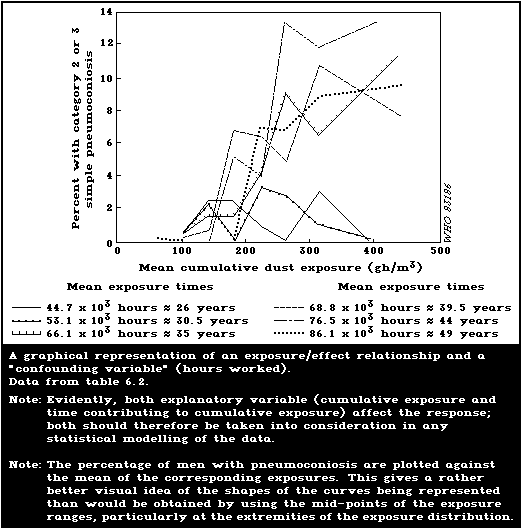 Table 6.2. A trivariate frequency distribution
Number of men in ranges of cumulative dust exposure and hours worked.
Also shown (in parentheses) are averages of 5 physicians' assessments of
the percentages of men in each subgroup whose chest radiographs showed
simple pneumoconiosis amounting to category 2 or 3 on the International
Labour Office's scale. (Data from the British National Coal Board's
Pneumoconiosis Field Research)a
--------------------------------------------------------------------------
C U M U L A T I V E D U S T E X P O S U R E (gh/m3)
Cumulative 0- 80- l20- 160- 200- 240- 280- 360+ ALL
hours 79 119 159 199 239 279 359
worked
(in 1000s)
--------------------------------------------------------------------------
0-39 73 72 84 42 19 10 3 3 306
(0.0) (0.0) (0.0) (0.0) (0.0) (0.0) (0.0) (0.0) (0.0)
40-48 97 81 87 106 45 26 20 3 465
(0.0) (0.0) (2.3) (2.3) (0.9) (0.0) (3.0) (0.0) (1.2)
49-56 91 65 68 60 79 45 41 7 456
(0.0) (0.0) (2.4) (0.0) (3.3) (2.7) (1.0) (0.0) (1.3)
57-64 70 51 53 58 67 81 64 37 481
(0.0) (0.0) (1.5) (1.4) (3.9) (8.9) (6.3) (11.4) (4.1)
65-72 75 48 36 36 42 46 70 33 386
(0.0) (0.0) (0.6) (6.7) (6.2) (4.8) (10.6) (7.3) (4.5)
73-80 42 35 29 35 29 38 68 64 340
(0.0) (0.0) (0.0) (5.1) (4.1) (13.2) (11.8) (13.8) (7.3)
80+ 33 22 15 18 17 15 25 21 166
(0.6) (0.0) (0.0) (0.0) (7.1) (6.7) (8.8) (9.5) (4.0)
--------------------------------------------------------------------------
ALL 481 374 372 355 298 261 291 168 2600
(0.0) (0.0) (1.2) (2.1) (3.6) (6.4) (7.8) (10.4)
--------------------------------------------------------------------------
a From: Hurley et al. (1982).
Notes: 1. The marginal distribution for dust exposure is the same as
shown in Table 6.1.
2. The relatively few numbers in the top-right and bottom-left
sections of the table demonstrate the correlation between
cumulative exposure and hours worked. These variables are
associated, by definition.
3. The marginal distributions of percentages of men with
pneumoconiosis indicate a positive relationship with both
associated explanatory variables. See Fig. 6.3 for a
graphical representation of these data.
6.3.4 Discrete variables and contingency tables
Replies to a question such as "do you smoke" may be either "yes"
or "no". The discrete nature of such variation ("yes" or "no") is
distinguished from variations on a continuous scale (for instance
the weights of tobacco consumed per week by pipe-smokers). Discrete
variables commonly encountered in epidemiological work include sex,
ethnic group, occupation, smoking habit, geographical location, and
responses to questions on symptoms. Adequate description often
requires tabulation of frequencies and relative frequencies
corresponding to such classifications. Graphical representation of
discrete variable distributions should be distinguished from their
continuous variable analogues by representing the frequencies as
proportional to the heights of vertical lines or clearly separated
rectangles, rather than by adjacent rectangles depicting grouped
data on a continuous scale.
Tables of multivariate discrete distributions of frequencies
are known as contingency tables. They may be simple, perhaps
involving only two variables (say sex and current smoking habit)
with each divided into only two levels (male/female; smoker/non-
smoker). Or they may be complicated, hierarchial (or "nested")
arrangements of frequencies according to several discrete
variables, with each at two or more levels. The statistical
analysis of such material has generated a large literature of its
own and the most important methods are described in standard text-
books. For the purpose of data description, the essence of an
effective presentation is to arrange the tables so that the
variables and levels of variables included will reveal the presence
or absence of associations that are pertinent to the research
questions. Test-statistics calculated from such tables may
indicate probabilities of chance occurrence of apparent
associations, but references in reports to values of X2 (Chi
squared) or probability levels are not adequate substitutes for
systematic documentation of the observed frequencies themselves.
6.3.5. Independent and related data
Epidemiological investigations often involve repeated
observations on the same individuals at different times (e.g.,
replicated measurements of lung function in a cross-sectional
survey; assessments of acute effects of temporary exposure to
pollutants; follow-up surveys in longitudinal studies). Whatever
the interval between the measurements, be it minutes, days, or
years, it is usually quite unrealistic to suppose that the sets
of observations corresponding to the different times are
"statistically independent"a. By definition, the sets of data
-------------------------------------------------------------------
a Two events are statistically independent if the occurrence of one
of them does not affect the probability that the other may occur.
Many widely-used statistical procedures are based on the
assumption that the individual items of data under examination
are independent. Conclusions based on such methods, when the
assumption is not justified, can be seriously in error.
are related, and, in practice, they often show clear patterns of
association. The corresponding frequency distributions should
therefore be presented in tabular or graphical form, using methods
appropriate for associated data (section 6.3.2).
The same distinction between independent and related data is
relevant to many case-control (retrospective) studies, if the
individual cases are "matched" with controls. Results referring to
individuals within a matched pair (for instance, the levels of
exposure to a pollutant) are then "related" in a statistical sense,
by definition, and it is often helpful to reflect this design-
determined fact in the tables that describe the results.
6.3.6. General points on tables and graphs
Choice of statistical methods for the analysis of data is
affected in an important way according to whether the variables are
discrete or continuous, and whether the data are related or
statistically independent. It is desirable, therefore, that the
format of data-description aids such as tables and graphs, reflect
both these factors. Otherwise, perusal of the summarized material
may confuse the issue and invite false conclusions. Ideally,
graphs and tables should be interpretable without reference to any
accompanying text. This requires that care is taken to ensure that
captions and legends are informative and unambiguous in describing
what the data displayed represent. Axes of graphs must be labelled
clearly giving the correct units. Explanatory footnotes may be
added, if necessary, to aid easy assimilation of the results
displayed. However, the addition of a narrative verbal text
describing the material will usually be necessary, and this should
include references to summary statistics and indices of morbidity
and mortality.
6.3.7. Summary statistics and indicesa
6.3.7.1. Averages
Care should be taken to select the most appropriate measure of
average tendency to indicate the approximate location of the
observations on the scale of measurement used. The arithmetic mean
(or just simply the "mean") is usually the most informative
statistic for this purpose, if the observations are on a continuous
scale, and if they are distributed more or less symmetrically on
either side of the mean. Happily (for statisticians), this is
frequently true, but whether or not it is so in any particular
instance can only be determined by examining the observed
distribution itself, preferably in a graphical form.
-------------------------------------------------------------------
a Most books on statistics, including some of those mentioned in
the list of references, give formal definitions and derivations
of various summary statistics mentioned in this section. These
are not necessarily reproduced in this short guide on when and
how the statistics should be used.
Marked lack of symmetry, for instance, a long "tail" on one side
of the distribution, would justify supplementing a reference to the
mean by quoting also the median, i.e., the value on the scale that
splits the number of observations contributing to the distribution
into two equal halves. A "bump" in the tail, be it large or
small, is a warning to re-examine how the data were collected and
processed before proceeding with description. Such bimodality may
indicate that the observations refer to two or more fundamentally
different types of situation, and it is usually wise to try at least
to explain or, if possible, to disentangle the mixture.
Distributions of measurements of atmospheric pollution are
often positively skewed: most of the observations fall, perhaps
symmetrically, within a relatively small range, but a proportion
are distributed with decreasing frequency at considerably higher
values (Fig. 6.1b). In this situation, the median will give a good
idea of about where on the scale most of the data are located,
while the higher value of the mean signals both the presence of
assymetry and its direction.
An alternative useful index of central tendency for positively-
skewed distribution is the geometric meana: the nth-root of
the products of all (n) observations. Reference to a geometric mean
should alert the reader to a likely positive skew, and this measure
will then provide a better indication of where most of the
observations are located than would the arithmetic mean.
When describing averages of discrete distributions (for
instance, the number of persons, or the number of smokers in each of
a series of households) reference to the mean ("the mean number of
smokers was 2.7...") may be misleading if it is quoted on its own.
The most frequently occurring number of persons observed (the mode)
is usually more acceptable and at least as informative a guide to
the facts, provided that it is supplemented with some other
information to indicate how typical the mode really is.
-------------------------------------------------------------------
a The geometric mean is numerically equivalent to the antilogarithm
of the arithmetic mean of the logarithms of the observations.
The logarithmic transformation of positively-skewed data is often
used to achieve approximate symmetry prior to the use of
statistical procedures which appeal, in part, to arguments based
on assumed symmetry, or to represent what is in essence a
curvilinear relationship between variables by an equation for a
straight line. If logarithmic scales are used in data
description to illustrate such features (for instance, in graphs
of cumulative frequency distributions or in scattergrams), then
particular care should be taken to draw attention conspicuously
to the transformation that has been used. Otherwise, the table
or graph may give a totally misleading impression of the pattern
of the raw data.
6.3.7.2. Scatter (or dispersion)
Questions concerning the range of the observations, such as
whether there was a sizeable proportion of households where the
number seen was very different from the mode (or mean), can be
anticipated and answered by mentioning an appropriate percentile of
the distribution. The pth percentile is the value that is
exceeded by p% of the observations (so that the 50th percentile is
the same as the median).
Measures of dispersion, including the range and percentiles,
are equally important when describing distributions on a continuous
scale. The statistical properties of the standard deviation of the
Gaussian ("Normal") frequency function are well documenteda.
This fact determines that reference to an estimate of the Standard
Deviation (SD) from a sample of data, which are distributed
approximately normally, provides a powerful and easily
interpretable measure of dispersion. If the observed data do mimic
the pattern defined by the "Normal" frequency curve, more or less,
then about two-thirds of all the observations will have occurred in
a range stretching from one SD below the mean to one SD above it.
Moreover, the mean will then be very close to the median and to the
mode. However, the ease with which pocket calculators (to say
nothing of computers) can generate SDs from large amounts of data
must not be allowed to obscure the fact that all or some of the
useful properties described above may be absent, if the observed
distribution deviates seriously from the normal function. Summary
statistics supplement but never substitute for careful tabulation
and graphical description of data.
Sometimes, the scatter within grouped subsets of data increases
systematically with the mean values for the different subsets. For
instance, the variability of somatic effects of a pollutant will
generally be higher in groups exposed to high levels of the
pollutant than in groups exposed to low levels. If the standard
deviation is approximately proportional to the mean then the ratio
of these two measures (SD/mean), called the coefficient of
variation, which is usually expressed as a percentage, is a useful
summary statistic, because it will be more or less constant over the
whole range of the data. Conversely, reference to coefficients of
variation on their own, for different sets of data, when the SD
is not proportional to the mean can be misleading; one value may
be relatively high, either because the SD is relatively high, or
because the mean is relatively low (or both). Unlike the SD, the
coefficient of variation is a dimensionless quantity. It can
therefore be used to compare variability in sets of data measured
in different units (e.g., particle-count and mass concentrations of
particulate matter).
-------------------------------------------------------------------
a A frequency function is a mathematical specification of a curve
that describes a theoretical distribution of frequencies. The
Gaussian "Normal" equation generates the familiar, symmetrical,
bell-shaped Gaussian "Normal" curve.
6.3.7.3. Morbidity and mortality indices
The earliest indices of community health were derived using
death certificates originally introduced to serve as legal
documents. As the limitations of these basic records became
recognized and interest developed in disease and disability,
epidemiologists turned their attention to alternative sources of
information such as hospital and general practice records as well as
morbidity surveys and morbidity registers (e.g., the National Cancer
Register in the United Kingdom). This change was not straight-
forward. Mortality indices described absolute events occurring
at single points in time; morbidity indices on the other hand, were
needed to summarize periods of ill-health or disability of varying
severity. Some of these conditions might result in deaths while
others would be followed by complete recovery.
Mortality measures the numbers of people dying in a defined
population in a defined period of time. In most circumstances
mortality can be expressed simply as the number dying per 100 000
population in one year. Actuaries have used this index, referred to
as the central death rate, to calculate the probability of surviving
(or dying) from one age to the next.
Two indices used to describe morbidity; incidence and
prevalence have been defined in section 4.2.2.
When a number of different morbidity indicators (symptoms,
signs, lung function, radiological changes, etc.) are used, some
individuals will demonstrate morbidity on more than one scale. Care
should therefore be taken to specify exactly what is being measured
and how the various aspects of morbidity overlap.
In most studies of mortality and morbidity, measures of the
burden (the numbers of deaths or cases of disease and disability)
can be converted to rates by relating them to independent estimates
of the size of the population to which the burden refers. Thus, the
total number of deaths in a country in a particular year may be
divided by an estimate of the mid-year population to give a crude
death rate for the country. As record linkage has developed and
epidemiologists have started to monitor the experiences of
individuals in well-defined groups, more precise measures of the
population at risk have been defined by taking into account the
changing ages of individuals as they are observed over time. This
new denominator, the person-years-at-risk, is more useful than an
estimate of the mid-year population, particularly when the age
structure of the population may be changing rapidly with time.
Such is the case, for example, in studies of cancer survival, when
death rates in the first few months after diagnosis are particularly
high (section 6.4.4.3).
6.3.7.4. Standardization
The principal determinant of mortality is age; at the ages of 85
years and over, death rates are more than 100 times those at ages
35-44 years. It is essential, therefore, that comparisons between
populations should take into account differences in the age-
structure of the populations. The most effective approach is to
make comparisons within age-groups by considering age-specific death
rates; the narrower the age-group the more precise the comparison.
However, in many situations, particularly when a number of
comparisons are required, it is not practicable to compare age-
specific death rates. A summary statistic is needed. A useful form
of summarization is by age-adjustment (or age-standardization). The
two most common approaches are indirect and direct standardization.
The corresponding mortality indices derived from these techniques
are Standardized Mortality Ratios (SMR) and Comparative Mortality
Figures (CMF) respectively, but the same principles can be used
for the construction of standardized morbidity indices. For
instance, McLintock et al. (1971) used indirect standardization, to
adjust for differences in age and in the profusion of small
opacities on chest radiographs, for a study on regional variations
in the attack rate of progressive massive lung fibrosis in British
coalminers. Fleiss (1981) reviews both these and other methods for
standardization and discusses some further examples.
Indirect standardization of mortality data answers the question
"how many deaths would be expected if the study population were
subject to some standard death rates"? "Expected deaths" are
calculated as:
Expected deaths = sigma [ (study population) x (standard death rates) ]
age [ ( in age group i ) ( in age group i ) ]
and the SMR is defined as:
observed deaths
--------------- x 100
expected deaths
Direct standardization answers the question "what would be the
death rate of the standard population, if it had experienced the
study population's age-specific death rate?" The approach is to
calculate first the total equivalent deaths in the standard
population:
Total equi- = sigma [ (standard population) x (death rate for study) ]
valent deaths age [ ( in age group i ) (group in age group i) ]
The age-adjusted death rate is then defined as:
total equivalent deaths
--------------------------
total standard population
and the CMF as:
age-adjusted death rate for study group
---------------------------------------- x 100
crude death rate for standard population
total equivalent deaths for study group
--------------------------------------- x 100
total deaths for standard population
In general, the SMR and CMF are similar, numerically. The two
factors that contribute to differences between them are the age-
specific mortality ratio and the age-specific population
distribution. For the SMR and CMF to differ appreciably, the
mortality rates must vary with age, and the population distribution
by age for the two groups must also differ materially.
One advantage of the SMR compared with the CMF is that
calculation of an SMR does not require knowledge of ages at death
in the study group; all that is required is the age distribution of
those at risk of death, and, of course, the corresponding standard
death rates. Calculation of SMRs by hand for a series of study
groups or subgroups, but using the same standard death rates, is also
easier than calculation of the corresponding CMFs, and this may be an
important consideration, if electronic computing aids are not
readily available.
In practice, the SMR is used mainly in occupational or other
cohort studies, when the number of deaths observed are small
relative to the size of the population being studied. The CMF is
helpful, when comparing national and regional statistics and trends
over time. Some statisticians argue that the CMF may be preferred
also for summarizing data from prospective studies, if the main aim
is to make comparisons between subgroups within the population being
investigated, or if the length of follow-up results in relatively
high observed age-specific death rates.
6.3.7.5. Proportional mortality
Often the main interest in an epidemiological investigation is
the suspected prominence of a particular cause of death, rather than
overall mortality. A disproportionately high number of deaths
attributed to a particular cause may then be summarized as, the
ratio of the fraction of all deaths attributed to that cause in the
study group to a similar fraction in the control group or standard
population, with which it is desired to make the comparison. The
resulting index, the Proportional Mortality Ratio (PMR), has the
advantage of simplicity: in its crudest form neither the age
distribution of those at risk nor the ages at death are required to
calculate it. But great care is required when trying to interpret
the significance of such a ratio, particularly if the age range of
those being studied is wide. An unusually high proportion of
deaths from a particular cause may be because of an unusually high
number of people at risk in an age-group, where the cause-specific
death rate is high in any case, even in the standard population.
One way in which gross anomalies of this kind can be avoided,
even when the age distribution of those "at risk" is not known, is
to use the distribution of ages at death to calculate the number of
deaths due to a particular cause C that might be "expected", if the
age-specific fractions of deaths due to C had been the same as in
the standard (referent) population. Note that the definition of
"expected" here differs from that used to calculate the SMR. The
"expected" number of deaths due to cause C is:
EC = sigma [ ( fraction of deaths ) ( number of deaths ) ]
age at [ (due to C in referent) x ( from all causes in ) ]
death [ ( population at age i) (study group at age i) ]
The age-standardized proportional mortality ratio for cause C
is then taken as the total number of deaths attributed to C
that have been observed, expressed as a percentage of those
"expected":
(observed deaths due to C)
Standardized PMRC = -------------------------- x 100
EC
An even more useful way of studying proportional mortality
is to compare the observed fraction of deaths attributed to a
cause C with the fraction that would be expected if the age-
and cause-specific death rates of the referent population had
been experienced:
(observed deaths due to C)
--------------------------
(all observed deaths)
------------------------------------- x 100
(expected deaths due to cause C)
---------------------------------
(expected deaths from all causes)
This proportional analogue to the SMR has been referred to as a
Relative Standardized Mortality Ratio (RSMR), because of its
numerical equivalence to the SMR for the cause of interest divided
by the SMR for all deaths:
SMR for cause C
RSMRC = ------------------ x 100
SMR for all causes
The importance of the RSMR is that it may exceed 100%,
indicating an excess proportion of deaths due to C in the study
population, even when the cause-specific SMR (SMRC) is similar to
or perhaps less severe than in the referent population. This would
imply that the SMR for all causes is well below 100%, indicating a
favourable overall mortality compared with the referent population.
This situation is met frequently in occupational health studies,
because of the selection effects common in such studies. Kupper et
al. (1978) discussed the theoretical relationship between the RSMR
and the standardized PMR, and showed that, in practice, the latter
may be a good approximation to the RSMR.
6.3.7.6. Relative risk and attributable risk
The ratio of comparative mortality figures (CMFs) from two
groups (when both CMFs are based on the same reference population)
is equivalent algebraically to the ratio of the corresponding age-
adjusted death rates. The quotient is therefore a direct measure of
the relative risks of death in the two groups. Similarly, the
relative risks of disease in two groups may be expressed as the
ratio of the appropriate (directly) age-standardized disease
incidence rates.
But incidence rates can only be measured in follow-up studies.
Prevalence rates, from cross-sectional surveys of large groups, are
only indirect reflections of disease risks, because prevalence
depends not only on the incidence of disease over a period of time,
but also on how long those with disease remain in the group being
studied. The prevalence rate of cases (with disease) in a group
defined for a case-control study does not provide any measure of
the disease risk for that group, because the magnitude of such a
prevalence rate depends on an arbitrary choice of how many controls
are included in the study.
Nevertheless, an approximate measure of relative risk for two
groups, A and B, can be obtained, both from cross-sectional and from
case-control studies, by comparing the odds favouring the occurrence
of the disease in the two groups:
(number with disease in group A)
-----------------------------------
(number without disease in group A)
Odds ratio = ----------------------------------------
(number with disease in group B)
-----------------------------------
(number without disease in group B)
This quotient is a useful index of the extent to which the
occurrence of disease is associated with membership of one or other
group. If the true incidence rates of the disease concerned are
small in both groups, then the odds ratio approximates closely to
the ratio of the incidence rates themselves - the true relative
risk. Of course, differences in the age distributions of the two
groups may seriously distort such a comparison, just as they would
when considering any other crude average. Techniques analogous to
age-standardization (or standardization for any other variable,
such as smoking) can be used to calculate an adjusted Summary
Relative Risk from data relating to appropriate subgroups (Mantel &
Haenszel, 1959). These ideas are developed further in section 6.4.5.
Sometimes, it is necessary to make a quantitative assessment of
the likely impact of preventive measures on the future incidence of
disease. It then becomes important to try to estimate how much of
the total incidence of the disease in a community is attributable
to a risk factor under consideration. If the incidence rates for
the whole community and for that part of it which has been exposed
to risk are known, then the difference between these rates provides
an obvious measure of attributable risk. This may be expressed as
a proportion of the total risk in the community, that is, a
population Attributable Risk Ratio. But, as with relative risks,
diffiulties arise when incidence rates are not known. However, if
at least a reliable estimate of the proportion of those in the
community who are exposed to the risk factor (chi), and a reliable
estimate (from the odds ratio) of the risk for those exposed
relative to those not exposed (r) are available, then the
population Attributable Risk Ratio may be approximated by
[chi(r-1)]/[1+chi(r-1)]. For further details of these and other
approximations see Walter (1976) and Leung & Kupper (1981).
6.3.7.7. Concluding remarks about summary statistics and indices
It is important to recall that summary statistics were
introduced in section 6.3.6 as supplements to data description, not
as substitutes for that activity. Any one summary statistic cannot
do more than reflect one aspect of the results, and reference to
that single aspect is unlikely to provide a convincing answer to
even the simplest research question.
The morbidity and mortality indices that have been mentioned are
measures of average tendencies and, as such, references to them
should generally be qualified by an indication of the dispersion of
the results on which they are based. This may be achieved by
tabular or graphical representations as discussed above, or by
quoting statistics that summarize the scatter (section 6.3.7.2). A
further extremely important way of describing the scatter associated
with an average is to derive a measure of the variability that would
be expected in that average, if the experiment, or survey giving
rise to it were repeated a large number of times, that is, the
Standard Error (SE) of the average concerned. Calculation of the
SE from the data leads directly to statistical inference including
the formal testing of hypotheses, and these problems are discussed
in the sections that follow.
6.4. Analysis and Interpretation
6.4.1. Statistical ideas about the interpretation of data
In some situations, a careful description of results from an
epidemiological study may be enough, or almost enough, to satisfy
the main research objectives. More usually, perusal of the data
descriptions leads to questions. Is it reasonable to conclude that
the apparent differences, trends, associations, or correlations,
which have been observed, really reflect the effects of the
explanatory variables hypothesized? How easily could the results
have arisen by chance? What is the best estimate of the likely
effect of a particular noxious agent, other things (smoking habits,
age, physique, social factors, etc.) being equal? What degree of
confidence can be placed in the estimate?
These questions reflect the uncertainty associated with many
experimental and observational settings, particularly those
involving living organisms. The uncertainty stems from the
multiplicity of factors that may influence a particular outcome,
such as the onset or cure of disease in an individual. The outcome
for the individual is not precisely predictable; yet a pattern is
thought to exist and may be discernible, if enough observations are
made on a number of persons and over a sufficiently long period.
This type of situation is described by statisticians as a random
system.
Applied statisticians study data generated from random systems
with the aim of quantifying the inherent uncertainty in the
observations and teasing-out patterns that may not be immediately
obvious. The procedure, quite generally, is to construct an
idealized mathematical representation (or model) of the system being
studied and then to examine the degree to which the model conforms
to the observed data. Statistical models are distinguished from
other mathematical constructions used in science by the fact that
they always include a term, explicit or implicit, to symbolize
variations that are not due to the factors being studied, that is
the randomness in the system. The aim is to characterize the
pattern of random variation, to quantify it, and to use the
estimated magnitude of the so-called "random error" to qualify
statements about the factors and effects being studied. The effects
(e.g., disease incidence, mortality, symptom prevalence) associated
with particular factors (e.g., exposure to a pollutant, membership
of a social group) are estimated (so-called "point estimates"). The
probable ranges within which the estimate might be expected to fall,
if the study were repeated a large number of times, may also be
determined ("interval estimation"). The estimated random error is
also used frequently as the basis for making judgements about the
statistical significance of effects, apparently associated with
factors in the model.
The percentage level of statistical significance is an inverse
index of how likely it is that an observed effect is due to chance.
Reference to a 5% level of significance, for instance, is
equivalent to stating that the probability of observing a result as
extreme or more extreme than that recorded, purely by chance, is
less than five in one hundred ( P < 0.05). This particular level
of significance is usually interpreted as some evidence that the
effect concerned is not due to chance. A lower significance level,
for instance, P < 0.01, might be described as fairly strong
evidence that the result is not due to chance. Most people would
regard P < 0.001 as overwhelming evidence against chance
occurrence.
The ubiquity of significance testing in epidemiology justifies
a brief restatement here of three important riders;
(a) Significance testing cannot prove that an effect is real.
A one-in-thousand chance does occur occasionally - by
chance (about once in a thousand times, in fact).
(b) If the probability of chance occurrence is, say, less than
1%, this does not mean that the probability that the
effect is real is 99% or more.
(c) "Not significant" is not to be misinterpreted as "not
real" or "not important". The absence of a statistically
significant result means only that the data concerned are
consistent with chance variation.
6.4.2. Errors
The riders mentioned above draw attention to different types of
error that may occur, when accepting results from significance
tests. The situation described in rider (a) - a chance event
occurs in practice, although the odds are fairly heavily against it
occurring - implies that an investigator who accepts the evidence
from the test at its face value is accepting an error: the so-
called Type I error. No statistical procedure can determine
whether or not the error has been made; but, if the test suggests
significance at, say, the alpha % level, then the probability of
making the Type I error is quantified: it is less than alpha %.
If the results are really due to chance, and the statistical test
also suggests that they are not significant at the alpha % level
(P > alpha), then the probability that an investigator is right in
accepting the implications of the test is at least (1-alpha); i.e.,
(1-alpha) is the probability of not making the Type I error.
Neither the level of significance (alpha) nor its complement (1-
alpha) measures the probability that an observed effect is real (see
rider (b).
On the other hand, it is possible that a real effect does exist
and yet the survey results may not provide any convincing evidence
in support of the reality, possibly because the effect is small, or
because not enough data are available. The absence of a
statistically significant result in this situation may persuade the
investigator to accept the Type II error: accepting the
hypothesis of "no effect" (the "null hypothesis") when in fact it
is not true. Again, no statistical procedure can determine whether
or not such an error has been made, but the probability of making
it (beta) can be controlled by adequate design of the study.
Fleiss (1981) provides useful tables to help answer the familiar
question: "how many observations are required ...?" to achieve the
required statistical power (1-beta) consistent with various
significance levels (alpha) and specified differences in
proportions.
It is the randomness in the system that gives rise to the
existence of Type I and Type II errors; the possibility of making
them cannot be avoided, but the probability of their occurrence can
be measured. A third more serious type of error is to ignore the
existence of alpha or beta or both, and to rely entirely on
intuition when interpreting epidemiological data; this error is
avoidable.
Results from epidemiological surveys usually provide a large
number of possible contrasts and comparisons. For instance, the
data may be divided into subsets corresponding to the two sexes, to
exposure types or categories, etc. A well thought-out survey plan,
designed to answer specific questions, will have anticipated the
main contrasts that are likely to be of interest. Data collection
and data description will have been organized in such a way that
these contrasts can be studied sensibly. But an alert eye must be
kept for the unusual and the unexpected, and tests of significance
in this situation are not necessarily straightforward.
In particular, unplanned division of the data into subsets,
with no specific research question in mind, sometimes leads to the
question of which, if any, of the observed differences between
subgroups are unlikely to be due to chance. The answer cannot be
determined simply by repeated tests of significance on all possible
combinations of subgroups, or by selecting for test those contrasts
that appear to be large. Apparent significance levels from such
repeated tests are not sound estimates of probabilities of making
Type I errorsa. Multiple comparisons of this kind require special
procedures that are described in many statistics texts, usually in
the context of analysis of variance (section 6.4.3.4). The first
step in these procedures is to put the question in a more general
form, not specific to any particular subgroup, i.e., whether
evidence from the data that the dispersion between the grouped
results is anything but random. Only if the answer is that there
is indeed evidence that the dispersion is not entirely random, is
it necessary to proceed with further modified tests to determine
which of the contrasts show significant differences. For instance,
the Registrar General of England and Wales (Registrar General,
1978) discussed multiple comparisons of SMRs in large-scale
mortality studies.
The instruments used in an epidemiological survey may generate
errors in the observations that are analogous to the Type I and
Type II errors familiar from the theory of significance testing.
Suppose that circumstances dictate that it is not possible to use
sophisticated clinical laboratory equipment in the field, and that
a simpler, but necessarily cruder, instrument (or questionnaire) is
used to classify subjects into the dichotomy diseased/not-diseased.
Suppose also that a pilot study has been conducted on a sample
consisting of N subjects, all of whom have been examined by both
methods, and that the results are as shown in Table 6.3.
A fraction [b/(b+d)] of those with no disease is classified
wrongly as having the disease ("false positives", compare the
probability of making the Type I error, alpha). [1-b/(b+d)] =
d/(b+d) is known as the specificity of the simpler test.
-------------------------------------------------------------------
a For instance, 15 subgroups would generate 105 possible contrasts
between pairs of subgroups. It would not be surprising to find
that about five of these contrasts appear to be "statistically
significant at the 5% level" even if the 15 subsets of results
were effectively random samples from one homogeneous set of data
(i.e., there are no real differences between subgroups - only
chance variations).
Table 6.3. T R U E S T A T U S
(based on full clinical investigation)
-------------------------------------------------------------------
With disease Without disease Total
-------------------------------------------------------------------
With a b a + B
Result disease
from simpler ----------------------------------------------------
test Without c d c + d
disease
-------------------------------------------------------------------
Total a+c b+d N = a+b+c+d
-------------------------------------------------------------------
Another fraction [c/(a+c)] is classified wrongly as having no
disease ("false negatives" compare the probability of making the
Type II error, beta). [1-c/(a+c)] = a/(a+c) is known as the
sensitivity of the simpler test.
The hypothetical pilot study referred to above might be
extended to help distinguish between two other types of error that
may be incurred in the survey procedures. Suppose that not just
one, but repeated measurements are made with the simpler (survey)
instrument on all N subjects involved in the pilot study. The
results from any one subject may be very variable (a high
coefficient of variation perhaps) but they may average out to a
value very close to the "true" value for that subject, as
determined from the measurement on the more sophisticated
equipment. In this event, measurements using the simpler
instrument are said to be very imprecise but unbiased.
However, it may be that the simpler instrument gives very
precise results for any one subject (a low coefficient or
variation), but averages of results referring to individual
subjects may differ systematically from the true values of the
individuals. The instrument and the measurements are said to be
biased, although they are precise. It is important to distinguish
between lack of precision and bias. In principle, the precision of
an average of repeated measurements can always be increased (at a
cost) by making more measurements. Bias however is usually more
difficult to detect or to correct. Properly conducted pilot
studies should include efforts to quantify these possible errors
(section 5.6.6).
The various terms concerning the characteristics of results of
measurements, such as precision, accuracy, and validity, have been
discussed in sections 3.5.1 and 4.1.2. It is clear that errors
arising from the way that observations are made, from the
limitations of the instruments themselves, and from the inherent
variability in the (random) biological system being studied, all
contribute to the total uncertainty that is associated with
epidemiological results. It is worth recalling, therefore, the
references in Chapters 2 and 5 to the important link between the
design and conduct of a study and the subsequent analysis of
results. The more carefully a study has been designed, the easier
it is to postulate realistic models and to derive sensible
conclusions from the observations. Conversely, it is generally
true that a poorly designed or conducted study is unlikely to yield
reliable results, however ingenious the statistical analysis.
The remainder of this section will refer to some of the models
that may be applicable to results from some of the study designs
discussed in Chapter 2. The statistical principles involved are
emphasized, without details of statistical theory and methods.
Recent developments in statistical thinking that are particularly
relevant to the analysis of epidemiological data are discussed,
although some of the ideas mentioned are still controversial.
6.4.3. Analysing results from cross-sectional studies
6.4.3.1. Qualitative data
Cross-sectional studies generate results that refer to a
single point in time (or to a relatively short interval). The
effects observed in such a study are, of course, influenced by time
to a major extent (e.g., the ages of those studied, the length of
prior exposure to a pollutant, the latency period for the occurrence
of disease), but technical complications, which arise when
considering repeated measurements on the same individuals at
different times, are absent. Cross-sectional survey results are
therefore a convenient starting point for a discussion on how to
interpret data that have been described previously by the methods
outlined in section 6.3.
In the first instance the qualitative data are considered, that
is, the classified frequencies with respect to discrete variables in
the contingency tables that were mentioned in section 6.3.4. The
variations in numbers recorded in the corresponding cells of the
data description tables will generate questions. For instance, is
the relative frequency of persons with disease, in the sample
studied, a useful indication of the true prevalence in the
"population" from which the sample has been drawn?
The above enclosure in quotation marks of the word "population"
is to draw attention to a difference between the use of the word in
a statistical context, and the more general meaning of the word
population as used also by epidemiologists. For instance, a survey
with a 100% response-rate of all people in a village exposed to a
particular pollutant may provide an authoritative picture of disease
prevalence in that community, or population in the sense that the
word is used by epidemiologists; this is important in its own right.
However, the most important aspect of the results from the survey is
likely to be the information that it provides on the probable
prevalence of the disease in other groups who may be exposed to the
same pollutant. From this point of view, the group studied in one
village is but a sample from a larger statistical population of
similar communities that have not been studied. And it is this
population of villages, or groups, that has not been surveyed, (and
may not even have been identified), which probably lies at the
centre of the research question that stimulated the survey in the
first place.
How good then is the sample estimate of the population
prevalence? A quantitative answer to this question will require an
appeal to statistical theory about binomial responses. It will
depend partly on the size of the sample that has been studied, and
it may be expressed either as a standard error of the sample
estimate of prevalence, or as confidence limits for the estimate.
In many situations, these measures are directly related, in that an
interval measuring approximately twice the standard error on either
side of the estimate will approximate closely to the 95% confidence
interval. This is the range of figures likely to embrace 95% of the
prevalence results in a hypothetical long series of repetitions of
surveys, of the kind that have produced the sample estimate.
Provided that the group studied is representative of the population
concerned, then the best available (point) estimate of the true
population prevalence will be that found in the survey. The
variability of the estimate can be quantified using probability
concepts.
Similar principles will be used, when exploring hypothesized
differences between groups that apparently exhibit different levels
of prevalence. To what extent are those differences attributable to
the fact that the individual results are only sample estimates of
the true corresponding population prevalences? How likely is it
that the differences observed are due to chance? The extension of
these ideas to analyses of results with more than two levels of a
discrete variable (i.e., not just disease/no disease, the so-called
binary responses, but possibly disease A/disease B/no disease), and
to the investigation of possible associations between discrete
variables (e.g., occurrence of disease and residence in a particular
area) is often pursued using the well-known x2 test of association.
The principle of this test is to divide the data into appropriate
subsets corresponding to cells in a contingency table (section
6.3.4). The numbers of observations that might be expected in each
cell, under the (null) hypothesis of no association, are calculated
in proportion to the observed frequencies in the marginal
distributions. The sum of terms (one for each cell) each of the
form:
[(number observed - number expected)2/(number expected)]
constitutes the test statistic probability distribution of which,
under the null hypothesis, is approximately the same as that of a
mathematical function known as x2. The x2 distribution varies,
depending on the number of independenta terms (degrees of freedom)
contributing to it, and this number is always less than the number
of cells in the corresponding contingency table. A table
consisting of r rows and c columns contributes ( r-1) x ( c-1)
degrees of freedom to the test statistic. Note that the test
statistic must be constructed by operating on numbers of
observations (observed and expected), not on proportions,
percentages, or measurements on a continuous scale. The text by
Maxwell (1961) provides a particularly helpful and concise guide to
these methods of analysis. The statistical study of rates and
-------------------------------------------------------------------
a See footnote to section 6.3.5.
proportions is dealt with in a systematic and comprehensive way by
Fleiss (1981) in a book that includes many examples of
epidemiological applications.
Different categories of a discrete variable are sometimes
arranged naturally into a distinct order; for instance, low,
medium, and high exposure to a pollutant that has not been measured
precisely; or categories representing the increasing severity of a
symptom. Generation of such ordered categorical data is often
characterized by a subjective element, which usually implies a
relatively high level of variability between different observers in
their assessments of the same phenomena - observer error. The data
themselves are quasi-continuous, in that changes from one category
to the next reflect an underlying continuum from low to high, or
small to large; but the difficulty of determining precisely where on
the continuum a particular observation should be placed determines
that the measurements are expressed as discrete categories. Some of
the methods available for analysing data arranged in ordered
categories have been reviewed by Jacobsen (1975a), who gives
examples from classifications of an increasing profusion of small
shadows on chest radiographs.
Methods for investigating associations between binary responses
and several other variables, and for estimating the separate effects
attributable to these variables, are reviewed, explained, and
extended in a classical monograph by Cox (1970). Some of the ideas
used by Cox are analogous to those applied to the study of continuous
variables that generate quantitative data.
6.4.3.2. Quantitative data: response and explanatory variables
Physiology, chemistry, and biochemistry, quantitative pathology,
and anthropometry may furnish epidemiologists with biological end-
points to relate to environmental factors. These endpoints of
function, concentration, or size are normally recorded as
continuous variables, yielding "quantitative data". Moreover, even
when the data recorded are qualitative, for instance the numbers of
deaths occurring in different groups, their analysis may sometimes
be effected more efficiently by expressing the numbers as fractions
or rates (for instance the death rates in the various groups).
Either the fractions themselves, or one of several possible
mathematical transformations of the fractions, may then be treated
as quantitative data, as if they were measurements on a continuous
scale.
Statistical models involve two broad types of variables, both
of which may include qualitative and quantitative data. The first
type refers to variations that are posited as the consequence of
some other event or events; these are the so-called response or
dependent variables, which are also referred to as regressands in
the context of regression analysis. Then there are the so-called
explanatory, independent, or regressor variables, namely, those
that are represented in the model as being responsible for some
part of the variation in the response variablesa. Mortality and
different indices of morbidity including, for example, the level of
lung function, the blood level of a pollutant, the appearance of a
chest radiograph, or the occurrence of symptoms, are typical
response variables in an epidemiological setting. Age, nutrition,
social conditions, smoking habits, and the intensity and length of
exposure to a pollutant, are examples of observations that are
usually regarded as explanatory variables, because the way in which
they vary helps to explain the variation in the response variable
of interest.
It will be clear immediately that what may be regarded
reasonably as an explanatory variable in one situation may be
considered as a response variable in another. For instance, the
concentration of pollutant in the ambient air is certainly an
explanatory variable in an analysis of the effect on the health of
the people exposed to the pollutant. But the very same levels of
pollutant may be regarded as responses to variations in climatic
conditions or the intensity of production of some local factory, or
variations in types of fuel used in the area.
Moreover it is commonplace that some explanatory variables are
themselves associated, that is, one of them may vary depending on
the level of another (Table 6.2; section 6.3.3). Age for instance
is often correlated with the level of cumulative exposure to a
pollutant. Indeed, in the absence of an independent measure of
exposure, age, or some simple function of age is sometimes used as
a crude, indirect index of cumulative exposure.
A further complication in the statistical nomenclature for
variables arises in case-control or restrospective studies. The
cases and controls are defined and identified at the start in
relation to the presence and absence, respectively, of some morbid
condition. The research question is: do these two groups differ
also with respect to some antecedent factor, such as exposure to a
pollutant? From the statistical point of view, the exposure is now
a response variable; the occurrence of a case or control is the
explanatory variable. This apparently curious reversal of the
labels attached to the same variable is a reflection of the fact
that the question presented in the case-control study can be
formulated as follows: "given these (independently) defined
groups, cases, and controls, what is the difference in their prior
exposures?". The corresponding cross-sectional or prospective
design to examine the same epidemiological problem would lead to
the question: "given different levels of exposure to a pollutant,
what is the difference in the prevalence or incidence of the
conditions of interest?". The design-determined difference in the
way that the statistical question is posed, is often reflected in
the methods used for the statistical analysis. In general, a
-------------------------------------------------------------------
a In this chapter it is convenient to distinguish between these
broad classes of variables by referring to them as response and
explanatory variables, respectively.
decision as to which is the explanatory and which the response
variable in a particular setting depends on which data are given at
the outset; the given information refers to the explanatory variable.
6.4.3.3. Statisticians and computers
Most epidemiological studies are observational, not
experimental. Normally, the effects of several known or suspected
explanatory variables must be considered before useful inferences
can be made concerning relationships of the environment to the
biological indicators of interest. Multiple variables must be
included in the analysis: hence multivariate analysis. Analysis
of variance, and correlation and regression analysis, described in
any good basic statistics text (Dixon & Massey, 1957, for example)
are the best known of the multivariate techniques, and the most
generally useful in environmental epidemiology. Choice of the
appropriate multivariate approach and practical implementation of
the analysis are tasks requiring the professional skills of a
statistician, who should be qualified and experienced in applying
mathematical probability concepts to data generated from
observations on a human population.
For large sets of data, particularly when many variables are
being considered, full exploitation of the methods discussed here
will usually require access to a computer. Generally, it will be
desirable to inspect results from several alternative statistical
models of the data before attempting to draw conclusions. When a
computer is used, it is wise to select a subportion of data for
manual analysis, using perhaps three variables on 50 subjects, and
compare results with those on the computer output. This will serve
to highlight possible errors in the computer programs themselves or
in the choice of statistical options of the user provided in general
purpose packaged software (preprogrammed statistical operations).
In any case, the additional insight into the data, which will be
gained by adopting this discipline, is a valuable aid to intelligent
inspection and interpretation of the computer output.
The following discussion concerns multivariate methods in
environmental epidemiology from three points of view: first, the
utility of various techniques; second, general considerations in
formulating models; and finally, how to evaluate the effectiveness
of particular models.
6.4.3.4. Analysis of variance
Analyses of variance are used to establish the presence of
statistically significant effects in designed experiments and to
estimate the effects with appropriate confidence limits. The
usefulness of this powerful statistical tool depends largely on the
ability to control the sequence in which specified combinations of
different levels of explanatory variables are allowed to occur, and
this is determined by the experimental, as distinct from
epidemiological, design. The method is therefore the mainstay of
experimentalists, but it has relatively few applications in
observational sciences (King, 1969)a. Nevertheless, the analysis
of variance is used in environmental epidemiology in certain
circumstances, for instance, to study multiple repeated
measurements in near-experimental study designs. An example
referring to daily changes in lung function over several days may
be found in the papers by Carey et al. (1967, 1968). An analysis
of multiple repeated measurements over three years by McKerrow &
Rossiter (1968) is of particular interest, yielding evidence of
linear trends over the study period for individuals.
The analysis of variance can be regarded as a special case of
the more general family of multiple regression models that are used
extensively in observational studies and that are considered further
below. The formulation and interpretation of such models in
environmental epidemiology requires knowledge concerning factors
affecting fluctuations in both response and explanatory variables.
These problems may be studied by considering the "components of
variance" in a set of observations. Total variability may be
estimated by combining independent estimates of the components,
using analysis of variance methods, or by measuring the observed
(total) variance directly. Duncan (1959) discussed this important
topic in detail. In cross-sectional studies, it is usually
necessary to have reasonable estimates of what proportion of the
total variance in a measurement can be ascribed to between-person
variability, individual or within-person variability, instrument,
or laboratory variability, when relevant, and residual variance.
Another epidemiological situation, in which the idea of
components of variance may be important, is when limited sampling
equipment and resources have to be allocated to measure the
concentration of a pollutant (e.g., in air, water, or food supply).
The problem is how to plan the distribution of the available
resources to different locations and times so as to maximize the
precision of exposure estimates that are required for the
subsequent epidemiological survey. A solution to the problem may
usually be found from a pilot study designed to yield estimates of
the appropriate components of variance (between general locations,
specific places within the general locations, different time
intervals, instruments, staff using the instruments, etc.). Such a
preliminary study may have quasi-experimental features suited to a
formal analysis of variance, or, otherwise, the components of
variance may be estimated, but less efficiently, using more general
regression models.
Analysis of single pairs of differences, such as changes in
ventilatory function before and after a work shift (Lapp et al.,
1972) may be based on paired t-tests. "Before" and "after"
study designs are extremely useful in environmental epidemiology,
because short-term decrements in function in response to an
-------------------------------------------------------------------
a The constraints on materials and methods in epidemiology affect
not only the statistical approach to the data but also the
conclusions that can be drawn, particularly in exposure/effect
studies (section 6.4.6).
environmental agent may suggest long-term effects. In general,
analyses of pairs of observations should be carried out on
differences in averages of the observations; using the observations
singly may generate statistical artefacts (due to regression towards
individual means) and the spurious correlations can be misleading.
Oldham (1962) and Gardner & Heady (1973) have discussed the problem
in detail. Effects of regression toward individual means in
analyses of results from treatment of groups of patients have been
studied by Deniston & Rosenstock (1973); their experience is
relevant in environmental epidemiology when panels of ill subjects
are being selected for repeated observations over a period of time
(time series).
Within-individual variability often depends on the time interval
over which the repeated measurements are made. For instance,
systematic reduction of lung function within individuals over
several years has been studied longitudinally (Fletcher et al.,
1976; Love & Miller, 1982) but the variation between individuals in
the rates of reduction with time is much higher than the variations
between individuals of the same age, at the same time. This fact
points to a very substantial non-systematic (random) within-
individual component of variance over long time periods. In
general, variability within individuals from one year to the next is
greater than that from one month to the next, and so on down to the
time between immediately repeated tests (Berry, 1974; Lebowitz et
al., 1982). Cross-sectional evaluation of any physiological test in
terms of within-subject variability requires explicit consideration
of the duration over which variability is of interest.
6.4.3.5. Correlations
A correlation coefficient is an index of the degree of linear
association between two variables. It is a dimensionless decimal
fraction that may vary between -1.0 and +1.0 depending on whether
one of the variables decreases or whether it increases as the other
increases. The danger of misinterpreting numerical estimates of
such coefficients from samples of data can be reduced by making it a
rule always to study their significance in the context of the
corresponding scattergrams (section 6.3.3). Studying the scatter-
grams will often reveal features in the data that may have
artefactually inflated or diminished the calculated values.
One fairly common and potentially misleading situation is the
occurrence of a high value of the index in bivariate data consisting
of well-separated clusters of points that happen to fall on a
straight line drawn through them (Fig. 6.4a). The separate clusters
may correspond to quite different situations, each characterized by
relatively slight variability about different mean values of one
variable (say, blood-lead levels as determined at different
laboratories). Even quite small but systematic differences in the
laboratory techniques may then generate superficially impressive but
spurious correlation with any explanatory variable, the mean
levels of which also happen to differ systematically between the
laboratories in the same (or in the opposite) direction (say some
aspect of dietary intake among persons resident close to the
laboratories). A scattergram will quickly reveal the clustering and
will also show whether there is any suggestion of a linear trend
within the clusters. If there is no such trend within clusters (and
in the same direction as the trend between clusters), then the
apparently high value of the correlation coefficient is not to be
interpreted as an index of linear trend between the variables; it
reflects only a linear trend of mean values between clusters. Good
data description should have identified the clustering before the
correlation coefficient was calculated, and the possible reasons why
it occurred should have been investigated before formal analysis
(section 6.3.1).
Table 6.2. A trivariate frequency distribution
Number of men in ranges of cumulative dust exposure and hours worked.
Also shown (in parentheses) are averages of 5 physicians' assessments of
the percentages of men in each subgroup whose chest radiographs showed
simple pneumoconiosis amounting to category 2 or 3 on the International
Labour Office's scale. (Data from the British National Coal Board's
Pneumoconiosis Field Research)a
--------------------------------------------------------------------------
C U M U L A T I V E D U S T E X P O S U R E (gh/m3)
Cumulative 0- 80- l20- 160- 200- 240- 280- 360+ ALL
hours 79 119 159 199 239 279 359
worked
(in 1000s)
--------------------------------------------------------------------------
0-39 73 72 84 42 19 10 3 3 306
(0.0) (0.0) (0.0) (0.0) (0.0) (0.0) (0.0) (0.0) (0.0)
40-48 97 81 87 106 45 26 20 3 465
(0.0) (0.0) (2.3) (2.3) (0.9) (0.0) (3.0) (0.0) (1.2)
49-56 91 65 68 60 79 45 41 7 456
(0.0) (0.0) (2.4) (0.0) (3.3) (2.7) (1.0) (0.0) (1.3)
57-64 70 51 53 58 67 81 64 37 481
(0.0) (0.0) (1.5) (1.4) (3.9) (8.9) (6.3) (11.4) (4.1)
65-72 75 48 36 36 42 46 70 33 386
(0.0) (0.0) (0.6) (6.7) (6.2) (4.8) (10.6) (7.3) (4.5)
73-80 42 35 29 35 29 38 68 64 340
(0.0) (0.0) (0.0) (5.1) (4.1) (13.2) (11.8) (13.8) (7.3)
80+ 33 22 15 18 17 15 25 21 166
(0.6) (0.0) (0.0) (0.0) (7.1) (6.7) (8.8) (9.5) (4.0)
--------------------------------------------------------------------------
ALL 481 374 372 355 298 261 291 168 2600
(0.0) (0.0) (1.2) (2.1) (3.6) (6.4) (7.8) (10.4)
--------------------------------------------------------------------------
a From: Hurley et al. (1982).
Notes: 1. The marginal distribution for dust exposure is the same as
shown in Table 6.1.
2. The relatively few numbers in the top-right and bottom-left
sections of the table demonstrate the correlation between
cumulative exposure and hours worked. These variables are
associated, by definition.
3. The marginal distributions of percentages of men with
pneumoconiosis indicate a positive relationship with both
associated explanatory variables. See Fig. 6.3 for a
graphical representation of these data.
6.3.4 Discrete variables and contingency tables
Replies to a question such as "do you smoke" may be either "yes"
or "no". The discrete nature of such variation ("yes" or "no") is
distinguished from variations on a continuous scale (for instance
the weights of tobacco consumed per week by pipe-smokers). Discrete
variables commonly encountered in epidemiological work include sex,
ethnic group, occupation, smoking habit, geographical location, and
responses to questions on symptoms. Adequate description often
requires tabulation of frequencies and relative frequencies
corresponding to such classifications. Graphical representation of
discrete variable distributions should be distinguished from their
continuous variable analogues by representing the frequencies as
proportional to the heights of vertical lines or clearly separated
rectangles, rather than by adjacent rectangles depicting grouped
data on a continuous scale.
Tables of multivariate discrete distributions of frequencies
are known as contingency tables. They may be simple, perhaps
involving only two variables (say sex and current smoking habit)
with each divided into only two levels (male/female; smoker/non-
smoker). Or they may be complicated, hierarchial (or "nested")
arrangements of frequencies according to several discrete
variables, with each at two or more levels. The statistical
analysis of such material has generated a large literature of its
own and the most important methods are described in standard text-
books. For the purpose of data description, the essence of an
effective presentation is to arrange the tables so that the
variables and levels of variables included will reveal the presence
or absence of associations that are pertinent to the research
questions. Test-statistics calculated from such tables may
indicate probabilities of chance occurrence of apparent
associations, but references in reports to values of X2 (Chi
squared) or probability levels are not adequate substitutes for
systematic documentation of the observed frequencies themselves.
6.3.5. Independent and related data
Epidemiological investigations often involve repeated
observations on the same individuals at different times (e.g.,
replicated measurements of lung function in a cross-sectional
survey; assessments of acute effects of temporary exposure to
pollutants; follow-up surveys in longitudinal studies). Whatever
the interval between the measurements, be it minutes, days, or
years, it is usually quite unrealistic to suppose that the sets
of observations corresponding to the different times are
"statistically independent"a. By definition, the sets of data
-------------------------------------------------------------------
a Two events are statistically independent if the occurrence of one
of them does not affect the probability that the other may occur.
Many widely-used statistical procedures are based on the
assumption that the individual items of data under examination
are independent. Conclusions based on such methods, when the
assumption is not justified, can be seriously in error.
are related, and, in practice, they often show clear patterns of
association. The corresponding frequency distributions should
therefore be presented in tabular or graphical form, using methods
appropriate for associated data (section 6.3.2).
The same distinction between independent and related data is
relevant to many case-control (retrospective) studies, if the
individual cases are "matched" with controls. Results referring to
individuals within a matched pair (for instance, the levels of
exposure to a pollutant) are then "related" in a statistical sense,
by definition, and it is often helpful to reflect this design-
determined fact in the tables that describe the results.
6.3.6. General points on tables and graphs
Choice of statistical methods for the analysis of data is
affected in an important way according to whether the variables are
discrete or continuous, and whether the data are related or
statistically independent. It is desirable, therefore, that the
format of data-description aids such as tables and graphs, reflect
both these factors. Otherwise, perusal of the summarized material
may confuse the issue and invite false conclusions. Ideally,
graphs and tables should be interpretable without reference to any
accompanying text. This requires that care is taken to ensure that
captions and legends are informative and unambiguous in describing
what the data displayed represent. Axes of graphs must be labelled
clearly giving the correct units. Explanatory footnotes may be
added, if necessary, to aid easy assimilation of the results
displayed. However, the addition of a narrative verbal text
describing the material will usually be necessary, and this should
include references to summary statistics and indices of morbidity
and mortality.
6.3.7. Summary statistics and indicesa
6.3.7.1. Averages
Care should be taken to select the most appropriate measure of
average tendency to indicate the approximate location of the
observations on the scale of measurement used. The arithmetic mean
(or just simply the "mean") is usually the most informative
statistic for this purpose, if the observations are on a continuous
scale, and if they are distributed more or less symmetrically on
either side of the mean. Happily (for statisticians), this is
frequently true, but whether or not it is so in any particular
instance can only be determined by examining the observed
distribution itself, preferably in a graphical form.
-------------------------------------------------------------------
a Most books on statistics, including some of those mentioned in
the list of references, give formal definitions and derivations
of various summary statistics mentioned in this section. These
are not necessarily reproduced in this short guide on when and
how the statistics should be used.
Marked lack of symmetry, for instance, a long "tail" on one side
of the distribution, would justify supplementing a reference to the
mean by quoting also the median, i.e., the value on the scale that
splits the number of observations contributing to the distribution
into two equal halves. A "bump" in the tail, be it large or
small, is a warning to re-examine how the data were collected and
processed before proceeding with description. Such bimodality may
indicate that the observations refer to two or more fundamentally
different types of situation, and it is usually wise to try at least
to explain or, if possible, to disentangle the mixture.
Distributions of measurements of atmospheric pollution are
often positively skewed: most of the observations fall, perhaps
symmetrically, within a relatively small range, but a proportion
are distributed with decreasing frequency at considerably higher
values (Fig. 6.1b). In this situation, the median will give a good
idea of about where on the scale most of the data are located,
while the higher value of the mean signals both the presence of
assymetry and its direction.
An alternative useful index of central tendency for positively-
skewed distribution is the geometric meana: the nth-root of
the products of all (n) observations. Reference to a geometric mean
should alert the reader to a likely positive skew, and this measure
will then provide a better indication of where most of the
observations are located than would the arithmetic mean.
When describing averages of discrete distributions (for
instance, the number of persons, or the number of smokers in each of
a series of households) reference to the mean ("the mean number of
smokers was 2.7...") may be misleading if it is quoted on its own.
The most frequently occurring number of persons observed (the mode)
is usually more acceptable and at least as informative a guide to
the facts, provided that it is supplemented with some other
information to indicate how typical the mode really is.
-------------------------------------------------------------------
a The geometric mean is numerically equivalent to the antilogarithm
of the arithmetic mean of the logarithms of the observations.
The logarithmic transformation of positively-skewed data is often
used to achieve approximate symmetry prior to the use of
statistical procedures which appeal, in part, to arguments based
on assumed symmetry, or to represent what is in essence a
curvilinear relationship between variables by an equation for a
straight line. If logarithmic scales are used in data
description to illustrate such features (for instance, in graphs
of cumulative frequency distributions or in scattergrams), then
particular care should be taken to draw attention conspicuously
to the transformation that has been used. Otherwise, the table
or graph may give a totally misleading impression of the pattern
of the raw data.
6.3.7.2. Scatter (or dispersion)
Questions concerning the range of the observations, such as
whether there was a sizeable proportion of households where the
number seen was very different from the mode (or mean), can be
anticipated and answered by mentioning an appropriate percentile of
the distribution. The pth percentile is the value that is
exceeded by p% of the observations (so that the 50th percentile is
the same as the median).
Measures of dispersion, including the range and percentiles,
are equally important when describing distributions on a continuous
scale. The statistical properties of the standard deviation of the
Gaussian ("Normal") frequency function are well documenteda.
This fact determines that reference to an estimate of the Standard
Deviation (SD) from a sample of data, which are distributed
approximately normally, provides a powerful and easily
interpretable measure of dispersion. If the observed data do mimic
the pattern defined by the "Normal" frequency curve, more or less,
then about two-thirds of all the observations will have occurred in
a range stretching from one SD below the mean to one SD above it.
Moreover, the mean will then be very close to the median and to the
mode. However, the ease with which pocket calculators (to say
nothing of computers) can generate SDs from large amounts of data
must not be allowed to obscure the fact that all or some of the
useful properties described above may be absent, if the observed
distribution deviates seriously from the normal function. Summary
statistics supplement but never substitute for careful tabulation
and graphical description of data.
Sometimes, the scatter within grouped subsets of data increases
systematically with the mean values for the different subsets. For
instance, the variability of somatic effects of a pollutant will
generally be higher in groups exposed to high levels of the
pollutant than in groups exposed to low levels. If the standard
deviation is approximately proportional to the mean then the ratio
of these two measures (SD/mean), called the coefficient of
variation, which is usually expressed as a percentage, is a useful
summary statistic, because it will be more or less constant over the
whole range of the data. Conversely, reference to coefficients of
variation on their own, for different sets of data, when the SD
is not proportional to the mean can be misleading; one value may
be relatively high, either because the SD is relatively high, or
because the mean is relatively low (or both). Unlike the SD, the
coefficient of variation is a dimensionless quantity. It can
therefore be used to compare variability in sets of data measured
in different units (e.g., particle-count and mass concentrations of
particulate matter).
-------------------------------------------------------------------
a A frequency function is a mathematical specification of a curve
that describes a theoretical distribution of frequencies. The
Gaussian "Normal" equation generates the familiar, symmetrical,
bell-shaped Gaussian "Normal" curve.
6.3.7.3. Morbidity and mortality indices
The earliest indices of community health were derived using
death certificates originally introduced to serve as legal
documents. As the limitations of these basic records became
recognized and interest developed in disease and disability,
epidemiologists turned their attention to alternative sources of
information such as hospital and general practice records as well as
morbidity surveys and morbidity registers (e.g., the National Cancer
Register in the United Kingdom). This change was not straight-
forward. Mortality indices described absolute events occurring
at single points in time; morbidity indices on the other hand, were
needed to summarize periods of ill-health or disability of varying
severity. Some of these conditions might result in deaths while
others would be followed by complete recovery.
Mortality measures the numbers of people dying in a defined
population in a defined period of time. In most circumstances
mortality can be expressed simply as the number dying per 100 000
population in one year. Actuaries have used this index, referred to
as the central death rate, to calculate the probability of surviving
(or dying) from one age to the next.
Two indices used to describe morbidity; incidence and
prevalence have been defined in section 4.2.2.
When a number of different morbidity indicators (symptoms,
signs, lung function, radiological changes, etc.) are used, some
individuals will demonstrate morbidity on more than one scale. Care
should therefore be taken to specify exactly what is being measured
and how the various aspects of morbidity overlap.
In most studies of mortality and morbidity, measures of the
burden (the numbers of deaths or cases of disease and disability)
can be converted to rates by relating them to independent estimates
of the size of the population to which the burden refers. Thus, the
total number of deaths in a country in a particular year may be
divided by an estimate of the mid-year population to give a crude
death rate for the country. As record linkage has developed and
epidemiologists have started to monitor the experiences of
individuals in well-defined groups, more precise measures of the
population at risk have been defined by taking into account the
changing ages of individuals as they are observed over time. This
new denominator, the person-years-at-risk, is more useful than an
estimate of the mid-year population, particularly when the age
structure of the population may be changing rapidly with time.
Such is the case, for example, in studies of cancer survival, when
death rates in the first few months after diagnosis are particularly
high (section 6.4.4.3).
6.3.7.4. Standardization
The principal determinant of mortality is age; at the ages of 85
years and over, death rates are more than 100 times those at ages
35-44 years. It is essential, therefore, that comparisons between
populations should take into account differences in the age-
structure of the populations. The most effective approach is to
make comparisons within age-groups by considering age-specific death
rates; the narrower the age-group the more precise the comparison.
However, in many situations, particularly when a number of
comparisons are required, it is not practicable to compare age-
specific death rates. A summary statistic is needed. A useful form
of summarization is by age-adjustment (or age-standardization). The
two most common approaches are indirect and direct standardization.
The corresponding mortality indices derived from these techniques
are Standardized Mortality Ratios (SMR) and Comparative Mortality
Figures (CMF) respectively, but the same principles can be used
for the construction of standardized morbidity indices. For
instance, McLintock et al. (1971) used indirect standardization, to
adjust for differences in age and in the profusion of small
opacities on chest radiographs, for a study on regional variations
in the attack rate of progressive massive lung fibrosis in British
coalminers. Fleiss (1981) reviews both these and other methods for
standardization and discusses some further examples.
Indirect standardization of mortality data answers the question
"how many deaths would be expected if the study population were
subject to some standard death rates"? "Expected deaths" are
calculated as:
Expected deaths = sigma [ (study population) x (standard death rates) ]
age [ ( in age group i ) ( in age group i ) ]
and the SMR is defined as:
observed deaths
--------------- x 100
expected deaths
Direct standardization answers the question "what would be the
death rate of the standard population, if it had experienced the
study population's age-specific death rate?" The approach is to
calculate first the total equivalent deaths in the standard
population:
Total equi- = sigma [ (standard population) x (death rate for study) ]
valent deaths age [ ( in age group i ) (group in age group i) ]
The age-adjusted death rate is then defined as:
total equivalent deaths
--------------------------
total standard population
and the CMF as:
age-adjusted death rate for study group
---------------------------------------- x 100
crude death rate for standard population
total equivalent deaths for study group
--------------------------------------- x 100
total deaths for standard population
In general, the SMR and CMF are similar, numerically. The two
factors that contribute to differences between them are the age-
specific mortality ratio and the age-specific population
distribution. For the SMR and CMF to differ appreciably, the
mortality rates must vary with age, and the population distribution
by age for the two groups must also differ materially.
One advantage of the SMR compared with the CMF is that
calculation of an SMR does not require knowledge of ages at death
in the study group; all that is required is the age distribution of
those at risk of death, and, of course, the corresponding standard
death rates. Calculation of SMRs by hand for a series of study
groups or subgroups, but using the same standard death rates, is also
easier than calculation of the corresponding CMFs, and this may be an
important consideration, if electronic computing aids are not
readily available.
In practice, the SMR is used mainly in occupational or other
cohort studies, when the number of deaths observed are small
relative to the size of the population being studied. The CMF is
helpful, when comparing national and regional statistics and trends
over time. Some statisticians argue that the CMF may be preferred
also for summarizing data from prospective studies, if the main aim
is to make comparisons between subgroups within the population being
investigated, or if the length of follow-up results in relatively
high observed age-specific death rates.
6.3.7.5. Proportional mortality
Often the main interest in an epidemiological investigation is
the suspected prominence of a particular cause of death, rather than
overall mortality. A disproportionately high number of deaths
attributed to a particular cause may then be summarized as, the
ratio of the fraction of all deaths attributed to that cause in the
study group to a similar fraction in the control group or standard
population, with which it is desired to make the comparison. The
resulting index, the Proportional Mortality Ratio (PMR), has the
advantage of simplicity: in its crudest form neither the age
distribution of those at risk nor the ages at death are required to
calculate it. But great care is required when trying to interpret
the significance of such a ratio, particularly if the age range of
those being studied is wide. An unusually high proportion of
deaths from a particular cause may be because of an unusually high
number of people at risk in an age-group, where the cause-specific
death rate is high in any case, even in the standard population.
One way in which gross anomalies of this kind can be avoided,
even when the age distribution of those "at risk" is not known, is
to use the distribution of ages at death to calculate the number of
deaths due to a particular cause C that might be "expected", if the
age-specific fractions of deaths due to C had been the same as in
the standard (referent) population. Note that the definition of
"expected" here differs from that used to calculate the SMR. The
"expected" number of deaths due to cause C is:
EC = sigma [ ( fraction of deaths ) ( number of deaths ) ]
age at [ (due to C in referent) x ( from all causes in ) ]
death [ ( population at age i) (study group at age i) ]
The age-standardized proportional mortality ratio for cause C
is then taken as the total number of deaths attributed to C
that have been observed, expressed as a percentage of those
"expected":
(observed deaths due to C)
Standardized PMRC = -------------------------- x 100
EC
An even more useful way of studying proportional mortality
is to compare the observed fraction of deaths attributed to a
cause C with the fraction that would be expected if the age-
and cause-specific death rates of the referent population had
been experienced:
(observed deaths due to C)
--------------------------
(all observed deaths)
------------------------------------- x 100
(expected deaths due to cause C)
---------------------------------
(expected deaths from all causes)
This proportional analogue to the SMR has been referred to as a
Relative Standardized Mortality Ratio (RSMR), because of its
numerical equivalence to the SMR for the cause of interest divided
by the SMR for all deaths:
SMR for cause C
RSMRC = ------------------ x 100
SMR for all causes
The importance of the RSMR is that it may exceed 100%,
indicating an excess proportion of deaths due to C in the study
population, even when the cause-specific SMR (SMRC) is similar to
or perhaps less severe than in the referent population. This would
imply that the SMR for all causes is well below 100%, indicating a
favourable overall mortality compared with the referent population.
This situation is met frequently in occupational health studies,
because of the selection effects common in such studies. Kupper et
al. (1978) discussed the theoretical relationship between the RSMR
and the standardized PMR, and showed that, in practice, the latter
may be a good approximation to the RSMR.
6.3.7.6. Relative risk and attributable risk
The ratio of comparative mortality figures (CMFs) from two
groups (when both CMFs are based on the same reference population)
is equivalent algebraically to the ratio of the corresponding age-
adjusted death rates. The quotient is therefore a direct measure of
the relative risks of death in the two groups. Similarly, the
relative risks of disease in two groups may be expressed as the
ratio of the appropriate (directly) age-standardized disease
incidence rates.
But incidence rates can only be measured in follow-up studies.
Prevalence rates, from cross-sectional surveys of large groups, are
only indirect reflections of disease risks, because prevalence
depends not only on the incidence of disease over a period of time,
but also on how long those with disease remain in the group being
studied. The prevalence rate of cases (with disease) in a group
defined for a case-control study does not provide any measure of
the disease risk for that group, because the magnitude of such a
prevalence rate depends on an arbitrary choice of how many controls
are included in the study.
Nevertheless, an approximate measure of relative risk for two
groups, A and B, can be obtained, both from cross-sectional and from
case-control studies, by comparing the odds favouring the occurrence
of the disease in the two groups:
(number with disease in group A)
-----------------------------------
(number without disease in group A)
Odds ratio = ----------------------------------------
(number with disease in group B)
-----------------------------------
(number without disease in group B)
This quotient is a useful index of the extent to which the
occurrence of disease is associated with membership of one or other
group. If the true incidence rates of the disease concerned are
small in both groups, then the odds ratio approximates closely to
the ratio of the incidence rates themselves - the true relative
risk. Of course, differences in the age distributions of the two
groups may seriously distort such a comparison, just as they would
when considering any other crude average. Techniques analogous to
age-standardization (or standardization for any other variable,
such as smoking) can be used to calculate an adjusted Summary
Relative Risk from data relating to appropriate subgroups (Mantel &
Haenszel, 1959). These ideas are developed further in section 6.4.5.
Sometimes, it is necessary to make a quantitative assessment of
the likely impact of preventive measures on the future incidence of
disease. It then becomes important to try to estimate how much of
the total incidence of the disease in a community is attributable
to a risk factor under consideration. If the incidence rates for
the whole community and for that part of it which has been exposed
to risk are known, then the difference between these rates provides
an obvious measure of attributable risk. This may be expressed as
a proportion of the total risk in the community, that is, a
population Attributable Risk Ratio. But, as with relative risks,
diffiulties arise when incidence rates are not known. However, if
at least a reliable estimate of the proportion of those in the
community who are exposed to the risk factor (chi), and a reliable
estimate (from the odds ratio) of the risk for those exposed
relative to those not exposed (r) are available, then the
population Attributable Risk Ratio may be approximated by
[chi(r-1)]/[1+chi(r-1)]. For further details of these and other
approximations see Walter (1976) and Leung & Kupper (1981).
6.3.7.7. Concluding remarks about summary statistics and indices
It is important to recall that summary statistics were
introduced in section 6.3.6 as supplements to data description, not
as substitutes for that activity. Any one summary statistic cannot
do more than reflect one aspect of the results, and reference to
that single aspect is unlikely to provide a convincing answer to
even the simplest research question.
The morbidity and mortality indices that have been mentioned are
measures of average tendencies and, as such, references to them
should generally be qualified by an indication of the dispersion of
the results on which they are based. This may be achieved by
tabular or graphical representations as discussed above, or by
quoting statistics that summarize the scatter (section 6.3.7.2). A
further extremely important way of describing the scatter associated
with an average is to derive a measure of the variability that would
be expected in that average, if the experiment, or survey giving
rise to it were repeated a large number of times, that is, the
Standard Error (SE) of the average concerned. Calculation of the
SE from the data leads directly to statistical inference including
the formal testing of hypotheses, and these problems are discussed
in the sections that follow.
6.4. Analysis and Interpretation
6.4.1. Statistical ideas about the interpretation of data
In some situations, a careful description of results from an
epidemiological study may be enough, or almost enough, to satisfy
the main research objectives. More usually, perusal of the data
descriptions leads to questions. Is it reasonable to conclude that
the apparent differences, trends, associations, or correlations,
which have been observed, really reflect the effects of the
explanatory variables hypothesized? How easily could the results
have arisen by chance? What is the best estimate of the likely
effect of a particular noxious agent, other things (smoking habits,
age, physique, social factors, etc.) being equal? What degree of
confidence can be placed in the estimate?
These questions reflect the uncertainty associated with many
experimental and observational settings, particularly those
involving living organisms. The uncertainty stems from the
multiplicity of factors that may influence a particular outcome,
such as the onset or cure of disease in an individual. The outcome
for the individual is not precisely predictable; yet a pattern is
thought to exist and may be discernible, if enough observations are
made on a number of persons and over a sufficiently long period.
This type of situation is described by statisticians as a random
system.
Applied statisticians study data generated from random systems
with the aim of quantifying the inherent uncertainty in the
observations and teasing-out patterns that may not be immediately
obvious. The procedure, quite generally, is to construct an
idealized mathematical representation (or model) of the system being
studied and then to examine the degree to which the model conforms
to the observed data. Statistical models are distinguished from
other mathematical constructions used in science by the fact that
they always include a term, explicit or implicit, to symbolize
variations that are not due to the factors being studied, that is
the randomness in the system. The aim is to characterize the
pattern of random variation, to quantify it, and to use the
estimated magnitude of the so-called "random error" to qualify
statements about the factors and effects being studied. The effects
(e.g., disease incidence, mortality, symptom prevalence) associated
with particular factors (e.g., exposure to a pollutant, membership
of a social group) are estimated (so-called "point estimates"). The
probable ranges within which the estimate might be expected to fall,
if the study were repeated a large number of times, may also be
determined ("interval estimation"). The estimated random error is
also used frequently as the basis for making judgements about the
statistical significance of effects, apparently associated with
factors in the model.
The percentage level of statistical significance is an inverse
index of how likely it is that an observed effect is due to chance.
Reference to a 5% level of significance, for instance, is
equivalent to stating that the probability of observing a result as
extreme or more extreme than that recorded, purely by chance, is
less than five in one hundred ( P < 0.05). This particular level
of significance is usually interpreted as some evidence that the
effect concerned is not due to chance. A lower significance level,
for instance, P < 0.01, might be described as fairly strong
evidence that the result is not due to chance. Most people would
regard P < 0.001 as overwhelming evidence against chance
occurrence.
The ubiquity of significance testing in epidemiology justifies
a brief restatement here of three important riders;
(a) Significance testing cannot prove that an effect is real.
A one-in-thousand chance does occur occasionally - by
chance (about once in a thousand times, in fact).
(b) If the probability of chance occurrence is, say, less than
1%, this does not mean that the probability that the
effect is real is 99% or more.
(c) "Not significant" is not to be misinterpreted as "not
real" or "not important". The absence of a statistically
significant result means only that the data concerned are
consistent with chance variation.
6.4.2. Errors
The riders mentioned above draw attention to different types of
error that may occur, when accepting results from significance
tests. The situation described in rider (a) - a chance event
occurs in practice, although the odds are fairly heavily against it
occurring - implies that an investigator who accepts the evidence
from the test at its face value is accepting an error: the so-
called Type I error. No statistical procedure can determine
whether or not the error has been made; but, if the test suggests
significance at, say, the alpha % level, then the probability of
making the Type I error is quantified: it is less than alpha %.
If the results are really due to chance, and the statistical test
also suggests that they are not significant at the alpha % level
(P > alpha), then the probability that an investigator is right in
accepting the implications of the test is at least (1-alpha); i.e.,
(1-alpha) is the probability of not making the Type I error.
Neither the level of significance (alpha) nor its complement (1-
alpha) measures the probability that an observed effect is real (see
rider (b).
On the other hand, it is possible that a real effect does exist
and yet the survey results may not provide any convincing evidence
in support of the reality, possibly because the effect is small, or
because not enough data are available. The absence of a
statistically significant result in this situation may persuade the
investigator to accept the Type II error: accepting the
hypothesis of "no effect" (the "null hypothesis") when in fact it
is not true. Again, no statistical procedure can determine whether
or not such an error has been made, but the probability of making
it (beta) can be controlled by adequate design of the study.
Fleiss (1981) provides useful tables to help answer the familiar
question: "how many observations are required ...?" to achieve the
required statistical power (1-beta) consistent with various
significance levels (alpha) and specified differences in
proportions.
It is the randomness in the system that gives rise to the
existence of Type I and Type II errors; the possibility of making
them cannot be avoided, but the probability of their occurrence can
be measured. A third more serious type of error is to ignore the
existence of alpha or beta or both, and to rely entirely on
intuition when interpreting epidemiological data; this error is
avoidable.
Results from epidemiological surveys usually provide a large
number of possible contrasts and comparisons. For instance, the
data may be divided into subsets corresponding to the two sexes, to
exposure types or categories, etc. A well thought-out survey plan,
designed to answer specific questions, will have anticipated the
main contrasts that are likely to be of interest. Data collection
and data description will have been organized in such a way that
these contrasts can be studied sensibly. But an alert eye must be
kept for the unusual and the unexpected, and tests of significance
in this situation are not necessarily straightforward.
In particular, unplanned division of the data into subsets,
with no specific research question in mind, sometimes leads to the
question of which, if any, of the observed differences between
subgroups are unlikely to be due to chance. The answer cannot be
determined simply by repeated tests of significance on all possible
combinations of subgroups, or by selecting for test those contrasts
that appear to be large. Apparent significance levels from such
repeated tests are not sound estimates of probabilities of making
Type I errorsa. Multiple comparisons of this kind require special
procedures that are described in many statistics texts, usually in
the context of analysis of variance (section 6.4.3.4). The first
step in these procedures is to put the question in a more general
form, not specific to any particular subgroup, i.e., whether
evidence from the data that the dispersion between the grouped
results is anything but random. Only if the answer is that there
is indeed evidence that the dispersion is not entirely random, is
it necessary to proceed with further modified tests to determine
which of the contrasts show significant differences. For instance,
the Registrar General of England and Wales (Registrar General,
1978) discussed multiple comparisons of SMRs in large-scale
mortality studies.
The instruments used in an epidemiological survey may generate
errors in the observations that are analogous to the Type I and
Type II errors familiar from the theory of significance testing.
Suppose that circumstances dictate that it is not possible to use
sophisticated clinical laboratory equipment in the field, and that
a simpler, but necessarily cruder, instrument (or questionnaire) is
used to classify subjects into the dichotomy diseased/not-diseased.
Suppose also that a pilot study has been conducted on a sample
consisting of N subjects, all of whom have been examined by both
methods, and that the results are as shown in Table 6.3.
A fraction [b/(b+d)] of those with no disease is classified
wrongly as having the disease ("false positives", compare the
probability of making the Type I error, alpha). [1-b/(b+d)] =
d/(b+d) is known as the specificity of the simpler test.
-------------------------------------------------------------------
a For instance, 15 subgroups would generate 105 possible contrasts
between pairs of subgroups. It would not be surprising to find
that about five of these contrasts appear to be "statistically
significant at the 5% level" even if the 15 subsets of results
were effectively random samples from one homogeneous set of data
(i.e., there are no real differences between subgroups - only
chance variations).
Table 6.3. T R U E S T A T U S
(based on full clinical investigation)
-------------------------------------------------------------------
With disease Without disease Total
-------------------------------------------------------------------
With a b a + B
Result disease
from simpler ----------------------------------------------------
test Without c d c + d
disease
-------------------------------------------------------------------
Total a+c b+d N = a+b+c+d
-------------------------------------------------------------------
Another fraction [c/(a+c)] is classified wrongly as having no
disease ("false negatives" compare the probability of making the
Type II error, beta). [1-c/(a+c)] = a/(a+c) is known as the
sensitivity of the simpler test.
The hypothetical pilot study referred to above might be
extended to help distinguish between two other types of error that
may be incurred in the survey procedures. Suppose that not just
one, but repeated measurements are made with the simpler (survey)
instrument on all N subjects involved in the pilot study. The
results from any one subject may be very variable (a high
coefficient of variation perhaps) but they may average out to a
value very close to the "true" value for that subject, as
determined from the measurement on the more sophisticated
equipment. In this event, measurements using the simpler
instrument are said to be very imprecise but unbiased.
However, it may be that the simpler instrument gives very
precise results for any one subject (a low coefficient or
variation), but averages of results referring to individual
subjects may differ systematically from the true values of the
individuals. The instrument and the measurements are said to be
biased, although they are precise. It is important to distinguish
between lack of precision and bias. In principle, the precision of
an average of repeated measurements can always be increased (at a
cost) by making more measurements. Bias however is usually more
difficult to detect or to correct. Properly conducted pilot
studies should include efforts to quantify these possible errors
(section 5.6.6).
The various terms concerning the characteristics of results of
measurements, such as precision, accuracy, and validity, have been
discussed in sections 3.5.1 and 4.1.2. It is clear that errors
arising from the way that observations are made, from the
limitations of the instruments themselves, and from the inherent
variability in the (random) biological system being studied, all
contribute to the total uncertainty that is associated with
epidemiological results. It is worth recalling, therefore, the
references in Chapters 2 and 5 to the important link between the
design and conduct of a study and the subsequent analysis of
results. The more carefully a study has been designed, the easier
it is to postulate realistic models and to derive sensible
conclusions from the observations. Conversely, it is generally
true that a poorly designed or conducted study is unlikely to yield
reliable results, however ingenious the statistical analysis.
The remainder of this section will refer to some of the models
that may be applicable to results from some of the study designs
discussed in Chapter 2. The statistical principles involved are
emphasized, without details of statistical theory and methods.
Recent developments in statistical thinking that are particularly
relevant to the analysis of epidemiological data are discussed,
although some of the ideas mentioned are still controversial.
6.4.3. Analysing results from cross-sectional studies
6.4.3.1. Qualitative data
Cross-sectional studies generate results that refer to a
single point in time (or to a relatively short interval). The
effects observed in such a study are, of course, influenced by time
to a major extent (e.g., the ages of those studied, the length of
prior exposure to a pollutant, the latency period for the occurrence
of disease), but technical complications, which arise when
considering repeated measurements on the same individuals at
different times, are absent. Cross-sectional survey results are
therefore a convenient starting point for a discussion on how to
interpret data that have been described previously by the methods
outlined in section 6.3.
In the first instance the qualitative data are considered, that
is, the classified frequencies with respect to discrete variables in
the contingency tables that were mentioned in section 6.3.4. The
variations in numbers recorded in the corresponding cells of the
data description tables will generate questions. For instance, is
the relative frequency of persons with disease, in the sample
studied, a useful indication of the true prevalence in the
"population" from which the sample has been drawn?
The above enclosure in quotation marks of the word "population"
is to draw attention to a difference between the use of the word in
a statistical context, and the more general meaning of the word
population as used also by epidemiologists. For instance, a survey
with a 100% response-rate of all people in a village exposed to a
particular pollutant may provide an authoritative picture of disease
prevalence in that community, or population in the sense that the
word is used by epidemiologists; this is important in its own right.
However, the most important aspect of the results from the survey is
likely to be the information that it provides on the probable
prevalence of the disease in other groups who may be exposed to the
same pollutant. From this point of view, the group studied in one
village is but a sample from a larger statistical population of
similar communities that have not been studied. And it is this
population of villages, or groups, that has not been surveyed, (and
may not even have been identified), which probably lies at the
centre of the research question that stimulated the survey in the
first place.
How good then is the sample estimate of the population
prevalence? A quantitative answer to this question will require an
appeal to statistical theory about binomial responses. It will
depend partly on the size of the sample that has been studied, and
it may be expressed either as a standard error of the sample
estimate of prevalence, or as confidence limits for the estimate.
In many situations, these measures are directly related, in that an
interval measuring approximately twice the standard error on either
side of the estimate will approximate closely to the 95% confidence
interval. This is the range of figures likely to embrace 95% of the
prevalence results in a hypothetical long series of repetitions of
surveys, of the kind that have produced the sample estimate.
Provided that the group studied is representative of the population
concerned, then the best available (point) estimate of the true
population prevalence will be that found in the survey. The
variability of the estimate can be quantified using probability
concepts.
Similar principles will be used, when exploring hypothesized
differences between groups that apparently exhibit different levels
of prevalence. To what extent are those differences attributable to
the fact that the individual results are only sample estimates of
the true corresponding population prevalences? How likely is it
that the differences observed are due to chance? The extension of
these ideas to analyses of results with more than two levels of a
discrete variable (i.e., not just disease/no disease, the so-called
binary responses, but possibly disease A/disease B/no disease), and
to the investigation of possible associations between discrete
variables (e.g., occurrence of disease and residence in a particular
area) is often pursued using the well-known x2 test of association.
The principle of this test is to divide the data into appropriate
subsets corresponding to cells in a contingency table (section
6.3.4). The numbers of observations that might be expected in each
cell, under the (null) hypothesis of no association, are calculated
in proportion to the observed frequencies in the marginal
distributions. The sum of terms (one for each cell) each of the
form:
[(number observed - number expected)2/(number expected)]
constitutes the test statistic probability distribution of which,
under the null hypothesis, is approximately the same as that of a
mathematical function known as x2. The x2 distribution varies,
depending on the number of independenta terms (degrees of freedom)
contributing to it, and this number is always less than the number
of cells in the corresponding contingency table. A table
consisting of r rows and c columns contributes ( r-1) x ( c-1)
degrees of freedom to the test statistic. Note that the test
statistic must be constructed by operating on numbers of
observations (observed and expected), not on proportions,
percentages, or measurements on a continuous scale. The text by
Maxwell (1961) provides a particularly helpful and concise guide to
these methods of analysis. The statistical study of rates and
-------------------------------------------------------------------
a See footnote to section 6.3.5.
proportions is dealt with in a systematic and comprehensive way by
Fleiss (1981) in a book that includes many examples of
epidemiological applications.
Different categories of a discrete variable are sometimes
arranged naturally into a distinct order; for instance, low,
medium, and high exposure to a pollutant that has not been measured
precisely; or categories representing the increasing severity of a
symptom. Generation of such ordered categorical data is often
characterized by a subjective element, which usually implies a
relatively high level of variability between different observers in
their assessments of the same phenomena - observer error. The data
themselves are quasi-continuous, in that changes from one category
to the next reflect an underlying continuum from low to high, or
small to large; but the difficulty of determining precisely where on
the continuum a particular observation should be placed determines
that the measurements are expressed as discrete categories. Some of
the methods available for analysing data arranged in ordered
categories have been reviewed by Jacobsen (1975a), who gives
examples from classifications of an increasing profusion of small
shadows on chest radiographs.
Methods for investigating associations between binary responses
and several other variables, and for estimating the separate effects
attributable to these variables, are reviewed, explained, and
extended in a classical monograph by Cox (1970). Some of the ideas
used by Cox are analogous to those applied to the study of continuous
variables that generate quantitative data.
6.4.3.2. Quantitative data: response and explanatory variables
Physiology, chemistry, and biochemistry, quantitative pathology,
and anthropometry may furnish epidemiologists with biological end-
points to relate to environmental factors. These endpoints of
function, concentration, or size are normally recorded as
continuous variables, yielding "quantitative data". Moreover, even
when the data recorded are qualitative, for instance the numbers of
deaths occurring in different groups, their analysis may sometimes
be effected more efficiently by expressing the numbers as fractions
or rates (for instance the death rates in the various groups).
Either the fractions themselves, or one of several possible
mathematical transformations of the fractions, may then be treated
as quantitative data, as if they were measurements on a continuous
scale.
Statistical models involve two broad types of variables, both
of which may include qualitative and quantitative data. The first
type refers to variations that are posited as the consequence of
some other event or events; these are the so-called response or
dependent variables, which are also referred to as regressands in
the context of regression analysis. Then there are the so-called
explanatory, independent, or regressor variables, namely, those
that are represented in the model as being responsible for some
part of the variation in the response variablesa. Mortality and
different indices of morbidity including, for example, the level of
lung function, the blood level of a pollutant, the appearance of a
chest radiograph, or the occurrence of symptoms, are typical
response variables in an epidemiological setting. Age, nutrition,
social conditions, smoking habits, and the intensity and length of
exposure to a pollutant, are examples of observations that are
usually regarded as explanatory variables, because the way in which
they vary helps to explain the variation in the response variable
of interest.
It will be clear immediately that what may be regarded
reasonably as an explanatory variable in one situation may be
considered as a response variable in another. For instance, the
concentration of pollutant in the ambient air is certainly an
explanatory variable in an analysis of the effect on the health of
the people exposed to the pollutant. But the very same levels of
pollutant may be regarded as responses to variations in climatic
conditions or the intensity of production of some local factory, or
variations in types of fuel used in the area.
Moreover it is commonplace that some explanatory variables are
themselves associated, that is, one of them may vary depending on
the level of another (Table 6.2; section 6.3.3). Age for instance
is often correlated with the level of cumulative exposure to a
pollutant. Indeed, in the absence of an independent measure of
exposure, age, or some simple function of age is sometimes used as
a crude, indirect index of cumulative exposure.
A further complication in the statistical nomenclature for
variables arises in case-control or restrospective studies. The
cases and controls are defined and identified at the start in
relation to the presence and absence, respectively, of some morbid
condition. The research question is: do these two groups differ
also with respect to some antecedent factor, such as exposure to a
pollutant? From the statistical point of view, the exposure is now
a response variable; the occurrence of a case or control is the
explanatory variable. This apparently curious reversal of the
labels attached to the same variable is a reflection of the fact
that the question presented in the case-control study can be
formulated as follows: "given these (independently) defined
groups, cases, and controls, what is the difference in their prior
exposures?". The corresponding cross-sectional or prospective
design to examine the same epidemiological problem would lead to
the question: "given different levels of exposure to a pollutant,
what is the difference in the prevalence or incidence of the
conditions of interest?". The design-determined difference in the
way that the statistical question is posed, is often reflected in
the methods used for the statistical analysis. In general, a
-------------------------------------------------------------------
a In this chapter it is convenient to distinguish between these
broad classes of variables by referring to them as response and
explanatory variables, respectively.
decision as to which is the explanatory and which the response
variable in a particular setting depends on which data are given at
the outset; the given information refers to the explanatory variable.
6.4.3.3. Statisticians and computers
Most epidemiological studies are observational, not
experimental. Normally, the effects of several known or suspected
explanatory variables must be considered before useful inferences
can be made concerning relationships of the environment to the
biological indicators of interest. Multiple variables must be
included in the analysis: hence multivariate analysis. Analysis
of variance, and correlation and regression analysis, described in
any good basic statistics text (Dixon & Massey, 1957, for example)
are the best known of the multivariate techniques, and the most
generally useful in environmental epidemiology. Choice of the
appropriate multivariate approach and practical implementation of
the analysis are tasks requiring the professional skills of a
statistician, who should be qualified and experienced in applying
mathematical probability concepts to data generated from
observations on a human population.
For large sets of data, particularly when many variables are
being considered, full exploitation of the methods discussed here
will usually require access to a computer. Generally, it will be
desirable to inspect results from several alternative statistical
models of the data before attempting to draw conclusions. When a
computer is used, it is wise to select a subportion of data for
manual analysis, using perhaps three variables on 50 subjects, and
compare results with those on the computer output. This will serve
to highlight possible errors in the computer programs themselves or
in the choice of statistical options of the user provided in general
purpose packaged software (preprogrammed statistical operations).
In any case, the additional insight into the data, which will be
gained by adopting this discipline, is a valuable aid to intelligent
inspection and interpretation of the computer output.
The following discussion concerns multivariate methods in
environmental epidemiology from three points of view: first, the
utility of various techniques; second, general considerations in
formulating models; and finally, how to evaluate the effectiveness
of particular models.
6.4.3.4. Analysis of variance
Analyses of variance are used to establish the presence of
statistically significant effects in designed experiments and to
estimate the effects with appropriate confidence limits. The
usefulness of this powerful statistical tool depends largely on the
ability to control the sequence in which specified combinations of
different levels of explanatory variables are allowed to occur, and
this is determined by the experimental, as distinct from
epidemiological, design. The method is therefore the mainstay of
experimentalists, but it has relatively few applications in
observational sciences (King, 1969)a. Nevertheless, the analysis
of variance is used in environmental epidemiology in certain
circumstances, for instance, to study multiple repeated
measurements in near-experimental study designs. An example
referring to daily changes in lung function over several days may
be found in the papers by Carey et al. (1967, 1968). An analysis
of multiple repeated measurements over three years by McKerrow &
Rossiter (1968) is of particular interest, yielding evidence of
linear trends over the study period for individuals.
The analysis of variance can be regarded as a special case of
the more general family of multiple regression models that are used
extensively in observational studies and that are considered further
below. The formulation and interpretation of such models in
environmental epidemiology requires knowledge concerning factors
affecting fluctuations in both response and explanatory variables.
These problems may be studied by considering the "components of
variance" in a set of observations. Total variability may be
estimated by combining independent estimates of the components,
using analysis of variance methods, or by measuring the observed
(total) variance directly. Duncan (1959) discussed this important
topic in detail. In cross-sectional studies, it is usually
necessary to have reasonable estimates of what proportion of the
total variance in a measurement can be ascribed to between-person
variability, individual or within-person variability, instrument,
or laboratory variability, when relevant, and residual variance.
Another epidemiological situation, in which the idea of
components of variance may be important, is when limited sampling
equipment and resources have to be allocated to measure the
concentration of a pollutant (e.g., in air, water, or food supply).
The problem is how to plan the distribution of the available
resources to different locations and times so as to maximize the
precision of exposure estimates that are required for the
subsequent epidemiological survey. A solution to the problem may
usually be found from a pilot study designed to yield estimates of
the appropriate components of variance (between general locations,
specific places within the general locations, different time
intervals, instruments, staff using the instruments, etc.). Such a
preliminary study may have quasi-experimental features suited to a
formal analysis of variance, or, otherwise, the components of
variance may be estimated, but less efficiently, using more general
regression models.
Analysis of single pairs of differences, such as changes in
ventilatory function before and after a work shift (Lapp et al.,
1972) may be based on paired t-tests. "Before" and "after"
study designs are extremely useful in environmental epidemiology,
because short-term decrements in function in response to an
-------------------------------------------------------------------
a The constraints on materials and methods in epidemiology affect
not only the statistical approach to the data but also the
conclusions that can be drawn, particularly in exposure/effect
studies (section 6.4.6).
environmental agent may suggest long-term effects. In general,
analyses of pairs of observations should be carried out on
differences in averages of the observations; using the observations
singly may generate statistical artefacts (due to regression towards
individual means) and the spurious correlations can be misleading.
Oldham (1962) and Gardner & Heady (1973) have discussed the problem
in detail. Effects of regression toward individual means in
analyses of results from treatment of groups of patients have been
studied by Deniston & Rosenstock (1973); their experience is
relevant in environmental epidemiology when panels of ill subjects
are being selected for repeated observations over a period of time
(time series).
Within-individual variability often depends on the time interval
over which the repeated measurements are made. For instance,
systematic reduction of lung function within individuals over
several years has been studied longitudinally (Fletcher et al.,
1976; Love & Miller, 1982) but the variation between individuals in
the rates of reduction with time is much higher than the variations
between individuals of the same age, at the same time. This fact
points to a very substantial non-systematic (random) within-
individual component of variance over long time periods. In
general, variability within individuals from one year to the next is
greater than that from one month to the next, and so on down to the
time between immediately repeated tests (Berry, 1974; Lebowitz et
al., 1982). Cross-sectional evaluation of any physiological test in
terms of within-subject variability requires explicit consideration
of the duration over which variability is of interest.
6.4.3.5. Correlations
A correlation coefficient is an index of the degree of linear
association between two variables. It is a dimensionless decimal
fraction that may vary between -1.0 and +1.0 depending on whether
one of the variables decreases or whether it increases as the other
increases. The danger of misinterpreting numerical estimates of
such coefficients from samples of data can be reduced by making it a
rule always to study their significance in the context of the
corresponding scattergrams (section 6.3.3). Studying the scatter-
grams will often reveal features in the data that may have
artefactually inflated or diminished the calculated values.
One fairly common and potentially misleading situation is the
occurrence of a high value of the index in bivariate data consisting
of well-separated clusters of points that happen to fall on a
straight line drawn through them (Fig. 6.4a). The separate clusters
may correspond to quite different situations, each characterized by
relatively slight variability about different mean values of one
variable (say, blood-lead levels as determined at different
laboratories). Even quite small but systematic differences in the
laboratory techniques may then generate superficially impressive but
spurious correlation with any explanatory variable, the mean
levels of which also happen to differ systematically between the
laboratories in the same (or in the opposite) direction (say some
aspect of dietary intake among persons resident close to the
laboratories). A scattergram will quickly reveal the clustering and
will also show whether there is any suggestion of a linear trend
within the clusters. If there is no such trend within clusters (and
in the same direction as the trend between clusters), then the
apparently high value of the correlation coefficient is not to be
interpreted as an index of linear trend between the variables; it
reflects only a linear trend of mean values between clusters. Good
data description should have identified the clustering before the
correlation coefficient was calculated, and the possible reasons why
it occurred should have been investigated before formal analysis
(section 6.3.1).
 Similar spurious correlations may occur, if most of the data are
clustered quite randomly in one region of the scattergram (say, in
the bottom-left corner) with a few points in the opposite corner
(Fig. 6.4b). A high value of the correlation coefficient in this
situation does not reveal anything more than is obvious from
elementary geometry; the shortest distance between two points
placed in the centroids of the two clusters is a straight line. In
observational studies, generally, high coefficients of correlation
may be interpretable as reflecting real linearity in the
relationship between the variables considered, only if the plotted
points on the scattergram fall into portions of the graph that are
reasonably representative of the ranges of the data concerned.
Equal caution is required when considering low, not significant
values of the coefficient. The low figure indicates only the
absence of a linear trend in the data. But the shape of the
relationship between two variables may be a curve rather than a
straight line. If so, the pattern will often be apparent from the
scattergram. Data transformations and regression methods may then
be used to quantify and study such relationships (section 6.4.3.8).
Similar spurious correlations may occur, if most of the data are
clustered quite randomly in one region of the scattergram (say, in
the bottom-left corner) with a few points in the opposite corner
(Fig. 6.4b). A high value of the correlation coefficient in this
situation does not reveal anything more than is obvious from
elementary geometry; the shortest distance between two points
placed in the centroids of the two clusters is a straight line. In
observational studies, generally, high coefficients of correlation
may be interpretable as reflecting real linearity in the
relationship between the variables considered, only if the plotted
points on the scattergram fall into portions of the graph that are
reasonably representative of the ranges of the data concerned.
Equal caution is required when considering low, not significant
values of the coefficient. The low figure indicates only the
absence of a linear trend in the data. But the shape of the
relationship between two variables may be a curve rather than a
straight line. If so, the pattern will often be apparent from the
scattergram. Data transformations and regression methods may then
be used to quantify and study such relationships (section 6.4.3.8).
 Any set of multivariate data can be used to generate a
correlation matrix: an array of correlation coefficients that
reflect the degree of linear associations between the variables
taken in pairs. Inspection of such a matrix, together with the
corresponding scattergrams and frequency distributions, is usually
an indispensable part of the process of searching for the most
appropriate approach to building statistical models. But it may be
seriously misleading to use the magnitudes of such correlations, or
partial correlations, as indicators of what are the most important
relationships. This is because the observed correlations depend
not only on the underlying true relationship between the variables;
they depend also on the particular variance structures as observed
in the study. The latter are frequently not characteristic of
other groups or situations. Using observed correlation
coefficients to compare relationships is like comparing two overall
death rates without age-adjustment.
These cautions are particularly relevant to a class of
epidemiological investigations, sometimes referred to as
"correlation" or "ecologic" studies. The idea is to examine
hypothesized associations by considering correlations between
measures of average tendency (e.g., disease incidence rates,
mortality incidences, average levels of air contaminants) from
different communities; but the variability of these features within
the different communities is not taken into consideration. Valid
interpretation of apparent correlations is then extremely difficult
if not impossible, because variance structures of possible
explanatory variables (air pollution, weather data, dietary,
smoking or drinking habits) may differ widely from year-to-year and
place-to-place. At best, any correlations that are observed should
be regarded as stimuli for further research, rather than as a basis
for conclusions. A useful discussion of the effect of measurement
errors in correlation analyses is given by Fleiss & Strout (1977).
6.4.3.6. Multiple regression
The following discussion of multiple regression includes some
points that are also relevant to other multivariate techniques.
The essence of a multiple regression model is to hypothesize
some mathematical function of the explanatory variables which,
together with a variable representing random fluctuations, will
provide a useful estimate of the response corresponding to a
particular combination of values of the explanatory variables. For
example, it is known from many studies that, in general, a person's
FEV1 depends in part on the individual's height (H), age (A), and
smoking habit (S). The following simple function usually provides
a good approximation of the likely value for an individual,
provided that the coefficients bo, b1 and b3 are known for the
population of which the individual is a member.
FEV1 = bo + b1H + b2A + b3S
The variable S, symbolizing smoking habits, might be expressed in
various ways: perhaps the number of cigarettes being smoked per
day or per week at the time of survey, or some estimate of
cumulative exposure to tobacco smoke measured in cigarette-pack-
years. The constant bo can be thought of as some underlying number
for the population being studied which is modified by the addition
of terms consisting of the explanatory variables each of which have
first to be multiplied by appropriate constants.
The above equation is a deterministic mathematical model. The
corresponding statistical multiple regression model would alter the
left-hand side of the equation to read "E (FEV1/H,A,S)",
symbolizing the statement "the expected value of FEV1 given some
particular values of H, A, and S". This restatement of the model
now incorporates the essential statistical concept of
"expectation", meaning that given enough individual data from the
same population, all of whom are characterized by identical values
of H, A, and S, then the equation provides an estimate of the mean
value of FEV1 that might be observed for those individuals. It
follows immediately that the statistical model does not purport to
predict a precise value of FEV1 for any one individual; it provides
an estimate of the likely value and it admits that the value
observed for an individual may vary from that estimate, up or down,
because of random fluctuations. This idea can be expressed
directly by the following alternative way of writing the
statistical model:
Observed FEV1 = bo + b1H + b2A + b3S + R
This indicates that the result observed for an individual can be
expressed as the sum of terms corresponding to estimates
(symbolized by the underscoring) of effects associated with the
explanatory variables, plus an additional term R representing
random fluctuations. The precise value of R, negative or positive,
is not predictable for an individual, but the regression model
stipulates that, for a sufficiently large number of individuals,
the average of the Rs will be zeroa. The technical problem in a
multiple regression analysis is to estimate the regression
coefficients (the bs) and to estimate the variance of R from data.
6.4.3.7. Additive linear models
Now, consider how long-term exposure to a pollutant affecting
the respiratory system might require the model to be modified. The
simplest, and sometimes an effective, way of incorporating this new
explanatory variable is to add a further term, E (symbolizing a
continuous measure of exposure) and to attempt to estimate the
corresponding regression coefficient b4. Rogan et al. (1973) used
a model of this kind to show that cumulative exposure to respirable
coalmine dust affected the FEV1 of miners irrespective of whether
they had simple pneumoconiosis.
If the exposure to the pollutant is current, and includes an
acute reversible effect, then the coefficient bo might be altered,
reflecting a change in the underlying average level of FEV1 for the
subjects exposed compared with those not exposed. Nevertheless,
the equation as modified remains a so-called additive linear model.
It is "additive" because the terms involving different explanatory
variables are added to each other, rather than being multiplied by
each other. It is "linear" because the effect of any one variable
on the response is represented in the model as changes
corresponding to a straight-line graph of FEV1 plotted against that
variable on its own.
6.4.3.8. More complicated models
In many situations, an additive linear model may be sufficient
for practical purposes, despite the fact that it is probably a
simplification of reality; the existence of statistically
significant effects may be established and a fair idea may often be
obtained of the order of magnitude of the change in the response
variable that might follow changes in the explanatory variables.
Sometimes, however, it will be convenient, advantageous, or even
essential to work with more complicated models. For instance, Cole
(1975, 1977) suggested that FEV1 might be better represented as a
power function of height rather than as a linear function. Jacobsen
(1975b) argued that a non-additive model incorporating a term that
represents the product of age and height (AH), in addition to linear
terms for each of these variables separately, might equally reflect
the apparent non-linearity of FEV1 with respect to height. A
possible interaction between the effect of an environmental
pollutant and smoking is often important and may be reflected in a
regression model by also including a new variable defined as the
product (ES).
-------------------------------------------------------------------
a Some authors prefer to use the simpler deterministic form of the
equation to describe multiple regression models, omitting the
random term R, which is then implied by the statistical context
of the report.
In general, an interaction between two or more explanatory
variables implies that the magnitude of the effect of any one of
them on the response will itself vary, depending on the level of
the other(s). No single regression coefficient can then summarize
the effect concerned and a simple additive model that does not
reflect these complications can be misleading. For instance, in an
analysis of racial differences in FEV1, Stebbings (1973) found that
blacks had lower mean values than whites; among non-smokers the
coefficient for age did not differ between blacks and whites; but
black smokers had a less rapid decline in FEV1 than white smokers
for the same amount smoked. A simple linear model, representing
race and smoking as additive effects would have been grossly
misleading.
6.4.3.9. Dummy variables
Discrete explanatory variables can be included on the right-
hand side of the regression equation as follows. Suppose that the
only information available about the smoking habits of individuals
surveyed is whether or not they were smokers or non-smokers at time
of survey. The variable S in the model described might then be
defined as taking the value 1, if an individual is a smoker, and
zero for a non-smoker. S is now a "dummy variable"a. The
regression coefficient (b3) is then to be interpreted as a measure
of the change in the response depending upon whether or not a
person is a smoker or non-smoker.
The same idea can be extended to discrete variables having more
than two levels. In general, a discrete variable with n mutually
exclusive categories can be represented in the model by a system
consisting of (n - 1) dummy variables.
Interactions between dummy variables, or between one dummy
variable and another continuous variable, can also be accommodated
in regression models. An alternative way of accomplishing the same
objective is to fit separate, but identical, models to data
corresponding to the different levels of the discrete variable
(e.g., smokers and non-smokers). Possible differences in the
effect of the other explanatory variables can then be examined
directly. The usefulness of dummy variables in observational
studies has been discussed by various authors (Suits, 1957;
Johnston, 1963; Cohen, 1968; Wesolowsky, 1976) and examples of
their application in environmental epidemiology can be found in
several papers by Stebbings (1971a, 1971b, 1972, 1973, 1974).
-------------------------------------------------------------------
a The term "dummy variable" is used also in a different sense, in
the context of case-control studies. Information judged, a
priori, as very unlikely to explain the occurrence of cases is
gathered for both cases and controls. The aim is to monitor the
absence of a possible difference in the rigour and effort used to
obtain all the information relating to cases and to controls. An
apparent association between such a "dummy variable" and the
occurrence of cases will alert the investigator to a possible
bias in the research methods.
6.4.3.10. Selection of variables
Which explanatory variables should be included in a regression
model? In what order should they be introduced into the sequence
of computations, required to estimate the regression coefficients?
Which, if any, criteria should be used to decide that a particular
variable should be omitted from an equation? These questions have
been debated at length in the statistical literature and the topic
remains controversial to some extent. The issues involved have
been reviewed by Cox & Snell (1974) and by Hocking (1976). The
following non-technical discussion draws attention to the main
points.
In a well-designed experiment, the explanatory variables of
interest are chosen before the experimental work begins and the
observations are made in a way that ensures that correlations
between explanatory variables in the experimental data are exactly
zero. Generally, no such arrangements are possible for
observational studies. For instance, the older members of a
community being surveyed are likely to have had longer exposure to
a pollutant under investigation. The fact that at least part of
their cumulative exposure may have occurred in earlier years, may
mean that they received higher doses per unit time early in their
exposure histories. Their breathing capacities, as measured, say,
by the FEV1, will certainly be lower than those of younger persons
in the same community. How much of the average decrement observed
is reasonably attributable to the higher doses received at an early
age? How much is due to the higher cumulative exposure? How much
is due simply to age?
The non-zero correlations between the potential explanatory
variables complicate interpretation of results, even from a
multiple regression analysis, because any one regresion coefficient
that emerges is an estimate of the effect of the variable
concerned, given that the variability associated with the others
previously included in the equation has already been taken into
consideration. Thus, the inclusion or omission of any one
variable, and the sequence in which the variables are introduced
affect the numerical values of the estimates that are made,
sometimes substantially, and may also affect their apparent
statistical significance.
An intuitively reasonable approach is to ensure, in the first
place, that the model includes all variables, which are known to
affect the response. In the example of FEV1 above, these might be
height (an intrinsic factor), age (also an intrinsic factor but
likely to be correlated with other extrinsic factors), instrument
effects, technician effects, and smoking.
Other variables, in which the reality of the effect is
uncertain and under investigation, would be added to the equation
at that point. They might include concomitant variables (or
intervening variables) whose influence on results are suspected but
not fully understood (social class for instance) or variables of
direct interest such as air pollution, home-heating method, or
occupation.
Some statisticians recommend the use of so-called stepwise
procedures to select a subset of test variables for inclusion in
the final fitted equation. The principle is that if two, or more,
potential explanatory variables happen to be highly correlated in
the set of data being considered (say employment in a particular
industry and use of a particular type of domestic fuel), and
inclusion of either one of them on its own into the equation helps
to explain a significant portion of the varitions in the response,
then inclusion of the other may not appear to have any significant
effect. The stepwise procedure then determines which of the two
explains more of the variance of the response, when they are
entered into the equation at the same point, and it thus provides a
criterion for excluding one and including the other variable from
the fitted equation.
Used in this way, stepwise regression is essentially a decision
procedure, and it presupposes a logical selection of the level of
statistical significance that is required to justify inclusion of a
variable, and also the level of change in the estimate of response
(per unit change in the explanatory variable) that is regarded as
important enough to merit inclusion of one or other or both of the
competing candidates. Useful reviews of stepwise selection
procedures are included in the books by Wesolowsky (1976) and
Draper & Smith (1966).
Other research workers feel that, because the selection of
constraints for the decision procedure are a matter of subjective
judgement, the apparent objectivity of variable exclusion criteria
may be misleading. It is argued that, if these methods are used at
all, then all results should be reported, perhaps with some comment
on which particular formulation of the model produced the best
fitting equation. Readers of the report may then use their own
judgements as to whether results based on the statistical criteria
adopted coincide with their general expectations based on common-
sense and on familiarity with similar data from other sources. An
unconstrained exploratory approach to the data, backed by
informative scattergrams, is often the most helpful way of trying
to understand results from epidemiological surveys.
If two variables are very highly correlated in the data then no
statistical procedure can determine which of the two is more
important; but presumptive considerations, independent of the data
themselves, may suggest which is of greater interest.
It can happen also that an explanatory variable known, in
general, to influence the response (say height on FEV1) happens to
be not statistically significant at some arbitrarily chosen level in
a particular analysis, perhaps because the range of heights observed
was too small to affect the response significantly, relative to the
residual variability in that set of data. This does not mean that
the variable concerned can be excluded from the equation with
impunity; it may nevertheless affect the estimates of one or more
of the other variables under investigation. If there are sound
reasons for supposing that a particular variable influences the
results (e.g., smoking on lung function, or the use of different
technicians in cooperation-dependent or partly subjective tests)
then it is wise to include those variables in the model,
irrespective of their statistical significance. This is equivalent
to standardizing results; it places assessments of other effects on
a common base-line and helps to avoid artefacts and biases.
6.4.3.11. Evaluating "goodness of fit"
Evaluation of the model that has been chosen can be considered
under two broad headings; goodness of fit and stability (section
6.4.3.12). First, how well does the fitted equation explain the
variability in the particular set of data that has been observed?
("Goodness of fit").
A residual is the difference between a single observed
response and that which may be estimated from the fitted equation.
The pattern of residual variability in the data, that is the
variation unexplained by the equation, can give valuable clues to
deficiencies in the fitted model. Graphical and tabular analyses of
residuals may reveal trends indicating that the functional form of
the equation is inadequate, or that there are interactions between
explanatory variables that have been included only as additive
terms, or that assumptions that are made in significance testing
about the shape of the distribution of residual variability are
inappropriate. Draper & Smith (1966) devote an entire chapter of
their book to this important topic and explain how graphical
analyses may be complemented by formal tests based on probability.
Cox (1970) also includes a discussion of how to examine residuals in
models where the response is a transformation of a binary variable.
Corrective action to improve the fit can take various forms
depending on the deficiency identified. Nonlinear relationships may
often be studied using regression methods either by mathematical
transformations of the variables into a linear form or by the
addition of polynomial terms into an additive model. Draper & Smith
(1966) give a useful introduction to the subject; Williams (1959)
discusses transformations and nonlinear regressions, and the
comparison of alternative forms of regression. Frequently, in
environmental epidemiology, there is no clear choice between linear
and nonlinear regressions; both may then be tried. Sometimes, when
there is a large residual variance, neither form has a clearly
demonstratable advantage. Non-normality in the residuals or a
changing variance of the residuals over the range of the data
(heteroscedasticity) do not bias the estimates of the regression
coefficients, but serious deviations from these properties may
affect the validity of tests of significance. Methods for dealing
with these problems are discussed by Wesolowsky (1976).
Dependence of a residual on preceding residuals, when the
observations are arranged in some natural order, indicates
autocorrelation, and this may occur in studies involving variations
in space or time. Johnston (1963) and Wesolowsky (1976) discuss
autocorrelation in the temporal case; King (1969) discusses it in
geographical correlations.
Graphical analyses of residuals may draw attention to so-called
outliers that may or may not have been revealed in the earlier data
preparation and description. These are values of the observed
responses that lie well outside the range of the rest of the data,
the plausibility of which is suspected. The controversial question
then arises: is it sensible to include such unorthodox results in
the analysis? Tietjen & Moore (1972) described some methods for
detecting outliers and for deciding whether or not they should be
removed from the analysis to improve the goodness of fit. When
either the response or explanatory variables are highly skewed, as
may be the case in a time-series of air pollution measurements or
in studies of trace-substances in the body, Scott (1964) suggested
serial deletion of outliers, and examination of a plot of
regression coefficients to determine when they stabilize. It is
clearly important to be particularly cautious in drawing
conclusions about the importance of a pollutant, if deletion of one
or several observations from dozens or hundreds drastically changes
the inference that would be made without the deletion.
A crude overall index of "goodness of fit" of the model to the
data is the coefficient of determination (R2) which is a measure
of the proportion of the total variability that has been explained
by the particular formulation of explanatory variables appearing in
the equation. On its own, this index is only of limited value; it
may be quite low, even when statistically significant effects have
been detected.
Some measurements have a high proportion of between-individual
variability to total variance. The FEV1 is an example for which a
review of variance components is available (Stebbings, 1971a).
Others, like the fractional carbon monoxide uptake (Stebbings,
1974), have a very high variability component within individuals
over several months and a low component between individuals. Data
from cross-sectional studies provide the basis for studying
variations between individuals in large human populations; studies
involving repeated measurements in relatively small groups may be
used to estimate within-individual variability. But, in general,
either type of study, on its own, describes adequately the total
variability in large populations. This underlines the importance of
trying to identify and estimate the components of total variability
in responses, rather than relying on correlation coefficients (r) or
coefficients of determination (R2) to assess the viability of
particular hypothesized relationships.
If it is known from the literature or from pilot studies that a
particular response measurement has a relatively high within-
individual variance component, then a cross-sectional study may be
strengthened by arranging for repeated measurements on the same
subjects. The analysis of results may then separate the between-
and within-individual variance components and this will make more
sensitive statistical tests possible for what may be small but real
differences between groups of individuals, i.e., the statistical
power of the procedure is increased.
6.4.3.12. Evaluating the stability of models
If a fitted regression equation appears to explain the observed
data moderately well, it will be desirable to consider how likely it
is that the fitted relationship will be reproducible, at least
approximately, in other similar surveys. Replication of findings in
different studies is the ultimate evidence of the reliability of
conclusions. Cox (1968) noted that stability might mean that, when
the survey or experiment was repeated under different conditions:
either (a) the same regression equation would hold, even though
other aspects of the data changed; (b) parallel regression
equations would be obtained; or (c) satisfactory regression lines
would always be obtained, but with different positions and slopes.
The ideal situation (a) is rarely achievable in epidemiology
because of well-known demographic variations in many physiological
and biological indicators. Type (b) stability is very important
when considering estimates of the effects of a pollutant if the
results from surveys are to be used for decisions on environmental
hygiene standards. Even when such stability is demonstrated with
respect to the effect of the pollutant, the effects of other
concomitant variables may vary in different human populations.
Type (c) stability amounts to convincing confirmation that
assertions of statistically significant effects in one survey are
not artefacts. Cox suggests that variations in parameters indicated
by situations (b) and (c) may be investigated by further regression
analyses, in which the differing estimates of regression coefficients
are treated as responses, and the new explanatory variables now
characterize the different populations that have been studied.
All this presupposes that comparable studies have been reported.
An indirect approach to the problem in "ecologic" studies is to
investigate a number of test variables which are not expected to
correlate with the health indicators. A selection of such variables
is generally available from published statistics. They should not
correlate with health as readily as do the suspect agents, if the
apparent effects of the latter are real (see footnote on dummy
variables in section 6.4.3.9).
6.4.3.13. Predicted normal values
Estimates of regression equations based on large samples of
various populations have been published and provide so-called
predicted normal values, particularly for various measures of lung
function. These predictions may be used to aid clinical diagnosis
of disease or respiratory impairment in an individual. Murphy and
Abbey (1967) and Oldham (1970) discuss some of the difficulties
involved and errors that may occur.
However, it will be clear from the foregoing discussion of the
variety of regression models that can be postulated reasonably, and
from the differences in coefficients that may be relevant in
different studies, great care must be taken if such predictions are
used to assess deviations from "normality" in an epidemiological
survey. If data are available to estimate the appropriate
coefficients from the sample being studied, some researchers feel,
when attempting to make inferences in epidemiology, that predicted
normal values should never be relied on. For FEV1, Cole (1977)
suggested relatively simple formulae for standardizing this measure
of lung function for age and height, while avoiding the
computational complexities of having to fit a multiple regression
equation.
6.4.3.14. Other methods for studying multivariate data
Sophisticated instrumentation is frequently used in
environmental epidemiology, for measuring both the environment and
physiological responses. Random error in such measurements is
often a major contribution to the total variability in the
experimental setting. Great care should therefore be taken in
using conventional regression on correlation models to analyse such
data, since an assumption that the explanatory variables have been
measured without error is usually not even approximately satisfied.
This problem and some solutions are discussed by Williams (1959)
under the title "functional relations". One approach is orthogonal
regression or principal component analysis. Hartwell et al. (1974)
presented a detailed discussion of the problem in a report on nine
methods for monitoring nitrogen dioxide in ambient air. In their
numerous examples, they compared results from principal components
with those obtained from conventional regression analyses. A
similar idea has been used to reduce a complex of interconnected
variables, reflecting pollution of urban environments, to a smaller
number of orthogonal factors with only weak correlations between
them (Cassel et al., 1969; Zvinjackovskij, 1979; Shandala &
Zvinjackovskij, 1981). Such preliminary condensation of the data
provides new explanatory variables, representing groups of
environmental factors with only low correlations between groups,
which may then be related to morbidity patterns in the exposed
communities.
One usage of the term "multivariate analysis" restricts it to
methods involving multiple response variables. These techniques
(discriminant analysis, canonical correlation analysis, factor
analysis, etc.) are used in epidemiology for the identification of
disease entities and for the classification of patients (Kasap &
Corkhill, 1973; Maxwell, 1970). Application of these methods in
environmental epidemiology is relatively rare, possibly because the
health indicators and environmental variables measured in such
studies are frequently of intrinsic interest individually.
Attempts to condense several variables into one or two composite
measures of response may then tend to obscure rather than clarify
the relationships that are being sought. Examples of the use of
such methods in occupational health studies include Liddell's
(1972) application of canonical correlations to data on the
appearances of coal-miners' chest radiographs in life in relation
to the weight and composition of dust found in their lungs post
mortem; and a study of coal-miners' mortality in relation to
canonical variates derived from a battery of correlated in vivo
lung function tests (Oldham & Rossiter, 1965).
Another interesting application of these ideas, relevant to
environmental epidemiology, is in the stratification of study
subjects by the multivariate confounder score of Miettinen (1976).
This makes it possible to adjust for several disturbing variables at
the same time, thereby avoiding the need for multiple cross-
classification of the data as the prelude to standardization.
6.4.4. Analysis of data from prospective and follow-up studies
6.4.4.1. Nomenclature
In this section, statistical approaches to results from studies
involving a prospective health follow-up of a defined group, or
cohort are discussed. This type of investigation is referred to
variously as a prospective, longitudinal, follow-up or cohort study,
but we use the terms prospective and follow-up as explained in
section 2.6.
6.4.4.2. Time as a measured variable
Most of the statistical concepts and methods discussed in the
previous sections are also widely used in the analyses of results
from prospective and follow-up studies. But the fact that a
prospective or a follow-up study involves observations at least at
two points in time adds a new dimension to the analysis. It is
possible to consider the incidence of disease, not just prevalence;
to measure the rate of change of a condition (for instance,
deterioration in lung function, radiological progression); and to
monitor environmental conditions over the period of follow-up.
Exposure/effect relationships and disease latency periods may be
studied with greater precision than would be possible otherwise.
But new methodological problems arise in the statistical analysis.
Comparisons between groups over a period of time are also
complicated by the changing age structure of those at risk of
disease or death as the study proceeds.
The results of prospective and follow-up studies can be
expressed as estimates of absolute risks (exposure-specific
incidence rates, prevalence rates, or mortality rates) or as
relative risks (relative that is, to some unexposed or comparison
group; the comparative mortality figure (for instance).
The following discussion refers to some of these additional
features. Studies of cancer mortality are used to illustrate the
main points, although many of the methods are equally applicable to
investigations of morbidity or other causes of death.
6.4.4.3. Person-years method
As noted earlier (section 6.3.7.3), the force of mortality in a
population over an extended period of time may be summarized by an
average annual death rate, that is, the total number of deaths
divided by the person-years-at-risk (PYR). The same principle is
often applied and extended when calculating denominators for
Standardized Mortality Ratios (SMR) in prospective and follow-up
studies. The number of deaths expected over the whole follow-up
under the hypothesis of no difference in mortality between the group
being studied and a standard control group is then:
t s [ (survivors up to) (standard death) ]
Expected deaths = sigma sigma [ (start of year i) x (rate in year i) ]
i=1 j=1 [ ( in stratum j ) ( for stratum j) ]
If an external control groupa is being used for the comparison,
then the s strata are likely to refer to specified values of
variables such as sex, race, and attained age. Cause-specific
standard death rates corresponding to the strata for different
calendar years are obtained from published statistics for the
geographical region concerned. Note that if such statistics are
used as standard rates, then it is improper to correct death
certificates for the study group by the use of supplementary
information (hospital records, pathology reports, etc.) since such
corrections are not made for the death certificates used for the
compilation of population death rates. Preferential correction of
data for the study group would tend to bias cause-specific
comparisons.
When internal controlsb are used, further stratification is
possible to adjust for other factors (e.g., smoking history).
Thus, by proper stratification it can be inferred that the
difference in cancer mortality between the exposed group and
controls is due to exposure to the agent, and not to differences in
the composition of the comparison group such as age, race, and sex.
Pasternack & Shore (1977) pointed out that in studies of
radiation carcinogenesis an assumption is often made that the
carcinogenic risk is additive and therefore expressible in absolute
terms. The usual terminology expresses absolute (excess) risk as
"cases/(106 "years" rem)". This implies that the radiation-
induction of some types of cancer is independent of the spontaneous
rate of that cancer; an important assumption, because the
spontaneous incidence of most forms of cancer varies markedly with
age. If the assumption is not true, then the absolute risk
estimates are interpretable, only if they are expressed specific to
age. In some cases, the ratio of the absolute risk to the
spontaneous risk will be constant at different ages, suggesting the
use of a relative risk model. Taken as a whole, the available
epidemiological data on radiation carcinogenesis do not clearly
support either the absolute risk or the relative risk models.
Therefore, the nature of the relationship between age and radiation
risk should be examined carefully in each study.
Because age has such a powerful influence on the rates of
tumour induction and on many other diseases, it is important to
make careful adjustments for age variations in prospective and
follow-up studies. Ideally stratification should be by single
-------------------------------------------------------------------
a See section 2.6.
b See section 2.6.
year of age, if the sample size were large enough, although 5-year
intervals are satisfactory for most purposes. Occasionally, it
may be necessary to use 10-year intervals, when there are only
small numbers in subgroups, defined by age and other factors
simultaneously. Studies using 20- or 30-year age groupings may
fail to adjust for a substantial fraction of the bias introduced
by age differences. Even if it is desired to report data grouped
by wide age ranges, such as this, it is desirable to stratify by
narrower ranges in the analysis, and then summarize results in
broader groups.
6.4.4.4. Modified life-table method
If information on exposure history is available, then more
informative and sensitive analyses become possible by stratifying
the data according to years of exposure. With elapsed time since
first exposure, it is possible to consider latency, as well as the
possibility that the carcinogenic risk (the incidence rate) may
change with time from the initial exposure. Ignoring latency
usually leads to an underestimate of carcinogenic effect. Even
when the exposures of individuals to the suspected pollutant cannot
be measured precisely, it may still be possible to construct
approximate exposure categories based on the relative magnitudes of
exposure (taking duration, intensity, and timing into account). Any
evidence of an exposure/effect relationship would further strengthen
inferences concerning the presence of an effect.
6.4.4.5. Overlap of exposure and observation periods
If the exposure period and the follow-up period do not overlap
(as might be the case when studying groups of retired workers), then
those at risk in the exposed group may be stratified according to
appropriately defined exposure categories. But, if the exposure and
follow-up periods overlap, as is usually the case, difficulties
occur. As noted by Enterline (1976), high exposure and death tend
to be incompatible states. For example, in a retrospective follow-
up of employees entering a study in 1938 say, with a follow-up
period 1938-64 and exposure measured as time worked during the
interval 1938-64, the maximum exposure period (27 years) could only
be attained for a worker who survived the entire follow-up period.
Early cancer death during the observation period had to correspond
to lower exposure. Thus, there is a built-in bias that tends to
generate a spurious negative correlation between exposure and
effect.
When overlap occurs, modified techniques have to be used.
Pasternack & Shore (1977) suggested the following method for
dealing with the problem. Each PYR for a worker is assigned to
an exposure category that reflects the total exposure experience
(or score), up to the time point concerned. This implies that
any one person may contribute PYRs to several exposure categories.
If each PYR is also simultaneously stratified according to yearly
interval since first exposure (eliminating early years, say the
first five years, that is, the minimal latent period), as well
as attained age and any other factors to be controlled, expected
deaths can be obtained for exposure categories with equivalent
times since first exposure and with adjustment for age and other
confounding factors. This method was used by Pasternack et al.
(1977) in their retrospective cohort mortality study of occupational
exposure to chloromethyl ethers - resulting in improved estimates of
the exposure/response relationship. Breslow (1977) suggested an
alternative approach using time-dependent covariates, based on Cox's
(1972) regression model for survival data.
6.4.4.6. Lagged exposures
Assignment of a current cumulative exposure score to each PYR,
as suggested above, may not be appropriate for studying cancer
mortality, because recent exposures are unlikely to affect the
current cancer risk. It was therefore suggested by Pasternack &
Shore (1977) that lagged exposures might be used to predict risk.
For example, the exposure/response relationship could be tested when
the PYRs were assigned to exposure categories reflecting the
person's cumulative exposure from, say, five years prior to the
given PYR. Ideally, if a model of tumour growth-rates or other
temporal factors in tumour induction is available, the lagged years
could be weighted in correspondence with this model. Without such a
model, an exploratory series of analyses might be performed with
lags of one year, two years, three years, etc., to determine the
degree of lag that results in the most sensitive statistical
analysis for detecting a carcinogenic effect.
6.4.4.7. Measures of latency
The end of a follow-up period in a study of environmental
cancer usually occurs before all those at risk have died. A
precise survival time is known for those who died during the
follow-up; but, for the remainder of the cohort, survival time is
less definite. Such data are said to be censored up to the end of
the follow-up. As the censoring increases, the latency estimates
derived from considering only the cancer cases will be increasingly
too small, since the PYRs decrease as the interval from exposure
onset increases. This would not be of great concern if the degree
of bias were equal in all the groups being compared. However,
according to the differences in the amount of censoring differs
among the groups, the amount of bias will also differ, so a measure
of latency is needed that takes into account the size of the
population at risk at each interval. A median latency derived from
a life-table analysis provides such a measure. Pasternack & Shore
(1977) provide details, as do Robinson & Upton (1978) who describe
alternative methods in the context of animal carcinogenesis
studies.
It should be noted that if a median or other quantile value is
to be interpreted in an absolute sense, then it is necessary to have
observed at least part of the sample until the end of the period of
tumour induction. However, even when the end of the induction
period has not been reached, it is still possible to compare the
median, etc., in two or more sets of data having the same length of
observation, and to determine if there are relative differences in
the time to tumour appearance.
The goal in studying latency is to examine the distribution of
only those cancers attributable to the environmental exposure under
study. If the available data suggest that the exposure being
studied accounts for virtually all the cancers that occur, then the
method described by Pasternack & Shore (1977) may accomplish this
goal. Usually, however, such data are found mainly with tumours,
which quite rarely occur spontaneously, or when the relative risk
is very high, so that the bulk of the tumour occurrences are
carcinogen-induced. With a more common type of cancer and a fairly
low relative risk, the fraction of cancers attributable to the
carcinogen is small: thus any calculation of latency needs to be
corrected for the spontaneous incidence.
6.4.4.8. Some analytical techniques
A modification of the procedure described by Mantel & Haenszel
(1959) can be used when two sets of life-table data are to be
compared (Mantel, 1966; Hankey & Myers, 1971). The Mantel-Haenszel
(1959) relative-odds measure, or Miettinen's (1972) standardized-
risk ratio provides estimates of adjusted relative risk (see also
Thomas, 1975).
The Mantel-Haenszel (1959) technique can be generalized to three
or more groups (Mantel & Byar, 1974). When the groups are defined
by exposure levels, exposure/response relationships can be tested
for linearity and nonlinearity by methods developed by Mantel (1963)
and Tarone (1975). Using these methods in conjunction with
stratification of the data as suggested above, it is possible to
examine the relationships while adjusting for interval since
exposure, age, and other variables.
Other techniques have been described for relating risk factors
to disease or death in prospective and follow-up studies, based on
the multiple logistic model used by Truett et al. (1967); see
reports by Brown (1975); Byar & Mantel (1975); Dyer (1975a,b) and
Farewell (1977). Kullback & Cornfield (1976) described the use of
log-linear models for analysing multiple cross-classified data and
gave an illustration dealing with the effect of a number of smoking
variables on mortality from coronary heart disease.
The role that epidemiological methods play in the process of
assessing human risk from cancer, including sample size requirements
for cohort and case-control studies were discussed by Mack et al.
(1977). Applications of multistage models of disease induction to
problems of design, analysis, and interpretation of epidemiological
studies were considered by Berry (1977), Berry et al. (1979),
Whittemore (1977), and Peto (1978a,b).
Many of the most recent developments in statistical methods for
analysing data from prospective and follow-up studies are based on
applications and extensions of the important general model for
survival data proposed by Cox (1972). The flexibility of this
approach to the study of time-related and other explanatory
variables in an epidemiological setting is explored below, in the
context of case-control studies (section 6.4.5.2 et seq.).
6.4.5. Analysis of data from case-control studiesa
6.4.5.1. Relative and absolute risks
The difficulties in reaching valid conclusions from the case-
control approach are discussed in a paper on how to analyse data
from retrospective studies by Mantel & Haenszel (1959). The authors
emphasize that the investigators must satisfy themselves about "the
fundamental assumption underlying the analysis of retrospective
data": that the assembled cases and controls are representative of
the statistical population defined for the investigation.
The contingency table methods described by Mantel & Haenszel
concentrate on how to summarize the overall relative risk from
substrata among those being studied, where the strata refer to
groups similar in age or some other factor expressed as a discrete
variable.
Note that the results are expressed as estimates of relative
risk; on their own, case-control studies do not provide measures of
absolute risks.
6.4.5.2. Relation between prospective and case-control studies
Mantel & Haenszel (1959) noted that, in a case-control study,
"a primary goal is to reach the same conclusions ... as would have
been obtained from a forward study, if one had been done." This
viewpoint is fundamental to a relatively new methodological
approach described here. The analytical methods for prospective
and follow-up studies outlined in section 6.4.4 may relate the
probability of disease occurrence, or more precisely the rate of
occurrence, to each individual's exposure history. The following
discussion shows that the same methods of analysis can be adapted
for use with the case-control design.
Consider first the prospective and follow-up study in which a
population of disease-free persons is followed over a study period
of defined length. Subjects are classified at the beginning of the
period, according to their exposure history, and at the end,
according to whether or not they have developed the disease. (Times
of disease occurrence during the study period are ignored for the
moment). A common method of analysis for this situation is to
apply the linear logistic model (Cox, 1970), which relates a binary
response variable y to a vector of K independent explanatory
variables X = (X1, ..., XK) via the conditional probability
formula.
-------------------------------------------------------------------
a Note the different meaning attached to the word "control" here,
compared with section 6.4.4.3 et seq. There the "control group"
was required for a comparison of incidence of disease, not for a
comparison of previous history. See also the remarks about
nomenclature for variables in section 6.4.3.2.
K
pr (y=1|X) = {1 + exp (-alpha - sigma betakxk)}-1 (1)
1
Here y denotes whether (y = 1) or not (y = 0) the disease occurs,
while X represents the exposure history and other relevant risk
variables. A large number of possible relationships can be
represented in this form by including among the Xs both discrete
and continuous variables, transformations of these variables, and
interaction (cross product) terms. The classic illustration of this
methodology is that of Truett et al. (1967), who used it to study
the simultaneous effects of age, systolic blood pressure, serum
cholesterol, and other variables on the risk of coronary heart
disease.
Provided that the disease is sufficiently rare, or the study
period sufficiently short, the ratio of risks (RR) for individuals
with two separate sets of values X* and X is well approximated
by the corresponding odds ratio.
pr(y=1|X*)pr(y=0|X)
RR = ------------------- (2)
pr(y=1|X)pr(y=0|X*)
Under the logistic model (1) this takes the particularly simple
form,
exp {sigma beta (X * - X )} (3)
1 k k k
Thus the effect of a unit increase in the value of the kth risk
variable Xk is to multiply the risk of disease by the factor
exp (betak). In other words, betak represents the natural
logarithm of the relative risk accompanying a unit change in Xk.
Case-control studies should involve random sampling from the
population at risk. Typically, all or nearly all available cases
are used, while the controls represent only a small fraction of
persons who remain disease-free throughout the study period. The
essential requirement is that the sampling fractions for cases and
controls must not depend on any of the risk variables under study.
Under these circumstances, the relative risk corresponding to
different histories can be estimated by fitting to the sampled case-
control data exactly the same logistic model (1) as would have been
fitted to the data on the entire cohort, had they been available.
The regression coefficient beta has exactly the same interpretation
as for the cohort study; only the constant term alpha is modified,
depending on the ratio of the sampling fractions for cases and
controls. See Anderson (1972), Mantel (1973), and Prentice &
Breslow (1978) for technical details that justify this approach.
One of the major difficulties of hospital-based studies, in
which persons with diseases other than that under study are chosen
as controls, is that they often violate the requirement that the
control sampling fractions should not depend on the risk variables.
Since the same exposure may be related to several diseases, exposed
persons can easily be over-represented in the control sample, which
leads to the relative risk associated with such exposures being
underestimated.
6.4.5.3. Analysis of stratified samples
In practice, it would be rare to draw an unrestricted sample of
cases and controls from the population at risk. The age and sex
distribution of patients with particular diseases usually departs
markedly from that of the general population. Since these
variables are often related also to exposure, they may confounda
the relationship between risk factor and disease (Miettinen, 1974).
This suggests that a stratified control sample should be drawn with
roughly the same age and sex distribution as the cases. Additional
nuisance factors may be used for strata formation, when their
influence on the risk of disease occurrence is not itself of
intrinsic interest but serves mainly to confound the issue. Strata
may be formed also on the basis of variables which could interact
with the exposures to modify their effects. Since variables
selected for stratification at the design stage cannot be evaluated
as potential risk factors, an appropriate choice requires
considerable care as well as substantial knowledge of the disease
process. Factors considered to be a nuisance on one occasion may
well be the risk variables of prime importance in another study.
Even if a stratified sample has not been drawn at the design
stage, it is possible to form the strata at the time of analysis.
The same criteria are applied, namely the variables selected for
strata formation are those that may confound or modify the
disease/risk factor association. Of course, with post-hoc
stratification there is a risk of having serious imbalances between
the number of cases and controls in some strata.
Thus, the strategy of statistical analysis suggested here is to
control the effects of the nuisance factors by stratification,
while modelling the exposure main effects and interactions via the
linear logistic model. Equation (1) is generalized to:
K
pri(y=1|X) = {1 + exp (-alphai-sigma beta X )}-1 (4)
1 k k
-------------------------------------------------------------------
a The word "confounded" is used in the statistical theory of
experimental design to describe an arrangement whereby
information about the independent effects of some factors is
sacrificed deliberately for the sake of economy of effort. The
more general use of the term in epidemiology refers to
inadvertent associations between the main factor under
investigation and other factors which may also affect the
response variable. Special care is then necessary to try to
distinguish between the effects of the confounded variables. See
also the remarks in sections 2.5 and 6.4.6.
where i = 1, ....., I indexes the stratum. If none of the
regression variables X are interaction terms between exposure and
stratification factors, a consequence of this formulation is that
the RR associated with particular exposures remains constant over
strata. However, by including such interaction terms, changes in
the RR can be modelled that accompany changes in age or other
stratification factors.
If the study period is very long, say more than a year or two,
dividing it into intervals and using calendar time as one of the
stratification variables in addition to age should be considered.
Cases developing the disease during a particular time interval are
matched with controls who remain disease-free at that time. Thus,
the probability (Equation 4) refers more specifically to the
conditional probability of developing the disease during the
associated interval, given that the subject was disease-free at the
appropriate instant. An advantage of this formulation is that,
provided the intervals are made sufficiently short, the probability
of developing the disease during any one of them is so small that
there is no doubt about the odds ratio approximation (Equation 3).
A convenient computer package for fitting the model (Equation
4), among several that are available, is the General Linear
Interactive Modelling Program (GLIM) developed by Nelder (1975).
This provides maximum likelihood estimates of the relative risk
parameters beta and large sample estimates of their standard
errors. Evaluation of the statistical significance of terms in
the regression equation, whether singly or in groups, is made via
the likelihood ratio test. Breslow & Day (1980) present several
worked examples that illustrate this approach.
6.4.5.4. Analysis of matched samples
If closer control over the nuisance factors is desired than
that provided by stratification into broad categories, each case
may be matched individually to one or more controls. Studies
carried out entirely in hospital often involve sets of cases and
controls matched on the basis of age, sex, race, and date of
admission. For occupational studies, the control may be chosen as
having the same dates of birth and employment and being disease-
free at the time that the case is diagnosed.
One view of matching is as a limiting form of stratification in
which the intervals of age and time used to form the strata become
infinitesimally small. This results in a continuous time analogue
of Equation (4) wherein the ratio of age- and time-specific
incidence rates for persons having exposure variables X* and X is
given exactly by Equation (3). It will be recognized as the
proportional hazards model of Cox (1972), which was mentioned
earlier as a major tool for the analysis of cohort studies. In the
analysis stemming from this model, each case of disease occurring
in the cohort is compared to the risk set of all persons remaining
disease-free at the time the case was diagnosed. With the case-
control approach, the case is compared only with those matched
controls actually sampled from the risk set at that time. Prentice
& Breslow (1978) give a more detailed account of the proportional
hazards model as it relates to case-control studies.
Alternatively, each matched set may simply be regarded as a
stratum for which the logistic model (Equation 4) continues to
hold. However, when the number of alphai parameters is of the
same order of magnitude as the number of subjects, then it is no
longer feasible nor advisable to estimate them all. Instead, they
may be eliminated from the model by conditioning on the collection
of risk vectors X actually observed for each matched set (Breslow
et al., 1978). Xijk denotes the value of the kth variable for
the case (j = o) or jth control in the ith matched set. Then
the conditional probability that the vector of variables Xio =
(Xio1, ..., Xiok) pertains to the case, as observed, and the
remainder to the controls is
1
1 + sigma exp{sigma beta (X - X )} (5)
j k k ijk iok
A likelihood function for beta is obtained by taking the
product of the conditional probabilities (Equation 5) over all the
matched sets. This may be used to generate maximum likelihood
estimates of the regression coefficients, standard errors, and
likelihood ratio tests as in the stratified analysis based on the
model (Equation 4). Computer programs for implementing the matched
analyses are available (Smith et al., 1981; Gail et al., 1981), and
worked examples are presented in an IARC/WHO publication on the
analysis of case-control studies (Breslow & Day, 1980).
6.4.5.5. Effect of ignoring the matching
Prior to the advent of methods for the multivariate analysis of
matched case-control studies, it was common practice to ignore the
matching in the analysis. This was thought to do little harm since,
at least in the case of a single binary risk factor, it was known to
yield conservative results (Seigel & Greenhouse, 1973; Armitage,
1975). Moreover in many problems, accounting for the matching in
the analysis did not make any perceptible changes in the estimates
of relative risk.
When matching variables are strongly correlated with both
disease and exposure, however, it must be anticipated that an
unmatched analysis may lead to serious underestimation of the
relative risk. Breslow & Day (1980) present an example which
contrasts the correct analysis based on the conditional likelihood
derived from (Equation 5) with several unconditional analyses that
take increasing account of the matching variables through inclusion
of additional A1 stratum parameters in the logistic equation (4).
Estimates of the log relative risk (beta) parameters in the
unmatched analysis are approximately half, in absolute value, of
those obtained with the fully-matched conditional analysis.
Estimates based on unconditional models incorporating some of the
matching variables occupy an intermediate position. This suggests
that the bias in an unmatched analysis may be avoided, at least in
part, by modelling the effects of the matching variables in the
regression equation. Of course, this is only feasible when the
matching factors are quantifiable, and would be of little help if
cases and controls were sibs, for example.
Situations will occur when variables that were thought to have
confounding effects during the planning process and were therefore
used for matching, turn out later not to have such properties. The
question then arises concerning the loss in efficiency that may
accompany a fully matched analysis when it is not needed. If, in a
matched-pairs design, the probabilities of exposure to a binary risk
factor are constant over the matched sets at p1 and po for cases and
controls, the matched analysis is unnecessary to avoid bias and has
an efficiency of:
p1 q1 + po qo
---------------
p1 qo + po q1
relative to the analysis that ignores the matching. The efficiency
is 100%, when the relative risk is 1 (p1 - p0), and generally falls
below 70% only if relative risks larger than 4 or smaller than 0.25
are being estimated (Breslow & Day, 1980).
A related question is whether or not matching at the design
stage ought to have been used at all as a method of controlling the
confounding effects of quantitative variables that could be
controlled in analysis. Several papers (Kupper et al., 1981;
Samuels, 1981; Smith & Day, 1981) suggest that such matching is
helpful, only if the confounding variables are strongly related to
the disease. Otherwise, the gains in efficiency from having case-
control samples that are balanced vis-à-vis the confounding
variables are not important and, in some situations with large
relative risks, there may even be a loss.
6.4.5.6. Alternative methods of analysis
The methods described above require the solution of nonlinear
equations by iterative numerical methods and are thus practical
only if the research worker has access to the appropriate computer
hardware and software. When interest is focused on a single risk
variable, and particularly when that variable takes on only two
values, such machinery is not needed. The techniques for
stratified analyses proposed by Mantel & Haenszel (1959) have
served many epidemiologists well for nearly two decades. The same
non-iterative techniques can also be used with matched designs and,
if the number of controls per case is constant, they lead to quite
simple expressions for estimates and test statistics (Miettinen,
1970). The required calculations are easily programmed for a
pocket calculator, or may be performed by hand, if the data are not
too extensive. Fleiss (1981) gives many examples.
If high-speed computing machinery is available, however, there
is considerable advantage in using the logistic modelling approach.
Since it is couched in a general regression framework, it allows
the user a great deal of flexibility with regard to the treatment
of the various risk variables in the analysis. Continuous
variables such as age, weight, or blood pressure are probably best
categorized into several levels, a separate estimate of relative
risk being made for each, relative to a designated baseline level.
However, they may be analysed as continuous variables, using
transformations and polynomial expressions, where necessary, to
achieve an adequate fit to the data. Interactions among risk
variables, or between risk and stratification variables, are easily
explored. Powerful tests are available for assessing the
statistical significance of such interactions, which would not be
feasible with the simpler stratified analyses. Using general
purpose computer software such as the General Linear Interactive
Modelling (GLIM), all this may be accomplished with relative ease
using standard statistical nomenclature. In short, the logistic
model and its analogues provide a link between the fundamental
epidemiological measure of relative risk and the mainstream of
statistical concepts and methods.
6.4.6. Drawing conclusions from analyses
Most of the statistical methods referred to above are based
implicitly on an assumption that is very rarely justified for
epidemiological data. The assumption is that the observed response
measurements are random samplesa from hypothetical statistical
populations of similar responses.
Consider a well-designed clinical drug trial: it is possible,
at least in principle, to allocate one or other treatment to persons
selected randomly from a defined population of patients. The
theoretical requirement of random sampling may be met, or very
nearly met. But a group of individuals who happen to be exposed to
a pollutant because they are resident in a particular part of a
district, are certainly not a random sample of all people in that
district. Moreover, their residence there is likely to be
associated with a number of social factors, some of which may be
associated in turn with the same measures of response that are
thought to be affected by the pollutant; the effects of the social
factors are then partly confounded with the effect of exposure to
the pollutant (footnote to section 6.4.5.3).
The problem of obtaining random samples is common to all
observational studies. Statistical implications have been reviewed
in detail by McKinlay (1975) who refers to many earlier discussions
-------------------------------------------------------------------
a A random sample consists of items which have been selected from a
population in a way which ensures that all items in that
population have an exactly equal chance of being in the sample.
See section 6.4.3.1 for an explanation of the statistical concept
of "population".
in the literature (see also the comments by Fienberg (1975) on
McKinlay's paper and remarks by Jacobsen (1972) about
epidemiologically determined exposure/effect relationships).
The fact that it is not usually possible to achieve truly
random sampling in epidemiological studies determines that reliance
is placed on the hope that the data are quasi-random. Therefore,
every effort has to be made to avoid biases in the way that the
material is selected for study (a question of design, organization,
and conduct of the work) and attempts must be made to detect biases
that are unavoidable. Data processing and descriptions should have
been pursued with an alert eye open for artefacts and impossible
data. Model building should reflect the realities of the
situation, as determined from data descriptions, so that the
analyses can search for intercorrelations between hypothesized
explanatory variables and other interfering factors that may have
distorted the structure of the data. Estimates of effects may be
adjusted accordingly, whenever possible, using assumptions that can
be tested from the data themselves. In some cases, quantitative
statements can be made about the degree to which biases may have
affected results. Conclusions based on the application of
statistical methods can then be qualified by warnings about the
restricted range of their validity.
These caveats underline the importance of the suggestion in
the introduction to this chapter: the interpretation of
epidemiological data should be an activity involving all members of
the study team, not just statisticians. Results from statistical
analyses must be considered in the wider, extrastatistical context
of the biological and environmental phenomena that are being
investigated (Merkov, 1979).
The need for an interdisciplinary approach becomes particularly
urgent when attempting to draw conclusions from statistically
significant associations between an environmental factor and some
index of disease. Can that association be interpreted legitimately
as evidence that the environmental factor caused the disease? The
question touches on fundamental and controversial philosophical
issues that have been debated for centuries; no universally accepted
formula has yet been devised that resolves the difficulty.
Nevertheless, several authorities have made suggestions on how to
assess the plausibility of a causal interpretation of an
epidemiologically-determined association (e.g., US Public Health
Service, 1964; Hill, 1965; MacMahon & Pugh, 1970; Merkov, 1979).
Examples of efforts to apply these ideas in practice include studies
of smoking and lung cancer (US Public Health Service, 1964), air
pollution and health effects (Lave & Seskin, 1977), and cadmium
poisoning and Itai-Itai disease (Shigematsu, 1978). Some of the
principles involved are discussed below.
In the first place, it is important to rule out the most
obvious statistical artefacts: spurious correlations of the kind
discussed in section 6.4.3.5; lack of attention to confounding
variables; population selection effects; and other biases common in
observational studies. A causal interpretation is generally more
plausible, if it can be demonstrated that such possible distortions
are unlikely to have affected results, and, if the observed effect
on health tends to occur after exposure to the suspected agent,
rather than before such exposure. The latter desideratum may be
difficult to achieve from results based on retrospective (or even
from cross-sectional) study designs, if the effect on health is a
chronic condition with a well-recognized latency period (e.g.,
cancer).
Second, the so-called strength of the association should be
considered. In an epidemiological context, this refers to how
frequently the health effect is observed contiguously with the
hypothesized environmental factor. However impressive the
statistical significance of an association, that is, however low
the probability that it is due simply to chance, an interpretation
that the environmental agent caused the effect on health will be
less attractive if the same effect also occurs frequently in the
absence of the suspected causal factor.
The strength of an association will be reflected in the
magnitude of the estimated relative risk or some other statistical
index of association that may be appropriate. But of course, that
index is calculated generally from a particular sample of data.
If other well-designed studies fail to demonstrate similar
associations, then this weakens the suggestion that the association
found can be regarded as a demonstration of cause and effect. To
strengthen the case for causality, consistency in the association
in different studies, circumstances, and population groups should
be sought.
Such consistency is analogous to the concept of stability of
regression relationships, which was discussed in section 6.4.3.12.
If the suspected environmental factor can be expressed in the form
of a continuous exposure variable, and, if the corresponding fitted
regression model is reasonably convincing, then this demonstration
of an exposure/effect relationship is powerful evidence supporting
a causal interpretation.
Confidence that the apparent stability of an exposure/effect
relationship is real and not artefactual will be strengthened
further, if it can be shown, after the survey has been completed,
that a reduction in the level of the pollutant concerned does
indeed lead to the reduced effect predicted by the fitted model.
Intensified preventive measures, which often follow publication of
results from epidemiological studies, may thus provide further very
strong quasi-experimental evidence supporting the original
hypothesis of cause and effect.
A cause-effect explanation for a statistically demonstrated
association will not be convincing, if the explanation appears to
conflict seriously with other well established knowledge concerning
the biological processes involved or the environmental conditions
posited as having led to the health effects. Coherence of an
hypothesized causal model with previously established scientific
facts will tend to strengthen the argument.
All the above presupposes that the statistical evidence
demonstrating an association is convincing, i.e., that the
probability of having made the Type I error is acceptably low. But
the existence of the Type II error should not be forgotten. A
strong association (say an apparently high relative risk) may
justify concern, even if it fails to reach statistical significance
at some arbitrarily chosen level. Results of this kind should
prompt at least two questions before conclusions are formulated.
First, what precisely was the level of significance found?
Obviously P ca. 0.45 is less impressive than P ca. 0.06, although
both may be reported as not significant at the 5% level. It is a
mistake to treat such very different situations as if they were
equivalent. In research-oriented studies, signficance testing
should be regarded as a tool to help quantify evidence, not as a
procedural panacea for solving scientific problems. The second
question should be "what, approximately, is the probability of
having made the Type II error?". The absence of statistical
significance when beta is high (perhaps because of constraints on
the numbers of observations that were possible in the survey
situation) should be interpreted more cautiously than would the
same results in circumstances where beta is low.
Conclusions derived from a critical review of results along
these lines will remain sterile unless they are communicated
clearly and convincingly. The planning of the study should have
allowed adequate time and resources for reporting.
6.5. Reporting
6.5.1. The variety of epidemiological reports
The potential audience for reports on results from an
epidemiological study of environmental factors is likely to be
wider than is usual in many other areas of scientific activity.
Individuals and groups directly involved, the sponsors of the work,
public authorities, trade unionists, politicians, the press, and of
course scientific colleagues - all may be anxious to hear about the
findings in more or less detail and to learn of the conclusions
drawn.a
Pressures for statements and summaries before the data have
been properly processed and analysed may have to be resisted
(section 5.6.7.6). Premature release of material before it has
been verified may mislead and confuse rather than assist. Priority
should therefore have been given to sound data description (section
6.3) as distinct from formal analysis. The format of such
descriptions should have been planned in advance, and the material
should be made available to members of the study team, for comment,
before modelling begins, even if some tables or graphs have to be
-------------------------------------------------------------------
a The epidemiological or environmental hygiene implications of the
results should be distinguished clearly from any clinical
observations on individuals, which will have been communicated in
confidence to the persons concerned, soon after examination.
endorsed with warnings that they are subject to correction on
details. Clear captions and legends and perhaps short explanatory
notes may be all that is required for the first informal reports,
to stimulate comments and suggestions that will be of help in the
subsequent more detailed statistical work.
Continuation of such useful interaction between various parts
of the study team may require additional papers and notes, of
increasing complexity, during the course of the analysis. Placing
results and ideas on paper in a form that can be understood by
others is a useful aid to clear thinking, and the accumulated
papers will be helpful in the preparation of the main report.
6.5.2. Main scientific report
The funding agency or other organization that has requested or
supported the work may have specified the format and amount of
detail required for the final, as distinct from the interim
progress, reports. Some useful guidelines for the documentation of
epidemiological studies have been suggested by the "Epidemiology
Work Group of the Interagency Regulatory Liaison Group" (1981). In
any case, it is sensible to assume that the sponsors will wish to
receive a workmanlike scientific document that states clearly how
the resources were used. The report should include:
- an explanation of the objectives of the study and comments
on why they were chosen;
- a description of how the work was carried out;
- presentation of the results; and
- discussion on their implications.
These elements and their sequence correspond to the four
familiar main headings in scientific papers: Introduction; Methods;
Results; Discussion.
6.5.2.1. Introduction
The introductory explanation as to why the study was undertaken
may refer to previously published material on the same subject, to
justify the new effort that is being reported. Authors will wish
to highlight gaps in existing knowledge or new hypotheses that have
been stimulated by earlier work. However, there is no merit in
prefacing the report with a formal bibliography or mini-review
article, unless this has been specifically requested; it will tend
to obscure the main purpose of the section, i.e., a clear statement
of objectives.
6.5.2.2. Methods
The description of methods used should obey the norms of good
scientific reporting - clarity and precision of expression and
economy of words.
In an epidemiological report, this section should include
unambiguous statements: describing the study design that was used;
defining the group(s) being studied with respect to location and
time; recording how the defined individuals were identified; and
explaining what steps were taken to establish that identification
of the defined groups was complete and accurate. The methods for
defining and ascertaining the health outcomes (end points, indices)
must be clearly reported, as well as the methods for determining
environmental exposures.
There should be references to the equipment, instruments, and
questionnaires that were used, how they were used, by whom, and
after what training. Precautions taken to avoid errors should also
be mentioned. Non-standard methods should be described in
sufficient detail to permit reproduction by others. Lengthy
descriptions (for instance, a newly developed questionnaire) may be
conveniently placed in an appendix.
The mechanics of data processing and verification procedures
should be summarized, from the point that data were collected or
generated to the point where analyses began.
The Methods section may include a brief account of findings
from any pilot trials that were conducted, particularly with regard
to estimates of intra- and interinstrument and observer
variability. If this material is extensive and interesting in its
own right, then it is better placed in an appendix.
6.5.2.3. Results
Results usually start with a statement of how many in the
defined group(s) were in fact identified and surveyed (response
rates and follow-up rates). These facts should be presented in a
form that enables the reader to assess the degree to which lack of
response or other gaps in the data might have biased or distorted
the results. This means that the distribution of individuals or
items of data, which were not included, should be reported in
relation to the main variables of interest, as far as possible,
(e.g., age, or index of disease at an earlier survey). Such tables
may be the basis for estimating the likely or the maximum possible
bias in the results caused by the omissions. But note that tests
of significance on apparent differences between those surveyed and
those not surveyed with respect to explanatory variables are
usually irrelevant.a
-------------------------------------------------------------------
a Whether or not the gaps in the data arose by chance, by
negligence, or by force of circumstances might be of interest to
those responsible for auditing the survey procedures, with a view
perhaps to improving them in the future. The absence of a
significant differ difference in these circumstances is certainly
no assurance that there is negligible bias in the results.
Data description follows, based on careful selection of
available tables, graphs, and summary statistics, in order to
convey the overall trends and the complexities that are relevant to
the study objectives, including negative results. Very detailed
tables containing many rows and columns may be included as
appendices, with appropriate summary tables in the text, if the
data they contain are central to the main research objective. The
principle is to ensure that all the essential information is
documented and available for detailed study by the interested
specialist reader without disturbing the flow of the text
describing the results. Summary statistics should be referred to
with standard errors or other measure of dispersion, and with
results from significance tests where appropriate.b
Narrative, tabular and graphical descriptions of results from
more complex modelling of the data are often easier to follow if the
model used is stated explicitly rather than just in general terms,
perhaps as a footnote. Graphs of fitted curves are generally
unhelpful, unless they are accompanied by descriptions of the
dispersion of results around the estimated lines, either in the form
of confidence limits, or standard errors, or scattergrams of the
data.
Tabular presentation of estimates of parameters, such as means
or regression coefficients, are best accompanied by standard errors
rather than " P-values". The former allow the latter to be
derived by the reader; the converse is not true.
The test accompanying the tables and graphs might explain why
particular models were considered to be appropriate and why others
were not investigated at all, but an effort should be made to
separate the statement of results (with comments to clarify the
meaning of the analysis) from the discussion of their implications.
6.5.2.4. Discussion
This should include a critical review of imperfections in the
design as originally conceived and as realized in practice. It
should draw attention to weaknesses in the data revealed by the
description and analysis, with particular attention to possible
population selection effects or other biases. The discussion may
include comparisons of results with those in earlier reports and
any apparent contradictions should be commented on. The discussion
may include hypotheses generated from the work described and future
steps to be taken.
-------------------------------------------------------------------
b For instance, whether or not a difference in age between a group
being studied and a control group is due to chance is immaterial.
The important point is to adjust estimates of response to allow
for this factor. See also the last paragraph of section 6.4.3.10.
A useful guide to deciding whether or not a significance test is
appropriate is to ask: "What is the null hypothesis? What is the
alternative hypothesis? Are they relevant to the research
questions?".
The authors' main conclusions may be recapitulated in the last
paragraph of the discussion, or perhaps in a short additional
section.
6.5.2.5. Abstract
A report of this kind should always include an Abstract
rather than a Summary. An abstract means a concise statement,
usually not exceeding one or two pages, which refers to the key
points in each of the four main sections of the report; i.e., why
the work was done, how it was done, the findings, and the
conclusions. The word "Summary" is used more loosely to include, at
the one extreme, the kind of abstract described above, and at the
other extreme, a single sentence paraphrasing the main conclusion or
even just elaborating on the title of the report. Neither of these
options are recommended for the kind of report considered here, but
shorter papers that are intended for submission to scientific
journals should comply with the convention of the journal concerned.
6.5.3. Non-technical reports
A well-prepared scientific report should be clear and pleasant
to read, however long or complex the argument. Unnecessary jargon
will have been excised from early drafts and obscurities will have
been clarified as a result of discussion and criticism from
colleagues. But the detailed documentation that is proper for such
a report will often be of little interest or will be unintelligible
(because of its technical complexity) to many non-specialist who
are very anxious to understand what was found. However, the
abstract may not provide sufficient information to satisfy them or
it may not convey the essential message adequately to those
unaccustomed to reading scientific reports. It will often be
useful therefore, and sometimes it will be essential, to prepare an
additional short paper that recapitulates and supplements the
abstract without necessitating familiarity with the various
technical disciplines typically involved in epidemiological studies
of environmental problems.
The difficulty of preparing such a short document should not be
underestimated. A balance has to be struck between providing all
the information strictly necessary to sustain the argument
rigorously on the one hand, and oversimplifying the issues on the
other. The busy people who will want to rely primarily on this
paper will not wish to be blinded by science; but neither will they
wish to be patronized. It will be helpful to seek criticisms of
drafts not only from professional colleagues, but also from others
unconnected with epidemiology.
The effort required is usually justifiable, since it is better
that an attempt to summarize the findings in non-technical language
should be made by someone thoroughly familiar with the complexities
and nuances of the particular study, rather than by someone
unconnected with the project, however competent.
A report of this kind will often be the key document informing
public debate and for briefing policy makers. These matters are
discussed in Chapter 7.
REFERENCES
ANDERSON, J.A. (1972) Separate sample logistic discrimina-
tion. Biometrika, 59: 19-35.
ARMITAGE, P. (1975) The use of the cross-ratio in aetio-
logical surveys. In Gani, J., ed. Perspectives in probability
and statistics. London, Academic Press, pp. 349-355.
BERRY, G. (1974) Longitudinal observations, their usefulness
and limitations, with special reference to the forced
expiratory volume. Bull. Physiol. Pathol. Resp., 10: 643-655.
BERRY, G. (l977) Discussion of the paper by Professors
Liddell and McDonald and Dr Thomas. J. R. Stat. Soc., A, 140:
485-486.
BERRY, G., GILSON, J.C., HOLMES, S., LEWINSOHN, M.C., & ROACH,
S.A. (1979) Asbestosis: a study of dose-response relation-
ships in an asbestos textile factory. Br. J. ind. Med., 36:
98-112.
BRESLOW, N. (1977) Some statistical models useful in the
study of occupational mortality. In: Whittemore, A., ed.
Environmental health: Quantitative methods - Proceedings of a
Conference on Environmental Health, Alta, Utah, 5-9 July 1976,
Philadelphia, Society of Industrial and Applied Mathematics,
pp. 88-103.
BRESLOW, N. & DAY, N.E. (1980) Statistical methods in cancer
research, Vol. I: The analysis of case-control studies. Lyons:
International Agency for Research on Cancer. 338 pp (IARC
Scientific Publication No. 32).
BRESLOW, N., DAY, N.E., HALVORSEN, K.T., PRENTICE, R.L., &
SABAI, C. (1978) Estimation of multiple relative risk
functions in matched case-control studies. Am. J. Epidemiol.,
108: 199-307.
BROWN, C.C. (1975) On the use of indicator variables for
studying the time-dependence of parameters in a response-time
model. Biometrics, 31: 863-872.
BYAR, D.P. & MANTEL, N. (1975) Some interrelationships among
the regression coefficient estimates arising in a class of
models appropriate to response-time data. Biometrics, 31:
943-947.
CAREY, G.C.R., DAWSON, T.A.J., & MERRETT, J.D. (1967) Daily
changes in ventilatory capacity in smokers and in non-smokers.
Br. J. prev. soc. Med., 21: 86-89.
CAREY, G.C.R., DAWSON, T.A.J., & MERRETT, J.D. (1968) Adden-
dum to daily changes in ventilatory capacity in smokers and
non-smokers. Br. J. prev. soc. Med., 22: 59.
CASSELL, E.J., LEBOWITZ, M.D., MOUNTAIN, I.M., LEE, M.T.,
THOMPSON, D.J., WOLTER, D.W., & McCARROL, J.R. (1969) Air
pollution, weather and illness in a New York population. Arch.
environ. Health, 18: 523-530.
COHEN, J. (1968) Multiple regression as a general data-
analytic system. Psychol. Bull., 70: 426-443.
COLE, T.J. (1975) Linear and proportional regression models
in the prediction of ventilatory function. J. R. Stat. Soc.,
A, 138: 297-338.
COLE, T.J. (1977) Height standardization of ventilatory
function. Proc. R. Soc. Med., 70: 165-166.
COX, D.R. (1968) Notes on some aspects of regression
analysis. J. R. Stat. Soc., A, 131: 265-279.
COX, D.R. (1970) The analysis of binary data, London,
Methuen, 142 pp.
COX, D.R. (1972) Regression models and life tables (with
discussion). J. R. Stat. Soc., B, 34: l87-220
COX, D.R. & SNELL, E.J. (1974) The choice of variables in
observational studies. Appl. Stat., 23: 51-59.
DENISTON, D.L. & ROSENSTOCK, I.M. (1973) The validity of
non-experimental designs for evaluating health services.
Health Serv. Rep., 88: 153-164.
DIXON, W.J. & MASSEY, F.J., Jr (1957) Introduction to
statistical analysis, Second Edition, New York, McGraw-Hill,
488 pp.
DRAPER, N.R. & SMITH, H. (1966) Applied regression analysis,
New York, Wiley, 407 pp.
DUNCAN, A.J. (1959) Quality control and industrial
statistics, revised ed., Homewood, Illinois, Irwin, Inc., 946
pp.
DYER, A.R. (1975a) An analysis of the relationship of
systolic blood pressure, serum cholersterol, and smoking to
14-year mortality in the Chicago Peoples Gas Company study -
I. Total mortality in exponential-Weibull model. J. chron.
Dis., 28: 565-570.
DYER, A.R. (1975b) An analysis of the relationship of
systolic blood pressure, serum cholesterol, and smoking to
14-year mortality in the Chicago Peoples Gas Company study -
II. Coronary and cardiovascular-renal mortality in two
competing risk models. J. chron. Dis., 28: 571-578.
ENTERLINE, P.E. (1976) Pitfalls in epidemiological re-
search. J. occup. Med., 18: 150-156.
EPIDEMIOLOGY WORK GROUP of the INTERAGENCY REGULATORY LIAISON
GROUP (1981) Guidelines for documentation of epidemiologic
studies (with comments by the Joint Committee on Governmental
Affairs of the Epidemiology Section of the American Public
Health Association, and the Society for Epidemiologic
Research). Am. J. Epidemiol., 114: 609-618.
FAREWELL, V.T. (1977) The combined effect of breast cancer
risk factors. Cancer, 40: 931-936.
FIENBERG, S.E. (1975) Comment on the paper by McKinlay. J.
Am. Stat. Assoc., 70: 521-523.
FINNEY, D.J. (1975) Numbers and data. Biometrics, 31:
375-386.
FLEISS, J.L. (1981) Statistical methods for rates and
proportions, 2nd ed., New York, Wiley.
FLEISS, J.L. & STROUT, P.E. (1977) The effects of measure-
ment errors on some multivariate procedures. Am. J. Pub.
Health, 67: 1188-1191.
FLETCHER, C., PETO, R., TINKER, C., & SPEIZER, F.E. (1976)
The natural history of chronic bronchitis and emphysema.
Oxford, Oxford University Press, 272 pp.
GAIL, M.H., LUBIN, J.H., & RUBINSTEIN, L.V. (1981) Likeli-
hood calculations for matched case-control studies and surv-
ival studies with tied death times. Biometrika, 68: 703-707.
GARDNER, J.J. & HEADY, J.A. (1973) Some effects of
within-person variability in epidemiological studies. J.
chron. Dis., 26: 781-795.
HANKEY, B.F. & MYERS, M.H. (1971) Evaluating differences in
survival between two groups of patients. J. chron. Dis., 24:
523-531.
HARTWELL, T.D., CLAYTON, C.A., DECKER, C.E., & HUNT, P.N.
(1974) Comparability of nine methods for monitoring NO2 in
ambient air, Washington DC, US Environmental Protection
Agency, pp. 1-107 (Publication No. EPA-650/4-74-012).
HILL, A.B. (1965) The environment and diseases: associations
and causation. Proc. R. Soc. Med., Sect. occup. Med., 58:
295-300.
HOCKING, R.R. (1976) The analysis and selection of variables
in linear regression. Biometrics, 32: 1-49.
HURLEY, J.F., BURNS, J., COPLAND, L., DODGSON, J., & JACOBSEN,
M. (1982) Coalworkers' simple pneumoconiosis and exposure to
dust at 10 British coalmines. Br. J. ind. Med., 39: l20-127.
JACOBSEN, M. (1972) Evidence of dose-response relation in
pneumoconiosis (2). Trans. Soc. Occup. Med., 22: 88-94.
JACOBSEN, M. (1975a) Quantifying radiological changes in
simple pneumoconiosis. J. R. Stat. Soc. C, 24: 229-249.
JACOBSEN, M. (1975b) Discussion of Dr Cole's Paper. J. R.
Stat. Soc., A, 138: 331-322.
JOHNSTON, J. (1963) Econometric methods, New York,
McGraw-Hill, 300 pp.
KASAP, H.S. & CORKHILL, R.T. (1973) A review of multivariate
statistical techniques and the treatment of missing values in
epidemiological research. In: Uses of epidemiology in planning
health services. Proceedings of the sixth International
Scientific Meeting, International Epidemiological Association,
Primoste, Yugoslavia, 29 August-3 September, 1971, Belgrade,
Savremena Administracija, pp. 225-234.
KING, L.J. (1969) Statistical analysis in geography,
Englewood Cliffs, NJ, Prentice-Hall, 288 pp.
KULLBACK, S. & CORNFIELD, J. (1976) An information theoretic
contingency table analysis of the Dorn study of smoking and
mortality. Comput. biomed. Res., 9: 409-437.
KUPPER, L.L., MCMICHAEL, A.J., SYMONS, M.J., & MOST, B.M.
(1978) On the utility of proportional mortality analysis. J.
chron. Dis., 31: 15-22.
KUPPER, L.L., KARON, J.M., KLEINBAUM, D.G., MORGENSTERN, H., &
LEWIS, D.K. (1981) Matching in epidemiologic studies:
validity and efficiency considerations. Biometrics, 37:
271-291.
LAPP, N.L., HANKINSON, J.L., BURGESS, D.B., & O'BRIAN, R.
(1972) Changes in ventilatory function in coal miners after a
work shift. Arch. environ. Health, 24: 204-208.
LAVE, L.B. & SESKIN, E.P. (1977) Air pollution and human
health, Baltimore, Johns Hopkins University Press, 368 pp.
LEBOWITZ, M.D., KNUDSON, R.J., ROBERTSON, G., & BURROWS, B.
(1982) Significance of intra-individual changes in maximum
expiratory flow volume and peak expiratory flow measurements.
Chest, 81: 566-570.
LEUNG, H.M. & KUPPER, L.L. (1981) Comparisons of confidence
intervals for attributable risk. Biometrics, 37: 292-302.
LIDDELL, F.D.K. (1972) Validation of classifications of
pneumoconiosis. Ann. N.Y. Acad. Sci., 200: 527-551.
LOVE, R.G. & MILLER, B.G. (1982) Longitudinal study of lung
function in coalminers. Thorax, 37: 193-197.
MACK, T.M., PIKE, M.C., & CASAGRANDE, J.T. (1977) Epidemio-
logic methods for human risk assessment. In: Hiatt, H.H.,
Watson, J.D., & Winsten, J.A., ed. Origins of human cancer.
Cold Spring Harbor, NY, Cold Spring Harbor Laboratory, Vol. 4,
pp. 1749-1763.
MCKERROW, C.B. & ROSSITER, C.E. (1968) An annual cycle in
the ventilatory capacity of men with pneumoconiosis and of
normal subjects. Thorax, 23: 340-349.
MCKINLAY, S.M. (1975) The design and analysis of the
observational study - a review. J. Am. Stat. Assoc., 70:
503-520.
MCLINTOCK, J.S., RAE, S., & JACOBSEN, M. (1971) The attack
rate of progressive massive fibrosis. In: Walton, W.H., ed.
Inhaled particles III, Surrey, Unwin, Vol. 2, pp. 933-952.
MACMAHON, B. & PUGH, T.F. (1970) Epidemiology, principles
and methods, Boston, Little, Brown. 376 pp.
MANTEL, N. (1963) Chi-square tests with one degree of
freedom: extensions of the Mantel-Haenszel procedure. J. Am.
Stat. Assoc., 58: 690-700.
MANTEL, N. (1966) Evaluation of survival data and two new
rank order statistics arising in its consideration. Cancer
Chemother. Rep., 50: 163-170.
MANTEL, N. (l973) Synthetic retrospective studies and
related topics. Biometrics, 29: 479-486.
MANTEL, N. & BYAR, D.P. (1974) Evaluation of response-time
data involving transient states: an illustration using heart
transplant data. J. Am. Stat. Assoc., 69: 81-86.
MANTEL, N. & HAENSZEL, W. (1959) Statistical aspects of the
analysis of data from retrospective studies of disease. J.
Natl Cancer Inst., 22: 719-748.
MAXWELL, A.E. (1961) Analysing qualitative data, London,
Methuen, 163 pp.
MAXWELL, A.E. (1970) Multivariate analysis. In: Holland,
W.W., ed. Data handling in epidemiology, London, Oxford
University Press, pp.149-168.
MERKOV, A.M. (1979) The health of population and methods for
its study, Moscow, Statistika, 334 pp (in Russian).
MIETTINEN, O.S. (1970) Estimation of relative risk from
individually matched series. Biometrics, 26: 75-86.
MIETTINEN, O.S. (1972) Standardization of risk ratios. Am.
J. Epidemiol., 96: 383-388.
MIETTINEN, O.S. (1974) Confounding and effect modification.
Am. J. Epidemiol., 100: 350-353.
MIETTINEN, O.S. (1976) Stratification by a multivariate
confounder score. Am. J. Epidemiol., 104: 609-620.
MURPHY, E.A. & ABBEY, H. (1967) The normal range - a common
misuse. J. chron. Dis., 20: 79-88.
NELDER, J.A. (1975) General linear interactive modelling,
Oxford, Royal Statistical Society, 58 pp.
OLDHAM, P.D. (1962) A note on the analysis of repeated
measurements of the same subjects. J. chron. Dis., 15: 969-977.
OLDHAM, P.D. (1970) The uselessness of normal values. In:
Arcangeli, P., ed., Introduction to the definition of normal
values for respiratory function in man, Turin, Panminerva
Medica, pp. 49-56.
OLDHAM, P.D. & ROSSITER, C.E. (1965) Mortality in coal-
workers' pneumoconiosis related to lung function: a prospec-
tive study. Br. J. ind. Med., 22: 93-100.
PASTERNACK, B.S. & SHORE, R.E. (1977) Statistical methods
for assessing risk following exposure to environmental car-
cinogens. In: Whittemore, A. ed., Environmental health:
quantitative methods - Proceedings of a Conference on Environ-
mental Health, Alta, Utah, 5-9, July, 1976, Phildelphia,
Society of Industrial and Applied Mathematics, pp.49-71.
PASTERNACK, B.S., SHORE, R.E. & ALBERT, R.E. (1977) Occupa-
tional exposure to chloromethyl ethers. J. occup. Med., 19:
741-746.
PETO, R. (1978a) Control of industrially induced cancers.
Environ. Health Perspect., 22: 153-154.
PETO, R. (1978b) Carcinogenic effects of chronic exposure to
very low levels of toxic substances. Environ. Health
Perspect., 22: 155-159.
PRENTICE, R.L. & BRESLOW, N.E. (1978) Retrospective studies
and failure time models. Biometrika, 65: 153-158.
PRENTICE, R.L. & PYKE, R. (1979) Logistic disease incidence
models and case-control studies. Biometrika, 66: 403-411.
REGISTRAR GENERAL (1978) Occupational mortality. The
Registrar General's decennial supplement for England and
Wales, 1970-1972. London, HMSO (Series DS No. 1).
ROBINSON, C.V. & UPTON, A.C. (1978) Competing-risk analysis
of leukemia and non-leukemia mortality in X-irradiated, male
RF mice. J. Natl Cancer Inst., 6O: 995-1007.
ROGAN, J.M., ATTFIELD, M.D., JACOBSEN, M., RAE, S., WALKER,
D.D., & WALTON, W.H. (1973) Role of dust in the working
environment in development of chronic bronchitis in British
coal miners. Br. J. ind. Med., 30: 217-226.
SAMUELS, M.L. (1981) Matching and design efficiency in
epidemiological studies. Biometrika, 68: 577-588.
SCOTT, A.J. (1964) Optimizing statistical analysis: Data
screening and preconditioning. Evanston, Northwestern Univer-
sity (USGRR Document Number AD-433-551).
SANDALA, M.G. & ZVINJACKOVSKIJ, Ja.I. (1981) [Identification
of the role of separate factors in the complex exposure of
human populations to environmental factors.] Gig. i Sanit., 9:
4-6 (in Russian).
SHIGEMATSU, I., ed. (1978) [Epidemiology - methodology for
clinicians.] Tokyo, Kodansha, pp. 198-204 (in Japanese).
SIEGEL, D.G. & GREENHOUSE, S.W. (l973) Validity in estimat-
ing relative risk in case control studies. J. chron. Dis., 26:
2l9-225.
SMITH, P.G., PIKE, M.C., HILL, A.P., BRESLOW, N.E., & DAY,
N.E. (1981) Multivariate conditional logistic analysis of
stratum matched case-control studies. Appl. Stat., 30: 190-197.
SMITH, P.G. & DAY, N.E. (1981) Matching and confounding in
the design and analysis of epidemiological case-control
studies. In: Bithell, J.F., Coppi, R., ed. Perspectives in
medical statistics: Proceedings of the European Symposium on
Medical Statistics, Rome 1980, London, Academic Press, pp.
39-65.
STEBBINGS, J.H., Jr (1971a) Chronic respiratory disease
among non-smokers in Hagerstown, Maryland. II. Problems in the
estimation of pulmonary function values in epidemiological
surveys. Environ. Res., 4: 163-192.
STEBBINGS, J.H., Jr (1971b) Chronic respiratory disease
among non-smokers in Hagerstown, Maryland. III. Social class
and chronic respiratory disease. Environ. Res., 4: 213-232.
STEBBINGS, J.H., Jr (1972) A survey of respiratory disease
among New York City postal and transit workers. III. Anthropo-
metric, smoking, occupational, and ethnic variables affecting
the FEV1 among white males. Environ. Res., 5: 451-466.
STEBBINGS, J.H., Jr (1973) A survey of respiratory disease
among New York City postal and transit workers. IV. Racial
differences in the FEV1. Environ. Res., 6: 147-158.
STEBBINGS, J.H., Jr (1974) Fractional carbon monoxide uptake
in an employed population. Thorax, 29: 505-510.
SUITS, D.B. (1957) Use of dummy variables in regression
equations. J. Am. Stat. Assoc., 52: 548-551.
TARONE, R.E. (1975) Tests for trend in life table analysis.
Biometrika, 62: 679-682.
THOMAS, D.G. (1975) Exact and asymptotic methods for the
combination of 2 x 2 tables. Comput. biomed. Res., 8: 423-446.
TIETJEN, G.L. & MOORE, R.H. (1972) Some Grubbs-type
statistics for the detection of several outliers.
Technometrics, 14: 583-597.
TRUETT, J., CORNFIELD, J., & KARREL, W. (1967) A multi-
variate analysis of the risk of coronary heart disease in
Framingham. J. chron. Dis., 20: 511-524.
US PUBLIC HEALTH SERVICE (1964) Smoking and health. New
York, Van Nostrand, 387 pp (Report of the Advisory Committee
to the Surgeon-General of the Public Health Service. PHS Pub.
No. 1103).
WALTER, S.D. (1976) The estimation of attributable risk in
health research. Biometrics, 32: 829-849.
WESOLOWSKY, G.D. (1976) Multiple regression and analysis of
variance, New York, Wiley, 291 pp.
WHITTEMORE; A.A. (1977) The age distribution of human cancer
for carcinogenic exposures of varying intensity. Am. J.
Epidemiol., 106: 418-431.
WILLIAMS, E.J. (1959) Regression Analysis, New York, John
Wiley & Sons, 214 pp.
ZVINJACKOVSKIJ, Ja.I. (1979) [The effects of the complex of
environmental factors on human morbidity.] Gig. i Sanit.,
No. 4, 7-11 (in Russian).
7. USES OF EPIDEMIOLOGICAL INFORMATION
7.1. Introduction
Epidemiological research provides a variety of information, the
main aim of which is to answer the hypothesis as to whether there
are associations between suspected environmental agents and the
health of those exposed to them.
The objectives of epidemiological studies of the effects of
environmental agents on health may be summarized as follows:
(a) to provide decision makers and health workers with
information needed for the establishment of health
criteria and programmes for the control of pollution and
other environmental hazards;
(b) to assist in evaluating the efficacy of preventive and
control measures in protecting human health from
environmental hazards and to improve the quality of life;
and
(c) To improve scientific knowledge of the effects on health
of environmental conditions.
Thus, epidemiology is expected to provide the bulk of the
answers that the scientist, workman, employer, citizen, or
government needs about the relationship between various aspects of
environment and human health.
The objective of this chapter is to present guidance on the
practical application of epidemiological information in the
identification, management, and solution of some of the principal
health problems related to environmental pollution by chemical and
physical agents. The use of such information could be different
from one situation to another, in particular, in relation to the
social, economical, and cultural differences of communities, but
some general principles may be advanced.
7.2. Communication with the Public
As discussed in Chapter 6, a report of the results of a study
has to be prepared in precise and accurate scientific language on
the one hand, but on the other hand, there will frequently be a
need for a simplified presentation of results that can be addressed
to policy makers, the public and, in some cases, the mass-media.
The second type of presentation cannot tell the story with all the
technical details, and this frequently brings in a risk of
misinterpretation. It is therefore important that any material
written for the public in this way should be cleared by the
scientists and epidemiologists involved in the basic study. They
must carefully check the degree of simplification tolerable so that
the communication remains comprehensible to its intended audience.
In such a presentation, limitations of the epidemiological approach,
and the need for support from other studies, before firm conclusions
can be reached, may have to be spelt out, as discussed below.
7.3. Important Features and Limitations of Epidemiological
Information
One of the most important features of epidemiological research
is that it often leads to valuable findings, without elucidating
the detailed mechanisms involved. As an example, one can have
confidence in the epidemiological relationship between lung cancer
and cigarette smoking, although it has not yet been proved what the
carcinogenic factors are. The Minamata disease incidence (section
7.4.2) is another good example of this kind, where the disease had
been related to the consumption of contaminated fish and shellfish
and preventive action had been taken, though the causative factor,
methylmercury, became known much later.
However, this in turn means that an epidemiological association
does not necessarily provide firm evidence of a cause/effect
relationship. Quantitative exposure information necessary for
establishing exposure/effect relationships is always difficult to
obtain. Public health administrators and decision makers have to
be made aware of these problems.
For a number of reasons, epidemiological studies of the working
population are of importance and of relevance to the general
population. Exposures are often much higher in the workplace than
those in the outside environment and, therefore, the health risk
would be higher. For this reason, the first group from which to
seek information on an environmental impact will often be the
workers. However, it has to be borne in mind that a working
population is partly selected, since it excludes children, elderly
people, those whose health is already impaired or who may be
hypersensitive to certain agents, and a proportion of women.
Furthermore, exposure to a contaminant at work is limited in most
cases to eight hours a day. Therefore, extrapolation from work-
place results to the broader use of the data has to be done with
great caution.
It should also be noted that existing or routinely-collected
indices of morbidity or mortality are not, in general, of as much
value for standard setting as specific studies directed to the
effects under consideration. A further complication is that it is
unusual for exposure to be to one agent only; not only are the
effects due to various pollutants or contaminants liable to be
similar, but also there is increasing evidence of interactions
between different agents. Even the most sophisticated
epidemiological techniques cannot always provide answers to these
problems.
In the past, epidemiologists have learned a lot from various
emergencies caused by the accidental release of toxic chemicals
(sometimes called a "natural experiment", see section 2.10) by
following-up those who might have been exposed. However, though
major incidents attract distinct alarm and attention on many
occasions, sometimes valuable data have not been secured, because
of the inadequate organization for data collection in the early
stages of the emergency.
This type of problem is well illustrated by an example where
great difficultires were encountered in the epidemiological survey
of the population exposed to 2,3,7,8-tetrachlorodibenzo- p-dioxin
(TCDD) after an industrial accident in Seveso, Italy. Many social,
political, and ideological debates took place, particularly during
the months immediately after the accident. In addition, a great
number of "scientific suggestions" for the protection of the
population and land reclamation, often contradictory to each other,
were sent to the regional health authorities and to the inhabitants
of the polluted area, from several Italian and foreign research
workers and institutions. The decision of the Regional Council to
improve local services met with many difficulties in finding
technical and administrative manpower for efficient management of
this critical situation. All this and the uncertainties due to
scant public health services dismayed the population and deterred
them from participating as "guinea-pigs" in a big international
laboratory. They felt that they had the right in the investigation
of this accident not to allow clinicians and epidemiologists to
perform any test on them they wanted, and not to allow politicians
and social groups to use them to further their own interests
(Homberger et al., 1979; Bisanti et al., 1980; Del Corno et al.,
1980; Favaretti et al., 1980).
7.4. Standard setting
One of the most important fields in which epidemiological
information is required is that of standard setting. It is,
however, important to emphasize that epidemiological data are only
one of many factors that have to be taken into account when
developing standards. Even when an appropriate standard for any
one country has to be considered, it is likely that the scientific
information available from all sources, including toxicological
research, clinical studies, epidemiological surveillance, and
environmental monitoring, may still fall short of that which is
essential for deriving an exposure/effect relationship. Even if in
an ideal situation such a relationship could be constructed, there
must still be another layer of activity before a standard can be
postulated. That is, a standard has to take account, not only of
the scientific data from which the exposure/effect relationship is
derived, but also of the national resources to ensure compliance
with the standard.
No human activity is devoid of all risk, and, in many cases,
it is implicit that a threshold cannot be proved. Therefore, any
standard involves some degree of risk, either to susceptible
individuals or to a vulnerable proportion of the population. Hence,
it is essential that standard setting should be seen not only as a
scientific exercise, but as something requiring the cooperation of
those likely to be exposed and of the government agencies and
managements responsible.
The value judgements to be made on the information available
would be the responsibility of policy decision makers, and not of
epidemiologists or doctors in their professional roles. The role of
an epidemiologist is to provide the best data and exposure/effect
relationships possible and, in their interpretation, to underline
the limits of confidence to be placed in them.
Where attempts are made to set standards in the international
field, the difficulties are greater, because of cultural, political,
geographical, and other differences. Thus, there is always a danger
of an agreement or apparent agreement being reached that cannot be
applied effectively, in practice.
7.4.1. Factors in standard setting
One of the basic questions on the assessment of health risks
from chemicals and other environmental hazards is whether
extrapolation from experimental animal studies is appropriate.
Experience shows that extrapolation from animal to animal, even
with the same species, is often difficult because of variations in
factors such as nutrition, metabolism, or habits. Extrapolation
from animal to man is, in consequence, generally much less reliable.
Consideration has to be given also to the adequacy of any "safety
factor" that is introduced as a result of the incompleteness of the
available information. The development of laboratory tests for
mutagenesis, with all the technical problems involved, leads to
further questions about the continuity of the significance of
findings from cell systems through various animal species to man.
In the long run, however, only human studies will support or
challenge the control limits that are adopted.
The importance of social and economic factors in the required
decisions about acceptable standards is well illustrated by an
example on the problem of exposure to arsenic through drinking-
water in Mexico, in an area where the water supply is limited. In
this case, if assurance could be given that there would be no
significant health risk to the population through the food chain,
water with a content of arsenic unacceptable for human beings could
be used for agricultural purposes and possibly for cattle. The
economic significance of such action would be great, since it might
avoid the necessity of bringing water with a lower arsenic content
from distant hydrologic basins. It would be an oversimplification
to consider that, under all circumstances, lower levels of a
standard are better for man (Castellano Alvarado et al., 1964;
Sanchez de la Fuente, 1976).
Fluoridation of drinking-water is another example that has long
been controversial. This health measure was introduced in Canada
in 1945, and today some 45% of those on public water supplies
receive fluoridated water (Canada, Health and Welfare, 1978).
Allegations that fluoridation increased cancer rates prompted an
epidemiological study of the cancer mortality data from some 79
groups of municipalities throughout Canada (Canada, Health and
Welfare, 1977). Comparisons of the death rates from all types of
cancer, for the period 1954-73, in some 58% of the Canadian
population did not show any appreciable differences between
municipalities with fluoridated and non-fluoridated water supplies.
Nor were any significant differences apparent between death rates
from all types of cancer when compared within the same group of
municipalities prior to and after fluoridation. This is an
instance where an environmental policy decision to fluoridate
public water supplies, the benefit of which had been demonstrated
by an epidemiological study, was further supported and reinforced
by a population study based on disease incidence.
There are obviously great difficulties in establishing that no
effects exist. However, it is of great importance that negative
evidence should be made available, with indications of the degree of
confidence that can be placed on the results, since a summation of
marginally positive results might create mistaken impressions and
mislead those concerned with decision making.
7.4.2. Interim standards
In one sense, all standards are interim, since they have to be
reviewed at intervals, but there are also occasions when action
levels have to be set to limit exposures while further studies are
pursued. Epidemiological studies are often unable to provide the
unequivocal evidence required by decision makers. Similarly, since
adverse effects may in some cases only become manifest after a long
latent period, interim standards for new or newly-introduced
substances might have to be maintained for extended periods, before
appropriate epidemiological data become available.
In applying epidemiological studies in the establishment of
working assumptions about a disease of unknown cause, the
experience gained in the initial stages of Minamata disease taught
valuable lessons about possible approaches. A patient with an
undiagnosed cerebral disease was seen in the paediatric clinic of a
hospital at Minamata City, Japan, in early May 1956. A doctor in
the clinic remembered four similar patients in the recent past. He
thought that this was a sign of an epidemic outbreak of an unknown,
unusual cerebral disease and notified the Minamata Health Centre.
An epidemiological study was initiated by the Health Centre with
the cooperation of the local medical society and the city health
department. This was reported to the Department of Health of
Kumamoto Prefecture, and then to the Ministry of Health and
Welfare. The Medical School of Kumamoto University organized a
study group on Minamata disease in August 1956 (Study Group of
Minamata Disease, 1968). In November 1956, an initial conclusion
of the epidemiological studies was presented suggesting that this
disease was caused by long-term exposure to a common causative
actor, which was assumed to be polluted fish and shellfish in
Minamata Bay. Another important and interesting finding was an
abnormally high mortality rate in the cat population, with
associated cerebral disorders similar to those in man.
Although the findings of the epidemiological studies were still
preliminary, and although no exact cause had been identified at that
time, considering the grave health damage caused in the community,
the Prefectural Governor issued a probibition order on sales of fish
and shellfish harvested in Minamata Bay. This is a typical example
of the application of epidemiological findings to the decision of
public health administrators in a health crisis in a community.
The second outbreak of Minamata disease was reported along the
Agano River in Niigata Prefecture, Japan, in May 1965 (Special
Research Team, 1967). In the light of widespread concern about the
mercury pollution, nation-wide studies on the mercury and methyl-
mercury contents of fish and of the hair of the general human
population and workers in mercury-handling industrial plants were
conducted by the Ministry of Health and Welfare. Although
scientific evidence sufficient to establish tolerable limits of
mercury and alkylmercury had not yet been obtained from
epidemiological and other studies, the Ministry of Health and
Welfare was urged to take the necessary action to set up
provisional guidelines for monitoring, surveillance, and control of
these compounds. These guidelines were developed, on the basis of
the results of studies in Minamata, Agano, and from the nationwide
survey (Ministry of Health and Welfare, Japan, 1968). It was only
in 1972 that the Joint FAO/WHO Expert Committee issued provisional
tolerable weekly intakes of total mercury and methylmercury (WHO,
1972).
These examples illustrate the need for preventive action before
all the scientific facts, including epidemiological evidence, become
available and the subsequent need for more detailed studies.
7.5. Assessment of Effectiveness of Control Measures Taken
Once the environmental risk, to which a population group is
exposed, is determined and certain corrective measures have been
taken, it is useful to conduct epidemiological studies to see
whether the corrective measures taken have proved to be effective,
and whether the effects on health or the risk of exposure have been
reduced in the expected manner. The following is an examplea to
illustrate the use of an epidemiological study in this respect.
In a region in Mexico, chromium salts were entering the
environment through an inappropriate dumping arrangement for
hundreds of tonnes of solid wastes, resulting in the salts leaching
into an underground water supply. The corrective measures taken
fundamentally consisted in prohibiting the dumping of wastes in
order to stop them entering the water supply and in continuously
recycling within the industrial process. Also, at solid waste
disposal sites, necessary preventive measures were taken. Drinking-
water, which was not unduly contaminated, was brought in from
elsewhere. A second epidemiological study was organized, a few
years later, to evaluate the benefits that these actions had had on
the population. The study included medical examinations of a
representative sample of the affected population. The levels of
chromium compounds in urine were also determined. At the same time,
environmental measurements were conducted to measure chromium
concentrations in soil, in water samples from deep wells, and in the
effluent to the air from the factory. From all this information, it
was found that the corrective measures implemented were effective.
-------------------------------------------------------------------------
a Based on the contribution from Dr B. R. Ordonez,
Autonomous Metropolitan University, Mexico City, Mexico.
7.6. Policy of Openness
Some of the main uses of epidemiological information have been
described and illustrated. An attempt has been made also to show
the limitations implicit in the epidemiological method. Nowhere
are these difficulties more obvious than in the consideration of
multifactorial disease and the setting of appropriate standards for
environmental factors to which individuals may be particularly
sensitive. Decisions have to be taken about the appropriateness of
safety factors in the standard-setting process and such decisions
are not purely scientific by any means. In many cases, the
crudeness of the assessment of exposure is also a serious matter,
and it is important to avoid creating a false impression of
precision. This means that, where no threshold levels are known, or
where measurement is unreliable, no statement of absolute safety
can be issued in relation to any effects. If there is no threshold
for carcinogenic effect, the only way of ensuring that additional
cases would not occur under any circumstances would be to ban the
material concerned. There are usually many side-issues and other
consequences involved in banning a substance, or replacing it with
something else, which may again be adverse to the health of the
population.
In recent years, philosophical considerations arising from such
questions have led to an extensive literature on the subject of the
relative risks of various aspects of human activity (Knox, 1975;
Reissland & Harries, 1979). The expression "acceptable risk" has
also been used, though it appears to evade the question of who
decides to accept it and on whose behalf. While it is unlikely that
a true balancing of relative risks or a true understanding of what
the term "acceptable" risk means will ever be achieved, there are
certain principles which, to the epidemiologist, the standard
setter, the economist, and the administrator, must be made very
clear.
It is the responsibility of the leader of a study team to make
results with their proper interpretation available to the study
participants, the public, policy and decision makers, and to the
scientific community. Sometimes, hasty conclusions may have been
drawn from imperfect studies or from misinterpretation of existing
results, which may confuse the public and the decision makers. The
scientist must clearly indicate the unsatisfactory nature of such
conclusions in dialogues with the public and decision makers. It
may be stated that, in certain situations, conflicting interests
make it difficult to transmit results to both the public and
administrators. It follows that, as far as possible, all those who
are involved contribute to the dialogue leading to prevention.
There are differences of opinion about the role of an
epidemiologist in relation to political, economic, and other
spheres of activity. It would appear that two positions are
possible, and these are not, in fact, incompatible. In the first
place, the epidemiologist is responsible for analysing and studying
the available scientific evidence and arriving at as many definite
conclusions as possible. Any reservations that may be held about
the firmness of the inferences should be included in the statements.
If the scientific position is incorrect, everything else that
follows will be incorrect also.
Once a statement has been prepared about the relation of a
measurement of biological effect to a quantum of exposure, the
broader dialogue must proceed. In this dialogue, the epidemiologist
has a role as an expositor, recognizing, however, that the evidence
being presented is only one factor. When there are discussions
outside the realm of epidemiology, such as those on economic or
social factors, the epidemiologist can speak only as a citizen with
no more authority than any other citizen. A failure to recognize
this difference has led undoubtedly to friction in the past.
Unfortunately, non-scientific political factors can lead to a
blurring of scientific evidence, and unreal and unjustified alarm
can possibly arise. It would appear that the only way of dealing
with these problems, systematically and correctly, is by a declared
policy of openness on the part of the scientific community and by as
much exchange of scientific information as can be arranged
effectively. It must be hoped that there is a scientific integrity
among those responsible for measurements, assessments, and
interpretations.
REFERENCES
BISANTI, L., BONETTI, F., CARAMASCHI, F., DEL CORNO, G., FARA;
G.M., FAVARETTI, C., GIAMBELLUCA, S.E., MARNI, E.,
MONTESARCHIO, E., PUCCINELLI, V., REMOTTI, G., VOLPATO, C., &
ZAMBRELLI, E. (1980) Experience from the accident of Seveso.
Acta. Morpho. Acad. Sci. Hung., 28: 131-157.
CANADA, HEALTH AND WELFARE (1977) Fluoridation and Cancer,
Ottawa, Department of National Health and Welfare, 58 pp
(77-EHD-18).
CANADA, HEALTH AND WELFARE (1978) Fluoridation in Canada as
of December 31, 1976, Ottawa, Department of National Health
and Welfare, 26 pp (78-EHD-19).
CASTELLANO ALVARADO, L., VINIEGRA, C., ESLAVA GARCIA, R., &
ALVAREZ ACEVEDO, J. (1964) [Epidemiological Study of Arsenic
in the Miguel Aleman and Eduardo Guerra Colonies in Torréon,
Coahuila.] Salud Publ. Mex., 6: 375-385 (in Spanish).
DEL CORNO, G., FAVARETTI, C., CARAMASCHI, F., GIAMBELLUCA,
S.E., MONTESARCHIO, E., BONETTI, F., & VOLPATO, C. (1980)
[Distribution of chloracne cases in the area of Seveso,
polutted by TCDD.] Quad. Aggiorn. Reg. Lombardia, 6: 195-224
(in Italian).
FAVARETTI, C., DEL CORNO, G., CARAMASCHI, F., GIAMBELLUCA,
S.E., MONTESARCHIO, E., BONETTI, F., & VOLPATO, D. (1980)
[Chloracne and clinical impairement in children of 0 to 14
years of age exposed to TCDD in the area of Seveso.] Quad.
Aggiorn. Reg. Lombardia, 6: 225-243 (in Italian).
HOMBERGER, E., REGGIANI, G., SAMBETH J., & WIPF, H.K. (1979)
The Seveso accident: its nature, extent and consequences. Ann.
Occup. Hyg., 22 (4): 327-367.
JAPAN, MINISTRY OF HEALTH AND WELFARE (1968) Provisional
control measures for mercury poisoning; August 1968, Tokyo,
Ministry of Health & Welfare.
KNOX, E.G. (1975) Negligible risks to health. Commun.
Health, 6: 244
REISSLAND, B. & HARRIES, V. (1979) A scale for measuring
risks. New Scientist, 83: 809-11.
SANCHEZ DE LA FUENTE, E. (1976) Collective intoxication of
cattle in the Comarca Lagunera (Technical Information from the
Preventive Programs Service of Torréon's Health Center,
Torréon, Coahuila, Mexico).
SPECIAL RESEARCH TEAM (1967) Report of investigation of
Niigata mercury poisoning incidence. Tokyo, Ministry of Health
& Welfare.
STUDY GROUP OF MINAMATA DISEASE (1968) Minamata Disease,
Study Group of Minamata Disease, Kumamoto, Japan, Kumamoto
University, 338 pp.
WHO (1972) Evaluation of certain food additives and the
contaminants: mercury, lead, and cadmium. Geneva, World Health
Organization (WHO Technical Report Series No.505).
Any set of multivariate data can be used to generate a
correlation matrix: an array of correlation coefficients that
reflect the degree of linear associations between the variables
taken in pairs. Inspection of such a matrix, together with the
corresponding scattergrams and frequency distributions, is usually
an indispensable part of the process of searching for the most
appropriate approach to building statistical models. But it may be
seriously misleading to use the magnitudes of such correlations, or
partial correlations, as indicators of what are the most important
relationships. This is because the observed correlations depend
not only on the underlying true relationship between the variables;
they depend also on the particular variance structures as observed
in the study. The latter are frequently not characteristic of
other groups or situations. Using observed correlation
coefficients to compare relationships is like comparing two overall
death rates without age-adjustment.
These cautions are particularly relevant to a class of
epidemiological investigations, sometimes referred to as
"correlation" or "ecologic" studies. The idea is to examine
hypothesized associations by considering correlations between
measures of average tendency (e.g., disease incidence rates,
mortality incidences, average levels of air contaminants) from
different communities; but the variability of these features within
the different communities is not taken into consideration. Valid
interpretation of apparent correlations is then extremely difficult
if not impossible, because variance structures of possible
explanatory variables (air pollution, weather data, dietary,
smoking or drinking habits) may differ widely from year-to-year and
place-to-place. At best, any correlations that are observed should
be regarded as stimuli for further research, rather than as a basis
for conclusions. A useful discussion of the effect of measurement
errors in correlation analyses is given by Fleiss & Strout (1977).
6.4.3.6. Multiple regression
The following discussion of multiple regression includes some
points that are also relevant to other multivariate techniques.
The essence of a multiple regression model is to hypothesize
some mathematical function of the explanatory variables which,
together with a variable representing random fluctuations, will
provide a useful estimate of the response corresponding to a
particular combination of values of the explanatory variables. For
example, it is known from many studies that, in general, a person's
FEV1 depends in part on the individual's height (H), age (A), and
smoking habit (S). The following simple function usually provides
a good approximation of the likely value for an individual,
provided that the coefficients bo, b1 and b3 are known for the
population of which the individual is a member.
FEV1 = bo + b1H + b2A + b3S
The variable S, symbolizing smoking habits, might be expressed in
various ways: perhaps the number of cigarettes being smoked per
day or per week at the time of survey, or some estimate of
cumulative exposure to tobacco smoke measured in cigarette-pack-
years. The constant bo can be thought of as some underlying number
for the population being studied which is modified by the addition
of terms consisting of the explanatory variables each of which have
first to be multiplied by appropriate constants.
The above equation is a deterministic mathematical model. The
corresponding statistical multiple regression model would alter the
left-hand side of the equation to read "E (FEV1/H,A,S)",
symbolizing the statement "the expected value of FEV1 given some
particular values of H, A, and S". This restatement of the model
now incorporates the essential statistical concept of
"expectation", meaning that given enough individual data from the
same population, all of whom are characterized by identical values
of H, A, and S, then the equation provides an estimate of the mean
value of FEV1 that might be observed for those individuals. It
follows immediately that the statistical model does not purport to
predict a precise value of FEV1 for any one individual; it provides
an estimate of the likely value and it admits that the value
observed for an individual may vary from that estimate, up or down,
because of random fluctuations. This idea can be expressed
directly by the following alternative way of writing the
statistical model:
Observed FEV1 = bo + b1H + b2A + b3S + R
This indicates that the result observed for an individual can be
expressed as the sum of terms corresponding to estimates
(symbolized by the underscoring) of effects associated with the
explanatory variables, plus an additional term R representing
random fluctuations. The precise value of R, negative or positive,
is not predictable for an individual, but the regression model
stipulates that, for a sufficiently large number of individuals,
the average of the Rs will be zeroa. The technical problem in a
multiple regression analysis is to estimate the regression
coefficients (the bs) and to estimate the variance of R from data.
6.4.3.7. Additive linear models
Now, consider how long-term exposure to a pollutant affecting
the respiratory system might require the model to be modified. The
simplest, and sometimes an effective, way of incorporating this new
explanatory variable is to add a further term, E (symbolizing a
continuous measure of exposure) and to attempt to estimate the
corresponding regression coefficient b4. Rogan et al. (1973) used
a model of this kind to show that cumulative exposure to respirable
coalmine dust affected the FEV1 of miners irrespective of whether
they had simple pneumoconiosis.
If the exposure to the pollutant is current, and includes an
acute reversible effect, then the coefficient bo might be altered,
reflecting a change in the underlying average level of FEV1 for the
subjects exposed compared with those not exposed. Nevertheless,
the equation as modified remains a so-called additive linear model.
It is "additive" because the terms involving different explanatory
variables are added to each other, rather than being multiplied by
each other. It is "linear" because the effect of any one variable
on the response is represented in the model as changes
corresponding to a straight-line graph of FEV1 plotted against that
variable on its own.
6.4.3.8. More complicated models
In many situations, an additive linear model may be sufficient
for practical purposes, despite the fact that it is probably a
simplification of reality; the existence of statistically
significant effects may be established and a fair idea may often be
obtained of the order of magnitude of the change in the response
variable that might follow changes in the explanatory variables.
Sometimes, however, it will be convenient, advantageous, or even
essential to work with more complicated models. For instance, Cole
(1975, 1977) suggested that FEV1 might be better represented as a
power function of height rather than as a linear function. Jacobsen
(1975b) argued that a non-additive model incorporating a term that
represents the product of age and height (AH), in addition to linear
terms for each of these variables separately, might equally reflect
the apparent non-linearity of FEV1 with respect to height. A
possible interaction between the effect of an environmental
pollutant and smoking is often important and may be reflected in a
regression model by also including a new variable defined as the
product (ES).
-------------------------------------------------------------------
a Some authors prefer to use the simpler deterministic form of the
equation to describe multiple regression models, omitting the
random term R, which is then implied by the statistical context
of the report.
In general, an interaction between two or more explanatory
variables implies that the magnitude of the effect of any one of
them on the response will itself vary, depending on the level of
the other(s). No single regression coefficient can then summarize
the effect concerned and a simple additive model that does not
reflect these complications can be misleading. For instance, in an
analysis of racial differences in FEV1, Stebbings (1973) found that
blacks had lower mean values than whites; among non-smokers the
coefficient for age did not differ between blacks and whites; but
black smokers had a less rapid decline in FEV1 than white smokers
for the same amount smoked. A simple linear model, representing
race and smoking as additive effects would have been grossly
misleading.
6.4.3.9. Dummy variables
Discrete explanatory variables can be included on the right-
hand side of the regression equation as follows. Suppose that the
only information available about the smoking habits of individuals
surveyed is whether or not they were smokers or non-smokers at time
of survey. The variable S in the model described might then be
defined as taking the value 1, if an individual is a smoker, and
zero for a non-smoker. S is now a "dummy variable"a. The
regression coefficient (b3) is then to be interpreted as a measure
of the change in the response depending upon whether or not a
person is a smoker or non-smoker.
The same idea can be extended to discrete variables having more
than two levels. In general, a discrete variable with n mutually
exclusive categories can be represented in the model by a system
consisting of (n - 1) dummy variables.
Interactions between dummy variables, or between one dummy
variable and another continuous variable, can also be accommodated
in regression models. An alternative way of accomplishing the same
objective is to fit separate, but identical, models to data
corresponding to the different levels of the discrete variable
(e.g., smokers and non-smokers). Possible differences in the
effect of the other explanatory variables can then be examined
directly. The usefulness of dummy variables in observational
studies has been discussed by various authors (Suits, 1957;
Johnston, 1963; Cohen, 1968; Wesolowsky, 1976) and examples of
their application in environmental epidemiology can be found in
several papers by Stebbings (1971a, 1971b, 1972, 1973, 1974).
-------------------------------------------------------------------
a The term "dummy variable" is used also in a different sense, in
the context of case-control studies. Information judged, a
priori, as very unlikely to explain the occurrence of cases is
gathered for both cases and controls. The aim is to monitor the
absence of a possible difference in the rigour and effort used to
obtain all the information relating to cases and to controls. An
apparent association between such a "dummy variable" and the
occurrence of cases will alert the investigator to a possible
bias in the research methods.
6.4.3.10. Selection of variables
Which explanatory variables should be included in a regression
model? In what order should they be introduced into the sequence
of computations, required to estimate the regression coefficients?
Which, if any, criteria should be used to decide that a particular
variable should be omitted from an equation? These questions have
been debated at length in the statistical literature and the topic
remains controversial to some extent. The issues involved have
been reviewed by Cox & Snell (1974) and by Hocking (1976). The
following non-technical discussion draws attention to the main
points.
In a well-designed experiment, the explanatory variables of
interest are chosen before the experimental work begins and the
observations are made in a way that ensures that correlations
between explanatory variables in the experimental data are exactly
zero. Generally, no such arrangements are possible for
observational studies. For instance, the older members of a
community being surveyed are likely to have had longer exposure to
a pollutant under investigation. The fact that at least part of
their cumulative exposure may have occurred in earlier years, may
mean that they received higher doses per unit time early in their
exposure histories. Their breathing capacities, as measured, say,
by the FEV1, will certainly be lower than those of younger persons
in the same community. How much of the average decrement observed
is reasonably attributable to the higher doses received at an early
age? How much is due to the higher cumulative exposure? How much
is due simply to age?
The non-zero correlations between the potential explanatory
variables complicate interpretation of results, even from a
multiple regression analysis, because any one regresion coefficient
that emerges is an estimate of the effect of the variable
concerned, given that the variability associated with the others
previously included in the equation has already been taken into
consideration. Thus, the inclusion or omission of any one
variable, and the sequence in which the variables are introduced
affect the numerical values of the estimates that are made,
sometimes substantially, and may also affect their apparent
statistical significance.
An intuitively reasonable approach is to ensure, in the first
place, that the model includes all variables, which are known to
affect the response. In the example of FEV1 above, these might be
height (an intrinsic factor), age (also an intrinsic factor but
likely to be correlated with other extrinsic factors), instrument
effects, technician effects, and smoking.
Other variables, in which the reality of the effect is
uncertain and under investigation, would be added to the equation
at that point. They might include concomitant variables (or
intervening variables) whose influence on results are suspected but
not fully understood (social class for instance) or variables of
direct interest such as air pollution, home-heating method, or
occupation.
Some statisticians recommend the use of so-called stepwise
procedures to select a subset of test variables for inclusion in
the final fitted equation. The principle is that if two, or more,
potential explanatory variables happen to be highly correlated in
the set of data being considered (say employment in a particular
industry and use of a particular type of domestic fuel), and
inclusion of either one of them on its own into the equation helps
to explain a significant portion of the varitions in the response,
then inclusion of the other may not appear to have any significant
effect. The stepwise procedure then determines which of the two
explains more of the variance of the response, when they are
entered into the equation at the same point, and it thus provides a
criterion for excluding one and including the other variable from
the fitted equation.
Used in this way, stepwise regression is essentially a decision
procedure, and it presupposes a logical selection of the level of
statistical significance that is required to justify inclusion of a
variable, and also the level of change in the estimate of response
(per unit change in the explanatory variable) that is regarded as
important enough to merit inclusion of one or other or both of the
competing candidates. Useful reviews of stepwise selection
procedures are included in the books by Wesolowsky (1976) and
Draper & Smith (1966).
Other research workers feel that, because the selection of
constraints for the decision procedure are a matter of subjective
judgement, the apparent objectivity of variable exclusion criteria
may be misleading. It is argued that, if these methods are used at
all, then all results should be reported, perhaps with some comment
on which particular formulation of the model produced the best
fitting equation. Readers of the report may then use their own
judgements as to whether results based on the statistical criteria
adopted coincide with their general expectations based on common-
sense and on familiarity with similar data from other sources. An
unconstrained exploratory approach to the data, backed by
informative scattergrams, is often the most helpful way of trying
to understand results from epidemiological surveys.
If two variables are very highly correlated in the data then no
statistical procedure can determine which of the two is more
important; but presumptive considerations, independent of the data
themselves, may suggest which is of greater interest.
It can happen also that an explanatory variable known, in
general, to influence the response (say height on FEV1) happens to
be not statistically significant at some arbitrarily chosen level in
a particular analysis, perhaps because the range of heights observed
was too small to affect the response significantly, relative to the
residual variability in that set of data. This does not mean that
the variable concerned can be excluded from the equation with
impunity; it may nevertheless affect the estimates of one or more
of the other variables under investigation. If there are sound
reasons for supposing that a particular variable influences the
results (e.g., smoking on lung function, or the use of different
technicians in cooperation-dependent or partly subjective tests)
then it is wise to include those variables in the model,
irrespective of their statistical significance. This is equivalent
to standardizing results; it places assessments of other effects on
a common base-line and helps to avoid artefacts and biases.
6.4.3.11. Evaluating "goodness of fit"
Evaluation of the model that has been chosen can be considered
under two broad headings; goodness of fit and stability (section
6.4.3.12). First, how well does the fitted equation explain the
variability in the particular set of data that has been observed?
("Goodness of fit").
A residual is the difference between a single observed
response and that which may be estimated from the fitted equation.
The pattern of residual variability in the data, that is the
variation unexplained by the equation, can give valuable clues to
deficiencies in the fitted model. Graphical and tabular analyses of
residuals may reveal trends indicating that the functional form of
the equation is inadequate, or that there are interactions between
explanatory variables that have been included only as additive
terms, or that assumptions that are made in significance testing
about the shape of the distribution of residual variability are
inappropriate. Draper & Smith (1966) devote an entire chapter of
their book to this important topic and explain how graphical
analyses may be complemented by formal tests based on probability.
Cox (1970) also includes a discussion of how to examine residuals in
models where the response is a transformation of a binary variable.
Corrective action to improve the fit can take various forms
depending on the deficiency identified. Nonlinear relationships may
often be studied using regression methods either by mathematical
transformations of the variables into a linear form or by the
addition of polynomial terms into an additive model. Draper & Smith
(1966) give a useful introduction to the subject; Williams (1959)
discusses transformations and nonlinear regressions, and the
comparison of alternative forms of regression. Frequently, in
environmental epidemiology, there is no clear choice between linear
and nonlinear regressions; both may then be tried. Sometimes, when
there is a large residual variance, neither form has a clearly
demonstratable advantage. Non-normality in the residuals or a
changing variance of the residuals over the range of the data
(heteroscedasticity) do not bias the estimates of the regression
coefficients, but serious deviations from these properties may
affect the validity of tests of significance. Methods for dealing
with these problems are discussed by Wesolowsky (1976).
Dependence of a residual on preceding residuals, when the
observations are arranged in some natural order, indicates
autocorrelation, and this may occur in studies involving variations
in space or time. Johnston (1963) and Wesolowsky (1976) discuss
autocorrelation in the temporal case; King (1969) discusses it in
geographical correlations.
Graphical analyses of residuals may draw attention to so-called
outliers that may or may not have been revealed in the earlier data
preparation and description. These are values of the observed
responses that lie well outside the range of the rest of the data,
the plausibility of which is suspected. The controversial question
then arises: is it sensible to include such unorthodox results in
the analysis? Tietjen & Moore (1972) described some methods for
detecting outliers and for deciding whether or not they should be
removed from the analysis to improve the goodness of fit. When
either the response or explanatory variables are highly skewed, as
may be the case in a time-series of air pollution measurements or
in studies of trace-substances in the body, Scott (1964) suggested
serial deletion of outliers, and examination of a plot of
regression coefficients to determine when they stabilize. It is
clearly important to be particularly cautious in drawing
conclusions about the importance of a pollutant, if deletion of one
or several observations from dozens or hundreds drastically changes
the inference that would be made without the deletion.
A crude overall index of "goodness of fit" of the model to the
data is the coefficient of determination (R2) which is a measure
of the proportion of the total variability that has been explained
by the particular formulation of explanatory variables appearing in
the equation. On its own, this index is only of limited value; it
may be quite low, even when statistically significant effects have
been detected.
Some measurements have a high proportion of between-individual
variability to total variance. The FEV1 is an example for which a
review of variance components is available (Stebbings, 1971a).
Others, like the fractional carbon monoxide uptake (Stebbings,
1974), have a very high variability component within individuals
over several months and a low component between individuals. Data
from cross-sectional studies provide the basis for studying
variations between individuals in large human populations; studies
involving repeated measurements in relatively small groups may be
used to estimate within-individual variability. But, in general,
either type of study, on its own, describes adequately the total
variability in large populations. This underlines the importance of
trying to identify and estimate the components of total variability
in responses, rather than relying on correlation coefficients (r) or
coefficients of determination (R2) to assess the viability of
particular hypothesized relationships.
If it is known from the literature or from pilot studies that a
particular response measurement has a relatively high within-
individual variance component, then a cross-sectional study may be
strengthened by arranging for repeated measurements on the same
subjects. The analysis of results may then separate the between-
and within-individual variance components and this will make more
sensitive statistical tests possible for what may be small but real
differences between groups of individuals, i.e., the statistical
power of the procedure is increased.
6.4.3.12. Evaluating the stability of models
If a fitted regression equation appears to explain the observed
data moderately well, it will be desirable to consider how likely it
is that the fitted relationship will be reproducible, at least
approximately, in other similar surveys. Replication of findings in
different studies is the ultimate evidence of the reliability of
conclusions. Cox (1968) noted that stability might mean that, when
the survey or experiment was repeated under different conditions:
either (a) the same regression equation would hold, even though
other aspects of the data changed; (b) parallel regression
equations would be obtained; or (c) satisfactory regression lines
would always be obtained, but with different positions and slopes.
The ideal situation (a) is rarely achievable in epidemiology
because of well-known demographic variations in many physiological
and biological indicators. Type (b) stability is very important
when considering estimates of the effects of a pollutant if the
results from surveys are to be used for decisions on environmental
hygiene standards. Even when such stability is demonstrated with
respect to the effect of the pollutant, the effects of other
concomitant variables may vary in different human populations.
Type (c) stability amounts to convincing confirmation that
assertions of statistically significant effects in one survey are
not artefacts. Cox suggests that variations in parameters indicated
by situations (b) and (c) may be investigated by further regression
analyses, in which the differing estimates of regression coefficients
are treated as responses, and the new explanatory variables now
characterize the different populations that have been studied.
All this presupposes that comparable studies have been reported.
An indirect approach to the problem in "ecologic" studies is to
investigate a number of test variables which are not expected to
correlate with the health indicators. A selection of such variables
is generally available from published statistics. They should not
correlate with health as readily as do the suspect agents, if the
apparent effects of the latter are real (see footnote on dummy
variables in section 6.4.3.9).
6.4.3.13. Predicted normal values
Estimates of regression equations based on large samples of
various populations have been published and provide so-called
predicted normal values, particularly for various measures of lung
function. These predictions may be used to aid clinical diagnosis
of disease or respiratory impairment in an individual. Murphy and
Abbey (1967) and Oldham (1970) discuss some of the difficulties
involved and errors that may occur.
However, it will be clear from the foregoing discussion of the
variety of regression models that can be postulated reasonably, and
from the differences in coefficients that may be relevant in
different studies, great care must be taken if such predictions are
used to assess deviations from "normality" in an epidemiological
survey. If data are available to estimate the appropriate
coefficients from the sample being studied, some researchers feel,
when attempting to make inferences in epidemiology, that predicted
normal values should never be relied on. For FEV1, Cole (1977)
suggested relatively simple formulae for standardizing this measure
of lung function for age and height, while avoiding the
computational complexities of having to fit a multiple regression
equation.
6.4.3.14. Other methods for studying multivariate data
Sophisticated instrumentation is frequently used in
environmental epidemiology, for measuring both the environment and
physiological responses. Random error in such measurements is
often a major contribution to the total variability in the
experimental setting. Great care should therefore be taken in
using conventional regression on correlation models to analyse such
data, since an assumption that the explanatory variables have been
measured without error is usually not even approximately satisfied.
This problem and some solutions are discussed by Williams (1959)
under the title "functional relations". One approach is orthogonal
regression or principal component analysis. Hartwell et al. (1974)
presented a detailed discussion of the problem in a report on nine
methods for monitoring nitrogen dioxide in ambient air. In their
numerous examples, they compared results from principal components
with those obtained from conventional regression analyses. A
similar idea has been used to reduce a complex of interconnected
variables, reflecting pollution of urban environments, to a smaller
number of orthogonal factors with only weak correlations between
them (Cassel et al., 1969; Zvinjackovskij, 1979; Shandala &
Zvinjackovskij, 1981). Such preliminary condensation of the data
provides new explanatory variables, representing groups of
environmental factors with only low correlations between groups,
which may then be related to morbidity patterns in the exposed
communities.
One usage of the term "multivariate analysis" restricts it to
methods involving multiple response variables. These techniques
(discriminant analysis, canonical correlation analysis, factor
analysis, etc.) are used in epidemiology for the identification of
disease entities and for the classification of patients (Kasap &
Corkhill, 1973; Maxwell, 1970). Application of these methods in
environmental epidemiology is relatively rare, possibly because the
health indicators and environmental variables measured in such
studies are frequently of intrinsic interest individually.
Attempts to condense several variables into one or two composite
measures of response may then tend to obscure rather than clarify
the relationships that are being sought. Examples of the use of
such methods in occupational health studies include Liddell's
(1972) application of canonical correlations to data on the
appearances of coal-miners' chest radiographs in life in relation
to the weight and composition of dust found in their lungs post
mortem; and a study of coal-miners' mortality in relation to
canonical variates derived from a battery of correlated in vivo
lung function tests (Oldham & Rossiter, 1965).
Another interesting application of these ideas, relevant to
environmental epidemiology, is in the stratification of study
subjects by the multivariate confounder score of Miettinen (1976).
This makes it possible to adjust for several disturbing variables at
the same time, thereby avoiding the need for multiple cross-
classification of the data as the prelude to standardization.
6.4.4. Analysis of data from prospective and follow-up studies
6.4.4.1. Nomenclature
In this section, statistical approaches to results from studies
involving a prospective health follow-up of a defined group, or
cohort are discussed. This type of investigation is referred to
variously as a prospective, longitudinal, follow-up or cohort study,
but we use the terms prospective and follow-up as explained in
section 2.6.
6.4.4.2. Time as a measured variable
Most of the statistical concepts and methods discussed in the
previous sections are also widely used in the analyses of results
from prospective and follow-up studies. But the fact that a
prospective or a follow-up study involves observations at least at
two points in time adds a new dimension to the analysis. It is
possible to consider the incidence of disease, not just prevalence;
to measure the rate of change of a condition (for instance,
deterioration in lung function, radiological progression); and to
monitor environmental conditions over the period of follow-up.
Exposure/effect relationships and disease latency periods may be
studied with greater precision than would be possible otherwise.
But new methodological problems arise in the statistical analysis.
Comparisons between groups over a period of time are also
complicated by the changing age structure of those at risk of
disease or death as the study proceeds.
The results of prospective and follow-up studies can be
expressed as estimates of absolute risks (exposure-specific
incidence rates, prevalence rates, or mortality rates) or as
relative risks (relative that is, to some unexposed or comparison
group; the comparative mortality figure (for instance).
The following discussion refers to some of these additional
features. Studies of cancer mortality are used to illustrate the
main points, although many of the methods are equally applicable to
investigations of morbidity or other causes of death.
6.4.4.3. Person-years method
As noted earlier (section 6.3.7.3), the force of mortality in a
population over an extended period of time may be summarized by an
average annual death rate, that is, the total number of deaths
divided by the person-years-at-risk (PYR). The same principle is
often applied and extended when calculating denominators for
Standardized Mortality Ratios (SMR) in prospective and follow-up
studies. The number of deaths expected over the whole follow-up
under the hypothesis of no difference in mortality between the group
being studied and a standard control group is then:
t s [ (survivors up to) (standard death) ]
Expected deaths = sigma sigma [ (start of year i) x (rate in year i) ]
i=1 j=1 [ ( in stratum j ) ( for stratum j) ]
If an external control groupa is being used for the comparison,
then the s strata are likely to refer to specified values of
variables such as sex, race, and attained age. Cause-specific
standard death rates corresponding to the strata for different
calendar years are obtained from published statistics for the
geographical region concerned. Note that if such statistics are
used as standard rates, then it is improper to correct death
certificates for the study group by the use of supplementary
information (hospital records, pathology reports, etc.) since such
corrections are not made for the death certificates used for the
compilation of population death rates. Preferential correction of
data for the study group would tend to bias cause-specific
comparisons.
When internal controlsb are used, further stratification is
possible to adjust for other factors (e.g., smoking history).
Thus, by proper stratification it can be inferred that the
difference in cancer mortality between the exposed group and
controls is due to exposure to the agent, and not to differences in
the composition of the comparison group such as age, race, and sex.
Pasternack & Shore (1977) pointed out that in studies of
radiation carcinogenesis an assumption is often made that the
carcinogenic risk is additive and therefore expressible in absolute
terms. The usual terminology expresses absolute (excess) risk as
"cases/(106 "years" rem)". This implies that the radiation-
induction of some types of cancer is independent of the spontaneous
rate of that cancer; an important assumption, because the
spontaneous incidence of most forms of cancer varies markedly with
age. If the assumption is not true, then the absolute risk
estimates are interpretable, only if they are expressed specific to
age. In some cases, the ratio of the absolute risk to the
spontaneous risk will be constant at different ages, suggesting the
use of a relative risk model. Taken as a whole, the available
epidemiological data on radiation carcinogenesis do not clearly
support either the absolute risk or the relative risk models.
Therefore, the nature of the relationship between age and radiation
risk should be examined carefully in each study.
Because age has such a powerful influence on the rates of
tumour induction and on many other diseases, it is important to
make careful adjustments for age variations in prospective and
follow-up studies. Ideally stratification should be by single
-------------------------------------------------------------------
a See section 2.6.
b See section 2.6.
year of age, if the sample size were large enough, although 5-year
intervals are satisfactory for most purposes. Occasionally, it
may be necessary to use 10-year intervals, when there are only
small numbers in subgroups, defined by age and other factors
simultaneously. Studies using 20- or 30-year age groupings may
fail to adjust for a substantial fraction of the bias introduced
by age differences. Even if it is desired to report data grouped
by wide age ranges, such as this, it is desirable to stratify by
narrower ranges in the analysis, and then summarize results in
broader groups.
6.4.4.4. Modified life-table method
If information on exposure history is available, then more
informative and sensitive analyses become possible by stratifying
the data according to years of exposure. With elapsed time since
first exposure, it is possible to consider latency, as well as the
possibility that the carcinogenic risk (the incidence rate) may
change with time from the initial exposure. Ignoring latency
usually leads to an underestimate of carcinogenic effect. Even
when the exposures of individuals to the suspected pollutant cannot
be measured precisely, it may still be possible to construct
approximate exposure categories based on the relative magnitudes of
exposure (taking duration, intensity, and timing into account). Any
evidence of an exposure/effect relationship would further strengthen
inferences concerning the presence of an effect.
6.4.4.5. Overlap of exposure and observation periods
If the exposure period and the follow-up period do not overlap
(as might be the case when studying groups of retired workers), then
those at risk in the exposed group may be stratified according to
appropriately defined exposure categories. But, if the exposure and
follow-up periods overlap, as is usually the case, difficulties
occur. As noted by Enterline (1976), high exposure and death tend
to be incompatible states. For example, in a retrospective follow-
up of employees entering a study in 1938 say, with a follow-up
period 1938-64 and exposure measured as time worked during the
interval 1938-64, the maximum exposure period (27 years) could only
be attained for a worker who survived the entire follow-up period.
Early cancer death during the observation period had to correspond
to lower exposure. Thus, there is a built-in bias that tends to
generate a spurious negative correlation between exposure and
effect.
When overlap occurs, modified techniques have to be used.
Pasternack & Shore (1977) suggested the following method for
dealing with the problem. Each PYR for a worker is assigned to
an exposure category that reflects the total exposure experience
(or score), up to the time point concerned. This implies that
any one person may contribute PYRs to several exposure categories.
If each PYR is also simultaneously stratified according to yearly
interval since first exposure (eliminating early years, say the
first five years, that is, the minimal latent period), as well
as attained age and any other factors to be controlled, expected
deaths can be obtained for exposure categories with equivalent
times since first exposure and with adjustment for age and other
confounding factors. This method was used by Pasternack et al.
(1977) in their retrospective cohort mortality study of occupational
exposure to chloromethyl ethers - resulting in improved estimates of
the exposure/response relationship. Breslow (1977) suggested an
alternative approach using time-dependent covariates, based on Cox's
(1972) regression model for survival data.
6.4.4.6. Lagged exposures
Assignment of a current cumulative exposure score to each PYR,
as suggested above, may not be appropriate for studying cancer
mortality, because recent exposures are unlikely to affect the
current cancer risk. It was therefore suggested by Pasternack &
Shore (1977) that lagged exposures might be used to predict risk.
For example, the exposure/response relationship could be tested when
the PYRs were assigned to exposure categories reflecting the
person's cumulative exposure from, say, five years prior to the
given PYR. Ideally, if a model of tumour growth-rates or other
temporal factors in tumour induction is available, the lagged years
could be weighted in correspondence with this model. Without such a
model, an exploratory series of analyses might be performed with
lags of one year, two years, three years, etc., to determine the
degree of lag that results in the most sensitive statistical
analysis for detecting a carcinogenic effect.
6.4.4.7. Measures of latency
The end of a follow-up period in a study of environmental
cancer usually occurs before all those at risk have died. A
precise survival time is known for those who died during the
follow-up; but, for the remainder of the cohort, survival time is
less definite. Such data are said to be censored up to the end of
the follow-up. As the censoring increases, the latency estimates
derived from considering only the cancer cases will be increasingly
too small, since the PYRs decrease as the interval from exposure
onset increases. This would not be of great concern if the degree
of bias were equal in all the groups being compared. However,
according to the differences in the amount of censoring differs
among the groups, the amount of bias will also differ, so a measure
of latency is needed that takes into account the size of the
population at risk at each interval. A median latency derived from
a life-table analysis provides such a measure. Pasternack & Shore
(1977) provide details, as do Robinson & Upton (1978) who describe
alternative methods in the context of animal carcinogenesis
studies.
It should be noted that if a median or other quantile value is
to be interpreted in an absolute sense, then it is necessary to have
observed at least part of the sample until the end of the period of
tumour induction. However, even when the end of the induction
period has not been reached, it is still possible to compare the
median, etc., in two or more sets of data having the same length of
observation, and to determine if there are relative differences in
the time to tumour appearance.
The goal in studying latency is to examine the distribution of
only those cancers attributable to the environmental exposure under
study. If the available data suggest that the exposure being
studied accounts for virtually all the cancers that occur, then the
method described by Pasternack & Shore (1977) may accomplish this
goal. Usually, however, such data are found mainly with tumours,
which quite rarely occur spontaneously, or when the relative risk
is very high, so that the bulk of the tumour occurrences are
carcinogen-induced. With a more common type of cancer and a fairly
low relative risk, the fraction of cancers attributable to the
carcinogen is small: thus any calculation of latency needs to be
corrected for the spontaneous incidence.
6.4.4.8. Some analytical techniques
A modification of the procedure described by Mantel & Haenszel
(1959) can be used when two sets of life-table data are to be
compared (Mantel, 1966; Hankey & Myers, 1971). The Mantel-Haenszel
(1959) relative-odds measure, or Miettinen's (1972) standardized-
risk ratio provides estimates of adjusted relative risk (see also
Thomas, 1975).
The Mantel-Haenszel (1959) technique can be generalized to three
or more groups (Mantel & Byar, 1974). When the groups are defined
by exposure levels, exposure/response relationships can be tested
for linearity and nonlinearity by methods developed by Mantel (1963)
and Tarone (1975). Using these methods in conjunction with
stratification of the data as suggested above, it is possible to
examine the relationships while adjusting for interval since
exposure, age, and other variables.
Other techniques have been described for relating risk factors
to disease or death in prospective and follow-up studies, based on
the multiple logistic model used by Truett et al. (1967); see
reports by Brown (1975); Byar & Mantel (1975); Dyer (1975a,b) and
Farewell (1977). Kullback & Cornfield (1976) described the use of
log-linear models for analysing multiple cross-classified data and
gave an illustration dealing with the effect of a number of smoking
variables on mortality from coronary heart disease.
The role that epidemiological methods play in the process of
assessing human risk from cancer, including sample size requirements
for cohort and case-control studies were discussed by Mack et al.
(1977). Applications of multistage models of disease induction to
problems of design, analysis, and interpretation of epidemiological
studies were considered by Berry (1977), Berry et al. (1979),
Whittemore (1977), and Peto (1978a,b).
Many of the most recent developments in statistical methods for
analysing data from prospective and follow-up studies are based on
applications and extensions of the important general model for
survival data proposed by Cox (1972). The flexibility of this
approach to the study of time-related and other explanatory
variables in an epidemiological setting is explored below, in the
context of case-control studies (section 6.4.5.2 et seq.).
6.4.5. Analysis of data from case-control studiesa
6.4.5.1. Relative and absolute risks
The difficulties in reaching valid conclusions from the case-
control approach are discussed in a paper on how to analyse data
from retrospective studies by Mantel & Haenszel (1959). The authors
emphasize that the investigators must satisfy themselves about "the
fundamental assumption underlying the analysis of retrospective
data": that the assembled cases and controls are representative of
the statistical population defined for the investigation.
The contingency table methods described by Mantel & Haenszel
concentrate on how to summarize the overall relative risk from
substrata among those being studied, where the strata refer to
groups similar in age or some other factor expressed as a discrete
variable.
Note that the results are expressed as estimates of relative
risk; on their own, case-control studies do not provide measures of
absolute risks.
6.4.5.2. Relation between prospective and case-control studies
Mantel & Haenszel (1959) noted that, in a case-control study,
"a primary goal is to reach the same conclusions ... as would have
been obtained from a forward study, if one had been done." This
viewpoint is fundamental to a relatively new methodological
approach described here. The analytical methods for prospective
and follow-up studies outlined in section 6.4.4 may relate the
probability of disease occurrence, or more precisely the rate of
occurrence, to each individual's exposure history. The following
discussion shows that the same methods of analysis can be adapted
for use with the case-control design.
Consider first the prospective and follow-up study in which a
population of disease-free persons is followed over a study period
of defined length. Subjects are classified at the beginning of the
period, according to their exposure history, and at the end,
according to whether or not they have developed the disease. (Times
of disease occurrence during the study period are ignored for the
moment). A common method of analysis for this situation is to
apply the linear logistic model (Cox, 1970), which relates a binary
response variable y to a vector of K independent explanatory
variables X = (X1, ..., XK) via the conditional probability
formula.
-------------------------------------------------------------------
a Note the different meaning attached to the word "control" here,
compared with section 6.4.4.3 et seq. There the "control group"
was required for a comparison of incidence of disease, not for a
comparison of previous history. See also the remarks about
nomenclature for variables in section 6.4.3.2.
K
pr (y=1|X) = {1 + exp (-alpha - sigma betakxk)}-1 (1)
1
Here y denotes whether (y = 1) or not (y = 0) the disease occurs,
while X represents the exposure history and other relevant risk
variables. A large number of possible relationships can be
represented in this form by including among the Xs both discrete
and continuous variables, transformations of these variables, and
interaction (cross product) terms. The classic illustration of this
methodology is that of Truett et al. (1967), who used it to study
the simultaneous effects of age, systolic blood pressure, serum
cholesterol, and other variables on the risk of coronary heart
disease.
Provided that the disease is sufficiently rare, or the study
period sufficiently short, the ratio of risks (RR) for individuals
with two separate sets of values X* and X is well approximated
by the corresponding odds ratio.
pr(y=1|X*)pr(y=0|X)
RR = ------------------- (2)
pr(y=1|X)pr(y=0|X*)
Under the logistic model (1) this takes the particularly simple
form,
exp {sigma beta (X * - X )} (3)
1 k k k
Thus the effect of a unit increase in the value of the kth risk
variable Xk is to multiply the risk of disease by the factor
exp (betak). In other words, betak represents the natural
logarithm of the relative risk accompanying a unit change in Xk.
Case-control studies should involve random sampling from the
population at risk. Typically, all or nearly all available cases
are used, while the controls represent only a small fraction of
persons who remain disease-free throughout the study period. The
essential requirement is that the sampling fractions for cases and
controls must not depend on any of the risk variables under study.
Under these circumstances, the relative risk corresponding to
different histories can be estimated by fitting to the sampled case-
control data exactly the same logistic model (1) as would have been
fitted to the data on the entire cohort, had they been available.
The regression coefficient beta has exactly the same interpretation
as for the cohort study; only the constant term alpha is modified,
depending on the ratio of the sampling fractions for cases and
controls. See Anderson (1972), Mantel (1973), and Prentice &
Breslow (1978) for technical details that justify this approach.
One of the major difficulties of hospital-based studies, in
which persons with diseases other than that under study are chosen
as controls, is that they often violate the requirement that the
control sampling fractions should not depend on the risk variables.
Since the same exposure may be related to several diseases, exposed
persons can easily be over-represented in the control sample, which
leads to the relative risk associated with such exposures being
underestimated.
6.4.5.3. Analysis of stratified samples
In practice, it would be rare to draw an unrestricted sample of
cases and controls from the population at risk. The age and sex
distribution of patients with particular diseases usually departs
markedly from that of the general population. Since these
variables are often related also to exposure, they may confounda
the relationship between risk factor and disease (Miettinen, 1974).
This suggests that a stratified control sample should be drawn with
roughly the same age and sex distribution as the cases. Additional
nuisance factors may be used for strata formation, when their
influence on the risk of disease occurrence is not itself of
intrinsic interest but serves mainly to confound the issue. Strata
may be formed also on the basis of variables which could interact
with the exposures to modify their effects. Since variables
selected for stratification at the design stage cannot be evaluated
as potential risk factors, an appropriate choice requires
considerable care as well as substantial knowledge of the disease
process. Factors considered to be a nuisance on one occasion may
well be the risk variables of prime importance in another study.
Even if a stratified sample has not been drawn at the design
stage, it is possible to form the strata at the time of analysis.
The same criteria are applied, namely the variables selected for
strata formation are those that may confound or modify the
disease/risk factor association. Of course, with post-hoc
stratification there is a risk of having serious imbalances between
the number of cases and controls in some strata.
Thus, the strategy of statistical analysis suggested here is to
control the effects of the nuisance factors by stratification,
while modelling the exposure main effects and interactions via the
linear logistic model. Equation (1) is generalized to:
K
pri(y=1|X) = {1 + exp (-alphai-sigma beta X )}-1 (4)
1 k k
-------------------------------------------------------------------
a The word "confounded" is used in the statistical theory of
experimental design to describe an arrangement whereby
information about the independent effects of some factors is
sacrificed deliberately for the sake of economy of effort. The
more general use of the term in epidemiology refers to
inadvertent associations between the main factor under
investigation and other factors which may also affect the
response variable. Special care is then necessary to try to
distinguish between the effects of the confounded variables. See
also the remarks in sections 2.5 and 6.4.6.
where i = 1, ....., I indexes the stratum. If none of the
regression variables X are interaction terms between exposure and
stratification factors, a consequence of this formulation is that
the RR associated with particular exposures remains constant over
strata. However, by including such interaction terms, changes in
the RR can be modelled that accompany changes in age or other
stratification factors.
If the study period is very long, say more than a year or two,
dividing it into intervals and using calendar time as one of the
stratification variables in addition to age should be considered.
Cases developing the disease during a particular time interval are
matched with controls who remain disease-free at that time. Thus,
the probability (Equation 4) refers more specifically to the
conditional probability of developing the disease during the
associated interval, given that the subject was disease-free at the
appropriate instant. An advantage of this formulation is that,
provided the intervals are made sufficiently short, the probability
of developing the disease during any one of them is so small that
there is no doubt about the odds ratio approximation (Equation 3).
A convenient computer package for fitting the model (Equation
4), among several that are available, is the General Linear
Interactive Modelling Program (GLIM) developed by Nelder (1975).
This provides maximum likelihood estimates of the relative risk
parameters beta and large sample estimates of their standard
errors. Evaluation of the statistical significance of terms in
the regression equation, whether singly or in groups, is made via
the likelihood ratio test. Breslow & Day (1980) present several
worked examples that illustrate this approach.
6.4.5.4. Analysis of matched samples
If closer control over the nuisance factors is desired than
that provided by stratification into broad categories, each case
may be matched individually to one or more controls. Studies
carried out entirely in hospital often involve sets of cases and
controls matched on the basis of age, sex, race, and date of
admission. For occupational studies, the control may be chosen as
having the same dates of birth and employment and being disease-
free at the time that the case is diagnosed.
One view of matching is as a limiting form of stratification in
which the intervals of age and time used to form the strata become
infinitesimally small. This results in a continuous time analogue
of Equation (4) wherein the ratio of age- and time-specific
incidence rates for persons having exposure variables X* and X is
given exactly by Equation (3). It will be recognized as the
proportional hazards model of Cox (1972), which was mentioned
earlier as a major tool for the analysis of cohort studies. In the
analysis stemming from this model, each case of disease occurring
in the cohort is compared to the risk set of all persons remaining
disease-free at the time the case was diagnosed. With the case-
control approach, the case is compared only with those matched
controls actually sampled from the risk set at that time. Prentice
& Breslow (1978) give a more detailed account of the proportional
hazards model as it relates to case-control studies.
Alternatively, each matched set may simply be regarded as a
stratum for which the logistic model (Equation 4) continues to
hold. However, when the number of alphai parameters is of the
same order of magnitude as the number of subjects, then it is no
longer feasible nor advisable to estimate them all. Instead, they
may be eliminated from the model by conditioning on the collection
of risk vectors X actually observed for each matched set (Breslow
et al., 1978). Xijk denotes the value of the kth variable for
the case (j = o) or jth control in the ith matched set. Then
the conditional probability that the vector of variables Xio =
(Xio1, ..., Xiok) pertains to the case, as observed, and the
remainder to the controls is
1
1 + sigma exp{sigma beta (X - X )} (5)
j k k ijk iok
A likelihood function for beta is obtained by taking the
product of the conditional probabilities (Equation 5) over all the
matched sets. This may be used to generate maximum likelihood
estimates of the regression coefficients, standard errors, and
likelihood ratio tests as in the stratified analysis based on the
model (Equation 4). Computer programs for implementing the matched
analyses are available (Smith et al., 1981; Gail et al., 1981), and
worked examples are presented in an IARC/WHO publication on the
analysis of case-control studies (Breslow & Day, 1980).
6.4.5.5. Effect of ignoring the matching
Prior to the advent of methods for the multivariate analysis of
matched case-control studies, it was common practice to ignore the
matching in the analysis. This was thought to do little harm since,
at least in the case of a single binary risk factor, it was known to
yield conservative results (Seigel & Greenhouse, 1973; Armitage,
1975). Moreover in many problems, accounting for the matching in
the analysis did not make any perceptible changes in the estimates
of relative risk.
When matching variables are strongly correlated with both
disease and exposure, however, it must be anticipated that an
unmatched analysis may lead to serious underestimation of the
relative risk. Breslow & Day (1980) present an example which
contrasts the correct analysis based on the conditional likelihood
derived from (Equation 5) with several unconditional analyses that
take increasing account of the matching variables through inclusion
of additional A1 stratum parameters in the logistic equation (4).
Estimates of the log relative risk (beta) parameters in the
unmatched analysis are approximately half, in absolute value, of
those obtained with the fully-matched conditional analysis.
Estimates based on unconditional models incorporating some of the
matching variables occupy an intermediate position. This suggests
that the bias in an unmatched analysis may be avoided, at least in
part, by modelling the effects of the matching variables in the
regression equation. Of course, this is only feasible when the
matching factors are quantifiable, and would be of little help if
cases and controls were sibs, for example.
Situations will occur when variables that were thought to have
confounding effects during the planning process and were therefore
used for matching, turn out later not to have such properties. The
question then arises concerning the loss in efficiency that may
accompany a fully matched analysis when it is not needed. If, in a
matched-pairs design, the probabilities of exposure to a binary risk
factor are constant over the matched sets at p1 and po for cases and
controls, the matched analysis is unnecessary to avoid bias and has
an efficiency of:
p1 q1 + po qo
---------------
p1 qo + po q1
relative to the analysis that ignores the matching. The efficiency
is 100%, when the relative risk is 1 (p1 - p0), and generally falls
below 70% only if relative risks larger than 4 or smaller than 0.25
are being estimated (Breslow & Day, 1980).
A related question is whether or not matching at the design
stage ought to have been used at all as a method of controlling the
confounding effects of quantitative variables that could be
controlled in analysis. Several papers (Kupper et al., 1981;
Samuels, 1981; Smith & Day, 1981) suggest that such matching is
helpful, only if the confounding variables are strongly related to
the disease. Otherwise, the gains in efficiency from having case-
control samples that are balanced vis-à-vis the confounding
variables are not important and, in some situations with large
relative risks, there may even be a loss.
6.4.5.6. Alternative methods of analysis
The methods described above require the solution of nonlinear
equations by iterative numerical methods and are thus practical
only if the research worker has access to the appropriate computer
hardware and software. When interest is focused on a single risk
variable, and particularly when that variable takes on only two
values, such machinery is not needed. The techniques for
stratified analyses proposed by Mantel & Haenszel (1959) have
served many epidemiologists well for nearly two decades. The same
non-iterative techniques can also be used with matched designs and,
if the number of controls per case is constant, they lead to quite
simple expressions for estimates and test statistics (Miettinen,
1970). The required calculations are easily programmed for a
pocket calculator, or may be performed by hand, if the data are not
too extensive. Fleiss (1981) gives many examples.
If high-speed computing machinery is available, however, there
is considerable advantage in using the logistic modelling approach.
Since it is couched in a general regression framework, it allows
the user a great deal of flexibility with regard to the treatment
of the various risk variables in the analysis. Continuous
variables such as age, weight, or blood pressure are probably best
categorized into several levels, a separate estimate of relative
risk being made for each, relative to a designated baseline level.
However, they may be analysed as continuous variables, using
transformations and polynomial expressions, where necessary, to
achieve an adequate fit to the data. Interactions among risk
variables, or between risk and stratification variables, are easily
explored. Powerful tests are available for assessing the
statistical significance of such interactions, which would not be
feasible with the simpler stratified analyses. Using general
purpose computer software such as the General Linear Interactive
Modelling (GLIM), all this may be accomplished with relative ease
using standard statistical nomenclature. In short, the logistic
model and its analogues provide a link between the fundamental
epidemiological measure of relative risk and the mainstream of
statistical concepts and methods.
6.4.6. Drawing conclusions from analyses
Most of the statistical methods referred to above are based
implicitly on an assumption that is very rarely justified for
epidemiological data. The assumption is that the observed response
measurements are random samplesa from hypothetical statistical
populations of similar responses.
Consider a well-designed clinical drug trial: it is possible,
at least in principle, to allocate one or other treatment to persons
selected randomly from a defined population of patients. The
theoretical requirement of random sampling may be met, or very
nearly met. But a group of individuals who happen to be exposed to
a pollutant because they are resident in a particular part of a
district, are certainly not a random sample of all people in that
district. Moreover, their residence there is likely to be
associated with a number of social factors, some of which may be
associated in turn with the same measures of response that are
thought to be affected by the pollutant; the effects of the social
factors are then partly confounded with the effect of exposure to
the pollutant (footnote to section 6.4.5.3).
The problem of obtaining random samples is common to all
observational studies. Statistical implications have been reviewed
in detail by McKinlay (1975) who refers to many earlier discussions
-------------------------------------------------------------------
a A random sample consists of items which have been selected from a
population in a way which ensures that all items in that
population have an exactly equal chance of being in the sample.
See section 6.4.3.1 for an explanation of the statistical concept
of "population".
in the literature (see also the comments by Fienberg (1975) on
McKinlay's paper and remarks by Jacobsen (1972) about
epidemiologically determined exposure/effect relationships).
The fact that it is not usually possible to achieve truly
random sampling in epidemiological studies determines that reliance
is placed on the hope that the data are quasi-random. Therefore,
every effort has to be made to avoid biases in the way that the
material is selected for study (a question of design, organization,
and conduct of the work) and attempts must be made to detect biases
that are unavoidable. Data processing and descriptions should have
been pursued with an alert eye open for artefacts and impossible
data. Model building should reflect the realities of the
situation, as determined from data descriptions, so that the
analyses can search for intercorrelations between hypothesized
explanatory variables and other interfering factors that may have
distorted the structure of the data. Estimates of effects may be
adjusted accordingly, whenever possible, using assumptions that can
be tested from the data themselves. In some cases, quantitative
statements can be made about the degree to which biases may have
affected results. Conclusions based on the application of
statistical methods can then be qualified by warnings about the
restricted range of their validity.
These caveats underline the importance of the suggestion in
the introduction to this chapter: the interpretation of
epidemiological data should be an activity involving all members of
the study team, not just statisticians. Results from statistical
analyses must be considered in the wider, extrastatistical context
of the biological and environmental phenomena that are being
investigated (Merkov, 1979).
The need for an interdisciplinary approach becomes particularly
urgent when attempting to draw conclusions from statistically
significant associations between an environmental factor and some
index of disease. Can that association be interpreted legitimately
as evidence that the environmental factor caused the disease? The
question touches on fundamental and controversial philosophical
issues that have been debated for centuries; no universally accepted
formula has yet been devised that resolves the difficulty.
Nevertheless, several authorities have made suggestions on how to
assess the plausibility of a causal interpretation of an
epidemiologically-determined association (e.g., US Public Health
Service, 1964; Hill, 1965; MacMahon & Pugh, 1970; Merkov, 1979).
Examples of efforts to apply these ideas in practice include studies
of smoking and lung cancer (US Public Health Service, 1964), air
pollution and health effects (Lave & Seskin, 1977), and cadmium
poisoning and Itai-Itai disease (Shigematsu, 1978). Some of the
principles involved are discussed below.
In the first place, it is important to rule out the most
obvious statistical artefacts: spurious correlations of the kind
discussed in section 6.4.3.5; lack of attention to confounding
variables; population selection effects; and other biases common in
observational studies. A causal interpretation is generally more
plausible, if it can be demonstrated that such possible distortions
are unlikely to have affected results, and, if the observed effect
on health tends to occur after exposure to the suspected agent,
rather than before such exposure. The latter desideratum may be
difficult to achieve from results based on retrospective (or even
from cross-sectional) study designs, if the effect on health is a
chronic condition with a well-recognized latency period (e.g.,
cancer).
Second, the so-called strength of the association should be
considered. In an epidemiological context, this refers to how
frequently the health effect is observed contiguously with the
hypothesized environmental factor. However impressive the
statistical significance of an association, that is, however low
the probability that it is due simply to chance, an interpretation
that the environmental agent caused the effect on health will be
less attractive if the same effect also occurs frequently in the
absence of the suspected causal factor.
The strength of an association will be reflected in the
magnitude of the estimated relative risk or some other statistical
index of association that may be appropriate. But of course, that
index is calculated generally from a particular sample of data.
If other well-designed studies fail to demonstrate similar
associations, then this weakens the suggestion that the association
found can be regarded as a demonstration of cause and effect. To
strengthen the case for causality, consistency in the association
in different studies, circumstances, and population groups should
be sought.
Such consistency is analogous to the concept of stability of
regression relationships, which was discussed in section 6.4.3.12.
If the suspected environmental factor can be expressed in the form
of a continuous exposure variable, and, if the corresponding fitted
regression model is reasonably convincing, then this demonstration
of an exposure/effect relationship is powerful evidence supporting
a causal interpretation.
Confidence that the apparent stability of an exposure/effect
relationship is real and not artefactual will be strengthened
further, if it can be shown, after the survey has been completed,
that a reduction in the level of the pollutant concerned does
indeed lead to the reduced effect predicted by the fitted model.
Intensified preventive measures, which often follow publication of
results from epidemiological studies, may thus provide further very
strong quasi-experimental evidence supporting the original
hypothesis of cause and effect.
A cause-effect explanation for a statistically demonstrated
association will not be convincing, if the explanation appears to
conflict seriously with other well established knowledge concerning
the biological processes involved or the environmental conditions
posited as having led to the health effects. Coherence of an
hypothesized causal model with previously established scientific
facts will tend to strengthen the argument.
All the above presupposes that the statistical evidence
demonstrating an association is convincing, i.e., that the
probability of having made the Type I error is acceptably low. But
the existence of the Type II error should not be forgotten. A
strong association (say an apparently high relative risk) may
justify concern, even if it fails to reach statistical significance
at some arbitrarily chosen level. Results of this kind should
prompt at least two questions before conclusions are formulated.
First, what precisely was the level of significance found?
Obviously P ca. 0.45 is less impressive than P ca. 0.06, although
both may be reported as not significant at the 5% level. It is a
mistake to treat such very different situations as if they were
equivalent. In research-oriented studies, signficance testing
should be regarded as a tool to help quantify evidence, not as a
procedural panacea for solving scientific problems. The second
question should be "what, approximately, is the probability of
having made the Type II error?". The absence of statistical
significance when beta is high (perhaps because of constraints on
the numbers of observations that were possible in the survey
situation) should be interpreted more cautiously than would the
same results in circumstances where beta is low.
Conclusions derived from a critical review of results along
these lines will remain sterile unless they are communicated
clearly and convincingly. The planning of the study should have
allowed adequate time and resources for reporting.
6.5. Reporting
6.5.1. The variety of epidemiological reports
The potential audience for reports on results from an
epidemiological study of environmental factors is likely to be
wider than is usual in many other areas of scientific activity.
Individuals and groups directly involved, the sponsors of the work,
public authorities, trade unionists, politicians, the press, and of
course scientific colleagues - all may be anxious to hear about the
findings in more or less detail and to learn of the conclusions
drawn.a
Pressures for statements and summaries before the data have
been properly processed and analysed may have to be resisted
(section 5.6.7.6). Premature release of material before it has
been verified may mislead and confuse rather than assist. Priority
should therefore have been given to sound data description (section
6.3) as distinct from formal analysis. The format of such
descriptions should have been planned in advance, and the material
should be made available to members of the study team, for comment,
before modelling begins, even if some tables or graphs have to be
-------------------------------------------------------------------
a The epidemiological or environmental hygiene implications of the
results should be distinguished clearly from any clinical
observations on individuals, which will have been communicated in
confidence to the persons concerned, soon after examination.
endorsed with warnings that they are subject to correction on
details. Clear captions and legends and perhaps short explanatory
notes may be all that is required for the first informal reports,
to stimulate comments and suggestions that will be of help in the
subsequent more detailed statistical work.
Continuation of such useful interaction between various parts
of the study team may require additional papers and notes, of
increasing complexity, during the course of the analysis. Placing
results and ideas on paper in a form that can be understood by
others is a useful aid to clear thinking, and the accumulated
papers will be helpful in the preparation of the main report.
6.5.2. Main scientific report
The funding agency or other organization that has requested or
supported the work may have specified the format and amount of
detail required for the final, as distinct from the interim
progress, reports. Some useful guidelines for the documentation of
epidemiological studies have been suggested by the "Epidemiology
Work Group of the Interagency Regulatory Liaison Group" (1981). In
any case, it is sensible to assume that the sponsors will wish to
receive a workmanlike scientific document that states clearly how
the resources were used. The report should include:
- an explanation of the objectives of the study and comments
on why they were chosen;
- a description of how the work was carried out;
- presentation of the results; and
- discussion on their implications.
These elements and their sequence correspond to the four
familiar main headings in scientific papers: Introduction; Methods;
Results; Discussion.
6.5.2.1. Introduction
The introductory explanation as to why the study was undertaken
may refer to previously published material on the same subject, to
justify the new effort that is being reported. Authors will wish
to highlight gaps in existing knowledge or new hypotheses that have
been stimulated by earlier work. However, there is no merit in
prefacing the report with a formal bibliography or mini-review
article, unless this has been specifically requested; it will tend
to obscure the main purpose of the section, i.e., a clear statement
of objectives.
6.5.2.2. Methods
The description of methods used should obey the norms of good
scientific reporting - clarity and precision of expression and
economy of words.
In an epidemiological report, this section should include
unambiguous statements: describing the study design that was used;
defining the group(s) being studied with respect to location and
time; recording how the defined individuals were identified; and
explaining what steps were taken to establish that identification
of the defined groups was complete and accurate. The methods for
defining and ascertaining the health outcomes (end points, indices)
must be clearly reported, as well as the methods for determining
environmental exposures.
There should be references to the equipment, instruments, and
questionnaires that were used, how they were used, by whom, and
after what training. Precautions taken to avoid errors should also
be mentioned. Non-standard methods should be described in
sufficient detail to permit reproduction by others. Lengthy
descriptions (for instance, a newly developed questionnaire) may be
conveniently placed in an appendix.
The mechanics of data processing and verification procedures
should be summarized, from the point that data were collected or
generated to the point where analyses began.
The Methods section may include a brief account of findings
from any pilot trials that were conducted, particularly with regard
to estimates of intra- and interinstrument and observer
variability. If this material is extensive and interesting in its
own right, then it is better placed in an appendix.
6.5.2.3. Results
Results usually start with a statement of how many in the
defined group(s) were in fact identified and surveyed (response
rates and follow-up rates). These facts should be presented in a
form that enables the reader to assess the degree to which lack of
response or other gaps in the data might have biased or distorted
the results. This means that the distribution of individuals or
items of data, which were not included, should be reported in
relation to the main variables of interest, as far as possible,
(e.g., age, or index of disease at an earlier survey). Such tables
may be the basis for estimating the likely or the maximum possible
bias in the results caused by the omissions. But note that tests
of significance on apparent differences between those surveyed and
those not surveyed with respect to explanatory variables are
usually irrelevant.a
-------------------------------------------------------------------
a Whether or not the gaps in the data arose by chance, by
negligence, or by force of circumstances might be of interest to
those responsible for auditing the survey procedures, with a view
perhaps to improving them in the future. The absence of a
significant differ difference in these circumstances is certainly
no assurance that there is negligible bias in the results.
Data description follows, based on careful selection of
available tables, graphs, and summary statistics, in order to
convey the overall trends and the complexities that are relevant to
the study objectives, including negative results. Very detailed
tables containing many rows and columns may be included as
appendices, with appropriate summary tables in the text, if the
data they contain are central to the main research objective. The
principle is to ensure that all the essential information is
documented and available for detailed study by the interested
specialist reader without disturbing the flow of the text
describing the results. Summary statistics should be referred to
with standard errors or other measure of dispersion, and with
results from significance tests where appropriate.b
Narrative, tabular and graphical descriptions of results from
more complex modelling of the data are often easier to follow if the
model used is stated explicitly rather than just in general terms,
perhaps as a footnote. Graphs of fitted curves are generally
unhelpful, unless they are accompanied by descriptions of the
dispersion of results around the estimated lines, either in the form
of confidence limits, or standard errors, or scattergrams of the
data.
Tabular presentation of estimates of parameters, such as means
or regression coefficients, are best accompanied by standard errors
rather than " P-values". The former allow the latter to be
derived by the reader; the converse is not true.
The test accompanying the tables and graphs might explain why
particular models were considered to be appropriate and why others
were not investigated at all, but an effort should be made to
separate the statement of results (with comments to clarify the
meaning of the analysis) from the discussion of their implications.
6.5.2.4. Discussion
This should include a critical review of imperfections in the
design as originally conceived and as realized in practice. It
should draw attention to weaknesses in the data revealed by the
description and analysis, with particular attention to possible
population selection effects or other biases. The discussion may
include comparisons of results with those in earlier reports and
any apparent contradictions should be commented on. The discussion
may include hypotheses generated from the work described and future
steps to be taken.
-------------------------------------------------------------------
b For instance, whether or not a difference in age between a group
being studied and a control group is due to chance is immaterial.
The important point is to adjust estimates of response to allow
for this factor. See also the last paragraph of section 6.4.3.10.
A useful guide to deciding whether or not a significance test is
appropriate is to ask: "What is the null hypothesis? What is the
alternative hypothesis? Are they relevant to the research
questions?".
The authors' main conclusions may be recapitulated in the last
paragraph of the discussion, or perhaps in a short additional
section.
6.5.2.5. Abstract
A report of this kind should always include an Abstract
rather than a Summary. An abstract means a concise statement,
usually not exceeding one or two pages, which refers to the key
points in each of the four main sections of the report; i.e., why
the work was done, how it was done, the findings, and the
conclusions. The word "Summary" is used more loosely to include, at
the one extreme, the kind of abstract described above, and at the
other extreme, a single sentence paraphrasing the main conclusion or
even just elaborating on the title of the report. Neither of these
options are recommended for the kind of report considered here, but
shorter papers that are intended for submission to scientific
journals should comply with the convention of the journal concerned.
6.5.3. Non-technical reports
A well-prepared scientific report should be clear and pleasant
to read, however long or complex the argument. Unnecessary jargon
will have been excised from early drafts and obscurities will have
been clarified as a result of discussion and criticism from
colleagues. But the detailed documentation that is proper for such
a report will often be of little interest or will be unintelligible
(because of its technical complexity) to many non-specialist who
are very anxious to understand what was found. However, the
abstract may not provide sufficient information to satisfy them or
it may not convey the essential message adequately to those
unaccustomed to reading scientific reports. It will often be
useful therefore, and sometimes it will be essential, to prepare an
additional short paper that recapitulates and supplements the
abstract without necessitating familiarity with the various
technical disciplines typically involved in epidemiological studies
of environmental problems.
The difficulty of preparing such a short document should not be
underestimated. A balance has to be struck between providing all
the information strictly necessary to sustain the argument
rigorously on the one hand, and oversimplifying the issues on the
other. The busy people who will want to rely primarily on this
paper will not wish to be blinded by science; but neither will they
wish to be patronized. It will be helpful to seek criticisms of
drafts not only from professional colleagues, but also from others
unconnected with epidemiology.
The effort required is usually justifiable, since it is better
that an attempt to summarize the findings in non-technical language
should be made by someone thoroughly familiar with the complexities
and nuances of the particular study, rather than by someone
unconnected with the project, however competent.
A report of this kind will often be the key document informing
public debate and for briefing policy makers. These matters are
discussed in Chapter 7.
REFERENCES
ANDERSON, J.A. (1972) Separate sample logistic discrimina-
tion. Biometrika, 59: 19-35.
ARMITAGE, P. (1975) The use of the cross-ratio in aetio-
logical surveys. In Gani, J., ed. Perspectives in probability
and statistics. London, Academic Press, pp. 349-355.
BERRY, G. (1974) Longitudinal observations, their usefulness
and limitations, with special reference to the forced
expiratory volume. Bull. Physiol. Pathol. Resp., 10: 643-655.
BERRY, G. (l977) Discussion of the paper by Professors
Liddell and McDonald and Dr Thomas. J. R. Stat. Soc., A, 140:
485-486.
BERRY, G., GILSON, J.C., HOLMES, S., LEWINSOHN, M.C., & ROACH,
S.A. (1979) Asbestosis: a study of dose-response relation-
ships in an asbestos textile factory. Br. J. ind. Med., 36:
98-112.
BRESLOW, N. (1977) Some statistical models useful in the
study of occupational mortality. In: Whittemore, A., ed.
Environmental health: Quantitative methods - Proceedings of a
Conference on Environmental Health, Alta, Utah, 5-9 July 1976,
Philadelphia, Society of Industrial and Applied Mathematics,
pp. 88-103.
BRESLOW, N. & DAY, N.E. (1980) Statistical methods in cancer
research, Vol. I: The analysis of case-control studies. Lyons:
International Agency for Research on Cancer. 338 pp (IARC
Scientific Publication No. 32).
BRESLOW, N., DAY, N.E., HALVORSEN, K.T., PRENTICE, R.L., &
SABAI, C. (1978) Estimation of multiple relative risk
functions in matched case-control studies. Am. J. Epidemiol.,
108: 199-307.
BROWN, C.C. (1975) On the use of indicator variables for
studying the time-dependence of parameters in a response-time
model. Biometrics, 31: 863-872.
BYAR, D.P. & MANTEL, N. (1975) Some interrelationships among
the regression coefficient estimates arising in a class of
models appropriate to response-time data. Biometrics, 31:
943-947.
CAREY, G.C.R., DAWSON, T.A.J., & MERRETT, J.D. (1967) Daily
changes in ventilatory capacity in smokers and in non-smokers.
Br. J. prev. soc. Med., 21: 86-89.
CAREY, G.C.R., DAWSON, T.A.J., & MERRETT, J.D. (1968) Adden-
dum to daily changes in ventilatory capacity in smokers and
non-smokers. Br. J. prev. soc. Med., 22: 59.
CASSELL, E.J., LEBOWITZ, M.D., MOUNTAIN, I.M., LEE, M.T.,
THOMPSON, D.J., WOLTER, D.W., & McCARROL, J.R. (1969) Air
pollution, weather and illness in a New York population. Arch.
environ. Health, 18: 523-530.
COHEN, J. (1968) Multiple regression as a general data-
analytic system. Psychol. Bull., 70: 426-443.
COLE, T.J. (1975) Linear and proportional regression models
in the prediction of ventilatory function. J. R. Stat. Soc.,
A, 138: 297-338.
COLE, T.J. (1977) Height standardization of ventilatory
function. Proc. R. Soc. Med., 70: 165-166.
COX, D.R. (1968) Notes on some aspects of regression
analysis. J. R. Stat. Soc., A, 131: 265-279.
COX, D.R. (1970) The analysis of binary data, London,
Methuen, 142 pp.
COX, D.R. (1972) Regression models and life tables (with
discussion). J. R. Stat. Soc., B, 34: l87-220
COX, D.R. & SNELL, E.J. (1974) The choice of variables in
observational studies. Appl. Stat., 23: 51-59.
DENISTON, D.L. & ROSENSTOCK, I.M. (1973) The validity of
non-experimental designs for evaluating health services.
Health Serv. Rep., 88: 153-164.
DIXON, W.J. & MASSEY, F.J., Jr (1957) Introduction to
statistical analysis, Second Edition, New York, McGraw-Hill,
488 pp.
DRAPER, N.R. & SMITH, H. (1966) Applied regression analysis,
New York, Wiley, 407 pp.
DUNCAN, A.J. (1959) Quality control and industrial
statistics, revised ed., Homewood, Illinois, Irwin, Inc., 946
pp.
DYER, A.R. (1975a) An analysis of the relationship of
systolic blood pressure, serum cholersterol, and smoking to
14-year mortality in the Chicago Peoples Gas Company study -
I. Total mortality in exponential-Weibull model. J. chron.
Dis., 28: 565-570.
DYER, A.R. (1975b) An analysis of the relationship of
systolic blood pressure, serum cholesterol, and smoking to
14-year mortality in the Chicago Peoples Gas Company study -
II. Coronary and cardiovascular-renal mortality in two
competing risk models. J. chron. Dis., 28: 571-578.
ENTERLINE, P.E. (1976) Pitfalls in epidemiological re-
search. J. occup. Med., 18: 150-156.
EPIDEMIOLOGY WORK GROUP of the INTERAGENCY REGULATORY LIAISON
GROUP (1981) Guidelines for documentation of epidemiologic
studies (with comments by the Joint Committee on Governmental
Affairs of the Epidemiology Section of the American Public
Health Association, and the Society for Epidemiologic
Research). Am. J. Epidemiol., 114: 609-618.
FAREWELL, V.T. (1977) The combined effect of breast cancer
risk factors. Cancer, 40: 931-936.
FIENBERG, S.E. (1975) Comment on the paper by McKinlay. J.
Am. Stat. Assoc., 70: 521-523.
FINNEY, D.J. (1975) Numbers and data. Biometrics, 31:
375-386.
FLEISS, J.L. (1981) Statistical methods for rates and
proportions, 2nd ed., New York, Wiley.
FLEISS, J.L. & STROUT, P.E. (1977) The effects of measure-
ment errors on some multivariate procedures. Am. J. Pub.
Health, 67: 1188-1191.
FLETCHER, C., PETO, R., TINKER, C., & SPEIZER, F.E. (1976)
The natural history of chronic bronchitis and emphysema.
Oxford, Oxford University Press, 272 pp.
GAIL, M.H., LUBIN, J.H., & RUBINSTEIN, L.V. (1981) Likeli-
hood calculations for matched case-control studies and surv-
ival studies with tied death times. Biometrika, 68: 703-707.
GARDNER, J.J. & HEADY, J.A. (1973) Some effects of
within-person variability in epidemiological studies. J.
chron. Dis., 26: 781-795.
HANKEY, B.F. & MYERS, M.H. (1971) Evaluating differences in
survival between two groups of patients. J. chron. Dis., 24:
523-531.
HARTWELL, T.D., CLAYTON, C.A., DECKER, C.E., & HUNT, P.N.
(1974) Comparability of nine methods for monitoring NO2 in
ambient air, Washington DC, US Environmental Protection
Agency, pp. 1-107 (Publication No. EPA-650/4-74-012).
HILL, A.B. (1965) The environment and diseases: associations
and causation. Proc. R. Soc. Med., Sect. occup. Med., 58:
295-300.
HOCKING, R.R. (1976) The analysis and selection of variables
in linear regression. Biometrics, 32: 1-49.
HURLEY, J.F., BURNS, J., COPLAND, L., DODGSON, J., & JACOBSEN,
M. (1982) Coalworkers' simple pneumoconiosis and exposure to
dust at 10 British coalmines. Br. J. ind. Med., 39: l20-127.
JACOBSEN, M. (1972) Evidence of dose-response relation in
pneumoconiosis (2). Trans. Soc. Occup. Med., 22: 88-94.
JACOBSEN, M. (1975a) Quantifying radiological changes in
simple pneumoconiosis. J. R. Stat. Soc. C, 24: 229-249.
JACOBSEN, M. (1975b) Discussion of Dr Cole's Paper. J. R.
Stat. Soc., A, 138: 331-322.
JOHNSTON, J. (1963) Econometric methods, New York,
McGraw-Hill, 300 pp.
KASAP, H.S. & CORKHILL, R.T. (1973) A review of multivariate
statistical techniques and the treatment of missing values in
epidemiological research. In: Uses of epidemiology in planning
health services. Proceedings of the sixth International
Scientific Meeting, International Epidemiological Association,
Primoste, Yugoslavia, 29 August-3 September, 1971, Belgrade,
Savremena Administracija, pp. 225-234.
KING, L.J. (1969) Statistical analysis in geography,
Englewood Cliffs, NJ, Prentice-Hall, 288 pp.
KULLBACK, S. & CORNFIELD, J. (1976) An information theoretic
contingency table analysis of the Dorn study of smoking and
mortality. Comput. biomed. Res., 9: 409-437.
KUPPER, L.L., MCMICHAEL, A.J., SYMONS, M.J., & MOST, B.M.
(1978) On the utility of proportional mortality analysis. J.
chron. Dis., 31: 15-22.
KUPPER, L.L., KARON, J.M., KLEINBAUM, D.G., MORGENSTERN, H., &
LEWIS, D.K. (1981) Matching in epidemiologic studies:
validity and efficiency considerations. Biometrics, 37:
271-291.
LAPP, N.L., HANKINSON, J.L., BURGESS, D.B., & O'BRIAN, R.
(1972) Changes in ventilatory function in coal miners after a
work shift. Arch. environ. Health, 24: 204-208.
LAVE, L.B. & SESKIN, E.P. (1977) Air pollution and human
health, Baltimore, Johns Hopkins University Press, 368 pp.
LEBOWITZ, M.D., KNUDSON, R.J., ROBERTSON, G., & BURROWS, B.
(1982) Significance of intra-individual changes in maximum
expiratory flow volume and peak expiratory flow measurements.
Chest, 81: 566-570.
LEUNG, H.M. & KUPPER, L.L. (1981) Comparisons of confidence
intervals for attributable risk. Biometrics, 37: 292-302.
LIDDELL, F.D.K. (1972) Validation of classifications of
pneumoconiosis. Ann. N.Y. Acad. Sci., 200: 527-551.
LOVE, R.G. & MILLER, B.G. (1982) Longitudinal study of lung
function in coalminers. Thorax, 37: 193-197.
MACK, T.M., PIKE, M.C., & CASAGRANDE, J.T. (1977) Epidemio-
logic methods for human risk assessment. In: Hiatt, H.H.,
Watson, J.D., & Winsten, J.A., ed. Origins of human cancer.
Cold Spring Harbor, NY, Cold Spring Harbor Laboratory, Vol. 4,
pp. 1749-1763.
MCKERROW, C.B. & ROSSITER, C.E. (1968) An annual cycle in
the ventilatory capacity of men with pneumoconiosis and of
normal subjects. Thorax, 23: 340-349.
MCKINLAY, S.M. (1975) The design and analysis of the
observational study - a review. J. Am. Stat. Assoc., 70:
503-520.
MCLINTOCK, J.S., RAE, S., & JACOBSEN, M. (1971) The attack
rate of progressive massive fibrosis. In: Walton, W.H., ed.
Inhaled particles III, Surrey, Unwin, Vol. 2, pp. 933-952.
MACMAHON, B. & PUGH, T.F. (1970) Epidemiology, principles
and methods, Boston, Little, Brown. 376 pp.
MANTEL, N. (1963) Chi-square tests with one degree of
freedom: extensions of the Mantel-Haenszel procedure. J. Am.
Stat. Assoc., 58: 690-700.
MANTEL, N. (1966) Evaluation of survival data and two new
rank order statistics arising in its consideration. Cancer
Chemother. Rep., 50: 163-170.
MANTEL, N. (l973) Synthetic retrospective studies and
related topics. Biometrics, 29: 479-486.
MANTEL, N. & BYAR, D.P. (1974) Evaluation of response-time
data involving transient states: an illustration using heart
transplant data. J. Am. Stat. Assoc., 69: 81-86.
MANTEL, N. & HAENSZEL, W. (1959) Statistical aspects of the
analysis of data from retrospective studies of disease. J.
Natl Cancer Inst., 22: 719-748.
MAXWELL, A.E. (1961) Analysing qualitative data, London,
Methuen, 163 pp.
MAXWELL, A.E. (1970) Multivariate analysis. In: Holland,
W.W., ed. Data handling in epidemiology, London, Oxford
University Press, pp.149-168.
MERKOV, A.M. (1979) The health of population and methods for
its study, Moscow, Statistika, 334 pp (in Russian).
MIETTINEN, O.S. (1970) Estimation of relative risk from
individually matched series. Biometrics, 26: 75-86.
MIETTINEN, O.S. (1972) Standardization of risk ratios. Am.
J. Epidemiol., 96: 383-388.
MIETTINEN, O.S. (1974) Confounding and effect modification.
Am. J. Epidemiol., 100: 350-353.
MIETTINEN, O.S. (1976) Stratification by a multivariate
confounder score. Am. J. Epidemiol., 104: 609-620.
MURPHY, E.A. & ABBEY, H. (1967) The normal range - a common
misuse. J. chron. Dis., 20: 79-88.
NELDER, J.A. (1975) General linear interactive modelling,
Oxford, Royal Statistical Society, 58 pp.
OLDHAM, P.D. (1962) A note on the analysis of repeated
measurements of the same subjects. J. chron. Dis., 15: 969-977.
OLDHAM, P.D. (1970) The uselessness of normal values. In:
Arcangeli, P., ed., Introduction to the definition of normal
values for respiratory function in man, Turin, Panminerva
Medica, pp. 49-56.
OLDHAM, P.D. & ROSSITER, C.E. (1965) Mortality in coal-
workers' pneumoconiosis related to lung function: a prospec-
tive study. Br. J. ind. Med., 22: 93-100.
PASTERNACK, B.S. & SHORE, R.E. (1977) Statistical methods
for assessing risk following exposure to environmental car-
cinogens. In: Whittemore, A. ed., Environmental health:
quantitative methods - Proceedings of a Conference on Environ-
mental Health, Alta, Utah, 5-9, July, 1976, Phildelphia,
Society of Industrial and Applied Mathematics, pp.49-71.
PASTERNACK, B.S., SHORE, R.E. & ALBERT, R.E. (1977) Occupa-
tional exposure to chloromethyl ethers. J. occup. Med., 19:
741-746.
PETO, R. (1978a) Control of industrially induced cancers.
Environ. Health Perspect., 22: 153-154.
PETO, R. (1978b) Carcinogenic effects of chronic exposure to
very low levels of toxic substances. Environ. Health
Perspect., 22: 155-159.
PRENTICE, R.L. & BRESLOW, N.E. (1978) Retrospective studies
and failure time models. Biometrika, 65: 153-158.
PRENTICE, R.L. & PYKE, R. (1979) Logistic disease incidence
models and case-control studies. Biometrika, 66: 403-411.
REGISTRAR GENERAL (1978) Occupational mortality. The
Registrar General's decennial supplement for England and
Wales, 1970-1972. London, HMSO (Series DS No. 1).
ROBINSON, C.V. & UPTON, A.C. (1978) Competing-risk analysis
of leukemia and non-leukemia mortality in X-irradiated, male
RF mice. J. Natl Cancer Inst., 6O: 995-1007.
ROGAN, J.M., ATTFIELD, M.D., JACOBSEN, M., RAE, S., WALKER,
D.D., & WALTON, W.H. (1973) Role of dust in the working
environment in development of chronic bronchitis in British
coal miners. Br. J. ind. Med., 30: 217-226.
SAMUELS, M.L. (1981) Matching and design efficiency in
epidemiological studies. Biometrika, 68: 577-588.
SCOTT, A.J. (1964) Optimizing statistical analysis: Data
screening and preconditioning. Evanston, Northwestern Univer-
sity (USGRR Document Number AD-433-551).
SANDALA, M.G. & ZVINJACKOVSKIJ, Ja.I. (1981) [Identification
of the role of separate factors in the complex exposure of
human populations to environmental factors.] Gig. i Sanit., 9:
4-6 (in Russian).
SHIGEMATSU, I., ed. (1978) [Epidemiology - methodology for
clinicians.] Tokyo, Kodansha, pp. 198-204 (in Japanese).
SIEGEL, D.G. & GREENHOUSE, S.W. (l973) Validity in estimat-
ing relative risk in case control studies. J. chron. Dis., 26:
2l9-225.
SMITH, P.G., PIKE, M.C., HILL, A.P., BRESLOW, N.E., & DAY,
N.E. (1981) Multivariate conditional logistic analysis of
stratum matched case-control studies. Appl. Stat., 30: 190-197.
SMITH, P.G. & DAY, N.E. (1981) Matching and confounding in
the design and analysis of epidemiological case-control
studies. In: Bithell, J.F., Coppi, R., ed. Perspectives in
medical statistics: Proceedings of the European Symposium on
Medical Statistics, Rome 1980, London, Academic Press, pp.
39-65.
STEBBINGS, J.H., Jr (1971a) Chronic respiratory disease
among non-smokers in Hagerstown, Maryland. II. Problems in the
estimation of pulmonary function values in epidemiological
surveys. Environ. Res., 4: 163-192.
STEBBINGS, J.H., Jr (1971b) Chronic respiratory disease
among non-smokers in Hagerstown, Maryland. III. Social class
and chronic respiratory disease. Environ. Res., 4: 213-232.
STEBBINGS, J.H., Jr (1972) A survey of respiratory disease
among New York City postal and transit workers. III. Anthropo-
metric, smoking, occupational, and ethnic variables affecting
the FEV1 among white males. Environ. Res., 5: 451-466.
STEBBINGS, J.H., Jr (1973) A survey of respiratory disease
among New York City postal and transit workers. IV. Racial
differences in the FEV1. Environ. Res., 6: 147-158.
STEBBINGS, J.H., Jr (1974) Fractional carbon monoxide uptake
in an employed population. Thorax, 29: 505-510.
SUITS, D.B. (1957) Use of dummy variables in regression
equations. J. Am. Stat. Assoc., 52: 548-551.
TARONE, R.E. (1975) Tests for trend in life table analysis.
Biometrika, 62: 679-682.
THOMAS, D.G. (1975) Exact and asymptotic methods for the
combination of 2 x 2 tables. Comput. biomed. Res., 8: 423-446.
TIETJEN, G.L. & MOORE, R.H. (1972) Some Grubbs-type
statistics for the detection of several outliers.
Technometrics, 14: 583-597.
TRUETT, J., CORNFIELD, J., & KARREL, W. (1967) A multi-
variate analysis of the risk of coronary heart disease in
Framingham. J. chron. Dis., 20: 511-524.
US PUBLIC HEALTH SERVICE (1964) Smoking and health. New
York, Van Nostrand, 387 pp (Report of the Advisory Committee
to the Surgeon-General of the Public Health Service. PHS Pub.
No. 1103).
WALTER, S.D. (1976) The estimation of attributable risk in
health research. Biometrics, 32: 829-849.
WESOLOWSKY, G.D. (1976) Multiple regression and analysis of
variance, New York, Wiley, 291 pp.
WHITTEMORE; A.A. (1977) The age distribution of human cancer
for carcinogenic exposures of varying intensity. Am. J.
Epidemiol., 106: 418-431.
WILLIAMS, E.J. (1959) Regression Analysis, New York, John
Wiley & Sons, 214 pp.
ZVINJACKOVSKIJ, Ja.I. (1979) [The effects of the complex of
environmental factors on human morbidity.] Gig. i Sanit.,
No. 4, 7-11 (in Russian).
7. USES OF EPIDEMIOLOGICAL INFORMATION
7.1. Introduction
Epidemiological research provides a variety of information, the
main aim of which is to answer the hypothesis as to whether there
are associations between suspected environmental agents and the
health of those exposed to them.
The objectives of epidemiological studies of the effects of
environmental agents on health may be summarized as follows:
(a) to provide decision makers and health workers with
information needed for the establishment of health
criteria and programmes for the control of pollution and
other environmental hazards;
(b) to assist in evaluating the efficacy of preventive and
control measures in protecting human health from
environmental hazards and to improve the quality of life;
and
(c) To improve scientific knowledge of the effects on health
of environmental conditions.
Thus, epidemiology is expected to provide the bulk of the
answers that the scientist, workman, employer, citizen, or
government needs about the relationship between various aspects of
environment and human health.
The objective of this chapter is to present guidance on the
practical application of epidemiological information in the
identification, management, and solution of some of the principal
health problems related to environmental pollution by chemical and
physical agents. The use of such information could be different
from one situation to another, in particular, in relation to the
social, economical, and cultural differences of communities, but
some general principles may be advanced.
7.2. Communication with the Public
As discussed in Chapter 6, a report of the results of a study
has to be prepared in precise and accurate scientific language on
the one hand, but on the other hand, there will frequently be a
need for a simplified presentation of results that can be addressed
to policy makers, the public and, in some cases, the mass-media.
The second type of presentation cannot tell the story with all the
technical details, and this frequently brings in a risk of
misinterpretation. It is therefore important that any material
written for the public in this way should be cleared by the
scientists and epidemiologists involved in the basic study. They
must carefully check the degree of simplification tolerable so that
the communication remains comprehensible to its intended audience.
In such a presentation, limitations of the epidemiological approach,
and the need for support from other studies, before firm conclusions
can be reached, may have to be spelt out, as discussed below.
7.3. Important Features and Limitations of Epidemiological
Information
One of the most important features of epidemiological research
is that it often leads to valuable findings, without elucidating
the detailed mechanisms involved. As an example, one can have
confidence in the epidemiological relationship between lung cancer
and cigarette smoking, although it has not yet been proved what the
carcinogenic factors are. The Minamata disease incidence (section
7.4.2) is another good example of this kind, where the disease had
been related to the consumption of contaminated fish and shellfish
and preventive action had been taken, though the causative factor,
methylmercury, became known much later.
However, this in turn means that an epidemiological association
does not necessarily provide firm evidence of a cause/effect
relationship. Quantitative exposure information necessary for
establishing exposure/effect relationships is always difficult to
obtain. Public health administrators and decision makers have to
be made aware of these problems.
For a number of reasons, epidemiological studies of the working
population are of importance and of relevance to the general
population. Exposures are often much higher in the workplace than
those in the outside environment and, therefore, the health risk
would be higher. For this reason, the first group from which to
seek information on an environmental impact will often be the
workers. However, it has to be borne in mind that a working
population is partly selected, since it excludes children, elderly
people, those whose health is already impaired or who may be
hypersensitive to certain agents, and a proportion of women.
Furthermore, exposure to a contaminant at work is limited in most
cases to eight hours a day. Therefore, extrapolation from work-
place results to the broader use of the data has to be done with
great caution.
It should also be noted that existing or routinely-collected
indices of morbidity or mortality are not, in general, of as much
value for standard setting as specific studies directed to the
effects under consideration. A further complication is that it is
unusual for exposure to be to one agent only; not only are the
effects due to various pollutants or contaminants liable to be
similar, but also there is increasing evidence of interactions
between different agents. Even the most sophisticated
epidemiological techniques cannot always provide answers to these
problems.
In the past, epidemiologists have learned a lot from various
emergencies caused by the accidental release of toxic chemicals
(sometimes called a "natural experiment", see section 2.10) by
following-up those who might have been exposed. However, though
major incidents attract distinct alarm and attention on many
occasions, sometimes valuable data have not been secured, because
of the inadequate organization for data collection in the early
stages of the emergency.
This type of problem is well illustrated by an example where
great difficultires were encountered in the epidemiological survey
of the population exposed to 2,3,7,8-tetrachlorodibenzo- p-dioxin
(TCDD) after an industrial accident in Seveso, Italy. Many social,
political, and ideological debates took place, particularly during
the months immediately after the accident. In addition, a great
number of "scientific suggestions" for the protection of the
population and land reclamation, often contradictory to each other,
were sent to the regional health authorities and to the inhabitants
of the polluted area, from several Italian and foreign research
workers and institutions. The decision of the Regional Council to
improve local services met with many difficulties in finding
technical and administrative manpower for efficient management of
this critical situation. All this and the uncertainties due to
scant public health services dismayed the population and deterred
them from participating as "guinea-pigs" in a big international
laboratory. They felt that they had the right in the investigation
of this accident not to allow clinicians and epidemiologists to
perform any test on them they wanted, and not to allow politicians
and social groups to use them to further their own interests
(Homberger et al., 1979; Bisanti et al., 1980; Del Corno et al.,
1980; Favaretti et al., 1980).
7.4. Standard setting
One of the most important fields in which epidemiological
information is required is that of standard setting. It is,
however, important to emphasize that epidemiological data are only
one of many factors that have to be taken into account when
developing standards. Even when an appropriate standard for any
one country has to be considered, it is likely that the scientific
information available from all sources, including toxicological
research, clinical studies, epidemiological surveillance, and
environmental monitoring, may still fall short of that which is
essential for deriving an exposure/effect relationship. Even if in
an ideal situation such a relationship could be constructed, there
must still be another layer of activity before a standard can be
postulated. That is, a standard has to take account, not only of
the scientific data from which the exposure/effect relationship is
derived, but also of the national resources to ensure compliance
with the standard.
No human activity is devoid of all risk, and, in many cases,
it is implicit that a threshold cannot be proved. Therefore, any
standard involves some degree of risk, either to susceptible
individuals or to a vulnerable proportion of the population. Hence,
it is essential that standard setting should be seen not only as a
scientific exercise, but as something requiring the cooperation of
those likely to be exposed and of the government agencies and
managements responsible.
The value judgements to be made on the information available
would be the responsibility of policy decision makers, and not of
epidemiologists or doctors in their professional roles. The role of
an epidemiologist is to provide the best data and exposure/effect
relationships possible and, in their interpretation, to underline
the limits of confidence to be placed in them.
Where attempts are made to set standards in the international
field, the difficulties are greater, because of cultural, political,
geographical, and other differences. Thus, there is always a danger
of an agreement or apparent agreement being reached that cannot be
applied effectively, in practice.
7.4.1. Factors in standard setting
One of the basic questions on the assessment of health risks
from chemicals and other environmental hazards is whether
extrapolation from experimental animal studies is appropriate.
Experience shows that extrapolation from animal to animal, even
with the same species, is often difficult because of variations in
factors such as nutrition, metabolism, or habits. Extrapolation
from animal to man is, in consequence, generally much less reliable.
Consideration has to be given also to the adequacy of any "safety
factor" that is introduced as a result of the incompleteness of the
available information. The development of laboratory tests for
mutagenesis, with all the technical problems involved, leads to
further questions about the continuity of the significance of
findings from cell systems through various animal species to man.
In the long run, however, only human studies will support or
challenge the control limits that are adopted.
The importance of social and economic factors in the required
decisions about acceptable standards is well illustrated by an
example on the problem of exposure to arsenic through drinking-
water in Mexico, in an area where the water supply is limited. In
this case, if assurance could be given that there would be no
significant health risk to the population through the food chain,
water with a content of arsenic unacceptable for human beings could
be used for agricultural purposes and possibly for cattle. The
economic significance of such action would be great, since it might
avoid the necessity of bringing water with a lower arsenic content
from distant hydrologic basins. It would be an oversimplification
to consider that, under all circumstances, lower levels of a
standard are better for man (Castellano Alvarado et al., 1964;
Sanchez de la Fuente, 1976).
Fluoridation of drinking-water is another example that has long
been controversial. This health measure was introduced in Canada
in 1945, and today some 45% of those on public water supplies
receive fluoridated water (Canada, Health and Welfare, 1978).
Allegations that fluoridation increased cancer rates prompted an
epidemiological study of the cancer mortality data from some 79
groups of municipalities throughout Canada (Canada, Health and
Welfare, 1977). Comparisons of the death rates from all types of
cancer, for the period 1954-73, in some 58% of the Canadian
population did not show any appreciable differences between
municipalities with fluoridated and non-fluoridated water supplies.
Nor were any significant differences apparent between death rates
from all types of cancer when compared within the same group of
municipalities prior to and after fluoridation. This is an
instance where an environmental policy decision to fluoridate
public water supplies, the benefit of which had been demonstrated
by an epidemiological study, was further supported and reinforced
by a population study based on disease incidence.
There are obviously great difficulties in establishing that no
effects exist. However, it is of great importance that negative
evidence should be made available, with indications of the degree of
confidence that can be placed on the results, since a summation of
marginally positive results might create mistaken impressions and
mislead those concerned with decision making.
7.4.2. Interim standards
In one sense, all standards are interim, since they have to be
reviewed at intervals, but there are also occasions when action
levels have to be set to limit exposures while further studies are
pursued. Epidemiological studies are often unable to provide the
unequivocal evidence required by decision makers. Similarly, since
adverse effects may in some cases only become manifest after a long
latent period, interim standards for new or newly-introduced
substances might have to be maintained for extended periods, before
appropriate epidemiological data become available.
In applying epidemiological studies in the establishment of
working assumptions about a disease of unknown cause, the
experience gained in the initial stages of Minamata disease taught
valuable lessons about possible approaches. A patient with an
undiagnosed cerebral disease was seen in the paediatric clinic of a
hospital at Minamata City, Japan, in early May 1956. A doctor in
the clinic remembered four similar patients in the recent past. He
thought that this was a sign of an epidemic outbreak of an unknown,
unusual cerebral disease and notified the Minamata Health Centre.
An epidemiological study was initiated by the Health Centre with
the cooperation of the local medical society and the city health
department. This was reported to the Department of Health of
Kumamoto Prefecture, and then to the Ministry of Health and
Welfare. The Medical School of Kumamoto University organized a
study group on Minamata disease in August 1956 (Study Group of
Minamata Disease, 1968). In November 1956, an initial conclusion
of the epidemiological studies was presented suggesting that this
disease was caused by long-term exposure to a common causative
actor, which was assumed to be polluted fish and shellfish in
Minamata Bay. Another important and interesting finding was an
abnormally high mortality rate in the cat population, with
associated cerebral disorders similar to those in man.
Although the findings of the epidemiological studies were still
preliminary, and although no exact cause had been identified at that
time, considering the grave health damage caused in the community,
the Prefectural Governor issued a probibition order on sales of fish
and shellfish harvested in Minamata Bay. This is a typical example
of the application of epidemiological findings to the decision of
public health administrators in a health crisis in a community.
The second outbreak of Minamata disease was reported along the
Agano River in Niigata Prefecture, Japan, in May 1965 (Special
Research Team, 1967). In the light of widespread concern about the
mercury pollution, nation-wide studies on the mercury and methyl-
mercury contents of fish and of the hair of the general human
population and workers in mercury-handling industrial plants were
conducted by the Ministry of Health and Welfare. Although
scientific evidence sufficient to establish tolerable limits of
mercury and alkylmercury had not yet been obtained from
epidemiological and other studies, the Ministry of Health and
Welfare was urged to take the necessary action to set up
provisional guidelines for monitoring, surveillance, and control of
these compounds. These guidelines were developed, on the basis of
the results of studies in Minamata, Agano, and from the nationwide
survey (Ministry of Health and Welfare, Japan, 1968). It was only
in 1972 that the Joint FAO/WHO Expert Committee issued provisional
tolerable weekly intakes of total mercury and methylmercury (WHO,
1972).
These examples illustrate the need for preventive action before
all the scientific facts, including epidemiological evidence, become
available and the subsequent need for more detailed studies.
7.5. Assessment of Effectiveness of Control Measures Taken
Once the environmental risk, to which a population group is
exposed, is determined and certain corrective measures have been
taken, it is useful to conduct epidemiological studies to see
whether the corrective measures taken have proved to be effective,
and whether the effects on health or the risk of exposure have been
reduced in the expected manner. The following is an examplea to
illustrate the use of an epidemiological study in this respect.
In a region in Mexico, chromium salts were entering the
environment through an inappropriate dumping arrangement for
hundreds of tonnes of solid wastes, resulting in the salts leaching
into an underground water supply. The corrective measures taken
fundamentally consisted in prohibiting the dumping of wastes in
order to stop them entering the water supply and in continuously
recycling within the industrial process. Also, at solid waste
disposal sites, necessary preventive measures were taken. Drinking-
water, which was not unduly contaminated, was brought in from
elsewhere. A second epidemiological study was organized, a few
years later, to evaluate the benefits that these actions had had on
the population. The study included medical examinations of a
representative sample of the affected population. The levels of
chromium compounds in urine were also determined. At the same time,
environmental measurements were conducted to measure chromium
concentrations in soil, in water samples from deep wells, and in the
effluent to the air from the factory. From all this information, it
was found that the corrective measures implemented were effective.
-------------------------------------------------------------------------
a Based on the contribution from Dr B. R. Ordonez,
Autonomous Metropolitan University, Mexico City, Mexico.
7.6. Policy of Openness
Some of the main uses of epidemiological information have been
described and illustrated. An attempt has been made also to show
the limitations implicit in the epidemiological method. Nowhere
are these difficulties more obvious than in the consideration of
multifactorial disease and the setting of appropriate standards for
environmental factors to which individuals may be particularly
sensitive. Decisions have to be taken about the appropriateness of
safety factors in the standard-setting process and such decisions
are not purely scientific by any means. In many cases, the
crudeness of the assessment of exposure is also a serious matter,
and it is important to avoid creating a false impression of
precision. This means that, where no threshold levels are known, or
where measurement is unreliable, no statement of absolute safety
can be issued in relation to any effects. If there is no threshold
for carcinogenic effect, the only way of ensuring that additional
cases would not occur under any circumstances would be to ban the
material concerned. There are usually many side-issues and other
consequences involved in banning a substance, or replacing it with
something else, which may again be adverse to the health of the
population.
In recent years, philosophical considerations arising from such
questions have led to an extensive literature on the subject of the
relative risks of various aspects of human activity (Knox, 1975;
Reissland & Harries, 1979). The expression "acceptable risk" has
also been used, though it appears to evade the question of who
decides to accept it and on whose behalf. While it is unlikely that
a true balancing of relative risks or a true understanding of what
the term "acceptable" risk means will ever be achieved, there are
certain principles which, to the epidemiologist, the standard
setter, the economist, and the administrator, must be made very
clear.
It is the responsibility of the leader of a study team to make
results with their proper interpretation available to the study
participants, the public, policy and decision makers, and to the
scientific community. Sometimes, hasty conclusions may have been
drawn from imperfect studies or from misinterpretation of existing
results, which may confuse the public and the decision makers. The
scientist must clearly indicate the unsatisfactory nature of such
conclusions in dialogues with the public and decision makers. It
may be stated that, in certain situations, conflicting interests
make it difficult to transmit results to both the public and
administrators. It follows that, as far as possible, all those who
are involved contribute to the dialogue leading to prevention.
There are differences of opinion about the role of an
epidemiologist in relation to political, economic, and other
spheres of activity. It would appear that two positions are
possible, and these are not, in fact, incompatible. In the first
place, the epidemiologist is responsible for analysing and studying
the available scientific evidence and arriving at as many definite
conclusions as possible. Any reservations that may be held about
the firmness of the inferences should be included in the statements.
If the scientific position is incorrect, everything else that
follows will be incorrect also.
Once a statement has been prepared about the relation of a
measurement of biological effect to a quantum of exposure, the
broader dialogue must proceed. In this dialogue, the epidemiologist
has a role as an expositor, recognizing, however, that the evidence
being presented is only one factor. When there are discussions
outside the realm of epidemiology, such as those on economic or
social factors, the epidemiologist can speak only as a citizen with
no more authority than any other citizen. A failure to recognize
this difference has led undoubtedly to friction in the past.
Unfortunately, non-scientific political factors can lead to a
blurring of scientific evidence, and unreal and unjustified alarm
can possibly arise. It would appear that the only way of dealing
with these problems, systematically and correctly, is by a declared
policy of openness on the part of the scientific community and by as
much exchange of scientific information as can be arranged
effectively. It must be hoped that there is a scientific integrity
among those responsible for measurements, assessments, and
interpretations.
REFERENCES
BISANTI, L., BONETTI, F., CARAMASCHI, F., DEL CORNO, G., FARA;
G.M., FAVARETTI, C., GIAMBELLUCA, S.E., MARNI, E.,
MONTESARCHIO, E., PUCCINELLI, V., REMOTTI, G., VOLPATO, C., &
ZAMBRELLI, E. (1980) Experience from the accident of Seveso.
Acta. Morpho. Acad. Sci. Hung., 28: 131-157.
CANADA, HEALTH AND WELFARE (1977) Fluoridation and Cancer,
Ottawa, Department of National Health and Welfare, 58 pp
(77-EHD-18).
CANADA, HEALTH AND WELFARE (1978) Fluoridation in Canada as
of December 31, 1976, Ottawa, Department of National Health
and Welfare, 26 pp (78-EHD-19).
CASTELLANO ALVARADO, L., VINIEGRA, C., ESLAVA GARCIA, R., &
ALVAREZ ACEVEDO, J. (1964) [Epidemiological Study of Arsenic
in the Miguel Aleman and Eduardo Guerra Colonies in Torréon,
Coahuila.] Salud Publ. Mex., 6: 375-385 (in Spanish).
DEL CORNO, G., FAVARETTI, C., CARAMASCHI, F., GIAMBELLUCA,
S.E., MONTESARCHIO, E., BONETTI, F., & VOLPATO, C. (1980)
[Distribution of chloracne cases in the area of Seveso,
polutted by TCDD.] Quad. Aggiorn. Reg. Lombardia, 6: 195-224
(in Italian).
FAVARETTI, C., DEL CORNO, G., CARAMASCHI, F., GIAMBELLUCA,
S.E., MONTESARCHIO, E., BONETTI, F., & VOLPATO, D. (1980)
[Chloracne and clinical impairement in children of 0 to 14
years of age exposed to TCDD in the area of Seveso.] Quad.
Aggiorn. Reg. Lombardia, 6: 225-243 (in Italian).
HOMBERGER, E., REGGIANI, G., SAMBETH J., & WIPF, H.K. (1979)
The Seveso accident: its nature, extent and consequences. Ann.
Occup. Hyg., 22 (4): 327-367.
JAPAN, MINISTRY OF HEALTH AND WELFARE (1968) Provisional
control measures for mercury poisoning; August 1968, Tokyo,
Ministry of Health & Welfare.
KNOX, E.G. (1975) Negligible risks to health. Commun.
Health, 6: 244
REISSLAND, B. & HARRIES, V. (1979) A scale for measuring
risks. New Scientist, 83: 809-11.
SANCHEZ DE LA FUENTE, E. (1976) Collective intoxication of
cattle in the Comarca Lagunera (Technical Information from the
Preventive Programs Service of Torréon's Health Center,
Torréon, Coahuila, Mexico).
SPECIAL RESEARCH TEAM (1967) Report of investigation of
Niigata mercury poisoning incidence. Tokyo, Ministry of Health
& Welfare.
STUDY GROUP OF MINAMATA DISEASE (1968) Minamata Disease,
Study Group of Minamata Disease, Kumamoto, Japan, Kumamoto
University, 338 pp.
WHO (1972) Evaluation of certain food additives and the
contaminants: mercury, lead, and cadmium. Geneva, World Health
Organization (WHO Technical Report Series No.505).